
Turbulent flows feature swirling eddies over a range of sizes — the larger the size range, the higher the Reynolds number. In this satellite image, sediment highlights these eddies in shades of turquoise, showing off the complexity of the flows created where rivers, ocean, and tides meet. The eddies we see here stretch from kilometers in width down to a handful of meters, but the flow’s turbulence persists down to millimeter-scales before viscosity damps it out. (Image credit: L. Dauphin; via NASA Earth Observatory)
Search results for: “art”
Why Tornado Alley is North American
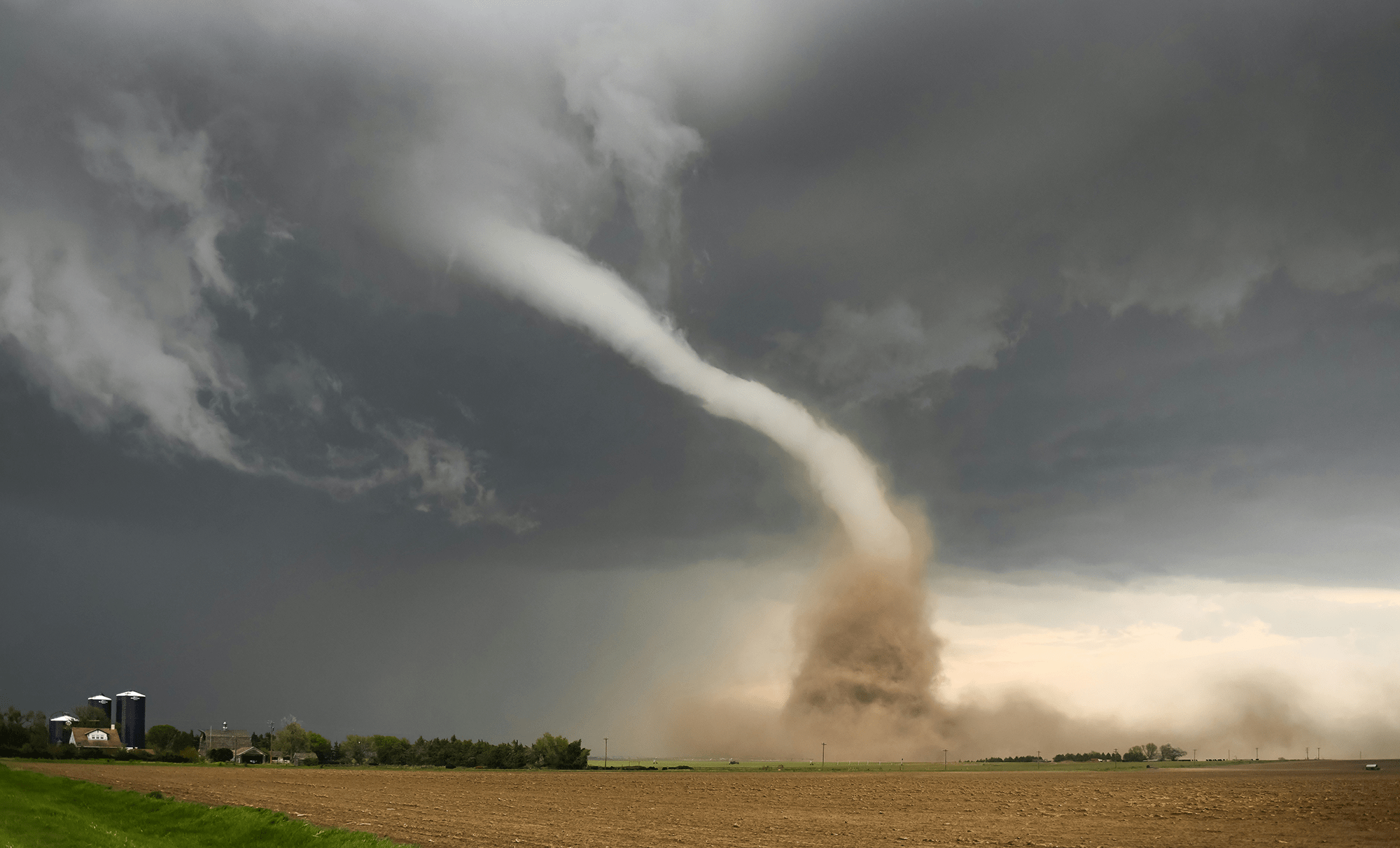
Growing up in northwest Arkansas, I spent my share of summer nights sheltering from tornadoes. Central North America — colloquially known as Tornado Alley — is especially prone to violent thunderstorms and accompanying tornadoes. That’s due, in part, to two geographical features: the Rocky Mountains and the Gulf of Mexico. Trade winds hitting the eastern slope of the Rockies get turned northward, imparting a counterclockwise vorticity. At the same time, warm moist air carried from the Gulf feeds into the atmosphere, creating perfect conditions for powerful thunderstorms. By this logic, though, South America should see lots of tornadoes, too, courtesy of the Andes Mountains and the moist environs of the Amazon Basin. To understand why South America doesn’t have a Tornado Alley, researchers used global weather models to investigate alternate North and South Americas.
They found that smoothness is a key ingredient for the upstream, moisture-generating region. Compared to the Amazon, the Gulf of Mexico is incredibly flat. With a flat Gulf, tornadoes abounded in North America, but their numbers dropped once that area was roughened to mimic the Amazon. The opposite held true, too: a smoothed-out Amazon Basin resulted in more simulated South American tornadoes.
For those in Tornado Alley, the results don’t offer much hope for mitigating our summer storms — we can’t exactly roughen the ocean. But the study does sound a word for warning for South America; the smoother the Amazon region becomes — due to mass deforestation — the more likely tornadoes become in parts of South America. (Image credit: G. Johnson; research credit: F. Li et al.; via Physics World)
Paris 2024: Diving
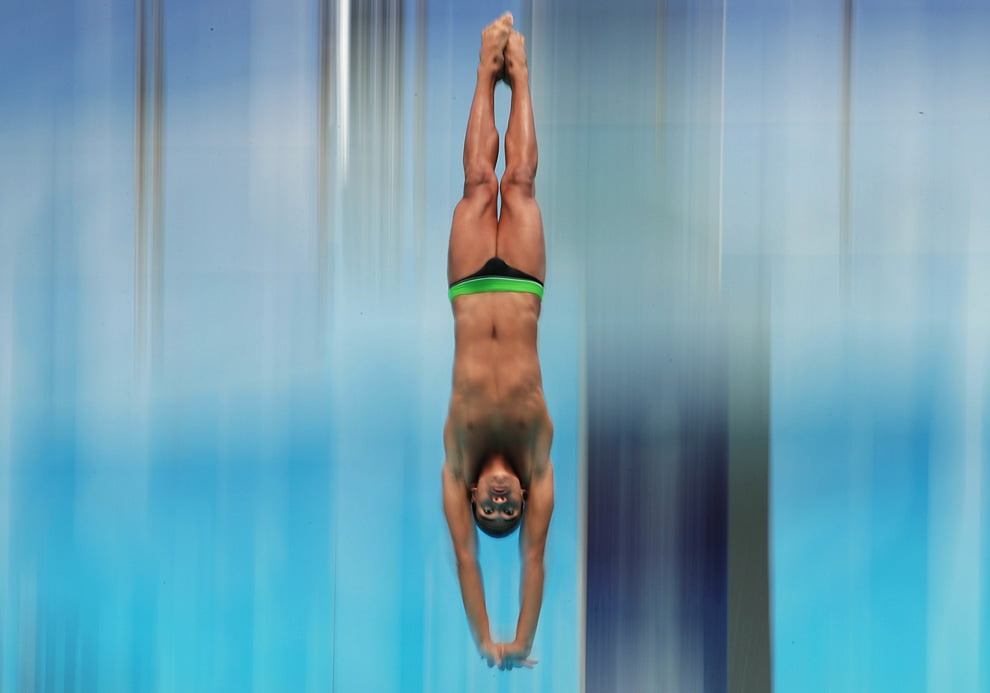
In competition diving, athletes chase a rip entry, the nearly splash-less dive that sounds like paper tearing. Part of a successful rip dive comes in the impact, where divers try to open a small air cavity with their hands that their entire body then enters. But the other key component happens below the surface, where divers bend at the hips once underwater. This maneuver enlarges the air cavity underwater and disrupts the formation of a jet that would typically shoot back upwards. Done properly, the result is an entry with little to no splash at the surface and a panel full of pleased judges. (Image credits: top – A. Pretty/Getty Images, other – E. Gregorio; research credit: E. Gregorio et al.; via Science News; submitted by Kam-Yung Soh)

Sequence of images showing a synthetic diver bending underwater to disrupt splash formation. Related topics: Rip entry physics, how pelicans dive safely, and how boobies plunge dive
This post marks the end of our Olympic coverage for this year’s Games, but if you missed any previous entries, you can find them all here.
Paris 2024: Clearing the Air
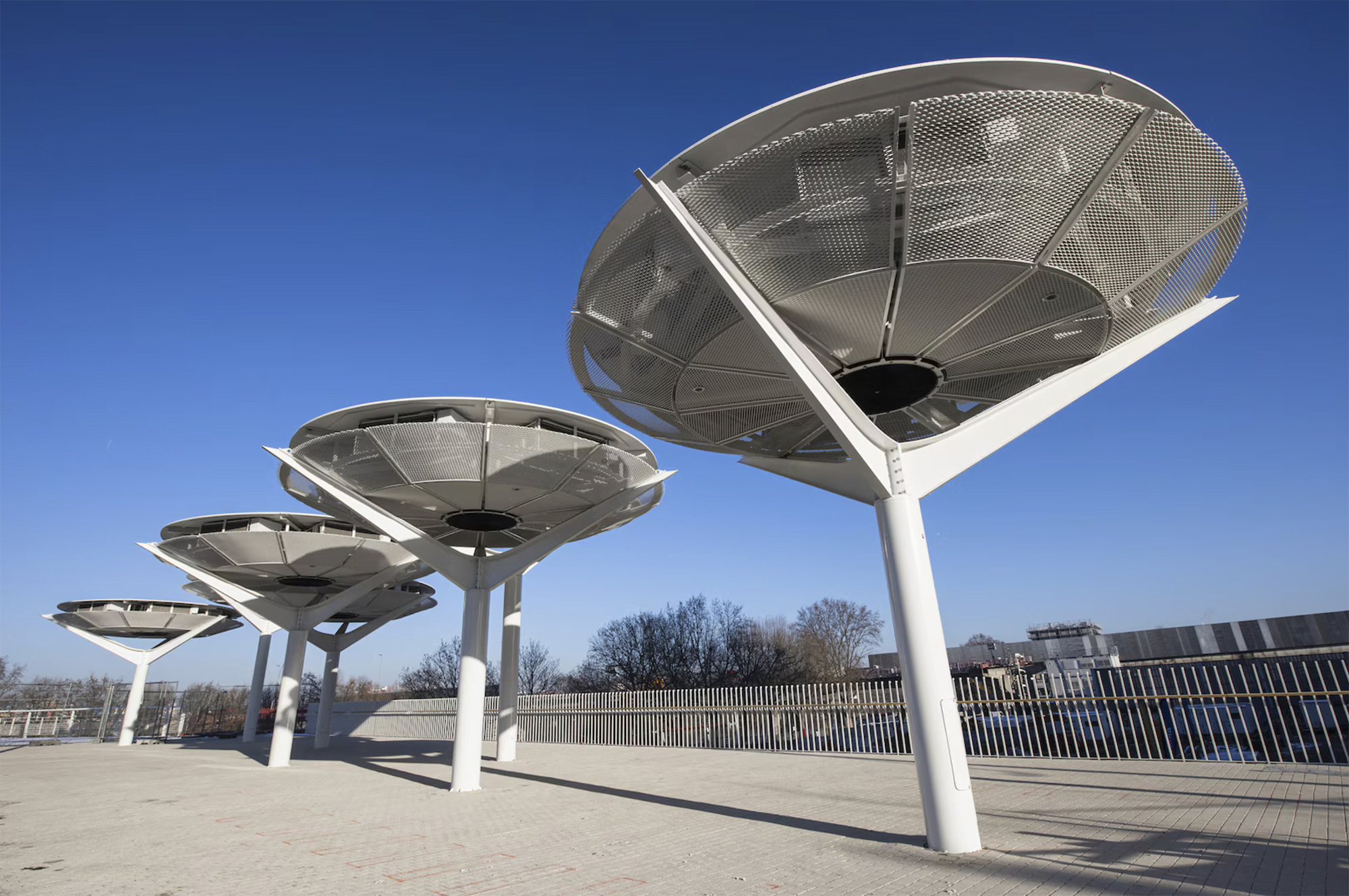
A quartet of mushroom-shaped structures tower nearly 6 meters above the Olympic Village. Known as Aerophiltres, these devices filter particulates out of the air to provide cleaner air for the Village, despite its proximity to major roadways. There’s no need to change out the filters in the Aerophiltres, though, because they don’t have any. Instead, the devices ionize fine particles, encourage them to clump together, and then capture them on highly-charged metal plates. A fan near the base sucks polluted air in through the top and expels clean air at the ground level. According to the engineers, the system is capable of removing 95% of particulates and producing nine Olympic-sized swimming pools’ worth of clean air each hour. Compared to traditional systems — which require lots of power to suck air through filters that get progressively more clogged — the Aerophiltres are energy efficient, highly effective, and easy to maintain. (Image credit: SOLIDEO/C. Badet; via DirectIndustry)
Related topics: How manta rays filter without clogging, making artificial snow, and building whitewater rafting courses
Catch our past and ongoing Olympic coverage here.

Paris 2024: Gunwale Bobbing


In the Olympics, you won’t see anyone win a rowing event without a paddle, but it turns out that you don’t really need one for a canoe or paddleboard. How can you get around when you’ve lost your paddle? You stand up on one end and start bobbing. This is known as gunwale (pronounced gunnel) bobbing, and it’s pretty impressively effective! With optimal parameters, scientists found that a canoe could move about 1 m/s with the technique.
As the bobber pushes, it generates an asymmetric wave field on the water surface. The canoe or paddleboard then essentially surfs those waves, turning the vertical displacement into a horizontal thrust. The researchers expect that the effect matters for competitive rowing, too, where the athletes’ rowing motions cause some vertical displacement. Clearly, the biggest effect comes from the oars themselves, but optimal bobbing could provide enough of an edge to ensure the gold. (Image credit: top – R. Chisu; others – G. Benham et al.; research credit: G. Benham et al.; via APS Physics; submitted by Kam-Yung Soh)
Related topics: Optimizing oar length, vorticity around an oar, and a vibration-propelled biorobot
See more of our past and ongoing Olympic coverage here.
Paris 2024: Tennis Racket Physics
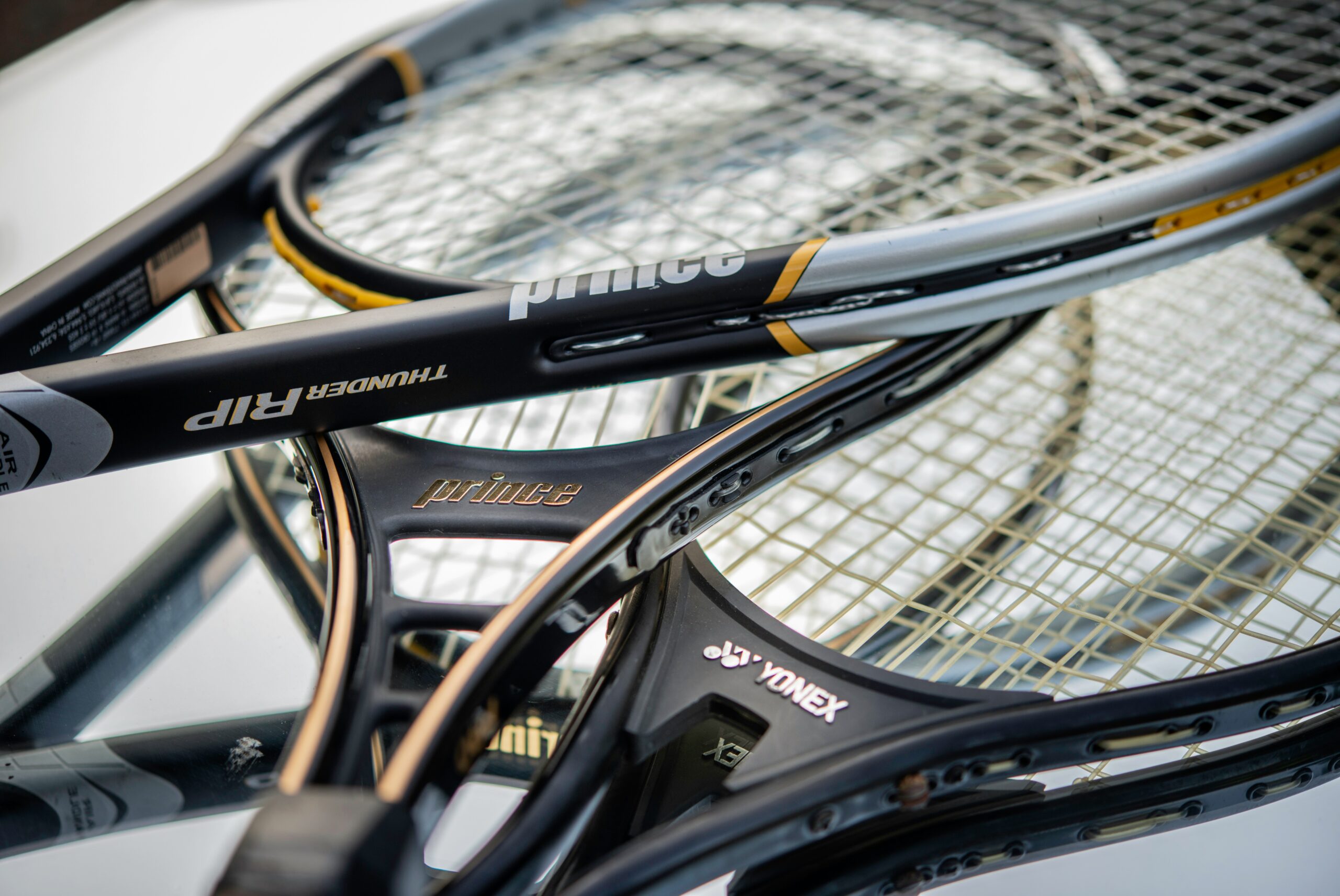
Like many sports that feature balls, spin plays a big role in tennis. By imparting a topspin or backspin to a tennis ball, players can alter the ball’s trajectory after a bounce and, using the Magnus effect to alter lift around the ball, change how it travels through the air. For example, a ball hit with backspin can dive just after the net, forcing an opponent to scramble after it. How much spin a player can impart depends on the speed of the racket’s head. Competitive rackets are carefully engineered — in terms of weight, string tension, and frame stiffness — to translate the kinetic energy of a player’s swing into the ball. But aerodynamics also play a role: new rackets designed to minimize drag hit the market 15-20 years ago, promising drag reductions up to 24% compared to previous rackets. That gives a player more swing speed and higher spins at a lower energy cost. (Image credit: C. Costello)
Related topics: The Magnus effect in table tennis and in golf; the reverse Magnus effect
Check out more of our ongoing and past Olympic coverage here.

Paris 2024: Coordinating the Front-Crawl
Of all the swimming strokes humans have invented, none is faster or more efficient than the front-crawl. That’s why all competitors use it in freestyle events, and why it’s the only stroke that appears in races longer than 200 meters. But elite swimmers don’t perform the front-crawl the same way in a sprint as they do in a longer race. Instead, researchers found that swimmers use three different regimes of arm coordination.
For long-distance races, elite swimmers adopt a stroke that has only one arm in the water at a time. Each stroke is followed by a glide phase with one arm stretched in front of them. Researchers compared this to the burst-and-coast method that fish use to minimize the energy they use. As a swimmer’s speed increases, they shorten the glide phase and begin to maximize the force produced with each propulsive stroke.
In the third regime — the fastest one used by elite sprinters — the strokes of a swimmer’s arms are superposed, with both arms engaged in propulsion at the same time during parts of the cycle. This mode maximizes propulsive force but requires a lot of energy, so swimmers can only sustain it for a short while.
Since researchers built their observations into a physical model that explains how and why elite swimmers do this, the model can actually be used to advise individual swimmers on how they can adapt their stroke based on their size, desired speed, and other physical characteristics. (Image credit: J. Chng; research credit: R. Carmigniani et al.)
Related topics: More on swimming physics including why swimmers are faster underwater and how to design faster pools.
Find all of our current and past Olympics coverage here.
Hole Punch Clouds
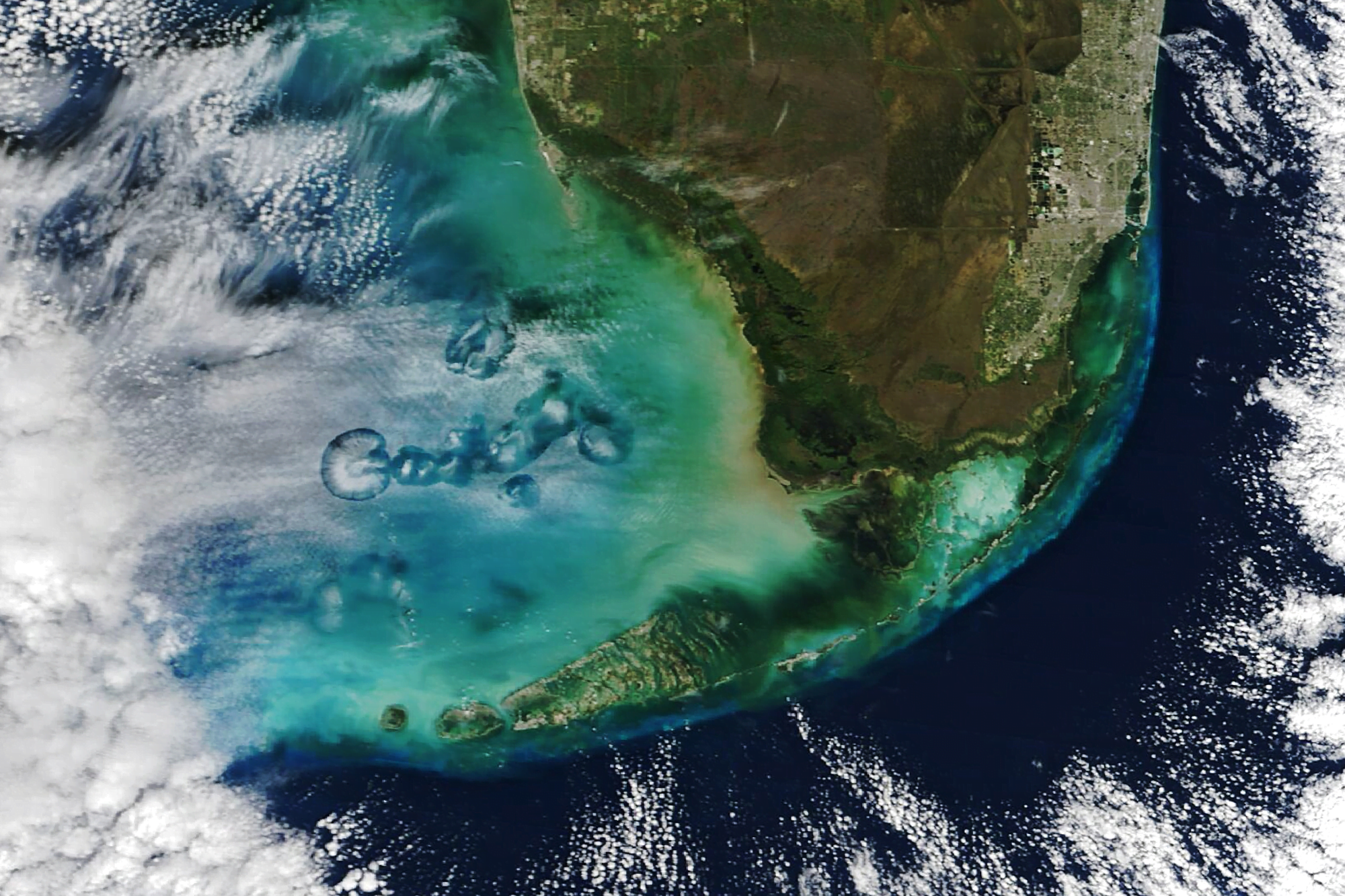
At times altocumulus cloud cover is pierced by circular or elongated holes, filled only with the wispiest of virga. These odd holes are known by many names: cavum, fallstreak holes, and hole punch clouds. Long-running debates about these clouds’ origins were put to rest some 14 years ago, after scientists showed they were triggered by airplanes passing through layers of supercooled droplets.
When supercooled, water droplets hang in the air without freezing, even though they are colder than the freezing point. This typically happens when the water is too pure to provide the specks of dust or biomass needed to form the nucleus of an ice crystal. But when an airplane passes through, the air accelerated over its wings gets even colder, dropping the temperature another 20 degrees Celsius. That is cold enough that, even without a nucleus, water drops will freeze. More and more ice crystals will form, until they grow heavy enough to fall, leaving behind a clear hole or wisps of falling precipitation.
In the satellite image above, flights moving in and out of Miami International Airport have left a variety of holes in the cloud cover each of them large enough to see from space! (Image credit: M. Garrison; research credit: A. Heymsfield et al. 2010 and A. Heymsfield et al. 2011; via NASA Earth Observatory)
Junggar Basin Aglow
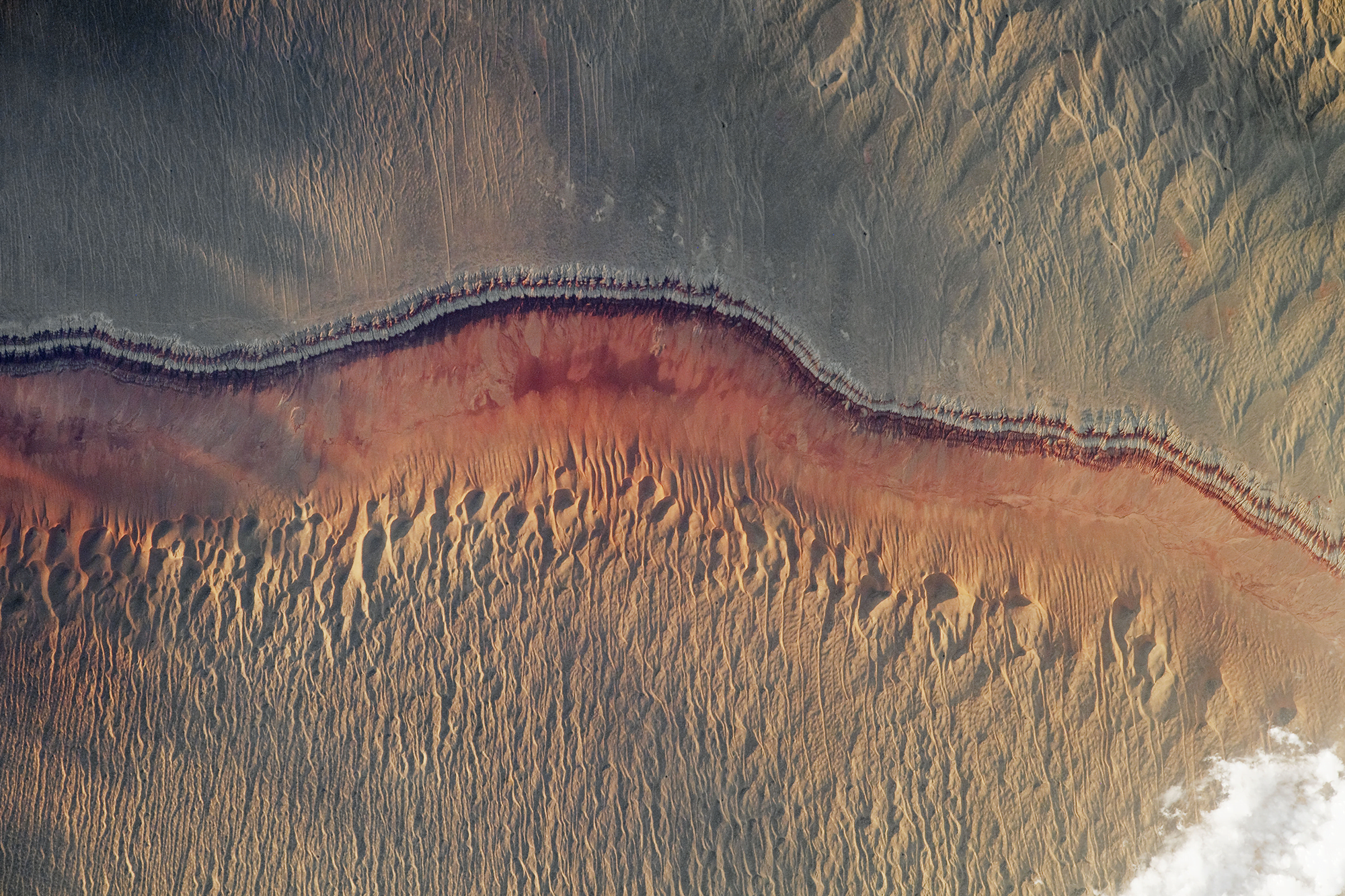
The low sun angle in this astronaut photo of Junggar Basin shows off the wind- and water-carved landscape. Located in northwestern China, this region is covered in dune fields, appearing along the top and bottom of the image. The uplifted area in the top half of the image is separated by sedimentary layers that lie above the reddish stripe in the center of the photo. Look closely in this middle area, and you’ll find the meandering banks of an ephemeral stream. Then the landscape transitions back into sandy wind-shaped dunes. (Image credit: NASA; via NASA Earth Observatory)
“Stomp-Rocket”: A New Type of Eruption
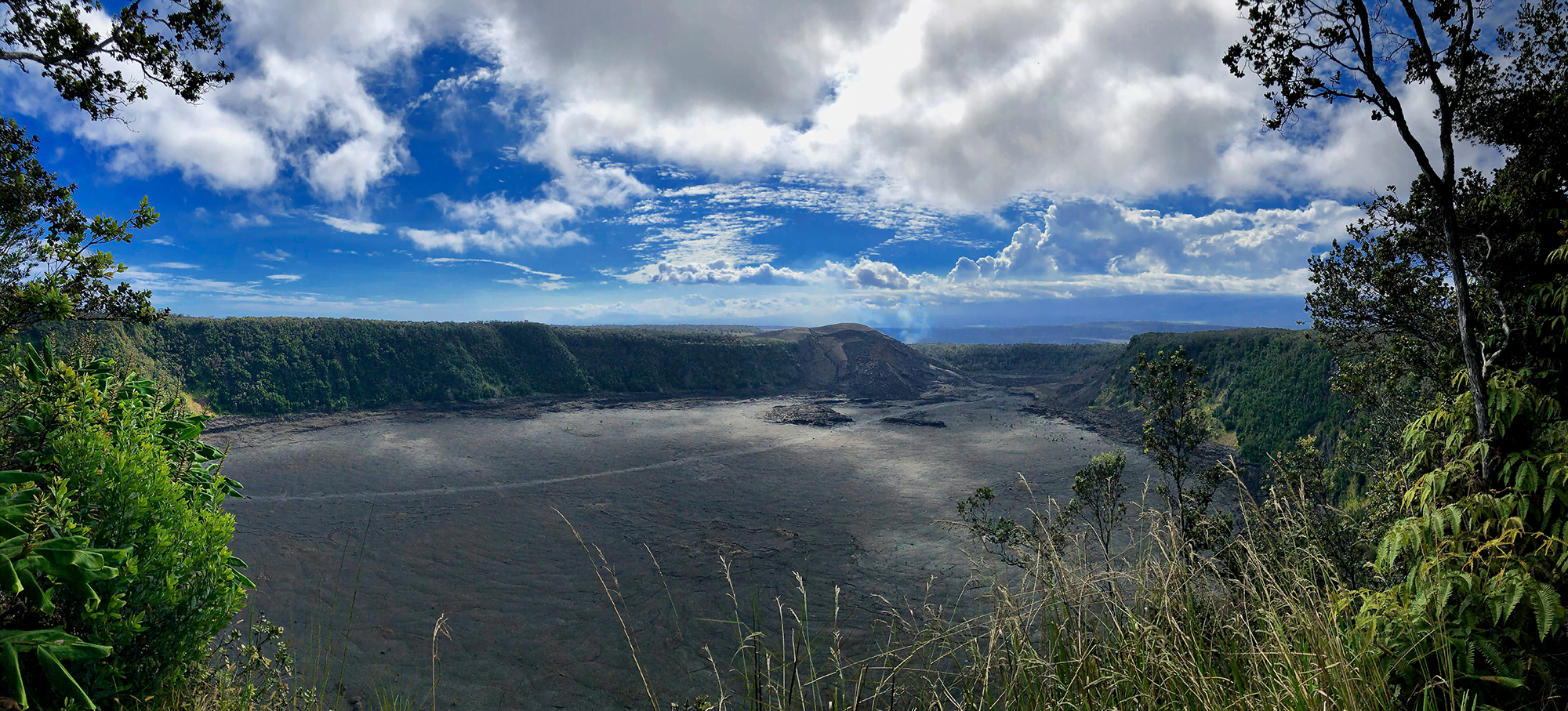
When Kilauea‘s caldera collapsed in 2018, it came with a sequence of 12 closely-timed eruptions that did not match either of the typical volcanic eruption types. Usually, eruptions are either magmatic — caused by rising magma — or phreatic — caused by groundwater flash-boiling into steam. The data from Kilauea matched neither type.
Instead, scientists proposed a new model for eruption, based around a mechanism similar to the stomp-rockets that kids use. They suggested that, before the eruption, Kilauea’s magma reservoir contained a mixture of magma and a pocket of gas. When part of the magma reservoir collapsed, the falling rock compressed the gases in the chamber — much the way a child’s foot compresses the air reservoir of a stomp rocket — building up enough gas pressure to explosively launch debris and hot gas up to the surface.
The team found that computer simulations of this new eruption model matched well with observations and measurements taken at Kilauea in 2018. Kilauea is one of the most closely monitored volcanoes in the world; although the team suspects this mechanism occurs during caldera collapse of other volcanoes, it’s unlikely they could have pieced together such a convincing case for an eruption anywhere else. (Image credit: O. Holm; research credit: J. Crozier et al.; via Physics World)
