Knots have long fascinated humans, appearing in art for thousands of years and generating entire fields of study. Until recently, however, the idea of a knotted fluid was purely theoretical. To knot fluids, researchers used 3D printing to create twisted hydrofoil shapes. When towed through water, fluid travels around the shape and spins up at the trailing edge, creating a knotted vortex ring. The knotted vortices were captured with 3D imaging, allowing scientists to observe how they evolve. So far the knots they’ve created have all been unstable, deforming until two vortex lines approach one another. Upon contact, the vortices disconnect and reconnect with one another, unraveling the knot. Intriguingly, these vortex reconnections seem remarkably similar to the vortex reconnections observed between quantized vortices in superfluids. (Video credit: D. Kleckner et al.)
Search results for: “art”
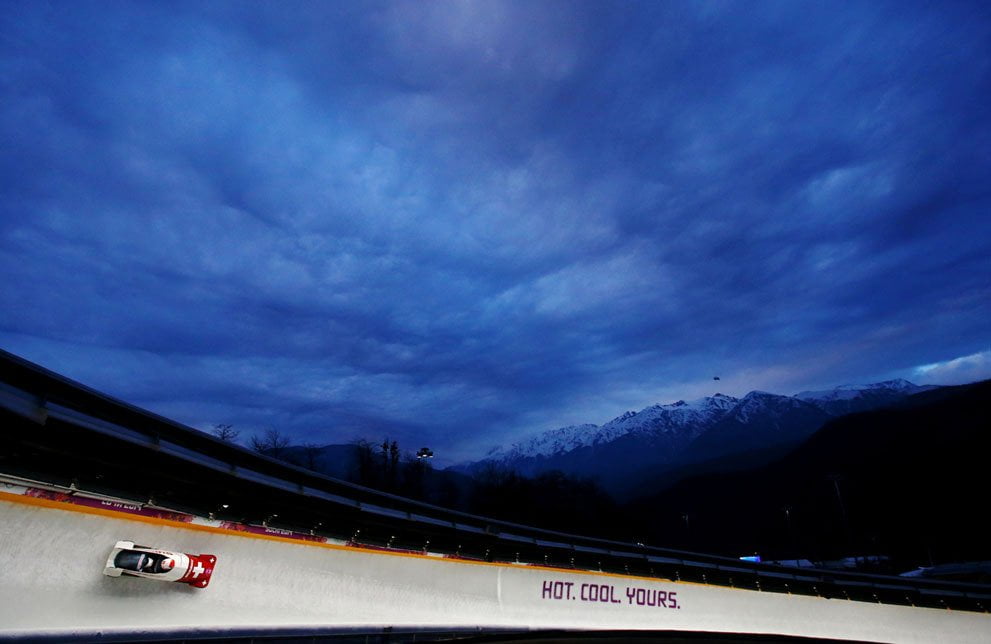
Sochi 2014: Link Round-up
I’ve come across a lot of great links over the course of writing the #Sochi2014 series, and I want to highlight some of my favorites here. Be sure to check them out for some great behind-the-scenes looks at Olympic sport science and technology.
- Ski Racing covers the intriguing history behind speed suit development. Of particular interest is the development of Spyder’s Speedwyre suit, which featured a tripwire to induce turbulent flow. The suits were so effective at increasing skiers’ speeds that skiing’s governing body outlawed them ahead of the 1998 Olympics. There are similar restrictions in the speed suits of other sports, but sometimes people get away with it. (h/t @YvesDubief)
- A must-watch: Sir David Attenborough narrates curling.
- Smarter Every Day has had some awesome Olympics-themed infographics during the Games. Some favorites: how clapskates work, how to do an axel jump, an illustration of ski jumping, how curling stones curl, and the basics of curling.
- The National Science Foundation put together a whole series of videos on the science and engineering of the Winter Olympics.
- CBS goes inside the BMW redesign of the US bobsleds, luge, and skeleton sleds.
- Wired took an in-depth look at using science to improve an alpine skier’s performance.
- It’s originally from 2010, but SciAm has a neat podcast on the physics of curling. They also give some background on the granite in the stones, which comes from one particular island off Scotland.
- The distinctive V-style of ski jumping may have developed as a result of an athlete’s mid-air seizure. (via @YvesDubief)
- Inrng compares the aerodynamics of cycling and skiing, wondering if skiers are leaving precious tenths behind on the hill due to bulky equipment.
(Photo credit: A. Bello/Getty Images)

Sochi 2014: Speed Skiing
As FYFD wraps up coverage of #Sochi2014, let’s take a look at a winter sport not currently contested at the Olympics. This year’s Winter Games featured 12 new events. Speed skiing was not among them, though it was a demonstration sport in the 1992 Olympics. Like many of the sports in Sochi, speed skiing is gravity-driven, and friction and drag serve only to slow competitors. Speed skiing is about getting from the top of the course to the bottom, in a straight line, as fast as possible. Athletes reach velocities as high as 250 kph (155 mph), and aerodynamics are of the utmost concern. The skiers’ rubberized speed suits include airfoil-shaped fairings behind their calves that mold the airflow, and athletes wear giant aerodynamic helmets to smooth flow over their heads and shoulders. They spend their entire descent in an aerodynamic tuck, arms extended ahead of them like a cyclist in a time trial. It looks a pretty crazy ride. Would you like to see it added to the Olympics? (Video credit: R. Sill/University of Cambridge)
FYFD is celebrating #Sochi2014 with a look at fluid dynamics in winter sports. Check out the previous poss on why ice is slippery, the aerodynamics of speedskating, and how lugers slide fast.
Sochi 2014: Curling
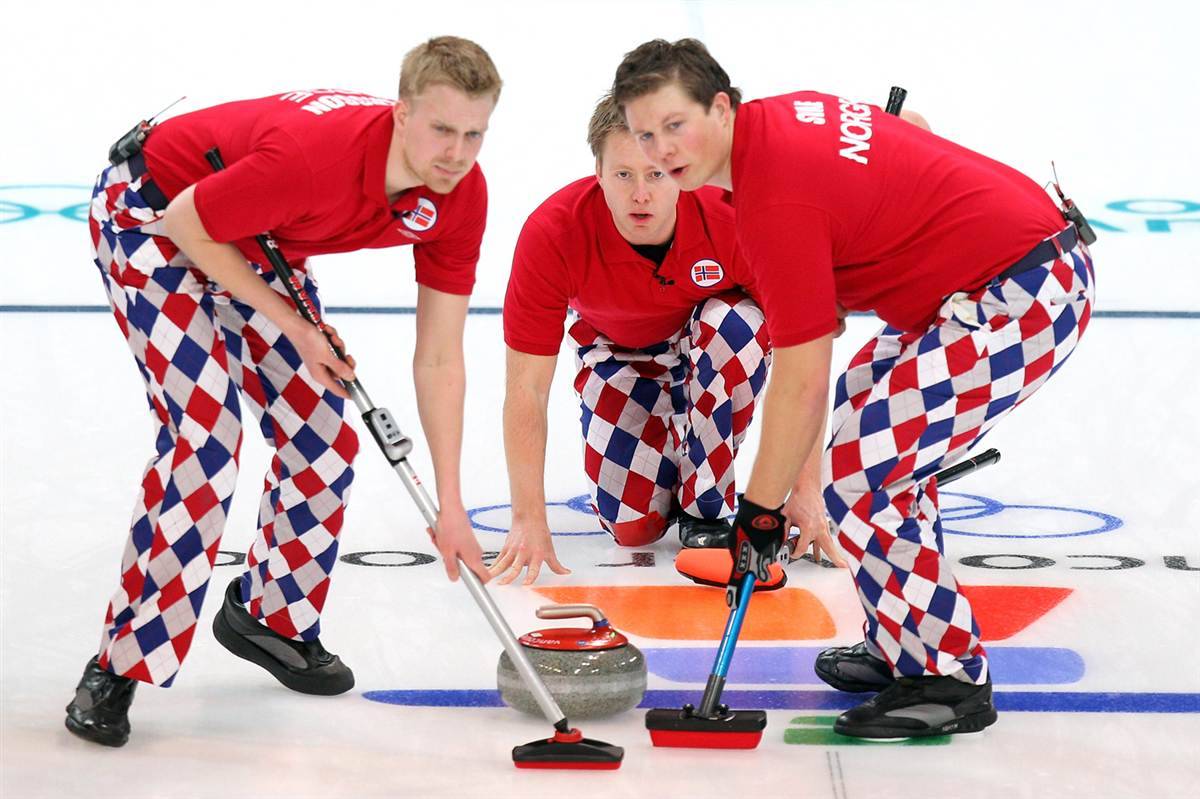
Curling is rather unique among target-based sports because it allows athletes to alter the trajectory of their projectile after release. Curlers send 19 kg granite stones sliding across a pebbled ice surface at a target 28 meters away. On the way, teammates sweep the ice with natural or synthetic brushes. Sweeping the ice causes frictional heating, which lowers the local coefficient of friction and allows the stone to slide meters further than it would without sweeping. The bottom of the stone is concave, so the rock only contacts the ice along a narrow ring. One explanation for the stone’s tendency to curl in the direction it spins comes from this contact ring. Researchers suggest that the roughness of the leading edge cuts scratches into the ice which the trailing edge attempts to follow, causing the stone to move laterally, as illustrated over at Smarter Every Day. It’s important to note that the sweeping curlers do doesn’t directly guide the stone. In fact, by lowering the coefficient of friction the sweepers prevent the stone’s curling, and thus much of the skill of the sport is in knowing when, how, and how much to sweep. (Photo credit: C. Spencer/Getty Images)
FYFD is celebrating #Sochi2014 by studying the fluid dynamics of the Games. Check out some of our previous posts including how to make artificial snow, the aerodynamics of bobsledding, and how ski jumpers fly further.

Sochi 2014: Bobsledding
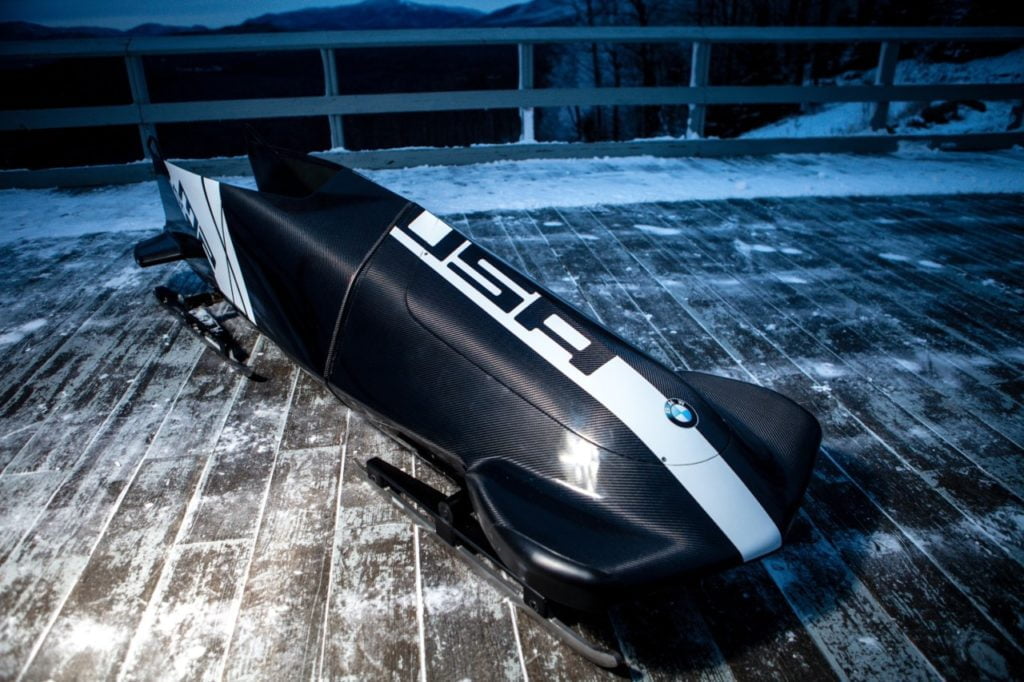


Today bobsledding is an sport rife with modern technology and design techniques. In recent years, companies better known for their expertise in automobiles and Formula 1 racing have become players with BMW designing American sleds, McLaren making the UK sleds, and Ferrari providing for the Italian team. Like many winter gravity sports, contenders can be separated by as little as hundredths of a second. This makes aerodynamics a serious concern, but the variability of the sled’s position and orientation over a run makes realistically simulating the aerodynamics, either in a wind tunnel or computationally, extremely difficult. Additionally, the sport’s governing body restricts a sled’s dimensions, weight, shape, and other details; for example, bobsleds are not allowed to use vortex generators that would help maintain attached flow and reduce drag. Instead, designers try to shave drag elsewhere, in the shaping of the sled’s nose or by tweaking the back end of the sled to reduce the drag-inducing wake. Even the shape of the driver’s helmet is aerodynamically significant. (Image credits: Exa Corp, Getty Images, BMW)
FYFD is celebrating #Sochi2014 by looking at fluid dynamics in winter sports. Check out our previous posts on how skiers glide, the US speedskating suit controversy, and why ice is slippery.

Sochi 2014: Downhill Skiing
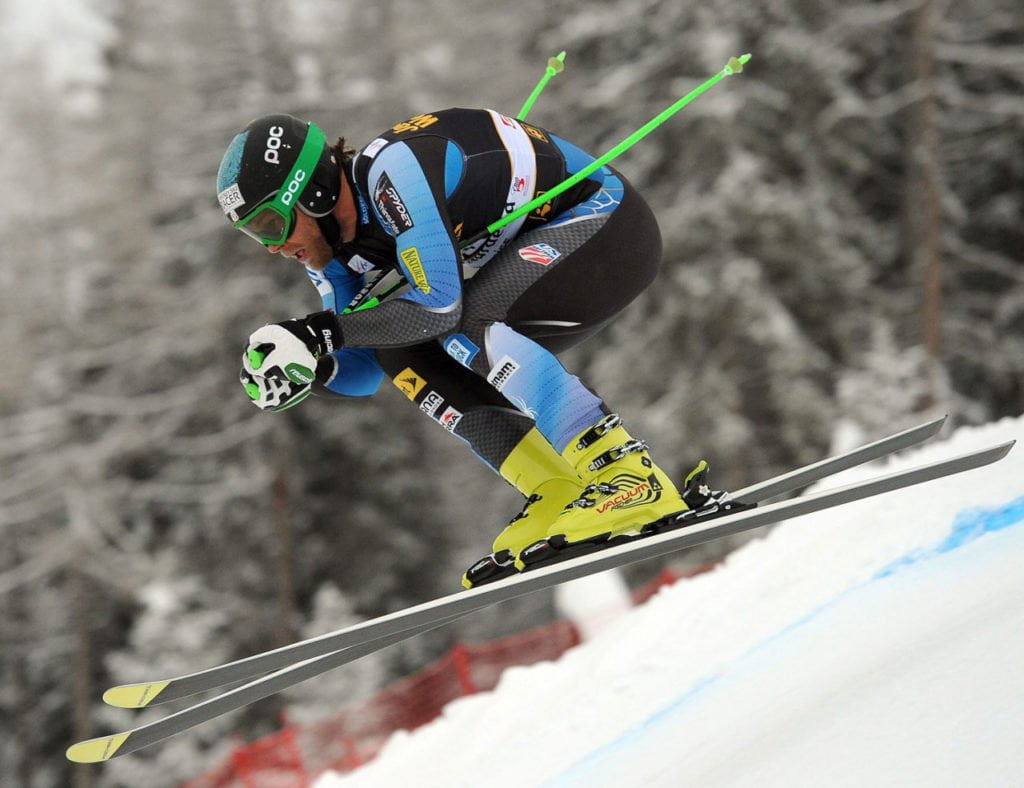
Like the athletes who compete on ice, skiers rely on a film of liquid beneath their skis to provide the low friction necessary to glide. The moisture results from the friction of the ski’s base and edges cutting into the snow, and, depending on the conditions of the snow, different surface treatments are recommended for the skis to help control and direct this lubricating film. Similarly, skiers uses various waxes on their skis to lower surface tension and provide additional lubrication. Fluid dynamics can also play a role in tactics for various ski-based events. In endurance events like cross-country skiing, drafting behind other skiers can help an athlete avoid drag and save energy. When drafting, cross-country skiers have lower heart rates. Drag and aerodynamics can also play a significant roles in alpine skiing, especially in speed events like the downhill or super G. In these events solo skiers reach speeds of 125 kph, where drag is a major factor in slowing their descent. Between turns smart skiers will tuck, decreasing their frontal area and reducing drag’s effects. Athletes use wind tunnel testing to dial in their tuck position for maximum effect, and, like speedskaters, skiers may also wear special aerodynamic suits. (Photo credits: F. Cofferini/AFP/Getty Images, C. Onerati; h/t to @YvesDubief)
Sochi 2014: Making Snow
Much attention ahead of the Sochi Winter Olympics has been dedicated to the question of how this subtropical resort town would provide and maintain adequate snow cover for the Games. Officials promised a combination of natural snow, snow transported from elsewhere, snow stored from the previous year, and, of course, artificial snow. These days many ski resorts rely heavily on snow guns producing artificial snow. There are two main types of snow gun–those which use compressed air and those which have an electrically-driven fan–but the principles behind each are the same. The snow guns provide a continuous spray of air and water, atomizing the water into tiny droplets which freeze rapidly. The effectiveness of snow guns depends on both the temperature and humidity of the surrounding air. With sufficiently dry air, artificial snow can be made even several degrees above freezing. Sochi itself is relatively humid (72% on average for February), but most of the outdoor events are held in Krasnaya Polyana, higher in the mountains where temperatures are typically much lower and artificial snow can be manufactured. That said, temperatures have reached as high as 15 degrees Celsius during the Games so far, and athletes have complained about the changing snow conditions in several events. (Video credit: On The Snow)
FYFD is celebrating #Sochi2014 with a look at the fluid dynamics of the Winter Games. Check out our previous posts, including how lugers slide fast, how wind affects ski jumpers, and why ice is slippery.

Sochi 2014: Speedskating Redux

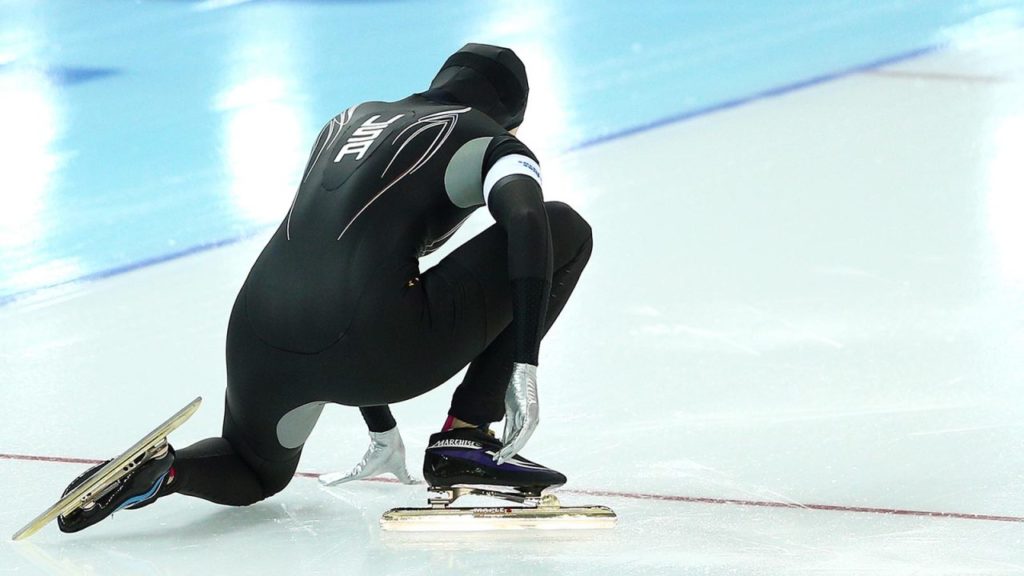


Since we wrote about the US team’s speedskating suits last week, they have become the subject of major controversy. After six events, the US team had not placed higher than seventh despite strong World Cup results during the autumn. The Wall Street Journal reported that three people familiar with the team suggested a design flaw:
Vents on back of the suit, designed to allow heat to escape, are also allowing air to enter and create drag that keeps skaters from staying in the low position they need to achieve maximum speed, these people said. One skater said team members felt they were fighting the suit to maintain correct form. #
To address this, some members had seamstresses sew fabric over the vent. The upper left image shows the original suit and the one on the right shows a team member in a modified suit. The change made no apparent impact on the skaters’ finish. The US team has no gone so far as to get a special dispensation to switch back to their older suits but still the podium eluded skaters in Saturday’s events.
Now, to be clear, I have not seen any data on the development of Under Armour’s suits beyond the public coverage, and I have no connections to any of the parties involved. However, given the extensive nature of the wind tunnel development that went into these suits, I would be exceptionally surprised if there was a design flaw capable of slowing skaters down by nearly 1 second over 1000 meters. It would require a major flaw in the testing design and methodology to overlook such a substantial drag effect.
At the same time, there are other factors that may be affecting the US team adversely. Sochi’s races are taking place at low altitudes, where the air is denser and drag is greater. This does affect all competitors, but it is worth noting that many of the US speedskaters train at altitude in Salt Lake City and that the entire team had their training camp at high altitude in Italy prior to Sochi. Another factor is the ice conditions. Salt Lake has what is considered fast ice that permits longer glides between each step, whereas Sochi has soft ice, which requires a faster tempo and does not glide as easily. (Image credits: Under Armour, Getty Images, P. Semansky/AP)
Happy Valentine’s Day!
What can you do with a 7 x 7 grid of miniature vortex cannons? Why, make floating vortex hearts, of course. Happy Valentine’s Day from FYFD! (Video credit: D. Schulze/bitsbeauty; via Colossal)

Sochi 2014: Ski Jump
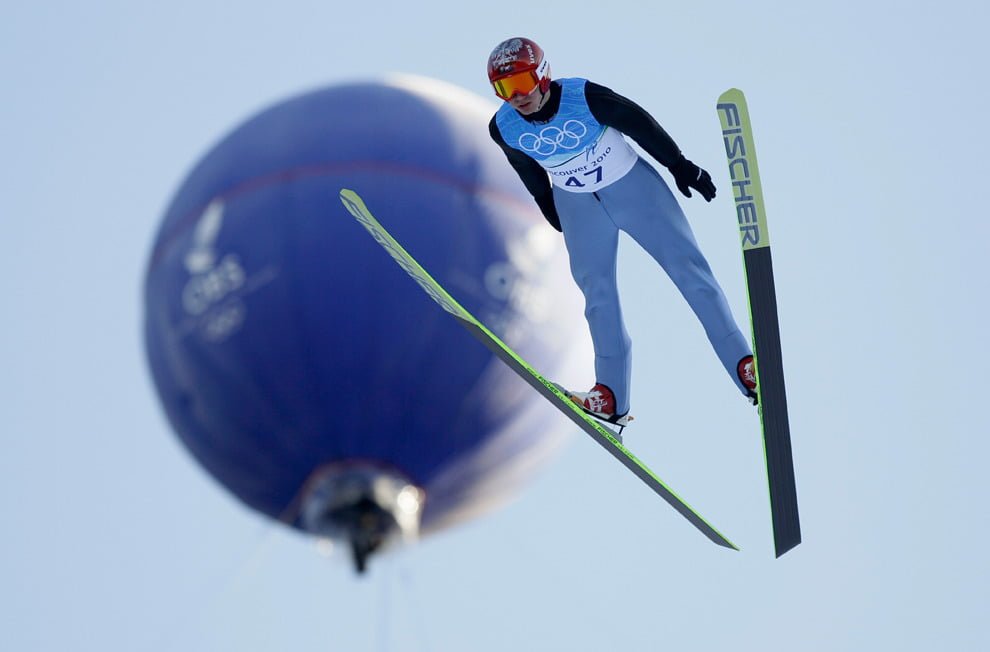
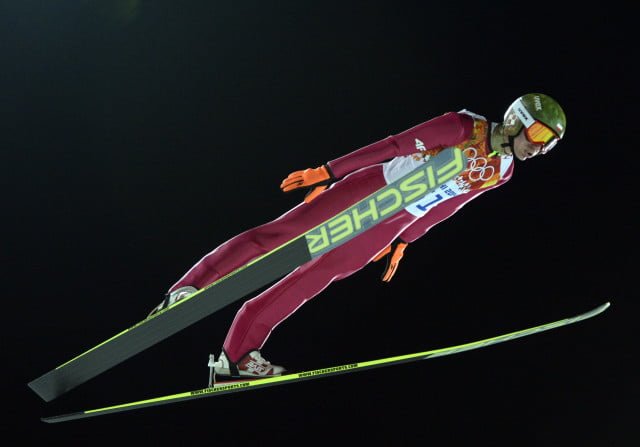
Great ski jumpers are masters of aerodynamics. There are four main parts to a jump: the in-run, take-off, flight, and landing. An athlete’s aerodynamics are most vital in the in-run and, naturally, the flight. During the in-run, the athlete is trying to gain as much speed as possible, so she tucks down and pulls her arms behind her back to streamline her body and keep her frontal area as small as possible. This limits her drag so that she can maximize her speed at take-off. Once in the air, though, the jumpers act like gliders. In flight, there are three forces acting on the the jumper: gravity, lift, and drag. Gravity pulls the jumper down, and drag tends to push her backwards up the hill, but lift, by counteracting gravity, helps keep jumpers aloft for a greater distance. To maximize lift, a jumper angles her skis outward in a V and holds her arms out from her sides. This configuration turns the jumper’s body and skis into a wing. The best jumpers will tweak their positions with training jumps and wind tunnel time to maximize their lift while minimizing their drag in flight and on the in-run. Technique is critical in ski jumping, but conditions play a significant role as well. Tomorrow’s post will discuss why and how judges account for changing conditions. (Photo credits: L. Baron/Bongarts/Getty Images; D. Lovetsky/AP; E. Bolte/USA Today)
FYFD is celebrating the Games with a look at fluid dynamics in the Winter Olympics. Check out our previous posts on the aerodynamics of speed skating, why ice is slippery and how lugers slide so fast.
