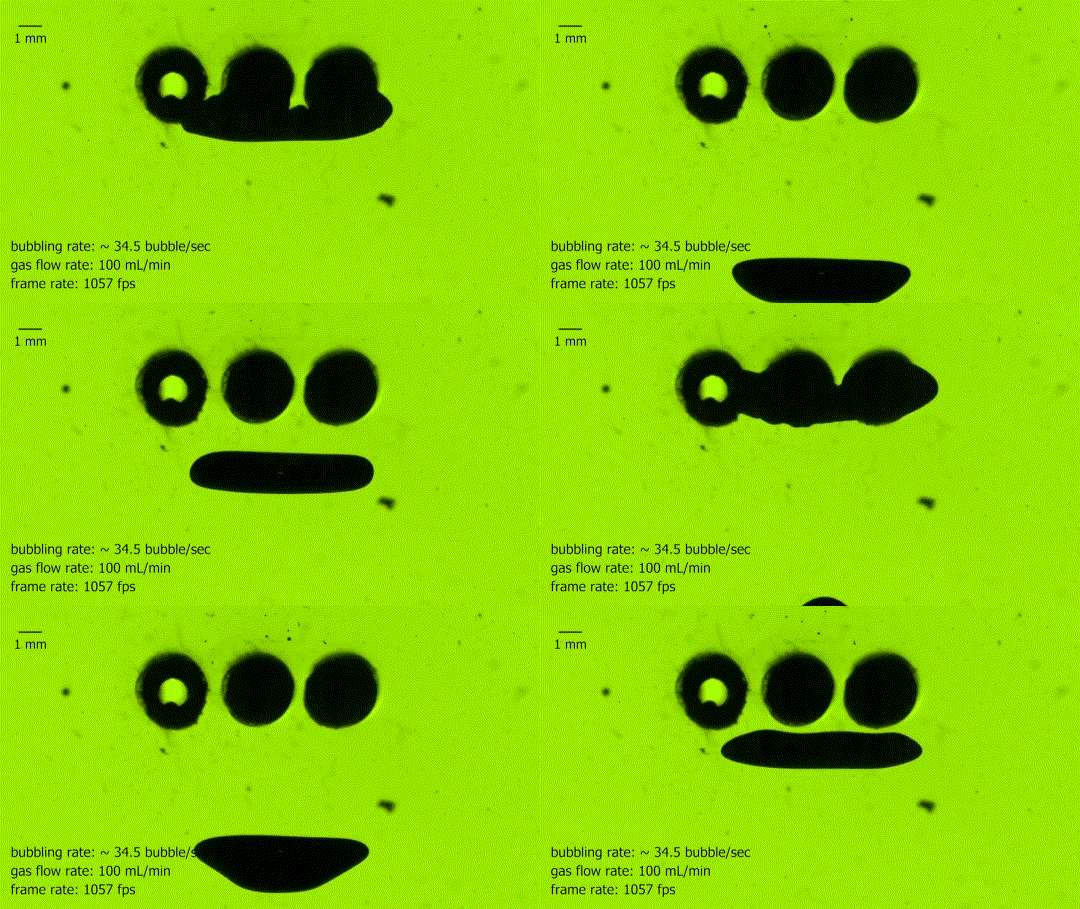
This is a bubble absorber. It’s formed from an array of three springs, seen end-on in the upper center, each of which is coated to make it superhydrophobic. The hollow interior of the springs is filled with air and ventilated to the atmosphere. As bubbles rise through the water, they contact the springs and readily coalesce with the interior gas. In the blink of an eye, the large bubble is almost completely absorbed into the thin air film that clings to the springs. Superhydrophobic arrays like these may be useful in power and life support systems that need to separate liquid and gas phases under low-gravity conditions. (Image credit: N. Pour and D. Thiessen, source)
Category: Research

Nautilus Swimming
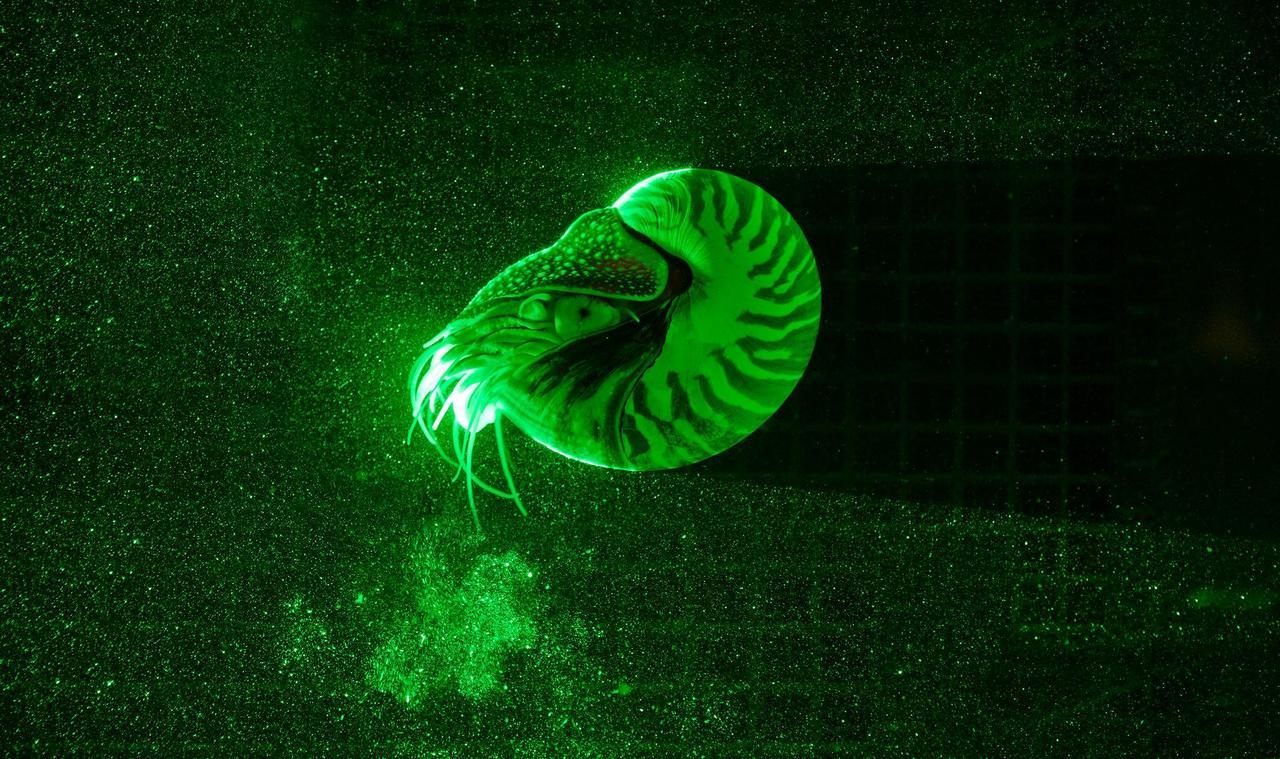
The shellbound chambered nautilus is a champion of underwater jet propulsion. It can eke out efficiencies as high as 75%, far outclassing other jet-based swimmers like squid, salps, and jellyfish. That high efficiency is especially important for the nautilus, which spends a great deal of time at depths where the oxygen needed to fuel movement is in short supply. To get around, the nautilus draws water in through an enlarged orifice, then squirts it out little by little. Its this asymmetry between drawing in and expending that keeps efficiency high. By releasing a jet slower and at lower speeds, the nautilus is able to reduce wasteful losses to friction and thereby keep the efficiency high. The drawback is that the nautilus swims relatively slowly at an average of around 8 centimeters–less than one body length–per second. (Image credit: Simon and Simon Photography/University of Leeds; research credit: T. Neil and G. Askew; via NYTimes; submitted by Kam-Yung Soh)

Modons
The spin of the Earth creates myriad eddies in our oceans, most of which move slowly westward at a speed dependent on their latitude. You can see many in the animation above as green and red rings slowly marching to the left. According to theory, it’s possible for two of these eddies to combine to become more than the sum of their parts; under the right conditions, the two conjoined eddies could become a modon, which, like a vortex ring, is capable of traveling far faster than its parental eddies. Despite the theory, however, no one had ever observed a modon in nature.
A new paper uses satellite imagery to identify nine modons in different locations around the world. One is shown above. Watch the eastern coast of Australia carefully, and you’ll see a modon form. It moves much faster than its surroundings, first southward toward Tasmania, then quickly eastward toward New Zealand. Thin black circles mark the two eddies that make up the modon. The strength and speed of these features makes them capable of pulling significant water mass with them. This suggests that they may play a role in ocean life, transporting water of different temperatures and nutrient content into regions it would not otherwise reach. (Image and research credit: C. Hughes and P. Miller; via Gizmodo)

Hairy Tongues Help Bats Drink
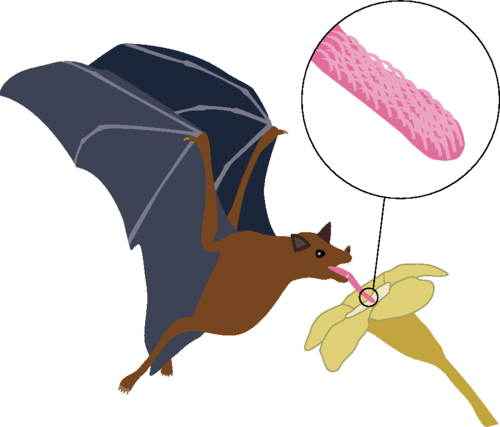
Nectar-drinking bats, honey possums, and honeybees all use hair-like protrusions on their tongues to help them drink. In bats, these papillae have blood vessels that swell when drinking, stiffening the hairs. To investigate this drinking mechanism, researchers built their own version of a bat tongue by fabricating hairy surfaces and testing how well they trapped viscous oil when dipped and withdrawn. Through a combination of experiment and mathematical modeling, the researchers found that the optimal fluid uptake depended on the density of hairs, fluid viscosity, and the withdrawal speed. When they compared their results to actual bats, honey possums, and honeybees, they found that those animals’ tongues have hair densities very close to the predicted optimal value, suggesting that their model is capturing the important physical mechanisms that have driven evolutionary advantages for these species. (Image and research credit: A. Nasto et al.; submitted by Kam-Yung Soh)

PyeongChang 2018: Moguls


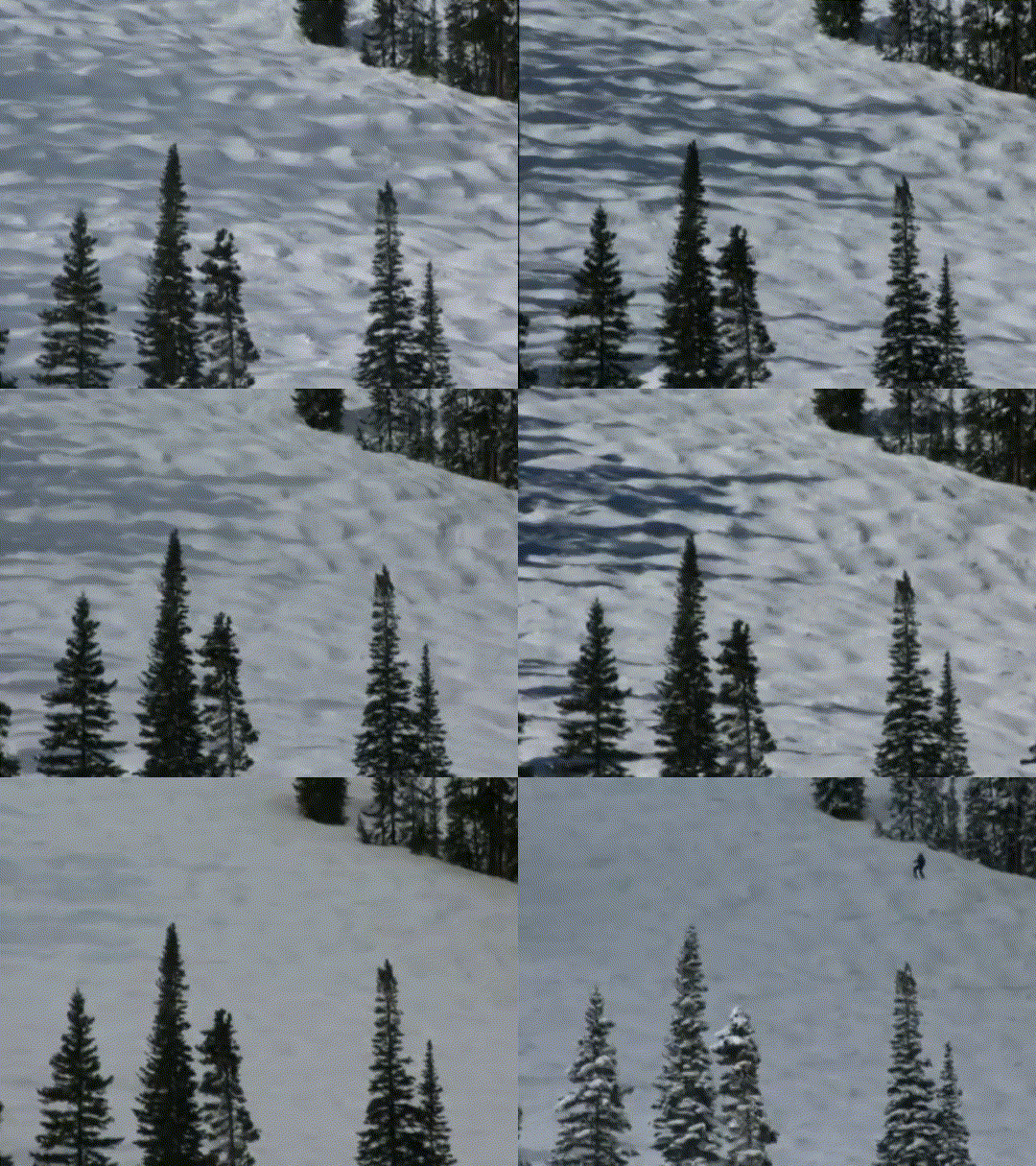
Moguls are bump-like snow mounds featured in freestyle skiing competitions and also frequently found on recreational ski courses. Although competition runs are man-made, most mogul fields form naturally on their own. As skiiers and snowboarders carve S-shaped paths down the slope, their skis and snowboards remove snow during sharp turns and deposit it further downhill. Over a surprisingly short amount of time, these random, uncoordinated actions form bumps large enough that they force skiers and snowboarders to begin turning on the downhill side of the bump. That action continues to carve out snow on the uphill side and deposit it downhill, effectively causing the downhill bumps to migrate uphill, as seen in the timelapse animation below. As more moguls form, their motion organizes them into a checkerboard-pattern that moves in lockstep. Observations show that mogul fields can move about 10 meters uphill over the course of a season. Seemingly, the only way to prevent mogul formation on steep slopes is to regularly groom them back to a flat state! (Image credits: J. Gruber/USA Today; J. Huet; D. Bahr; research credit: D. Bahr et al.)


PyeongChang 2018: Ice’s Watery Sublayer
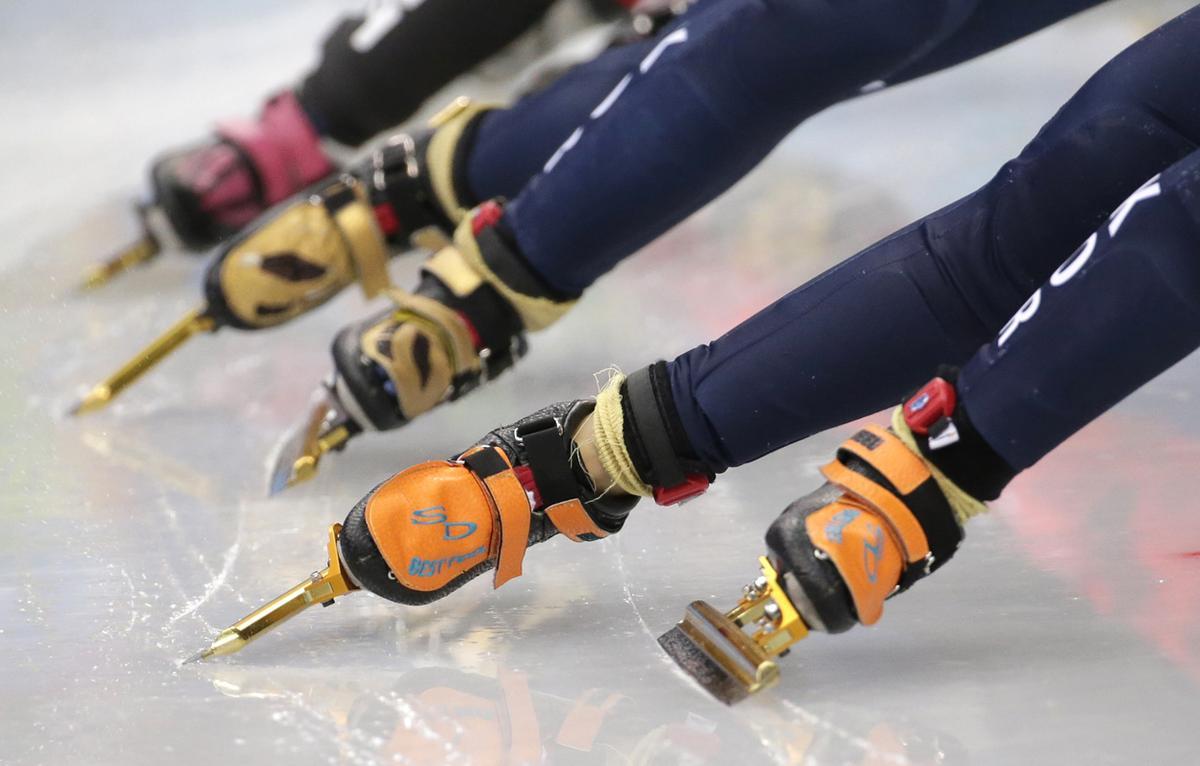
The Olympic Charter declares that winter sports must be practiced on snow or ice. Both are frozen forms of water, which despite its ubiquity, is one of the strangest substances around. In addition to its tendency to expand as it freezes, ice is inherently slippery, and no one’s quite certain yet why.
Most people have heard the theory that ice skating is possible due to high pressure melting the ice beneath the narrow blade. But realistically, pressure melting should only work for ice down to about -3.5 degrees Celsius. By contrast, the ideal temperatures for figure skating and ice hockey are -5.5 and -9 degrees Celsius, respectively. Melting due to friction might account for slipperiness a few more degrees below freezing, but it doesn’t explain why ice can be slippery when you’re just standing on it.
When physicist Michael Faraday suggested in 1850 that ice has a thin liquid-like layer at its surface, many discounted the theory. But modern experimental techniques and computer simulations have shown that Faraday was right. Ice has a liquid-like layer some 1 to 100 nanometers thick at its surface, and this layer persists to temperatures below -30 degrees Celsius. The process is known as surface pre-melting and what causes it is an area of active research for physical chemists. Current theories include hydrogen bonding and even quantum mechanical effects. (Image credit: AP Photo/B. Armangue; research credit: R. Rosenberg; Y. Li and G. Somorjai; F. Paesani and G. Voth)
This opens FYFD’s two-week series on the physics and fluid dynamics of the Winter Olympics. Stay tuned! – Nicole

Flowing Through Tight Spaces
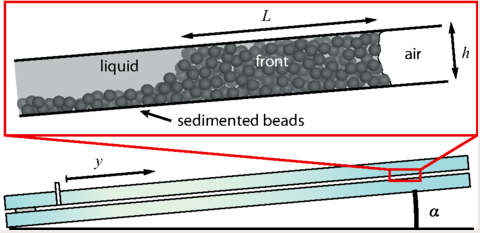
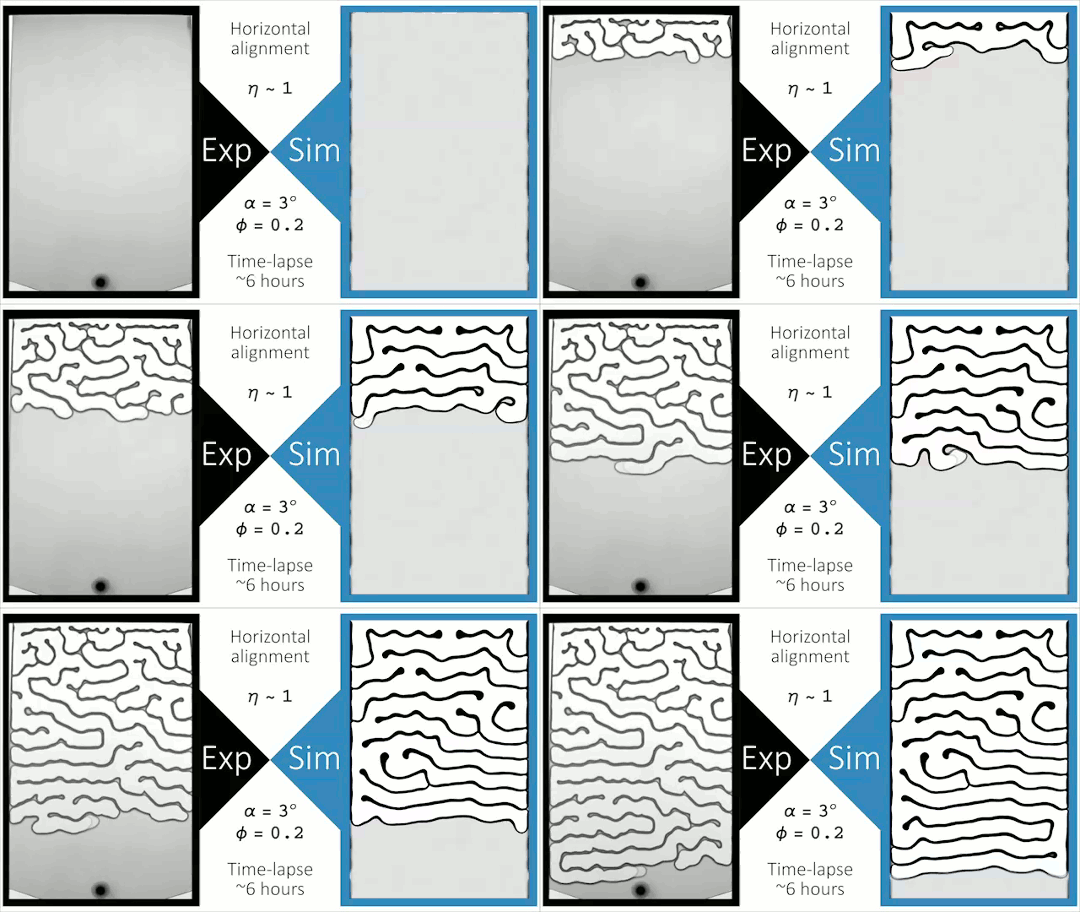
Fluid flow through porous media inside confined spaces can be tough to predict but is key to many geological and industrial processes. Here researchers examine a mixture of glass beads and water-glycerol trapped between two slightly tilted plates. As liquid is drained from the bottom of the cell, air intrudes. Loose grains pile up along the meniscus and get slowly bulldozed as the air continues forcing its way in. The result is a labyrinthine maze formed by air fingers of a characteristic width. The final pattern depends on a competition between hydrostatic pressure and the frictional forces between grains. Despite the visual similarity to phenomena like the Saffman-Taylor instability, the authors found that viscosity does not play a major role. For more, check out the video abstract here. (Image and research credit: J. Erikson et al., source)

Prehistoric CFD
Computational fluid dynamics (CFD) has been a valuable tool in engineering for decades, but its use is spreading to other fields as well. The image to the left shows a reconstruction of Parvancorina, a shield-shaped marine creature that lived some 550 million years ago. Fossil evidence alone cannot tell paleontologists whether this extinct creature could move through the water, and there are no living relatives that resemble the creature that scientists could study as an analogue. Instead, researchers turned to CFD to simulate flow over and around Parvancorina. They found that Parvancorina’s shape caused fast flow over the outer portions of its body and the slowest flow near its mouth. The results suggest that, not only was the creature mobile in the water, but that it was able to adjust its orientation to drive flow to different areas of its body. Paleontologists have only been using CFD for a decade or so, but already it’s giving us valuable insight into the creatures that roamed our planet hundreds of millions of years ago. (Image credit: M. De Stefano/Muse, I. Rahman; via Physics Today)

Microfluidic Legos
Microfluidic devices are valuable tools in a lab, but they are difficult and time-consuming to manufacture. Researchers looking to simplify the building of such fluidic circuits have turned to toys. The uniformity and modularity of LEGO bricks makes them a promising platform for modifiable microfluidics. Using a micromilling machine, researchers cut narrow channels into bricks, then sealed the channel with clear adhesive and a set of tiny O-rings. Their results allow them to build and rebuild simple microfluidic devices in moments. There are limitations, though. Micromills cannot cut the smallest size channels used in today’s microfluidic devices, and the plastic of the LEGO bricks restricts the chemicals and temperatures scientists can use. Nevertheless, this could be a useful teaching tool and a new method for testing and prototyping microfluidic devices. (Image credit: MIT, source; research credit: C. Owens and A. Hart)

Scallops and Erosion


Although we often think of solids as immovable in the face of flow, the motion of air and water sculpts many parts of our world. One common pattern, seen both on surfaces that melt and those that dissolve into a flow, is called scalloping. Mathematical analysis shows that flat surfaces exposed to a flow that melts or dissolves them unavoidably develop these scallops. The surface becomes rougher as the scallops form, but the instability that drives them only works up to a specific level of roughness. Instead of the scallops becoming deeper and deeper, the flow shifts as the surface changes. Peaks in the surface erode faster than the valleys, which tends to keep the scallops relatively uniform in depth after they’ve formed. Scallops like these are often seen in soluble rocks like limestone or marble as well as in snow and ice. (Image credit: Seattle Times, G. Smith; research credit: P. Claudin et al., L. Ristroph)