Category: Research

  • How Frogs Block Unwanted Noise

    How Frogs Block Unwanted Noise

    In a crowded room, it can be hard to pick out the one conversation you want to hear. This so-called “cocktail party problem” is one animals have to contend with, too, when a noisy landscape can obscure the calls of potential mates. American green tree frogs have a clever solution to the problem: inflating their lungs to dampen out other frog species’ calls.

    This method works because frogs have a direct anatomical connection between their lungs and their eardrums. Researchers found that when these frogs inflate their lungs, there’s a pronounced drop in their sensitivity to sound in the 1.4 – 2.2 kHz frequency band. That frequency range falls between the green tree frog’s peak mating call frequencies, but it coincides with the frequencies of other frogs living in the same regions. So rather than using their lungs to make themselves louder, these clever amphibians use them to make other frogs quieter! (Image credit: B. Gratwicke; research credit: N. Lee et al.; via Physics Today)

  • Featured Video Play Icon

    Springtails Jump Off Water

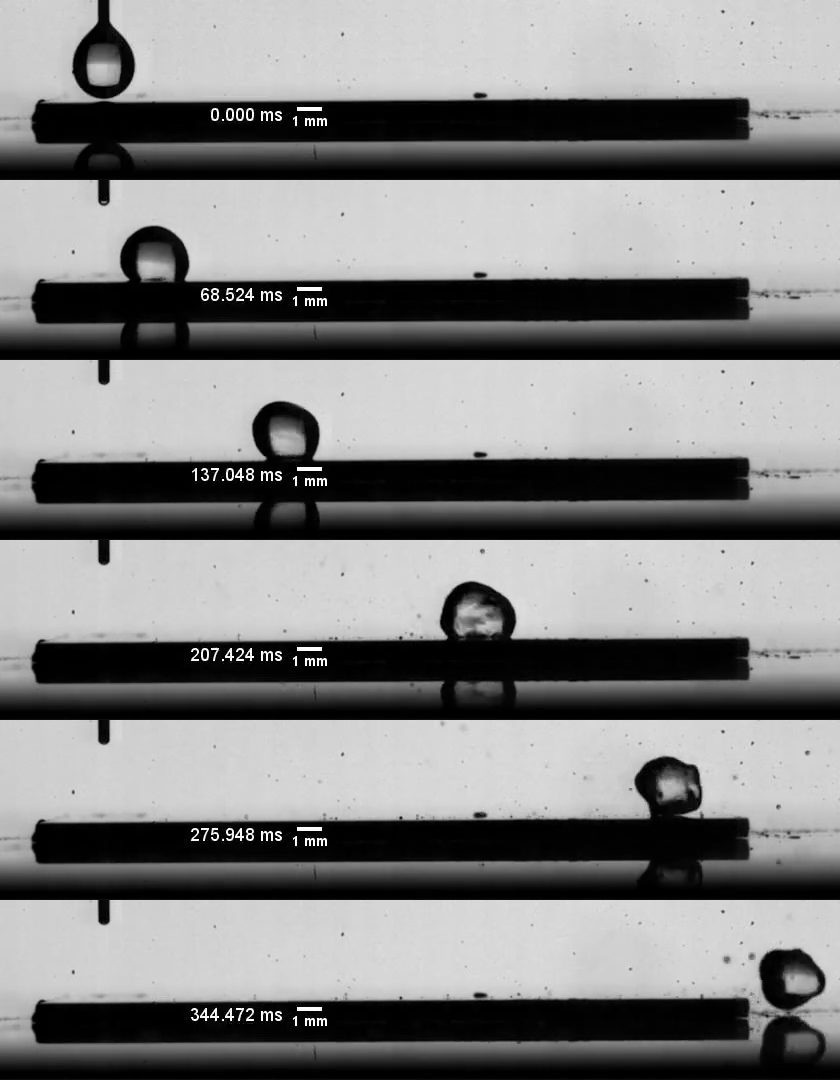
    Springtails are tiny hexapods often found near water, where they execute their superpower: backflipping off the water’s surface. When standing on the water, the springtail’s hydrophilic claws protrude beneath the water surface and give it traction. But its spring-loaded furcula is hydrophobic, so when it snaps down it strikes the water without breaking through. The impact propels the springtail upward and sets it spinning at an incredible rate — Smith saw up to 290 backflips a second! (Image and video credit: Ant Lab/A. Smith)

  • The Variable Venusian Day

    The Variable Venusian Day

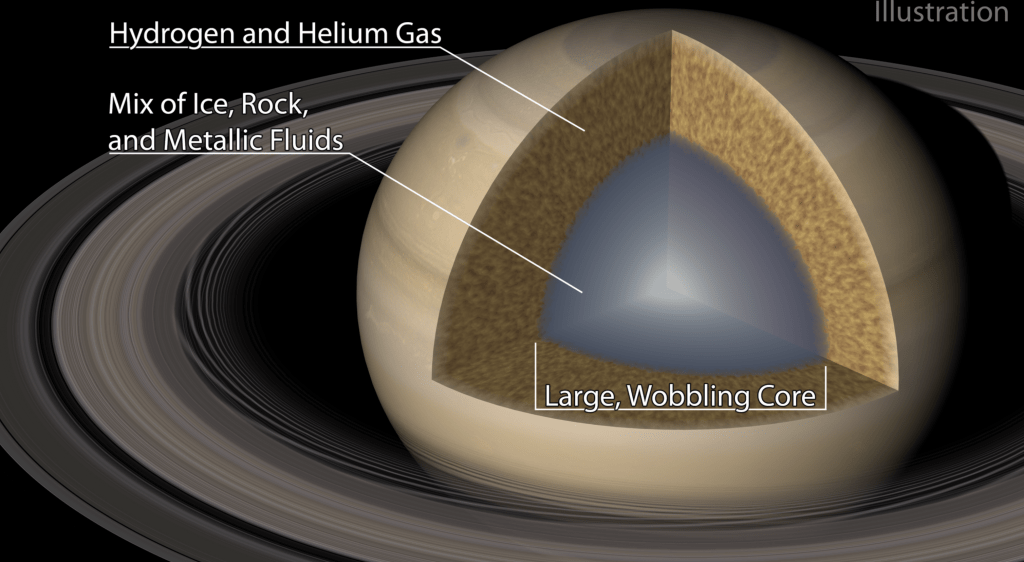
    Venus is a thoroughly unpleasant place thanks to its hellish temperatures and acidic clouds, but a new study adds another wrinkle to our strange sister planet: Venus’s day varies by up to 21 minutes in length. This peculiar factoid is the result of 15 years spent monitoring Venus’s rotation via radar. Previous attempts to pin down the exact length of Venus’s day produced differing answers; those disagreements make more sense in light of the new study, where individuals measurements of Venus’s rotation rate could differ by 3 minutes just from one (Earth) day to the next!

    So why does Venus’s rotation rate change so dramatically? Venus’s atmosphere is massive — 100 times more massive than Earth’s — and it spins incredibly fast. The upper layers of Venus’s atmosphere can complete a rotation in 4 Earth days, while the solid ground requires 243 Earth days. As the atmosphere spins and sloshes, some of its angular momentum gets transferred to the ground, changing the planet’s rotation rate. (Image credit: NASA/JPL-Caltech; research credit: J. Margot et al.; via AGU Eos; submitted by Kam-Yung Soh)

  • Levitating Cylinders by Lubrication

    Levitating Cylinders by Lubrication

    Here’s a surprising example of defying gravity: if you coat a vertical treadmill in oil, a cylinder held next to it will levitate! A new paper delves into the mathematics behind this surprising situation, showing that the key to keeping the cylinder aloft is the pressure that forms where the oil layer splits around the disk. For a given cylinder size and mass, there’s a unique treadmill speed that will levitate it. By experimentally testing a range of cylinder sizes and masses, the authors validated their model and showed a simply scaling argument for predicting the belt speed needed for levitation. (Image and research credit: M. Dalwadi et al.; via Nature; submitted by Kam-Yung Soh)

  • Featured Video Play Icon

    Ferrovolcanism

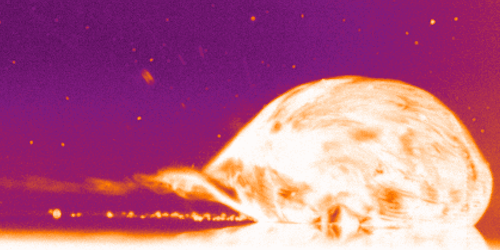
    Beyond Earth, scientists expect to find objects formed by a volcanism much different than what we typically see here. Researchers used Syracuse University’s Lava Project apparatus to simulate ferrovolcanism — in this case with a mixture containing both metallic lava and silicate lava. Interestingly, the team found that the two types of lava flow largely independently of one another. The silicate lava is much more viscous but less dense and flows relatively slowly. The metallic lava is far less viscous and flows about 10 times faster, but it’s also denser, so most of it flows beneath the silicate lava, with only a few fingers that burst out atop the other lava or erupt in braided flows from the leading edge of the flow.

    The upcoming Psyche mission will explore a metal asteroid (of the same name) that’s thought to be the remains of an early planet’s nickel-iron core. Studies like this one are giving planetary physicists new insight into the kinds of geological features await us there. (Video and research credit: A. Soldati et al.; via AGU Eos; submitted by Kam-Yung Soh)

  • Brace For Impact

    Brace For Impact

    What happens in the moment before an object hits the water? That’s the question at the heart of a new study exploring how water deforms before an object’s impact. The researchers dropped circular disks onto a pool of water and, using a new reflection-based technique, measured micron-sized deflections in the water’s surface before impact, as seen below.

    Animation showing the deflection of the water's surface just before a circular disk impacts it.
    Movie of the water surface’s deflection as the circular disk approaches. Look for distortions in the grid pattern.

    The deflections are caused by the air getting squeezed out of the space between the oncoming object and the water surface. The team found that the deformation isn’t uniform. The air squeezing out along the edges moves fast enough to trigger a Kelvin-Helmholtz instability and actually pull up the water surface. So when the disk hits, it impacts along its edges first and traps an air bubble underneath. (Image credits: divers – E. Carter, experiment – U. Jain et al.; research credit and submission: U. Jain et al.)

  • Tiny Symmetric Swimmers

    Tiny Symmetric Swimmers

    Microswimmers live in a world dominated by viscosity, and in viscous fluids, symmetric motion provides no propulsion. That’s why bacteria and other tiny organisms use cilia, corkscrew flagella, and other asymmetric means to swim. But a new study decouples the symmetry of a swimmer’s motion from the motion of the fluid, thereby creating a tiny symmetrically-driven swimmer that does swim.

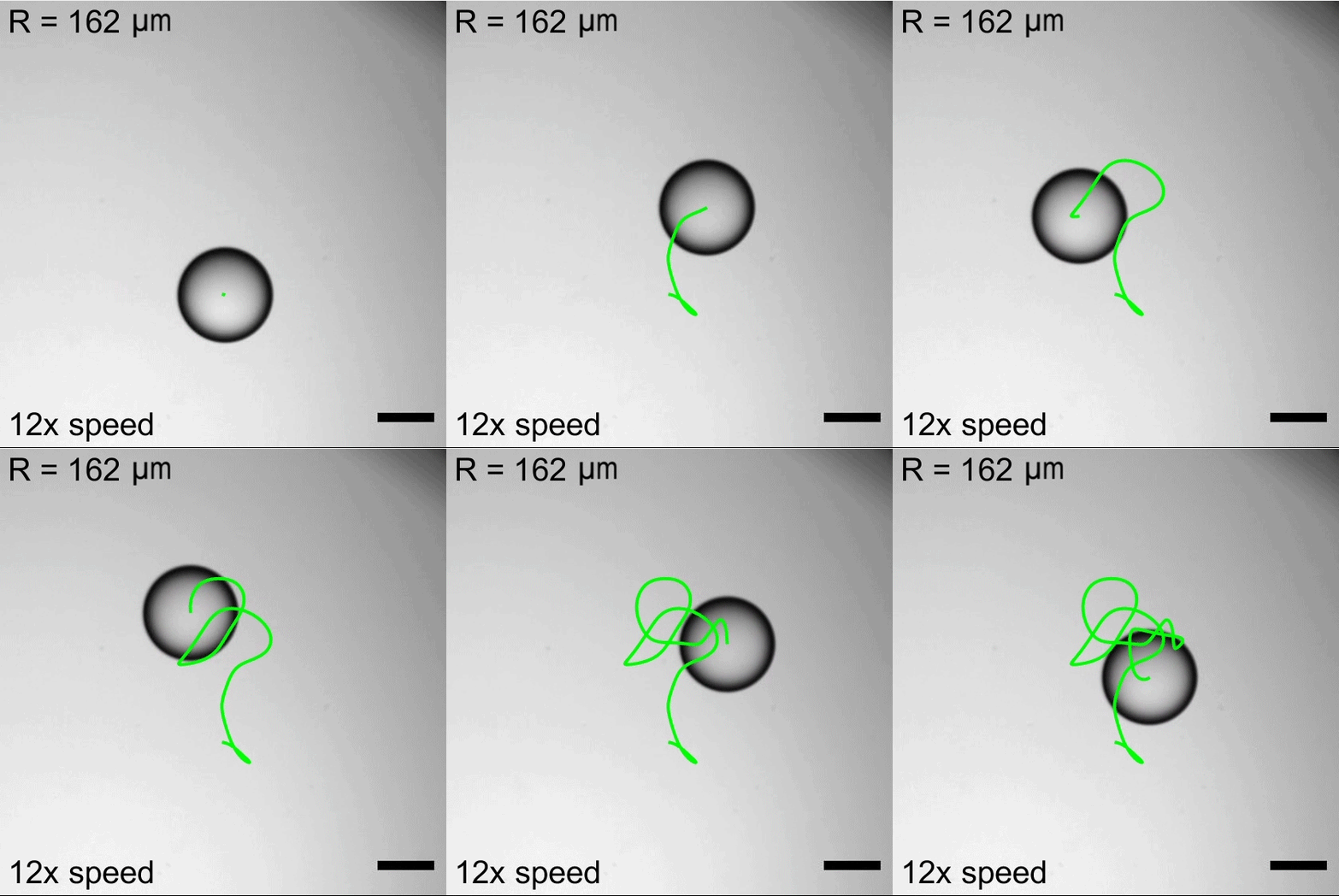
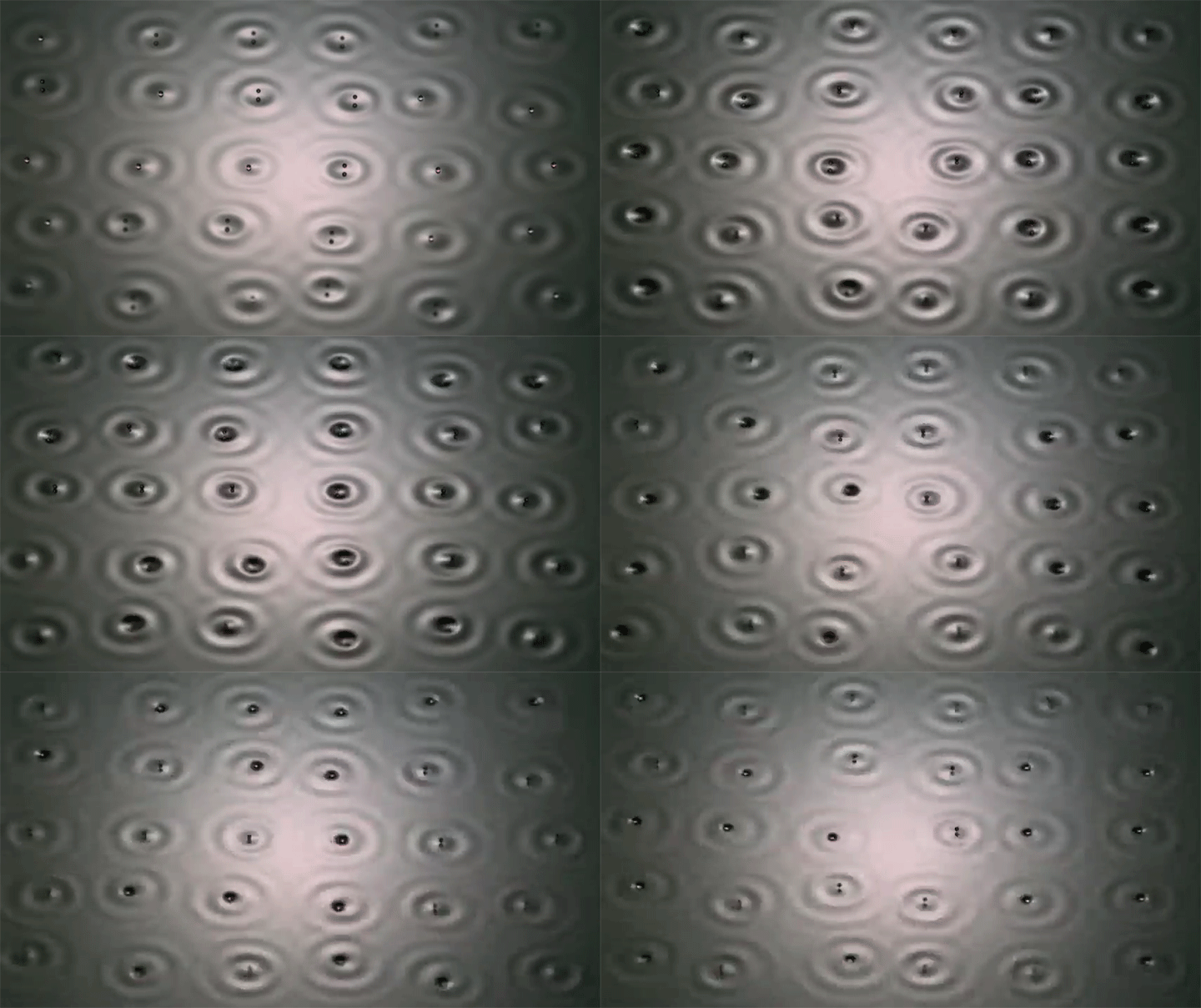
    Their microswimmer consists of two beads, which attract one another via surface tension and are repelled using external magnetic fields. This effectively creates a spring-like connection between the two beads, making them move in and out symmetrically in time. But since one bead is larger than the other, its greater inertia makes it slower to start moving and slower to coast to a stop. This inertial imbalance between the two is significant enough for the beads to swim. The key here is that though the beads’ motion relative to one another is symmetric, their motion relative to the fluid is not! (Image and research credit: M. Hubert et al.; via Science; submitted by Kam-Yung Soh)

  • Skipping Stone Physics

    Skipping Stone Physics

    Skipping stones across water has fascinated humans for millennia, but incredibly, we’re still uncovering the physics of this game today. A recent paper built and experimentally validated a mathematical model of a spinning, skipping disk. The authors found that, in order to skip, a stone needs to generate upward acceleration greater than 3.8 times gravity.

    To get that lift, the stone needs both the Magnus effect and the gyro effect. The Magnus effect is an aerodynamic force generated by an object spinning in a fluid that curves it away from its direction of travel — it’s what curves a corner kick into the goal in a soccer match. The gyro — or gyroscopic — effect also has to do with spinning, but it’s a result of conservation of angular momentum. Essentially, when you try to shift the axis that a rotating object spins around, there’s a force that resists that change. (The classic demo for this uses a spinning bicycle wheel.)

    In stone skipping, the gyro effect helps stabilize the stone’s bounce and, if it’s spinning fast enough, keeps its direction of travel straight. Once the stone’s spinning slows, the Magnus effect can start to curve its trajectory. (Image credit: B. Davies; research credit: J. Tang et al.; via Physics World; submitted by Kam-Yung Soh)

  • Space Hurricanes

    Space Hurricanes

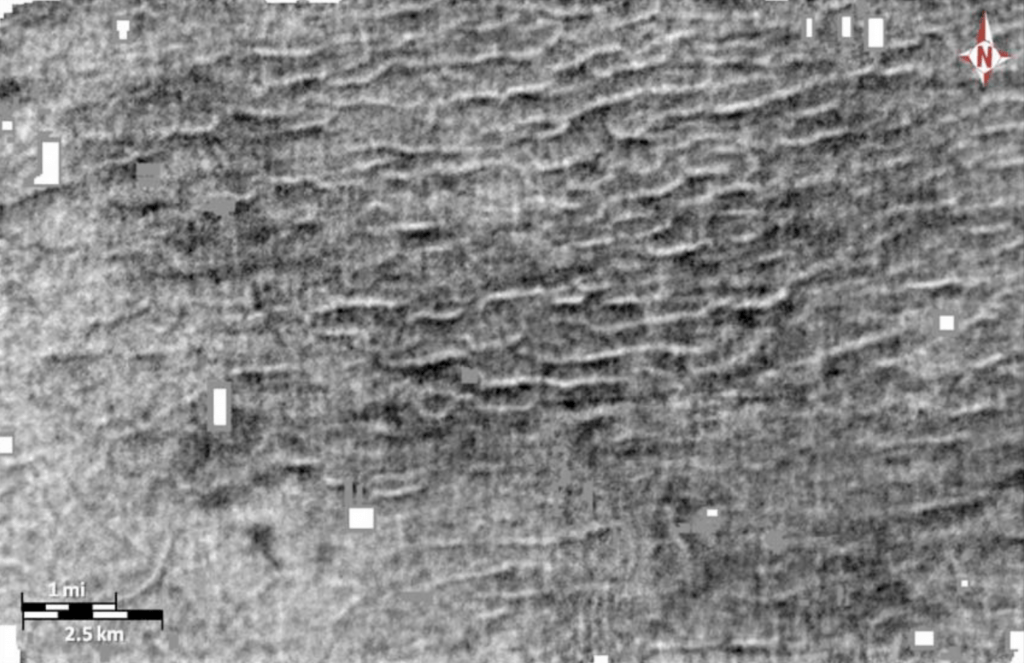
    Researchers have observed their first “space hurricane” – a 1,000-km-wide vortex of plasma – in Earth’s upper atmosphere. Like conventional hurricanes, this storm featured precipitation (of electrons rather than rain), a calm eye at its center, and several spiral arms. Based on the group’s model, interactions between the solar wind and Earth’s magnetic fields drive the storm. Interestingly, the storm they observed occurred during a period of low solar and geomagnetic activity, which suggests that such space hurricanes could be frequent, both on Earth and in the upper atmospheres of other planets. (Image credit: Q. Zhang; research credit: Q. Zhang et al.; via Physics World)

  • Falling Beads

    Falling Beads

    Liquids flowing down a fiber can form bead-like droplets that may sit symmetrically (a) or asymmetrically (b) on the fiber. In general, the asymmetric droplets appear as surface tension increases or as the fiber diameter increases. The pattern of the droplets changes with flow rate. Within each subfigure, the flow rate increases from left to right. At low flow rates, we see only one or two large droplets migrating down the fiber. At moderate flow rates, a regular pattern of drops emerges. And at high flow rates, droplets coalesce on the fiber to form drops large enough that they fall and sweep up the downstream droplets. (Image and research credit: C. Gabbard and J. Bostwick)