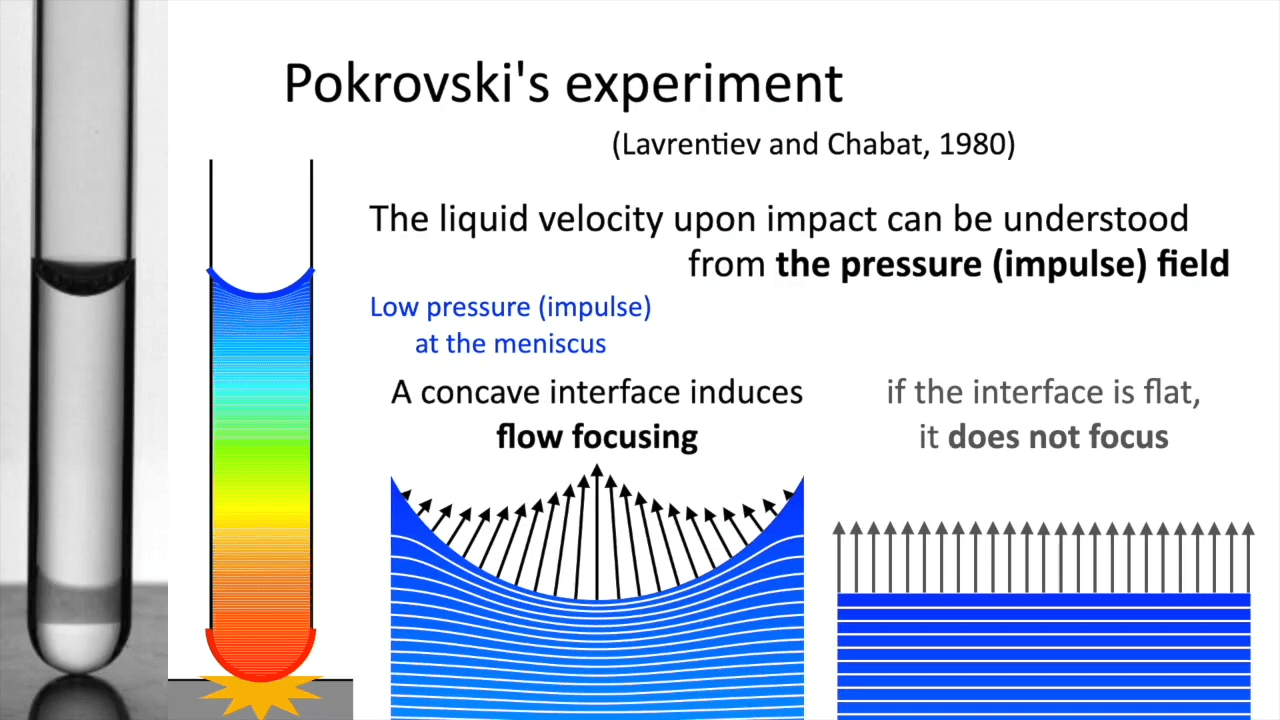
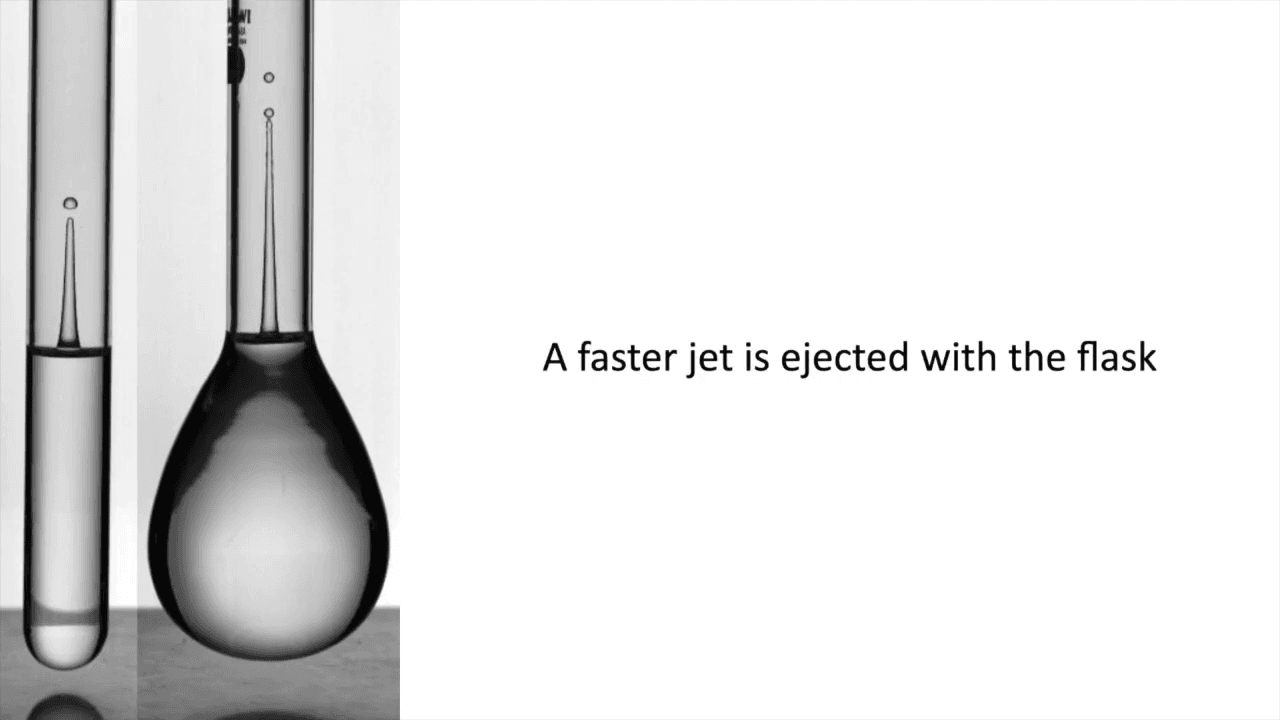
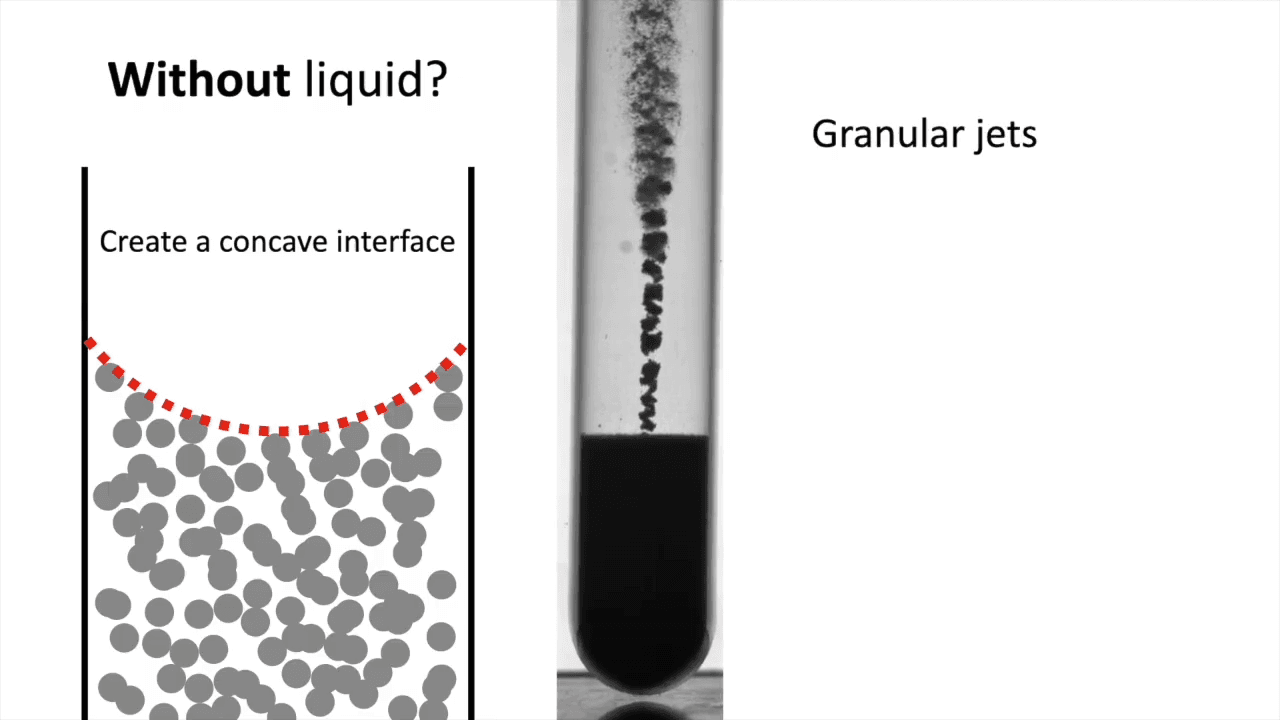
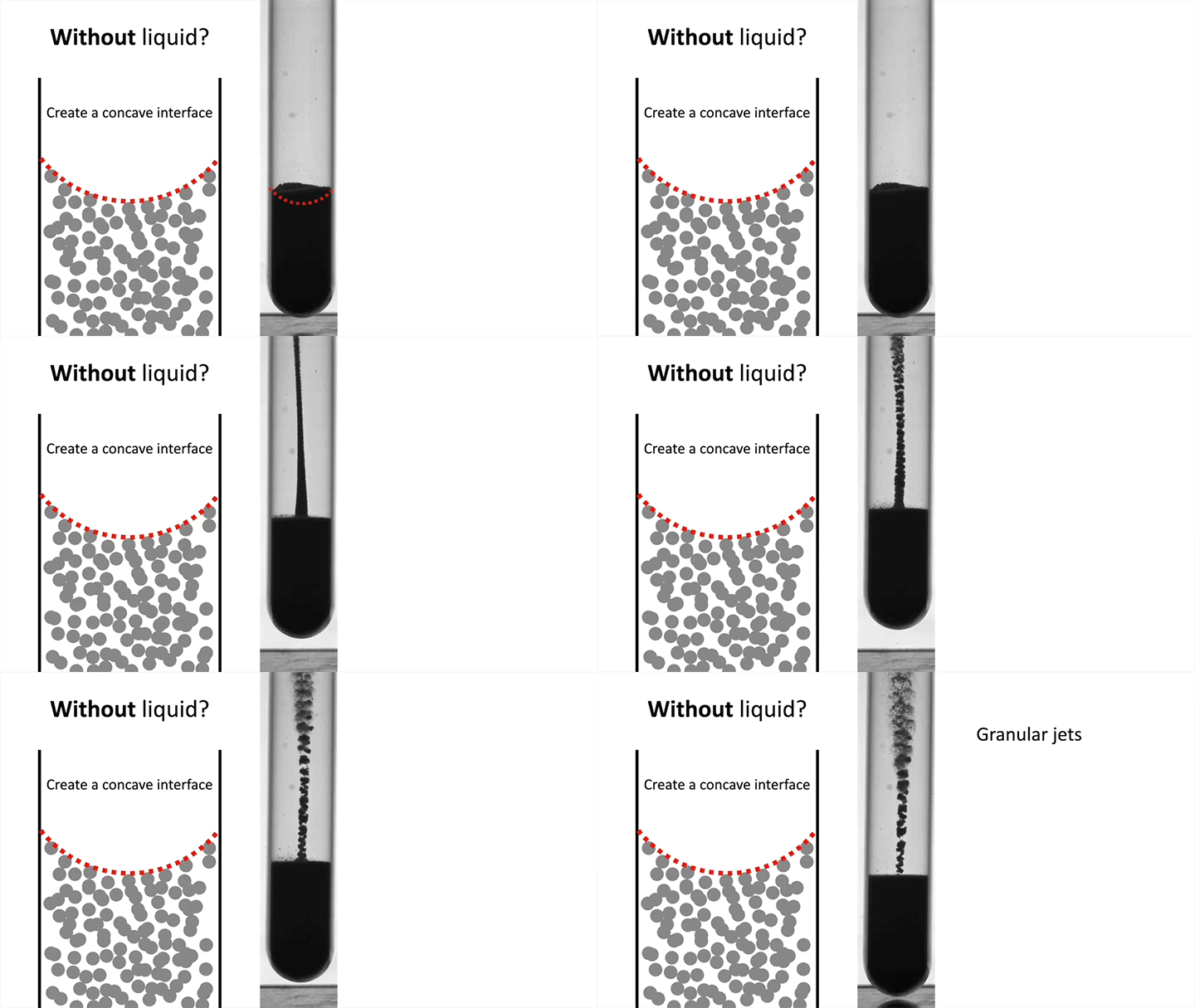
When a test tube of liquid hits a surface, the curvature of the meniscus focuses the rebounding fluid into a jet. In this video, researchers show some of the many variations they’ve explored on these experiments–from changing the depth of the fluid and the shape of the container, to changing the working fluid to honey or to dry grains. It’s a nice introduction to a fascinating phenomenon! (Video and image credit: H. Watanabe et al.; research credit: H. Watanabe et al. and K. Kobayashi et al.)
Animation showing how granular jets form in a test tube impact.
Our ears, like those of many other animals, convert mechanical signals to electrical ones, through a Rube-Goldberg-esque series of transformations. External sound waves make their way down the soft tube of the ear canal, which funnels them to a thin-walled cone, the eardrum, that’s about half as large as a dime. Here, the vibrating air pushes against the cone’s membrane, and those vibrations travel onward through a linked trio of small bones that amplify the vibration’s amplitude.
The last of these bones presses against an even smaller, oval-shaped membrane. As the bone moves, it shakes the membrane, sending waves through the liquid on its other side. Those waves travel down the spirals of the tiny, pea-sized cochlea, named for a snail shell’s shape. As the waves move through the liquid, they bend bundles of hair-like strands back and forth, like tall grass waving in a breeze. The bending triggers a chemical that binds to nerves at the base of the bundles, sending an electrical signal through the nerve and into the brain.
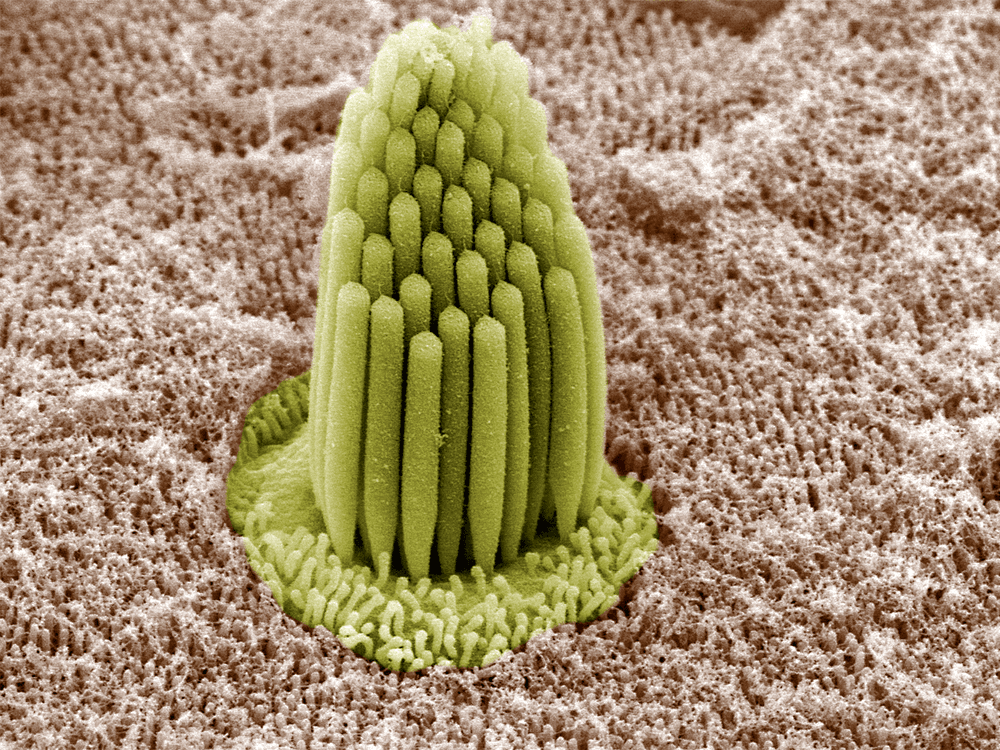
But the hair-like bundles, known as stereocilia, are also able to amplify incoming vibrations. In this case, the bundles in the outer portion of the cochlea expend energy to bend more than the incoming vibrations naturally make them move. This bending amplifies the fluid motion that gets transmitted to stereocilia further down the line; it’s those bundles that will make the final conversion to an electrical signal the brain receives. (Image credit: B. Kachar; research credit: Y. Thipmaungprom et al.; via APS)
Scanning electron microscope view of the stereocilia “hair bundles” inside a frog’s inner ear.
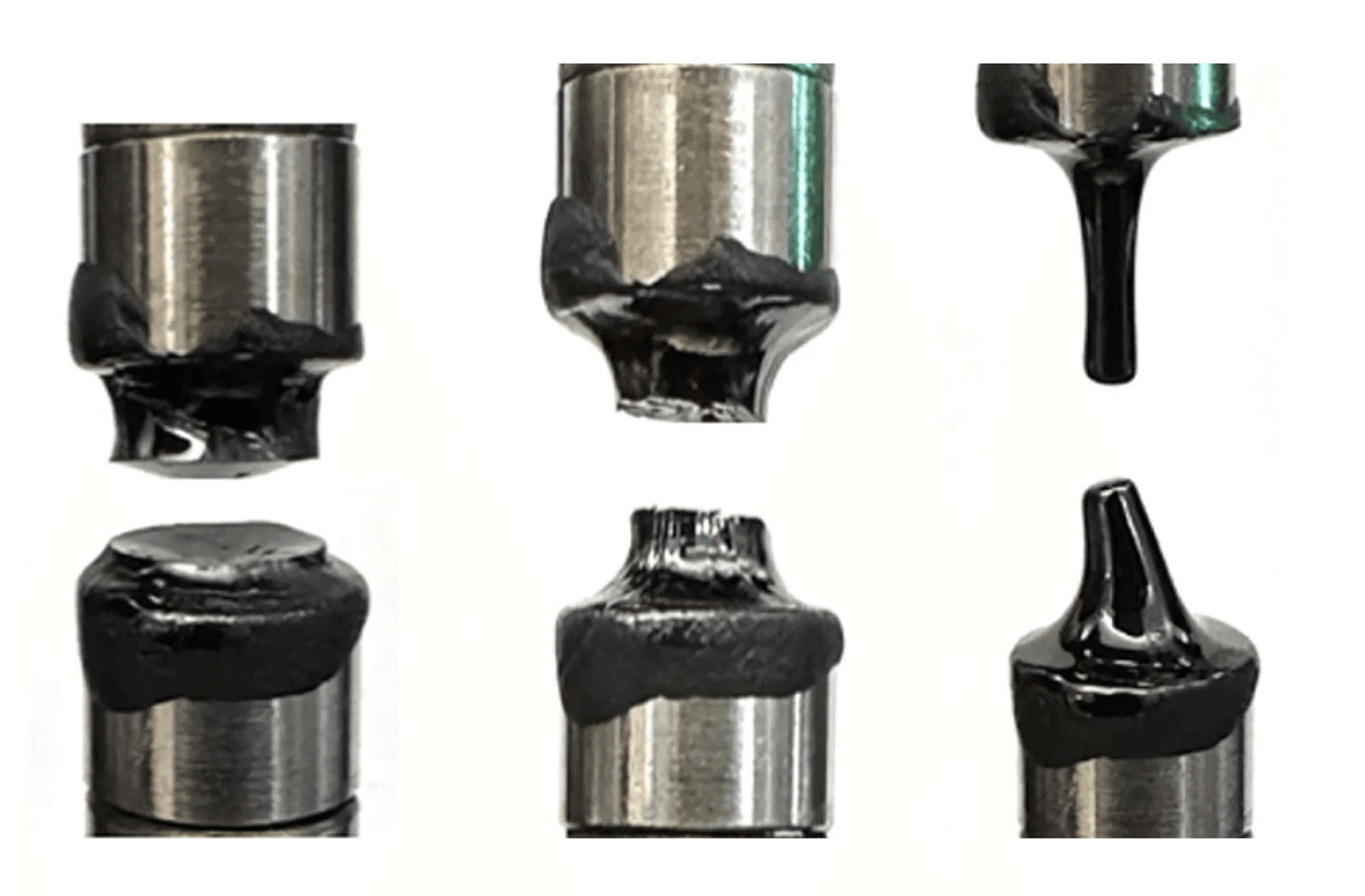
Fracture is a sudden, brittle breaking-apart that we generally associate with solid materials that get stressed too far. Some viscoelastic, non-Newtonian fluids have been known to fracture, but that was generally thought to be unusual. But a recent study turns that idea on its head, revealing that even simple, albeit highly viscous, liquids can fracture.
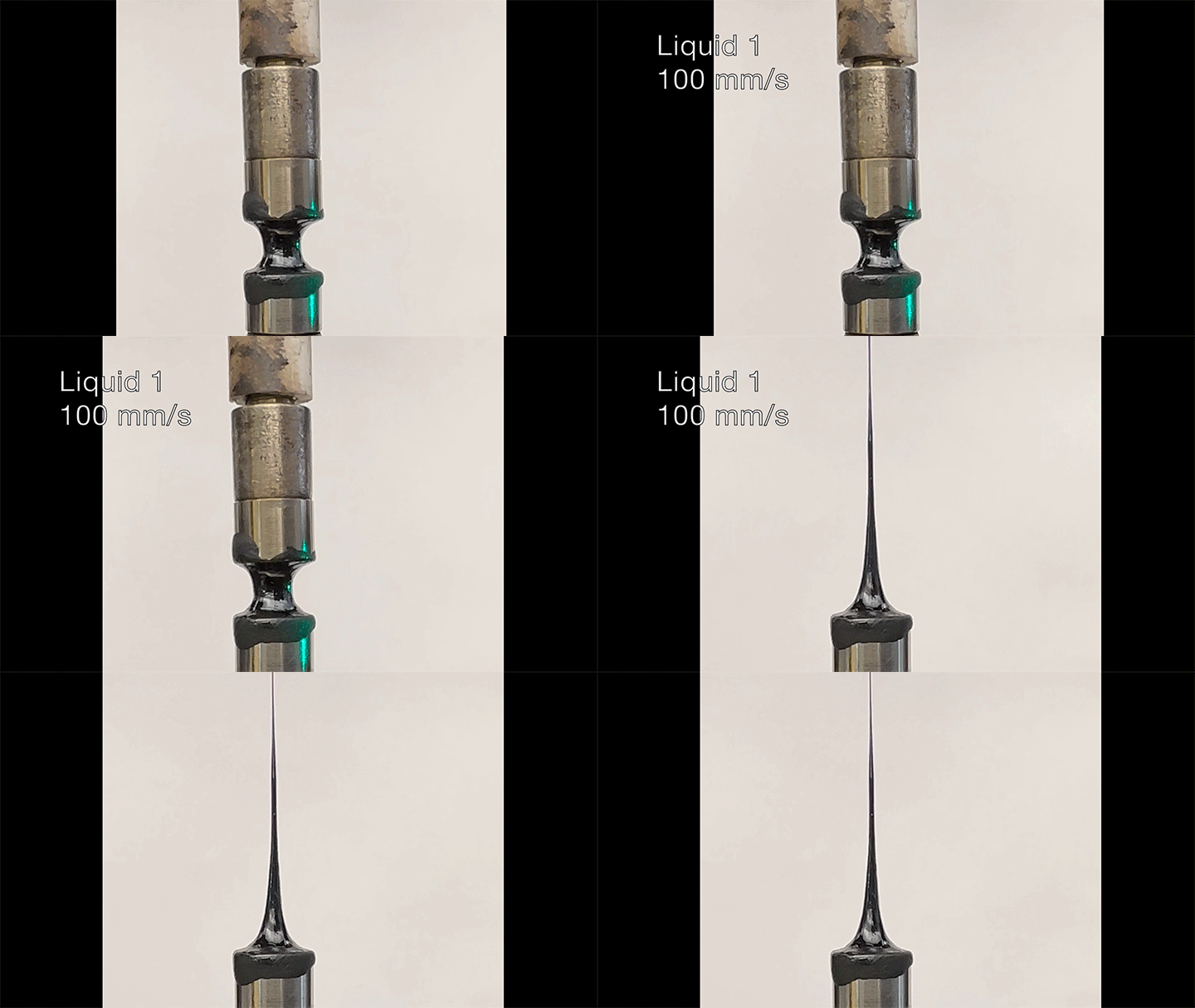
A viscous hydrocarbon fluid gets stretched at 100 mm/s, drawing it into a thinning shape.
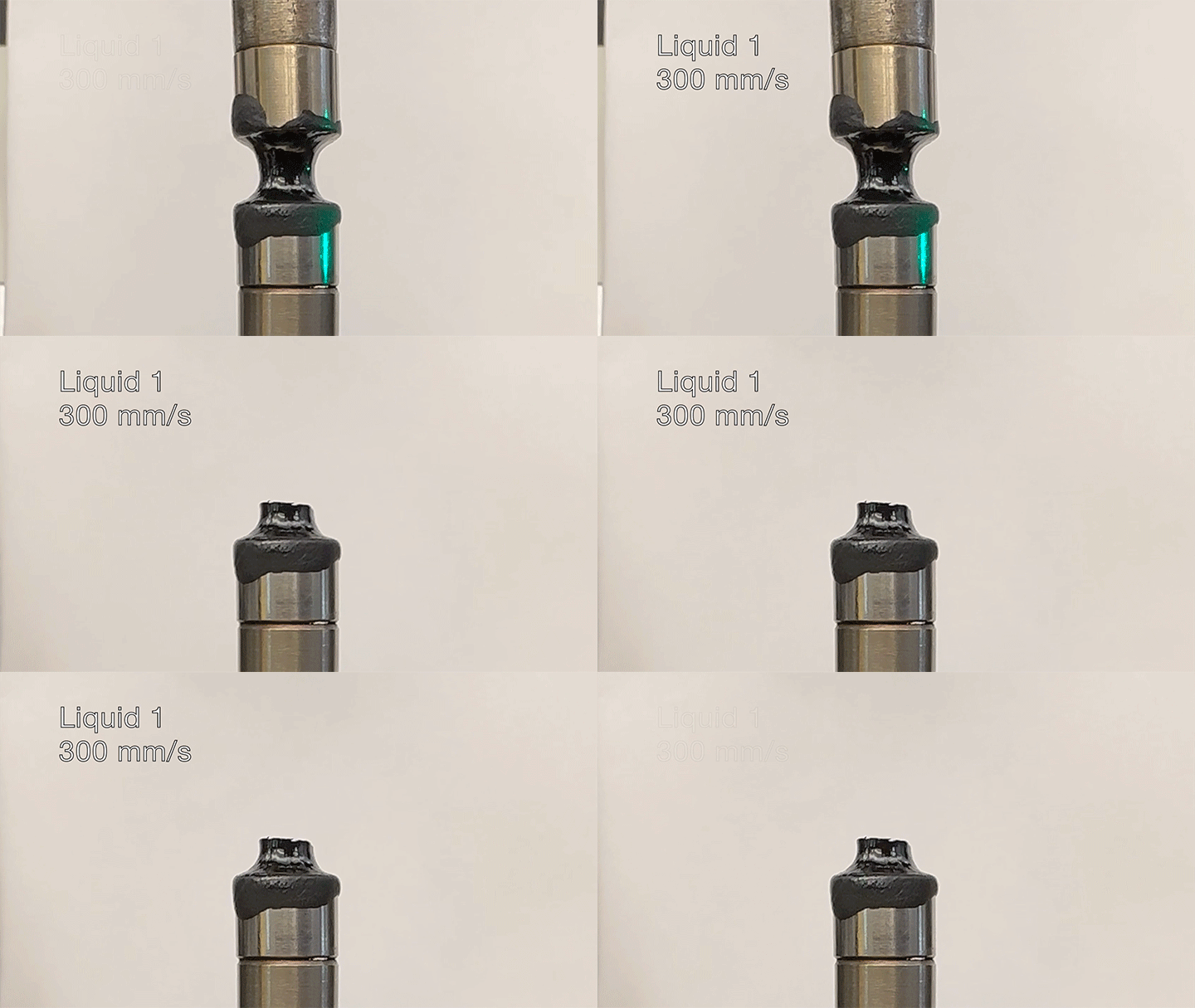
When you stretch a liquid, the general expectation is what you see above: the liquid gets drawn into an ever thinner shape. But researchers found that–when stretched quickly–that same simple hydrocarbon liquid cracked open:
A viscous hydrocarbon fluid gets stretched at 300 mm/s, causing it to fracture like a solid.
There’s even an audible snap, which you can hear in the video below. The results were so surprising that they repeated the experiment several times and with different viscous (but Newtonian) liquids. The results held. When the liquids were pulled to a critical stress, they audibly snapped and fractured like a solid.
The next question, of course, is why this happens. The authors suspect (but have yet to show) that cavitation may be at play in the initiation of the crack that separates the liquid in two. (Image, video, and research credit: T. Lima et al.; via Gizmodo)
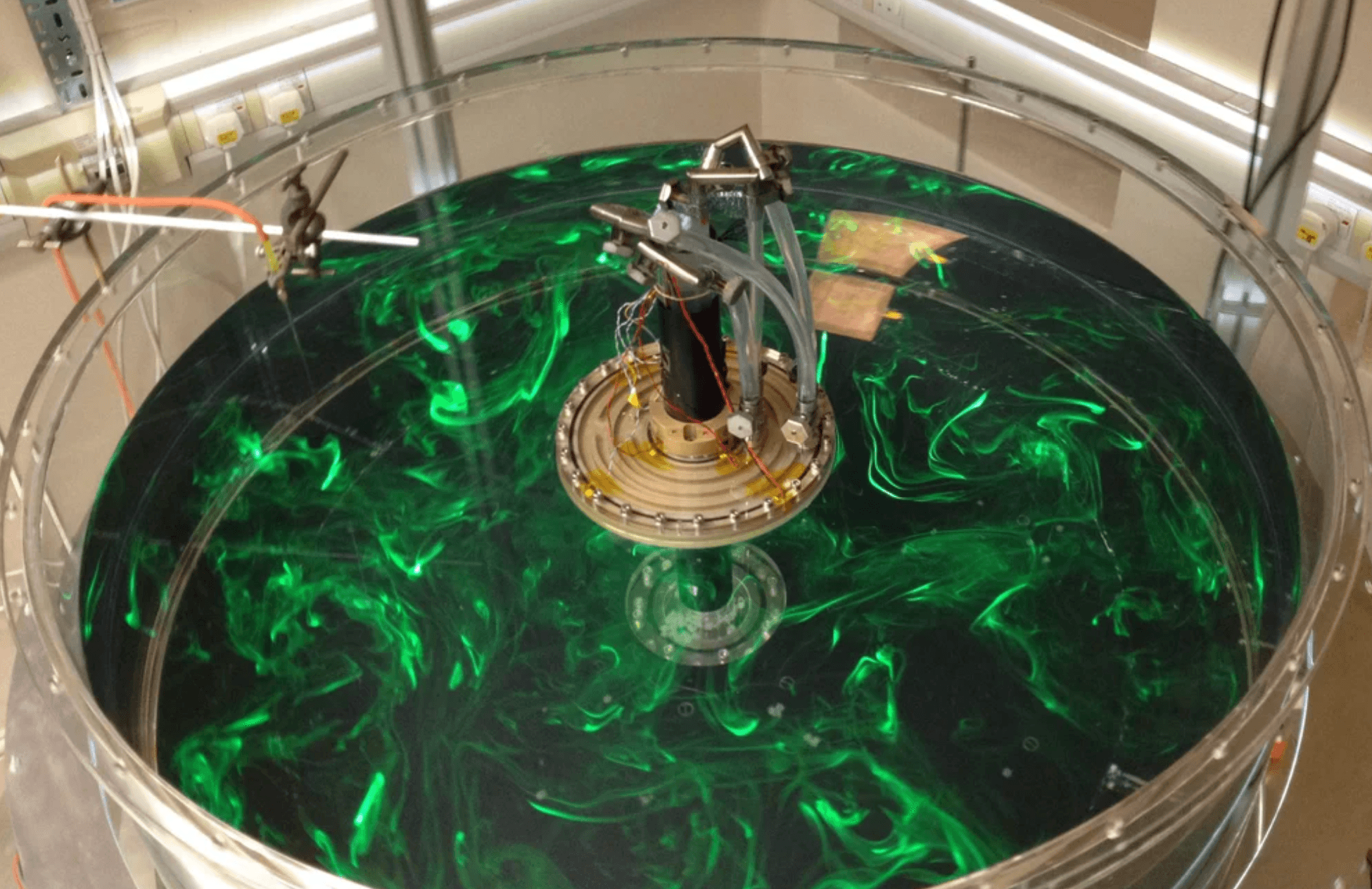
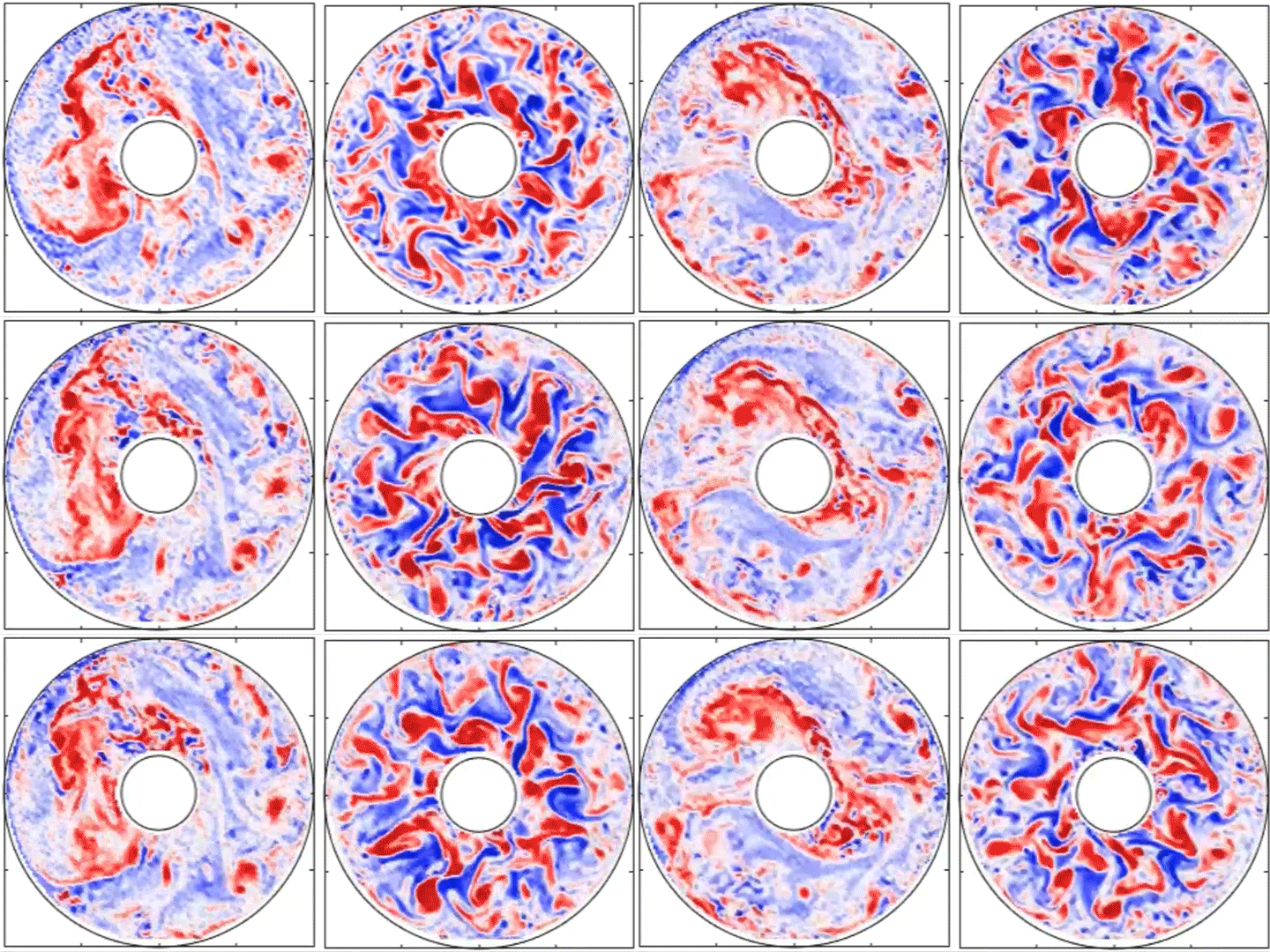
In planetary atmospheres, energy and vorticity can cascade from large scales to smaller ones, but the mechanics of this transfer remain somewhat elusive. In a recent experiment, researchers built a lab-scale representation of an atmosphere using a meter-scale rotating annular tank. The outer bottom edge of the tank gets heated–representing the sun’s warming at the equator–while a pipe in the center of the tank gets cooled near the tank surface, which mimics the chilling effect of the poles. Researchers filled the tank with a water-glycerol mixture and recorded how their artificial atmosphere responded at different rotation rates.
Two different rotating atmospheres, colored by vorticity (red clockwise, blue counterclockwise). The left version has a slower rate of rotation, and thus larger length scales.
The results show an energy spectrum that’s consistent with atmospheric observations–with a steep drop at large length scales and a flatter one at smaller scales. But interestingly, they also found that the cascade was temperature-dependent in ways that current models don’t predict. Untangling that effect could help us understand not only our atmosphere but those of other planets. (Image credit: tank – H. Scolan, animation – S. Ding et al.; research credit: S. Ding et al.; via APS)
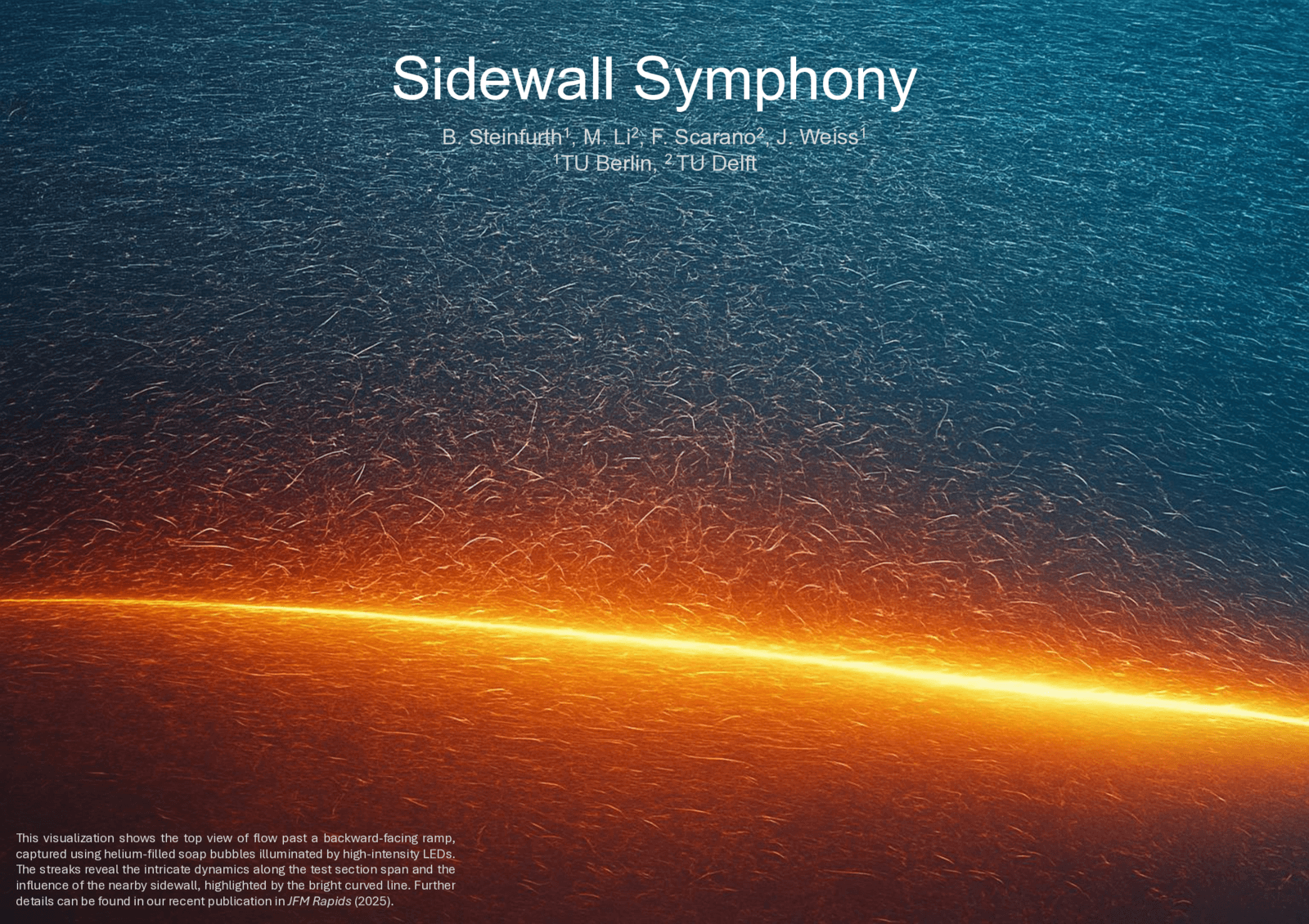
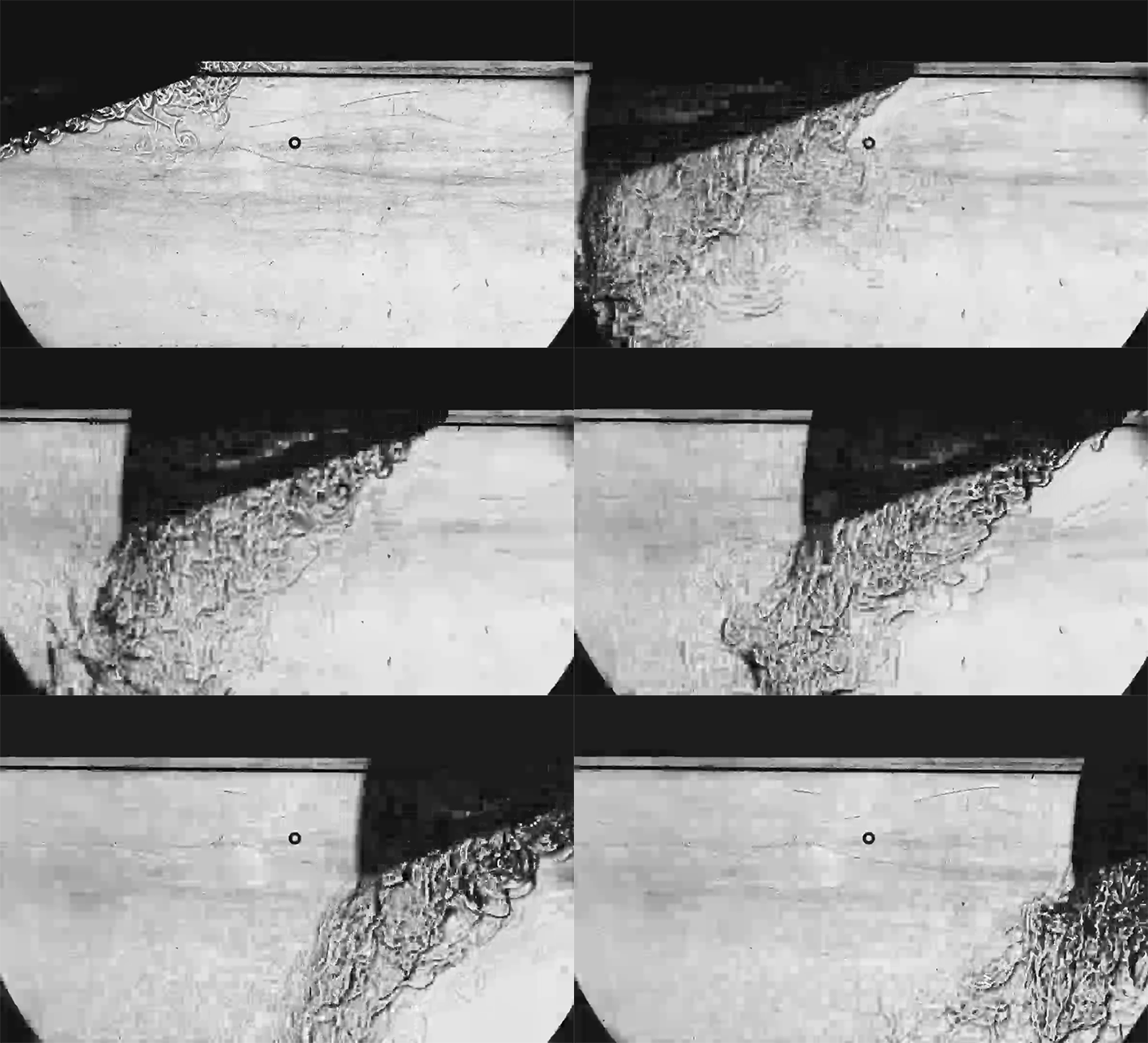
Flow visualization is both an art and science in fluid dynamics. Here, researchers were interested in studying the separation bubble that forms over a backward-facing ramp–a shape that shows up, for example, on an aircraft. In these areas, the flow over the surface separates, leaving an unsteady, recirculating bubble.
That’s the flow that researchers are visualizing here. They’ve done so by adding tiny helium-filled soap bubbles to the flow. With bright lights illuminating the bubbles, each one leaves a streak in a photograph, showing where the bubble moved during the time the camera’s shutter was open. Although images like these are beautiful, they can also be analyzed by computers to extract the underlying flow that created the image. (Image and research credit: B. Steinfurth et al.; see also here)
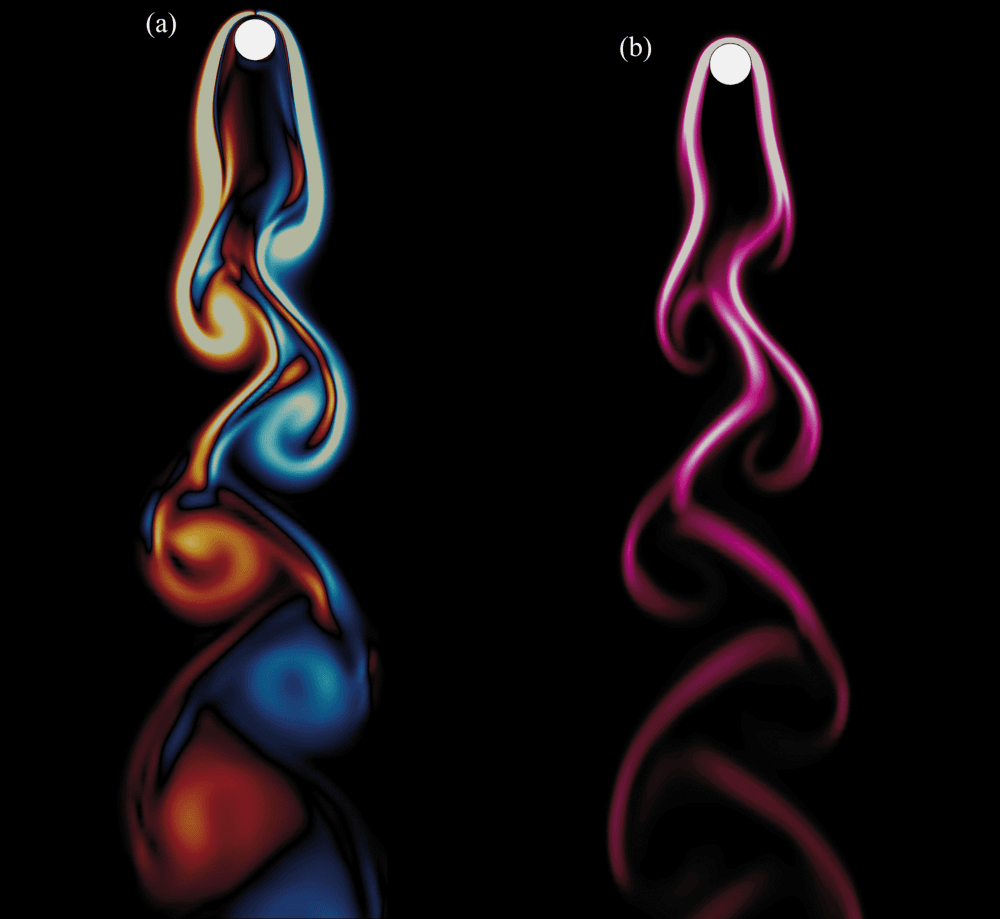
When flow moves past a cylinder, vortices get shed in its wake. Known as a von Karman vortex street, this distinctive pattern is seen behind flags, islands, and even behind starships. Here, researchers are simulating flow of a viscoelastic fluid, where–unlike water or other Newtonian fluids–elastic stresses can build up.
As the flow hits the leading edge of the cylinder, the polymers in the fluid compress and then get stretched as the flow moves around the cylinder. The left image shows vorticity in the flow; the right shows elastic stresses. The large swirls are primary vortices–those shed off the cylinder. But look closely and you’ll see smaller secondary vortices curled up beside the primaries. These form when the elastic stresses in the fluid pull some of the shear layer into the wake. (Image and research credit: U. Patel et al.)
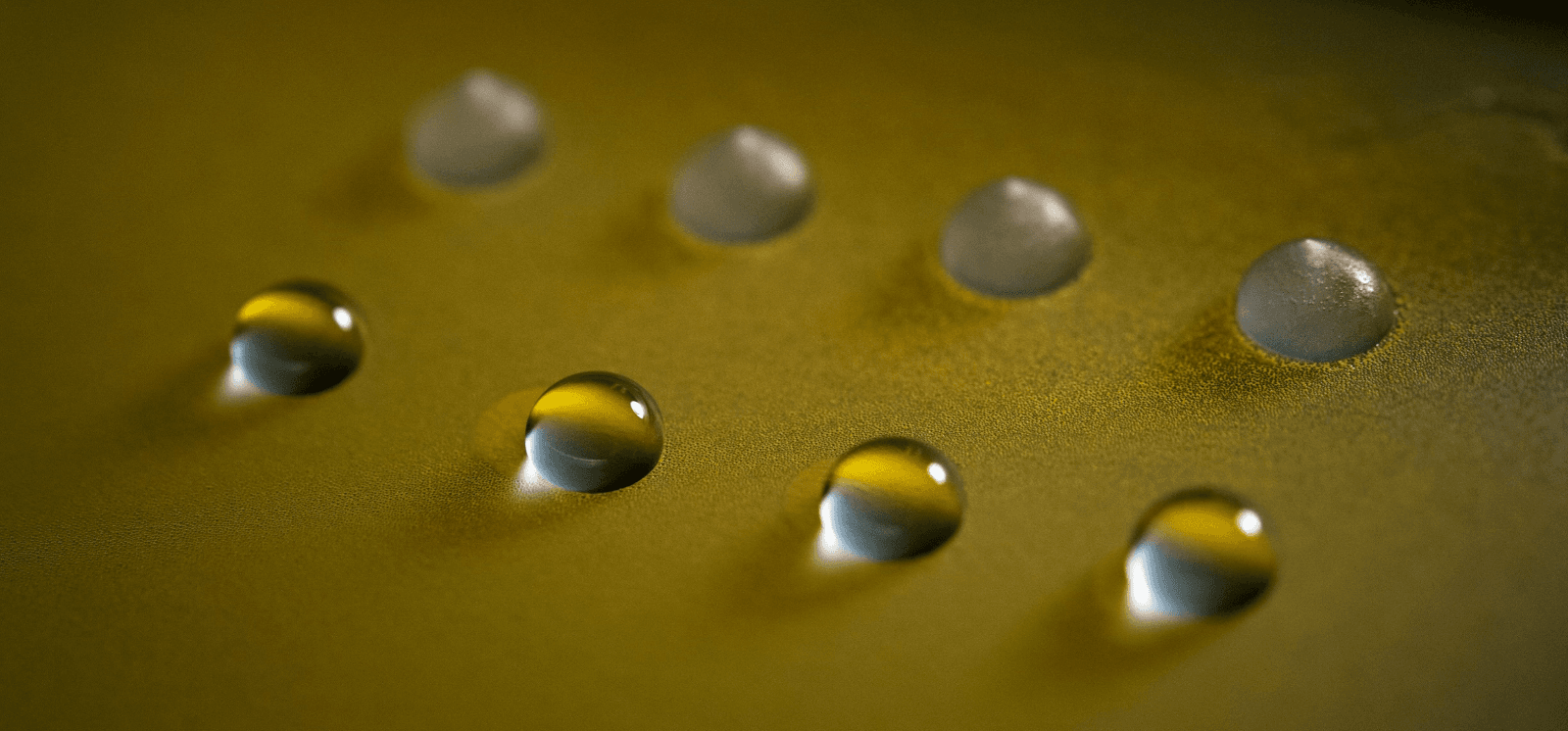
Although water can freeze below 0 degrees Celsius, it requires a little help–in the form of a nucleation site–to do so. Often temperatures must dip well below 0 degrees Celsius for droplets to become ice. But a new study shows that at least one fungus forms proteins that help the process along.
The proteins come from the Mortierellaceae fungal family, by way of a bacterial species some hundreds of thousands of years ago or more. In experiments, adding the fungal protein helped water freeze 10 or more degrees Celsius sooner than it otherwise would.
The authors note that there are many possible applications for this freezing additive; it could help preserve food or cells without requiring lower freezing temperatures that could damage delicate tissues. It could also serve as a cloud seeding chemical in place of toxic silver iodide particles. (Image and research credit: R. Eufemio et al.; via Gizmodo; see also V. Tech)
Icebergs have long served as a metaphor for not knowing what’s going on beneath the surface. Studies like today’s are a reminder of why that is. Researchers found that asymmetric icebergs–shaped, in this case, like a right triangular prism–can self-propel as they melt. Their shape forces cold, dense meltwater to slide down the surface, generating a sinking plume that propels the ice as a whole. The team demonstrated this effect in both fresh- and saltwater. For icebergs wandering into warm waters, the effect is particularly strong and may reach levels about 10% of the magnitude of dominant propulsive forces like wind. (Image and research credit: M. Berhanu et al.; via APS)
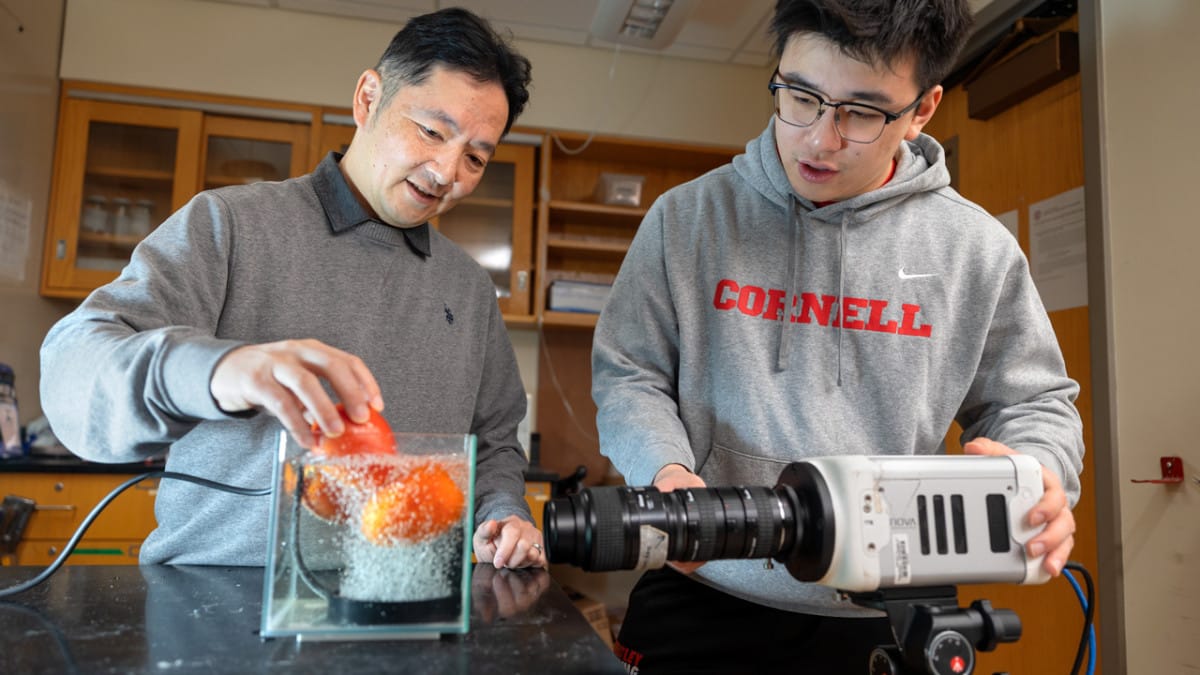
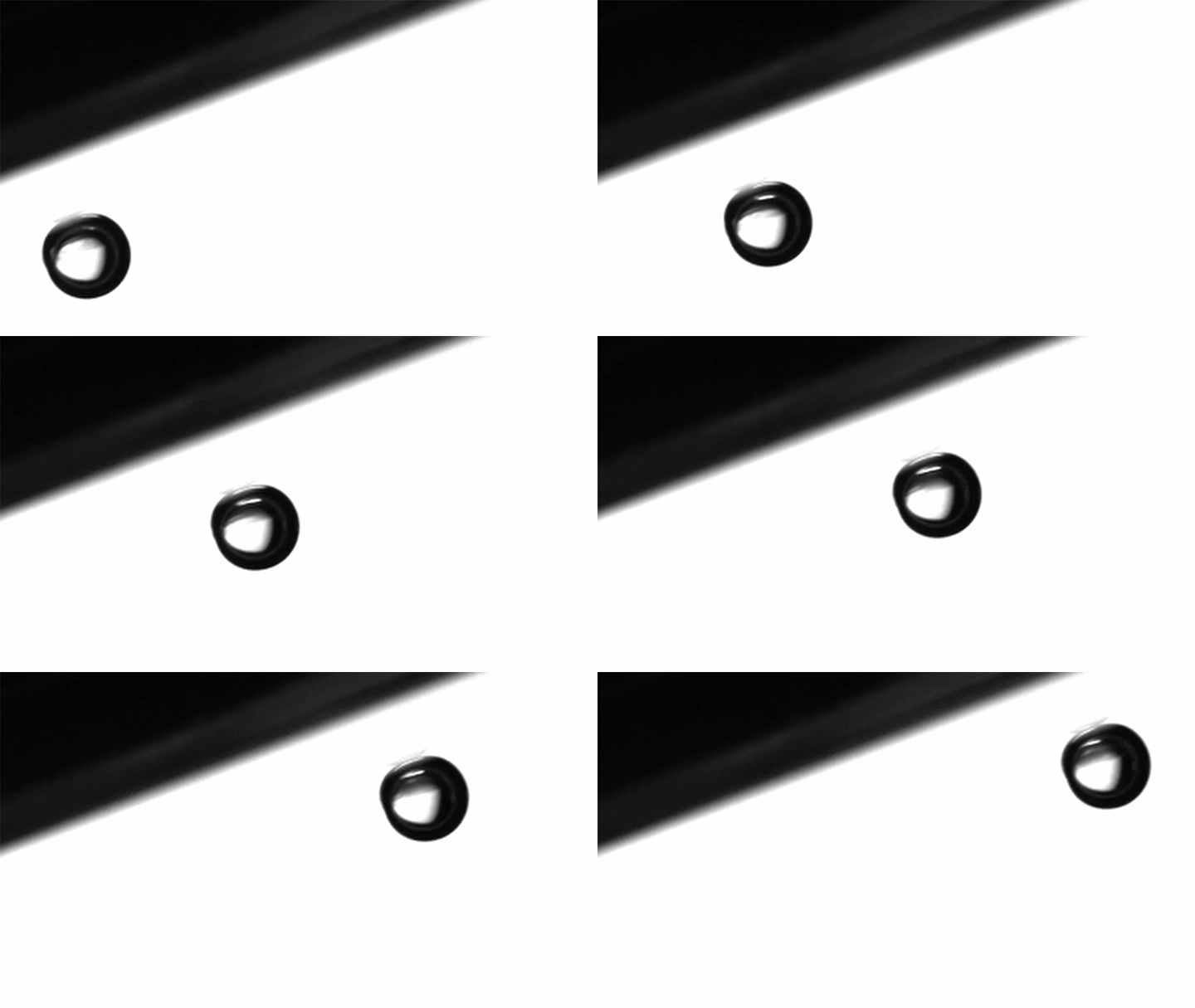
Cleaning produce helps fruits and vegetables last longer and reduces the chances for foodborne illness. But it can be a difficult feat with soft, delicate foods like tomatoes, berries, or greens. Current methods often combine ultrasonic cleaning and chemicals like chlorine. Instead, researchers are looking to boost the cleaning power of bubbles themselves by giving them an acoustic pick-me-up.
Stop-and-go. A bubble slides along an inclined surface in a pronounced stop-and-go motion when vibrated near its frequency for translational resonance.
The team combined a bubble-filled bath with sound at low (sub-cavitation) frequencies. They found that driving sound waves at the right frequency could vibrate the bubbles in a way that made them slide in a stop-and-go motion along inclined surfaces. This swaying significantly boosted their cleaning power; getting surfaces 90% cleaner than non-resonating bubbles did. (Image credit: S. Hok/Cornell University; video and research credit: Y. Lin et al.; via Gizmodo)
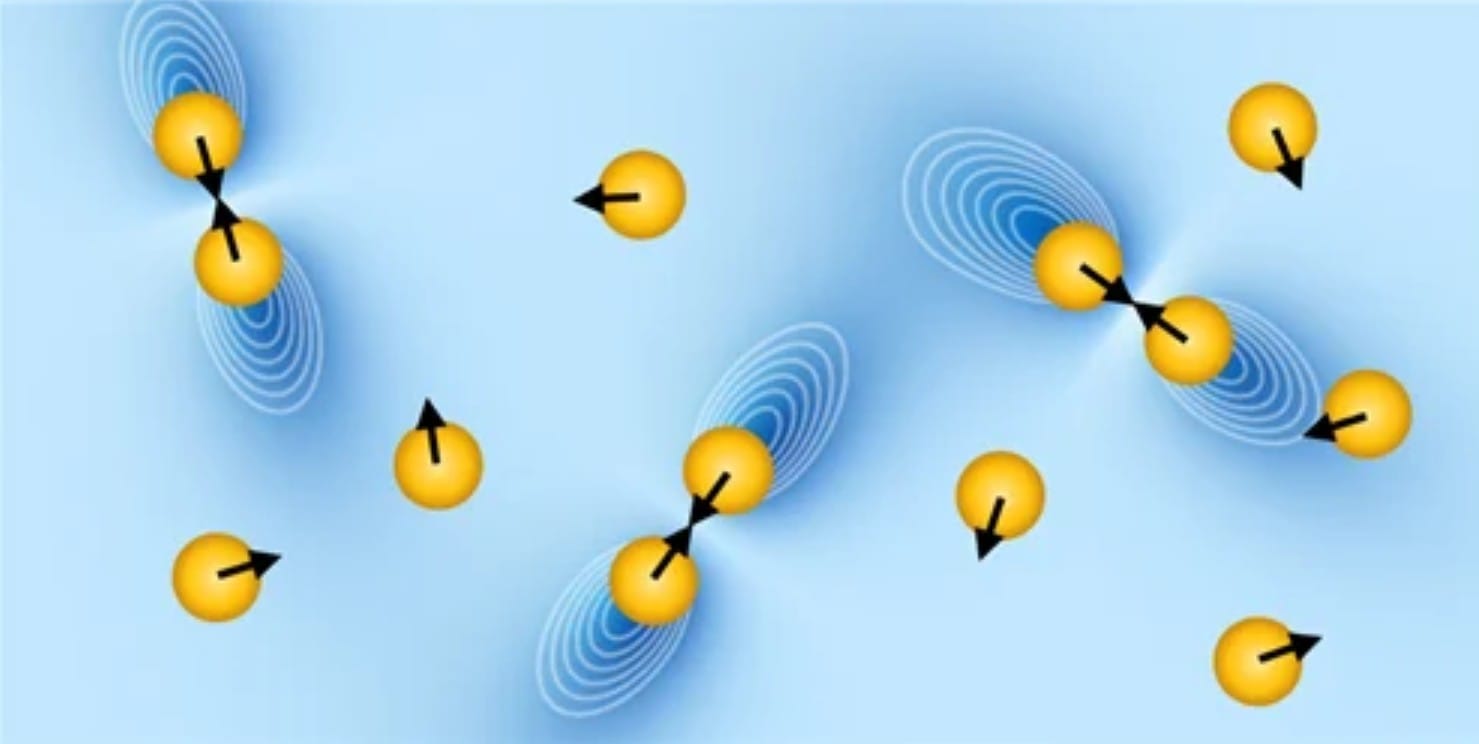
The field of active matter looks at the collective motion of particles and organisms–how birds flock and fish school. In systems of “dry” squirmers–those that have no hydrodynamic interactions with one another–clumps of squirmers can form with empty spaces in between them. This is known as motility-induced phase separation, or MIPS. Researchers wondered whether microswimmers in a fluid–which do produce hydrodynamic forces that can affect one another–would also show MIPS.
In a new study, researchers show, instead, that hydrodynamic interactions between swimmers will prevent (or destroy) these clumps. Through a combination of theoretical work and simulation, the authors found that translational flows between swimmers swept the swimmers out of clumps as they formed. Rotational flows between swimmers made them able to change direction faster, which also kept stable clumps from forming. (Image and research credit: T. Zhou and J. Brady; via APS)
Hydrodynamic interactions destroy clumps of microswimmers. This simulation shows microswimmers that are initially in a clumped formation before hydrodynamic interactions are “turned on”. Once the swimmers can affect one another through the flows their motion creates, the clumps quickly break apart.