Category: Research

  • Flipping Icebergs

    Flipping Icebergs

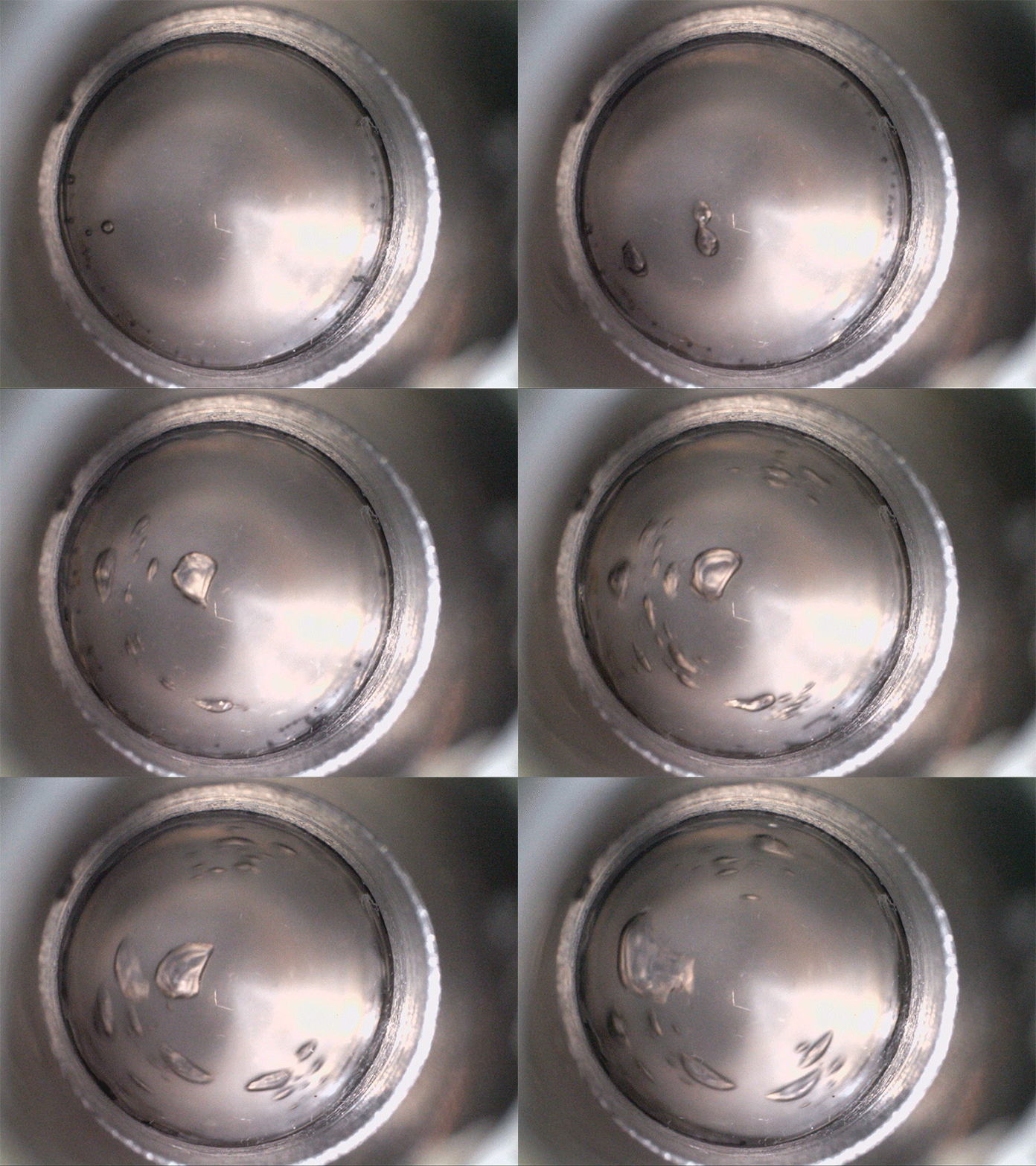
    When an iceberg flips, it creates waves that can endanger ships nearby, but the move can also trigger further melting. In the ocean, many factors, including wind and waves, can contribute to an iceberg flipping, so researchers studied small, lab-scale versions to see how melting–alone–affects an iceberg’s likelihood of flipping.

    The results showed that melting alone was enough to destabilize icebergs and make them flip, as seen in the timelapse above. These mini-icebergs melted faster underwater, changing the berg’s overall shape and eventually triggering a flip. Corners developed at the waterline where the different melt rates above- and below-the-water met. Whenever a flip occurred, one of these corners would always settle at the new water line, causing the lab iceberg to change from a circular cylinder to a polygon as melting continued. (Image credit: M. Whiston; research and video credit: B. Johnson et al.; via APS)

    Fediverse Reactions
  • Striations on the Sun

    Striations on the Sun

    One of the perpetual challenges for fluid dynamicists is the large range of scales we often have to consider. For something like a cloud, that means tracking not only the kilometer-size scale of the cloud, but the large eddies that are about 100 meters across and smaller ones all the way down to the scale of millimeters. In turbulent flows, all of these scales matter. That problem is even harder for something like the Sun, where the sizes range from hundreds of thousands of kilometers down to only a few kilometers.

    It’s those fine-scale features that we see captured here. This colorized image shows light and dark striations on solar granules. Scientists estimate that each one is between 20 and 50 kilometers wide. They’re reflections of the small-scale structure of the Sun’s magnetic field as it shapes the star’s hot, conductive plasma. (Image credit: NSF/NSO/AURA; research credit: D. Kuridze et al.; via Gizmodo)

    Fediverse Reactions
  • Dusty Clouds Make More Ice

    Dusty Clouds Make More Ice

    Even when colder than its freezing point, water droplets have trouble freezing–unless there’s an impurity like dust that they can cling to. It’s been long understood in the lab that adding dust allows water to freeze at warmer temperatures, but proving that at atmospheric scales has been harder. But a new analysis of decades’ worth of satellite imagery has done just that. The team showed that a tenfold increase in dust doubled the likelihood of cloud tops freezing.

    Since ice-topped clouds reflect sunlight and trap heat differently than water-topped ones, this connection between dust and icy clouds has important climate implications. (Image and research credit: D. Villanueva et al.; via Eos)

    Fediverse Reactions
  • Biodegradable PIV Particles

    Biodegradable PIV Particles

    Particle image velocimetry–PIV, for short–is used to visualize fluid flows. The technique introduces small, neutrally-buoyant particles into the flow and illuminates them with laser light. By comparing images of the illuminated particles, computer algorithms can work out the velocity (and other variables) of a flow. Typical methods use hollow glass spheres or polystyrene beads as the particles that follow the flow, but these options have many downsides. They’re expensive–as much as $200/pound–and they can potentially harm test subjects, like animals whose swimming researchers are studying. Instead, researchers are now looking at biodegradable options for PIV particles.

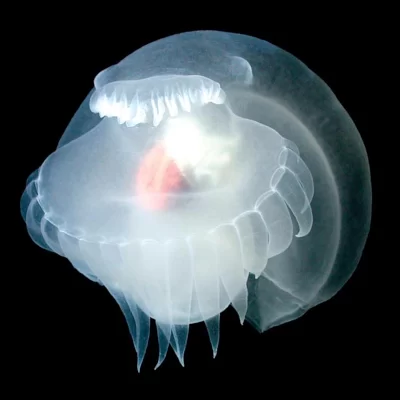
    One study found that corn and arrowroot starches were good candidates, at least for applications using artificial seawater. The powders were close to neutrally-buoyant, had uniform particle sizes, and accurately captured the flow around an airfoil, live brine shrimp, and free-swimming moon jellyfish. (Image credit: M. Kovalets; research credit: Y. Su et al.; via Ars Technica)

    Fediverse Reactions
  • Compressing Jupiter’s Magnetosphere

    Compressing Jupiter’s Magnetosphere

    Shaped by its strong internal magnetic field and the incoming solar wind, Jupiter has the largest magnetosphere in the solar system. It also has highly active aurorae at its poles, though they are most visible in ultraviolet wavelengths. A new analysis of Juno’s data shows that on 6-7 December 2022, Jupiter’s magnetosphere got compressed, coinciding with aurorae six times brighter than usual. The compression itself came from a shock wave in the incoming solar wind. (Image credit: NASA/JPL; research credit: R. Giles et al.; via Eos)

    Fediverse Reactions
  • Aboard a Hurricane Hunter

    Aboard a Hurricane Hunter

    For decades, NOAA has relied on two WP-3D Orion aircraft–nicknamed Kermit and Miss Piggy–to carry crews into the heart of hurricanes, collecting data all the while. Every ride aboard a Hurricane Hunter is a bumpy one, but some flights are notorious for the level of turbulence they see. In a recent analysis, researchers used flight data since 2004 (as well as a couple of infamous historic flights) to determine a “bumpiness index” that people aboard each flight would experience, based on the plane’s accelerations and changes in acceleration (i.e., jerk).

    The analysis confirmed that a 1989 flight into Hurricane Hugo was the bumpiest of all-time, followed by a 2022 flight into Hurricane Ian, which was notable for its side-to-side (rather than up-and-down) motions. Overall, they found that the most turbulent flights occurred in strong storms that would weaken in the next 12 hours, and that the bumpiest spot in a hurricane was on the inner edge of the eyewall. That especially turbulent region, they found, is associated with a large gradient in radar reflectivity, which could help future Hurricane Hunter pilots avoid such dangers. (Image credit: NOAA; research credit: J. Wadler et al.; via Eos)

    Fediverse Reactions
  • Tides Widen Ice Cracks

    Tides Widen Ice Cracks

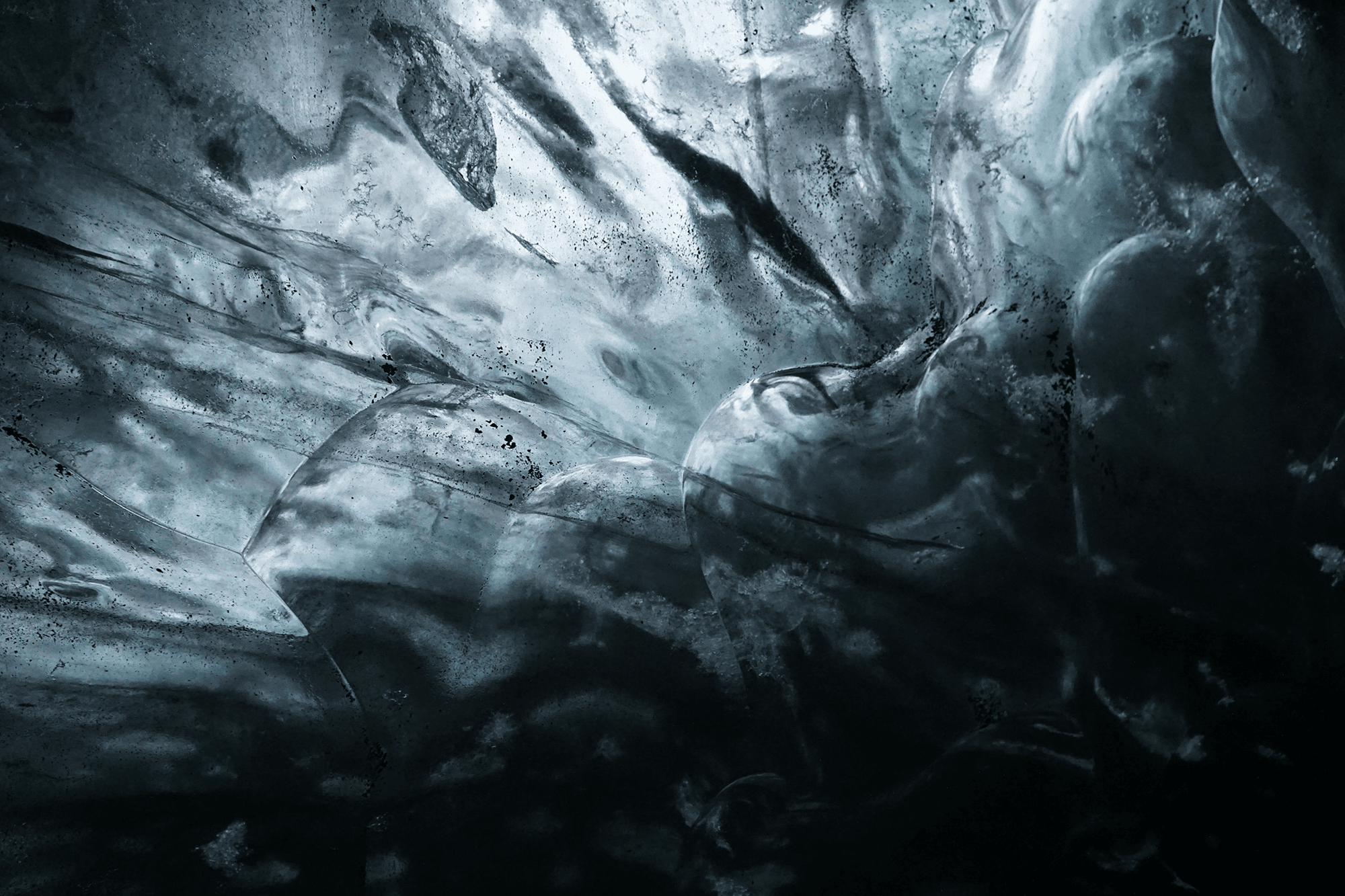
    When icebergs calve off of Arctic and Antarctic coastlines, it affects glacial flows upstream as well as local mixing between fresh- and seawater. A recent study points to ocean tides as a major factor in widening the ice cracks that lead to calving. The team built a simplified mathematical model of an ice shelf, taking into account the ice’s viscoelasticity, local tides, and winds. Then they compared the model’s predictions with satellite, GPS, and radar data of Antarctica’s Brunt Ice Shelf, where an iceberg the size of Greater London broke off in 2023.

    Between their model and the observation data, the team was able to show that the crack that preceded calving consistently grew during the spring tides, when tidal forces were at their strongest. The work gives us one more clue for refining our predictions of when major calving events are likely. (Image and research credit: O. Marsh et al.; via Gizmodo)

    Fediverse Reactions
  • Oil-Slicked Bubble Bursts

    Oil-Slicked Bubble Bursts

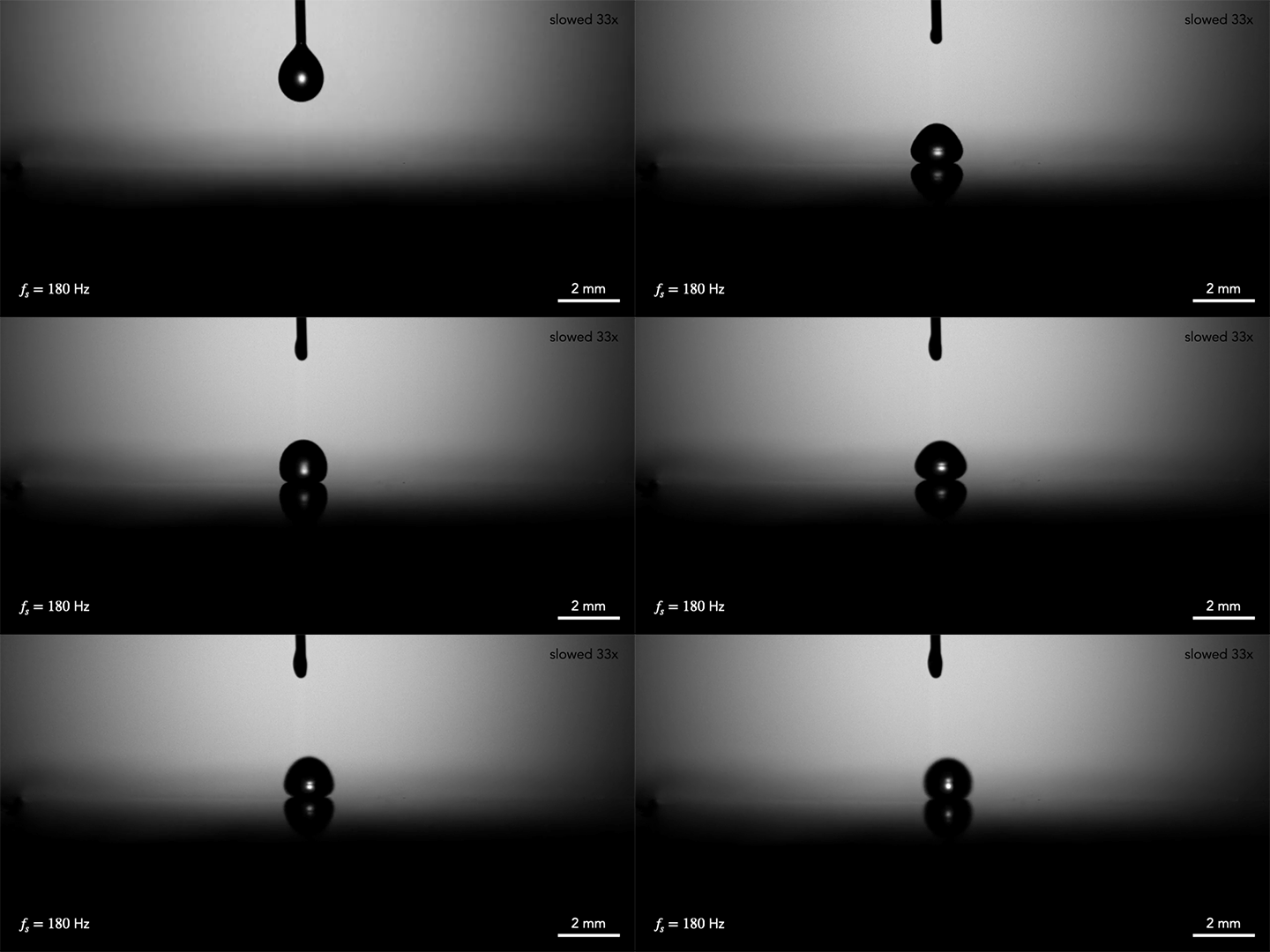
    When bubbles at the surface of the ocean pop, they can send up a spray of tiny droplets that carry salt, biomass, microplastics, and other contaminants into the atmosphere. Teratons of such materials enter the atmosphere from the ocean each year. To better understand how contaminants can cross from the ocean to the atmosphere, researchers studied what happens when a oil-coated water bubble pops.

    The team looked at bubbles about 2 millimeters across, coated in varying amounts of oil, and observed their demise via high-speed video. When the bubble pops, capillary waves ripple down into its crater-like cavity and meet at the bottom. That collision creates a rebounding Worthington jet, like the one above, which can eject droplets from its tip.

    The team found that the oil layer’s thickness affected the capillary waves and changed the width of the resulting jet. They were able to build a mathematical model that predicts how wide a jet will be, though a prediction of the jet’s velocity is still a work-in-progress. (Image credit: Р. Морозов; research credit: Z. Yang et al.; via APS)

    Fediverse Reactions
  • A New Plasma Wave for Jupiter

    A New Plasma Wave for Jupiter

    Jupiter‘s North Pole has a powerful magnetic field combined with plasma that has unusually low electron densities. This combination, researchers found, gives rise to a new type of plasma wave.

    Ions in a magnetic field typically move parallel to magnetic field lines in Langmuir waves and perpendicularly to the field lines in Alfvén waves — with each wave carrying a distinctive frequency signature. But in Jupiter’s strong magnetosphere, low-density plasma does something quite different: it creates what the team is calling an Alfvén-Langmuir wave — a wave that transitions from Alfvén-like to Langmuir-like, depending on wave number and excitation from local beams of electrons.

    Although this is the first time such plasma behavior has been observed, the team suggests that other strongly-magnetized giant planets — or even stars — could also form these waves near their poles. (Image credit: NASA / JPL-Caltech / SwR I/ MSSS/G. Eason; research credit: R. Lysak et al.; via APS)

    Fediverse Reactions
  • Earth’s Core is Leaking

    Earth’s Core is Leaking

    In Earth’s primordial days, liquid iron fell through the ball of magma that was our planet, collecting elements–like ruthenium-100–that are attracted to iron. All of that material ended up in Earth’s outer core, a dense sea of liquid metal that geoscientists assumed was unable to cross into the lighter mantle. But recent observations suggest instead that core material is making its way to the surface.

    Measurements from volcanic rocks in the Galapagos Islands, Hawai’i, and Canada’s Baffin Island all contain ruthenium isotopes associated with that primordial core material, indicating that that magma came from the core, not the mantle. Separately, seismic analyses suggest that this material could be crossing through continent-sized blobs of warm, large-grained crystals caught deep below Africa and the Pacific, at the boundary between the mantle and the outer core. For more, check out this Quanta Magazine article. (Image credit: B. Andersen; research credit: N. Messling et al. and S. Talavera-Soza et al.; via Quanta)

    Fediverse Reactions