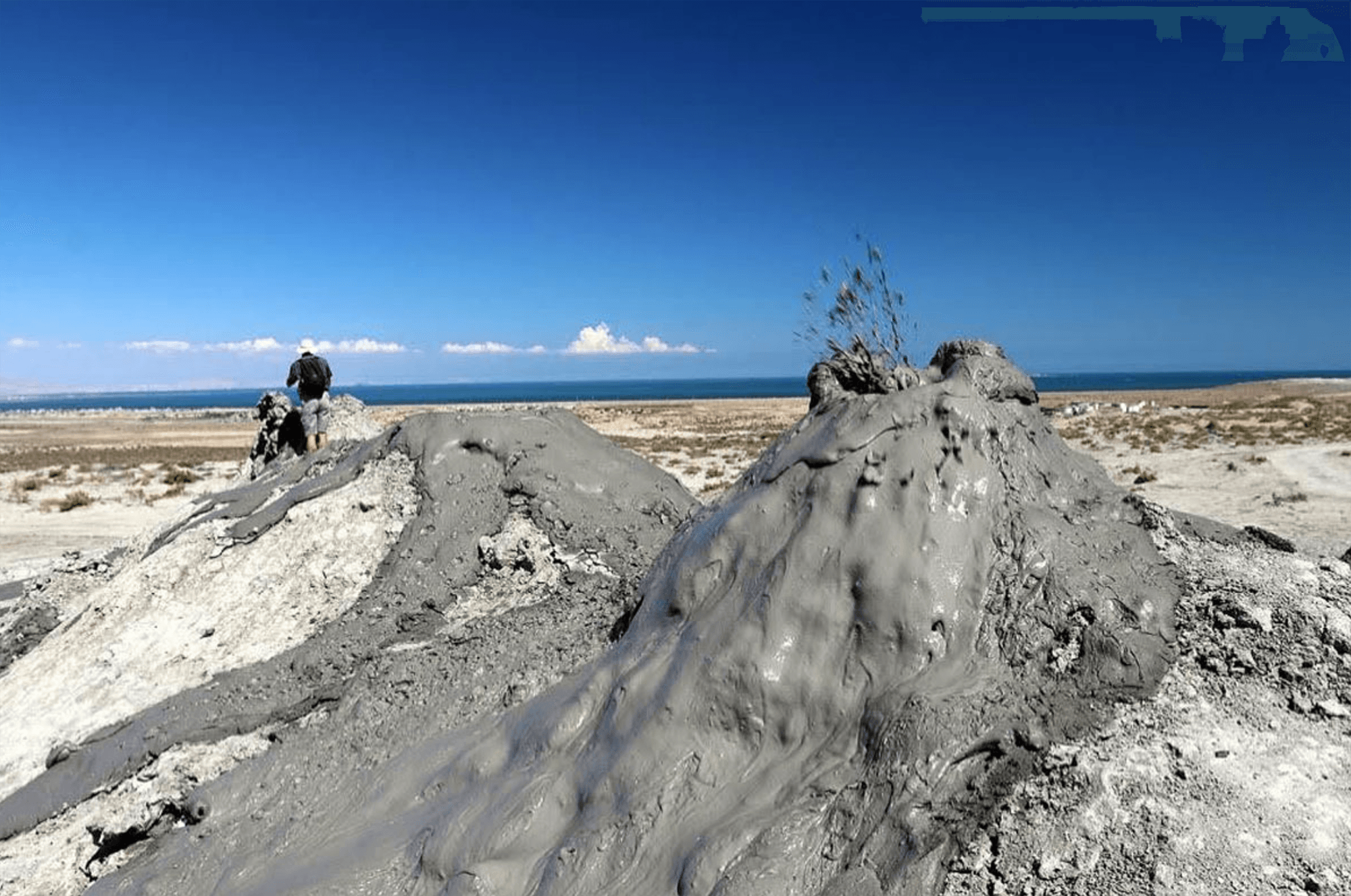
Mars features mounds that resemble our terrestrial mud volcanoes, suggesting that a similar form of mudflow occurs on Mars. But Mars’ thin atmosphere and frigid temperatures mean that water — a prime ingredient of any mud — is almost always in either solid or gaseous form on the planet. So researchers explored whether salty muds could flow under Martian conditions. They tested a variety of salts, at different concentrations, in a low-pressure chamber calibrated to Mars-like temperatures and pressures. The salts lowered water’s freezing point, allowing the muds to remain fluid. Even a relatively small amount of sodium chloride — 2.5% by weight — allowed muds to flow far. The team also found that the salt content affected the shape the flowing mud took, with flows ranging from narrow, ropey patterns to broad, even sheets. (Image credit: P. Brož/Wikimedia Commons; research credit: O. Krýza et al.; via Eos)
Category: Research

Filtering Like a Manta Ray
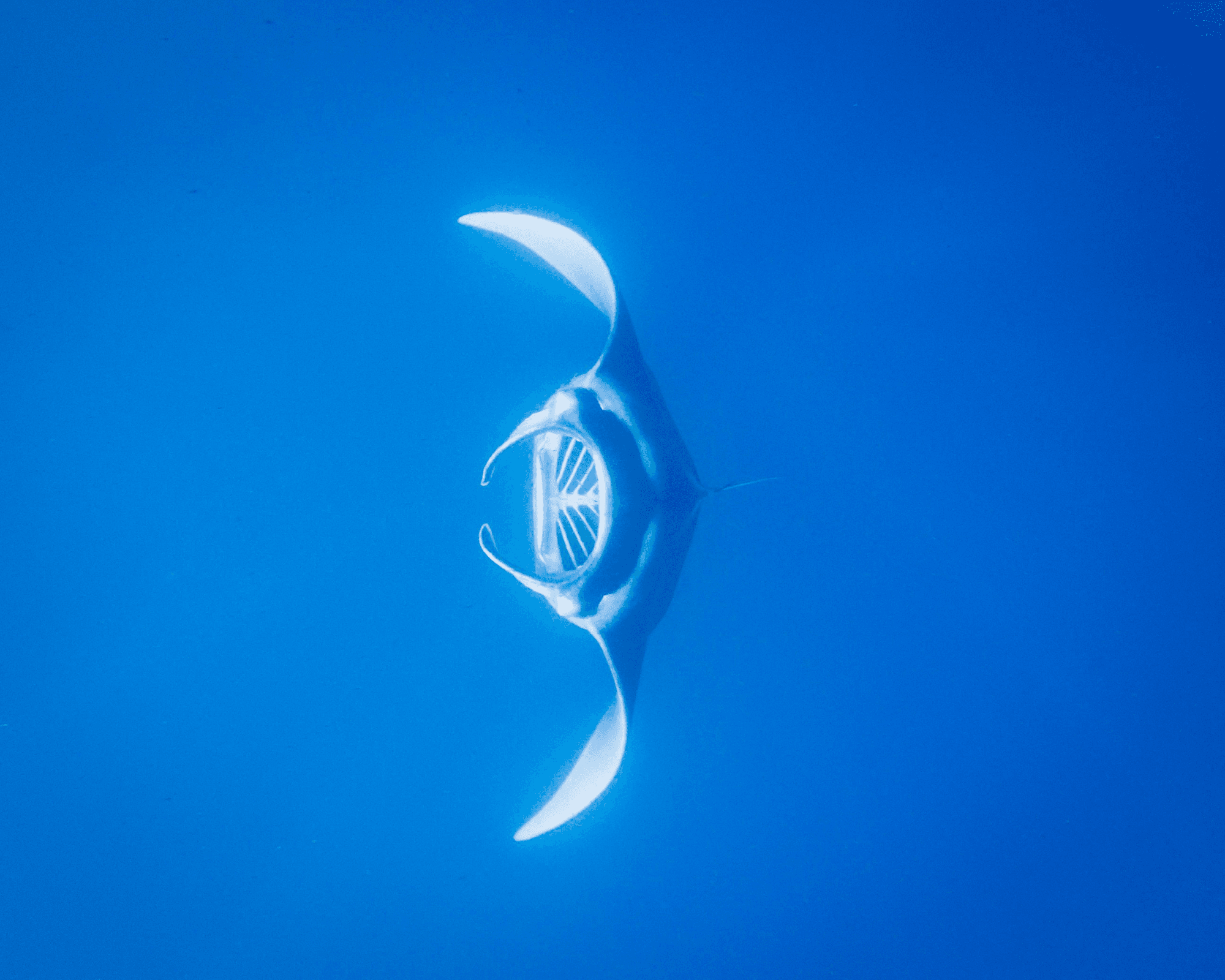
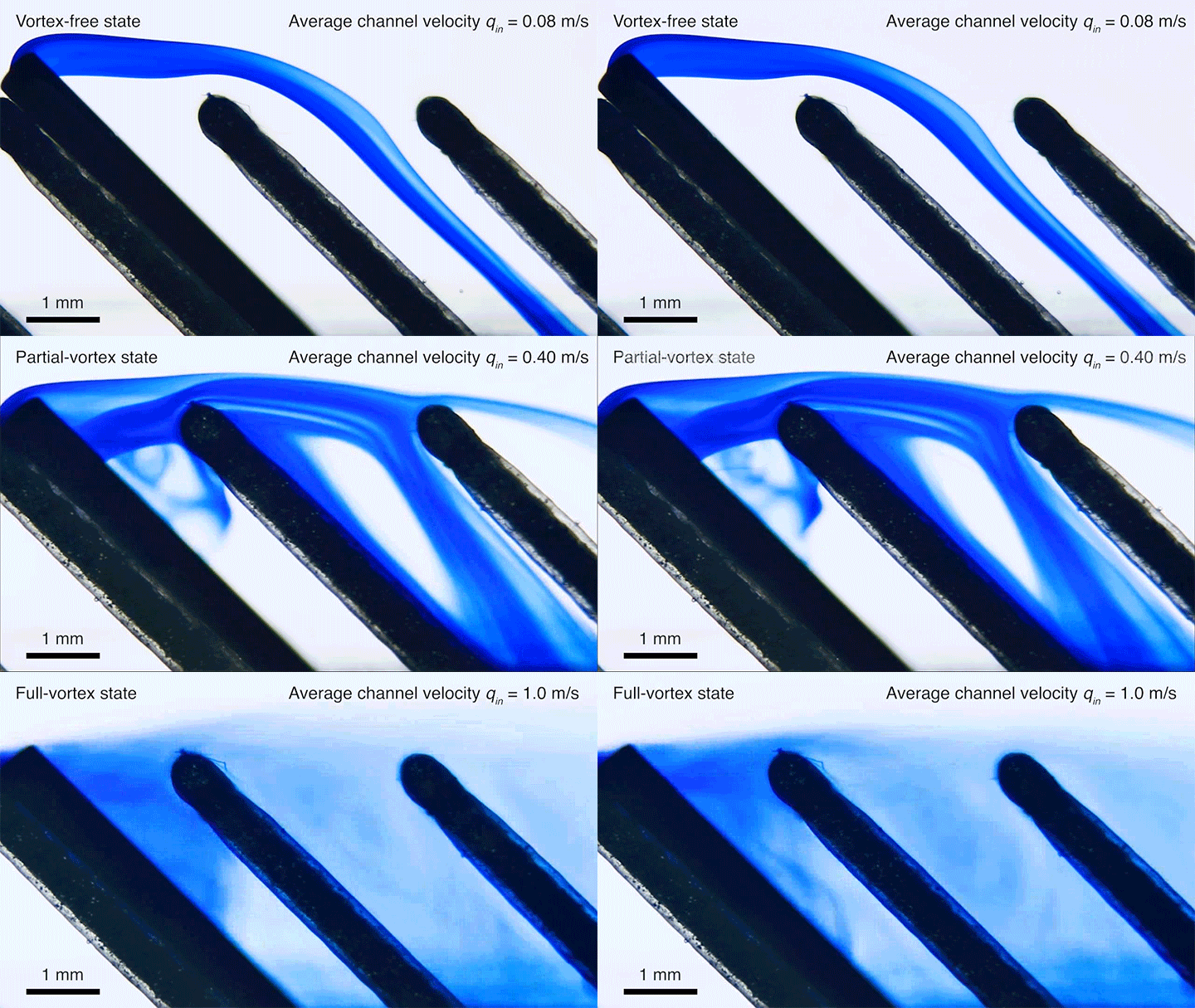
As manta rays swim, they’re constantly doing two important — but not necessarily compatible — things: getting oxygen to breathe and collecting plankton to eat. That requires some expert filtering to send food particles toward their stomach and oxygen-rich water to their gills. Manta rays do this with a built-in filter that resembles an industrial crossflow filter. Researchers built a filter inspired by a manta ray’s geometry, and found that it has three different flow states, based on the flow speed. At low speeds, flow moves freely down the filter’s channels; in a manta, this would carry both water and particles toward the gills. At medium speeds, vortices start to form at the entrance to the filter channels. This sends large particles downstream (toward a manta’s digestive system) while water passes down the channels. At even greater speeds, each channel entrance develops a vortex. That allows water to pass down the filter channels but keeps particles out. (Image credit: manta – N. Weldingh, filter – X. Mao et al.; research credit: X. Mao et al.; via Ars Technica)

Depending on the flow speed, a manta-inspired filter can allow both water and particles in or filter particles out of the water. Fediverse Reactions
-

Hot Droplets Bounce
In the Leidenfrost effect, room-temperature droplets bounce and skitter off a surface much hotter than the drop’s boiling point. With those droplets, a layer of vapor cushions them and insulates them from the hot surface. In today’s study, researchers instead used hot or burning drops (above) and observed how they impact a room-temperature surface. While room-temperature droplets hit and stuck (below), hot and burning droplets bounced (above).
In this case, the cushioning air layer doesn’t come from vaporization. Instead, the bottom of the falling drop cools faster than the rest of it, increasing the local surface tension. That increase in surface tension creates a Marangoni flow that pulls fluid down along the edges of the drop. That flow drags nearby air with it, creating the cushioning layer that lets the drop bounce. In this case, the authors called the phenomenon “self-lubricating bouncing.” (Image and research credit: Y. Liu et al.; via Ars Technica)

Fediverse Reactions
-

Bifurcating Waterways
Your typical river has a single water basin and drains along a river or two on its way to the sea. But there are a handful of rivers and lakes that don’t obey our usual expectations. Some rivers flow in two directions. Some lakes have multiple outlets, each to a separate water basin. That means that water from a single lake can wind up in two entirely different bodies of water.
The most famous example of these odd waterways is South America’s Casiquiare River, seen running north to south in the image above. This navigable river connects the Orinoco River (flowing east to west in this image) with the Rio Negro (not pictured). Since the Rio Negro eventually joins the Amazon, the Casiquiare River’s meandering, nearly-flat course connects the continent’s two largest basins: the Orinoco and the Amazon.
For more strange waterways across the Americas, check out this review paper, which describes a total of 9 such hydrological head-scratchers. (Image credit: Coordenação-Geral de Observação da Terra/INPE; research credit: R. Sowby and A. Siegel; via Eos)
Fediverse Reactions
-

Inside an Alien Atmosphere
Studying the physics of planetary atmospheres is challenging, not least because we only have a handful of examples to work from in our own solar system. So it’s exciting that researchers have unveiled our first look at the 3D structure of an exoplanet‘s atmosphere.
Using ground-based observations, researchers studied WASP-121b, also known as Tylos, an ultra-hot Jupiter that circles its star in only 30 Earth hours. One face of the planet always faces its star while the other faces into space. The team found that the exoplanet has a flow deep in the atmosphere that carries iron from the hot daytime side to the colder night side. Higher up, the atmosphere boasts a super-fast jet-stream that doubles in speed (from an estimated 13 kilometers per second to 26 kilometers per second) as it crosses from the morning terminator to the evening. As one researcher observed, the planet’s everyday winds make Earth’s worst hurricanes look tame. (Image credit: ESO/M. Kornmesser; research credit: J. Seidel et al.; via Gizmodo)
Fediverse Reactions
-

Flying Without a Rudder
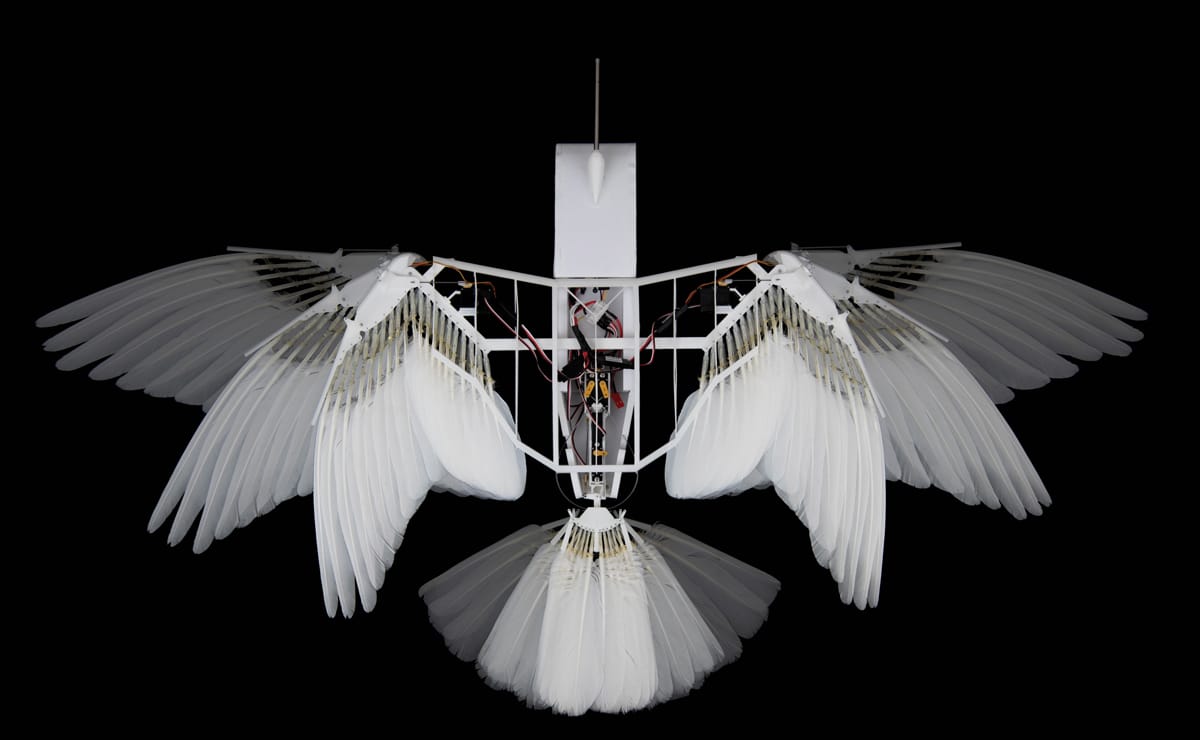
Aircraft typically use a vertical tail to keep the craft from rolling or yawing. Birds, on the other hand, maneuver their wings and tail feathers to counter unwanted motions. Researchers found that the list of necessary adjustments is quite small: just 4 for the tail and 2 for the wings. Implementing those 6 controllable degrees of freedom on their bird-inspired PigeonBot II allowed the biorobot to fly steadily, even in turbulent conditions, without a rudder. Adapting such flight control to the less flexible surfaces of a typical aircraft will take time and creativity, but the savings in mass and drag could be worth it. (Image credit: E. Chang/Lentink Lab; research credit: E. Chang et al.; via Physics Today)
Fediverse Reactions
-

Atmospheric Rivers Raise Temperatures
Atmospheric rivers are narrow streams of moisture-rich air running from tropical regions to mid- or polar latitudes. Though relatively short-lived, they are capable of carrying — and depositing — more water than the largest rivers. But researchers have found that their impact is not measured in water content alone. Instead, a survey of 43 years’ worth of data shows that atmospheric rivers also bring unusually warm temperatures. In some cases, the authors found surface temperatures near an atmospheric river climbed to as high as 15 degrees Celsius above the typical. On average, temperatures were about 5 degrees Celsius higher than expected for the region’s climate.
Several factors raise those temperatures — like the heat released when rising vapor meets cooler air and condenses into liquid — but the biggest effect came from carrying warm tropical temperatures to (usually) cooler regions. (Image credit: L. Dauphin/NASA; research credit: S. Scholz and J. Lora; via Physics Today)
Fediverse Reactions
-

Measuring Mucus by Dragging Dead Fish
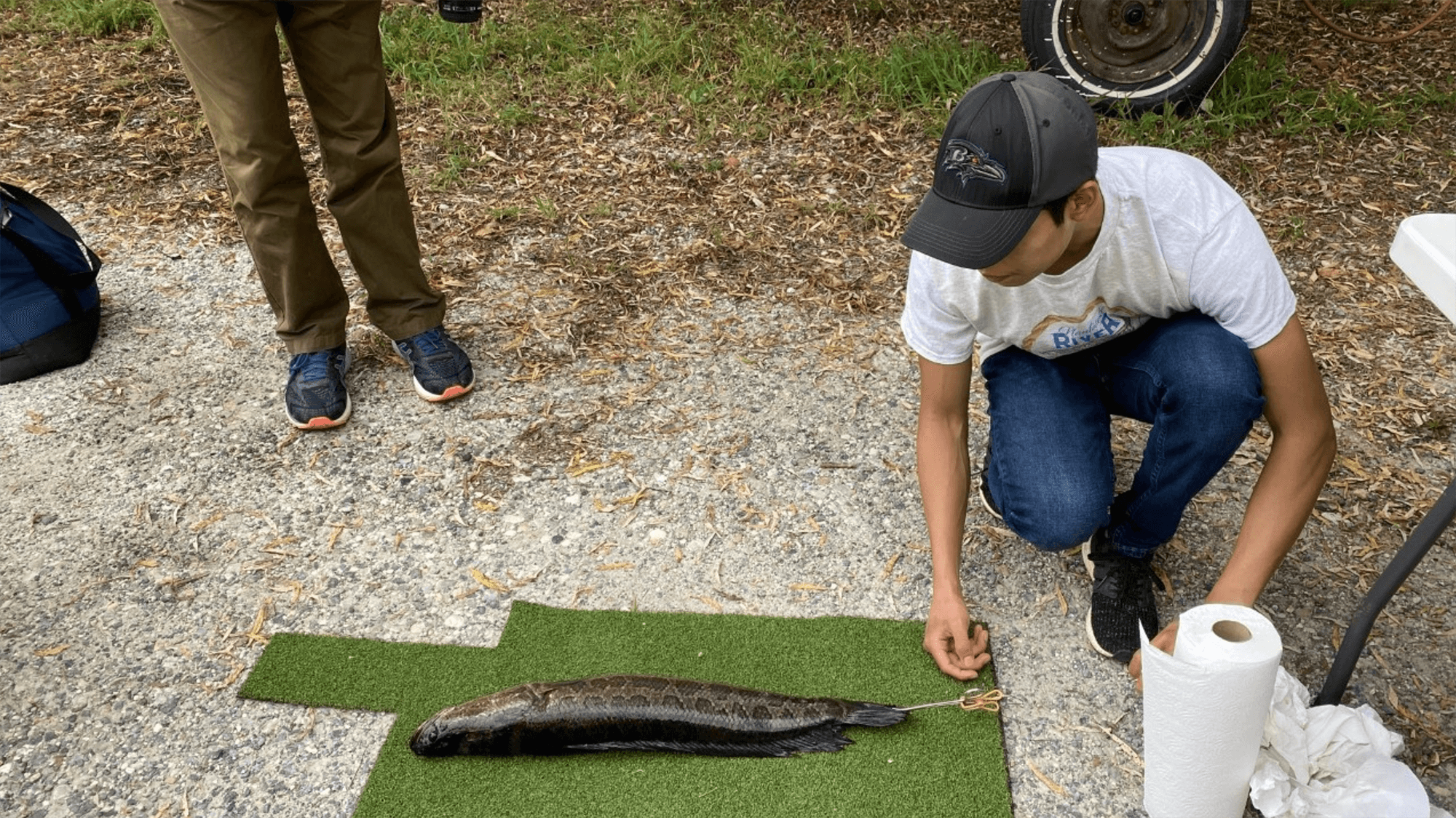
A fish‘s mucus layer is critical; it protects from pathogens, reduces drag in the water, and, in some cases, protects against predators. But little is known about how mucus could affect terrestrial locomotion in species like the northern snakehead, which can breathe out of the water and move across land. So researchers explored the snakehead’s mucus layer by measuring the force required to drag them (and two other non-terrestrial species) across different surfaces.
The team tested the same, freshly euthanized fish twice: once with its mucus layer intact and again once the mucus was washed off. Unsurprisingly, the fish’s friction was much lower with its mucus. But they also found that the snakehead was slipperier than either the scaled carp or the scale-free catfish. The biologists suggest that the snakehead could have evolved a slipperier mucus to help it move more easily on land, thereby extending the distance it can cover.
As a fluid dynamicist, I think fish mucus sounds like a great new playground for the rheologists among us. (Image and research credit: F. Lopez-Chilel and N. Bressman; via PopSci)
Fediverse Reactions
-

Thawing Permafrost Primes Slumps
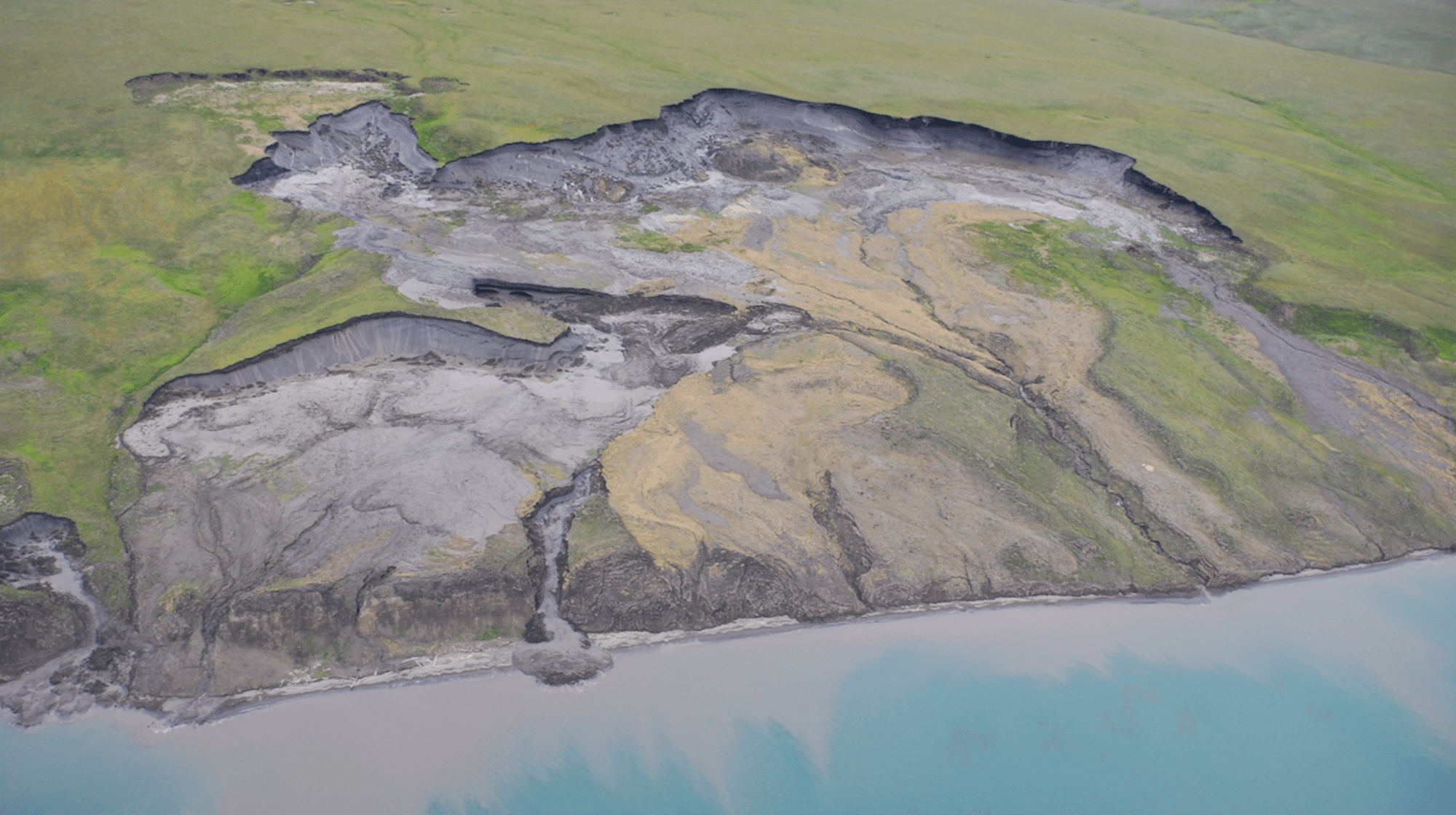
As permafrost thaws on Arctic hillsides and shorelines, the land often deforms in a unique fashion, known as a slump. Formally known as mega retrogressive thaw slumps, these areas superficially resemble a landslide. They’re also prone to repeat performances: as many as 90% of Canada’s Arctic slumps recur in the same place as previous slumps. Researchers used ground-penetrating radar and other tools to study the underground structure at slumps and found that several factors contribute to this repetitive cycle.
Seawater soaking into the foot of a hilly shore can destabilize the permafrost, creating a slump. That changes the nearby ground cover, exposing more permafrost to warming; their measurements showed this warming could extend tens of meters underground, priming the area for future slumps. Similarly, the mudslides and narrow ravines that form on an active slump also shift away ground cover and warm the underlying permafrost. Together, these factors suggest that once a slump forms, more slumps will occur as the underlying permafrost warms. (Image credit: M. Krautblatter; research credit: M. Krautblatter et al.; via Eos)
Fediverse Reactions
-

Simulating a Sneeze
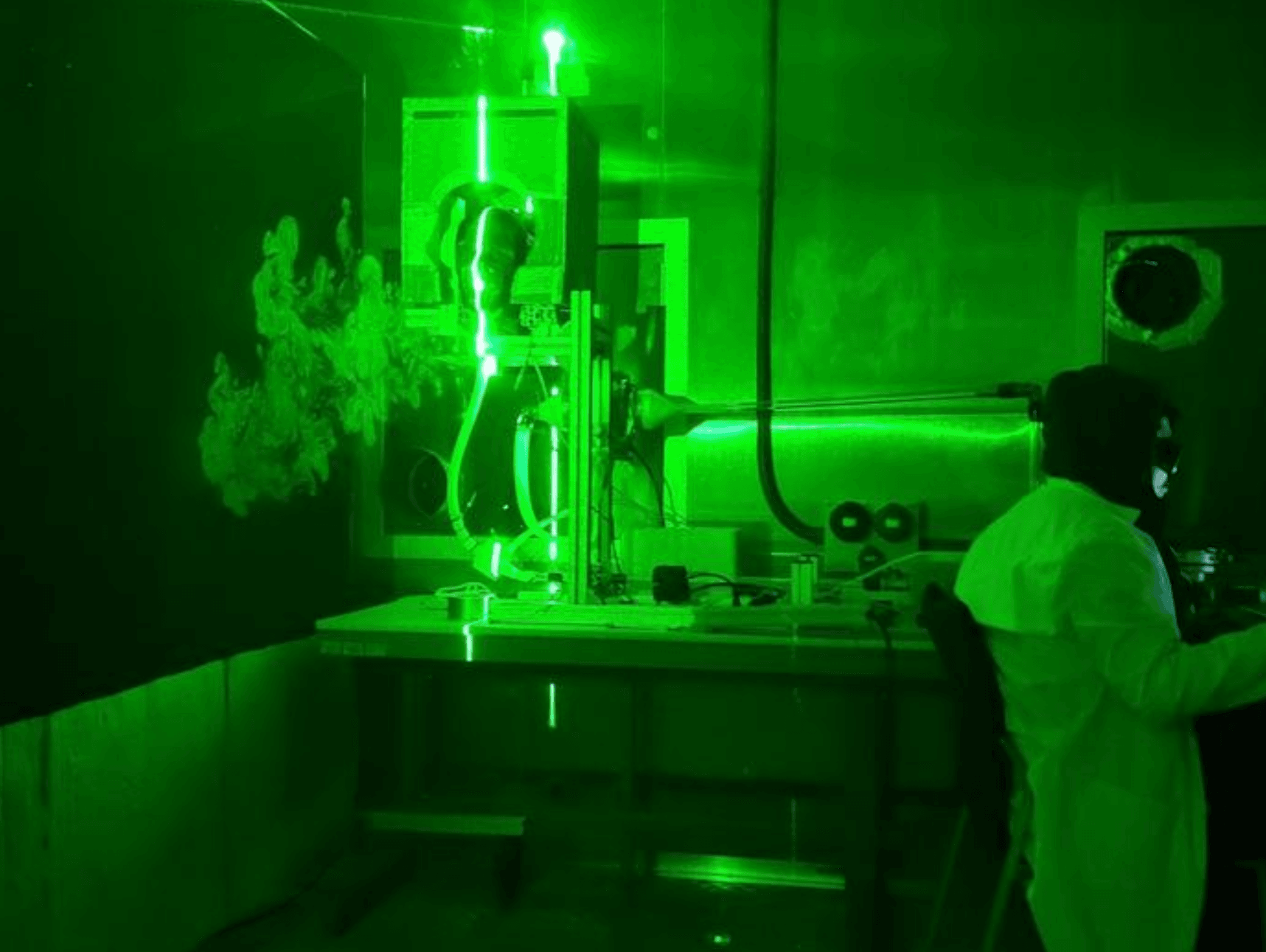
Sneezing and coughing can spread pathogens both through large droplets and through tiny, airborne aerosols. Understanding how the nasal cavity shapes the aerosol cloud a sneeze produces is critical to understanding and predicting how viruses could spread. Toward that end, researchers built a “sneeze simulator” based on the upper respiratory system’s geometry. With their simulator, the team mimicked violent exhalations both with the nostrils open and closed — to see how that changed the shape of the aerosol cloud produced.
The researchers found that closed nostrils produced a cloud that moved away along a 18 degree downward tilt, whereas an open-nostril cloud followed a 30-degree downward slope. That means having the nostrils open reduces the horizontal spread of a cloud while increasing its vertical spread. Depending on the background flow that will affect which parts of a cloud get spread to people nearby. (Image and research credit: N. Catalán et al.; via Physics World)
Fediverse Reactions
-




































































.JPG)