Category: Research

  • Disappearing Sea Ice Ridges

    Disappearing Sea Ice Ridges

    As blocks of sea ice shift and float, they can press together, forming ridges spaced every few hundred meters or so. A new study uses aerial observations from recent decades to show that these sea ridges are getting smaller in both size and number, a smoothing of Arctic topography that has many consequences.

    The team showed that the overall changes in the sea ridges correspond to a loss of older sea ice. The current smoother sea ice presents less drag to winds and currents, which might suggest that the ice is slower-moving, but instead the opposite seems true. Scientists are not sure why the ice is moving faster, though faster ocean currents may play a role.

    Another consequence of smoother sea ice is wider, shallower melt ponds each summer. These wider ponds increase the amount of sunlight the ice absorbs, hastening melting even further. (Image credit: USGS; research credit: T. Krumpen et al.; via Eos)

  • Baseball’s Mysterious Rubbing Mud

    Baseball’s Mysterious Rubbing Mud

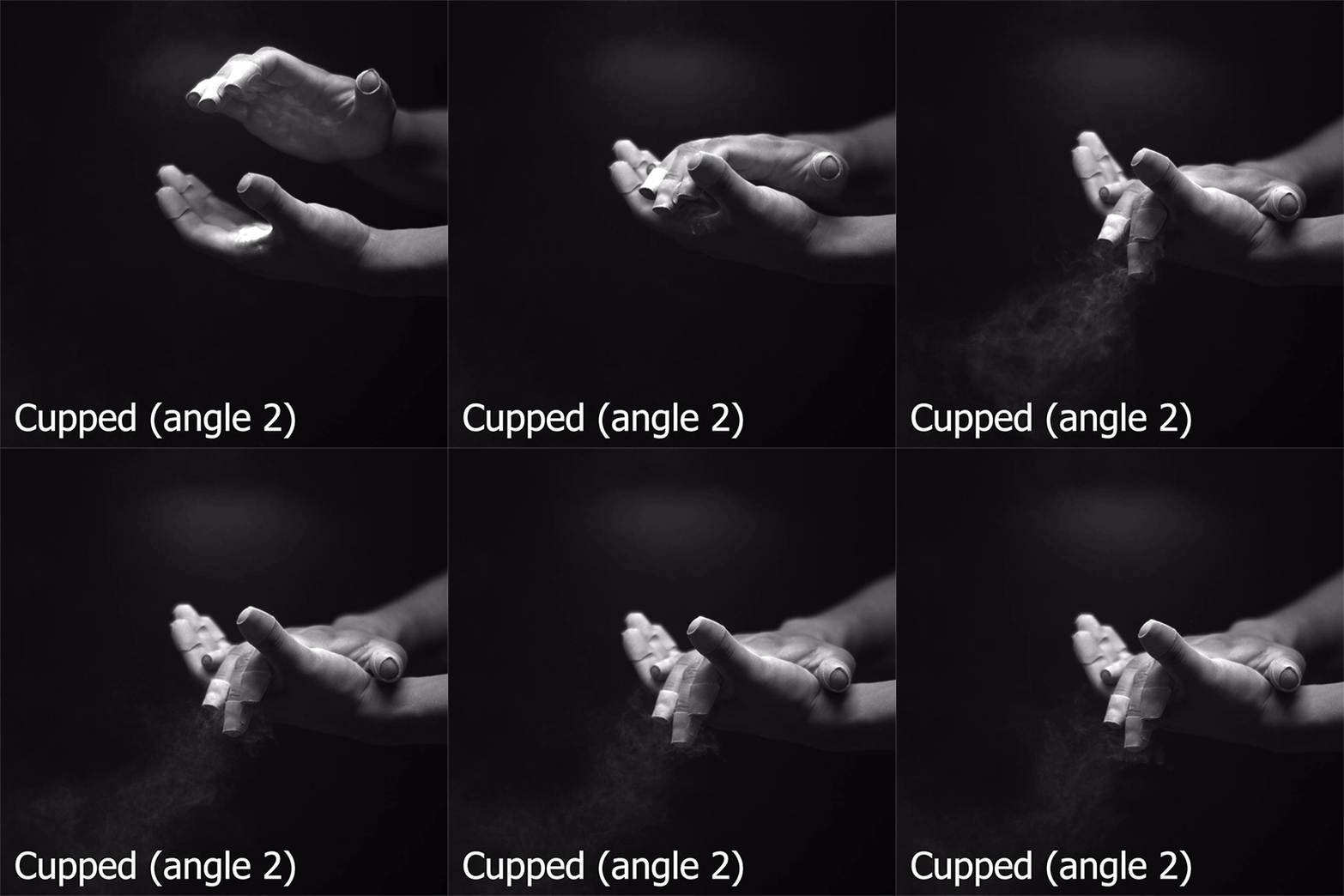
    Since 1938, every ball in Major League Baseball has been covered in a special “rubbing mud” harvested from a secret location in New Jersey. Although the league has tried in the past to replace the mud with an alternative, it’s never stuck. Researchers wondered just what makes this mud so special, so naturally, they brought some to the lab to study its composition and rheology.

    The mud consists of clay, silt, and sand with a smattering of organic particles. The make-up was pretty typical of river mud in the region, although researchers noted a drop-off in large particle sizes that probably indicates some sieving. In terms of rheology, the mud is shear-thinning, meaning it behaves a bit like lotion. It sits solidly in the hand until it’s deformed, at which point it smoothly coats the surface as a liquid would.

    So how does the mud change the baseballs? The researchers found three effects. First, the mud’s shear-thinning allowed it to fill in any pores or imperfections in the ball’s surface, creating a more uniform surface. Second, the dried mud’s residue doubled the ball’s contact adhesion. And, finally, the occasional large sand particles glued to the ball by the dried mud added friction. As the researchers put it, the rubbing mud “spreads like skin cream and grips like sandpaper.” (Image credit: L. Juarez; research credit: S. Pradeep et al.; via EOS)

    Fediverse Reactions
  • Cooking Perfect Cacio e Pepe

    Cooking Perfect Cacio e Pepe

    In cooking, sometimes the simplest recipes are the toughest to master. Cacio e pepe — a classic three-ingredient Italian pasta — is an excellent example. Made properly, the sauce of cheese and black pepper combines with starchy water to coat the pasta in a uniform, cheesy sauce. Or, if you’re me, you wind up with a pasta sauce flecked with stringy clumps of melted cheese. Fortunately for those of us who have yet to master this one, a new research paper has us covered with tips to make the perfect cacio e pepe.

    The key to that elusive silky sauce, they found, is the starch – water – cheese combination. Your water needs just the right amount of starch — they found that between 1 – 4% starch by (cheese) mass worked. If the starch concentration is too low (which can easily happen in pasta water), you’ll get the clumpy cheese mess that so frequently happens in my kitchen. Temperature is also critical; if the water is too hot when it’s added, then it can destabilize the sauce. Check out the pre-print’s Section V for the scientific, supposedly foolproof, recipe. I know I’ll be trying it! (Image credit: O. Kadaksoo; research credit: G. Bartolucci et al. pre-print; via APS News)

    Fediverse Reactions
  • Featured Video Play Icon

    Visualizing Unstable Flames

    Inside a combustion chamber, temperature fluctuations can cause sound waves that also disrupt the flow, in turn. This is called a thermoacoustic instability. In this video, researchers explore this process by watching how flames move down a tube. The flame fronts begin in an even curve that flattens out and then develops waves like those on a vibrating pool. Those waves grow bigger and bigger until the flame goes completely turbulent. Visually, it’s mesmerizing. Mathematically, it’s a lovely example of parametric resonance, where the flame’s instability is fed by system’s natural harmonics. (Video and image credit: J. Delfin et al.; research credit: J. Delfin et al. 1, 2)

    Fediverse Reactions
  • Predicting Landslide Speeds

    Predicting Landslide Speeds

    Knowing what speed a landslide will reach helps us predict how much damage they can cause. That speed depends on many factors: the steepness of the terrain, the sliding distance, the thickness of the flowing layer, and the type of grains making up the flow. Researchers found that predictions from previous studies often underestimated the speeds reached by thicker flows. Through laboratory experiments with grains of different shapes, a team found that those models mistakenly assumed a fully-developed flow — in other words, one where the grains have reached a constant final speed. While spherical grains reach that state over a short sliding distance, that’s not the case for other grains.

    Instead, the team used their results to build a new predictive model for landslide speeds. This one still depends on incline angle and flow thickness, but it also uses a dynamical friction coefficient to describe the granular material and capture how the flow’s speed varies with distance down the incline. (Image credit: W. Hasselmann; research credit: Y. Wu et al.; via APS News)

    Fediverse Reactions
  • Quick-Drying, Fast-Cracking

    Quick-Drying, Fast-Cracking

    Water droplets filled with nanoparticles leave behind deposits as they evaporate. Like a coffee ring, particles in the evaporating droplet tend to gather at the drop’s edge (left). As the water evaporates, the deposit grows inward (center) and cracks start to form radially. After just a couple minutes, the solid deposit covers the entire area of the original droplet and is shot through with cracks (right).

    Researchers found that the cracks’ patterns and propagation are predictable through a model that balances the local elastic energy and and the energy cost of fracture. They also found that the spacing between radial cracks depends on the deposit’s local thickness. Besides explaining the patterns seen here, these cracking models could help analyze old paintings, where cracks could hide information about the artist’s methods and the artwork’s condition. (Image and research credit: P. Lilit et al.; via Physics Today)

    Fediverse Reactions
  • An Exoplanet’s Supersonic Jet Stream

    An Exoplanet’s Supersonic Jet Stream

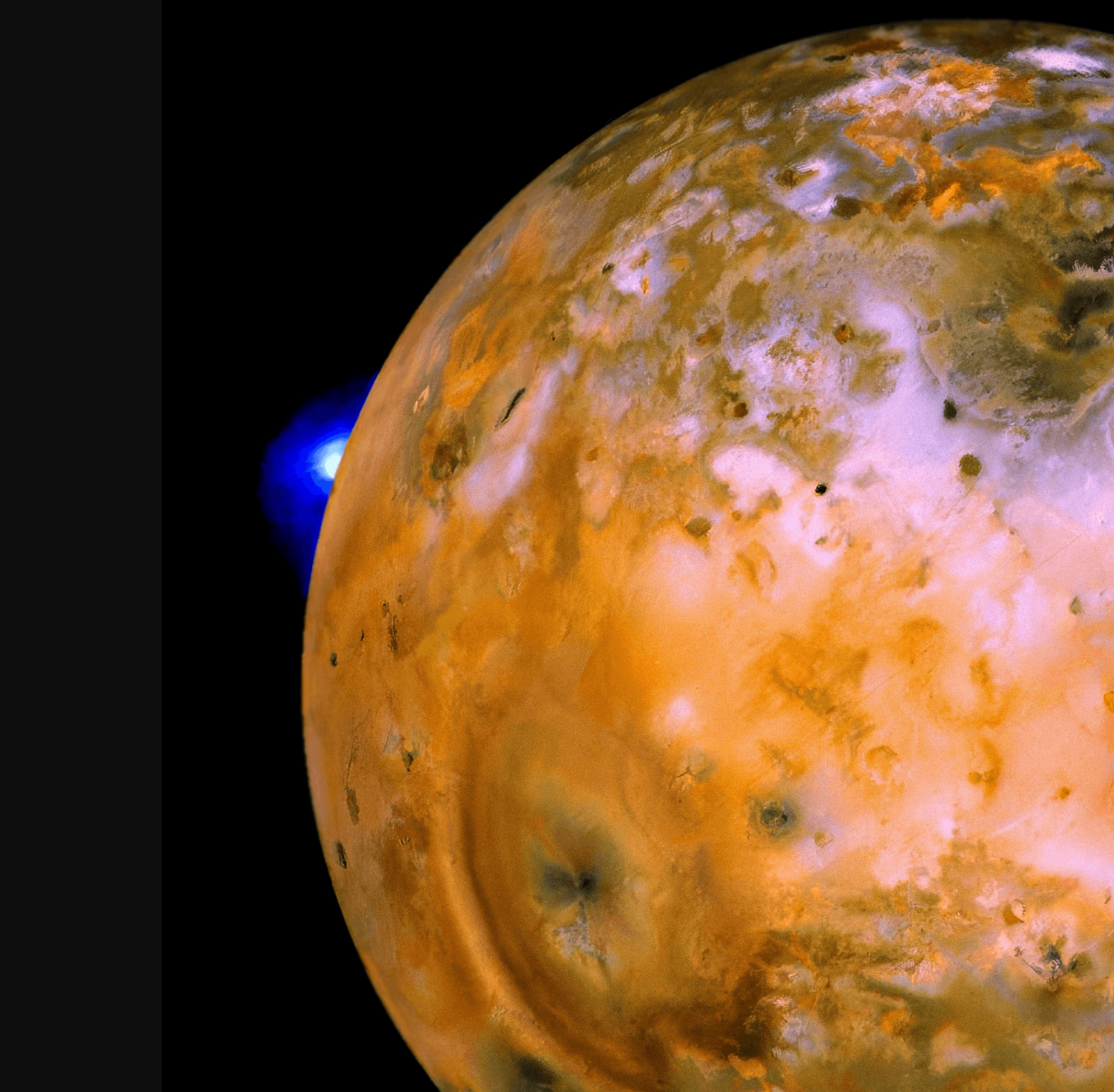
    WASP-127b is a hot Jupiter-type exoplanet located about 520 light-years from us. A new study of the planet’s atmosphere reveals a supersonic jet stream whipping around its equatorial region at 9 kilometers per second. For comparison, our Solar System’s fastest winds, on Neptune, are a comparatively paltry 0.5 kilometers per second. The team estimates the speed of sound — which depends on temperature and the atmosphere’s chemical make-up — on WASP-127b as about 3 kilometers per second, far below the measured wind speed. The planet’s poles, in contrast, are much colder and have far lower wind speeds.

    Of course, these measurements can only give us a snapshot of what the exoplanet’s atmosphere is like; we don’t have altitude data, for example, to see how the wind speed varies with height. Nevertheless, it shows that exoplanets beyond our planetary system can have some unimaginably wild weather. (Video and image credit: ESO/L. CalΓ§ada; research credit: L. Nortmann et al.; via Gizmodo)
    Fediverse Reactions
  • Featured Video Play Icon

    Explosively Jetting

    Dropping water from a plastic pipette onto a pool of oil electrically charges the drop. Then, as it evaporates, it shrinks and concentrates the charges closer and closer. Eventually, the strength of the electrical charge overcomes surface tension, making the drop form a cone-shaped edge that jets out tiny, highly-charged microdrops. Afterward, the drop returns to its spherical shape… until shrinkage builds up the charge density again. This microjetting behavior can carry on for hours! (Video and image credit: M. Lin et al.; research preprint: M. Lin et al.)

  • Flushing the Brain During Sleep

    Flushing the Brain During Sleep

    When we sleep, our brains flush out waste that builds up during our waking hours, but how this happens has been something of a mystery. A new study of sleeping mice has visualized and tracked the flow for the first time. The researchers found that, during a specific sleep phase (the non-rapid eye movement portion), the mice released pulses of norepinephrine — a cousin to adrenaline — that periodically contracted blood vessels in the rodents’ brains. As these blood vessels contract and relax, it forces the nearby cerebrospinal fluid to flow. In short, the pulsing of the blood vessels pumps the fluid bathing the brain, flushing it.

    The team also found that certain medications — like the sleep aid Ambien — disrupted this flow in mice by suppressing the blood vessels’ oscillations. It’s not known yet whether our brains operate on the same pumping principle or whether medications could affect that, but it does suggest that a similar study in humans is worthwhile. (Image credit: K. Howard; research credit: N. Hauglund et al.; via Science)

  • Peering Inside a Hailstone

    Peering Inside a Hailstone

    In spring and summer, major thunderstorms can include dangerous and destructive hailstones. In Catalonia, a group of scientists collected hailstones after a record-breaking 2022 storm, finding some as large as 12 centimeters across. Using a dentist’s CT scanner, they looked at the interior of the hailstones, uncovering layers that reveal how the hail grew. In the past, researchers have studied hail by slicing the ice; that method gives them only a single cross-section through the hailstone, which gets destroyed in the process. In contrast, a CT scan revealed the full interior of the ice.

    The scientists found that, even though hail often appears spherical, the nucleus of the hail is not always located in the center. They saw that the hail grew in uneven layers that varied in density, depending on the storm conditions the hail experienced. To get to the enormous sizes seen here, hailstones have to travel up and down repeatedly through a storm, building up layer by layer. From the hail’s interior structure, the team could also tell what orientation the hail took its final fall in; the ice along the bottom of the hailstone was bubble-free, indicating that it collected as water drops hit the surface and froze. (Image credit: T. Ribas; research credit: C. BarquΓ© et al.; via New Scientist)

    Fediverse Reactions