Category: Research

  • Measuring Mucus by Dragging Dead Fish

    Measuring Mucus by Dragging Dead Fish

    A fish‘s mucus layer is critical; it protects from pathogens, reduces drag in the water, and, in some cases, protects against predators. But little is known about how mucus could affect terrestrial locomotion in species like the northern snakehead, which can breathe out of the water and move across land. So researchers explored the snakehead’s mucus layer by measuring the force required to drag them (and two other non-terrestrial species) across different surfaces.

    The team tested the same, freshly euthanized fish twice: once with its mucus layer intact and again once the mucus was washed off. Unsurprisingly, the fish’s friction was much lower with its mucus. But they also found that the snakehead was slipperier than either the scaled carp or the scale-free catfish. The biologists suggest that the snakehead could have evolved a slipperier mucus to help it move more easily on land, thereby extending the distance it can cover.

    As a fluid dynamicist, I think fish mucus sounds like a great new playground for the rheologists among us. (Image and research credit: F. Lopez-Chilel and N. Bressman; via PopSci)

    Fediverse Reactions
  • Thawing Permafrost Primes Slumps

    Thawing Permafrost Primes Slumps

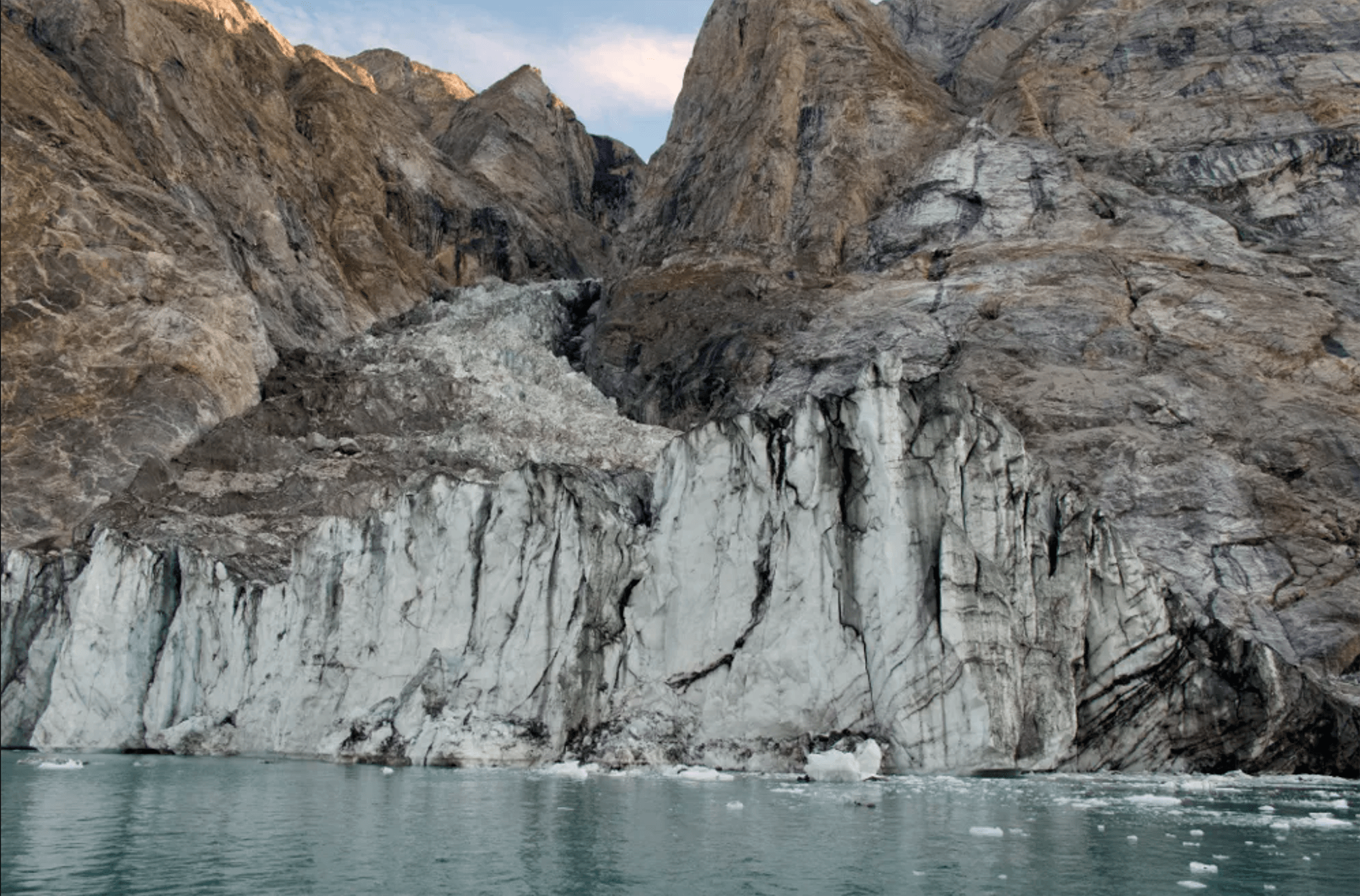
    As permafrost thaws on Arctic hillsides and shorelines, the land often deforms in a unique fashion, known as a slump. Formally known as mega retrogressive thaw slumps, these areas superficially resemble a landslide. They’re also prone to repeat performances: as many as 90% of Canada’s Arctic slumps recur in the same place as previous slumps. Researchers used ground-penetrating radar and other tools to study the underground structure at slumps and found that several factors contribute to this repetitive cycle.

    Seawater soaking into the foot of a hilly shore can destabilize the permafrost, creating a slump. That changes the nearby ground cover, exposing more permafrost to warming; their measurements showed this warming could extend tens of meters underground, priming the area for future slumps. Similarly, the mudslides and narrow ravines that form on an active slump also shift away ground cover and warm the underlying permafrost. Together, these factors suggest that once a slump forms, more slumps will occur as the underlying permafrost warms. (Image credit: M. Krautblatter; research credit: M. Krautblatter et al.; via Eos)

    Fediverse Reactions
  • Simulating a Sneeze

    Simulating a Sneeze

    Sneezing and coughing can spread pathogens both through large droplets and through tiny, airborne aerosols. Understanding how the nasal cavity shapes the aerosol cloud a sneeze produces is critical to understanding and predicting how viruses could spread. Toward that end, researchers built a “sneeze simulator” based on the upper respiratory system’s geometry. With their simulator, the team mimicked violent exhalations both with the nostrils open and closed — to see how that changed the shape of the aerosol cloud produced.

    The researchers found that closed nostrils produced a cloud that moved away along a 18 degree downward tilt, whereas an open-nostril cloud followed a 30-degree downward slope. That means having the nostrils open reduces the horizontal spread of a cloud while increasing its vertical spread. Depending on the background flow that will affect which parts of a cloud get spread to people nearby. (Image and research credit: N. Catalán et al.; via Physics World)

    Fediverse Reactions
  • Crowd Vortices

    Crowd Vortices

    The Feast of San Fermín in Pamplona, Spain draws crowds of thousands. Scientists recently published an analysis of the crowd motion in these dense gatherings. The team filmed the crowds at the festival from balconies overlooking the plaza in 2019, 2022, 2023, and 2024. Analyzing the footage, they discovered that at crowd densities above 4 people per square meter, the crowd begins to move in almost imperceptible eddies. In the animation below, lines trace out the path followed by single individuals in the crowd, showing the underlying “vortex.” At the plaza’s highest density — 9 people per square meter — one rotation of the vortex took about 18 seconds.

    Animation of the crowd in motion, with overlaid lines showing the circulating path followed by individual crowd members.

    The team found similar patterns in footage of the crowd at the 2010 Love Parade disaster, in which 21 people died. These patterns aren’t themselves an indicator of an unsafe crowd — none of the studied Pamplona crowds had a problem — but understanding the underlying dynamics should help planners recognize and prevent dangerous crowd behaviors before the start of a stampede. (Image credit: still – San Fermín, animation – Bartolo Lab; research credit: F. Gu et al.; via Nature)

    Fediverse Reactions
  • Slipping Ice Streams

    Slipping Ice Streams

    The Northeast Greenland Ice Stream provides about 12% of the island’s annual ice discharge, and so far, models cannot accurately capture just how quickly the ice moves. Researchers deployed a fiber-optic cable into a borehole and set explosive charges on the ice to capture images of its interior through seismology. But in the process, they measured seismic events that didn’t correspond to the team’s charges.

    Instead, the researchers identified the signals as small, cascading icequakes that were undetectable from the surface. The quakes were signs of ice locally sticking and slipping — a failure mode that current models don’t capture. Moreover, the team was able to isolate each event to distinct layers of the ice, all of which corresponded to ice strata affected by volcanic ash (note the dark streak in the ice core image above). Whenever a volcanic eruption spread ash on the ice, it created a weaker layer. Even after hundreds more meters of ice have formed atop these weaker layers, the ice still breaks first in those layers, which may account for the ice stream’s higher-than-predicted flow. (Image credit: L. Warzecha/LWimages; research credit: A. Fichtner et al.; via Eos)

    Fediverse Reactions
  • Filtering by Sea Sponge

    Filtering by Sea Sponge

    Gathering oil after a spill is fiendishly difficult. Deploying booms to corral and soak up oil at the water surface only catches a fraction of the spill. A recent study instead turns to nature to inspire its oil filter. The team was inspired by the Venus’ flower basket, a type of deep-sea sponge with a multi-scale structure that excels at pulling nutrients out of complex flow fields. The outer surface of the sponge has helical ridges that break up the turbulence of any incoming flow, helping the sponge stay anchored by reducing the force needed to resist the flow. Beneath the ridges, the sponge’s skeleton has a smaller, checkered pattern that further breaks up the flow as it enters into the sponge’s hollow body. Within this cavity, the flow is slower and swirling, giving plenty of time for nutrients in the water to collide with the nutrient-gathering flagellum lining the sponge.

    By mimicking this three-level structure, the team built a capable oil-capturing device that can filter even emulsified oil from the water. They swapped the flagellum with a (replaceable) oil-adsorbing material and found that their filter captured more than 97% of oil across a range of flow conditions. (Image credit: NOAA; research credit: Y. Yu et al.; via Physics World)

    Fediverse Reactions
  • Derecho-Induced Skyscraper Damage

    Derecho-Induced Skyscraper Damage

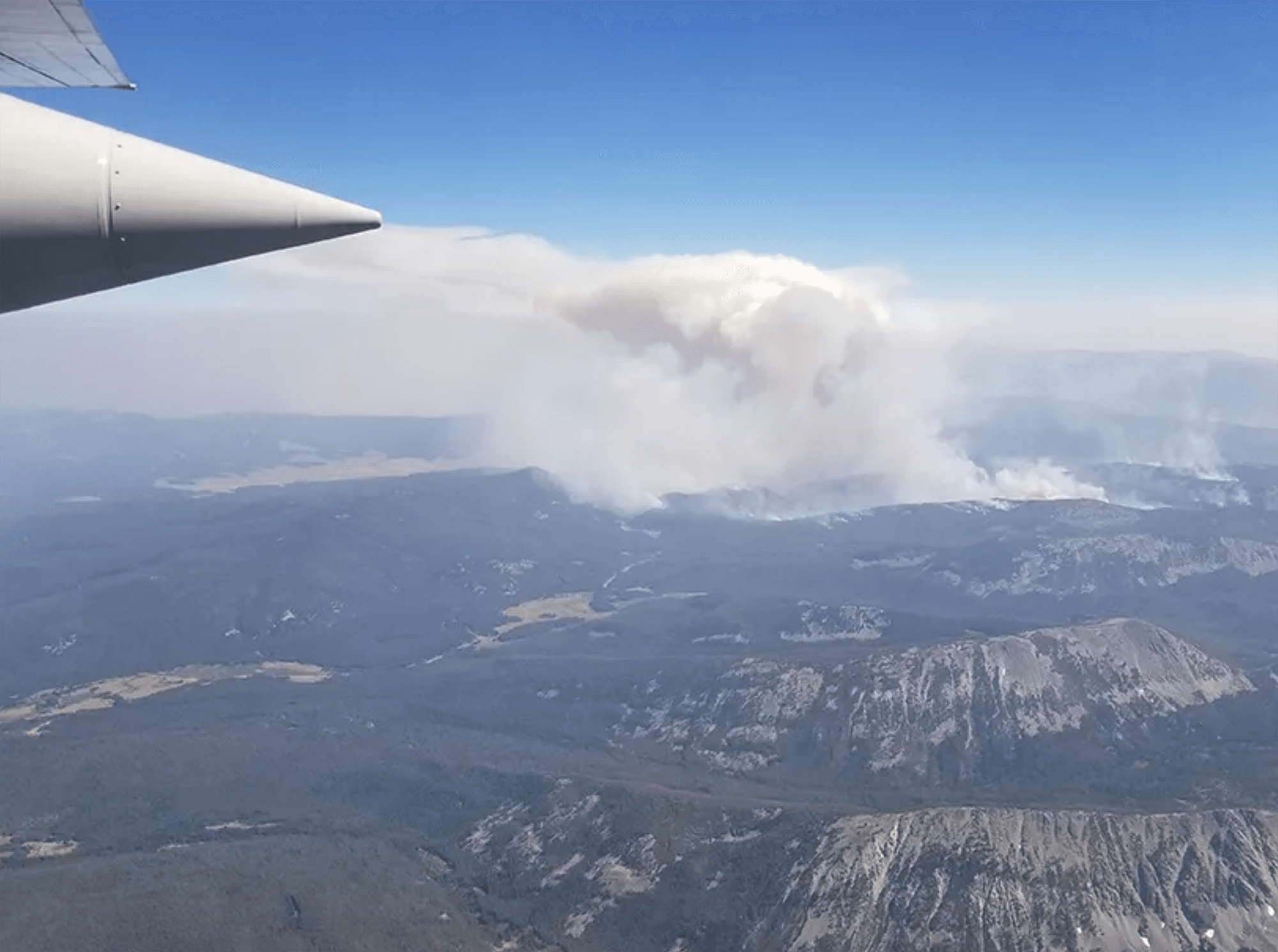
    Derechos are short-lived, intense wind storms sometimes associated with thunderstorms. Last spring, such a storm passed through Houston, leaving downtown skyscrapers with more damage than a hurricane with comparable wind speeds. Now researchers believe they know why a derecho’s 40 meter per second winds can badly damage buildings built to withstand 67 meter per second hurricane winds.

    In surveying the damage to Houston’s skyscrapers, the team noted that broken windows were concentrated in areas that faced other tall buildings. In a wind facility, the team explored how skyscrapers interfered with each other, based on their separation difference. They looked both at conditions that mimicked a hurricane’s winds as well as the downbursts — strong downward wind bursts — that are found in derechos.

    The researchers found that downbursts in between nearby buildings caused extremely strong suction forces along a building’s face — even compared to the forces seen with higher hurricane-force winds. Currently, these buildings are designed for hurricane-like conditions, but the team suggests that — at least in some regions — designers will need to take into account how downburst wind patterns affect a skyscraper, too. (Image credit: National Weather Service; research credit: O. Metwally et al.; via Ars Technica)

    Fediverse Reactions
  • Ultra-Soft Solids Flow By Turning Inside Out

    Ultra-Soft Solids Flow By Turning Inside Out

    Can a solid flow? What would that even look like? Researchers explored these questions with an ultra-soft gel (think 100,000 times softer than a gummy bear) pumped through a ring-shaped annular pipe. Despite its elasticity — that tendency to return to an original shape that distinguishes solids from fluids — the gel does flow. But after a short distance, furrows form and grow along the gel’s leading edge.

    Front view of an ultra-soft solid flowing through an annular pipe. The furrows forming along the face of the gel are places where the gel is essentially turning itself inside out.
    Front view of an ultra-soft solid flowing through an annular pipe. The furrows forming along the face of the gel are places where the gel is essentially turning itself inside out.

    Since the gel alongside the pipe’s walls can’t slide due to friction, the gel flows by essentially turning itself inside out. Inner portions of the gel flow forward and then split off toward one of the walls as they reach the leading edge. This eversion builds up lots of internal stress in the gel, and furrowing — much like crumpling a sheet of paper — relieves that stress. (Image and research credit: J. Hwang et al.; via APS News)

    Fediverse Reactions
  • Anti-Icing Polar Bear Fur

    Anti-Icing Polar Bear Fur

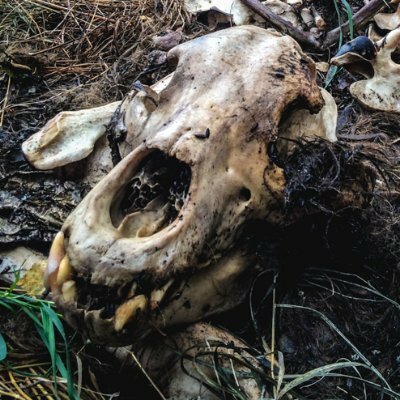
    Despite spending their lives in and around frigid water, snow, and ice, polar bears are rarely troubled by ice building up on their fur. This natural anti-icing property is one Inuits have long taken advantage of by using polar bear fur in hunting stools and sandals. In a new study, researchers looked at just how “icephobic” polar bear fur is and what properties make it so.

    The key to a polar bear’s anti-icing is sebum — a mixture of cholesterol, diacylglycerols, and fatty acids secreted from glands near each hair’s root. When sebum is present on the hair, the researchers found it takes very little force to remove ice; in contrast, fur that had been washed with a surfactant that stripped away the sebum clung to ice.

    The researchers are interested in uncovering which specific chemical components of sebum impart its icephobicity. That information could enable a new generation of anti-icing treatments for aircraft and other human-made technologies; right now, many anti-icing treatments use PFAS, also known as “forever chemicals,” that have major disadvantages to human and environmental health. (Image credit: H. Mager; research credit: J. Carolan et al.; via Physics World)

    Fediverse Reactions
  • Flooding the Mediterranean

    Flooding the Mediterranean

    Nearly 6 million years ago, the Mediterranean was cut off from the ocean and evaporated faster than rivers could replenish it. This created a salty desert that persisted until about 5.3 million years ago. One hypothesis — the Zanclean megaflood — suggests that the Mediterranean refilled rapidly through an erosion channel near the Strait of Gilbraltar. A new study bolsters the concept by identifying geological features near Sicily consistent with the megaflood.

    The team point to a grouping of over 300 ridges near the Sicily Sill, once a land bridge dividing the eastern and western Mediterranean and now underwater. The ridges are layered in debris but aren’t streamlined, suggesting they were rapidly deposited by turbulent waters, and date to the period of the proposed flooding. For more on the Zanclean Flood, check out this older post. (Image credit: R. Klavins; research credit: A. Micallif et al.; via Gizmodo)
    Fediverse Reactions