Category: Research

  • Penguin Poo Seeds Antarctic Clouds

    Penguin Poo Seeds Antarctic Clouds

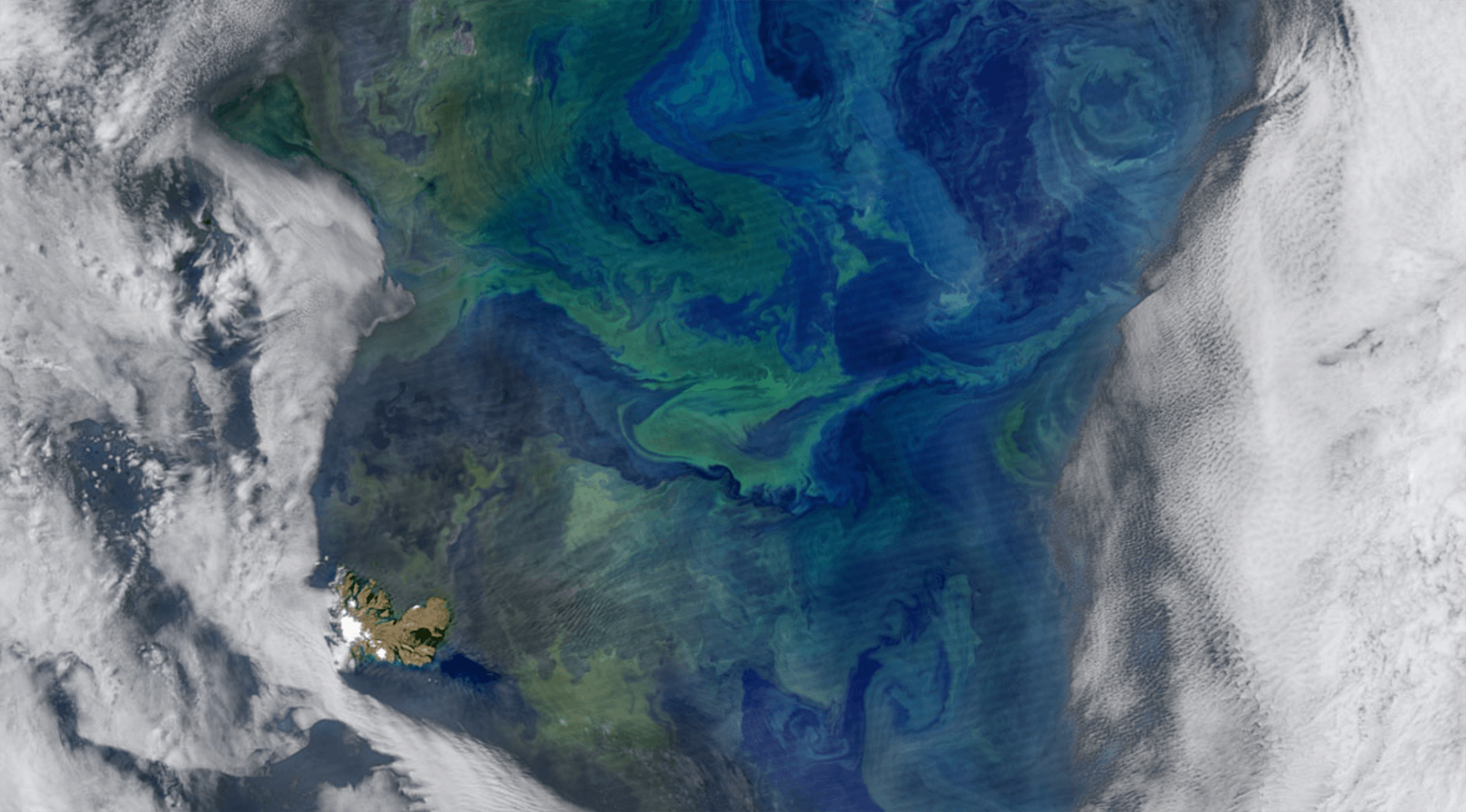
    Forming clouds requires more than just water vapor; every droplet in a cloud forms around a tiny aerosol particle that serves as a seed that vapor can condense onto. Without these aerosols, there are no clouds. In most regions of the world, aerosols are plentiful — produced by vegetation, dust, sea salt, and other sources. But in the Antarctic, aerosol sources are few. But a new study shows that penguins help create aerosols with their feces.

    Penguin feces is ammonia-rich, and that ammonia, when combined with sulfur compounds from marine phytoplankton, triggers chemistry that releases new aerosol particles. The researchers measured ammonia carried on the wind from nearby penguin colonies and found that the birds are a large ammonia source, producing 100 to 1000 times the region’s baseline ammonia levels. In combination with another ingredient in penguin guano, the researchers found the penguins boosted aerosol production 10,000-fold. That means penguins can actually influence their environment, helping to create clouds that keep Antarctica cooler. (Image credit: H. Neufeld; research credit: M. Boyer et al.; via Eos)

    Fediverse Reactions
  • Proving Superdiffusion

    Proving Superdiffusion

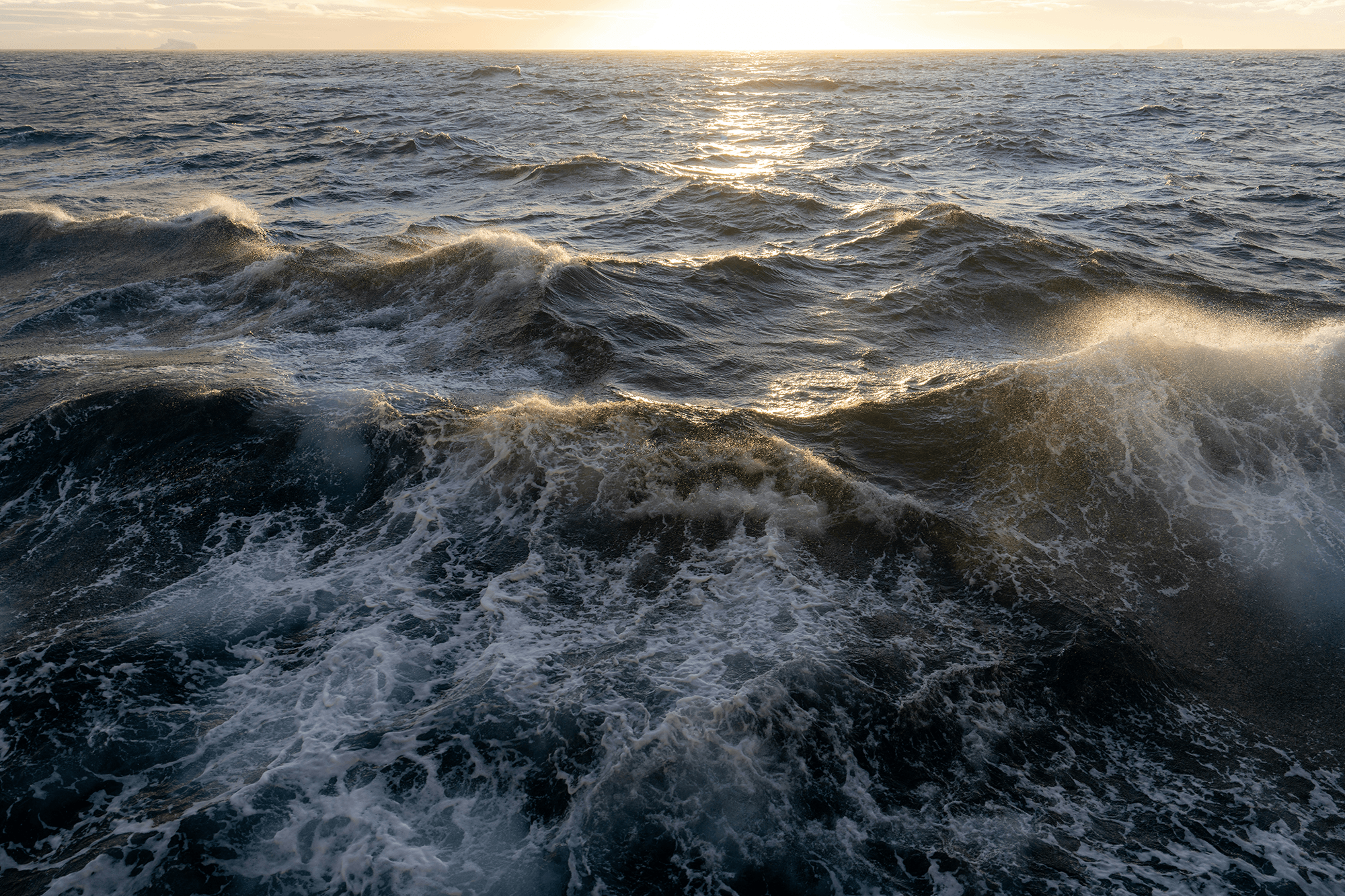
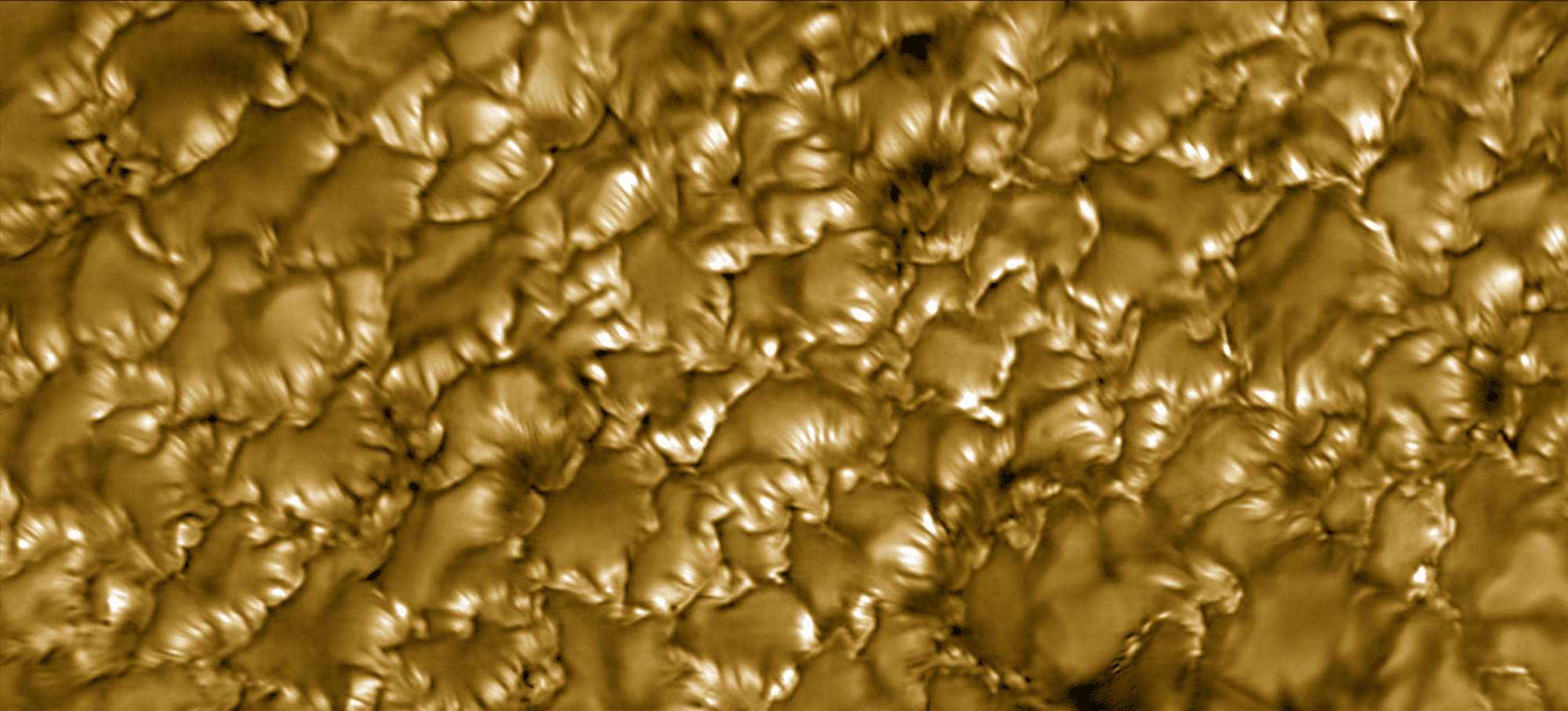
    Turbulence is very good at spreading things out. Drop dye into a turbulent flow and it will quickly disperse. Add in particles — like rubber ducks — and they can spread apart, often at speeds quicker than one would expect, based on the background flow. This is (roughly speaking) a phenomenon known as “superdiffusion,” where turbulence makes particles that start out as neighbors part ways.

    Physicists conjectured that turbulence — including simplified and idealized versions of it that are simpler to deal with — had this superdiffusion property, but no one was able to show that in a mathematically rigorous way. But now a group of mathematicians has done so, using a technique known as homogenization. There’s a lot more on the story over at Quanta, or you can check out the original papers on arXiv. (Image credit: J. Richard; research credit: S. Armstrong et al. and S. Armstrong and T. Kuusi; see also Quanta)

    Fediverse Reactions
  • Clapping Hands

    Clapping Hands

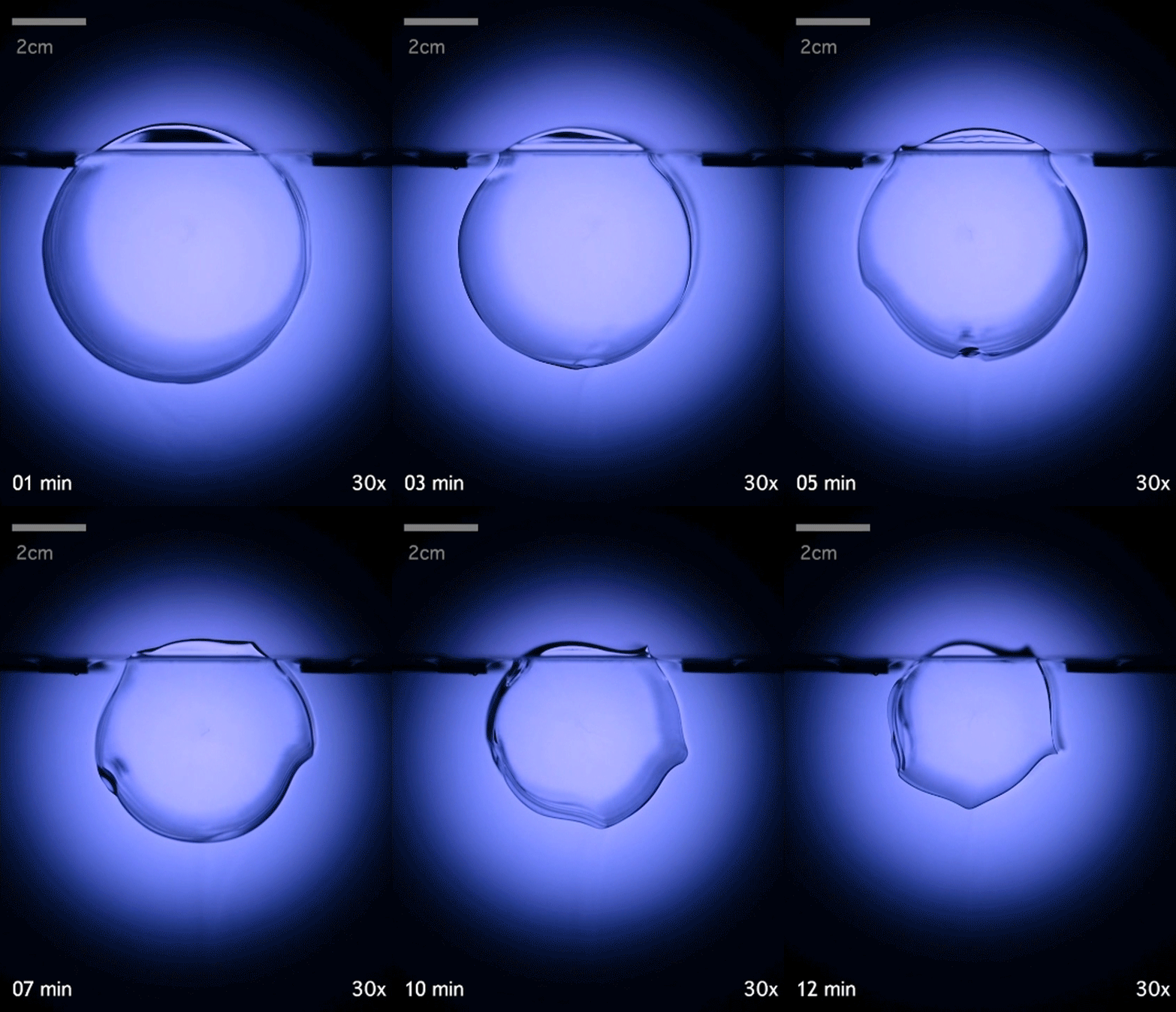
    Although often associated with applause, hand clapping is more universal than that. The distinctive sound can mark rhythms, draw attention, and even test the surrounding acoustics. But how exactly does hand clapping work? A recent study shows that the acoustics of hand clapping come from more than just the collision of hands. Especially in a cupped configuration, clapping hands act like a Helmholtz resonator (think blowing across a bottle top), producing a resonant jet that squeezes out between the forefinger and thumb of the impacted hand. Check out the images above to see how that jet appears in various clapping configurations. (Image and research credit: Y. Fu et al.; via Physics Today)

    Fediverse Reactions
  • Flamingo Fluid Dynamics, Part 2: The Game’s a Foot

    Flamingo Fluid Dynamics, Part 2: The Game’s a Foot

    Yesterday we saw how hunting flamingos use their heads and beaks to draw out and trap various prey. Today we take another look at the same study, which shows that flamingos use their footwork, too. If you watch flamingos on a beach, in muddy waters, or in a shallow pool, you’ll see them shifting back and forth as they lift and lower their feet. In humans, we might attribute this to nervous energy, but it turns out it’s another flamingo hunting habit.

    A mechanical model of a flamingo's foot reveals how its stomping and shape change create a standing vortex.

    As a flamingo raises its foot, it draws its toes together; when it stomps down, its foot spreads outward. This morphing shape, researchers discovered, creates a standing vortex just ahead of its feet — right where it lowers its head to sample whatever hapless creatures it has caught in this swirling vortex. And the vortex, as shown below, is strong enough to trap even active swimmers, making the flamingo a hard hunter to escape. (Image credit: top – L. Yukai, others – V. Ortega-Jimenez et al.; research credit: V. Ortega-Jimenez et al.; submitted by Soh KY)

    Video showing how active swimmers can get caught in the flamingo's stomping vortex.
    Fediverse Reactions
  • Flamingo Fluid Dynamics, Part 1: A Head in the Game

    Flamingo Fluid Dynamics, Part 1: A Head in the Game

    Flamingos are unequivocally odd-looking birds with their long skinny legs, sinuous necks, and bent L-shaped beaks. They are filter-feeders, but a new study shows that they are far from passive wanderers looking for easy prey in shallow waters. Instead, flamingos are active hunters, using fluid dynamics to draw out and trap the quick-moving invertebrates they feed on. In today’s post, I’ll focus on how flamingos use their heads and beaks; next time, we’ll take a look at what they do with their feet.

    As a flamingo retracts its beak from the bottom of a water tank, a tornado-like vortex forms.

    Feeding flamingos often bob their heads out of the water. This, it turns out, is not indecision, but a strategy. Lifting its flat upper forebeak from near the bottom of a pool creates suction. That suction creates a tornado-like vortex that helps draw food particles and prey from the muddy sediment.

    As a flamingo "chatters" its mandibles, it creates suction that can pull up food.

    When feeding, flamingos will also open and close their mandibles about 12 times a second in a behavior known as chattering. This movement, as seen in the video above, creates a flow that draws particles — and even active swimmers! — toward its beak at about seven centimeters a second.

    Video showing von Karman vortices trailing from a flamingo's head when placed on the water's surface. A recirculation zone forms at the tip of its beak, enhancing capture of food.

    Staying near the surface won’t keep prey safe from flamingos, either. In slow-flowing water, the birds will set the upper surface of their forebeak on the water, tip pointed downstream. This seems counterintuitive, until you see flow visualization around the bird’s head, as above. Von Karman vortices stream off the flamingo’s head, which creates a slow-moving recirculation zone right by the tip of the bird’s beak. Brine shrimp eggs get caught in these zones, delivering themselves right to the flamingo’s mouth.

    Clearly, the flamingo is a pretty sophisticated hunter! It’s actively drawing out and trapping prey with clever fluid dynamics. Tomorrow we’ll take a look at some of its other tricks. (Image credit: top – G. Cessati, others – V. Ortega-Jimenez et al.; research credit: V. Ortega-Jimenez et al.; submitted by Soh KY)

  • Non-Newtonian Effects in Magma Flows

    Non-Newtonian Effects in Magma Flows

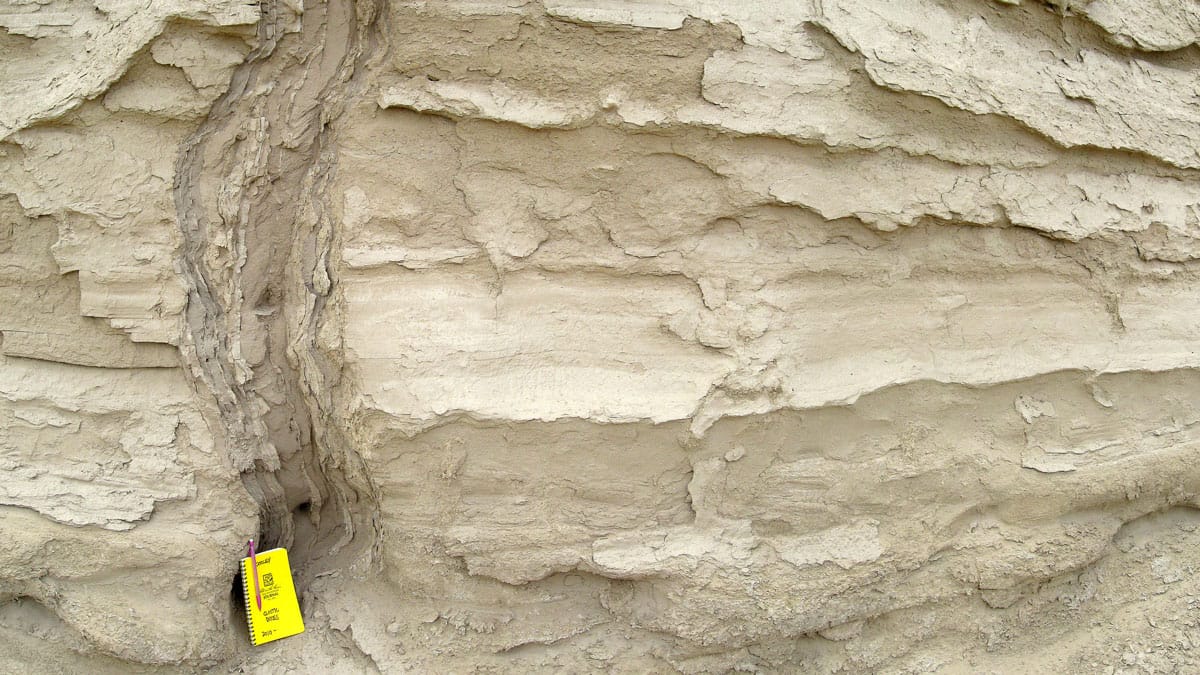
    As magma approaches the surface, it forces its way through new and existing fractures in the crust, forming dikes. When a volcano finally erupts, the magma’s viscosity is a major factor in just how explosive and dangerous the eruption will be, but a new study shows that what we see from the surface is a poor predictor of how magma actually flows within the dike.

    Researchers built their own artificial dike using a clear elastic gelatin, which they injected water and shear-thinning magma-mimics into. By tracking particles in the liquids, they could observe how each liquid followed on its way to the surface. All of the liquids formed similar-looking dikes at a similar speed, but within the dike, the liquids flowed very differently. Water cut a central jet through the gelatin, then showed areas of recirculation along the outer edges. In contrast, the shear-thinning liquids — which are likely more representative of actual magma — showed no recirculation. Instead, they flowed through the dike in a smooth, fan-like shape.

    The team cautions that surface-level observations of developing magma dikes provide little information on the flow going on underneath. Instead, their results suggest that volcanologists modeling magma underground should take care to include the magma’s shear-thinning to properly capture the flow. (Image credit: T. Grypachevska; research credit: J. Kavanagh et al.; via Eos)

    Fediverse Reactions
  • Whale Migration Carries Nutrients

    Whale Migration Carries Nutrients

    When it comes to the movement of nutrients in the ocean, we think of run-off from rivers, upwelling along coasts, and convective currents. We don’t typically think about animal migrations, but a new study of baleen whales (including species like humpbacks and right whales) suggests that these massive mammals provide a small but critical spreading service.

    These whales feed in cold, nutrient-rich waters, like those in the Arctic, then travel thousands of kilometers to warm but nutrient-poor tropical waters to birth and raise calves. During that time, mothers do not hunt or eat; they live off their fat stores, which they also use to make milk for their offspring. Although they’re not eating during this time, they do still urinate, and it’s this activity that, according to researchers, adds some 3,000 tons of critical nitrogen to these areas. Since nitrogen is often a limited resource in these tropical waters, the whales’ urine may act like a fertilizer shipment for other species in their breeding grounds. (Image credit: C. Le Duc; research credit: J. Roman et al.; via Eos)
    Fediverse Reactions
  • Featured Video Play Icon

    Tracking Insects in Flight

    Insects are masters of a challenging flight regime; their agility, stability, and control far outstrip anything we’ve built at their size. But to even understand how they accomplish this, researchers must manage to capture those maneuvers in the first place. Insects don’t stay in one small area, which is what the typical fixed camera motion capture set-up requires. Instead, one group of researchers has designed a system with a moveable mirror that tracks an insect’s motion in real-time, ensuring that the camera stays fixed on the insect even as it traverses a room or — for the drone-mounted version — a field.

    Real-time motion tracking means that researchers can better capture detailed footage of the insect’s maneuvers in a lab environment, or they can head into the field to follow insects in the wild. Imagine tracking individual pollinators through a full day of gathering or watching how a bumblebee responds to getting hit by a raindrop mid-flight. (Video and image credit: Science; research credit: T. Vo-Doan et al.)

    Fediverse Reactions
  • Pour-Over Physics

    Pour-Over Physics

    Fluids labs are filled with many a coffee drinker, and even those (like me) who don’t enjoy coffee, can find plenty of fascinating physics in their labmates’ mugs. Espresso has received the lion’s share of the research in recent years, but a new study looks at the unique characteristics of a pour-over coffee. In this technique, coffee grounds sit in a conical filter and a stream of hot water pours over the top of the grounds. Researchers found that the ideal pour creates a powerful mixing environment in a coffee-studded water layer that sits above a V-shaped bed of grains created by the falling water jet.

    The best mixing, they find, requires a pour height no greater than 50 centimeters (to prevent the jet from breaking into drops) but with enough height that the falling jet stirs up the grounds. You also want to pour slowly enough to give plenty of time for mixing, without letting the jet stick to the kettle’s spout, which (again) causes the jet to break up.

    That ideal pour extracts more coffee flavor from the grounds, allowing you to get the same strength of brew from fewer beans. As climate change makes coffee harder to grow, coffee drinkers will want every trick to stretch their supply. (Image credit: S. Satora; research credit: E. Park et al.; via Ars Technica)

    Fediverse Reactions
  • Mapping the Mozambique Channel

    Mapping the Mozambique Channel

    The Mozambique Channel boasts some of the world’s most turbulent waters, driven by eddies hundreds of kilometers wide. Eddies of this size — known as mesoscale — determine regional flows that influence local biodiversity, sediment mixing, and how plastic pollution moves. To better understand the region, scientists measured a mesoscale dipole from a research vessel.

    Illustration of flows in the Mozambique Channel. The anticyclonic ring in dark blue rotates counterclockwise and consists of largely uniform water (labeled Ring R1). To the south, in green, a cyclonic eddy rotates in a clockwise sense (labeled Cyclone C1). This area is chlorophyll-rich and has varying salinity levels. Between the two is a filament of chlorophyll-rich water being drawn from the near-shore region (labeled Filament F1).
    Illustration of flows in the Mozambique Channel. The anticyclonic ring in dark blue rotates counterclockwise and consists of largely uniform water (labeled Ring: R1). To the south, in green, a cyclonic eddy rotates in a clockwise sense (labeled Cyclone: C1). This area is chlorophyll-rich and has varying salinity levels. Between the two is a filament of chlorophyll-rich water being drawn from the near-shore region (labeled Filament: F1).

    The dipole consisted of a large anticyclonic ring (shown in dark blue) that rotated counterclockwise and a smaller cyclonic eddy (shown in green) that rotated clockwise. Between these eddies lay a central jet moving up to 130 centimeters per second that drew material out from the shoreline. In the anticyclonic ring, researchers found largely uniform waters with little chlorophyll. The cyclonic eddy, in contrast, was high in chlorophyll and had large variations in salinity. Those smaller-scale variations, they found, helped to drive vertical motions of up to 40 meters per day.

    In situ measurements like these help scientists understand how energy flows through different scales in the ocean and how that energy helps transport nutrients, sediment, and pollution regionally. Such measurements also help us to refine ocean models that enable us to predict this transport and how regions will change as climate patterns shift. (Image credit: ship – A. Lamielle/Wikimedia Commons, eddies – P. Penven et al.; research credit: P. Penven et al.; via Eos)

    Fediverse Reactions