Lake Erie, the shallowest of the Great Lakes, sees large swings in ice cover over the winter. In late January 2022, the lake was nearly completely frozen over, with 94 percent of its area covered in ice. By February 3rd, ice cover had dropped to 62 percent before rising again to 90 percent by the 5th. Air temperature and wind are the primary drivers of Erie’s fast ice growth and decay. As storms roll through, the ice can spread rapidly, but once temperatures rise, it takes very little forcing from the wind for the ice to begin breaking up. (Image credit: J. Stevens/USGS; via NASA Earth Observatory)
Category: Phenomena

Tricking a Kettle


Electric kettles are designed to shut off when the water inside them boils. But what does that mean exactly? In this video, Steve Mould explores that question by trying to trick his kettles into boiling off ethanol, a liquid with a lower boiling temperature than water. Steve figures that, if a kettle is designed to shut off at 100 degrees Celsius (water’s boiling point), then it will overboil ethanol since its temperature will never get that high.
I’ll let you watch the video and see what happens…
(more…)When Bubbles Don’t Die


In a pure liquid, most bubbles pop almost immediately. But with a simple ingredient — a little heat — bubbles can live almost indefinitely. The mechanism is revealed in this video when the researchers use an infrared camera to watch a bubble on a heated pool. The top of the bubble is cooler than the rest of the liquid, forming colder, denser droplets that slide down. But the cooler liquid also has a higher surface tension, which draws warm liquid up the bubble, replenishing it. The result is a stable bubble that simply carries on. (Image and video credit: S. Nath et al.)
Morphing Particle Rafts
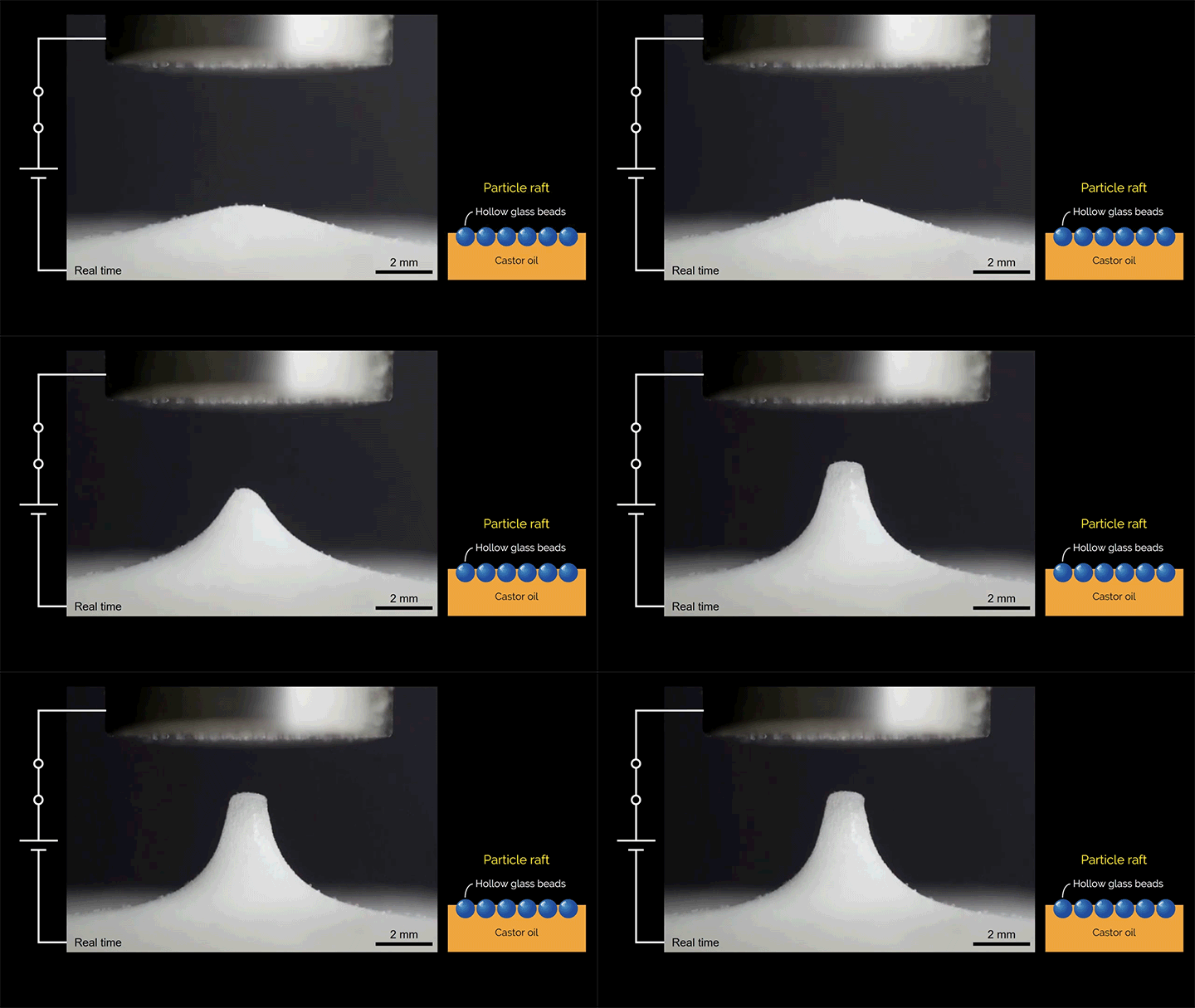
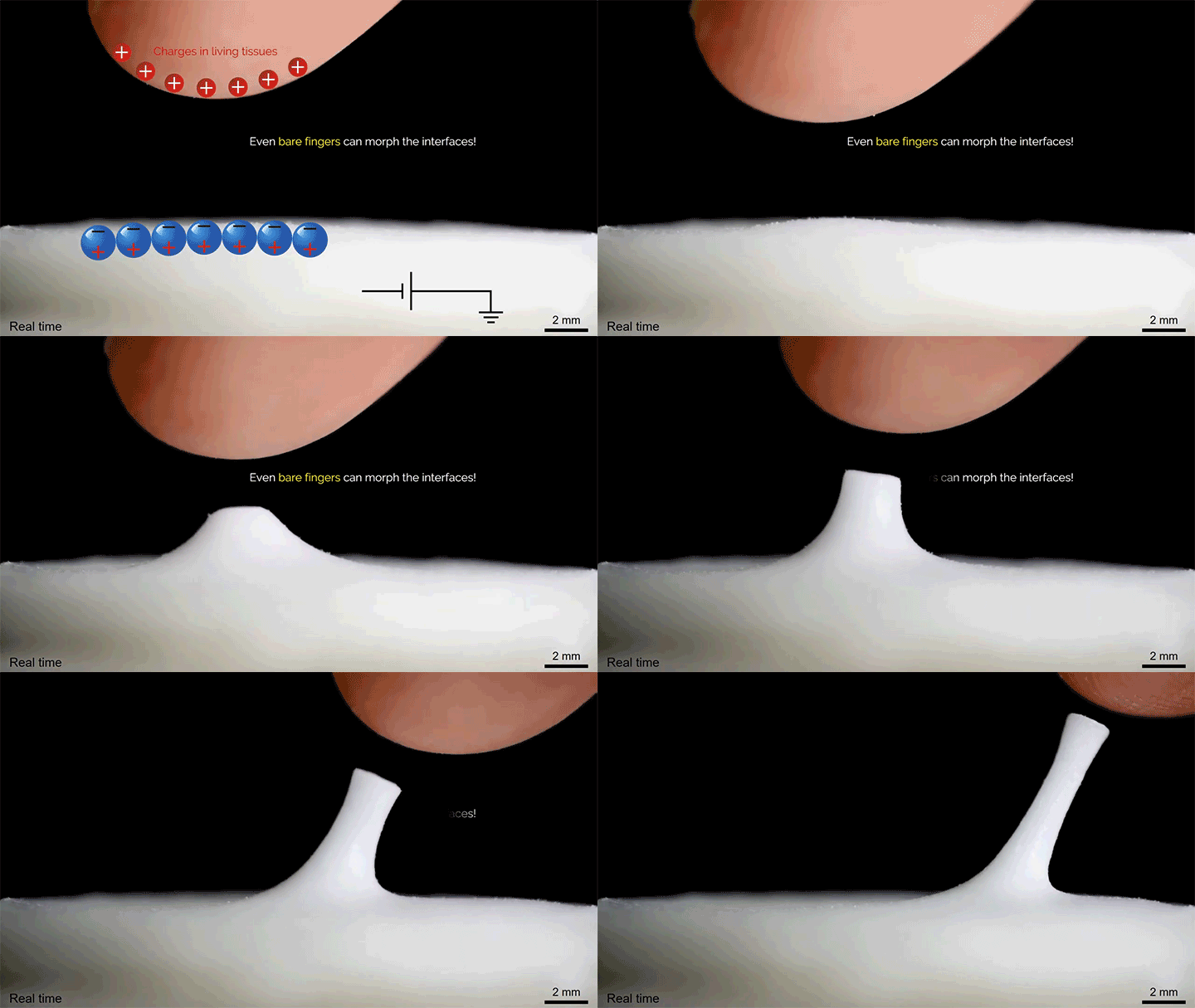
A layer of tiny glass beads sitting atop a pool of castor oil becomes a morphing surface in this video. Applying an electric field creates enough electrostatic force to draw the interface upward against the power of both gravity and surface tension. Moving the electric field — either by shifting the electrode or simply moving a finger over the surface — is enough to pull columns of fluid along! I could imagine this making some very cool human-machine interfaces one day. (Image and video credit: K. Sun et al.)

Mushy Layers
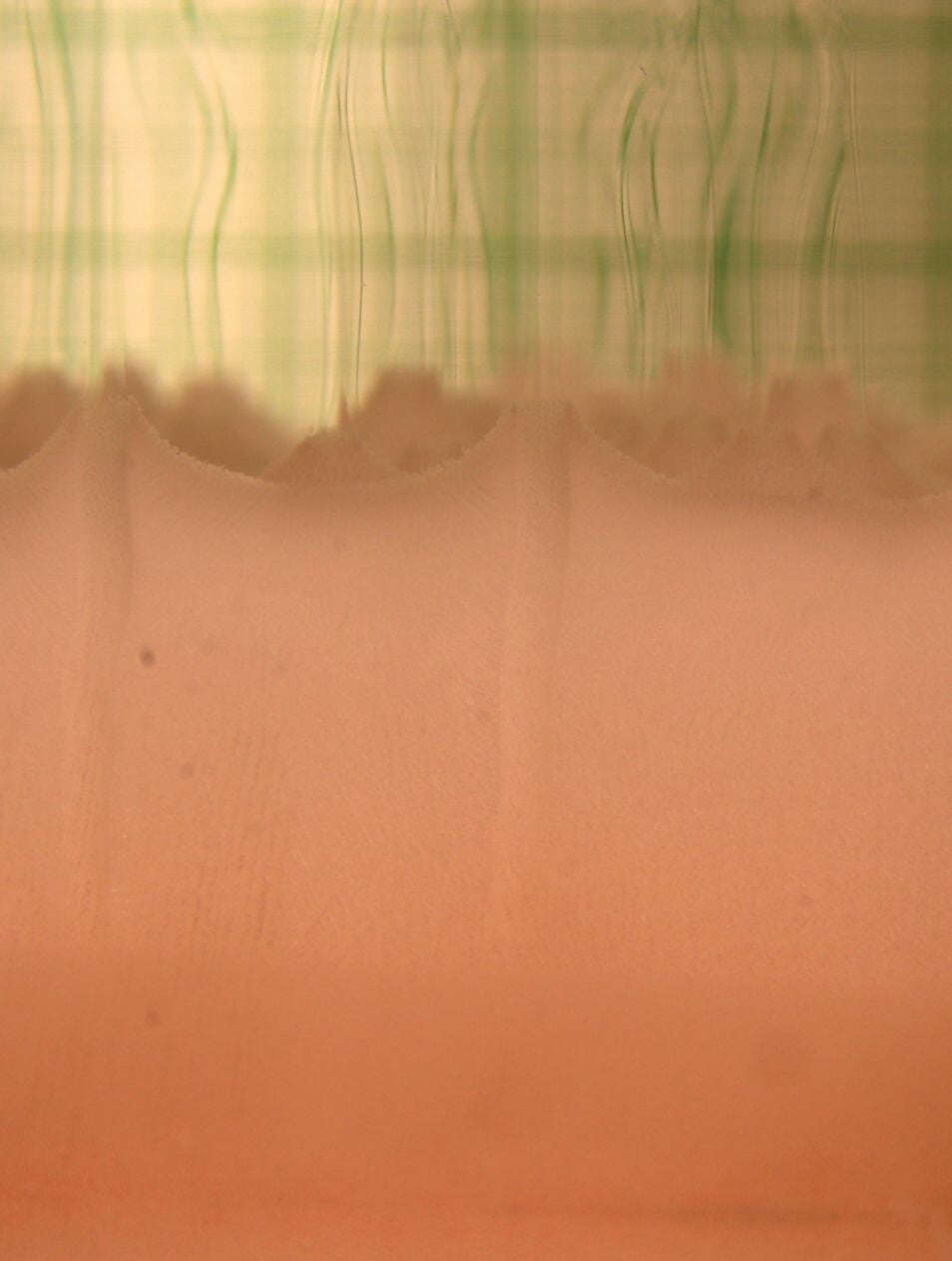
In many geophysical and metallurgical processes, there is a stage with a porous layer of liquid-infused solid known as a mushy layer. Such layers form in sea ice, in cooling metals, and even in the depths of our mantle. Within the mushy layer, temperature, density, and concentration can vary dramatically from one location to another.
The image above shows a mushy layer made from a mixture of water and ammonium chloride. Above the mushy layer, green plumes drift upward, carrying lighter fluid. Look closely within the mushy layer and you’ll see narrow channels feeding up to the surface. These are known as chimneys. In sea ice, chimneys like these carry salty brine out of the ice and into the seawater, increasing its salinity. See this Physics Today article for more details on the dynamics of mushy layers. (Image credit: J. Kyselica; via Physics Today)
Conserving the Hill House


In 1904, Scottish architect Charles Rennie Mackintosh created the Hill House, a masterpiece of modern design decades ahead of its time. Unfortunately, the Portland cement used for the house’s exterior has not held up well to a century of Scottish rains. As water saturated the cement, it began to dissolve and crumble. So to save the property, conservators commissioned the giant chainmail Box that currently surrounds the house. It protects the house from rain while allowing ventilation that dries the house out slowly. As an added bonus, the superstructure allows visitors to appreciate the house from new angles. (Video credit: T. Scott; via Colossal)
Vortex Arms


A fixed cylinder will shed alternating vortices in its wake, but one allowed to oscillate forward and backward in the flow instead sheds simultaneous vortices. The shape of the wake still depends on the flow’s velocity. At low flow speeds, the two vortices are the same size when they shed. At higher velocities, the two vortices still shed simultaneously, but one will be large while the other is small. The larger vortex moves faster and travels downstream, but the smaller, slower vortex drifts inward. In the next shedding cycle, the small and large vortices switch positions, creating alternating symmetric shedding. (Image and video credit: P. Boersma et al.)

Ship Tracks in the Sky
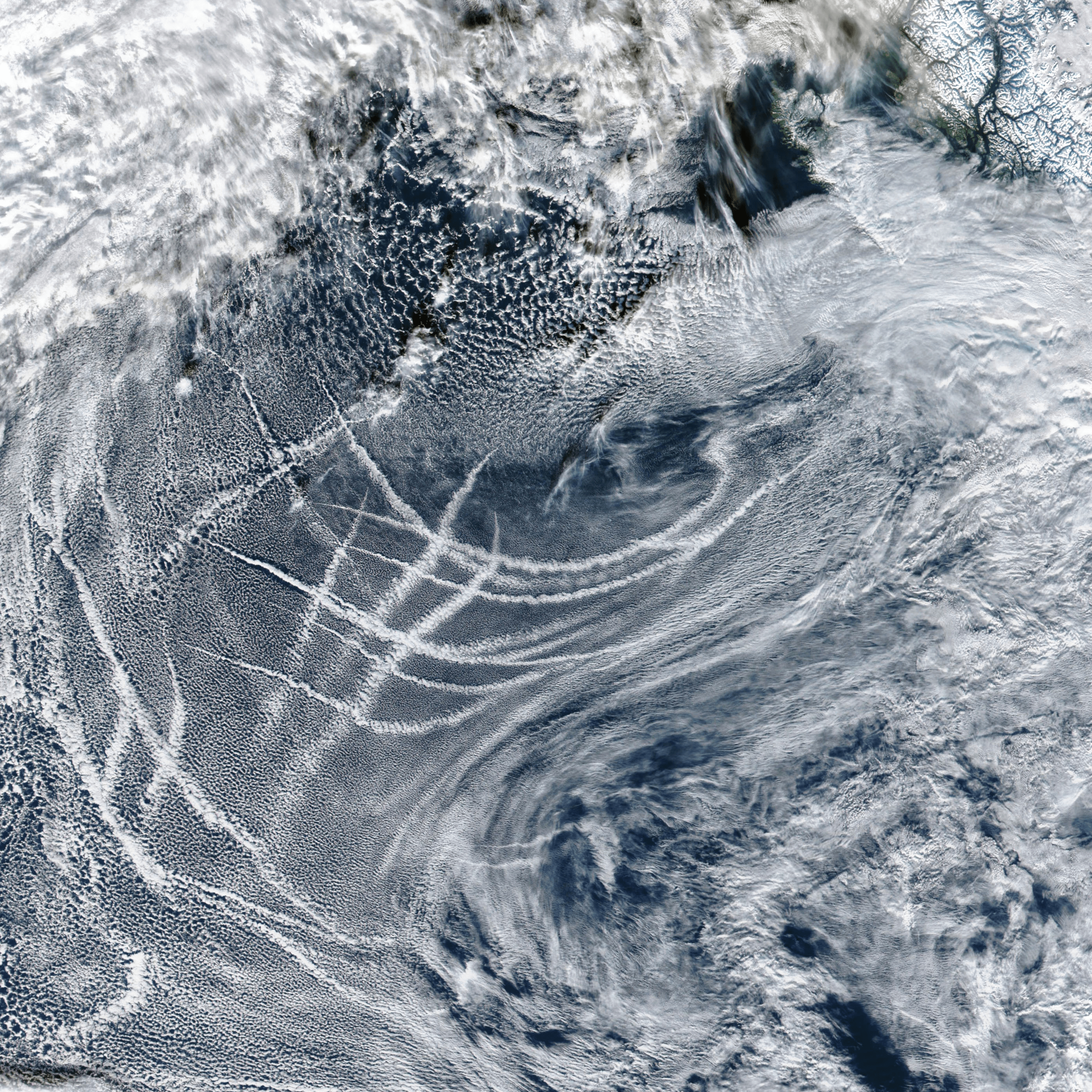
Line-like clouds criss-cross the Pacific Ocean in this satellite image. Each one is a ship track, a remnant left behind a passing ship. As they travel, ships leave a trail of exhaust that seeds the atmosphere with aerosols that serve as additional nucleation sites for clouds. The tiny particles interact with existing low-level clouds, making them brighter. Of course, the aerosols are present in the wake of ships regardless of whether they seed clouds that we can observe. (Image credit: J. Stevens; via NASA Earth Observatory)
Backflipping Bubbles


Rising bubbles can backflip when they impact a tilted surface. As shown in this video, small bubbles will bounce off a titled surface, with each hop leading the bubble further up the incline. For slightly larger bubbles, though, things get a little more complicated. The bubble impacts the surface, bounces away, then circles back and makes its second impact behind the first before moving further up the plate. What drives this backflip? The researchers found that circulation around these bubbles is asymmetric, generating a lift force that drives the bubble’s backflip. (Image and video credit: A. Hooshanginejad et al.)

Rocked By Waves
This astronaut photo shows the Isles of Scilly off the Cornish coast. The pale turquoise waters mark shallow reefs and shoals between the islands while blues reveal deeper waters surrounding the isles. The sun angle is perfect for highlighting the complex wave patterns caused by the winds and tides. Look closely and you’ll see swells intersecting one another and even diffracting around the smaller islets. (Image credit: NASA; via NASA Earth Observatory)