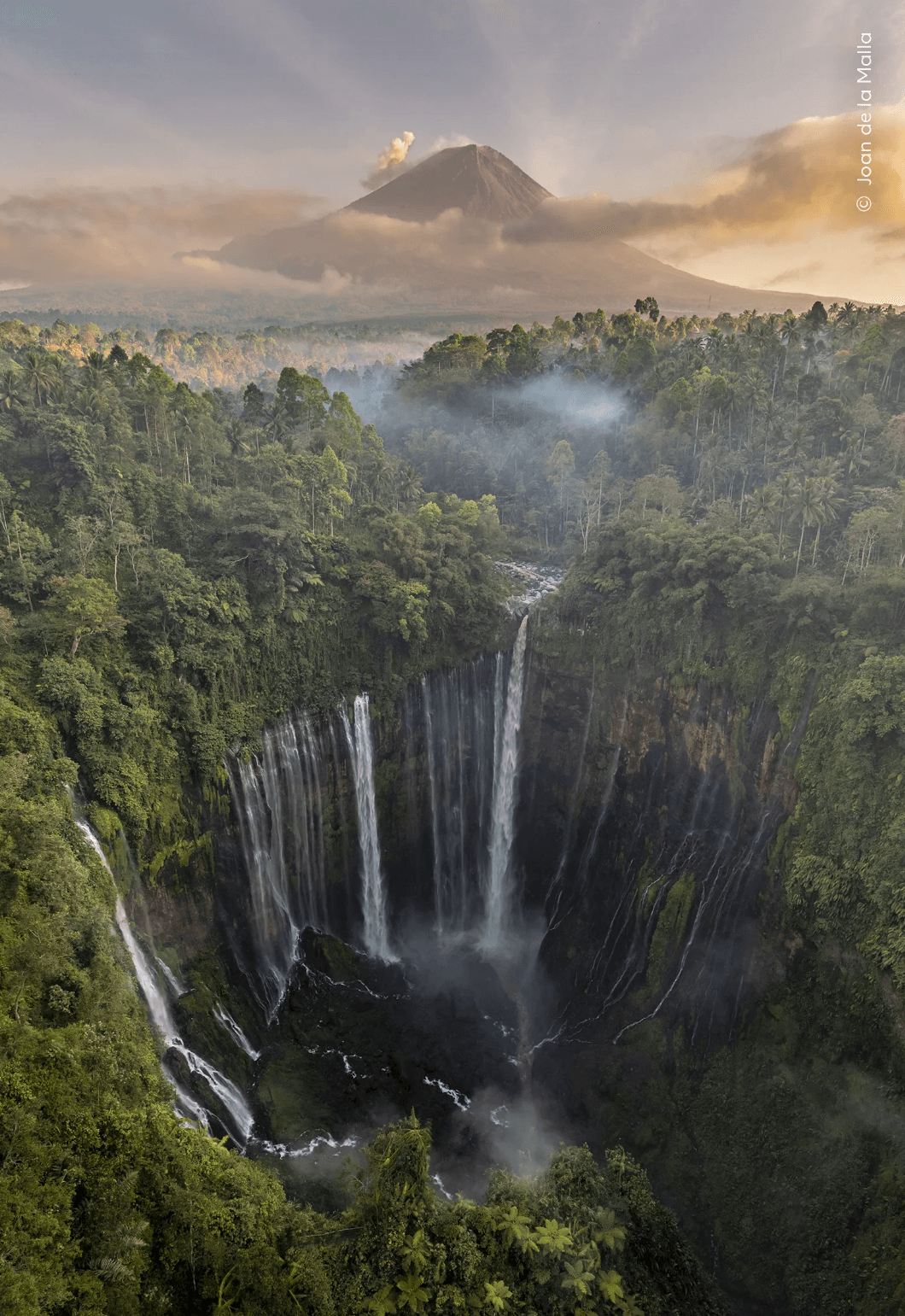
The Semeru volcano rises in the background of this photo of Java’s Tumpak Sewa waterfall by Joan de la Malla. Rain that falls on the volcano slides down its flank and wanders through the jungle on its way to the spectacular 120-meter-high waterfall. From the clouds wreathing the mountain through the jungle’s drifting fogs to the mists of the falls, this portrait highlights the many forms water takes on its journey. (Image credit: J. de la Malla/WPOTY; via Colossal)
Category: Art

Bubbling Up
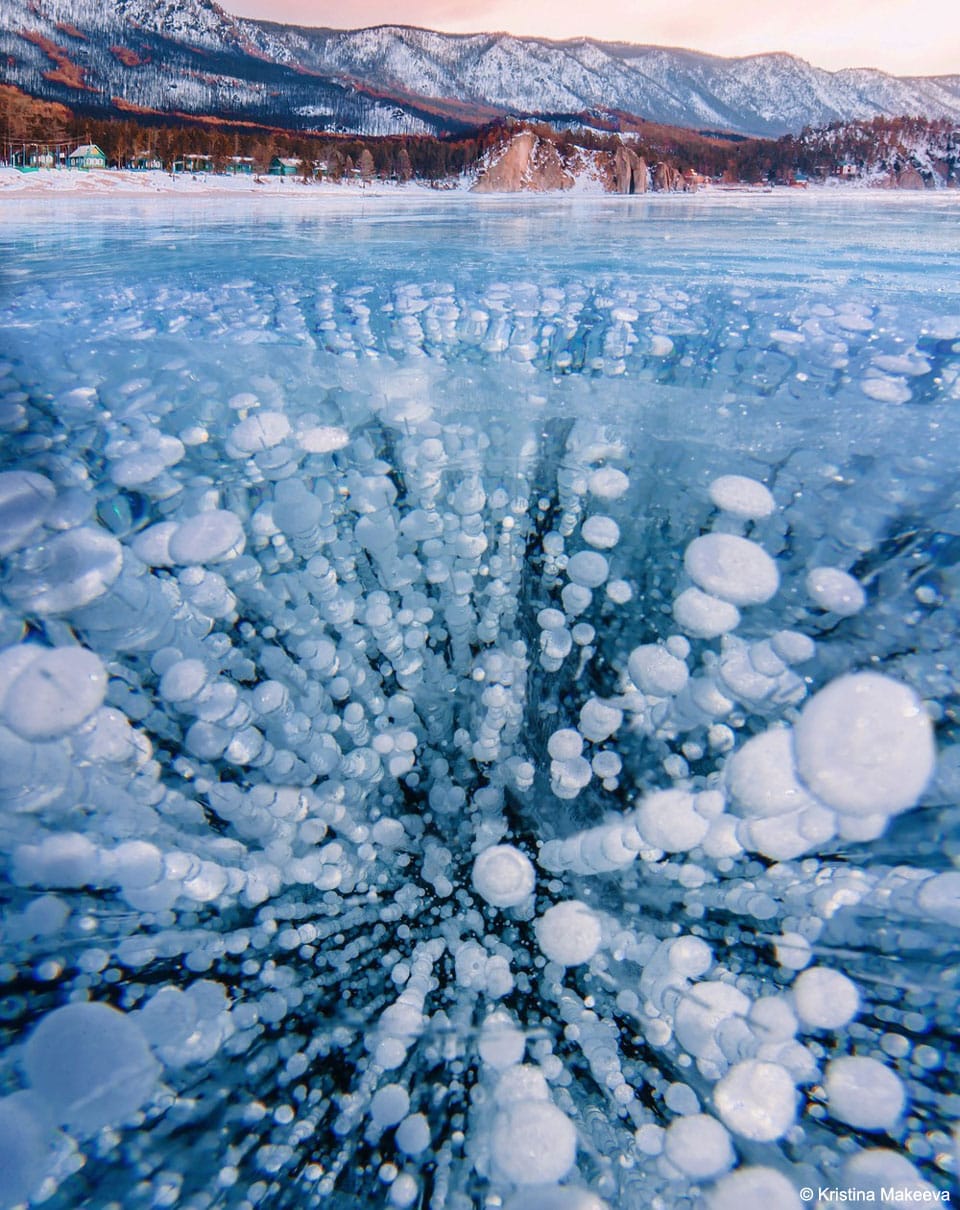
By volume, Lake Baikal is the world’s largest lake, holding over 20% of the planet’s fresh water. It’s also a major carbon sink, holding large amounts of methane. That’s the gas trapped in the frozen bubbles seen here. Baikal’s ice is exceptionally clear, making long trails of frozen bubbles visible during the winter. (Image credit: K. Makeeva; via APOD)
Fediverse Reactions
-

Within a Drop
In this macro video, various chemical reactions swirl inside a single dangling droplet. Despite its tiny size, quite a lot can go on in a drop like this. Both the injection of chemicals and the chemical reactions themselves can cause the flows we see here. Surface tension variations and capillary waves on the exterior of the drop can play a role, too. Just because a flow is tiny doesn’t mean it’s simple. (Video and image credit: B. Pleyer; via Nikon Small World in Motion)

Chemical reactions swirl within a single, hanging droplet. Fediverse Reactions
-

Strata of Starlings


Starlings come together in groups of up to thousands of birds for the protection of numbers. These flocks form spellbinding, undulating masses known as murmurations, where the movement of individual starlings sends waves spreading from neighbor to neighbor through the group. One bird’s effort to dodge a hawk triggers a giant, spreading ripple in the flock.
To capture the flowing nature of the murmuration, photographer and scientist Kathryn Cooper layers multiple images of the starlings atop one another. The birds themselves become pathlines marking the murmuration’s motion. The final images are surprisingly varied in form. Some flocks resemble a downpour of rain; others the dangling branches of a tree. (Image credit: K. Cooper; via Colossal)
Fediverse Reactions
-

“Flowing Kelp”
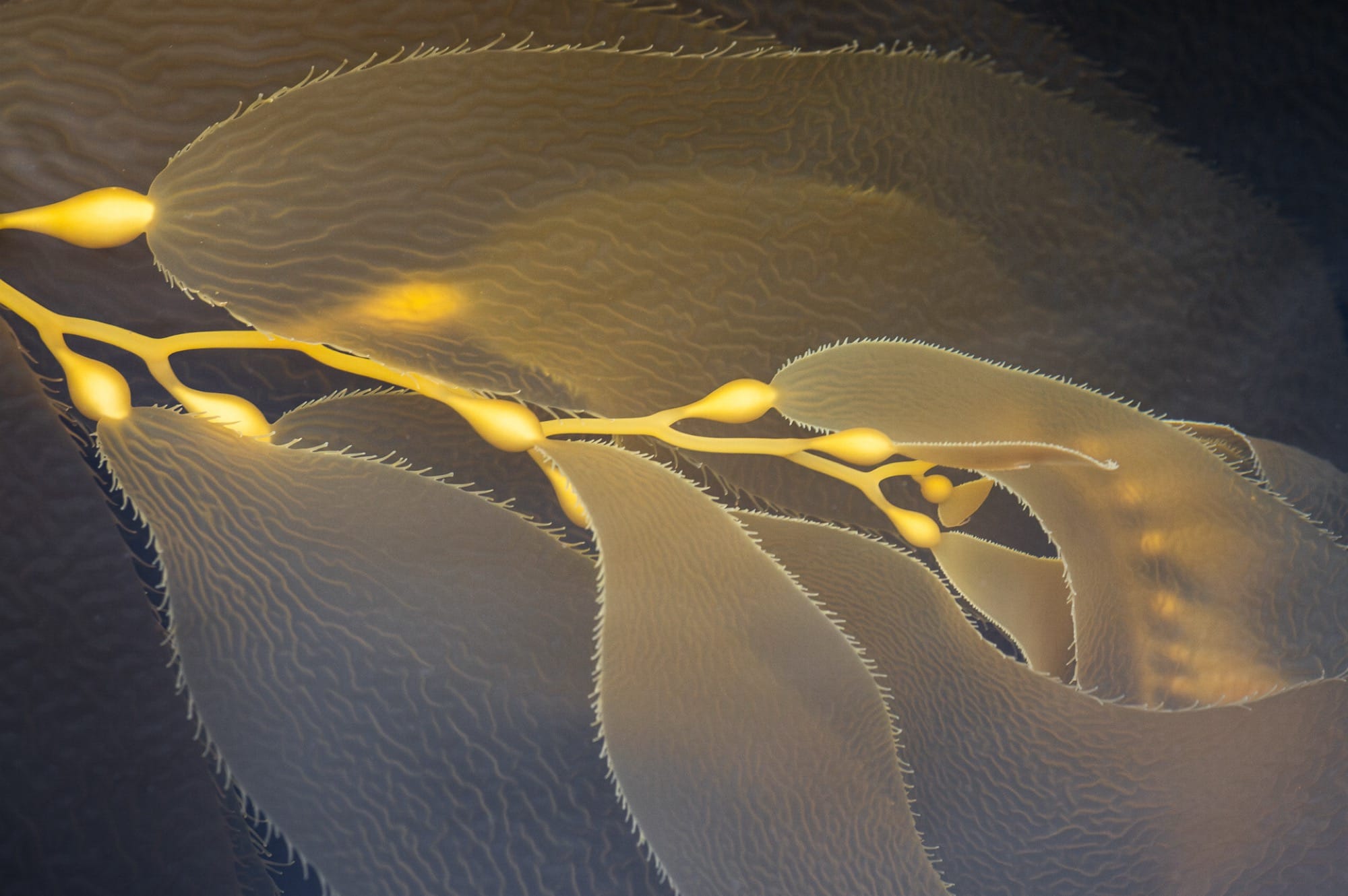
This CUPOTY-shortlisted photo by Sigfrido Zimmerman shows giant kelp drifting in the current. At the base of each blade is an inflated bladder that helps keep the algae buoyant. The blades themselves are furrowed on their surface, with patterns reminiscent of sand ripples. Though giant kelp can grow to as large as 60 meters, the species lives in constant flux, pushed and pulled by the currents that run along its length. (Image credit: S. Zimmerman/CUPOTY; via Colossal)
Fediverse Reactions
-

“Magic of the North”
Fires glow above and below in this award-winning image from photographer Josh Beames. In the foreground, lava from an Icelandic eruption spurts into the air and seeps across the landscape as it slowly cools. Above, the northern aurora ripples through the night sky, marking the dance of high-energy particles streaming into our atmosphere, guided by the lines of our magnetic field. Throw in some billowing turbulent smoke, and it’s hard to get more fluid dynamical (or beautiful!) than this. (Image credit: J. Beames/NLPOTY; via Colossal)
Fediverse Reactions
-

Beneath a River of Red
A glowing arch of red, pink, and white anchors this stunning composite astrophotograph. This is a STEVE (Strong Thermal Emission Velocity Enhancement) caused by a river of fast-moving ions high in the atmosphere. Above the STEVE’s glow, the skies are red; that’s due either to the STEVE or to the heat-related glow of a Stable Auroral Red (SAR) arc. Find even more beautiful astrophotography at the artist’s website and Instagram. (Image credit: L. Leroux-Géré; via APOD)
Fediverse Reactions
-
“Paradolia”


In “Paradolia,” filmmaker Susi Sie plays with pareidolia, our tendency to seek patterns in nebulous data — like faces on a slice of toast. Droplets of miscible and immiscible fluids collide, part, and mix in each sequence, providing plenty of fodder for an active imagination. For myself, my brain especially likes assigning cartoon expressions to well-spaced drops in the video. What do you see? (Video and image credit: S. Sie)

Trapped in Ice


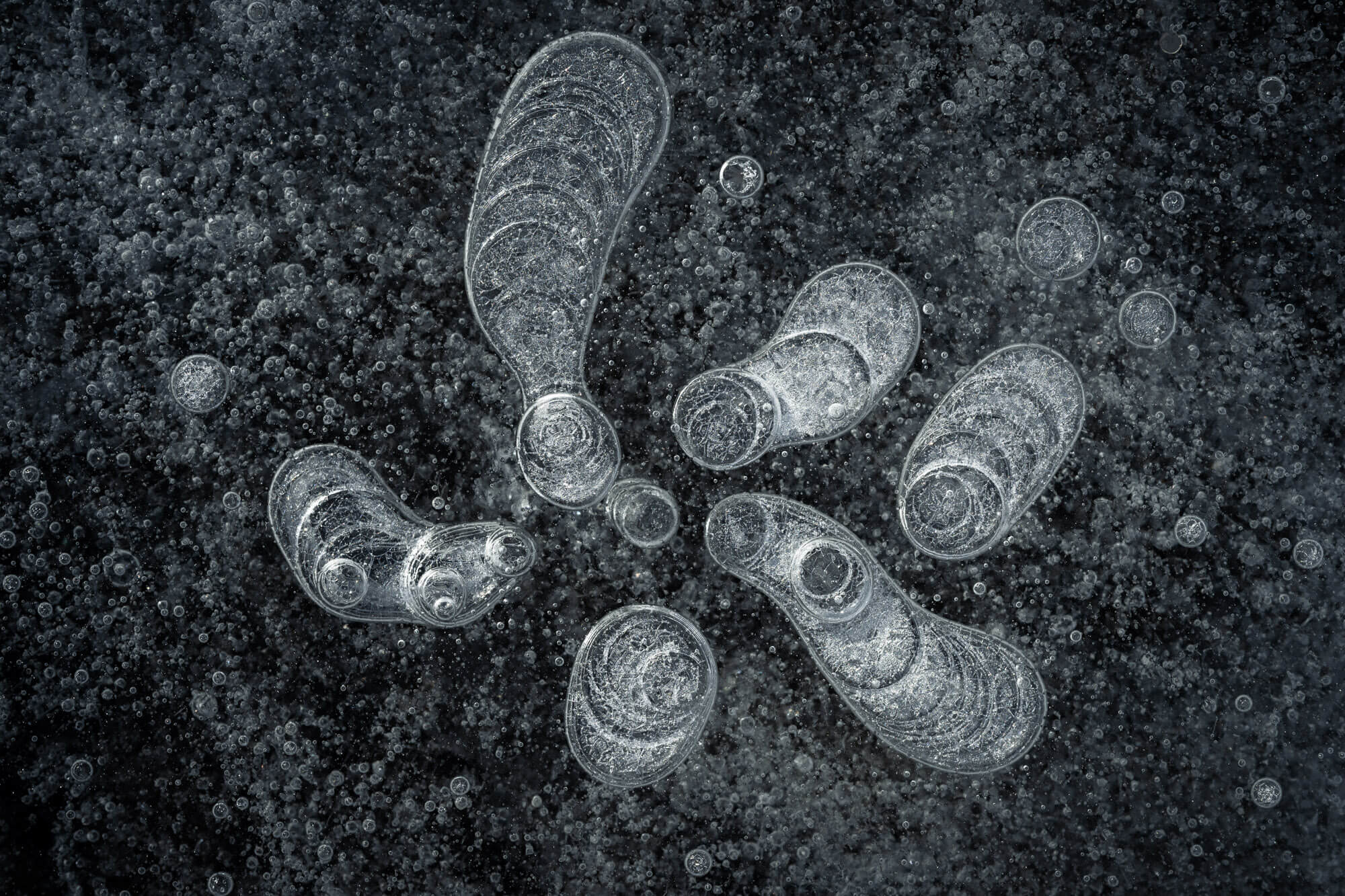


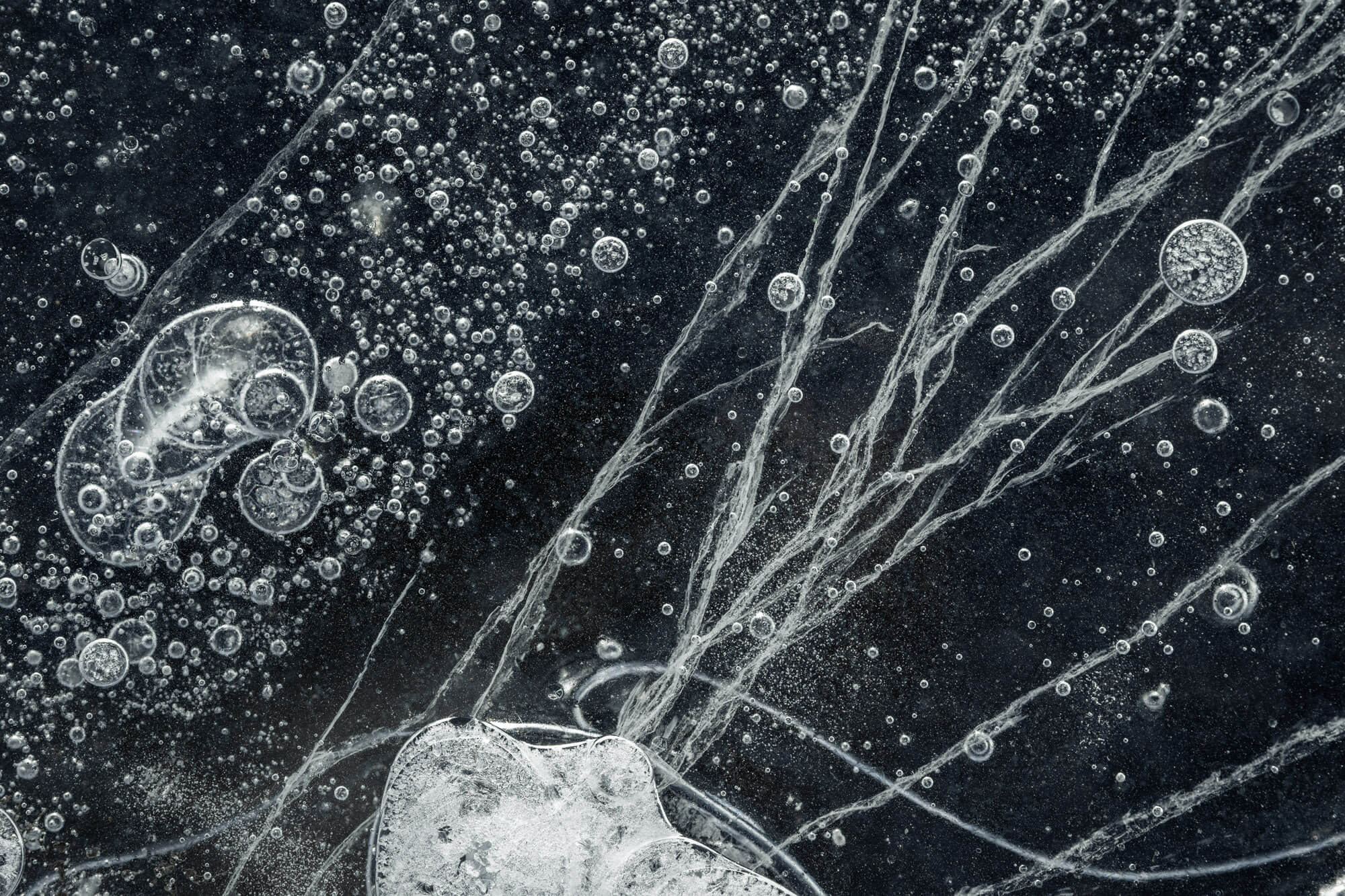
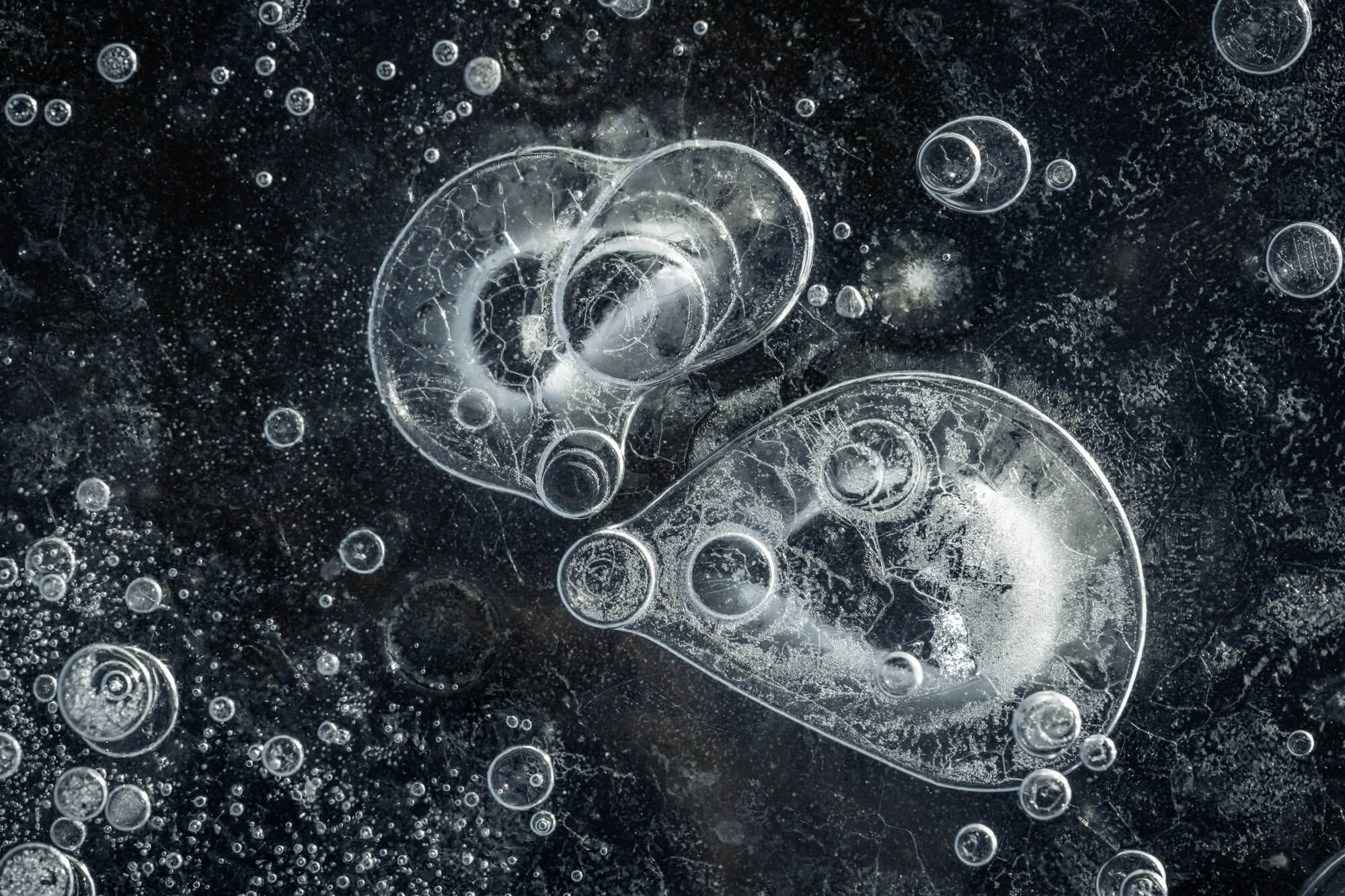
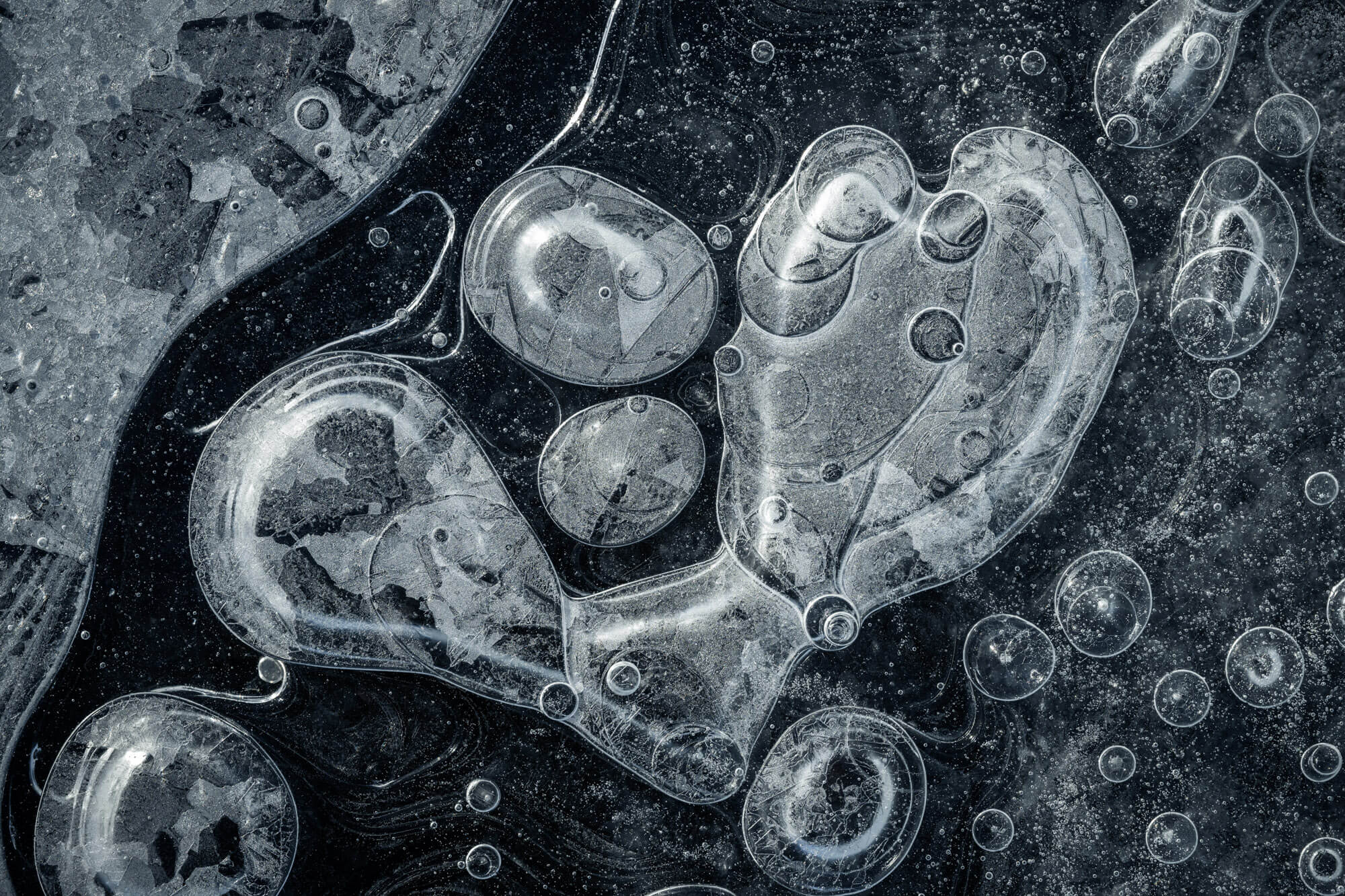
On lake bottoms, decaying matter produces methane and other gases that get caught as bubbles when the water freezes. In liquid form, water is excellent at dissolving gases, but they come out of solution when the molecules freeze. In the arctic, these bubbles form wild, layered patterns like these captured by photographer Jan Erik Waider in a lake on the edge of Iceland’s Skaftafellsjökull glacier. Unlike the bubbles that form in our fridges’ icemakers, these bubbles are large enough that they take on complicated shapes. I especially love the ones that leave a visible trail of where the bubble shifted during the freezing process. (Image credit: J. Waider; via Colossal)

“Surfing on the Other Side”
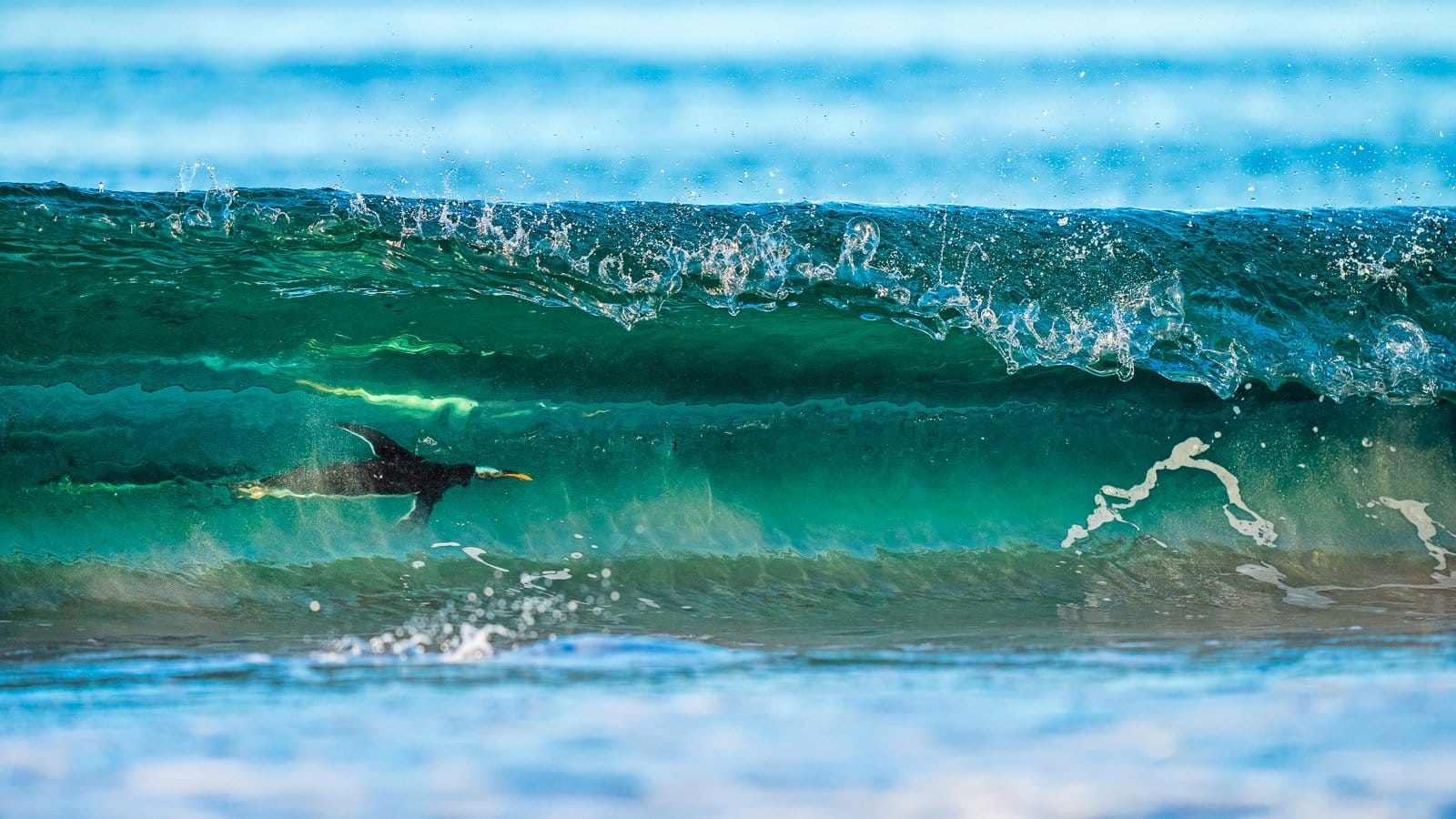
Surfers come in many forms — humans, robots, birds, and even honeybees. Most of the time, though, we see surfers above the water. In this award-winning photo, on the other hand, the surfing penguin shoots by beneath the water, riding beneath the wave’s crest. Keeping pace with the breaking wave should be no trouble for a penguin. They waddle awkwardly on land, but they have incredible speed in the water. Years ago, a penguin streaked past me in the water like a rocket to my paper airplane. (Image credit: L. Fitze/BPOTY)