Category: Art

  • Featured Video Play Icon

    “Paradolia”

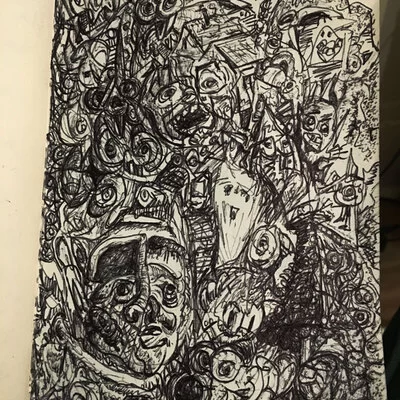
    In “Paradolia,” filmmaker Susi Sie plays with pareidolia, our tendency to seek patterns in nebulous data — like faces on a slice of toast. Droplets of miscible and immiscible fluids collide, part, and mix in each sequence, providing plenty of fodder for an active imagination. For myself, my brain especially likes assigning cartoon expressions to well-spaced drops in the video. What do you see? (Video and image credit: S. Sie)

  • Trapped in Ice

    Trapped in Ice

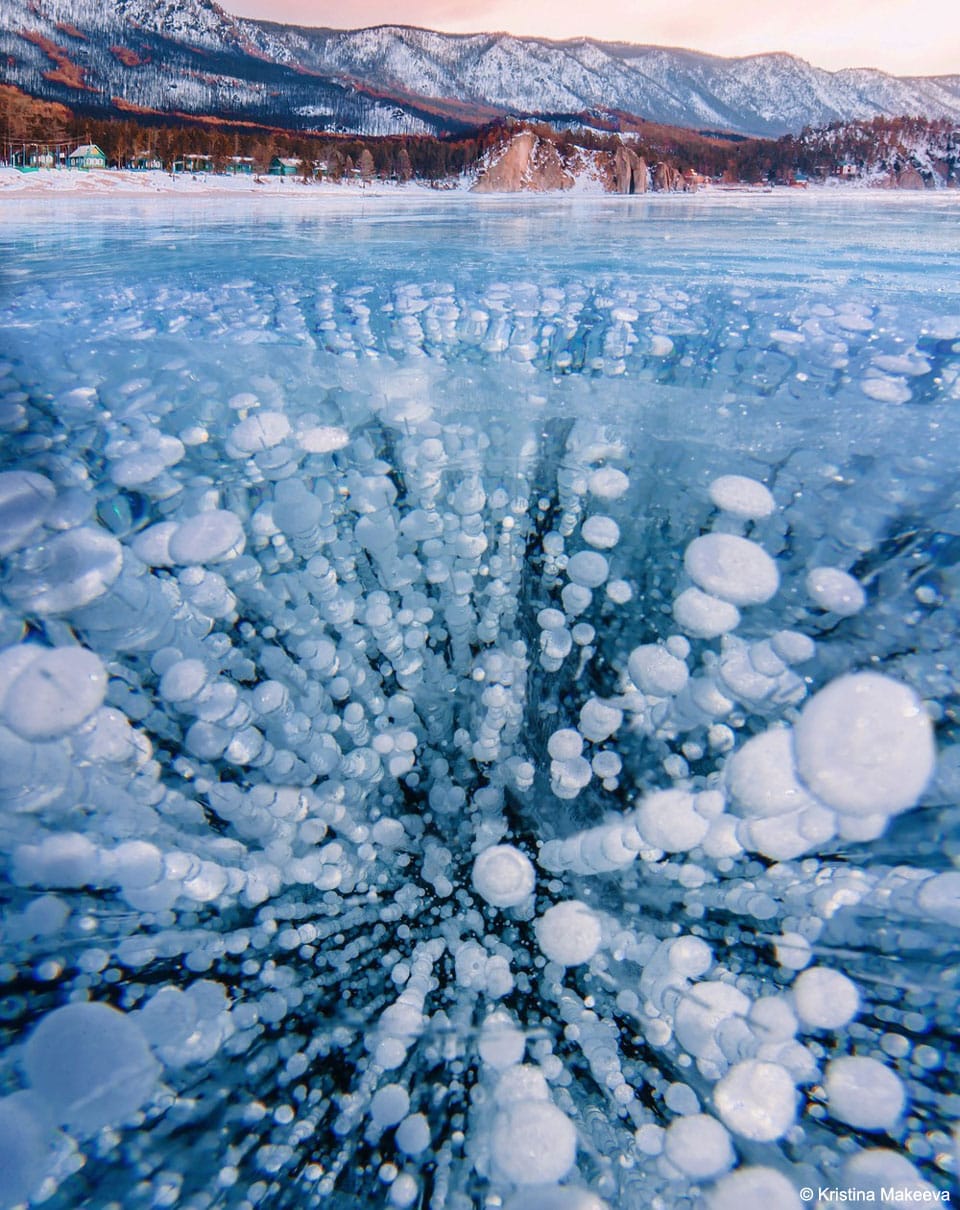
    On lake bottoms, decaying matter produces methane and other gases that get caught as bubbles when the water freezes. In liquid form, water is excellent at dissolving gases, but they come out of solution when the molecules freeze. In the arctic, these bubbles form wild, layered patterns like these captured by photographer Jan Erik Waider in a lake on the edge of Iceland’s Skaftafellsjökull glacier. Unlike the bubbles that form in our fridges’ icemakers, these bubbles are large enough that they take on complicated shapes. I especially love the ones that leave a visible trail of where the bubble shifted during the freezing process. (Image credit: J. Waider; via Colossal)

  • “Surfing on the Other Side”

    “Surfing on the Other Side”

    Surfers come in many forms — humans, robots, birds, and even honeybees. Most of the time, though, we see surfers above the water. In this award-winning photo, on the other hand, the surfing penguin shoots by beneath the water, riding beneath the wave’s crest. Keeping pace with the breaking wave should be no trouble for a penguin. They waddle awkwardly on land, but they have incredible speed in the water. Years ago, a penguin streaked past me in the water like a rocket to my paper airplane. (Image credit: L. Fitze/BPOTY)

  • “Alive Painting”

    “Alive Painting”

    Artist Akiko Nakayama’s intuitive grasp of fluid dynamics is so good that she manipulates liquids live to musical accompaniment. Her dendritic paintings — made from a combination of acrylic paint and isopropyl alcohol — inspired scientific research papers. There’s no substitute, I’m sure, for seeing her art live, but you can get a taste of her performances in the video below. Then you can head over to Physics World for more on the artist, her inspirations, and her scientific collaborations. (Image credits: H. Akagi and A. Nakayama; video credit: Eternal Art Space; via Physics World)

  • Ice Without Gravity

    Ice Without Gravity

    Astronaut Don Pettit is back in space, and that means lots of awesome microgravity experiments. Here, he grew thin wafers of ice in microgravity in a -95 degree Celsius freezer. Then he took the ice wafers and photographed them between crossed polarizers, creating this colorful image. The colors highlight different crystal orientations within the ice and give us a hint about how the freezing front formed and expanded. I can’t wait to see more examples! (Image credit: D. Pettit/NASA; via Ars Technica; submitted by J. Shoer)

    Fediverse Reactions
  • Featured Video Play Icon

    “Chemical Somnia”

    Under a macro lens, even a petri dish worth of fluids comes vividly to life. Here, artist Scott Portingale explores crystallization, Marangoni effects, and other phenomena alongside a haunting soundtrack from musician Gorkem Sen. Enjoy! (Image and video credit: S. Portingale et al.)

  • Eerie Aurora

    Eerie Aurora

    This surreal image comes from an aurora on Halloween 2013. Photographer Ole C. Salomonsen captured it in Norway during one of the best auroral displays that year. The shimmering green and purple hues are the glow of oxygen and nitrogen in the upper atmosphere reacting to high-energy particles streaming in from the solar wind. These geomagnetic storms can disrupt GPS satellites, compromise radio communication, and even corrode pipelines, but they also create these stunning nighttime displays. (Image credit: O. Salomonsen; via APOD)

  • “Last Breath of Autumn”

    “Last Breath of Autumn”

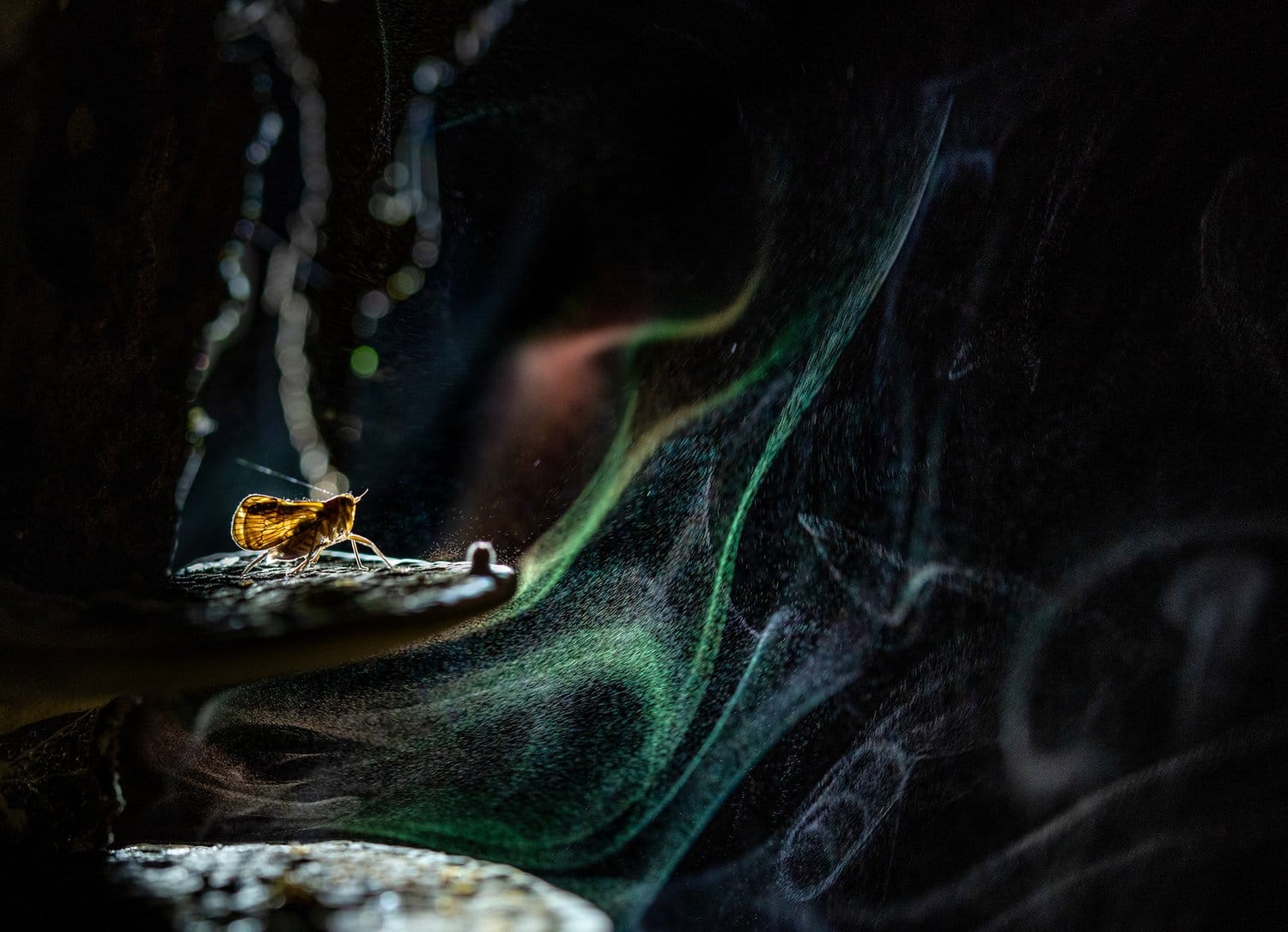
    On a rainy autumn day, Agorastos Papatsanis headed to the forest in search of fungi. There he captured this fairytale-like scene with falling rain and drifting spores. Near the forest floor, any breeze is slight, so mushrooms use their own humidity to move air and spread their spores. As water evaporates from the mushroom’s cap, it cools the air nearby, causing it to spread outward. Since that water vapor is lighter than air, it rises, too, carrying the mushroom’s spores along with it. (Image credit: A. Papatsanis; via Wildlife PotY)

  • Featured Video Play Icon

    “Colors of Glacial Rivers”

    As glaciers flow, they grind down rock, creating fine sediment that dyes waterways a milky color. In Jan Erik Waider’s aerial film, we get a bird’s eye view of the result, watching pockets of sediment move downstream in pulsating waves and swirls. Along the coast, ocean waves pass over the internal ones, creating a mesmerizing crisscrossed wavescape. You can also compare Waider’s aerial footage to Roman De Giuli’s tabletop-scale films and be amazed by their similarities. (Image and video credit: J. Waider; via Colossal)

  • The Crashing Waves of French Polynesia

    The Crashing Waves of French Polynesia

    Surfer and photographer Tim McKenna lives in the village of Teahupo’o on Tahiti’s southeastern coast. The area’s shallow coral reef system creates some of the world’s biggest barreling waves, which attract surfers from around the world. McKenna captures the majestic power of these surges in these black-and-white photographs; you can find more of his work on his website and Instagram. (Image credit: T. McKenna; via Colossal)