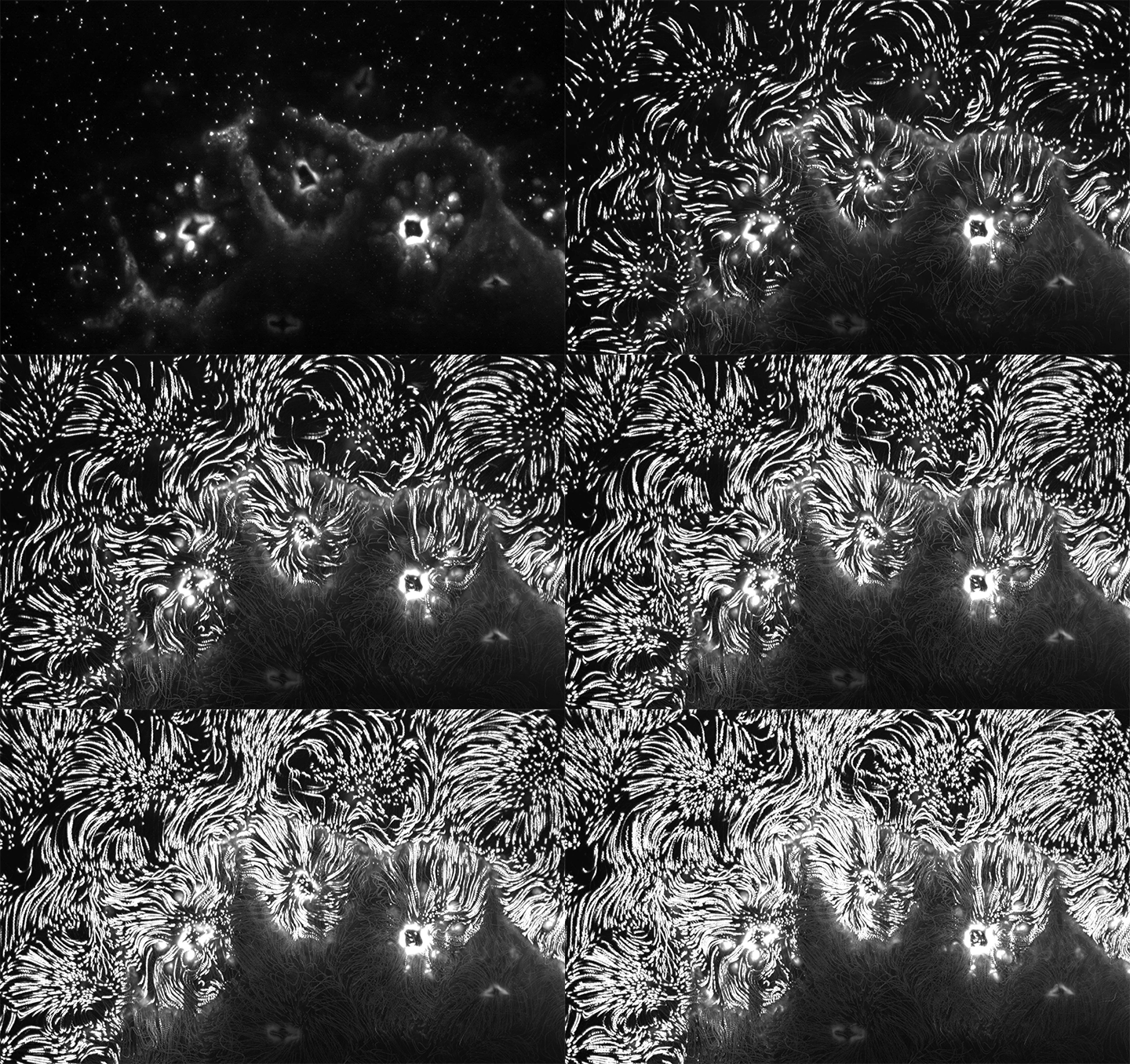
Reef-building coral polyps constantly stir the water around them with dense carpets of microscopic hair-like cilia. The beating of the cilia helps polyps feed while also pushing away sediment and debris. Their stirring increases nutrient and gas exchange with seawater, too. A new study combines experimental measurements with a simple mathematical model to recreate the three-dimensional flows corals make. The model’s efficiency means it should be useful for future studies of how corals and other cilia-covered systems interact with bacteria or other active particles. (Image and research credit: S. Selvan et al.; via APS)
Snoring and sleep apnea–a condition where aeroelastic flutter obstructs the airway and stops breathing during sleep–often go hand-in-hand. But diagnosing sleep apnea involves an expensive and time-consuming screening in which the patient has to sleep while monitored by various sensors. To make the process easier, researchers are developing a screening method based only on audio recording.
They started with a pre-trained audio model designed for speech recognition and stripped back computationally-expensive layers that weren’t relevant to snoring. Then they trained the new model using labeled audio data taken from standard clinical testing for sleep apnea. That means the model was told which audio recordings corresponded to “normal” snoring and which showed signs of sleep apnea. From there, the model was able to correctly identify apnea-related audio from fresh recordings just under 74% of the time. While that accuracy isn’t high enough to use the tool for diagnosis, it could help patients pre-screen for sleep apnea at home to decide whether the more invasive testing is warranted. (Image credit: L. Cline; research credit: H. Li et al.; via Physics World)
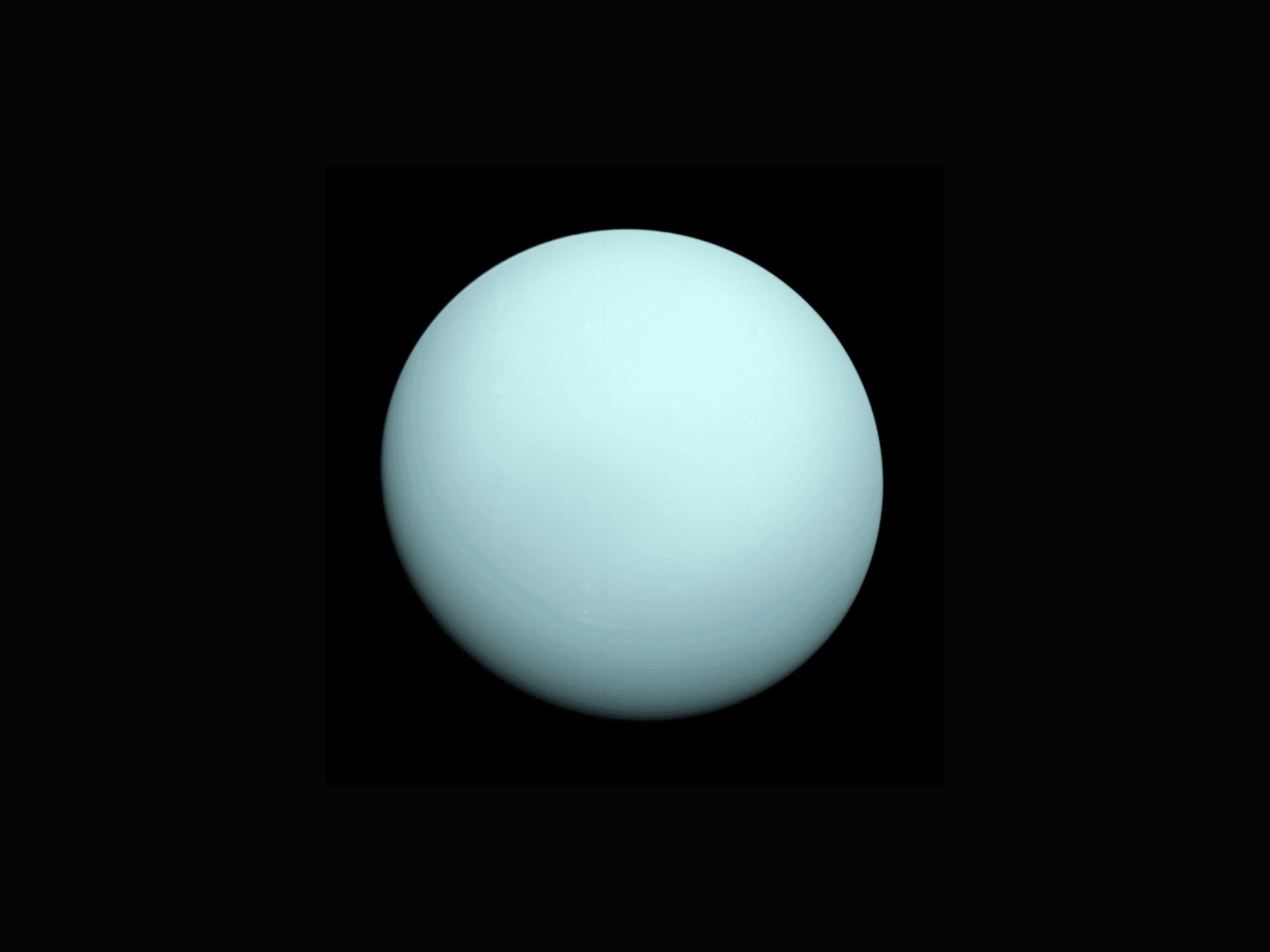
Uranus and Neptune–known as our system’s ice giants–are our least explored planets. Both have received exactly one flyby, from the Voyager 2 spacecraft. The data from those flybys remain our primary source of knowledge about each planet. The traditional model for each planet’s interior (dating back to before the flybys) consists of three layers: a rocky core; an icy mantle made up of water, ammonia, and methane; and a hydrogen/helium-rich atmosphere. That structure is one way to match the limited measurements we have from these planets, but, as today’s preprint study points out, it’s not the only way.
The authors suggest an alternative structure, in which a hydrogen-rich atmosphere overlays a supercritical magma ocean capable of dissolving hydrogen into heavier, metallic elements. Their suggestion is motivated by several factors. First, objects in the outer solar system–including Kuiper Belt objects–have less icy material than originally assumed, which suggests that Uranus and Neptune’s progenitors wouldn’t have been so ice-rich, either. Second, our understanding of how “rocky” materials respond at the temperatures and pressures found in these planet interiors has evolved. In particular, silicate, hydrogen, and iron are actually miscible at these conditions. That means that discrete sub-layers separated by material type are not as likely.
Using the magma ocean model, the team found compositions for both Uranus and Neptune that conformed well to our limited data about their gravitational and magnetic field properties. Time–and more data–will tell as to which interior model best describes these enigmatic giants. (Image credit: NASA; research credit: E. Young et al. (preprint); via Gizmodo)
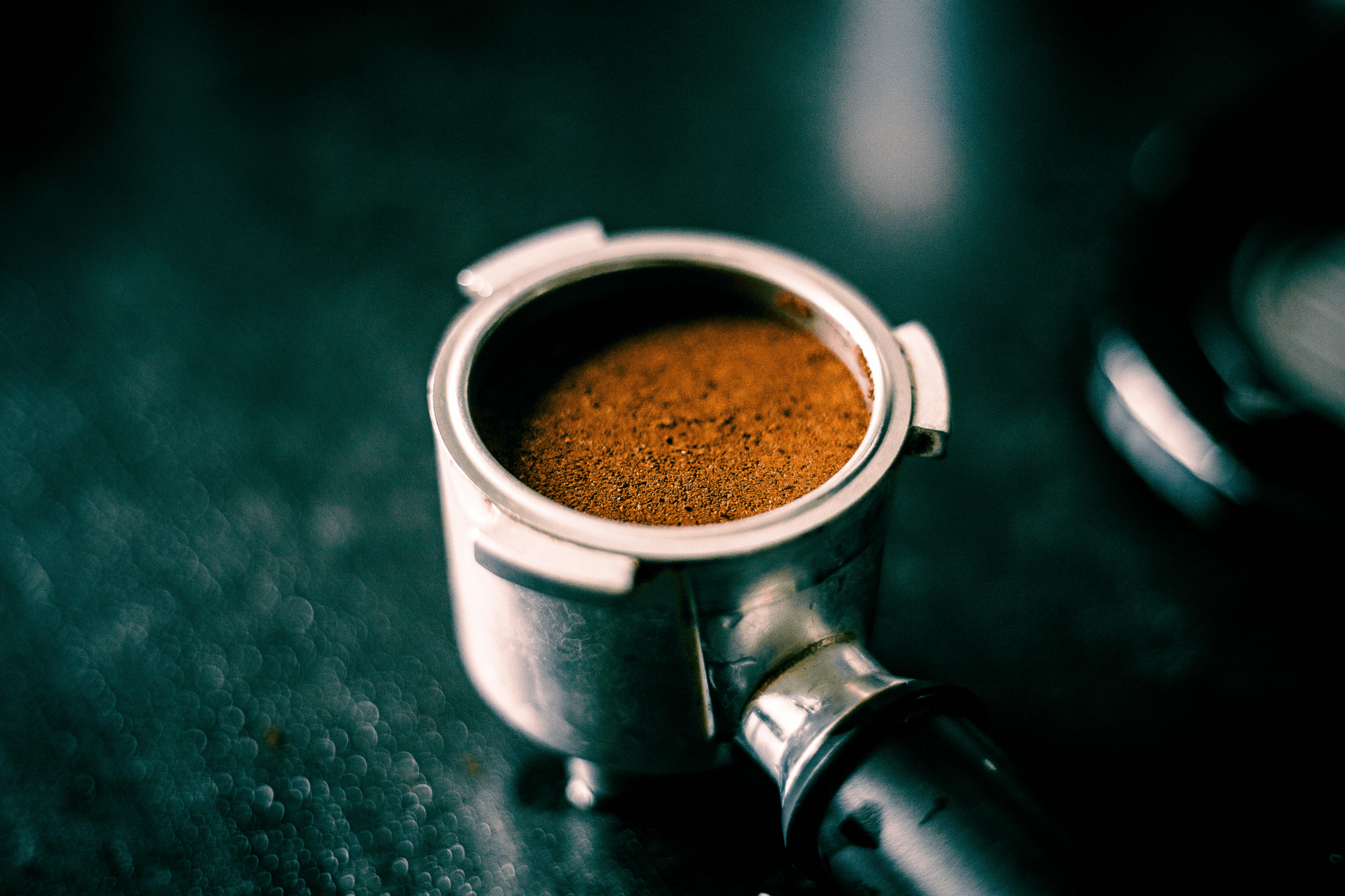
When pulling a shot of espresso, there are complicated physics at play. The ground coffee is tamped into a puck-like bed of grains, through which high-temperature, high-pressure water is forced. Here, researchers used X-ray tomography to visualize how and when water moves through the bed, which affects how flavors extract.
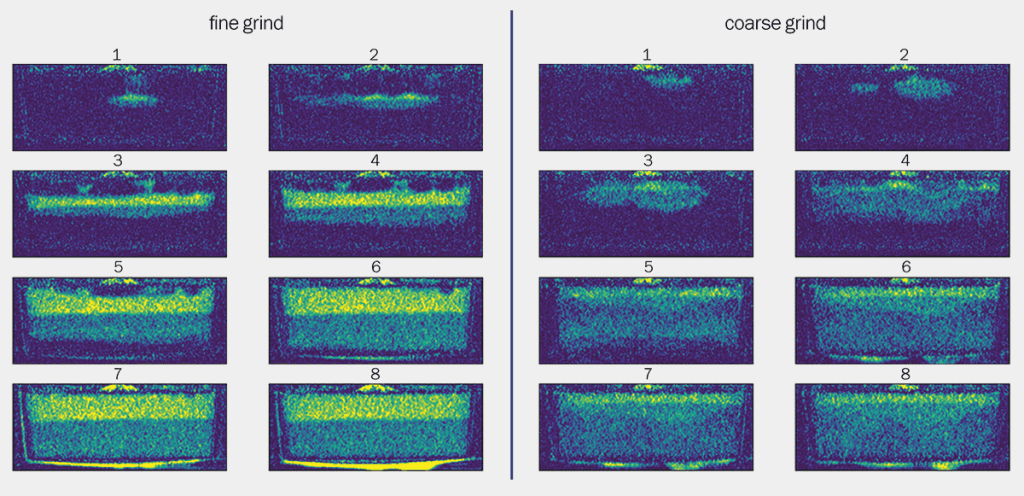
Composite images of water penetrating a bed of finely ground coffee (left) and a bed of coarsely ground coffee (right).
In a finely ground bed, water is relatively slow to penetrate the bed, but moves in fairly uniformly. Water can get into the coarse grind a little faster but does so less uniformly. With the new experimental technique in place, the team is interested in seeing how water temperature affects infiltration and what solids get extracted. (Image credit: top – R. Wicks, experiment – J. Foster et al.; research credit: J. Foster et al.; via Physics World)
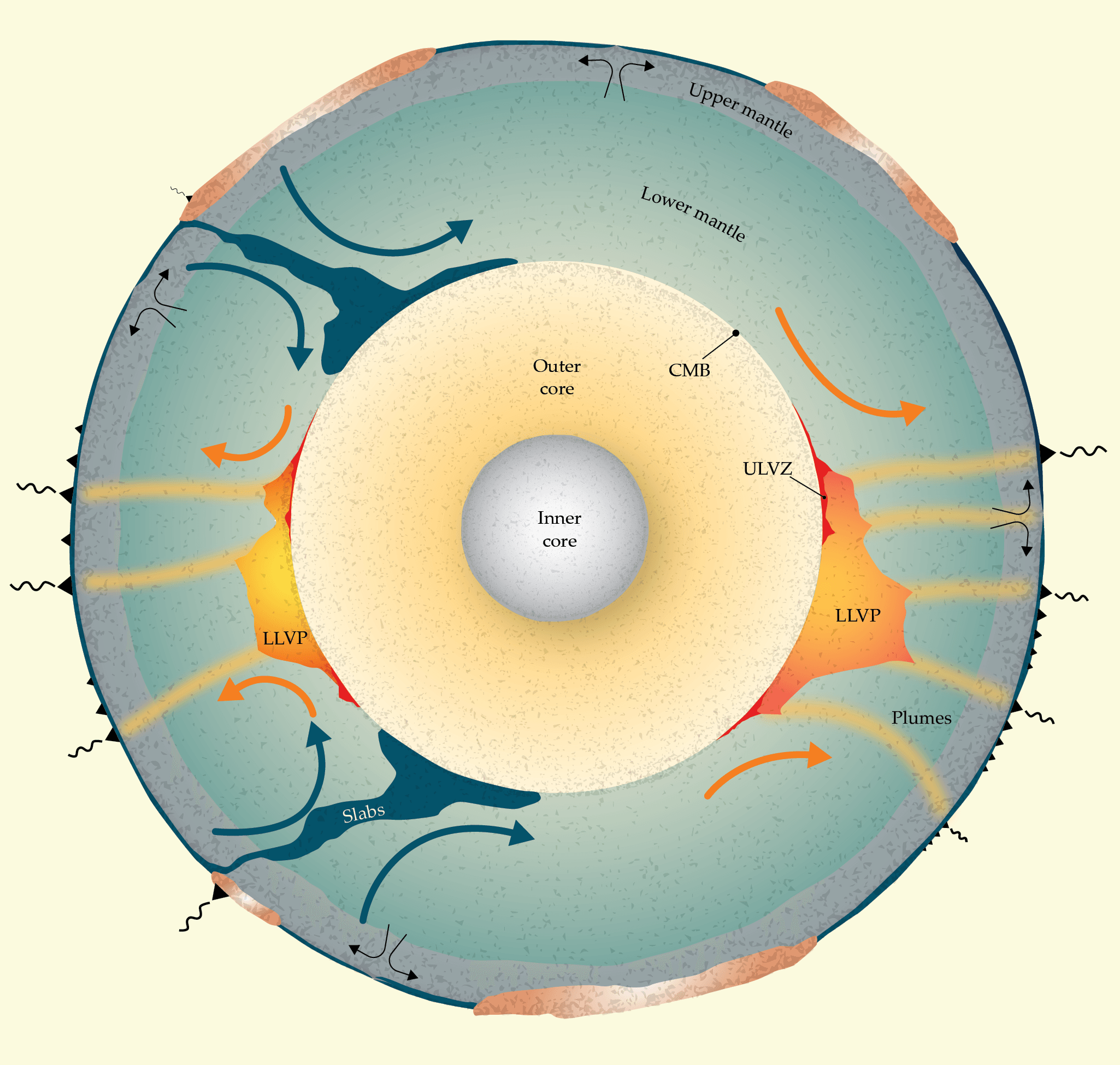
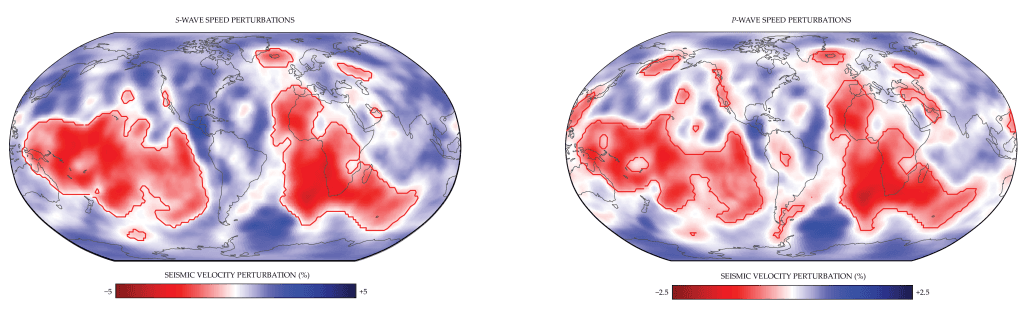
Most of what we know about Earth’s interior comes from observing how seismic waves–mostly from earthquakes–bounce around. As our observations have gotten better–more seisometers, better imaging techniques–scientists have identified two large anomalies sitting near the bottom of the mantle. Known as large low-velocity provinces, or LLVPs, these zones take up continent-sized areas beneath parts of Africa and the Pacific.
Seismic waves show lower speeds in large, continent-sized zones that sit beneath Africa and the Pacific. These large low-velocity provinces (LLVPs) are outlined in red.
The LLVPs are hot, which would normally make them buoyant, but their stationary nature suggests they are made up of extremely dense material. Narrow plumes of hot material make their way up from the LLVPs to form volcanic hotspots like those that made the Hawaiian and Galapagos Islands. Balancing that upward convection is the downward convection of former tectonic material carried into the mantle at subduction zones.
What the LLVPs are made of remains an active research question. One suggestion is that they contain remnants of Theia, the planet thought to have impacted the proto-Earth to form our Moon. (Image credits: E. Garnero and C. Richardson; see also Physics Today)
Illustration showing convection in the Earth’s inner mantle. Former tectonic material subducts downward in dark blue zones. The large low-velocity provinces (LLVPs) are shown in orange. Hot-spot volcanic activity is seen at the surface (black triangles) above narrow plumes that lift material from the LLVPs toward the surface.
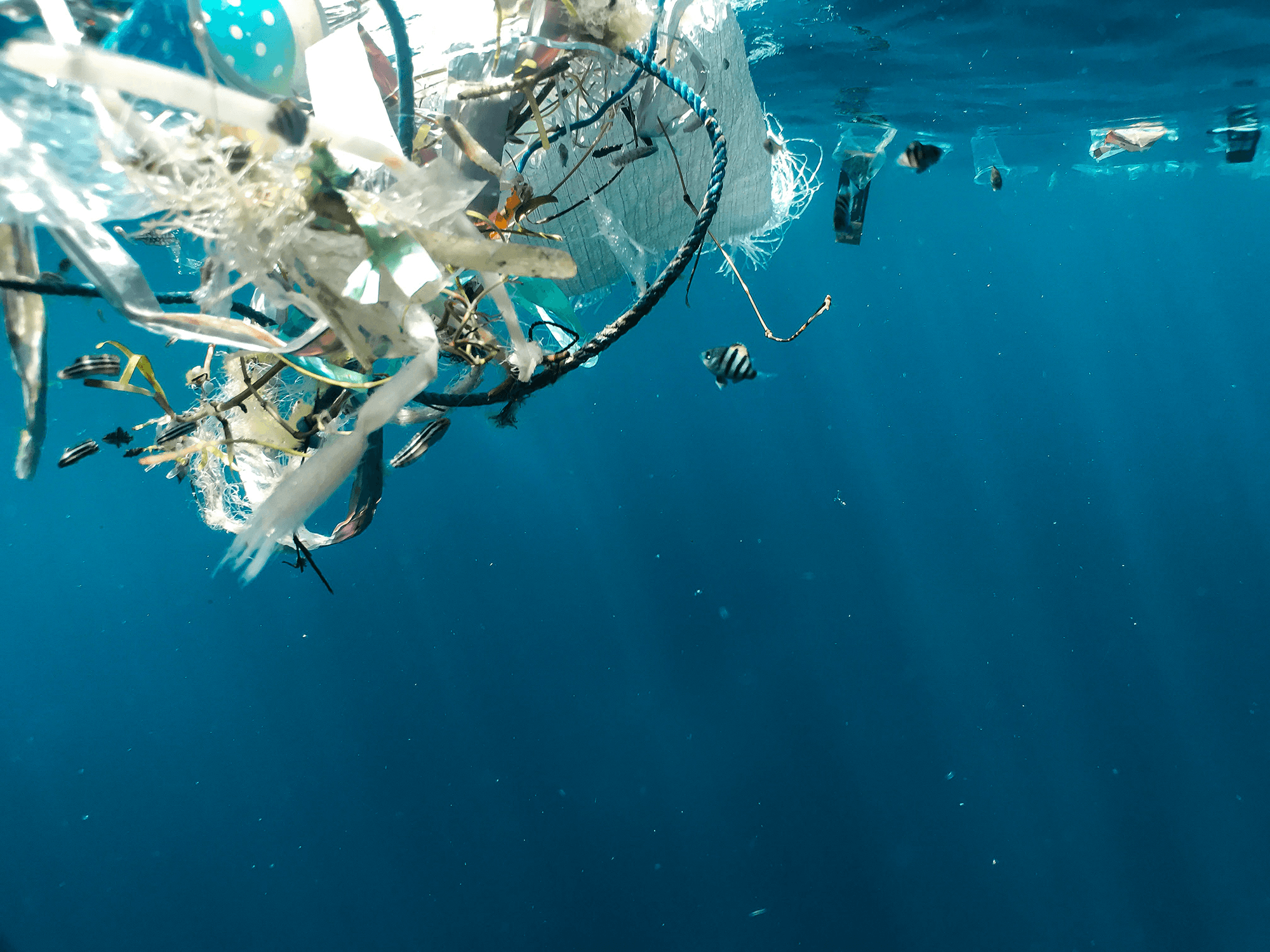
The classic theory of steady wave motion predicts a phenomenon called Stokes drift, in which particles spread horizontally in the direction of wave travel. That means that something like microplastics will drift in the direction that waves are traveling. But in the real world, ocean waves aren’t quite so neat and unchanging. A new study looks at what happens when waves are decaying in strength–in other words, what happens in our world when the wind dies down.
In those circumstances, the researchers found that particles did not just drift horizontally–they drifted vertically, too. Further, how much a particle drifts vertically depends on its initial depth. Since plastics vary in their buoyancy–and can be found in varying numbers and sizes throughout the upper layer of the ocean–this mechanism could significantly affect how waves mix and transport pollution. (Image credit: N. Jensen; research credit: T. Izawa et al.; via Physics World)
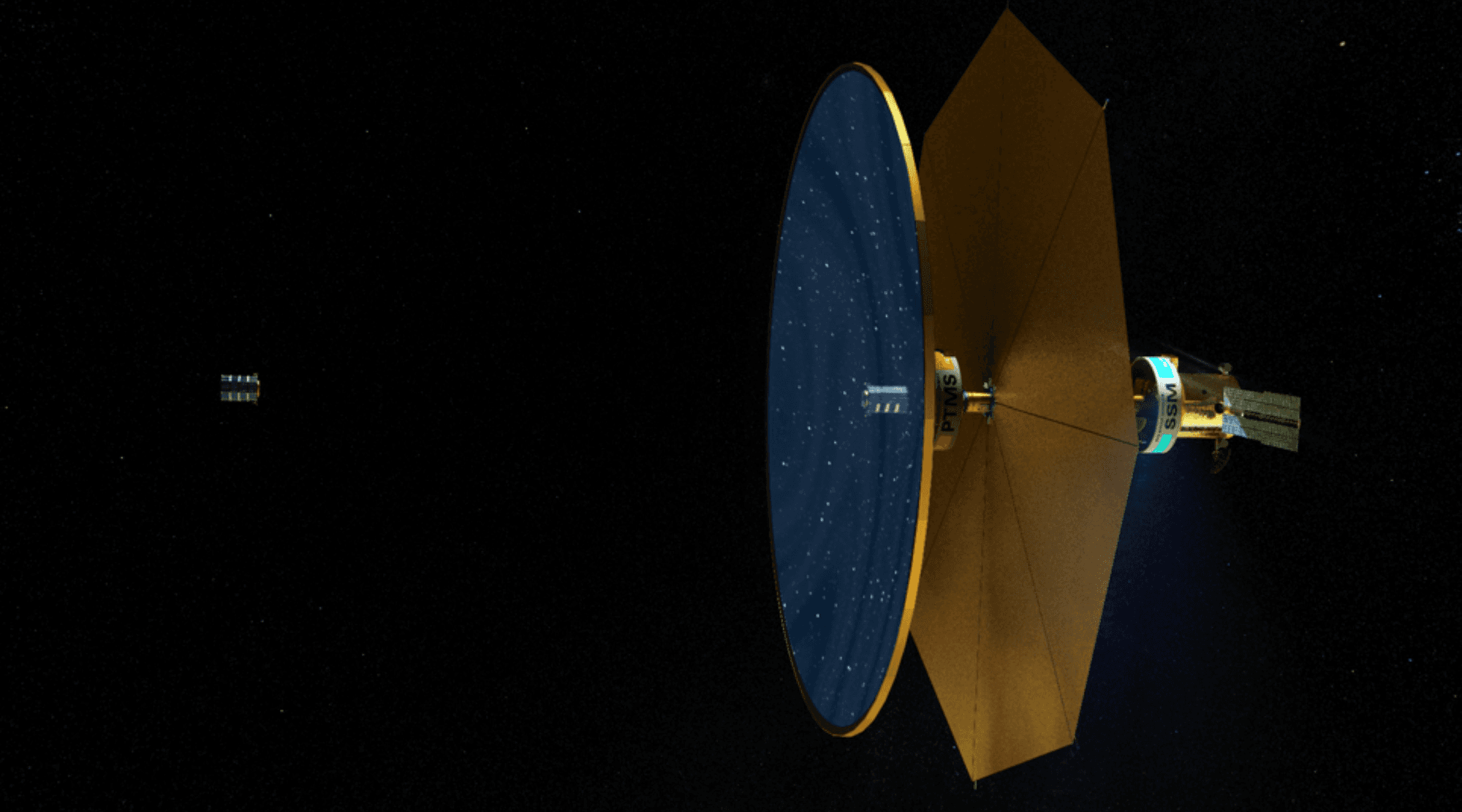
A telescope’s resolution is set by the size of its reflective surface. Our largest space telescope, JWST, has a 6.5-meter reflector, the largest we could manage given manufacturing constraints and the need to launch it in a rocket. To reach even larger sizes, researchers are considering a new type of reflector: one made of liquid.
A fluidic telescope has some obvious advantages: surface tension makes it atomically smooth, and liquids can be packed into any convenient shape for launch. But there are challenges, also. Like, what happens to the reflector when you point it in an new direction?
That’s what this study looks at, mathematically. Using a mathematical model of a 50-meter-wide, millimeter-thick fluid, the researchers analyzed how different maneuvers over the telescope’s lifetime would affect the image quality.
Shifting the reflector creates perturbations in the surface, initially at the mirror’s edges. Over time, those perturbations move toward the center of the mirror and, at the same time, decay. The team found that, while typical space telescope operations distorted parts of the mirror beyond the limits of good optical quality, the inner 80% of the mirror could remain undisturbed for twenty or more years. That would be like having a 40-meter telescope in orbit with more than 6x the resolution of JWST. (Image credit: NASA; research credit: I. Gabay et al.)
In nature, droplets and fibers can meet on a spider’s web, on fur, or on a dew-gathering cactus. Here, researchers explore what happens when the droplet can dissolve the fiber it’s suspended on. As the authors note, a lumberjack who cuts the branch they sit on makes a fatal choice. The droplet sees a different outcome.
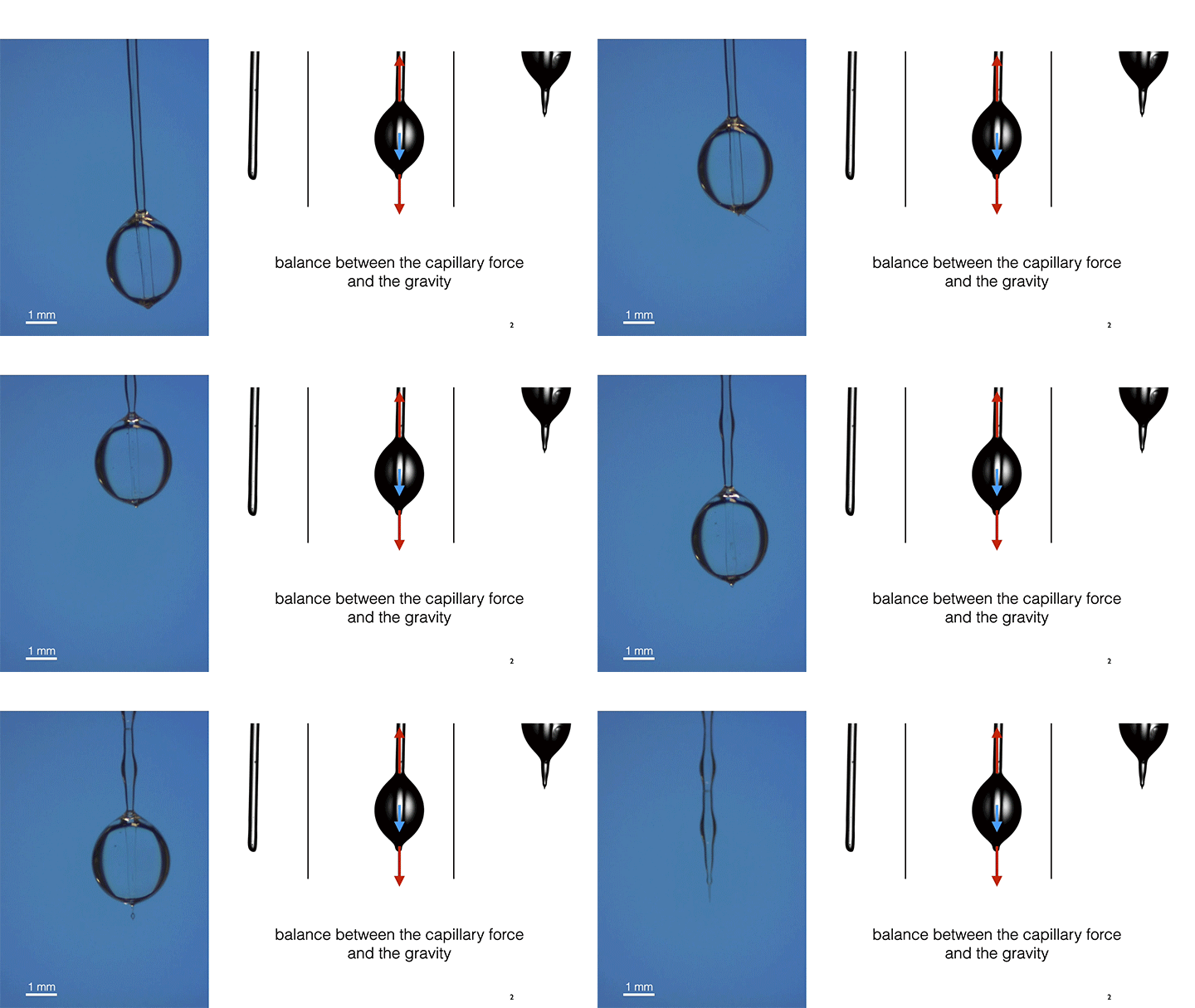
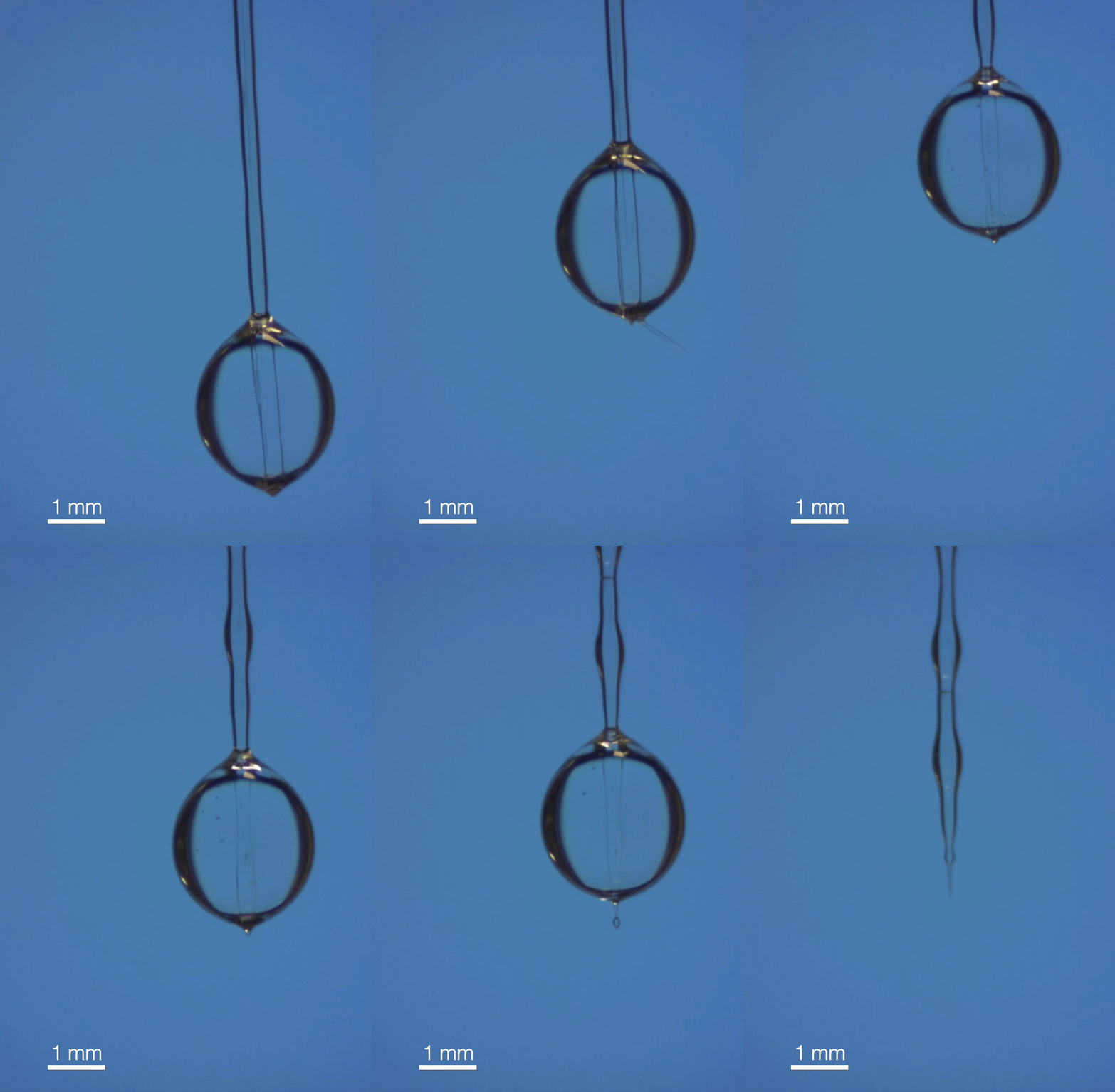
As the droplet hangs on the fiber, it dissolves the fiber’s sugar. Dense, sugar-laden water flows downward along the fiber and a replenishing upward flow goes along the droplet’s exterior. Because the sugar concentration is lower near the top of the drop, the fiber thins most quickly there.
A droplet hanging at the end of a sugar fiber dissolves the fiber and then “jumps” upward to the next intact portion.
The droplet has capillary forces along its top and bottom, where it meets the fiber. At the top, the droplet is free to expand, wetting more fiber, but the bottom of the drop is pinned to the fiber. The excess capillary force there goes into compressing the fiber.
As soon as the fiber breaks, the capillary force is no longer balanced, and the droplet jumps upward. If the drop and fiber are sized just right, the drop will jump upward enough to stay attached to the fiber instead of falling off. (Image and research credit: S. Dorbolo et al.)
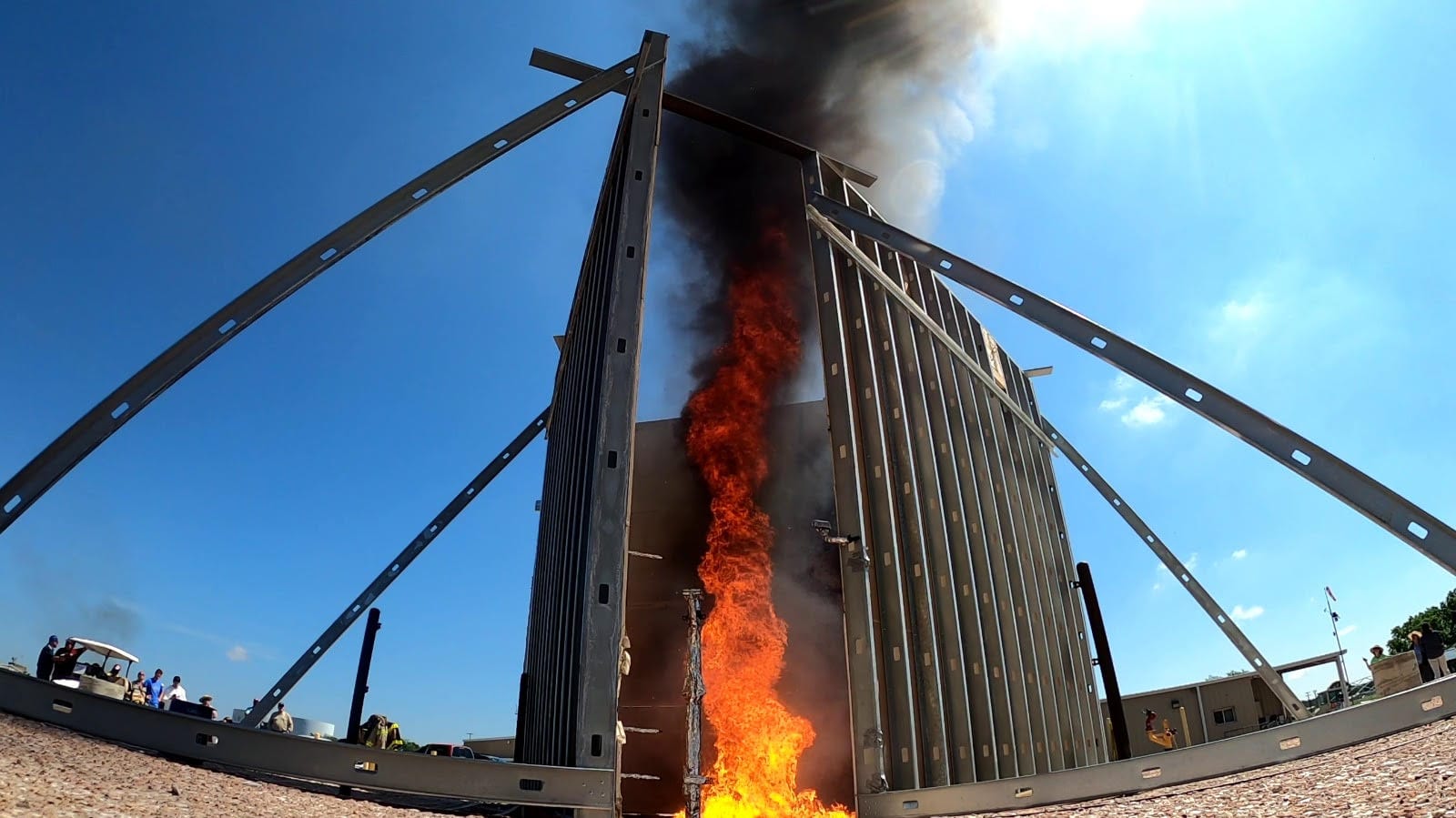
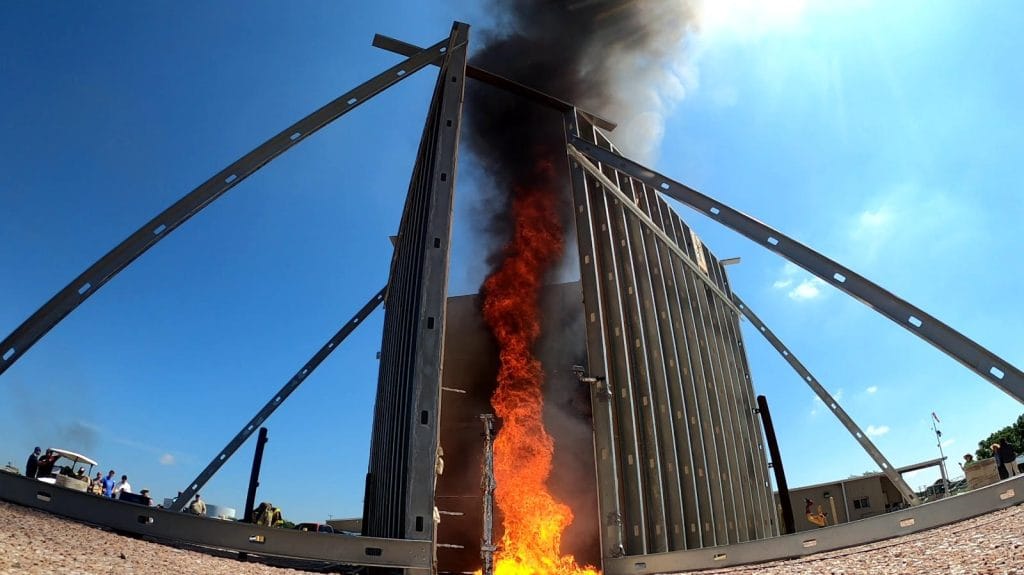
Though they are relatively infrequent, large marine oil spills, like 2010’s Deepwater Horizon, are devastating and incredibly difficult to clean up. In many locations, the “best” option for responding to such disasters is burning off the oil before it can absorb enough water to sink. But these floating fires leave behind unburned oil and produce soot. To enhance the burn, researchers are looking at the possibility of triggering large-scale fire whirls.
Often seen in wildfires, these fire vortices are intense and localized. Researchers made a more than 5-meter tall version in these experiments by arranging three walls that spun up the in-flowing air. The fire whirl sat above a pool of water topped in a layer of oil that served as the whirl’s fuel.
Within the whirl, the fire’s burn rate was 40% higher than a typical pool fire, and soot production was 40% lower–showing that fire whirls can burn cleaner. But the whirls are more finicky to start and maintain. It’s not yet clear whether such intense whirls are possible in the chaotic conditions on the ocean. (Research and image credit: W. Cui et al.; via Eos)
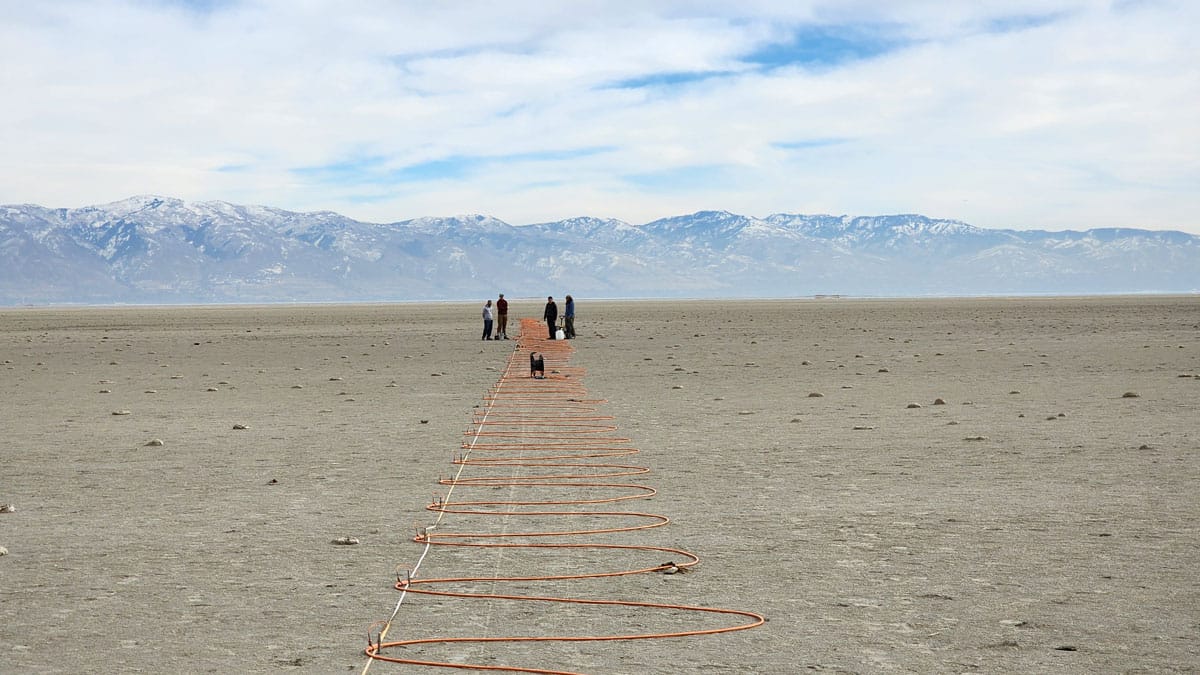
Since 1989, Utah’s Great Salt Lake has lost some 70% of its surface area. The exposed lakebed left behind is a source of toxic dust that gets lifted into the air. Researchers are trying to understand what water sources exist beneath the lake and whether they might save the saline lake and its ecosystem from disappearing entirely.
A recent study pinpoints underground water by measuring the electrical resistance between electrodes placed meters apart in the ground (photo above). Because salty water is more electrically conductive than fresh water, the researchers can distinguish between them. So far, they’ve found quite a lot of fresh water, sometimes only a couple meters below the surface. But those patches are often quite close to saline water, too.
The group also described to Eos that they found mounds of invasive reeds lying atop concentrations of fresh water. The invasive species seems to be sucking up water that would otherwise feed back into the lake or support native plants that provide habitat to native birds. (Image credit: M. Thorne; research credit: M. Jacketta et al.; via Eos)