Tag: supersonic

  • NASA Testing Supersonic Rotors for Mars

    NASA Testing Supersonic Rotors for Mars

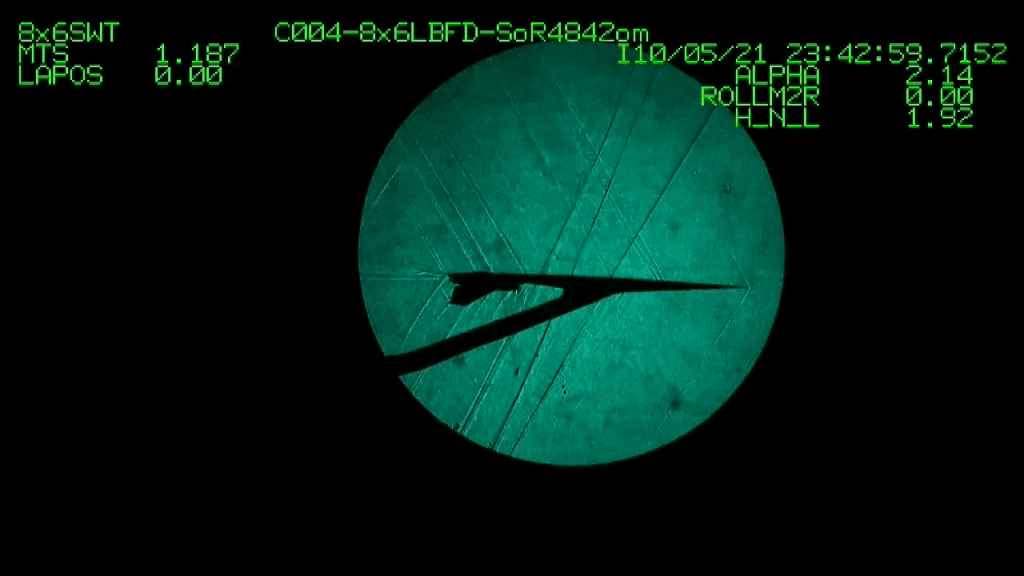
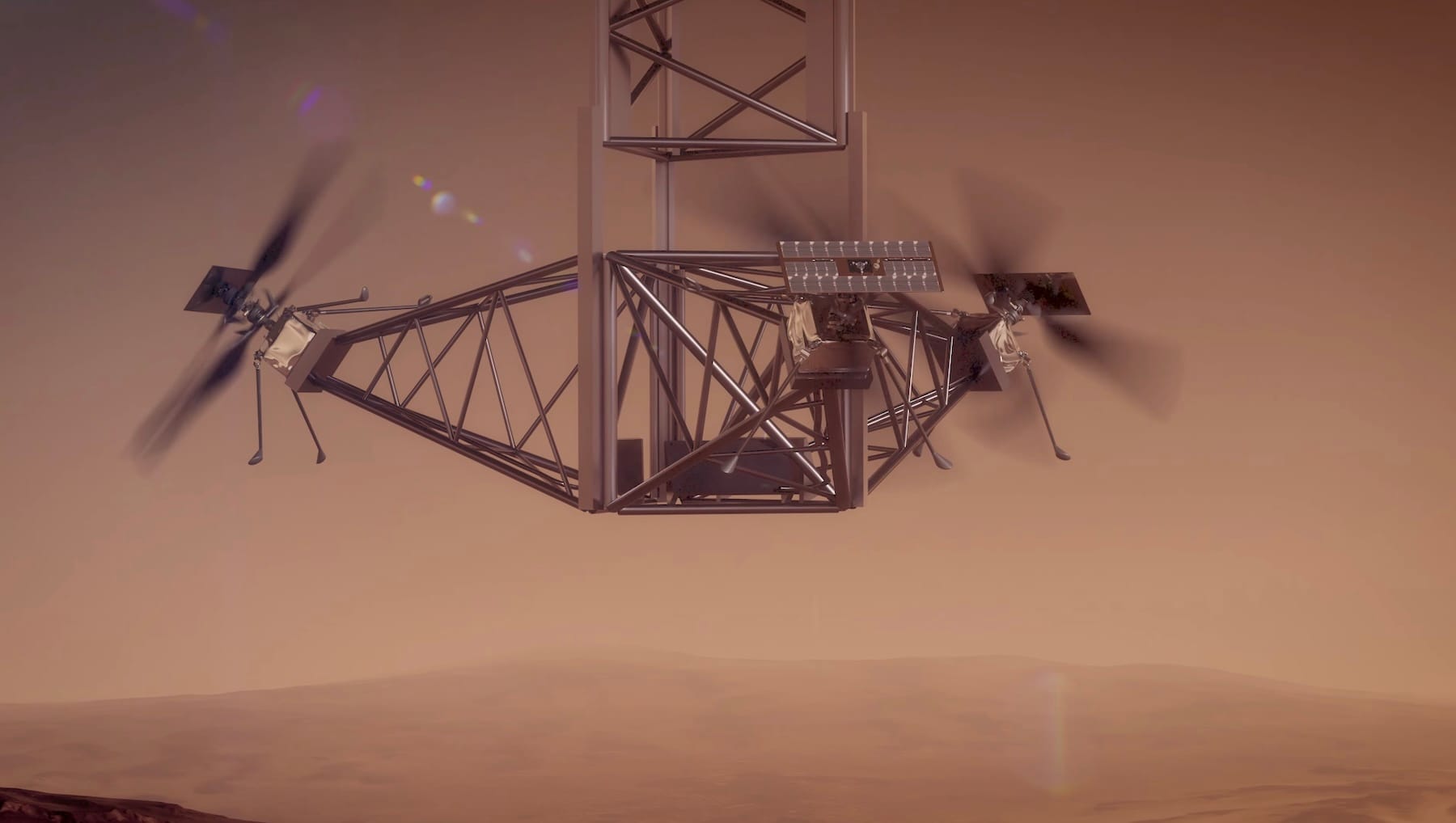
    NASA’s Ingenuity helicopter was the first aircraft humanity has flown on another planet, and engineers are looking to make the next generation of Martian helicopters bigger and more capable. That’s challenging in Mars‘ thin atmosphere, which is only 1% as dense as Earth’s. To get adequate lift, the rotors need to spin faster there.

    During Ingenuity’s mission, the team intentionally designed the craft to keep the rotor tips below supersonic speeds. But for the next mission–SkyFall–they’re looking to push the rotorcraft further. In recent tests in a Mars simulator chamber, they successfully spun the new rotors to tip speeds as high as Mach 1.08, significantly increasing the loads SkyFall could carry. (Image and video credit: NASA/JPL-Caltech; via Ars Technica)

    Fediverse Reactions
  • Seeking Quieter Supersonic Flight

    Seeking Quieter Supersonic Flight

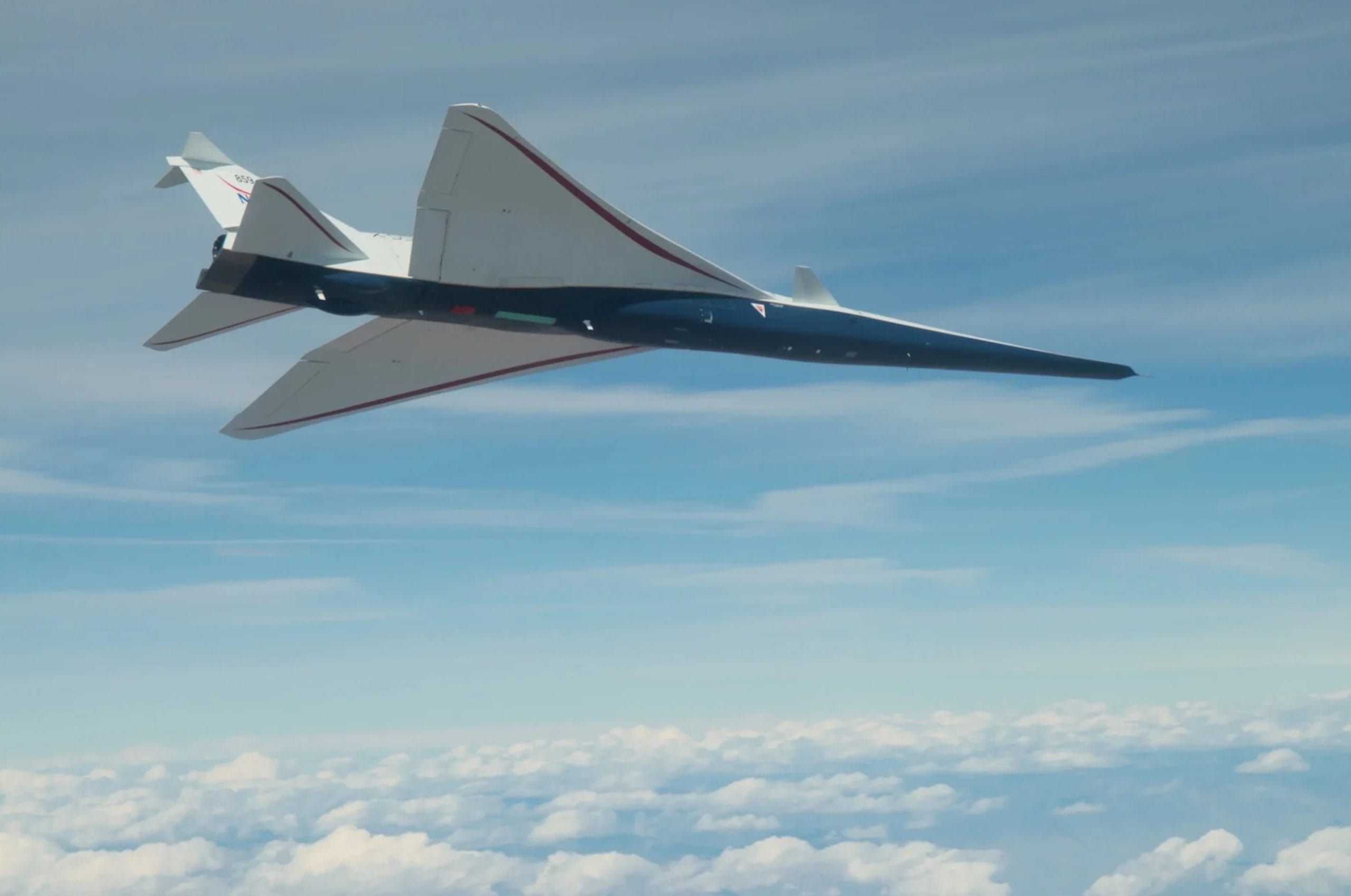
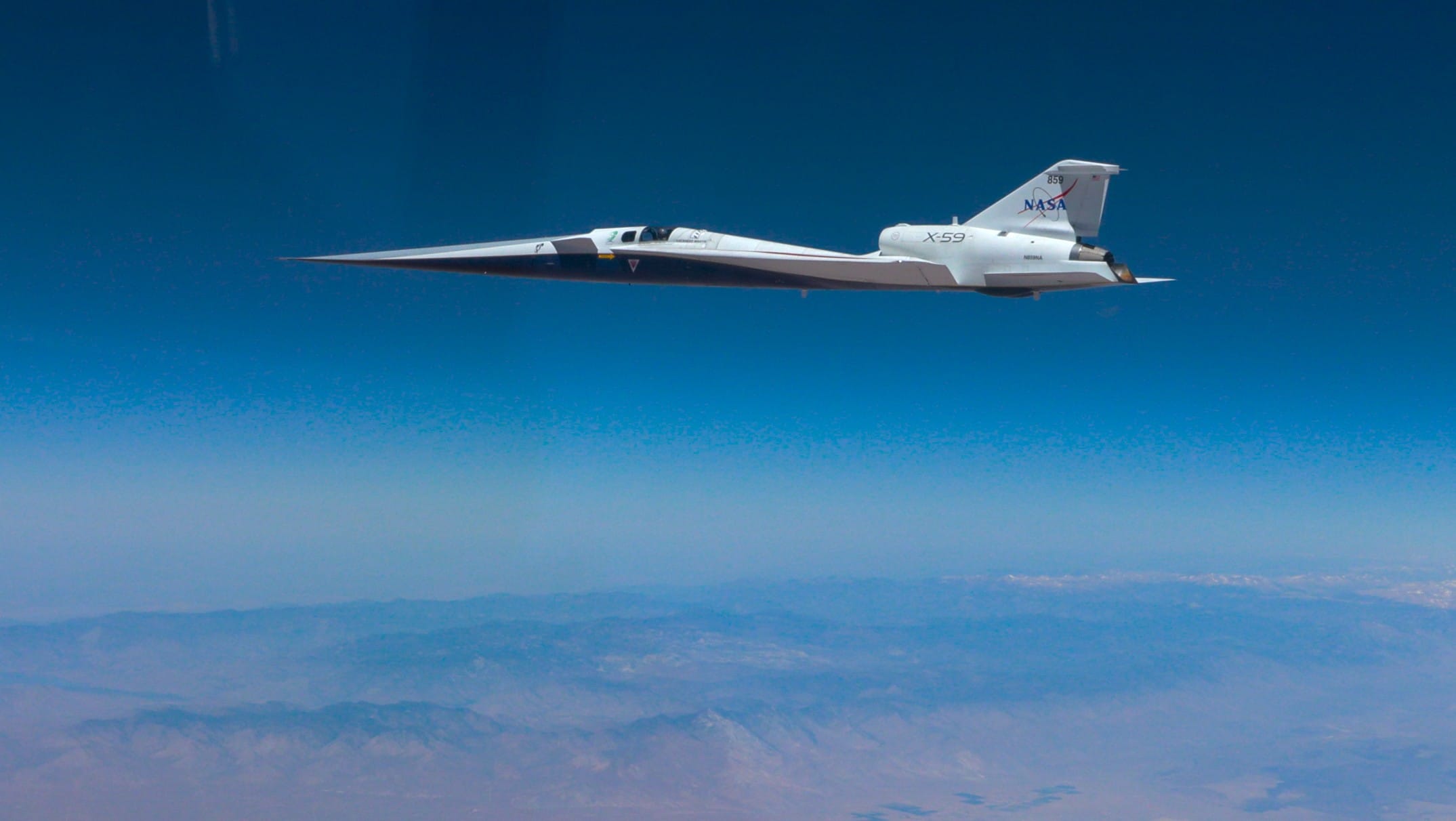
    Supersonic flight over the U.S. has been banned by all non-military aircraft for more than fifty years. The ban gained momentum in the 1960s after test programs over St. Louis and Oklahoma provoked public outcry. But NASA’s X-59 aircraft is working to lift the ban by softening the sonic booms that encouraged the ban in the first place. Although it hasn’t been tested at supersonic speeds yet, pilots are putting the sharp and skinny X-59 through its paces, slowly widening the flight envelope.

    In the video above, NASA shares footage of some of the recent test flights, including various maneuvers like phugoids, banking rolls, flutter, and landing gear tests. Pay close attention to the pilot’s view and the radio chatter, and you’ll hear that they’re hovering around Mach 0.98 in some cases–just underneath the point of generating a shock wave around the aircraft. It will be neat to see what happens when they finally do go supersonic. Will it be as quiet as promised? (Video credit: NASA; image credit: NASA/L. Losey; see also NASA; via Gizmodo)

    Fediverse Reactions
  • Supersonic Jet Interaction

    Supersonic Jet Interaction

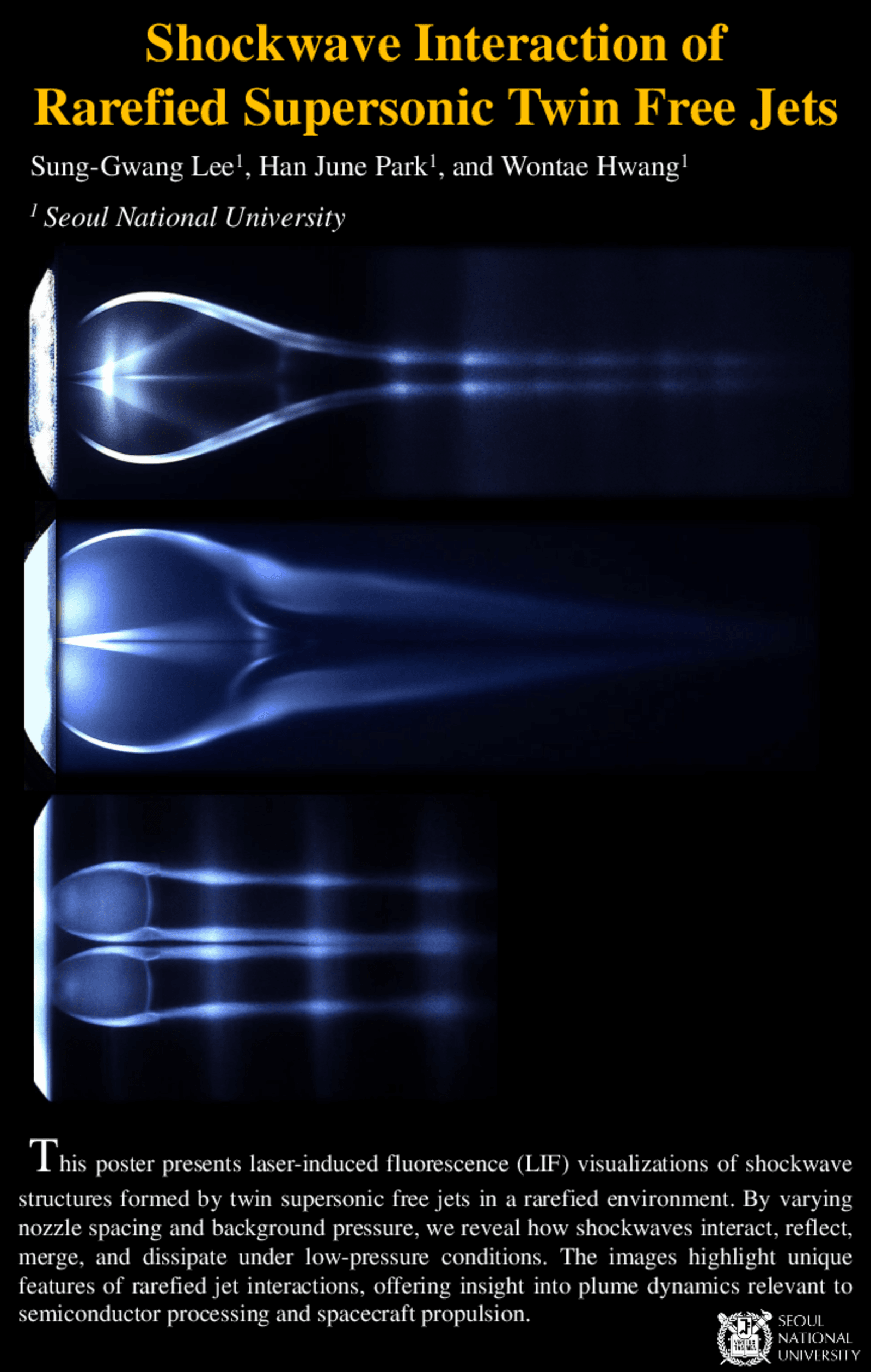
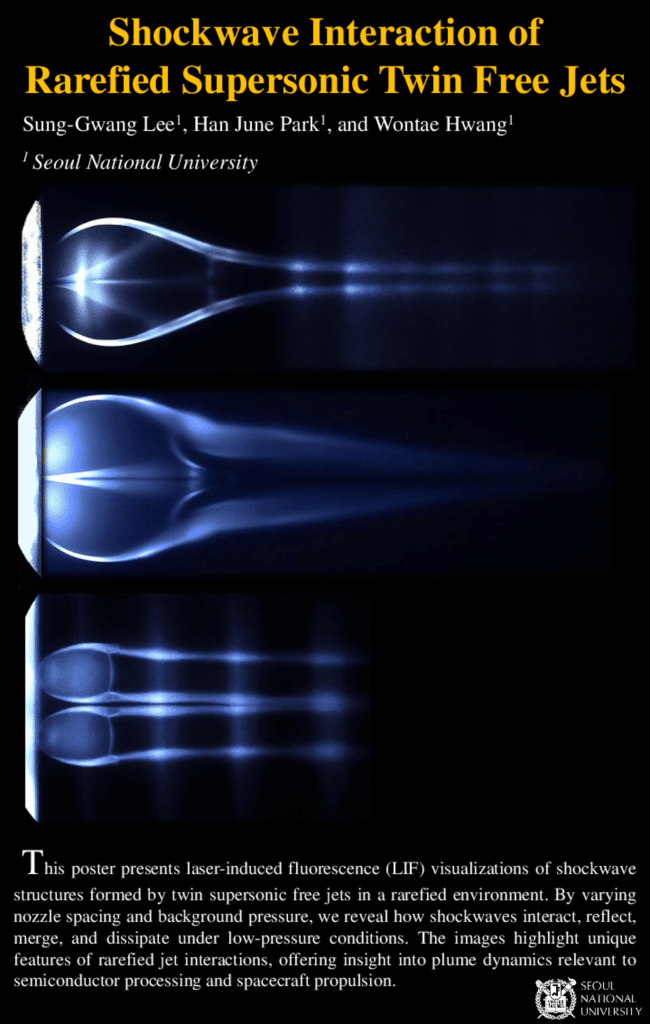
    When supersonic jets get emitted into rarefied air, they behave differently than they do in regular atmospheric conditions. Here, researchers picture three different configurations these jets can take. In the top image, the jets are close enough together that they appear to merge into a narrow supersonic jet. In the middle image, the jets are not quite as close together. They merge but form what appears to be a subsonic wake. In the final image, the jets are far enough apart that they don’t merge, although they do appear to “lean in” toward one another. (Image credit: S. Lee et al.)

    Research poster showing two supersonic jets interacting in a rarefied atmosphere.
    Fediverse Reactions
  • Escape From Yavin 4

    Escape From Yavin 4

    In an ongoing tradition, let’s take another look at some Star Wars-inspired aerodynamics. This year it’s the TIE fighter’s turn. Here, researchers simulate the spacecraft trying to escape Yavin 4’s atmosphere at Mach 1.15. The research poster’s blue contours show pressure contours, with darker colors connoting higher pressures. The bright low pressure region immediately behind the craft suggests a difficult, high-drag ascent and a turbulent, subsonic wake despite the craft’s supersonic velocity. (Image credit: A. Martinez-Sanchez et al.)

    Fediverse Reactions
  • Imaging a New Era of Supersonic Travel

    Imaging a New Era of Supersonic Travel

    Supersonic commercial travel was briefly possible in the twentieth century when the Concorde flew. But the window-rattling sonic boom of that aircraft made governments restrict supersonic travel over land. Now a new generation of aviation companies are revisiting the concept of supersonic commercial travel with technologies that help dampen the irritating effects of a plane’s shock waves.

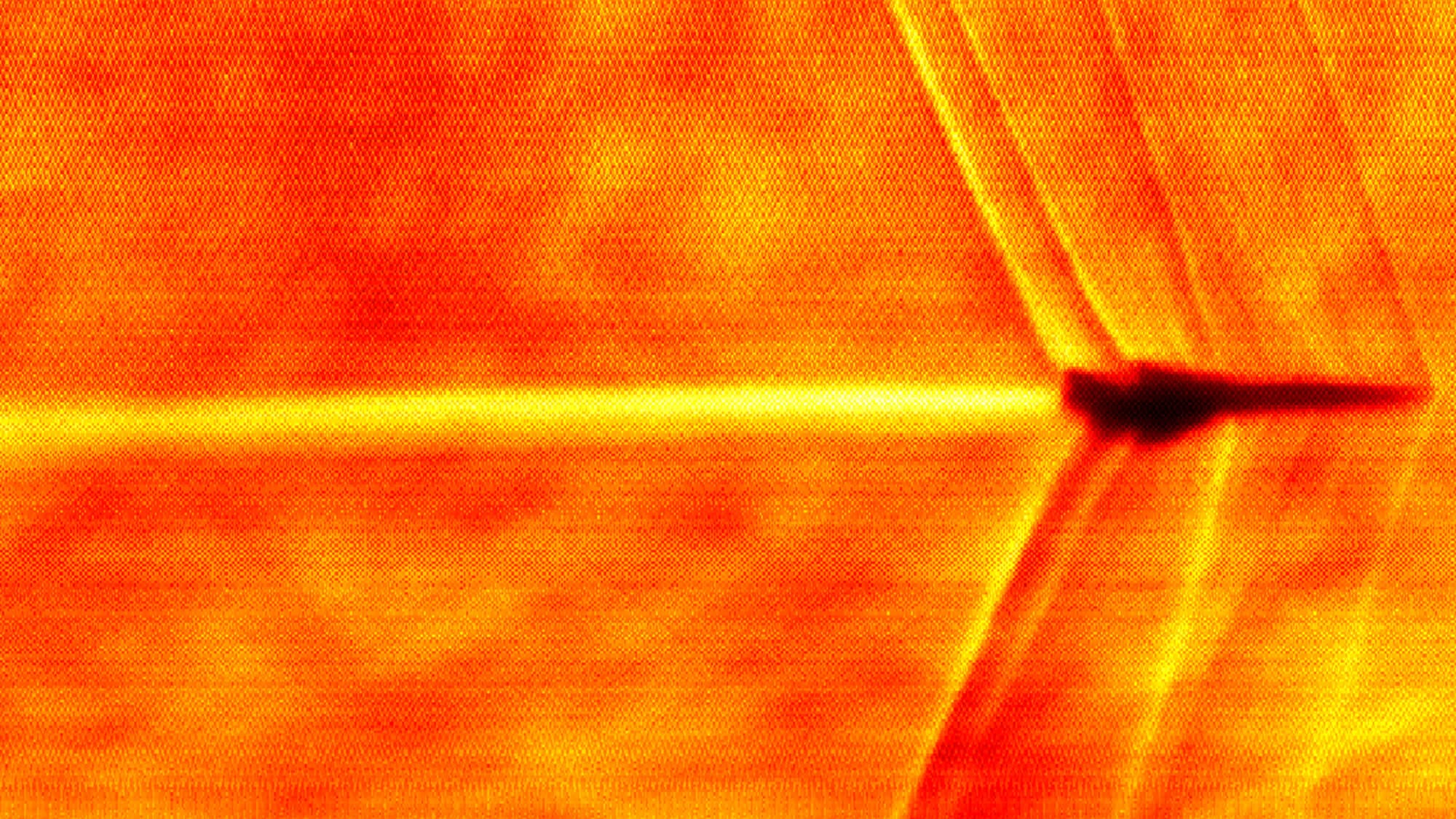
    One such company, Boom Supersonic, partnered with NASA to capture the above schlieren image of their experimental XB-1 aircraft in flight. The diagonal lines spreading from the nose, wings, and tail of the aircraft mark shock waves. It’s those shock waves’ interactions with people and buildings on the ground that causes problems. But the XB-1 is testing out scalable methods for producing weaker shock waves that dissipate before reaching people down below, thus reducing the biggest source of complaints about supersonic flight over land. (Image credit: Boom Supersonic/NASA; via Quartz)

    The XB-1 test aircraft in flight.
    Fediverse Reactions
  • An Exoplanet’s Supersonic Jet Stream

    An Exoplanet’s Supersonic Jet Stream

    WASP-127b is a hot Jupiter-type exoplanet located about 520 light-years from us. A new study of the planet’s atmosphere reveals a supersonic jet stream whipping around its equatorial region at 9 kilometers per second. For comparison, our Solar System’s fastest winds, on Neptune, are a comparatively paltry 0.5 kilometers per second. The team estimates the speed of sound — which depends on temperature and the atmosphere’s chemical make-up — on WASP-127b as about 3 kilometers per second, far below the measured wind speed. The planet’s poles, in contrast, are much colder and have far lower wind speeds.

    Of course, these measurements can only give us a snapshot of what the exoplanet’s atmosphere is like; we don’t have altitude data, for example, to see how the wind speed varies with height. Nevertheless, it shows that exoplanets beyond our planetary system can have some unimaginably wild weather. (Video and image credit: ESO/L. Calçada; research credit: L. Nortmann et al.; via Gizmodo)

    Fediverse Reactions
  • Reapproaching Supersonic Air Travel

    Reapproaching Supersonic Air Travel

    Before the Concorde even began regular flights, protests over its sound levels caused the U.S. and many other countries to ban overland commercial supersonic flight. Those restrictions have stood for fifty years. But NASA and Lockheed Martin Aeronautics are hoping to make supersonic air travel a possibility again with their experimental X-59 aircraft, designed to have a much quieter sonic boom.

    In supersonic flight, every curve, bolt, and bump generates a shock wave, and these waves tend to coalesce at the front and back of the aircraft, creating strong leading and trailing shocks. It’s these shock waves that are responsible for the double sonic boom that rattles windows and startles those of us on the ground. The X-59 reduces its noise by spreading out those shock waves, a feat designers managed with heavy reliance on computational fluid dynamics. They used wind tunnel studies mainly for validation, since iterating designs in the wind tunnel was far slower than working computationally. With the initial aircraft built, the team will now do test flights and, starting in 2026, will fly over the public and solicit feedback on whether the aircraft is acceptably quiet. (Image credit: NASA; via Physics Today)

    The sound of the X-59's sonic boom compared to other familiar sound levels.
    The sound of the X-59’s sonic boom compared to other familiar sound levels.
  • Featured Video Play Icon

    Can Explosions Deflect Bullets?

    In one of their most Mythbusters-like videos ever, the Slow Mo Guys ask: can an explosion deflect a bullet? To find out, they built out a system to trigger a C4 explosive using a 9mm bullet, all while watching with a series of high-speed cameras. As you’d expect, there are lots of blast waves and neat flame propagation to watch. As for the fundamental question, well, you’ll have to watch to find out! (Video and image credit: The Slow Mo Guys)

  • Featured Video Play Icon

    Test Firing a Rocket Engine

    Watching a rocket engine start up in slow motion is always fun. This Slow Mo Guys video shows a test fire of one of Firefly’s engines, which is capable of 45,000 pounds of thrust. Gav walks us through the process of preparing to film the test as well as what his footage shows.

    Green flames mark ignition of the initial fuel, and bursts of flame jerk back and forth as shock waves pass through the engine. That’s a necessary part of establishing supersonic flow through the bell-shaped diffuser at the end of the engine. Once the exhaust reaches supersonic speeds, expelling it creates a diamond-like pattern of standing shock waves and expansion fans that ultimately equalize the exhaust jet’s pressure to that of the surrounding atmosphere. (Video and image credit: The Slow Mo Guys)

  • Sonic Booms and Urban Canyons

    Sonic Booms and Urban Canyons

    In the days of the Concorde — thus far the world’s only supersonic passenger jet — noise complaints from residents kept the aircraft from faster-than-sound travel except over the open ocean. With many pursuing a new generation of civil supersonic aircraft, researchers are looking at how those sonic booms could interact with those of us on the ground.

    In this study, researchers simulated the shock waves from aircraft interacting with single and multiple buildings on the ground. They found that the presence of a building increases the perceived sound level of the boom by about 7 dB at the most. But the most interesting results are what happens between multiple buildings.

    If the street between buildings is wide enough, they each act independently, as if they were single buildings. But for narrower streets, the acoustics waves reflect and diffract between the buildings, creating a resonance that makes the acoustic echoes last longer. The effect is especially pronounced for a sonic boom traveling across a series of buildings, which mimics the layout of a dense city full of urban canyons. (Image credit: Concorde – M. Rochette, simulation – D. Dragna et al.; research credit: D. Dragna et al.)

    Acoustic waves reflect and propagate through 2D urban canyons with widths of 10 meters (top), 20 meters (middle), and 30 meters (bottom).
    Acoustic waves reflect and propagate through 2D urban canyons with widths of 10 meters (top), 20 meters (middle), and 30 meters (bottom).