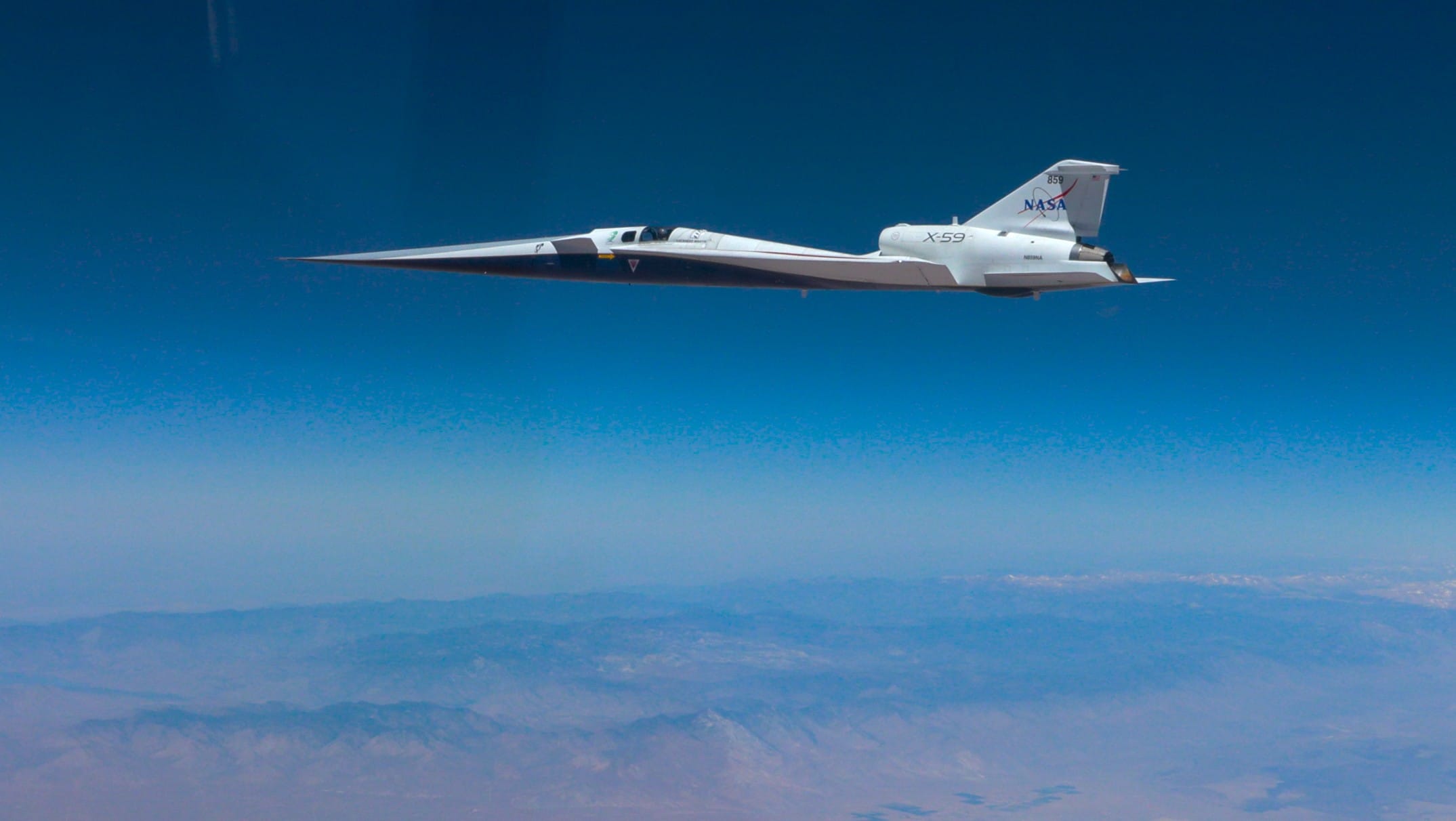
NASA’s X-59 aircraft is intended to demonstrate supersonic flight without the boom. Although it’s broken into supersonic speeds, we haven’t yet heard its “sonic thump” because, so far, it’s been accompanied by conventional supersonic aircraft, which are louder.
The idea behind the long, skinny X-59 is to create weaker, widely-spaced shocks along the aircraft body. Weaker shocks are easier for atmospheric effects to damp out before they reach the ground, and spacing them out makes it harder for them to “pile up” at the nose and tail to create the strong double shocks that merge into a sonic boom.
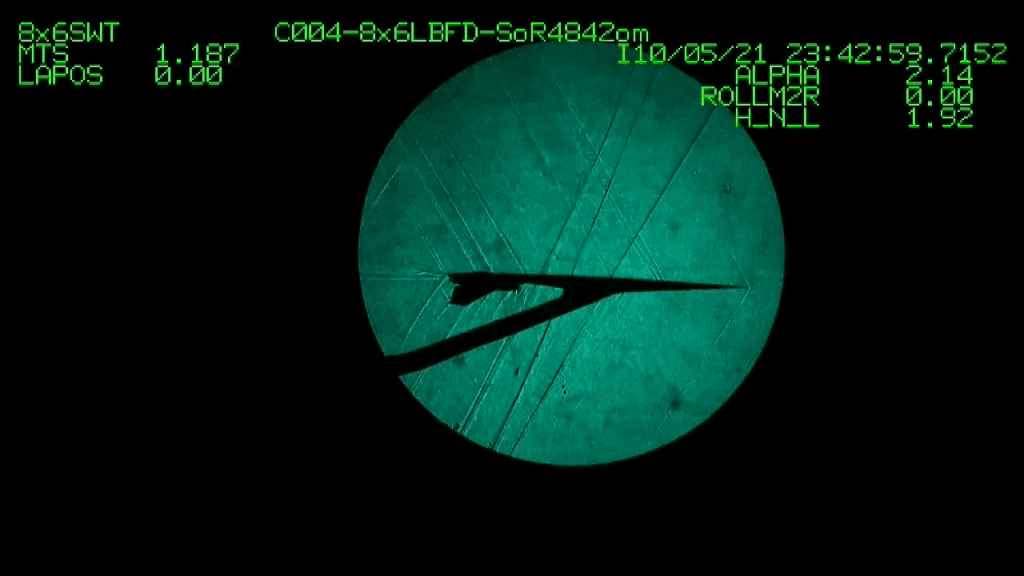
NASA is preparing to test the X-59’s in-flight shocks soon, including with in-air schlieren photography like they’ve done in the past for other aircraft. But we’ve already have a glimpse of what to expect, thanks to wind tunnel testing, shown above. Ignore the three dark diagonal lines in the middle of the image (those are from the wind tunnel, not the model aircraft), and focus instead on the thin bright lines coming off the plane. Those are some impressively subtle shock waves!
Hear more from the aircraft’s designer and test pilots in this Ars Technica article. (Image credit: NASA; see also: Ars Technica, M. Ahaus et al.)






Leave a Reply