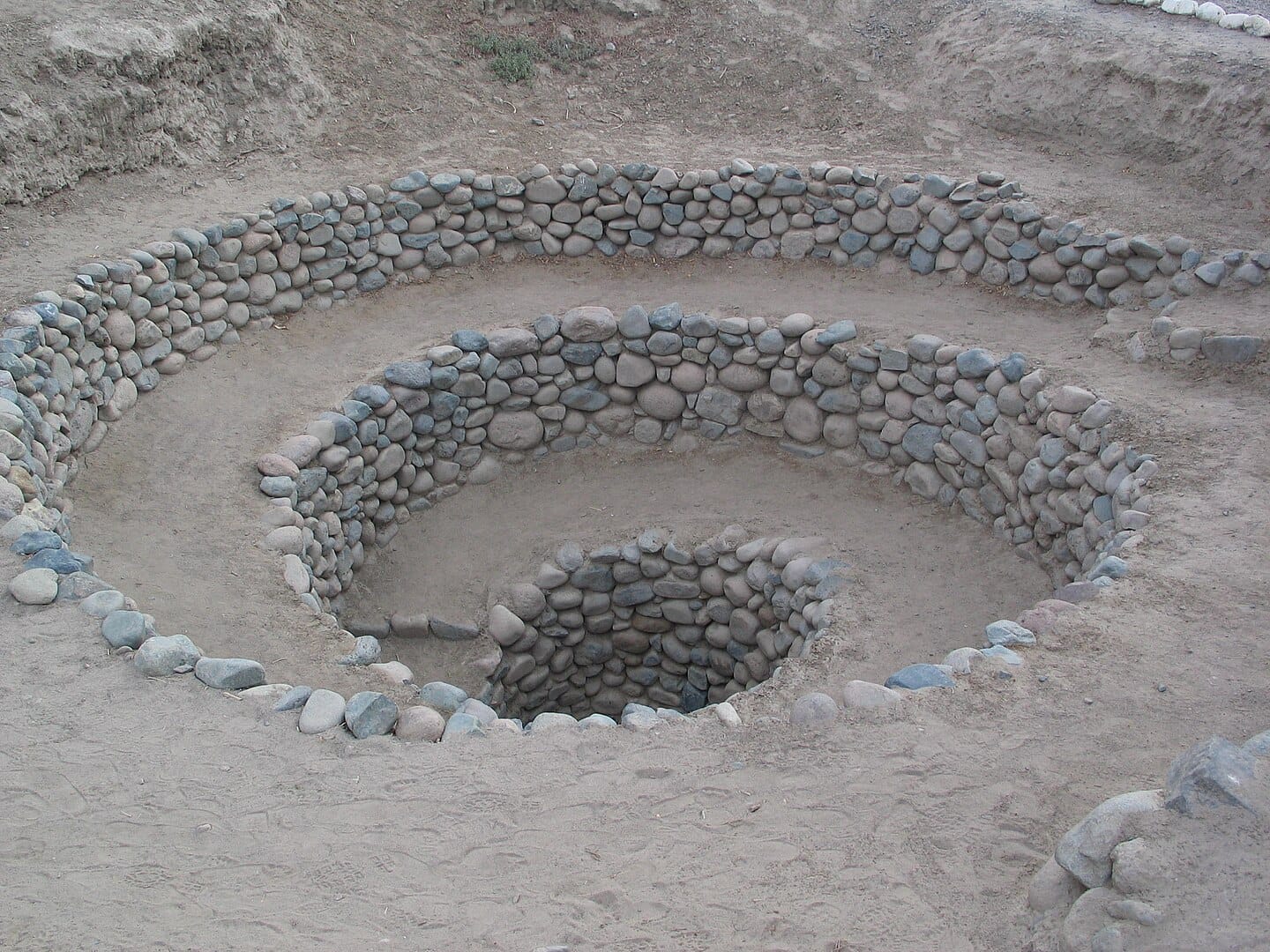
The arid Nazca region of Peru is dotted with spiral-shaped indentations, part of an irrigation system that helped indigenous civilizations thrive here before European contact. Although the region’s rainfall varies year-to-year, it never amounts to much. So pre-Columbian Nazcans turned instead to underground aquifers to gather and transport water.
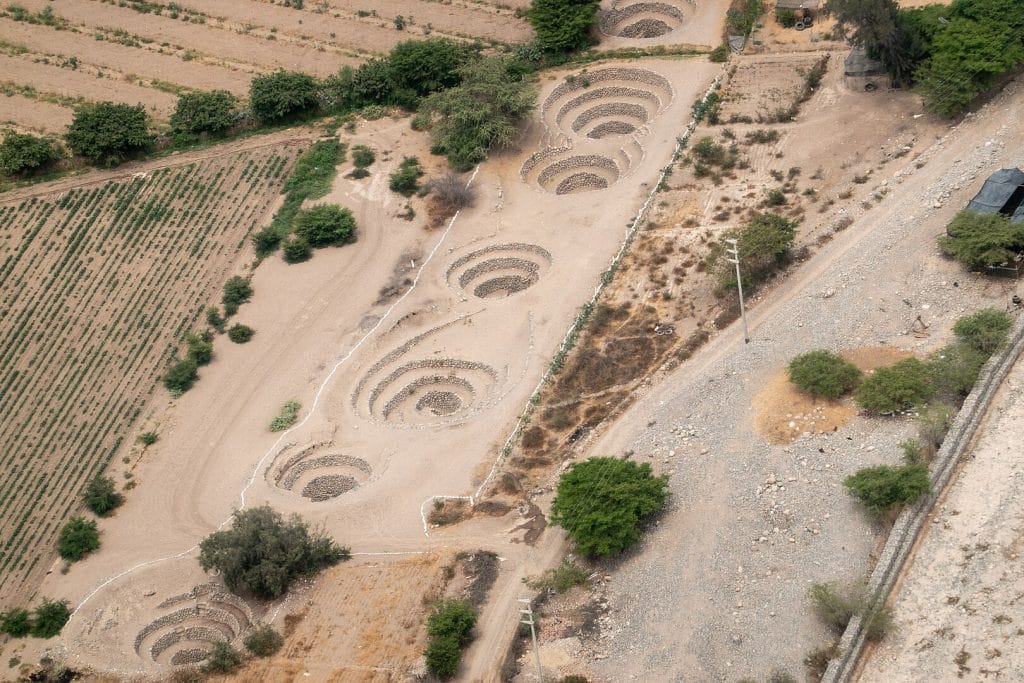
Aquifers in the region slope downward, following the local geology. Puquios builders began by digging a preliminary well in the highlands, tunneling down until they reached the aquifer. Then they built a horizontal tunnel underground, sloping gently downward, toward the location where water was needed. Along that roughly horizontal tunnel, they built additional chimneys, the spiraling mouths of which are seen above. These chimneys are thought to serve multiple purposes. They provide maintenance access to the aqueduct tunnel, and their shape may help funnel wind underground to oxygenate the water and help keep it flowing. Eventually, the underground tunnel would exit into an open trench and a reservoir, providing year-round water for irrigation and personal use.

Although the puquios cannot themselves be dated through usual archaeological means, the current consensus is that they originate from around 500 C.E., with subsequent modifications by both indigenous and colonial inhabitants. Impressively, several dozen puquios are still providing water today. (Image credits: Ab5602/Wikimedia, PsamatheM/Wikimedia, and R. Lasaponara et al.; research credit: R. Lasaponara et al.; via Eleanor K.)










Leave a Reply