Month: September 2019

  • The Drama of Turbulence

    The Drama of Turbulence

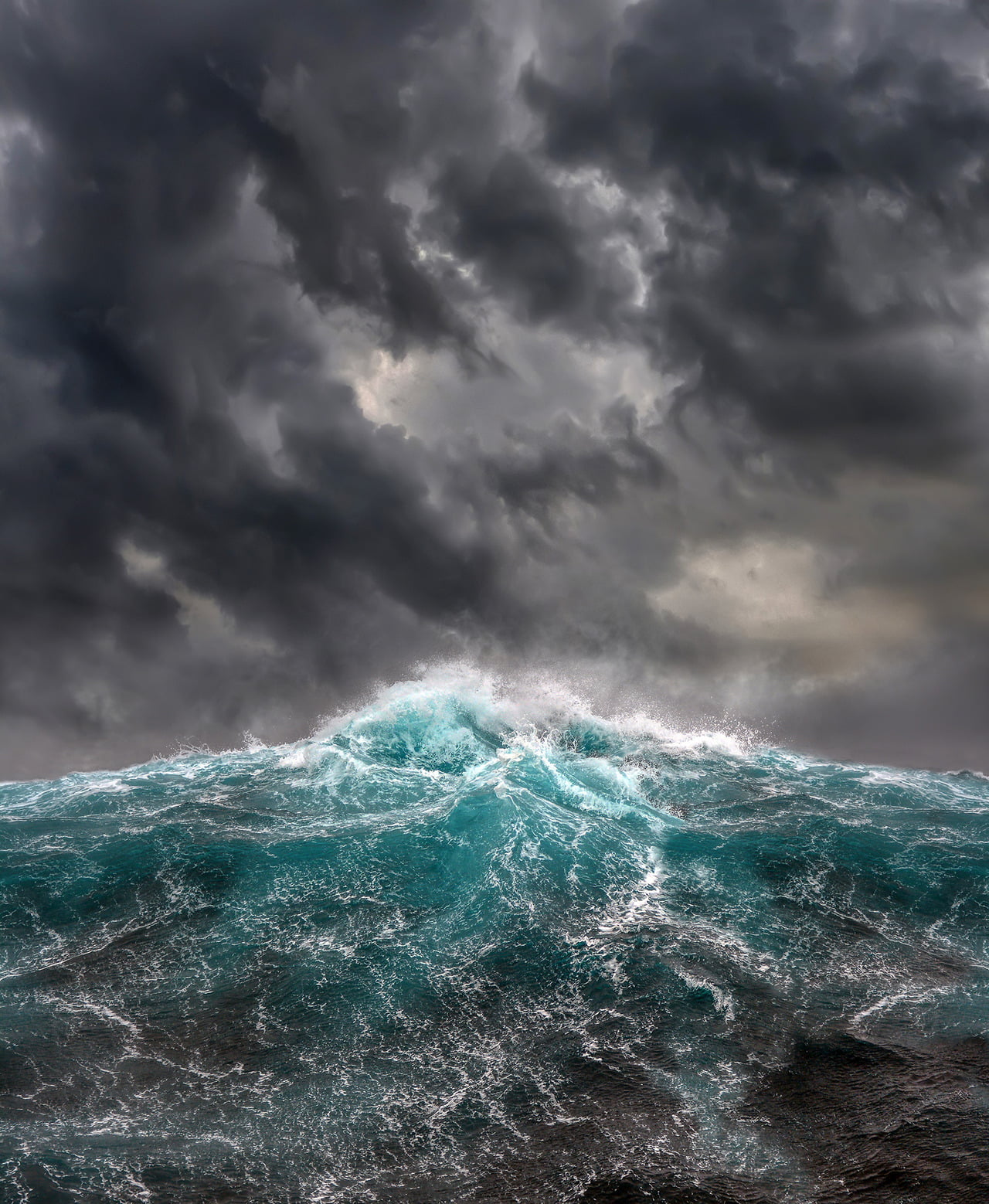
    Photographer Jason Wright captures dramatic views of Hawaiian landscapes. Moments like these remind us of the spectacular power of the ocean and atmosphere around us. Just look at all that incredible turbulence! See more of Wright’s work on his Instagram and website. (Image credit: J. Wright; via Colossal)

  • Superheating

    Superheating

    Being hot isn’t always enough to make water boil. To form vapor bubbles, water and other liquids need imperfections that serve as seeds. In the absence of these, the liquid can become superheated, reaching temperatures higher than its boiling point without forming bubbles. Superheated water can be quite dangerous because it appears to be cooler, but once it’s disturbed – thereby breaking its surface tension – vapor bubbles form rapidly and explosively. You can see in the animation above just how quickly and unsteadily a sudden vapor bubble expands as it rises to the surface. (Image credit: C. Kalelkar and K. Raj, source)

  • Waterspouts

    Waterspouts

    Despite their ominous appearance, these waterspouts – like most of their kind – are fair-weather phenomena unrelated to tornadoes. They can form when cold, dry air moves over warm waters. As warm, moist air rises from the water’s surface, air is drawn in from the surroundings to replace it. Any vorticity in that air comes with it, growing stronger as it gets pulls in, thanks to conservation of angular momentum. That action creates the waterspout, which becomes visible when the warm, humid air cools enough to condense and form a cloud wall. (Image credit: R. Giudici; via EPOD)

  • Avoiding Shear Thickening

    Avoiding Shear Thickening

    Many substances – like the cornstarch and water mixture above – exhibit a property called shear-thickening. In these fluids, deforming them quickly causes the viscosity to increase dramatically. That shear-thickening occurs when particles inside the fluid jam together, creating large chains able to resist the force being applied. That’s why the oobleck on this vibrating speaker can sustain these “cornstarch monsters”.

    Shear-thickening is useful in many contexts, but it’s problematic during manufacturing, when pumping these substances can become incredibly difficult due to the fluid’s innate resistance to flowing. A new study, though, finds that it’s possible to temporarily suppress shear-thickening using acoustic waves. The researchers used piezoelectric devices to generate acoustic waves at a frequency around 1 MHz while shearing the cornstarch mixture. The acoustic waves disrupt the formation of particle chains inside the mixture, keeping its viscosity 10 times lower than during regular shear-thickening. (Image credit: bendhoward, source; research credit: P. Sehgal et al.; submitted by Brian K.)

  • Seeing Sound

    Seeing Sound

    It’s not always easy to imagine how waves travel, but with this demonstration, you can see sound waves and how they reflect and defract. The set-up uses schlieren optics that show light and dark bands where strong changes in density take place. This, combined with a stroboscopic light, makes it possible to see the wave fronts from the acoustic transducer on the left side of the screen. Once the wave is apparent, introducing a reflective object lets us see exactly how sound waves bounce, reflect, and interfere. (Image and video credit: Harvard Natural Sciences Lecture Demonstrations)

  • Making Giant Soap Bubbles

    Making Giant Soap Bubbles

    Making soap bubbles is fun, but there’s something about gigantic soap bubbles that brings out the child in everyone. The world’s largest freestanding soap bubble had more than 100 square meters of surface area, which begs an important question: how can such a thin film stay stable at that size?

    The solutions used for giant bubbles have a few main ingredients: water, naturally; detergent, used for its surfactants; and polymers like polyethylene glycol that help stabilize the soap film. Exactly why polymers helped was a bit of mystery, but a new pre-print study aims to answer that.

    Researchers studied how polymer concentrations affected 1) how much solution could be drawn in as bubbles formed, and 2) how long a film of solution lasted before gravity and evaporation thinned it to breaking. They found that intermediate polymer concentrations actually worked best. This gave the solution the viscoelasticity needed to draw in more solution as bubbles grew without having so much polymer that it negatively affected film lifetime. (Image credit: Pixabay; research credit: S. Frazier et al.; via MIT Tech Review; submitted by Kam-Yung Soh)

  • Featured Video Play Icon

    How to Build a Lava Moat

    If you’re looking for a new and impractical way to protect your home, here’s a great option: a lava moat. Nothing says “Don’t try to knock on my door” like a glowing inferno of molten rock. And Minute Physics – along with xkcd – has put together a short, handy guide to some of the challenges you’ll face in building and maintaining this fearsome fortification. If running your own commercial-scale power plant seems overly daunting but you still want to see what lava’s all about, I have good news; here’s a selection of some of my favorite looks at lava here at FYFD:

    – Upstate NY’s homemade lava
    – What happens when you step on lava
    –  A veritable river of lava in action
    – What happens when water meets lava

    Now, if you’ll excuse me, I’m off to Hawai’i for the next two weeks. There will be lava. (Video credit: Minute Physics)

  • Featured Video Play Icon

    “Emergence”

    Artist Susi Sie explores fluidic worlds through her macro lens. In “Emergence,” her focus is on ferrofluids immersed in other liquids. Beginning with tiny droplets traversing the thin fluid channels of a foam, she allows the unique qualities of ferrofluids to slowly take center stage. Dark blobs grow into curvy labyrinths as a magnetic fields come into play. Until ultimately the magnetic nature of the fluid becomes undeniable as scattered droplets elongate into miniature compass needles and swing around to follow the field lines. (Video and image credit: S. Sie)

  • Escaping the Limits of Viscosity

    Escaping the Limits of Viscosity

    For large creatures, it’s not hard to feel the evidence of someone else swimming nearby. But to tiny swimmers water is incredibly viscous and hard to move. These creatures have to swim very differently than their larger cousins, and evidence of their motion dies out quickly. But at least one microorganism,  Spirostomum ambiguum, has discovered a method for overcoming the limits of size and viscosity.

    The single-celled swimmer, when threatened, contracts its body in milliseconds, generating accelerations greater than those seen by fighter pilots. That acceleration is strong enough that it generates a burst of turbulence powerful enough to overcome the natural damping of its viscous surroundings. Within their colonies, S. ambiguum seem to use contraction to send out hydrodynamic signals to neighbors, who pass on the call to arms. To see the colonies in action, check out this previous article. (Image and research credit: A. Mathijssen et al.; via Physics Today; submitted by Kam-Yung Soh)

  • Featured Video Play Icon

    Why Do Backwards Wings Exist?

    Over the years, there have been many odd airplane designs, but one you probably haven’t seen much is the forward-swept wing. While most early aircraft featured straight wings, rear-swept wings are fairly common today, especially among commercial airliners. A rear-swept wing has its forward-most point at the root of the ring, where it attaches to the fuselage. The sweep breaks up the incoming flow into a chordwise component that flows from the leading edge to the trailing edge of the wing and a spanwise component that flows along the wing. Compared to straight wings, a swept wing provides better stability and control when flying at transonic speeds where shock waves can form on the wing (even though the plane itself is not supersonic).

    The trouble with rear-swept wings is that when they stall, they do so from the wingtips inward. Since the ailerons that control the plane’s orientation are out near the wingtips, that’s a problem. Forward-swept wings were supposed to solve this issue because they would stall from the root outward. But they came with a whole new set of problems, which included the need for robust onboard computers controlling them constantly to keep them in stable flight. In the end, the disadvantages outweighed any gains and so, for the most part, the forward-swept wing design has seen little flight time. (Image and video credit: Real Engineering)