Year: 2017

  • Putting Out Fires

    Putting Out Fires

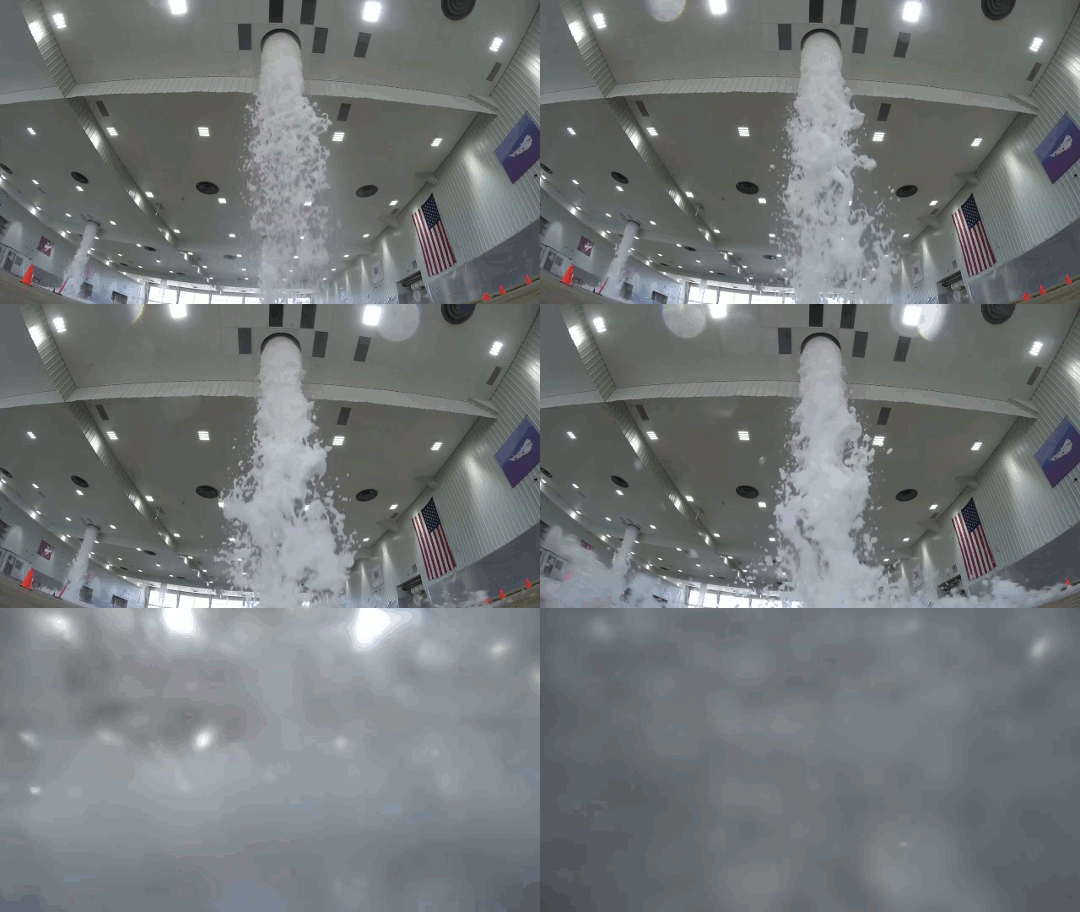
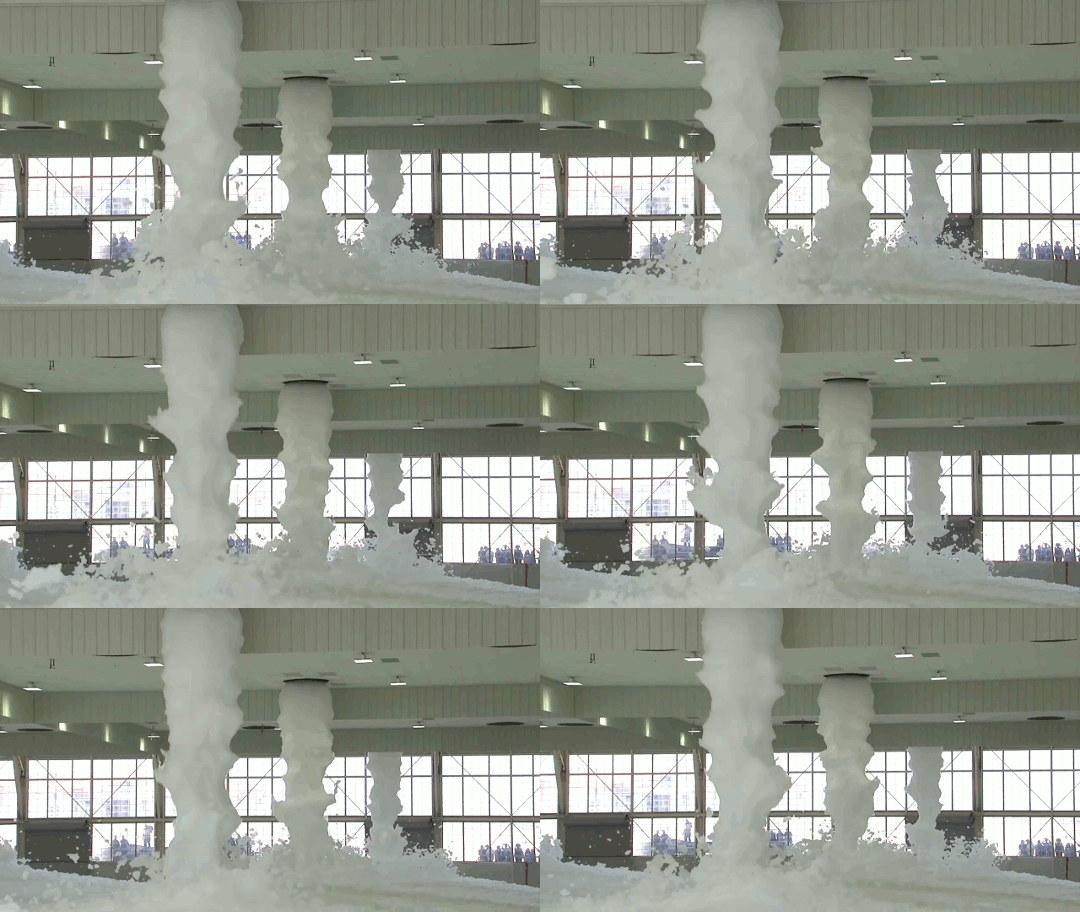
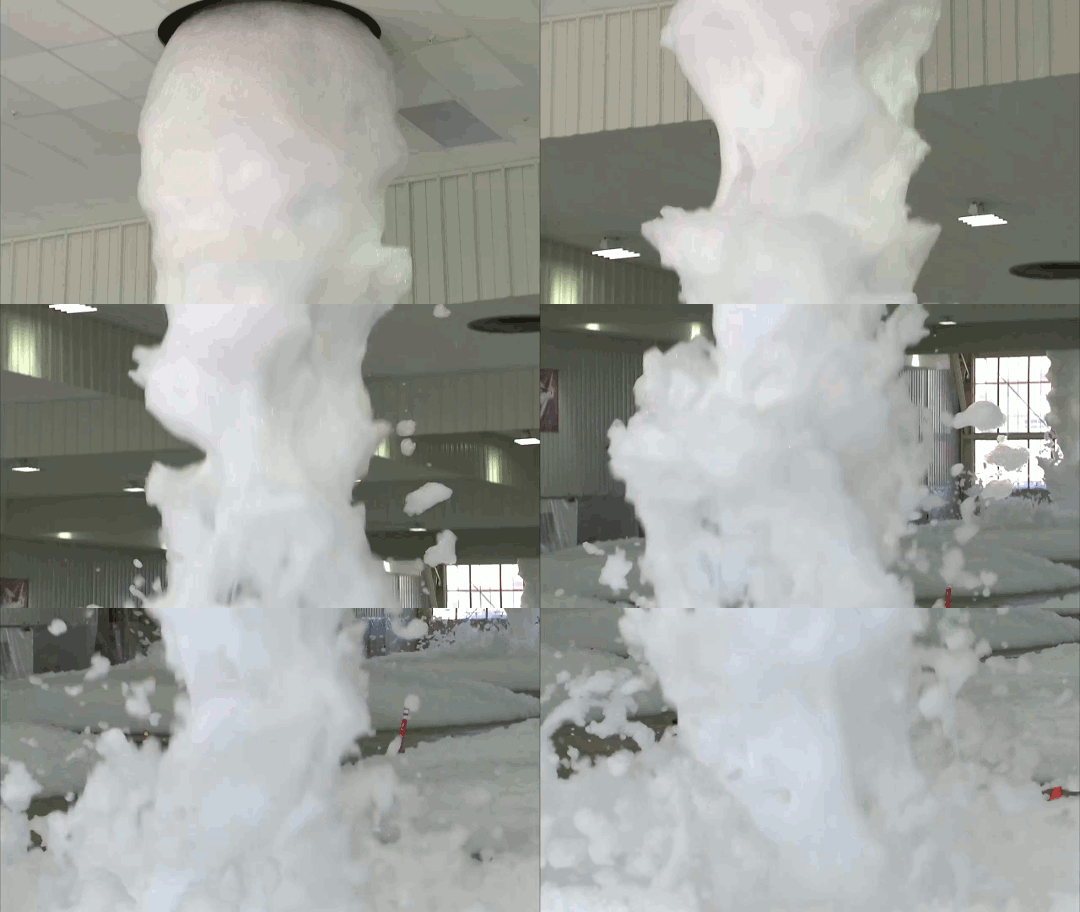
    Fires in large, open spaces like aircraft hangers can be difficult to fight with conventional methods, so many industrial spaces use foam-based fire suppression systems. These animations show such a system being tested at NASA Armstrong Research Center. When jet fuel ignites, foam and water are pumped in from above, quickly generating a spreading foam that floats on the liquid fuel and separates it from the flames. Since the foam-covered liquid fuel cannot evaporate to generate flammable vapors, this puts out the fire. 

    The shape of the falling foam is pretty fascinating, too. Notice the increasing waviness along the foam jet as it falls. Like water from your faucet, the foam jet is starting to break up as disturbances in its shape grow larger and larger. For the most part, though, the flow rate is high enough that the jet reaches the floor before it completely breaks up. (Image credit: NASA Armstrong, source)

  • Stellar Bow Shock

    Stellar Bow Shock

    This Hubble image shows a young star in the Orion Nebula and the curved bow shock arcing around it. Despite its age, the star LL Orionis is energetic, producing a stellar wind that exceeds our sun’s. When that wind collided with the flow in the Orion Nebula, it formed this bow shock that is about a half a light-year wide. We don’t often think about fluid dynamics applying in space, but if we consider a lengthscale that is large enough, even space contains enough matter to behave like a fluid. LL Orionis’s bow shock is in many ways comparable to ones we see form around re-entering spacecraft. (Image credit: NASA/Hubble, via APOD; submitted by jshoer)

  • Featured Video Play Icon

    “Ink in Motion”

    In this short film, the Macro Room team plays with the diffusion of ink in water and its interaction with various shapes. Injecting ink with a syringe results in a beautiful, billowing turbulent plume. By fiddling with the playback time, the video really highlights some of the neat instabilities the ink goes through before it mixes. Note how the yellow ink at 1:12 breaks into jellyfish-like shapes with tentacles that sprout more ink; that’s a classic form of the Rayleigh-Taylor instability, driven by the higher density ink sinking through the lower density water. Ink’s higher density is what drives the ink-falls flowing down the flowers in the final segment, too. Definitely take a couple minutes to watch the full video. (Image and video credit: Macro Room; via James H./Flow Vis)

  • Featured Video Play Icon

    The Tibetan Singing Bowl

    Rubbing a Tibetan singing bowl creates sound and a spray of droplets inside the container. But the reverse works, too! Instead of rubbing the bowl, one can project sound at it to make the droplets dance. In the video above, the speaker plays a sinusoidal wave at a frequency that resonates with the bowl. It activates the most basic vibrations in the bowl, making it bulge slightly front-to-back and then side-to-side. This is called the fundamental vibrational mode. The bowl doesn’t change shape enough to see by eye, but you can tell where the bowl is flexing the most – at the four points where the droplets are ejected! The larger vibrations there are what create the spray of droplets. (Video credit: D. Terwagne)

  • Escaping Quicksand

    Escaping Quicksand

    Quicksand is complicated stuff. It’s typically a mixture made up of sand, clay, and water. To get those ingredients into a proper quicksand mixture, you have to liquefy the particles by saturating the spaces between them with water, as the jumping tourists in the top animation are doing. (That’s not to say that you can’t just find a patch of quicksand – just that something has to have pumped that area full of water first.)

    If you end up in quicksand, don’t panic. Quicksand is denser than a human, which means that, at the worst, you won’t sink in much further than your waist (middle image). It’s tough to move once you sink because your weight has squeezed a lot of the water out from between the sand and clay particles, thereby drastically increasing the viscosity. To get out, try putting weight on one leg and wiggling the other back and forth (bottom image). This lets water back in the mixture and hopefully lets you free that leg. Once one leg is free, try to kneel on it and work the other leg out. (Image credits: making quicksand – T. L. Nguyen, source; stuck – National Geographic, source; escape – Tech Insider, source; research credit: G. Evans et al., A. Khaldoun et al.)

  • The Colorful Dissolution of Candies

    The Colorful Dissolution of Candies

    Many solids can dissolve in liquids like water, and while this is often treated as a matter of chemistry, fluid dynamics can play a role as well. As seen in this video by Beauty of Science, the dissolving candy coating of an M&M spreads outward from the candy. This is likely surface-tension-driven; as the coating dissolves, it changes the surface tension near the candy and flow starts moving away thanks to the Marangoni effect. With multiple candies dissolving near one another, these outward flows interfere and create more complex flow patterns. 

    These flows directly affect the dissolving process by altering flow near the candy surface, which may increase the rate of dissolution by scouring away loose coating. They can also change the concentration of dissolved coating in different areas, which then feeds back to the flow by changing the surface tension gradient. (Video and image credit: Beauty of Science)

  • Flow Above the Treetops

    Flow Above the Treetops

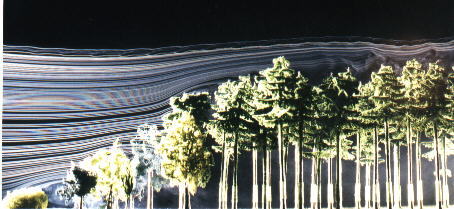
    As this smoke visualization shows, trees have a significant impact on airflow around them. Flow in the image is from left to right. On the left, the upstream air is traveling in smooth, laminar lines that are quickly disrupted as the flow moves into the trees. After the first shorter trees, flow inside the wooded area has been broken up and slowed. Above the canopy, the smoke streaklines have also slowed and become more turbulent. Understanding how wind and trees interact is important in a variety of applications, including when adding renewable energy options to buildings and when predicting the spread of forest fires. (Image credit: W. Frank et al.)

  • Sniffing Underwater

    Sniffing Underwater

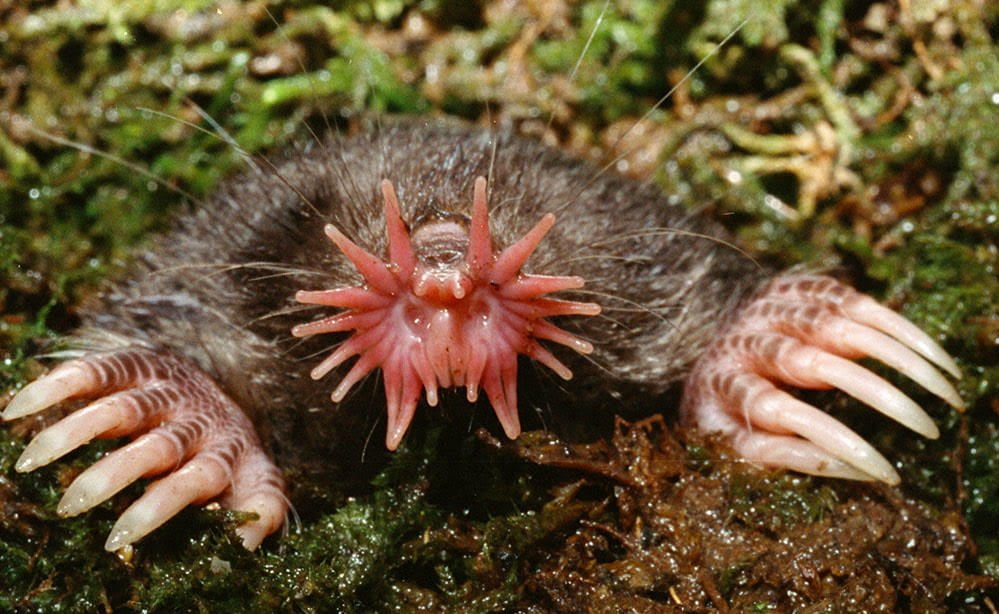
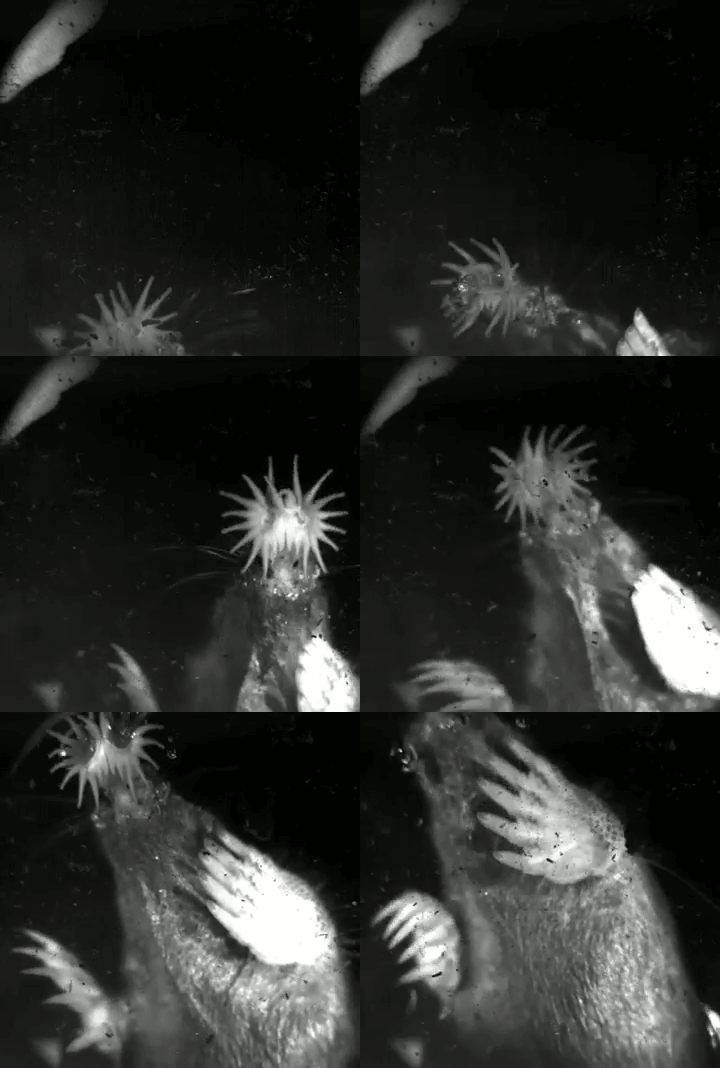
    You’d be forgiven for thinking that the star-nosed mole looks funny. Its distinctive star-shaped nose is a highly-sensitive organ, but the mole doesn’t just use it for finding its way through the underground tunnels it lives in. These moles can actually sniff underwater. By exhaling a bubble and then re-inspiring it, the moles collect scent particles that they can use to locate food. In experiments, both star-nosed moles and water shrews could use this technique to successfully follow a scent trail, demonstrating exploring and pausing behaviors similar to terrestrial sniffing as they did. To learn more about this impressive mammal, listen to the latest episode of Science Friday, where research Ken Catania describes his work with them. (Image credits: K. Catania; via Science Friday)

  • Watching a Model Rocket Burn

    Watching a Model Rocket Burn

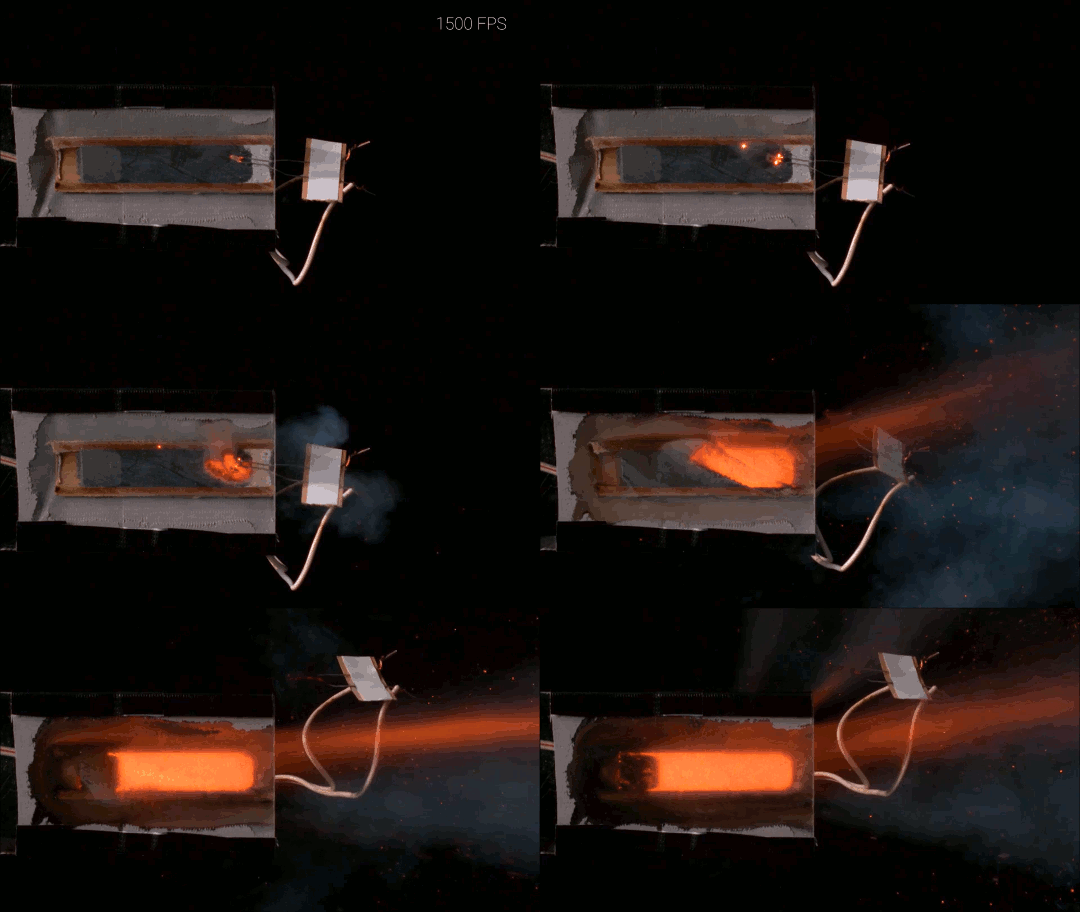
    Rockets operate on a pretty simple principle: if you throw something out the back really fast, the rocket goes forward. Practically speaking, we accomplish this with a combination of chemistry and physics, by burning fuel and oxidizer together and accelerating the exhaust out a nozzle. Solid rocket propellant, like that found in the model rockets shown here, is a combination of fuel and oxidizer that don’t react until they’re ignited. You don’t want your rocket to just explode as soon as it’s lit, though, so solid rocket motors are carefully designed to burn in a particular way. By packing the propellant into different shapes – and even including patterns of propellants with different burn rates – engineers can create a rocket that burns with the thrust pattern they want.

    In the case of this model rocket motor, what we observe is not really how it is intended to burn; you can see how some of the combustion products are working their way out of cracks that wouldn’t normally exist. But the video and animation do show how the burn front moves gradually through the engine, allowing it to produce a relatively steady amount of thrust for a longer period before reaching the darker burning propellant on the left, which would normally launch the model rocket’s parachute. (Image and video credit: Warped Perception; via Gizmodo)

  • How the Jellyfish Stings

    How the Jellyfish Stings

    Many jellyfish are capable of venomously stinging both their prey and their predators. The stings originate from specialized cells in their tentacles called nematocysts (middle image) that, when activated, rapidly extend a thin tubule that acts like a hypodermic needle to deliver venom into the jellyfish’s victim (bottom image). The tubules can elongate in about 50 ms – about one-sixth of the time needed to blink your eye. This rapid extension is driven by osmotic pressure – pressure generated when water flows across a semi-permeable membrane in response to chemical changes. 

    Researchers originally thought all of the osmotic pressure resided in the nematocyst’s capsule end from which the tubule expands, but new work indicates that the tubule is instead pulled along by high osmotic pressure along its moving front. That means that disrupting osmosis at the front – by say, wearing a material with no osmotic potential – can slow down the tubule expansion and stop the jellyfish’s sting. (Image credits: jellyfish – A. Kongprepan; nematocyst – D. Brand; tubule expansion – S. Park et al.; research credit: S. Park et al.; submitted by L. Buss)