Month: July 2016

  • The Evaporation of Ouzo

    The Evaporation of Ouzo

    Ouzo is an aperitif made up of ethanol (alcohol), water, and anise oil. This three-part, or ternary, mixture undergoes an intriguing evaporation process thanks to the characteristics of its components. An ouzo drop’s evaporation can be divided into four phases, each shown above. Initially, the drop is well-mixed and transparent (upper left). 

    Since ethanol is the most volatile of ouzo’s components, it evaporates the most quickly. As the ethanol evaporates, the drop becomes oversaturated with oil (upper right). Oil droplets form, giving the ouzo a milky appearance. At the same time, the ethanol evaporating causes gradients in surface tension, which drive a vigorous Marangoni flow inside the drop. 

    Eventually, the ethanol finishes evaporating and the oil drops collect in a ring around the outside of the drop (lower left). Slowly, the water inside the drop evaporates. Eventually, a tiny microdroplet of water is left to dissolve in the anise oil (lower right). (Image and research credit: H. Tan et al., source; via Inkfish)

  • Crisscrossing Clouds

    Crisscrossing Clouds

    This natural-color satellite image shows crisscrossing cloud patterns off coastal Africa. These distinctive lines in the sky are gravity waves, and they form when air masses get displaced upward by terrain or other conditions. In this case, dry air cooled overnight on land before moving out over the ocean. That displaced warm, humid air above the water and forced it upward, where it eventually cooled and condensed into clouds. Gravity created the ripple-like waves; as the moist air cooled, gravity again pulled it downward – leaving behind a clear sky. Once the humid air sank, the dry air pushed it up again, creating another line of clouds and continuing the cycle.  (Image credit: NASA; via NASA Earth Observatory)

  • Featured Video Play Icon

    Crash Course Fluids

    Crash Course Physics returns to the subject of fluids with their video on fluid dynamics. They stick with ideal fluids (i.e. incompressible, inviscid, laminar flows) for simplicity and cover some of the basics by discussing conservation of mass (also called continuity) and a simple form of Bernoulli’s equation. Despite keeping things basic, the video does a nice job introducing these topics; I especially like that they explain Bernoulli’s equation as a form of conservation of energy. Sometimes it’s easy to let the terminology in fluid dynamics mask the fact that the equations we use are just alternative forms of the classical equations for conserving mass, momentum, and energy. As with their fluids at rest video, the information is densely packed, so expect to pause and rewind. (Video credit: Crash Course)

  • Dust Devils

    Dust Devils

    Dust devils, like fire tornadoes and waterspouts, form from warm, rising air. As the sun heats the ground to temperatures hotter than the surrounding atmosphere, hot air will begin to rise. When it rises, that air leaves behind a region of lower pressure that draws in nearby air. Any vorticity in that air gets intensified as it gets pulled toward the low pressure area. It will start to spin faster, exactly like a spinning ice skater who pulls in his arms. The result is a spinning vortex of air driven by buoyant convection. On Earth, dust devils are typically no more than a few meters in size and can only pick up light objects like leaves or hay. On Mars, dust devils can be hundreds of meters tall, and, though they’re too weak to do much damage, they have helpfully cleaned off the solar panels of some of our rovers! (Image credit: T. Bargman, source; via Gizmodo)

  • Martian Ripples

    Martian Ripples

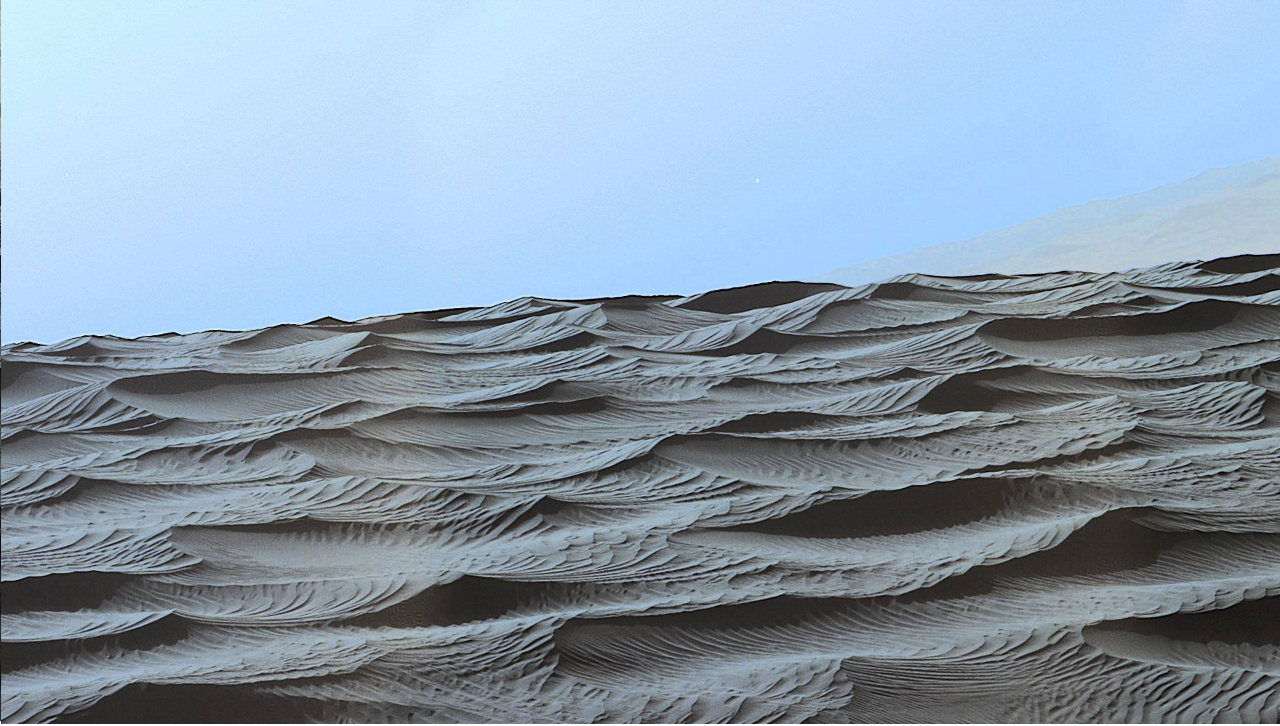
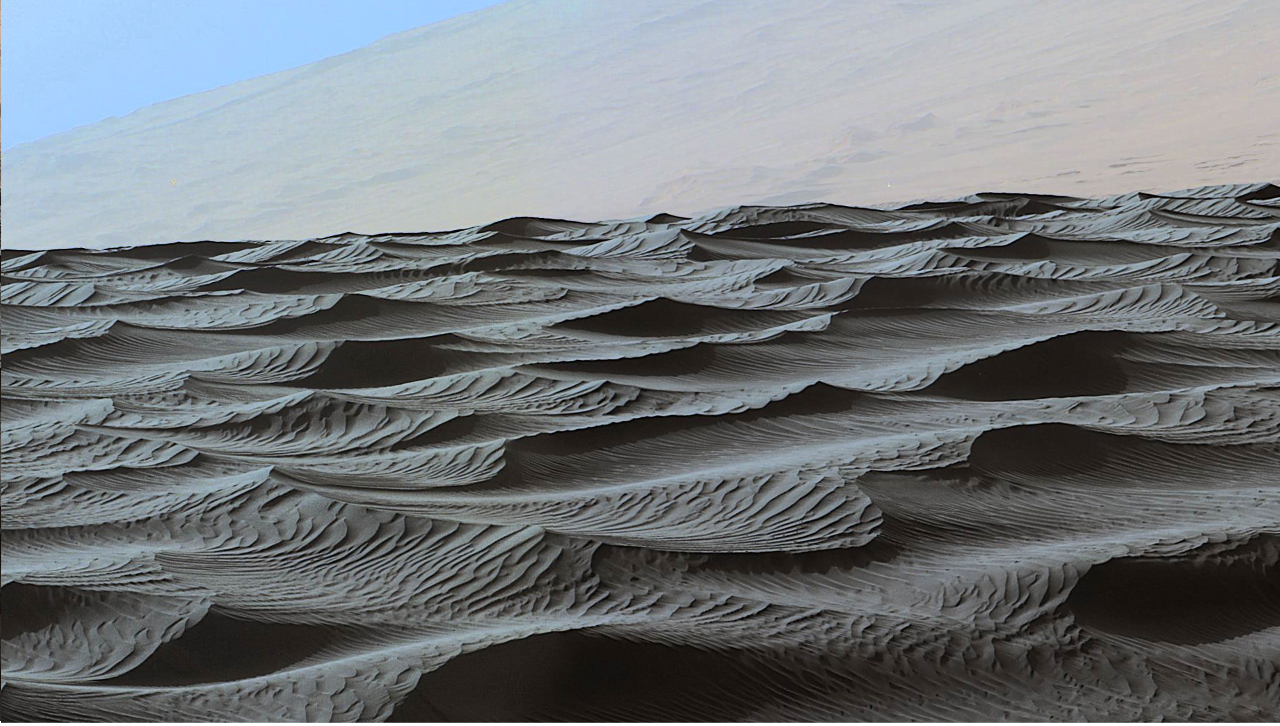
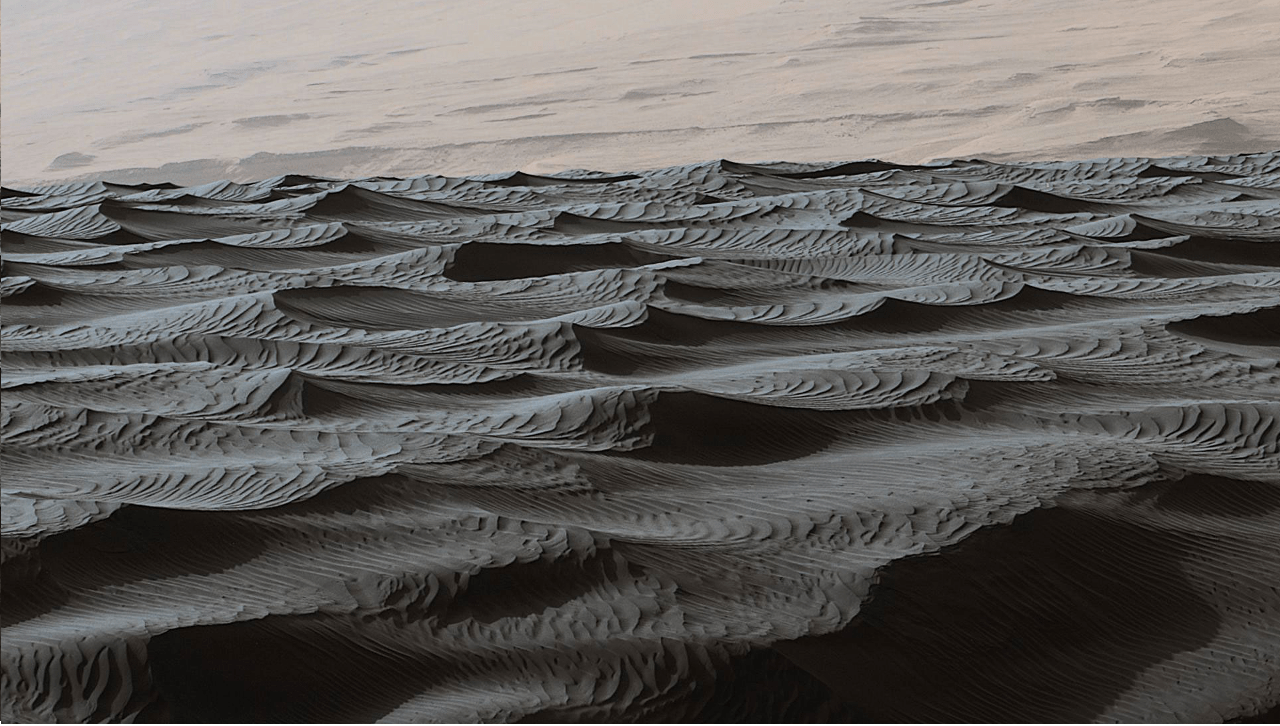
    Earth and Mars both feature fields of giant sand dunes. The huge dunes are shaped by the wind and miniature avalanches of sand, and their surface is marked by small ripples less than 30 centimeters apart. These little ripples are formed when sand carried by the wind impacts the dunes. But Martian dunes have a second, larger kind of ripple, too. These sinuous, curvy ripples lie about 3 meters apart and cast the dark shadows seen in the images above. On Earth we see ripples like these underwater, where water drags sand along the surface. On Mars, the same process is thought to play out with the wind, and so scientists have named these wind-drag ripples. (Image credit: NASA/JPL/MSSS; via APOD, full-res; submitted by jshoer)

  • These Invertibrates May Help Robots Swim

    These Invertibrates May Help Robots Swim

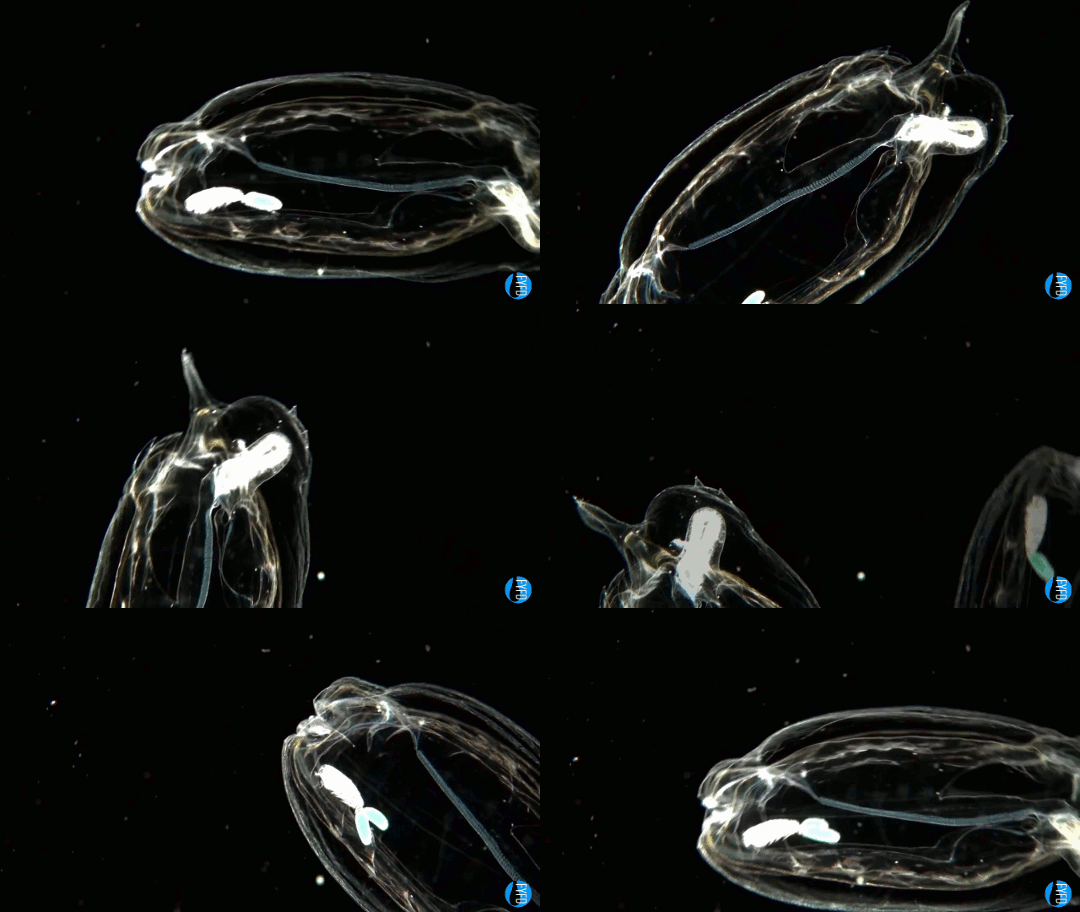
    New FYFD video! Learn all about salps, vortex rings, and underwater robots. Thanasi Athanassiadis takes me inside his lab and his newly published research into how proximity affects the thrust two vortex rings can produce.

    There are a ton of little things I love about how this video came out, especially the chalkboard animations. Check it the full video below and click through to the video description for lots more information about salps and vortex rings.

    (Image and video credits: N. Sharp and A. Athanassiadis; Original salp images: A. Migotto and D. Altherr)

  • Quarry Smashing

    Quarry Smashing

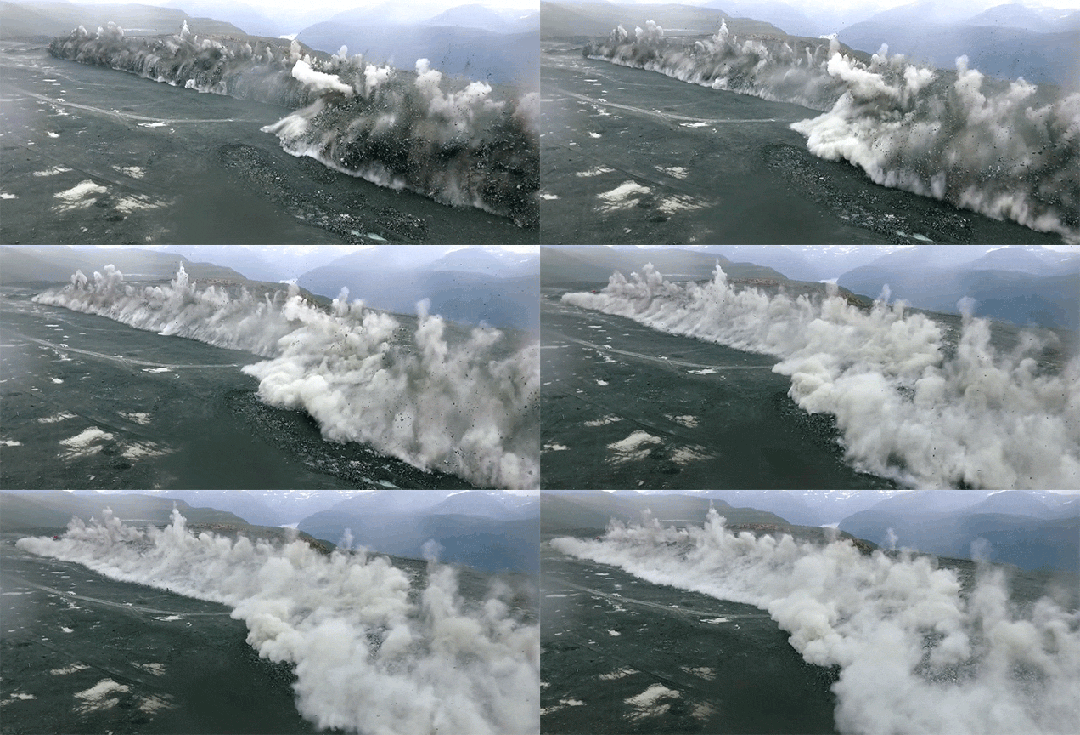
    Despite appearances, this is not a crashing ocean wave. In fact, it’s a planned explosion at a quarry, and that wave is more than 360,000 tons of rock and 68 tons of explosive pouring down. The scale of this is hard to imagine, and the physics of a ocean breaker and a massive wave of rocks and gas are similar enough that it’s no wonder our brains interpret them as the same event. Visual effects artists have been using this trick for decades. Rather than simulate the motion of a true fluid, many CGI effects are created from digital particles that, much like the rocks above, are similar enough to fool our eyes and our brains.  (Image credit: K. Venøy, source; via Gizmodo)

  • The Knuckleball

    The Knuckleball

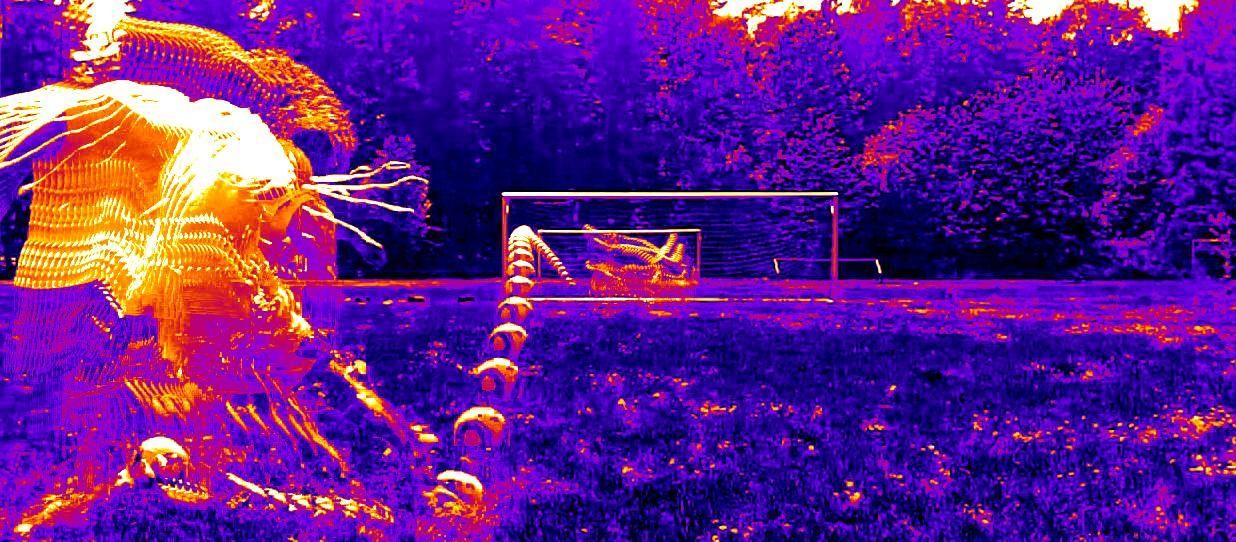
    For more than a century, athletes have used the zigzagging path of a knuckleball to confound their opponents. Knuckleballing is best known in baseball but appears also in volleyball, soccer, and cricket. It occurs when the ball has little to no spin. The source of the knuckleball’s confusing trajectory, according to a new study, is the unsteadiness of the lift forces around the ball. As the ball flies, tiny variations occur in the flow on either side, causing small variations to the lift as well. Using experiments and numerical models, the researchers established that this white noise in the lift forces is sufficient to cause knuckleball-like path changes.

    They were also able to explain why some sports see the knuckleball effect and others don’t. The wavelength of the deviations – the distance between a zig and a zag – is relatively long, so knuckleballing can only be noticed if the distance the ball flies is long enough for the deviation to be apparent. Additionally, the side-to-side motion is largest when flow on the ball is transitioning from laminar to turbulent flow, so knuckleballing also requires a very particular (and usually low) initial speed. (Image credit: L. Kang; research credit: B. Texier et al.; submitted by @1307phaezr)

  • Granular Plugs

    Granular Plugs

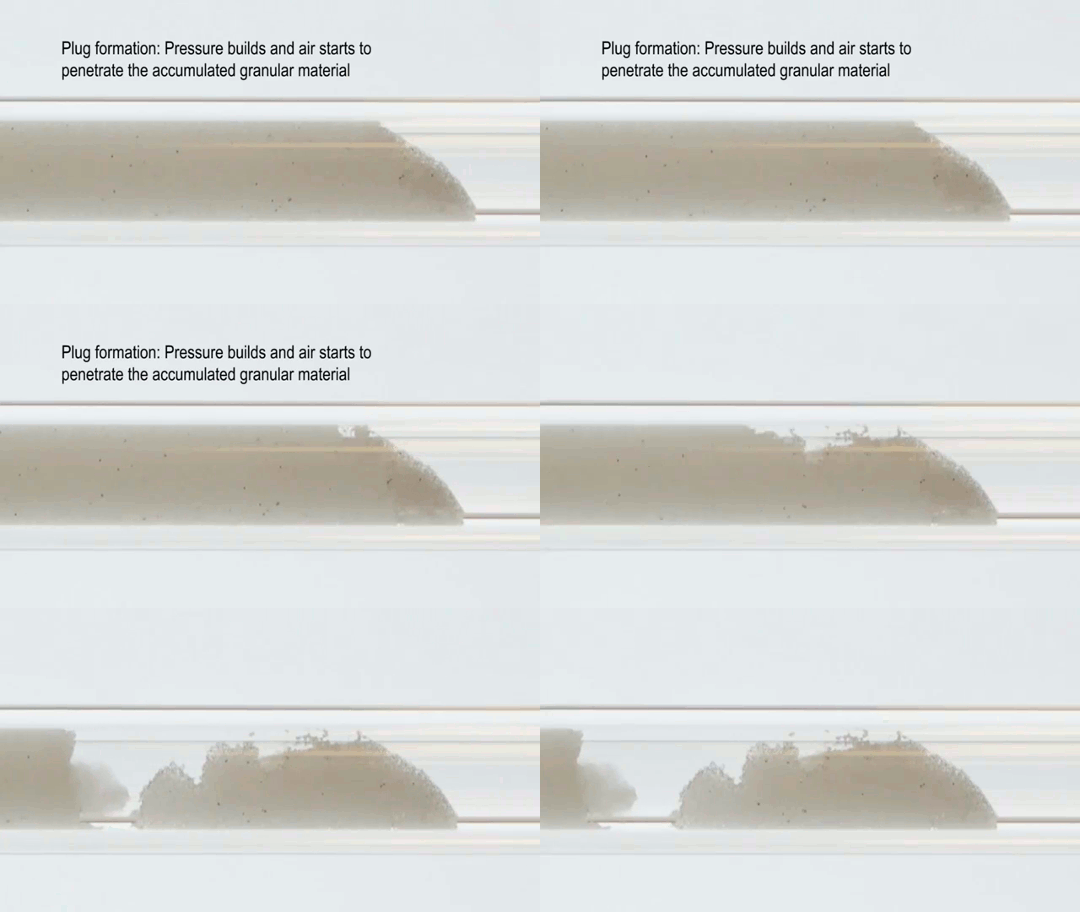
    Imagine filling a narrow tube with a mixture of water and tiny glass beads. Then take a syringe and very slowly start drawing out the water. As the water gets sucked out of the tube, air will be pulled into the opposite end. The meniscus where the air and water meet sweeps up the glass beads like a liquid bulldozer. As the experiment continues, pressure builds up and air starts filtering through the beads, changing the viscous and frictional forces the system experiences. Eventually, the grains break off, leaving a chunk of glass beads – known as a plug – behind. Keep draining the tube and more plugs form. Check out the video below to see it in action! (Image/video credit: G. Dumazer et al., source; research paper; open synopsis; submitted by B. Sandnes)

  • Featured Video Play Icon

    “Vorticity”

    Photographer Mike Olbinski is back with another storm-chasing timelapse entitled “Vorticity”. Like his previous work, this film is a breath-taking example of physics in action. It is well worth taking a few minutes to watch in fullscreen, at high resolution, and with headphones. Olbinski’s timelapses beautifully capture the incredible dynamic motion of our atmosphere. Fittingly, “Vorticity” is all about the swirling, roiling motion of supercell thunderstorms and the tornadoes they can spawn, but the film also captures many other great phenomena from the convection that builds clouds to unusual formations like undulatus asperatus and mammatus clouds. (Video credit: M. Olbinski; submitted by Paul vdB)