Italy’s Mount Etna is erupting again, producing a series of beautiful vortex rings. Like a dolphin’s bubble ring or a vortex cannon, the volcano’s rings are formed when gases are rapidly expelled through a narrow opening. Such formations are extremely common but are generally not visible to the eye. In this case, steam has gotten entrained into the rings to make them visible. Vortex rings can maintain their structure over substantial distances. The photographer of these rings noted that they lasted as many as ten minutes before dissipating. (Photo credit: T. Pfeiffer; via NatGeo)
Month: November 2013

Fluids Round-up – 16 November 2013
Time for another fluids round-up. Here are your links:
- PhysicsBuzz takes a look at the use of plasma actuators to control airflow.
- Over at Deep Sea News, you can learn about parasitic capillary waves.
- NanoWerk reports on self-steering particles in microfluidic devices.
- The 9th drop of the Queensland pitch drop experiment–believed to be the longest continuously running experiment in the world–is expected to fall at any time. Want to be part of the historic moment? Check out their Ninth Watch website.
- Aatish Bhatia examines the concepts behind the Fourier transform, an important mathematical technique used throughout fluid dynamics and physics. (via io9)
- Fluid dynamics and adaptive control might help alleviate traffic jams. (via @AIP_Publishing)
- On the whimsical side, take a look at these beautiful flying model boats built by Luigi Prina. (submitted by jshoer)
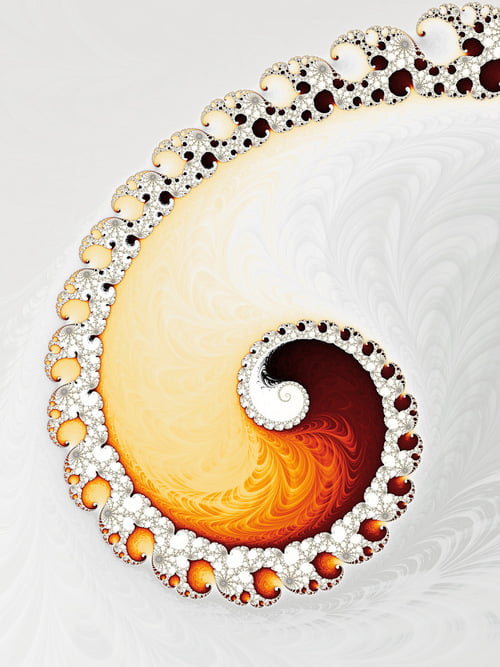
- Finally, our lead image was created with the app Frax, which allows users to make their own fractal-based art. Fluid dynamics has a lot of fractal behaviors. iOS users who want to play with fractals should check it out.
(Image credit: Ath3na)
Avoiding Splashback
Here’s a likely Ig Nobel Prize candidate from the BYU SplashLab: a study of splashing caused by a stream of fluid entering a horizontal body of water or hitting a solid vertical surface. In other words, urinal dynamics. The researchers simulated this activity using a stream of water released from a given height and angle and observed the resulting splash with high-speed video. They found a stream falls only 15-20 centimeters before the Plateau-Rayleigh instability breaks it into a series of droplets, and that this is the worst-case scenario for splash-back. The video above shows how a stream of droplets hits the pool, creating a complex cavity driven deeper with each droplet impact. Not only does each impact create a splash, the cavity’s collapse does as well. Similarly, when it comes to solid surfaces, they found that a continuous stream splashes less. They’ve also put together a helpful primer on the best ways to avoid splash-back. (Video credit: R. Hurd and T. Truscott; submitted by Ian N., bewuethr, John C. and possibly others)
For readers attending the APS DFD meeting, you can catch their talk, “Urinal Dynamics,” Sunday afternoon in Session E9 before you come to E18 for my FYFD talk.

Flow Behind a Cylinder
Flow over blunt bodies produces a series of alternating vortices that are shed behind an object. The image above shows the turbulent wake of a cylinder, with flow from right to left. Red and blue dyes are used to visualize the flow. This flow structure is known as a von Karman vortex street, named for aerodynamicist Theodore von Karman. The meander of the wake is caused by the shed vortices, each of which has a rotational sense opposite its predecessor. The rapid mixing of the two dyes is a result of the flow’s turbulence. In low Reynolds number laminar cases of this flow the structure of individual vortices is more visible. Similar flow structures are seen behind islands and in the wakes of flapping objects. (Photo credit: K. Manhart et al.)

Particle-Tracking in Granular Flows
One of the challenges of experimental fluid dynamics is gathering sufficient data in environments that can be fast-changing, visually dense, and sometimes harsh. Ideally, researchers want to gather as much data–velocities, temperatures, pressures–at as many points as possible and do so without disturbing the flow with a probe. No technique can provide everything, and thus new diagnostics are always under development. This video shows a new particle tracking method developed for fluidized granular flows where the high concentration of particles makes other techniques unsuitable. Such flows are often seen in industrial applications in chemical processing, pharmaceuticals, and powder transport. Interestingly, the technique can also be used in particle-seeded fluid flows like those normally studied with particle image velocimetry (PIV). (Video credit: F. Shaffer and B. Gopalan; submitted by @ASoutolglesias)

Beads-on-a-string
Viscoelastic fluids are a type of non-Newtonian fluid in which the stress-strain relationship is time-dependent. They are often capable of generating normal stresses within the fluid that resist deformation, and this can lead to interesting behaviors like the bead-on-a-string instability shown above. In this phenomenon, a uniform filament of fluid develops into a series of large drops connected by thin filaments. Most fluids would simply break into droplets, but the normal stresses generated by the viscoelastic fluid prevent break-up. For this particular photo, the stresses are generated by clumps of surfactant molecules within the wormlike micellar fluid. Similar effects are observed in polymer-laced fluids. (Photo credit: M. Sostarecz and A. Belmonte)

Wavy Swimmers
Animals often move in ways engineers find counter-intuitive. Take, for example, the glass knifefish, an undulatory swimmer that controls its motion through wavelike oscillations of its fin. One might expect the knifefish to move its fin so that a single continuous wave moves from one end to the other. Instead two opposing waves move down the knifefish’s fins, one travelling from head to tail and the other travelling from the tail forward. The intersection of these waves is the nodal point, and, by shifting the nodal point fore or aft, the knifefish can hover in place, move forward or swim backward. At first glance, this seems like a wasteful system since a significant portion of each wave cancels the other, but, through mathematical modeling and experiments with a biomimetic robot, the researchers found that the dual-wave locomotion increases both the stability and maneuverability of the fish. (Video credit: N. Cowan et al.; via phys.org)

Engineering Sediment Transport
Sediment transport via fluid motion is a major factor in engineering, geology, and ecology. This video shows two common forms of sediment transport: particle suspension and saltation. Suspension, in which the fluid carries small solid particles, is visible high in the blue water layer. Saltation occurs closer to the surface when loose particles are picked up by the flow before being redeposited downstream. Watch some of the individual particles near the surface to see the process. Kuchta has several more demo videos of flow in this desktop flume, sold by Little River Research & Design. (Video credit: M. Kuchta; submitted by gravelbar)

“Orchid”
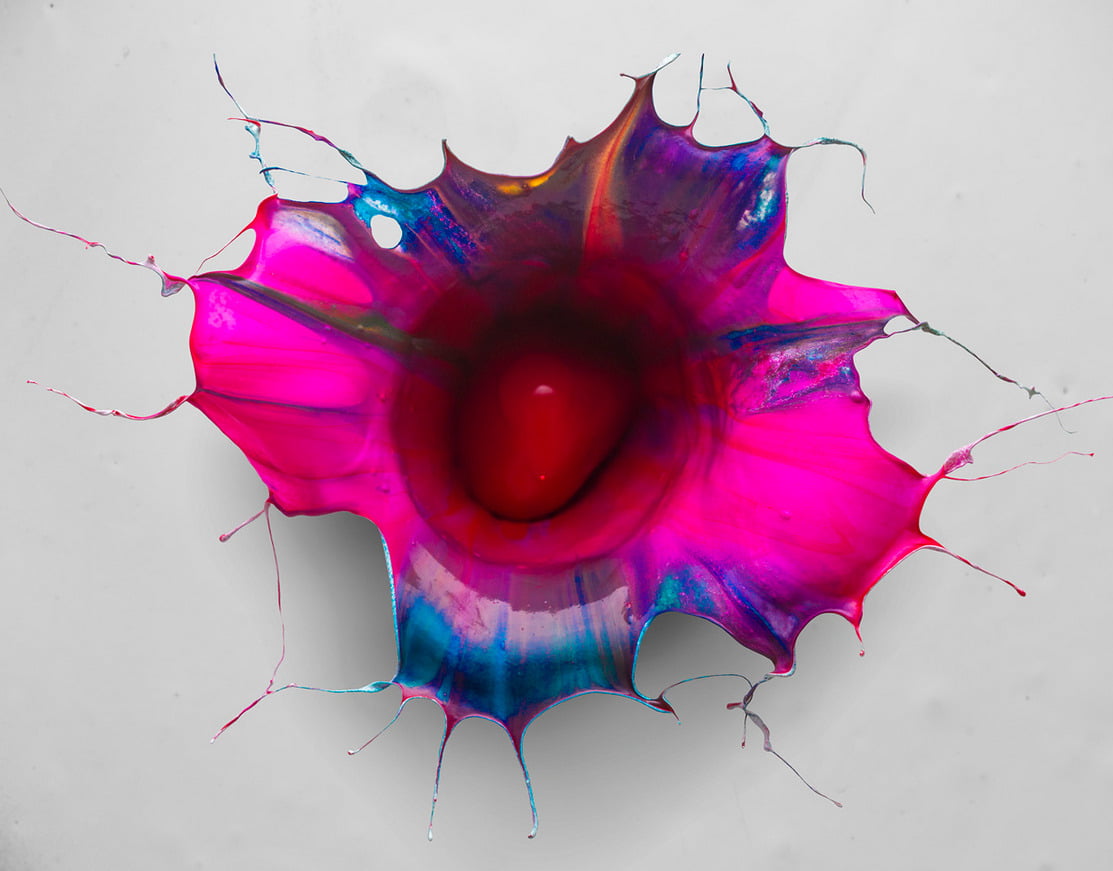
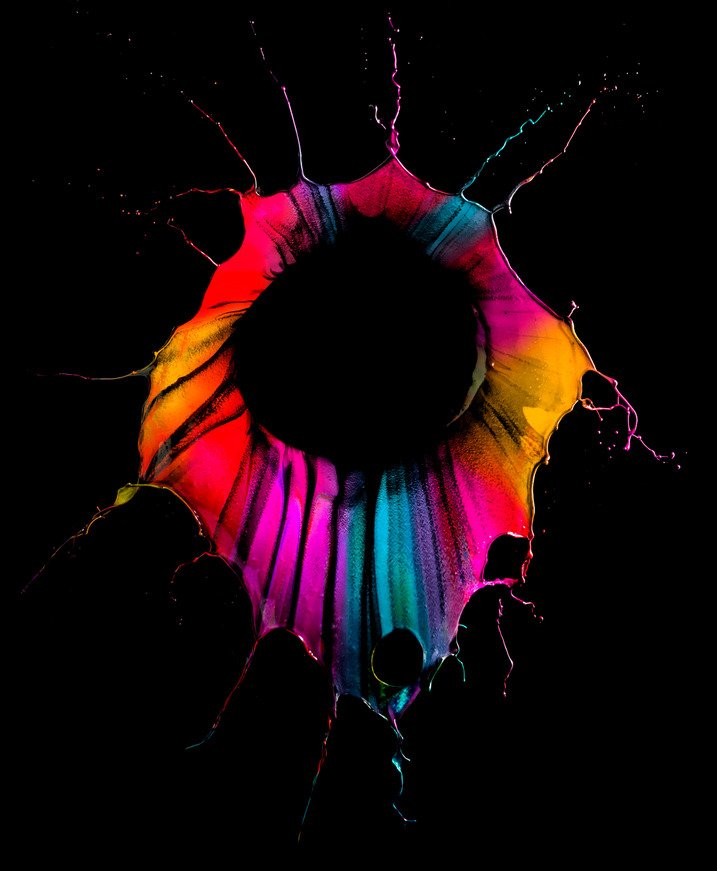
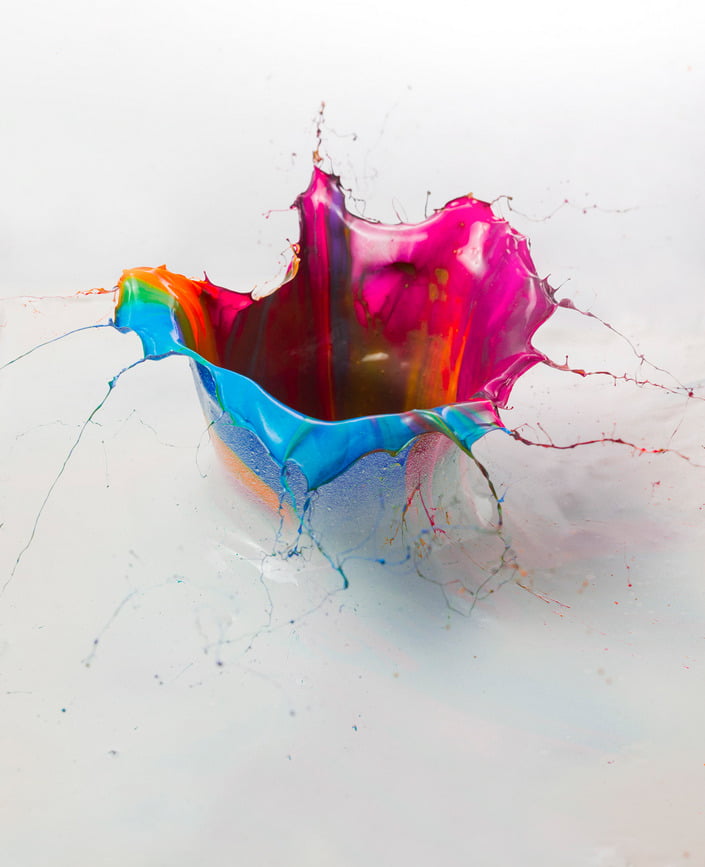
Artist Fabian Oefner enjoys capturing both art and science in his work. In his latest series, “Orchid”, the blossom-like images are the result of splashes. He layered multiple colors of paint, ending with a top layer of black or white, then dropped a sphere into the paint. The images show how the colors mix and rebound, a delicate splash crown seen from above. The liquid sheet thickens at the rim and breaks up into ligaments from the instability of the crown’s edge. It makes for a remarkable demonstration of the effects of momentum and surface tension. Several of Oefner’s previous collections have appeared on FYFD (1, 2, 3). (Photo credit: F. Oefner)

Making Better Tags for Tracking Turtles
Tagging equipment is used on all manner of aerial and marine creatures to gather data about animal behavior in their natural environments. It can be difficult, though, for researchers to gauge what effects the tags have on an animal. A recent study by T. T. Jones et al. used drag measurements on marine turtle casts to estimate the effects of common tagging equipment. They found that, on large turtles, the equipment increases a turtle’s drag by as little as 5%, but for smaller species or juvenile turtles, the drag cost can be much larger – in some cases doubling a turtle’s drag when swimming. Such large increases in drag may significantly change a tagged turtle’s behavior and skew results or even endanger the animal. The researchers suggest a model that allows others to estimate a tag’s drag effects across species. (Image credits: T. Gray and M. Carey; research credit: T. T. Jones et al.; via PopSci; submitted by Chi M.)