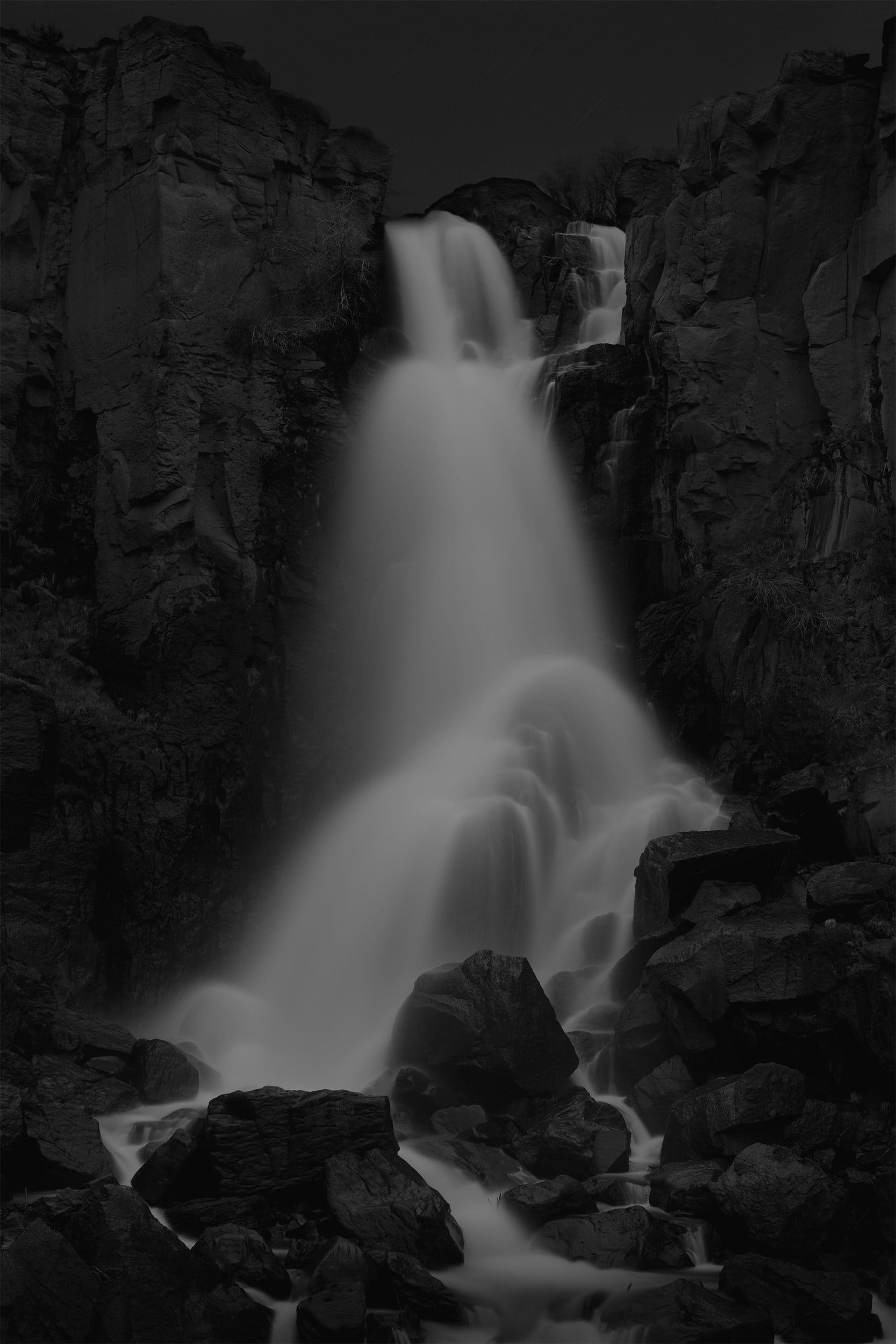
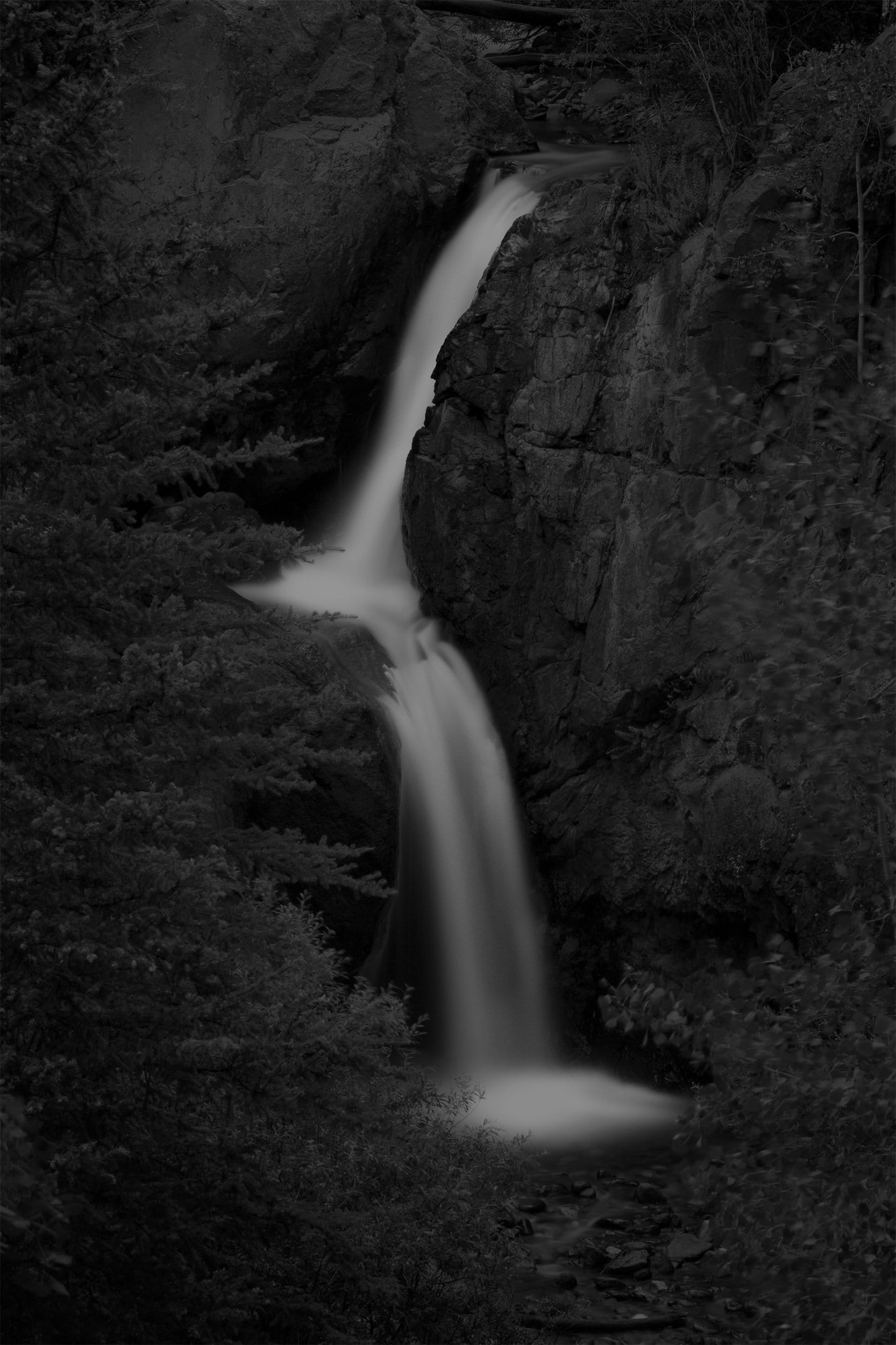
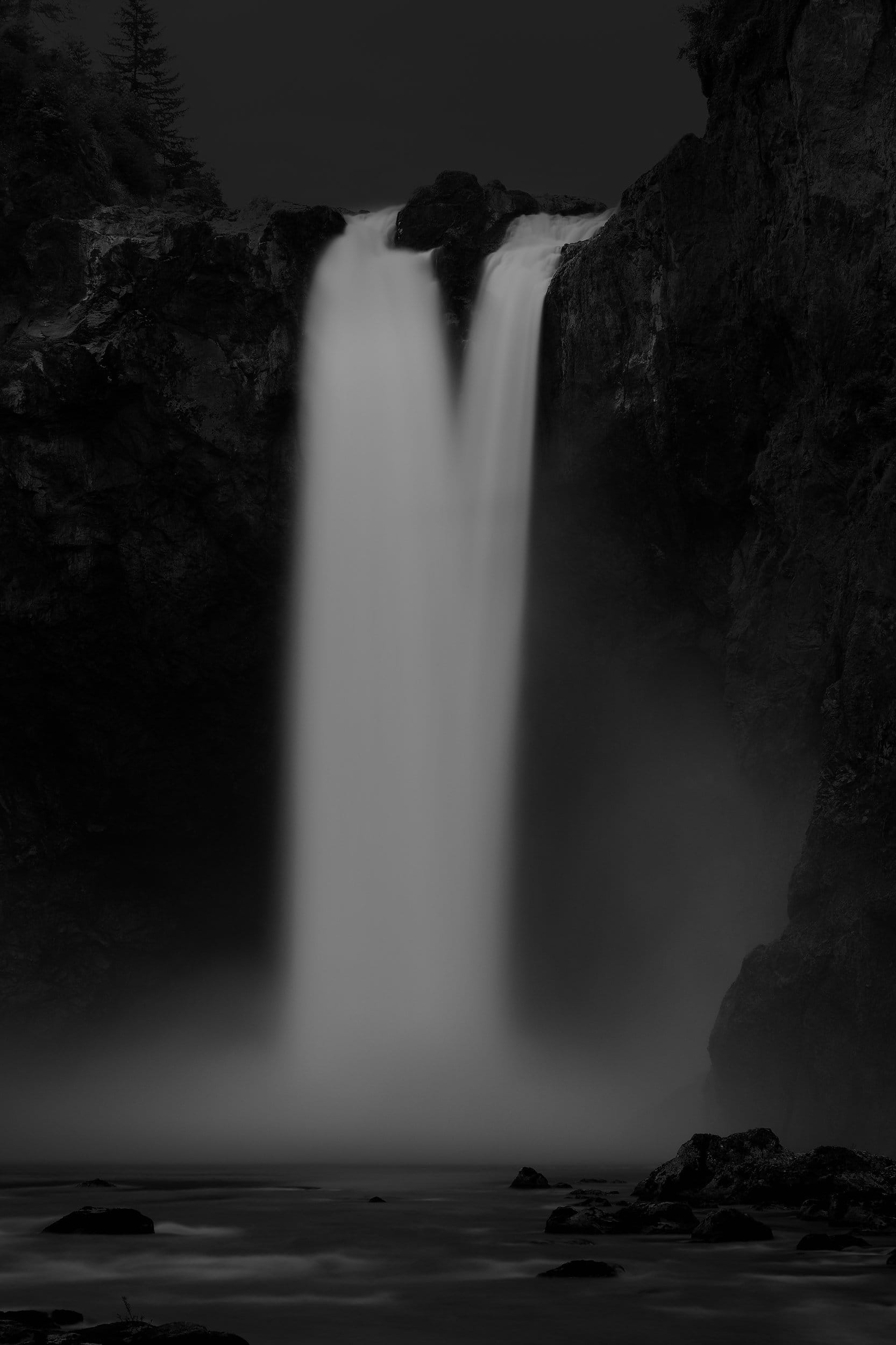
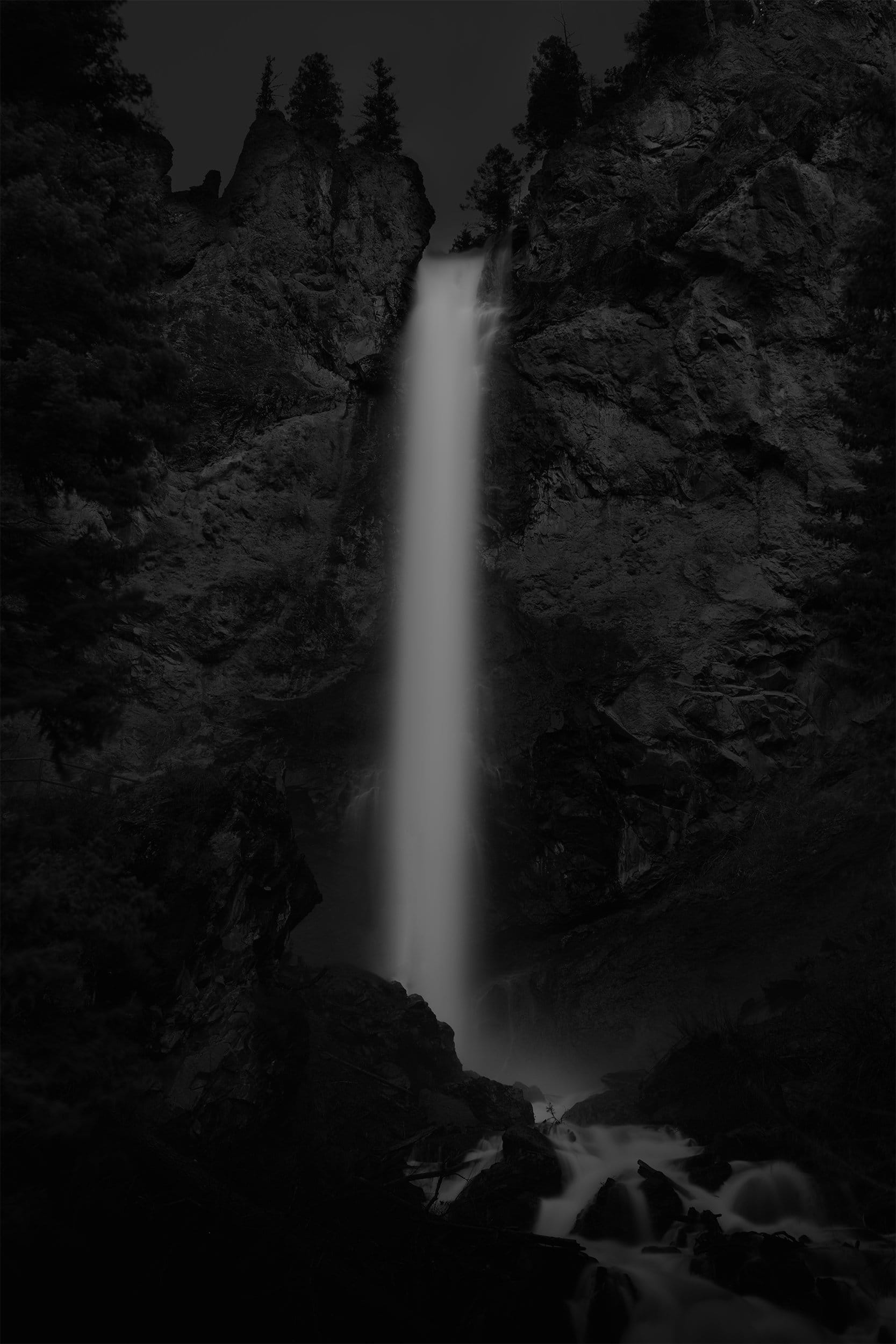
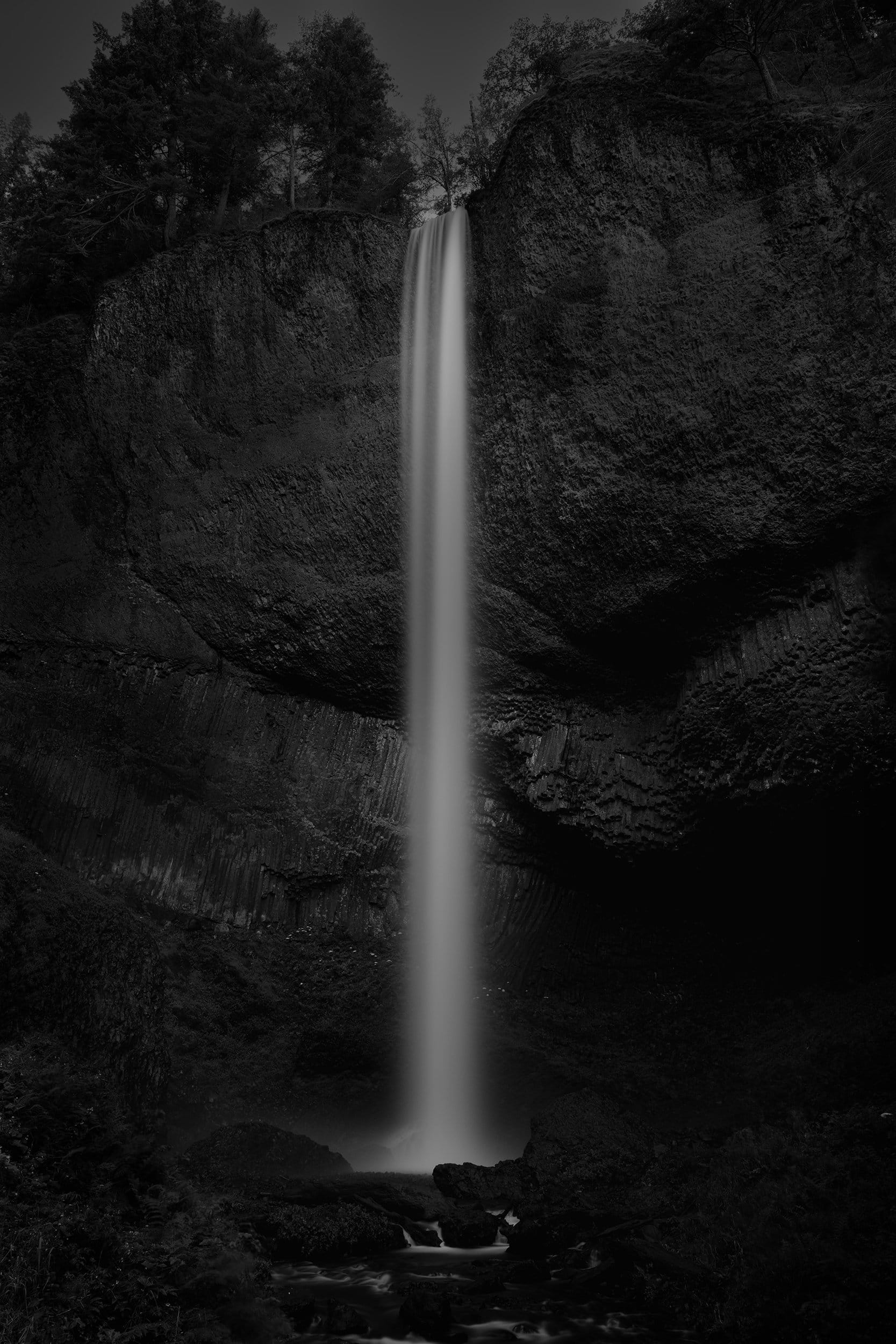
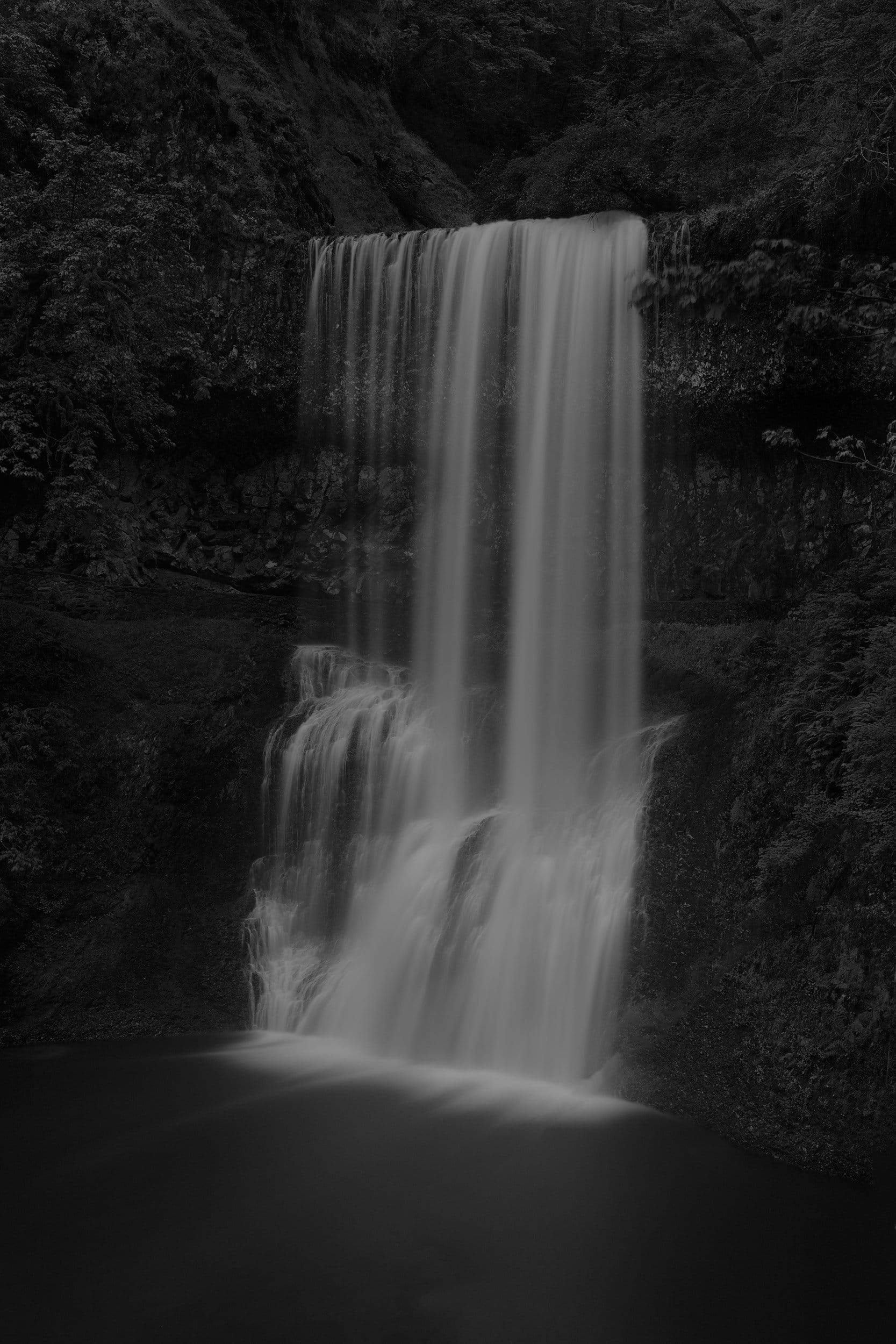
Photographer Jonathan Knight likes capturing waterfalls about 45 minutes after sunset, creating ghostly images that emphasize the shape of the cascading water. The dim surroundings and misty shapes remind me of old daguerreotypes. See more of his images on his website and his Instagram. (Image credit: J. Knight; via Colossal)
Known as “The Land of Fire and Ice,” Iceland has some of the most striking landscapes around. Photographer Jennifer Esseiva captures auroras, waterfalls, geysers, rivers, and more in this series from her 2024 trip to the island. Every one of these images bears the fingerprints of fluid dynamics: plasma flows lighting up the night sky; rivers of lava that formed the land; rivers and oceans that carve through the landscape; and pressurized, superheated water that shoots up from underground plumbing. (Image credit: J. Esseiva; via Colossal)
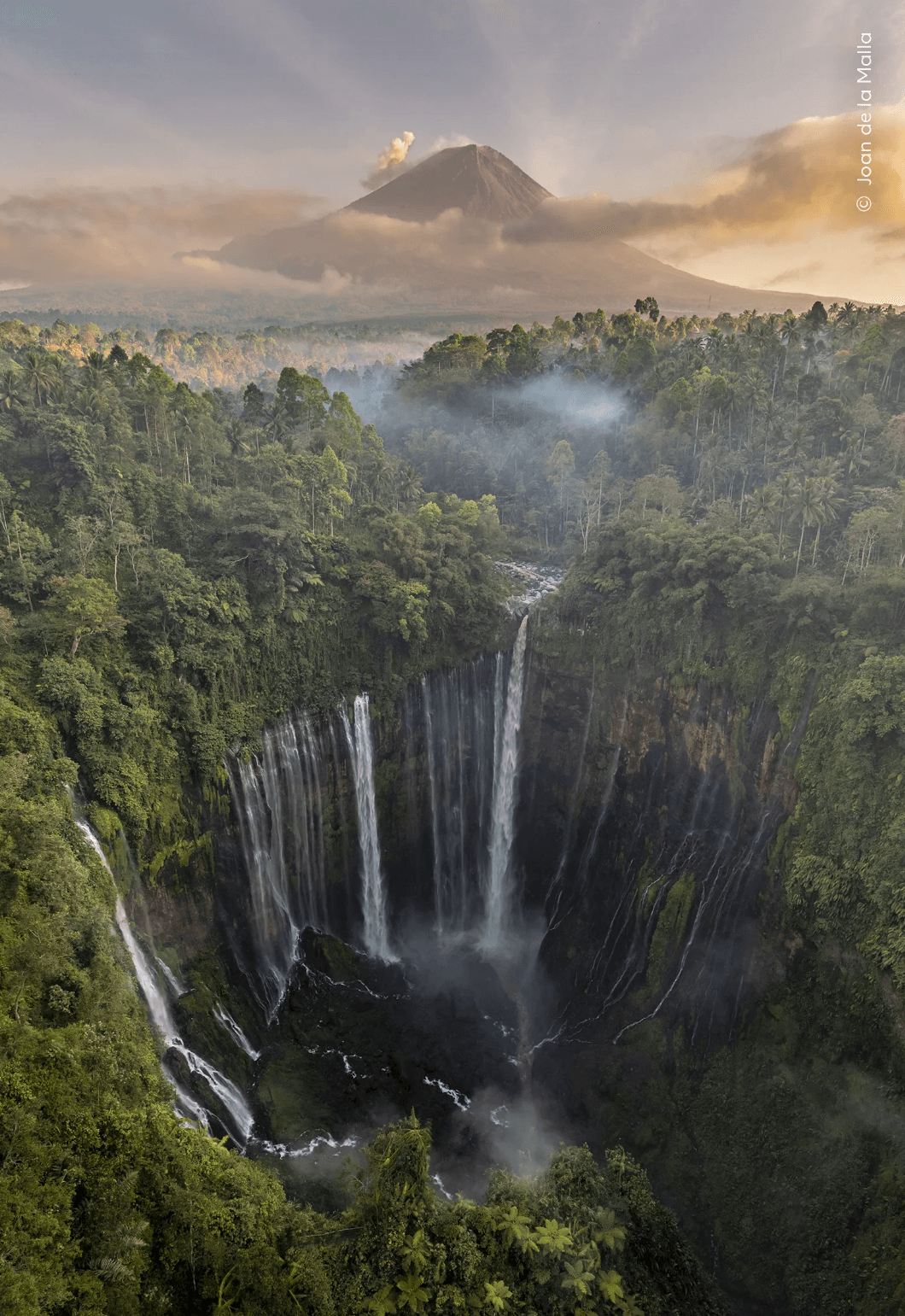
The Semeru volcano rises in the background of this photo of Java’s Tumpak Sewa waterfall by Joan de la Malla. Rain that falls on the volcano slides down its flank and wanders through the jungle on its way to the spectacular 120-meter-high waterfall. From the clouds wreathing the mountain through the jungle’s drifting fogs to the mists of the falls, this portrait highlights the many forms water takes on its journey. (Image credit: J. de la Malla/WPOTY; via Colossal)
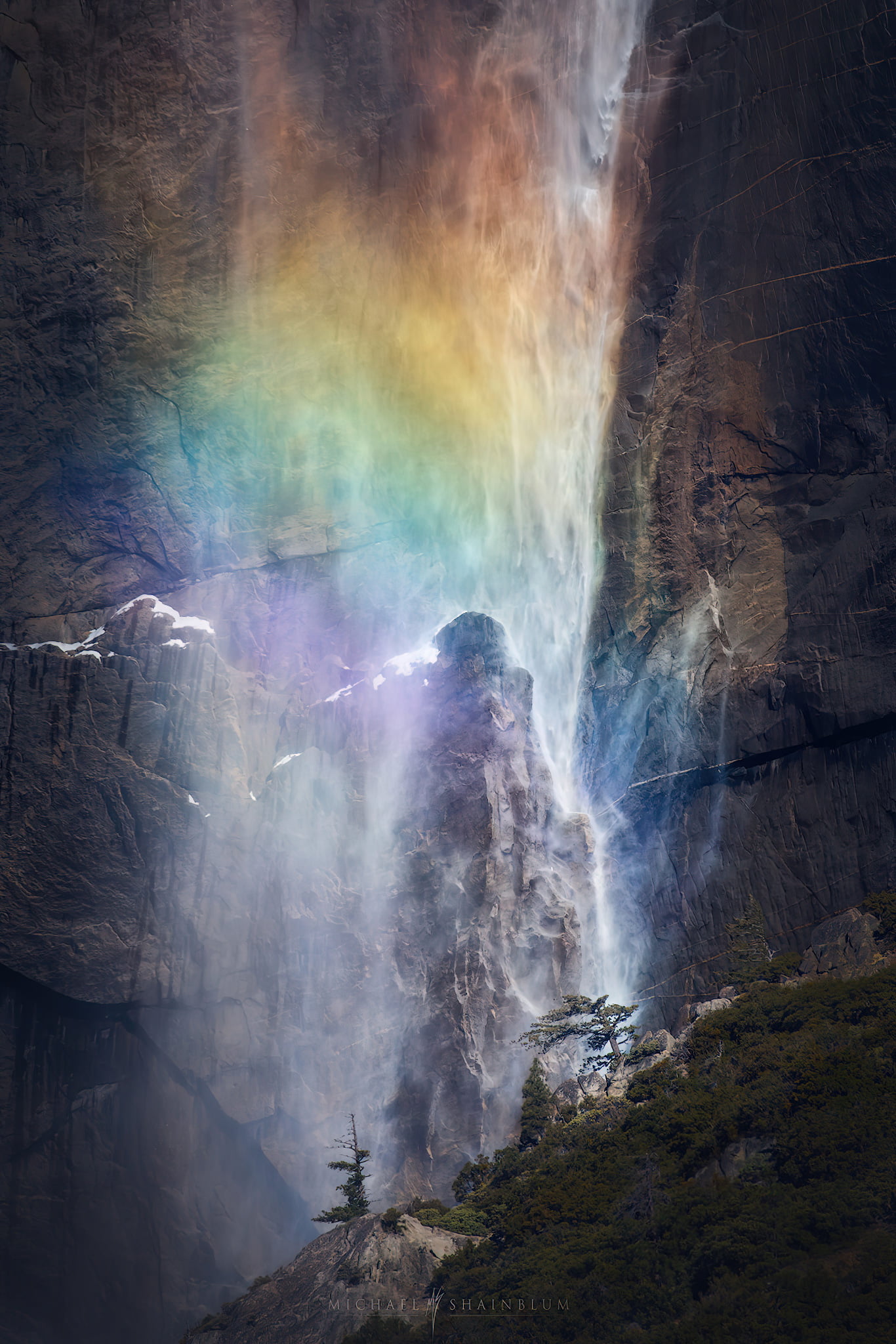
Waterfalls, fog, and snow wreathe Yosemite in these beautiful winter landscapes by photographer Michael Shainblum. I love how the tendrils of water and mist give you a real sense of the flow, even in still photos. Check out more of Shainblum’s photography on his Instagram and go behind-the-scenes on his Yosemite trip with this video. (Image credit: M. Shainblum; via Colossal)
Swifts and starlings often make their nests behind waterfalls. To explore how these birds traverse their watery curtain, researchers observed hummingbirds, a smaller sister species, flying through an artificial waterfall. They found that the birds tended to part the water with one wing while continuing to use the other to produce thrust. This behavior helped them cross the barrier smoothly and easily.
In contrast, smaller and slower flyers, like the insect species the researchers tested, were typically unable to cross the waterfall. Instead, they got carried away by the flow or managed to pass through only to crash. The scientists suggest that protection from insects may be one reason birds choose to nest behind waterfalls. (Image and research credit: V. Ortega-Jimenez et al.; via Science; submitted by Kam-Yung Soh)
Many factors can affect a waterfall’s formation – changes in bedrock structure, tectonic shifts, and glacial motion, to name a few. But a new study suggests that some waterfalls may be self-forming. Using a lab-scale experiment, researchers created a homogeneous “bedrock” out of polyurethane foam, which they eroded with a combination of constant water flow and particulates. Even without external perturbations, the flow carved out a series of steps.
As a pool deepened, particles built up inside, armoring the bed against further erosion. But further downstream, the chute continued to erode, steepening the area between them until a waterfall formed. On the timescale of the experiment, the waterfalls lasted only 20 minutes or so, but that’s equivalent to up to 10,000 years in geological time. (Image credit: M. Huey; research credit: J. Scheingross et al.; via EOS News; submitted by Kam-Yung Soh)
Sometimes the best way to appreciate a flow is standing still. In “Hawaii – The Pace of Formation” filmmakers explore how the Big Island is constantly changing, from fresh lava flows to towering waterfalls. Much of the footage presented is timelapse, which gives viewers a different perspective on familiar subjects; it highlights the similarities between clouds and the ocean, and it reminds us that a lava flow and the syrup flowing down a stack of pancakes have a lot in common. To me, this is one of the most beautiful parts of fluid dynamics: physics of flows on different length-scales and time-scales – even in different fluids – are still very much the same. (Video credit: A. Mendez et al.)
Time for another fluids round-up! Here are some of the best fluids-related links I’ve seen around:
– Above The Brain Scoop tells us about beetles that spend their whole lives underwater. They carry a little bubble of air with them in order to breathe!
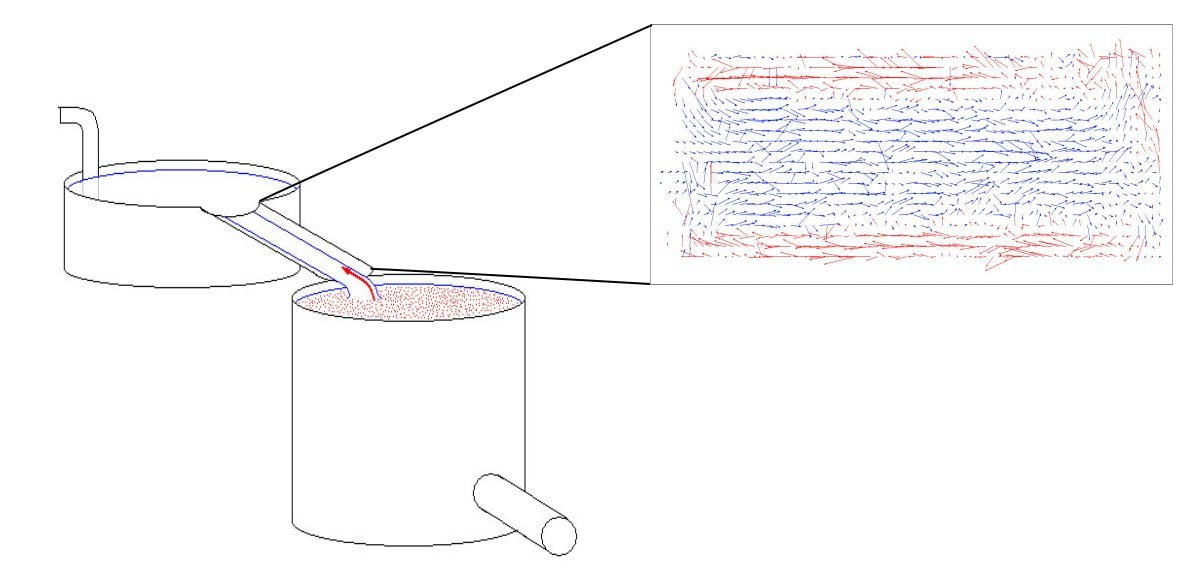
Tea-drinking physicistsfound that it’s possible for particles to flow up a short (< 1 cm) waterfall to contaminate pure upstream sources. Their apparatus is shown above, along with an inset showing the velocity field on the surface of the channel. The blue arrows indicate flow downstream and the red arrows indicate counterflow that carries particles upstream. The researchers suspect that Marangoni effects may play a role in setting up the counterflow. The finding could have implications for pollution control and manufacturing. # (submitted by Gabe)
I discovered this interesting bit of icing a couple years ago near the foot of a waterfall in Ithaca, NY. The predominant wind was always heading toward the falls (left to right in these pictures), while the falls were always throwing spray up into the wind. The result was that ice airfoils (center) formed in the wake of each tree branch throughout most of the gorge (top).