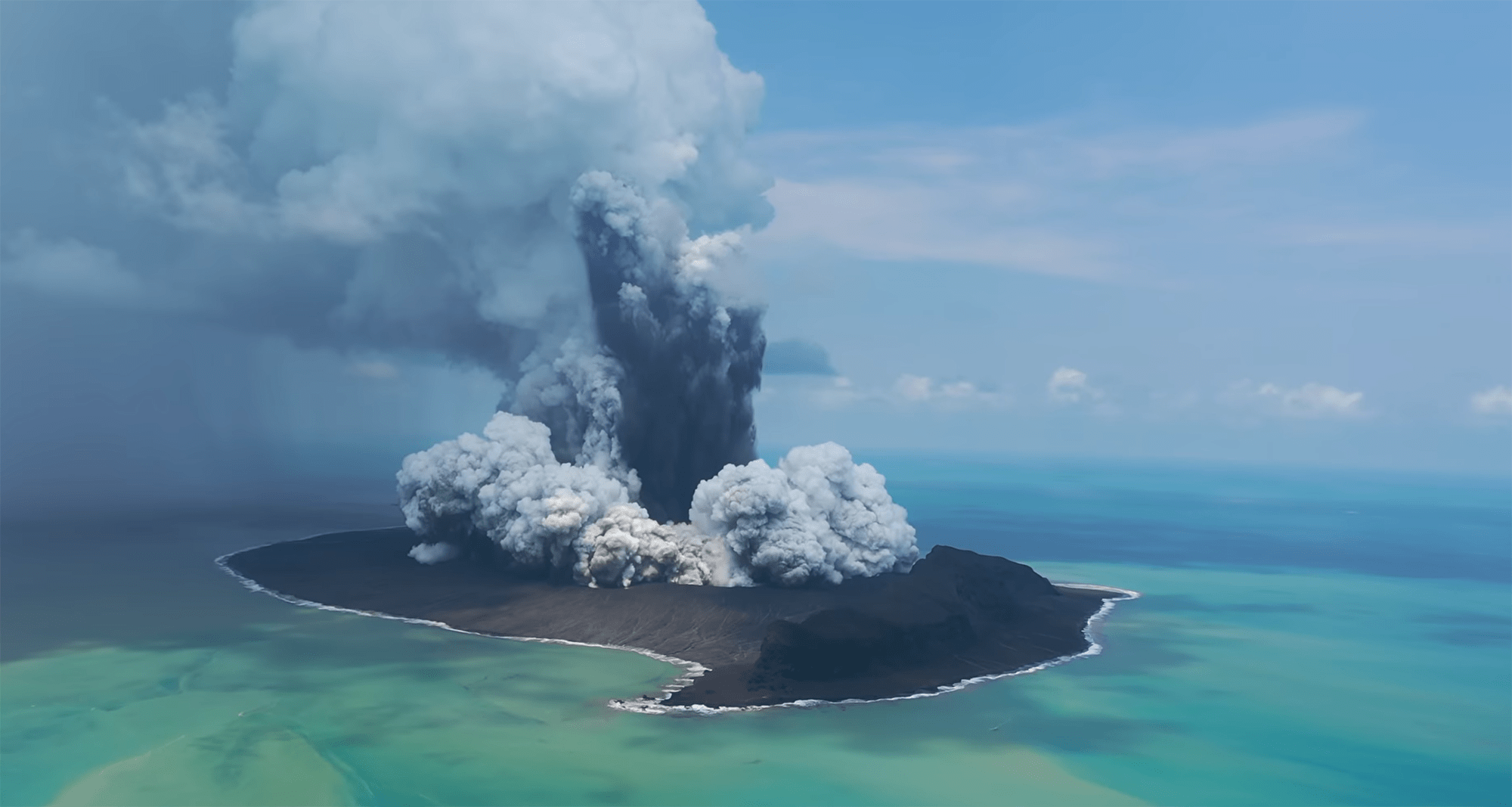
In mid-January 2022, the Hunga Tonga-Hunga Ha’apai (HTHH) volcano had one of the most massive eruptions ever recorded, destroying an island, generating a tsunami, and blanketing Tonga in ash. Volcanologists are accustomed to monitoring nearby seismic equipment for signs of an imminent eruption, but researchers found that the HTHH eruption generated a surface-level seismic wave picked up by detectors 750 kilometers away about 15 minutes before the eruption began. They propose that the seismic wave occurred when the oceanic crust beneath the caldera fractured. That fracture could have allowed seawater and magma to mix above the volcano’s subsurface magma chamber, creating the explosive trigger for the eruption. Their finding suggests that real-time monitoring for these distant signals could provide valuable early warning of future eruptions. (Image credit: NASA Earth Observatory; research credit: T. Horiuchi et al.; via Gizmodo and AGU News)
Tag: volcano

“Stomp-Rocket”: A New Type of Eruption
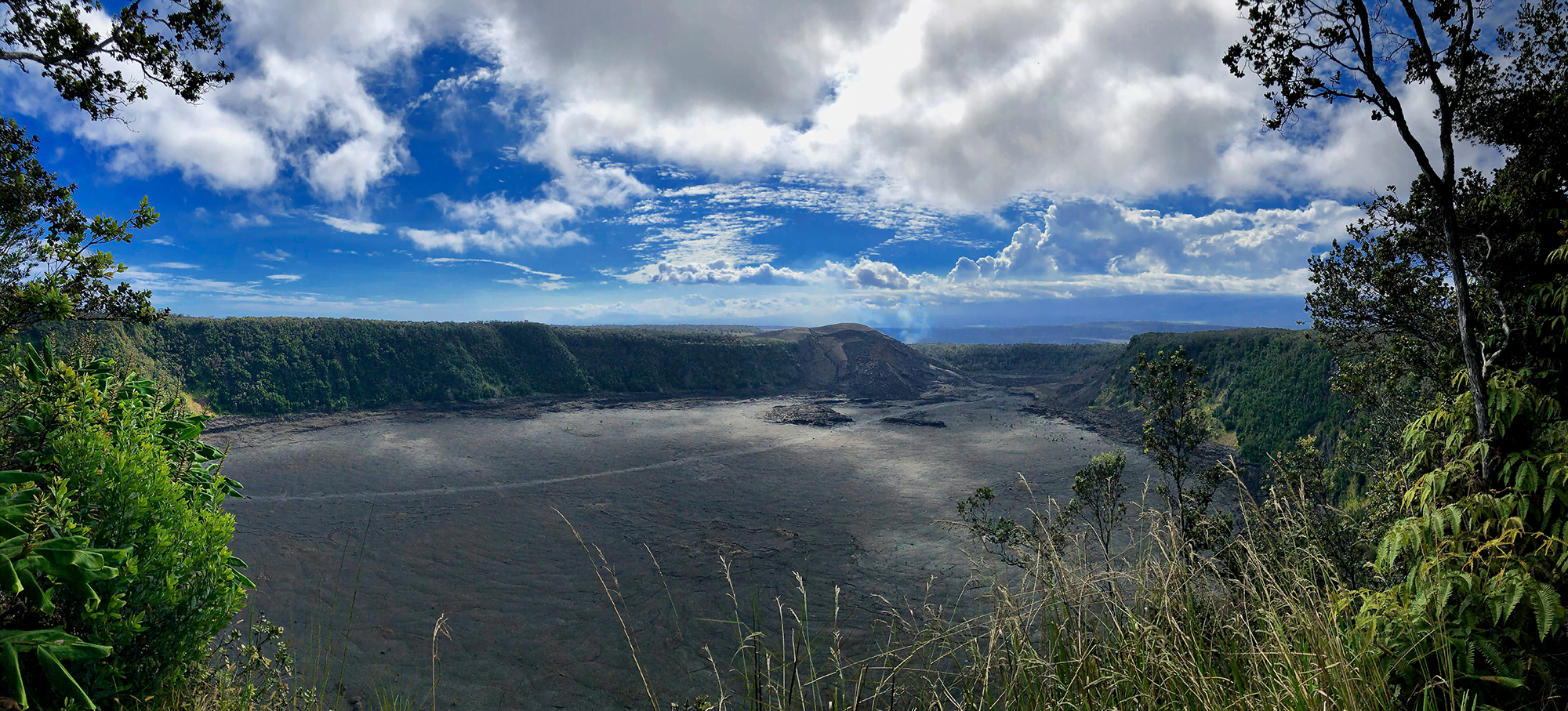
When Kilauea‘s caldera collapsed in 2018, it came with a sequence of 12 closely-timed eruptions that did not match either of the typical volcanic eruption types. Usually, eruptions are either magmatic — caused by rising magma — or phreatic — caused by groundwater flash-boiling into steam. The data from Kilauea matched neither type.
Instead, scientists proposed a new model for eruption, based around a mechanism similar to the stomp-rockets that kids use. They suggested that, before the eruption, Kilauea’s magma reservoir contained a mixture of magma and a pocket of gas. When part of the magma reservoir collapsed, the falling rock compressed the gases in the chamber — much the way a child’s foot compresses the air reservoir of a stomp rocket — building up enough gas pressure to explosively launch debris and hot gas up to the surface.
The team found that computer simulations of this new eruption model matched well with observations and measurements taken at Kilauea in 2018. Kilauea is one of the most closely monitored volcanoes in the world; although the team suspects this mechanism occurs during caldera collapse of other volcanoes, it’s unlikely they could have pieced together such a convincing case for an eruption anywhere else. (Image credit: O. Holm; research credit: J. Crozier et al.; via Physics World)

Venusian Lava Flows
Venus is often known as Earth’s twin, given its similar size and proximity. But, thanks to its runaway greenhouse effect, Venus is a hellish landscape buried beneath a hot atmosphere of carbon dioxide and sulfuric acid. Unlike Earth, Venus is not tectonically active, though it does have active volcanoes. A recent study re-examined synthetic aperture radar data from the Magellan spacecraft mission in the early 1990s and found that the data contained evidence of fresh lava flows.
The team found two areas near volcanoes where the surface backscatter changed significantly between orbital observations. After examining many possible explanations for the changes, the team concluded that the differences were most likely due to new lava. They even performed the same analysis for a volcanic field here on Earth between known lava flows and observed the same behavior. Combined with another recent study that found evidence of volcanic activity in Magellan data, signs are pointing toward Venus being about as volcanically active as our own planet, even if the mechanisms driving the volcanism differ. (Image credit: NASA/JPL-Caltech; research credit: D. Sulcanese et al.; via Gizmodo)

Vortex Rings at Dawn
Vortex rings blown from Mount Etna’s vents drift through the dawn light in this beautiful image from Dario Giannobile. Little is required to create vortex rings — they are a puff of fluid shaped by an orifice — but they are relatively unusual to see around volcanoes. Etna is an exception; it happens to have one or more vents that frequently form rings. Their shape and the venting pattern of the volcano must be unusually well-suited to ring formation. (Image credit: D. Giannobile; via APOD)

Etna’s Blowing Rings


Mount Etna has long been known for its smoke rings, but thanks to the opening of a new vent on the volcano’s southeast crater, it’s now making more rings than ever. Etna’s smoke rings are, more precisely, vortex rings — produced in the same way dolphins, swimmers, and whales make vortex rings: a sudden push of air through a roughly circular opening. It’s likely that Etna and other volcanoes make far more rings than those we see; we’re limited to noticing only the ones that entrain smoke and condensation to make them visible. (Video and image credit: The Straits Times; via Colossal)

Seeding Clouds
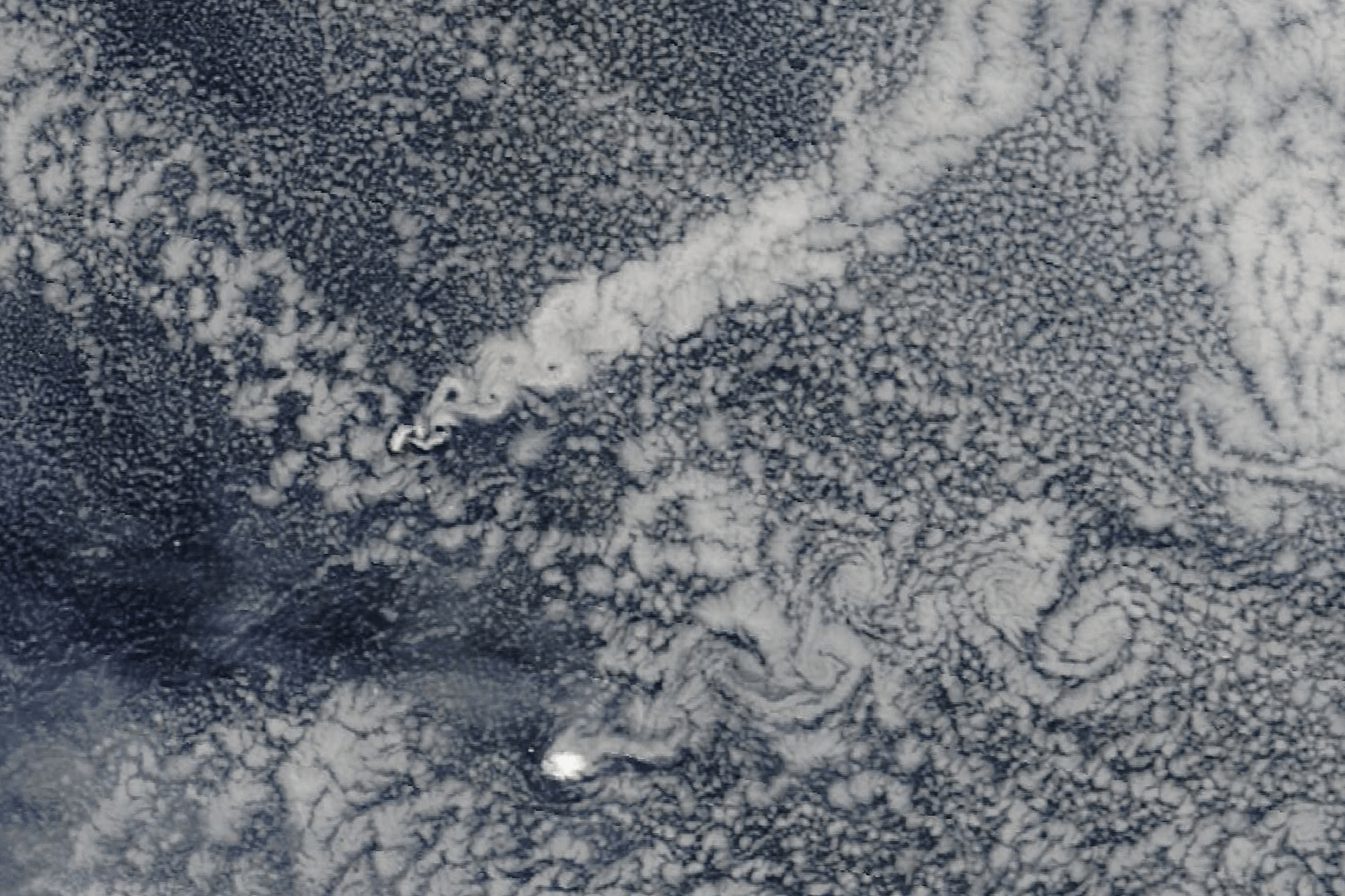
In the remote South Atlantic, north of the Antarctic Circle, sit the volcanic Zavodovski and Visokoi islands. Though only roughly 500 and 1000 meters tall, respectively, each island disrupts the atmosphere nearby, often generating cloudy wakes. In today’s pair of images, the northerly Zavodovski has a particularly bright cloud wake, thanks to sulfate aerosols degassing from its volcano, Mount Curry. Though it’s hard to pick out the effect in the natural-color image above, the false-color version below shows the bright wake clearly. The filtering on this image turns snow and ice — like that on Visokoi’s peak — red and makes the water vapor of clouds white. The sulfates from Mount Curry act as nucleii for water droplets, forming many small, reflective drops that stand out against the rest of the sky. (Image credit: W. Liang; via NASA Earth Observatory)

This false-color satellite image highlights the volcanic seeding by filtering snow and ice as red and water vapor in clouds as white. Icelandic Eruption


When I started FYFD, volcano footage was far rarer. These days the affordability and durability of drones and action cameras — along with the relative accessibility of eruptions in places like Iceland and Hawaii — means we get to see volcanic flows in glorious high definition. This footage comes from the recent Icelandic eruption on the Reykjanes peninsula. Lava fountains line the four-kilometer lava vent seen here, and flows from the vent spread into a delta-like fan in the field below. I never get tired of staring at molten rock that flows like water. (Video and image credit: I. Finnbogason; via Colossal)

Icelandic Glow
Solar wind particles slam into the atmosphere near Earth’s poles, creating billowing curtains of glowing plasma known as auroras. Beneath the earth, molten rock seethes and flows, squeezed up fissures to release explosive gases and spurts of lava to the surface world. These natural phenomena are captured in the left and center of this image, respectively. To the right, three plumes of water vapor rise from a geothermal power plant. Three very different phenomena — all fluid dynamical in nature and all captured in a single image of Iceland. It’s no wonder the island is covered in tourists. (Image credit: W. Gorecka; via APOD)

Underwater Volcanic Flows
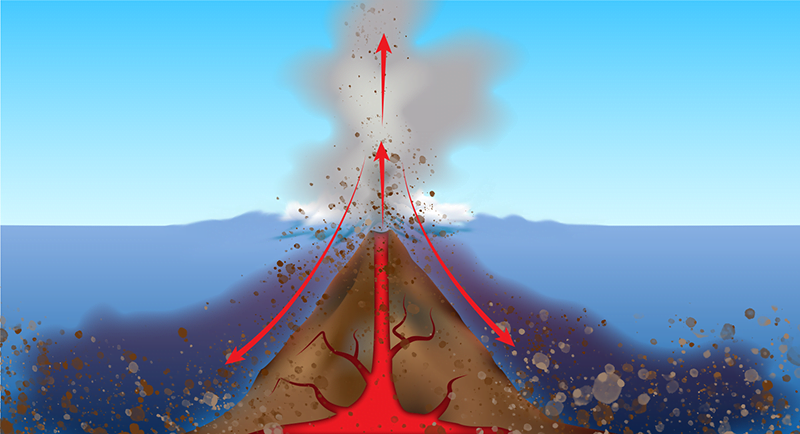
The Hunga Tonga–Hunga Ha’apai volcanic eruption in December 2021 was the most violent in 140 years, and we are still learning from its aftermath. A recent study focuses on the eruption’s incredible underwater flows, which damaged nearly 200 kilometers of underwater cables. From the cables’ locations and the time of service loss, the team calculated that gravity currents hit the cables at speeds as high as 122 kilometers per hour and with run-outs that lasted over 100 kilometers. These fast flows were triggered by material from the volcanic plume falling into the ocean, causing dense flows that swept down the submerged slopes of the volcano and seafloor.

Illustration of volcanic plume material falling into the ocean and triggering underwater flows. Previously, a landslide broke underwater telegraph cables off Newfoundland and a coastal construction accident severed a cable in the Mediterranean. But neither of those incidents revealed the same level of speed, distance, and destructive capacity as the Tongan eruption. It seems that these underwater gravity currents pose an ongoing threat to submerged infrastructure. As more cables are laid in volcanically-active regions of the Pacific, we will need more extensive mapping and monitoring of the seafloor to protect against future disruptions. (Image credit: eruption – Tonga Geological Services, illustration – APS/C. Cain; research credit: M. Clare et al.; via APS Physics)
Fresh Fissures

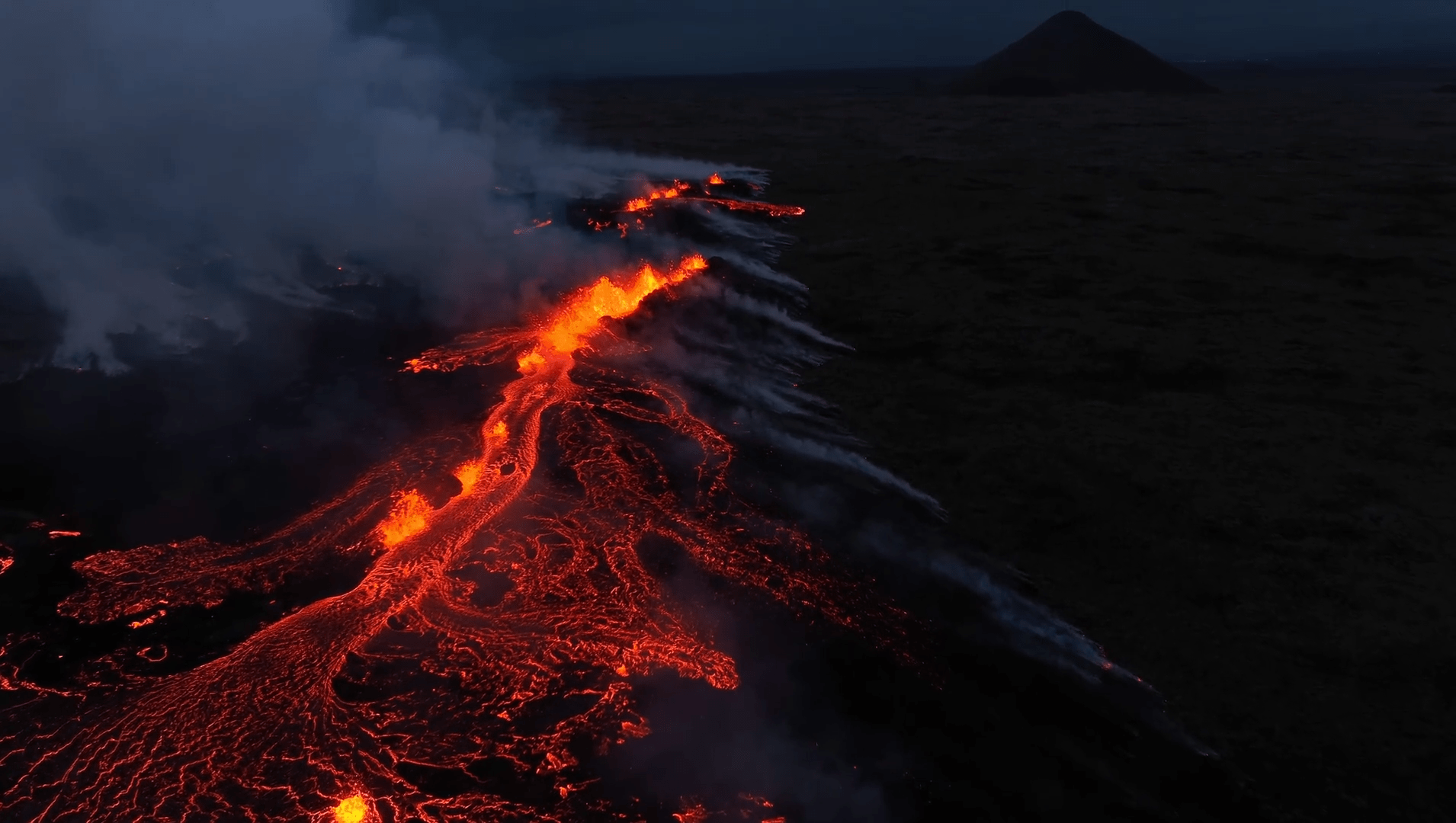

North of Iceland’s Fagradalsfjall, a new volcanic fissure opened in July 2023. This drone footage from Isak Finnbogason captures that fissure on its first night. Lava fountains jet from the earth, forming a complex, slow-moving river. The similarities between flowing lava and more common liquids like water never ceases to fascinate me. Even with the vast differences in temperature and viscosity, so much of their physics remains recognizably the same. (Image and video credit: I. Finnbogason; via Colossal)