Tag: sedimentation

  • Sedimentation After Flooding

    Sedimentation After Flooding

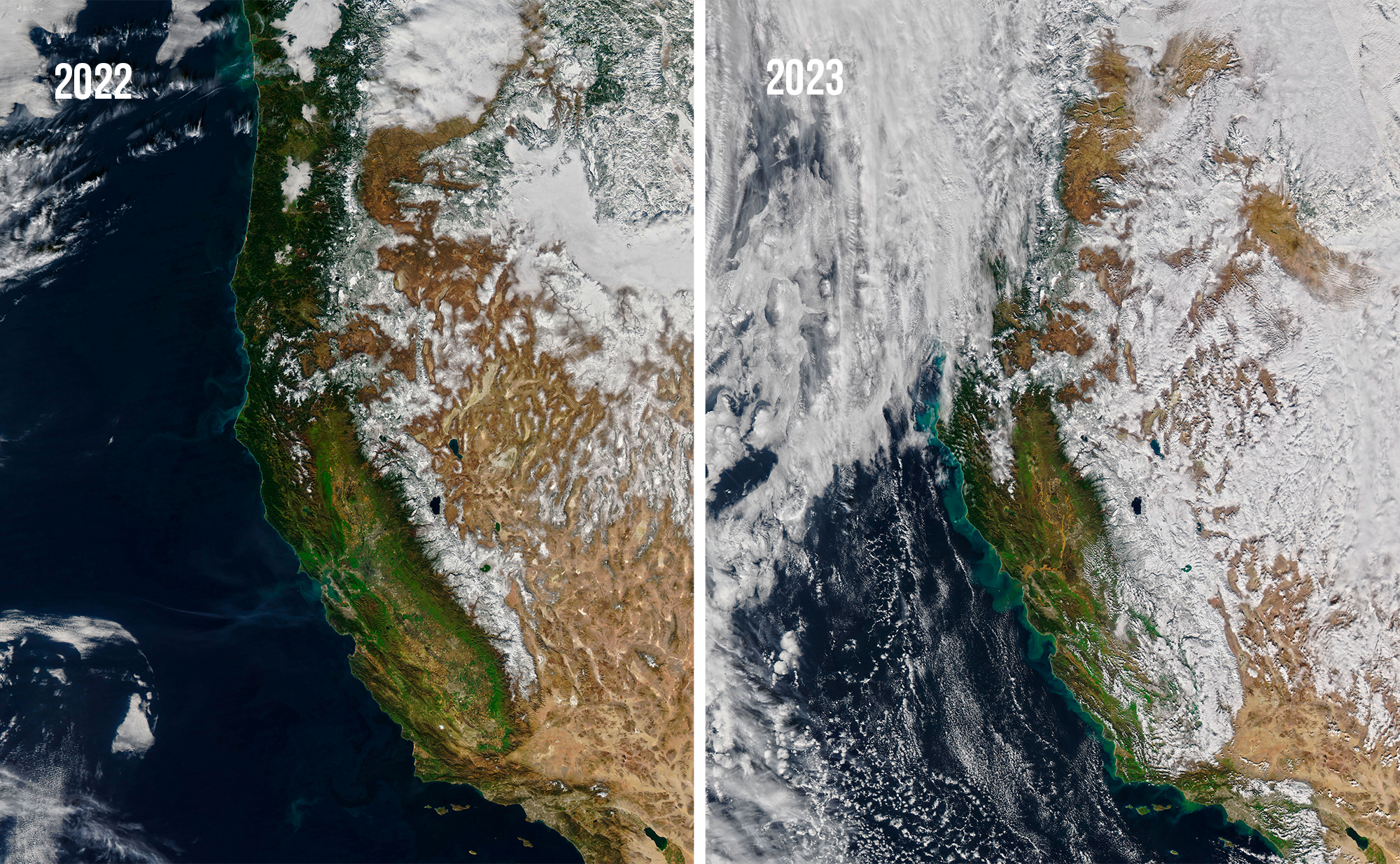
    The new year brought California a series of atmospheric rivers that poured record amounts of water onto drought-stricken lands. While the precipitation refreshed snowpacks and reservoirs, much of it washed away as soils oversaturated. Those flows carried sediment with them, creating swirls of brown and green along the coastline.

    Compare the two satellite images above to see how different January 2022 looked from January 2023, post-deluge. The snow levels in January 2023 were about 248 percent of their average level for that part of the season. But the sediment levels in the ocean are also drastically increased, indicating high levels of erosion. (Image credit: J. Stevens; via NASA Earth Observatory)

  • Reefs Along New Caledonia

    Reefs Along New Caledonia

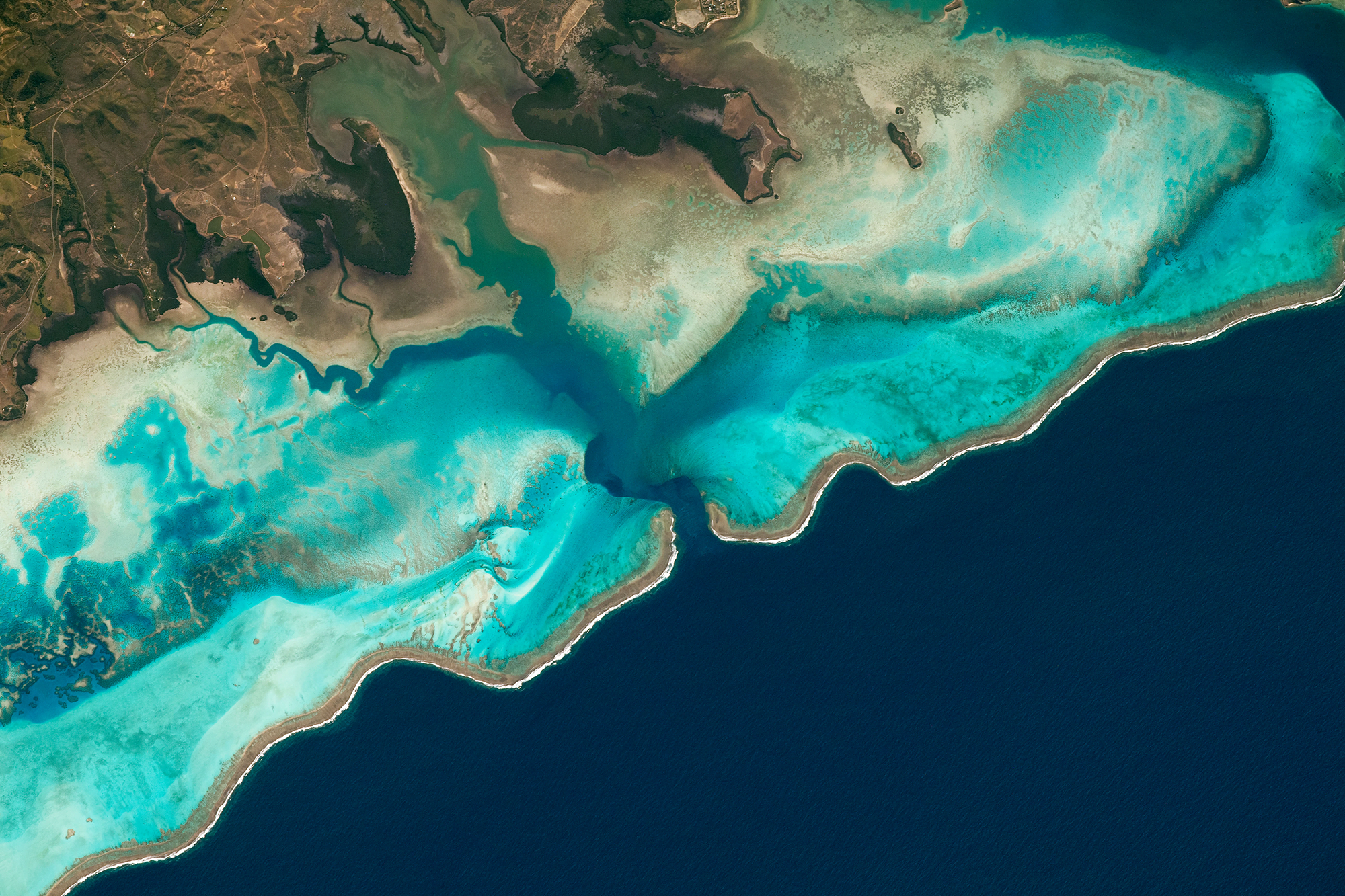
    Brown reefs edge a turquoise lagoon in this astronaut snapshot of the New Caledonian coastline. Reefs like these form a natural barrier that protects coastlines from storms by breaking up waves (seen here as those white edges) before they reach the shore. The lagoon is streaked with lines of tan where sediment flows from the uplands into the water. Similarly, the color variations from green to blue in water hint at changes in depth, organic content, and more. (Image credit: NASA; via NASA Earth Observatory)

  • Ingenuity’s Dust Cloud

    Ingenuity’s Dust Cloud

    Mars is quite dusty. It periodically gets swallowed by planet-spanning dust storms, but it’s also home to regular dust devils whose size can put Earth’s to shame. Exactly how so much dust gets picked up by Mars’ incredibly thin atmosphere — only 1% of Earth’s — is still something of a mystery. So scientists were excited after the Ingenuity helicopter’s fourth flight, where cameras on the Perseverance rover caught a billowing dust cloud following Ingenuity as it flew. Knowing how the helicopter flies, they may be able to unravel just how its wake picks up and carries dust. Since Ingenuity’s only purpose was to demonstrate flight on another planet, this would be a big scientific bonus for an already successful mission! (Image credit: NASA/JPL-Caltech/ASU/MSSS/SSI; via Nature; submitted by Kam-Yung Soh and jpshoer)

  • Suspended Sediments in Lake Erie

    Suspended Sediments in Lake Erie

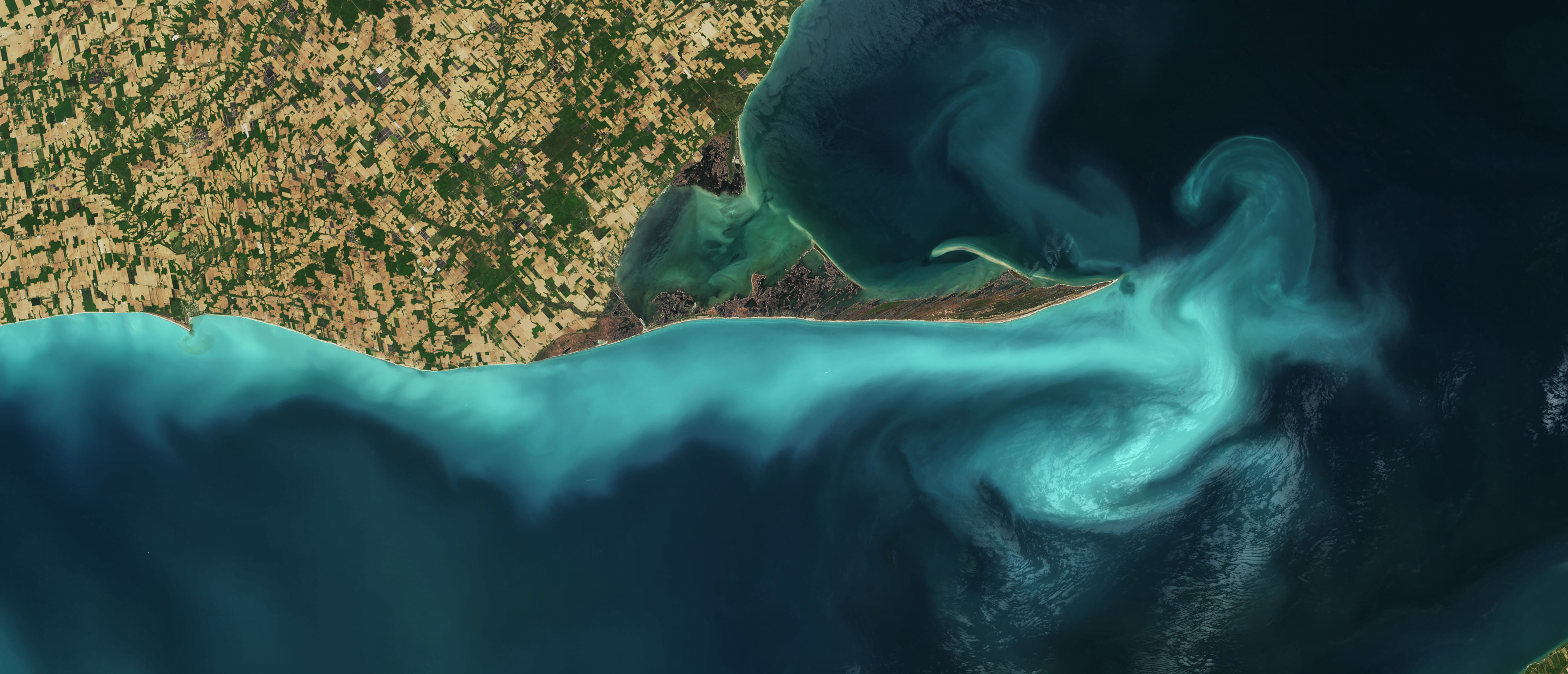
    Lake Erie’s Long Point is outlined in turquoise in this natural-color satellite image. The pale color is likely due to limestone sediments in the shallow waters getting resuspended by a seiche or other disturbance. A seiche is a standing wave that forms in a partially- or fully-bounded body of water; in Lake Erie they are typically wind- and weather-driven. (Image credit: J. Stevens/USGS; via NASA Earth Observatory)

  • Featured Video Play Icon

    When Rivers Break Their Banks

    Rivers often change their course, but they do not always do so gradually. River avulsions are a bit like earthquakes — they happen suddenly and with disastrous potential. Researchers find that these sudden course changes happen when silt builds up in a river and reduces the amount of water it can carry. Eventually, the resistance to flow is large enough that the river bursts its banks in search of an easier route to the sea. That’s a deadly problem for the communities that live nearby and rely on the river’s sedimentation for their fertile farmland. But using small-scale models, scientists are beginning to unravel the physics behind avulsions, bringing hope that they can be predicted or even sustainably averted. (Video and image credit: Science)

  • Blue Dunes

    Blue Dunes

    This false-color image shows a Martian dune field near the northern polar cap. The image itself covers an area 30 kilometers wide, but the dune field stretches over an area the size of Texas. In the photo cooler areas have been rendered in bluer tints, while warm areas are shown in yellow and orange. The sun warms the wind-sculpted dunes more than in the valleys that lie between. Complex dune networks like these build up over time as consistent winds push sand and create interactions between individual dunes. (Image credit: NASA/JPL-Caltech/ASU; via Colossal)

  • Featured Video Play Icon

    Coastal Erosion

    The same dynamic forces that make coastlines fascinating create perennial headaches for engineers trying to maintain coastlines against erosion. This Practical Engineering video discusses some of the challenges of coastal erosion and how engineers counter them.

    In a completely undeveloped coastline, waves and storms erode the shoreline while rivers and currents replenish sand through sedimentation. Manmade structures tend to strengthen erosion processes while disrupting the sedimentation that would normally counter it. Beach nourishment — where sand gets dredged up and deposited on a beach — is an engineered attempt to replace natural sedimentation.

    Dunes, mangrove forests, and wetlands are all nature’s way of protecting and maintaining coastlines. We engineers are still learning how to both utilize and protect shorelines. (Image and video credit: Practical Engineering)

  • High Tide

    High Tide

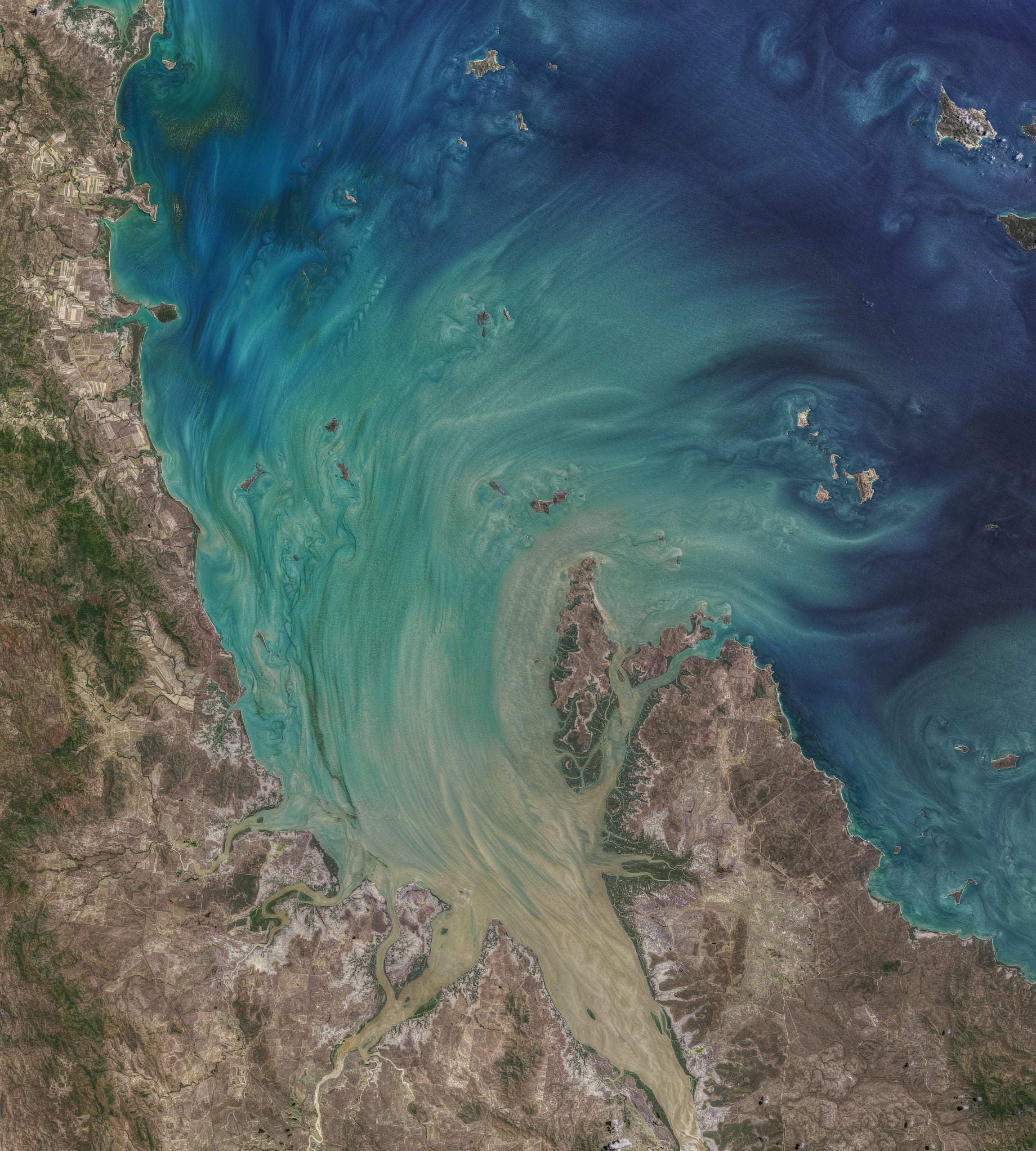
    Broad Sound, in eastern Australia, is home to some of the most extreme tidal swings in the world, with more than ten meters difference between high and low tides. The bay’s peculiar geography, along with the topography of nearby reefs, combine to cause the large tides. This color-enhanced satellite image shows the bay at high tide, as phytoplankton and suspended sediments are swept into the bay and around its many islands. The level of detail is just stunning. I particularly love all the von Karman vortex streets visible in the wakes of islands. I count more than a dozen of them! (Image credit: N. Kuring/NASA/USGS; via NASA Earth Observatory)

  • A Colorful Portrait of Flow

    A Colorful Portrait of Flow

    This gorgeous, natural-color image shows Lake Balkhash in southeastern Kazakhstan. In early March, the ice on the lake was beginning to break up, revealing glimpses of swirling sediment below the water’s surface. In contrast, the smaller lakes and ponds of the surrounding area remained frozen amidst the wintery browns of the nearby desert and wetlands. (Image credit: J. Stevens/USGS; via NASA Earth Observatory)

  • Two Views of Ocean Eddies

    Two Views of Ocean Eddies

    Colorful, sediment-laden eddies swirl off the Italian coast in this satellite image. These small-scale eddies — less than 10 km in diameter — can be short-lived and are often difficult to capture in numerical models, but remote sensing can help scientists better understand their impact on oceanic mixing, especially when we capture more than one view of the same event.

    The image below shows the same eddies in an infrared (thermal) view. The resolution on this instrument is not as fine as the natural color one, but we can still make out some of the same swirling motions. It’s also worth comparing the features we don’t see in both images. For example, the Cornia River discharges in infrared as a bright, white plume of cooler water, but it’s barely visible in the color-image, suggesting that the river is not contributing much sediment to the bay. (Image credit: USGS; via NASA Earth Observatory)

    Infrared satellite image of waters off the coast of Italy.