Tag: science

  • Jovian Dynamics

    Jovian Dynamics

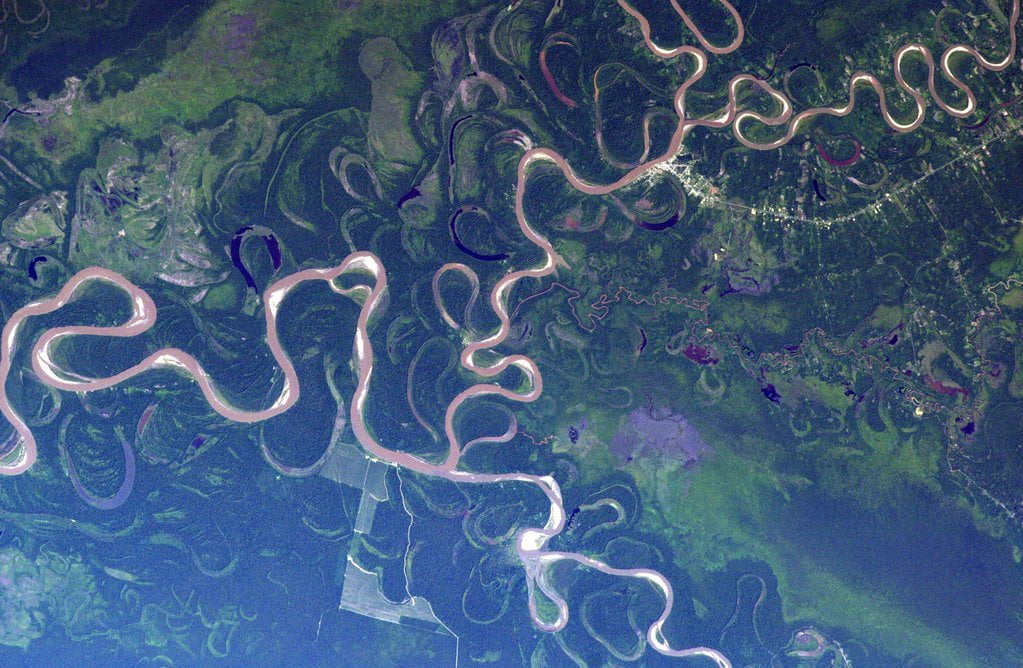
    Our solar system’s largest planet is a mysterious and majestic font of fluid dynamics. Unlike rocky Earth, Jupiter is made entirely of fluids. Beneath its massive gaseous atmosphere lies an ocean of liquid hydrogen. The lack of solid ground to weaken storms may explain some of the longevity of Jupiter’s Great Red Spot, a hurricane that’s been raging on the planet for more than a hundred and fifty years. Part of the challenge of understanding Jupiter’s dynamics is that most of our data consists of observations of the uppermost layer of the atmosphere. It’s kind of like trying to describe an entire ocean based on the surface alone; what we see is part of the story, but it’s only a small portion of a much greater whole. (Image credit: NASA; submitted by jshoer)

    ——————

    FINAL CALL: FYFD reader survey closes TODAY! I’ve teamed up with researcher Paige Brown Jarreau to create a survey of FYFD readers. By participating, you’ll be helping me improve FYFD and contributing to novel academic research on the readers of science blogs. It should only take 10-15 minutes to complete. You can find the survey here.

  • Convection Cells

    Convection Cells

    This magnified photo shows Rayleigh-Benard convection cells in silicone oil. This buoyancy-driven convection occurs when a fluid is heated from below and cooled above. Inside the cells, fluid rises through the center and sinks along the edges; this motion is made apparent here thanks to aluminum flakes in the oil. The distinctive hexagonal shape of the cells is actually due to surface tension. Here, the upper surface of the fluid is left open to the air and this free surface boundary condition causes hexagonal shapes to form. If the fluid were instead covered by a solid surface, the convection cells that form would be shaped differently. (Image credit: M. Velarde et al.; via Van Dyke’s An Album of Fluid Motion)

    ——————

    LAST CALL: FYFD reader survey closes Wednesday! I’ve teamed up with researcher Paige Brown Jarreau to create a survey of FYFD readers. By participating, you’ll be helping me improve FYFD and contributing to novel academic research on the readers of science blogs. It should only take 10-15 minutes to complete. You can find the survey here.

  • Featured Video Play Icon

    Carbonation in Space

    Astronauts don’t typically drink soda or other carbonated beverages while in space. The reason is probably apparent if you watch this new video of an effervescent tablet in water on the space station (or, you could watch the older classic one from Don Pettit). Unlike on Earth, where the carbon dioxide bubbles are buoyant and rise to the surface, the bubbles in a fluid in microgravity are randomly distributed. Those few bubbles that happen to be located along the edge of the water sphere will sometimes burst, creating the halo of tiny droplets you see in the video. In the case of sodas, though, the bubbles’ behavior creates a foamy mess, and, after ingestion, the bubbles are stuck travelling through the astronaut’s digestive system instead of getting burped out. Sounds rather unpleasant to me. (Video credit: NASA; submitted by entropy-perturbation and buckitdrop)

    ——————

    LAST CALL: Help us do some science! I’ve teamed up with researcher Paige Brown Jarreau to create a survey of FYFD readers. By participating, you’ll be helping me improve FYFD and contributing to novel academic research on the readers of science blogs. It should only take 10-15 minutes to complete. You can find the survey here.

  • Wave Clouds Over the Galapagos

    Wave Clouds Over the Galapagos

    This dramatic example of Kelvin-Helmholtz clouds was taken near the Galapagos Islands last week. The shark-fin-like clouds are the result of two air layers moving past one another. The velocity difference at their interface creates an unstable shear layer that quickly breaks down. The resemblance of the clouds to breaking ocean waves is no coincidence – the wind moving over the ocean’s surface generates waves via the same Kelvin-Helmholtz instability. In the case of the clouds above, the lower layer of air was moist enough to condense, which is why the pattern is visible. Clouds like these don’t tend to last for long because the disturbances that drive the instability grow exponentially quickly, leading to turbulence. (Image credit: C. Miller; via Washington Post; submitted by @jmlinhart)

    ——————

    Help us do some science! I’ve teamed up with researcher Paige Brown Jarreau to create a survey of FYFD readers. By participating, you’ll be helping me improve FYFD and contributing to novel academic research on the readers of science blogs. It should only take 10-15 minutes to complete. You can find the survey here.

  • Featured Video Play Icon

    Soap Bubble Coalescence

    Droplets falling onto a bath of the same liquid will sometimes coalesce via a series of increasingly smaller droplets in a process known as the coalescence cascade. Soap bubbles, it turns out, can exhibit a similar partial coalescence. When a bubble nears a soap film and the air between them drains away, coalesce can begin. If the the soap film beneath the bubble ruptures, some air from the inside of the bubble can escape. Part of the bubble coalesces with the soap film and a smaller daughter bubble is left behind. The researchers observed this process happen up to three times before the bubble coalesced completely. Alternatively, if the soap film did not rupture, the air inside the bubble had no escape, and the bubble would coalesce into a hemispherical lens atop the soap film. (Video credit: G. Pucci et al.; via KeSimpulan)

    ——————

    Don’t forget about our FYFD survey! I’ve teamed up with researcher Paige Brown Jarreau to create a survey of FYFD readers. By participating, you’ll be helping me improve FYFD and contributing to novel academic research on the readers of science blogs. It should only take 10-15 minutes to complete. You can find the survey here. Please take a few minutes to participate and share!

  • Featured Video Play Icon

    Suppressing Instability

    The Rayleigh Taylor instability is a common fluid phenomenon in which the interface between fluids of differing densities becomes unstable. It’s what’s responsible for all those awesome pictures of milk in ice coffee. For many years, fluid dynamicists theorized that the instability might be inhibited by rotation, which tends to suppress velocity changes along the axis of rotation. But actually creating an experiment demonstrating the effect was extremely difficult because any attempts to set a denser fluid over a lighter one before rotating it would kick off the instability. Recently, however, researchers succeeded in creating an experimental demonstration, seen in the video above. They did so by using magnetism. The initial set-up consists of two fluids of similar densities – a heavier, diamagnetic fluid on the bottom and a lighter, paramagnetic fluid floating on top. The tank was then spun up until both fluids were rotating like a rigid body. Then, the entire set-up was lowered into a vertically-oriented magnetic field. The paramagnetic fluid on top was attracted by the field while the diamagnetic fluid on the bottom was repelled. The end result is that the magnetic field created the effect of the upper fluid being heavier, thereby initiating the Rayleigh-Taylor instability. As you can see in the video, rotation does slow down–but not prevent–the instability. But it took some very clever and careful experimental design to show!  (Video credit: K. Baldwin et al.)

    ——————

    Don’t forget about our FYFD survey! I’ve teamed up with researcher Paige Brown Jarreau to create a survey of FYFD readers. By participating, you’ll be helping me improve FYFD and contributing to novel academic research on the readers of science blogs. It should only take 10-15 minutes to complete. You can find the survey here. Please take a few minutes to participate and share!

  • Happy 5th, FYFD!

    Happy 5th, FYFD!

    FYFD is 5 years old! Hard to believe it’s been five whole years. Thank you to everyone who has helped along the way, especially those of you who produce, submit, and share such beautiful fluid dynamics.

    Thanks also to everyone who is participating in our reader survey. We’re getting a lot of great feedback. If you haven’t taken it yet, there’s still time!

    And, finally, in honor of five years of FYFD, I present you with the five most popular FYFD posts of all time:

    1. Swimming through surface tension – Originally posted 7 Feb 2013
    2. Bioluminescence as a defense mechanism – Originally posted 4 Sep 2014
    3. Liquid mushroom – Originally posted 19 Feb 2013
    4. Dancing droplets – Originally posted 30 Mar 2015
    5. Stepping on lava – Originally posted 19 Dec 2014

  • Alligators Water Dancing

    Alligators Water Dancing

    Amorous alligators call to mates with a behavior known as water dancing. Their audible bellows are accompanied by infrasonic soundvibrations below the 20 Hz limit of human hearing. These vibrations from their lungs excite Faraday waves in the water near the alligator’s back and make the surface explode in a dance of jets and atomized droplets. I’ve seen similar results in other instances of vibration, but this may be the only example of this I’ve seen in the wild. Researchers studying the phenomenon noted that the frequency of sound the alligators emit corresponds to a wavelength equal to the spacing of the raised scales, or scutes, on the alligators’ backs. They hypothesize that the shape of the scutes helps males create the display.  (Image credit: N. Marven, source; research credit: P. Moriarty and R. Holt; h/t to io9)

    ——————

    Don’t forget about our FYFD survey! I’ve teamed up with researcher Paige Brown Jarreau to create a survey of FYFD readers. By participating, you’ll be helping me improve FYFD and contributing to novel academic research on the readers of science blogs. It should only take 10-15 minutes to complete. You can find the survey here. Please take a few minutes to participate and share!

  • Raindrops in Puddles

    Raindrops in Puddles

    Watching rain drops hit a puddle or lake is remarkably fascinating. Each drop creates a little cavity in the water surface when it impacts. Large, energetic drops will create a crown-shaped splash, like the ones in the upper animation. When the cavity below the surface collapses, the water rebounds into a pillar known as a Worthington jet. Look carefully and you’ll see some of those jets are energetic enough to produce a little satellite droplet that falls back and coalesces. Altogether it’s a beautifully complex process to watch happen over and over again. (Image credit: K. Weiner, source)

    ——————

    Help us do some science! I’ve teamed up with researcher Paige Brown Jarreau to create a survey of FYFD readers. By participating, you’ll be helping me improve FYFD and contributing to novel academic research on the readers of science blogs. It should only take 10-15 minutes to complete. You can find the survey here.

  • Featured Video Play Icon

    Magnus Effect

    Putting a little bit of spin on an object can have a big aerodynamic effect, thanks to the Magnus effect. As demonstrated in the video above, backspin on a basketball dropped from a big height will send it flying out and away. The reason spinning objects generate these counterintuitive motions is because the air flow over them creates differential pressures. On the side of the ball spinning with the flow, air is accelerated, dropping the local pressure; whereas on the opposite side, the ball spinning against the direction of flow makes the flow separate and no longer flow smoothly along that side. This causes a high pressure on that side. Like the difference in pressure on either side of an airfoil, the pressure difference across the ball creates a force that pushes the ball toward the low pressure side. Check out some of the other places Magnus effect shows up!  (Video credit: Veritasium; submitted by Andrew C.)

    ——————

    Help us do some science! I’ve teamed up with researcher Paige Brown Jarreau to create a survey of FYFD readers. By participating, you’ll be helping me improve FYFD and contributing to novel academic research on the readers of science blogs. It should only take 10-15 minutes to complete. You can find the survey here.