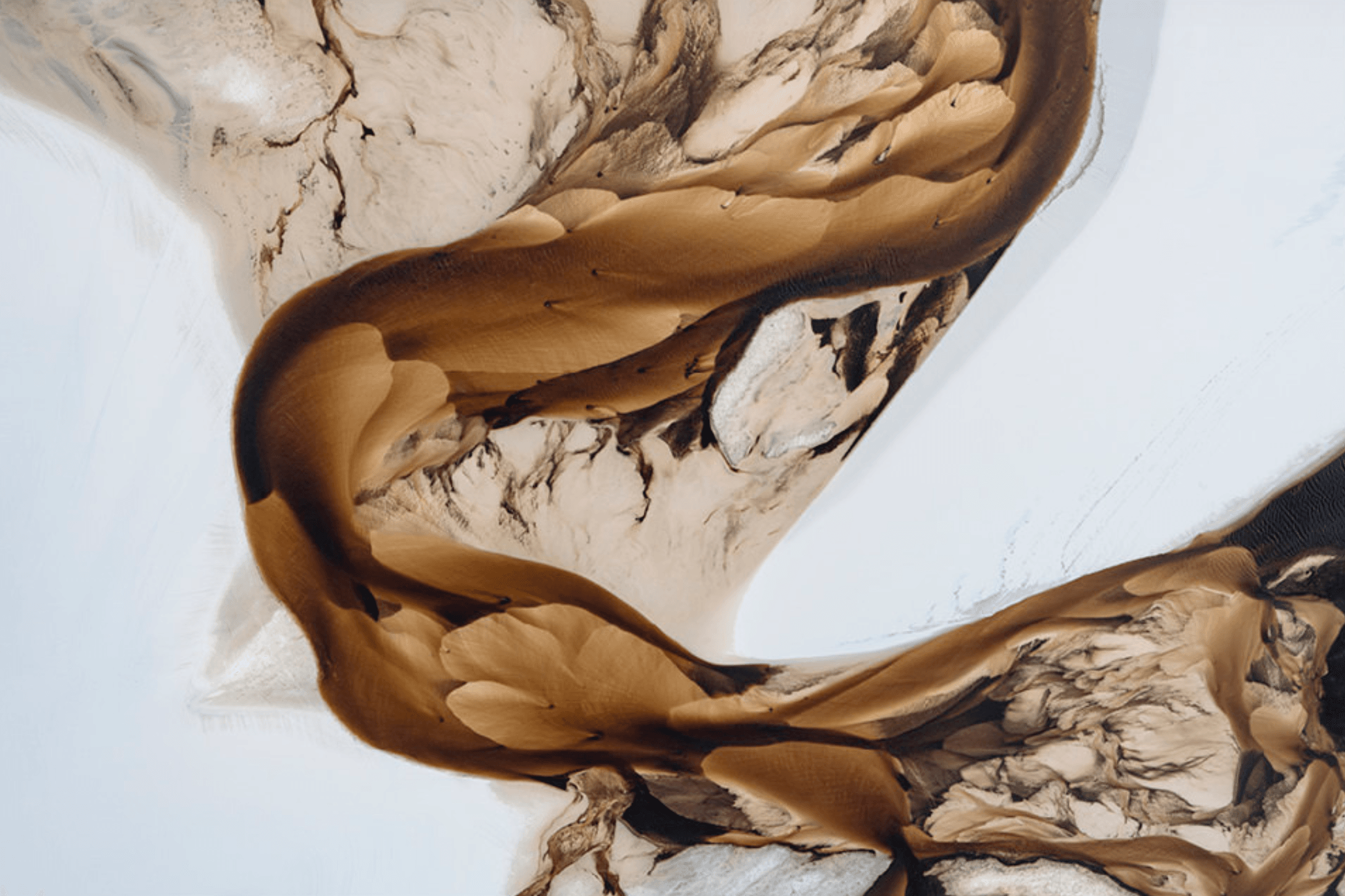
Lake Erie, the shallowest of the Great Lakes, can almost completely freeze over in winter. In this satellite image of the lake in March 2025, about a third of the lake remains ice-covered, while sediment — resuspended by wind and currents — and phytoplankton swirl in the ice-free zone. In recent decades, scientists discovered that diatoms, one of the phytoplankton groups found in the lake, can live within and just below Erie’s ice, thanks to a symbiotic relationship with an ice-loving bacteria. This symbiosis allows the diatoms to attach to the underside of the ice and gather the light needed for photosynthesis. Even in the depths of winter, an ice-covered lake can teem with life. (Image credit: M. Garrison; via NASA Earth Observatory)
Tag: science

“Vorticity 6”
It’s time for another storm-chasing timelapse from photographer Mike Olbinski! “Vorticity 6” focuses on supercell thunderstorms and their tornadoes. There’s billowing turbulent convection, undulating asperitas, bulging mammatus, microbursts, and more. There’s nothing like timelapse to highlight the growth, rotation, and shear involved in these storms. (Video and image credit: M. Olbinski)

Earth’s Core is Leaking
In Earth’s primordial days, liquid iron fell through the ball of magma that was our planet, collecting elements–like ruthenium-100–that are attracted to iron. All of that material ended up in Earth’s outer core, a dense sea of liquid metal that geoscientists assumed was unable to cross into the lighter mantle. But recent observations suggest instead that core material is making its way to the surface.
Measurements from volcanic rocks in the Galapagos Islands, Hawai’i, and Canada’s Baffin Island all contain ruthenium isotopes associated with that primordial core material, indicating that that magma came from the core, not the mantle. Separately, seismic analyses suggest that this material could be crossing through continent-sized blobs of warm, large-grained crystals caught deep below Africa and the Pacific, at the boundary between the mantle and the outer core. For more, check out this Quanta Magazine article. (Image credit: B. Andersen; research credit: N. Messling et al. and S. Talavera-Soza et al.; via Quanta)

How Particles Affect Melting Ice
When ice melts in salt water, there’s an upward flow along the ice caused by the difference in density. But most ice in nature is not purely water. What happens when there are particles trapped in the ice? That’s the question this video asks. The answer turns out to be relatively complex, but the researchers do a nice job of stepping viewers through their logic.
Large particles tend to fall off one-by-one, which doesn’t really affect the buoyant upward flow along the ice. In contrast, smaller particles fall downward in a plume that completely overwhelms the buoyant flow. That strong downward flow makes the ice ablate even faster. (Video and image credit: S. Bootsma et al.)

Double Detonation in Type 1a Supernovae
Type 1a supernovae are agreed to be explosions of white dwarf stars, the remains of stars similar in mass to our Sun. They’re thought to be triggered when extra mass — from a nearby companion star, for example — triggers a runaway fusion reaction in their carbon and oxygen, elements that white dwarfs generally don’t have enough mass to successfully fuse. The runaway fusion then blows the star apart.
But there’s another theory — demonstrated through numerical simulations — that suggests an alternate mechanism: a small explosion on the star’s surface could compress the interior enough to trigger fusion of the heavier elements there, thereby triggering a second detonation. The two explosions would happen in quick succession, making them difficult to detect, but astronomers predicted that each explosion could create a shell of calcium; given enough time, those two shells could drift apart, allowing astronomers to see a shell of sulfur between them.
The team looked to a supernova remnant about 300 years old, and using a spectrograph from the Very Large Telescope, they were able to image — as predicted — a two shells of calcium, separated by sulfur, supporting the double-detonation hypothesis.
The impact of double-detonation in Type 1a supernovae could be far-reaching. Right now, the intensity of these objects seems to be consistent enough that astronomers use their brightness to estimate their distance. Over the years, those distance estimates have been used to measure the universe’s expansion and provide evidence for the existence of dark matter. But if Type 1a supernovae are not all the same intensity, we may need to reevaluate their use as a universal yardstick. (Image credit: ESO/P. Das et al.; research credit: P. Das et al.; via Ars Technica)

Baltic Bloom
June and July brings blooming phytoplankton to the Baltic Sea, seen here in late July 2025. On-the-water measurements show that much of this bloom was cyanobacteria, an ancient type of organism among the first to process carbon dioxide into oxygen. These organisms thrive in nutrient- and nitrogen-rich waters. Here, they mark out the tides and currents that mix the Baltic. Zoom in on the full image, and you’ll see dark, nearly-straight lines across the swirls; these are the wakes of boats. (Image credit: M. Garrison; via NASA Earth Observatory)

Salty Swirls
Flamingos soar over swirls of salt and algae in a lake in Kenya’s Rift Valley. Shaped by winds, currents, physics, and chemistry these eddies reflect the motion of the water, evaporation patterns, and more. Without more information, it’s hard to say exactly what shapes the pattern, but it does appear reminiscent of a Kelvin-Helmholtz instability in places. (Image credit: B. Hayden/IAPOTY; via Colossal)

Studying Hydroelastic Turbulence
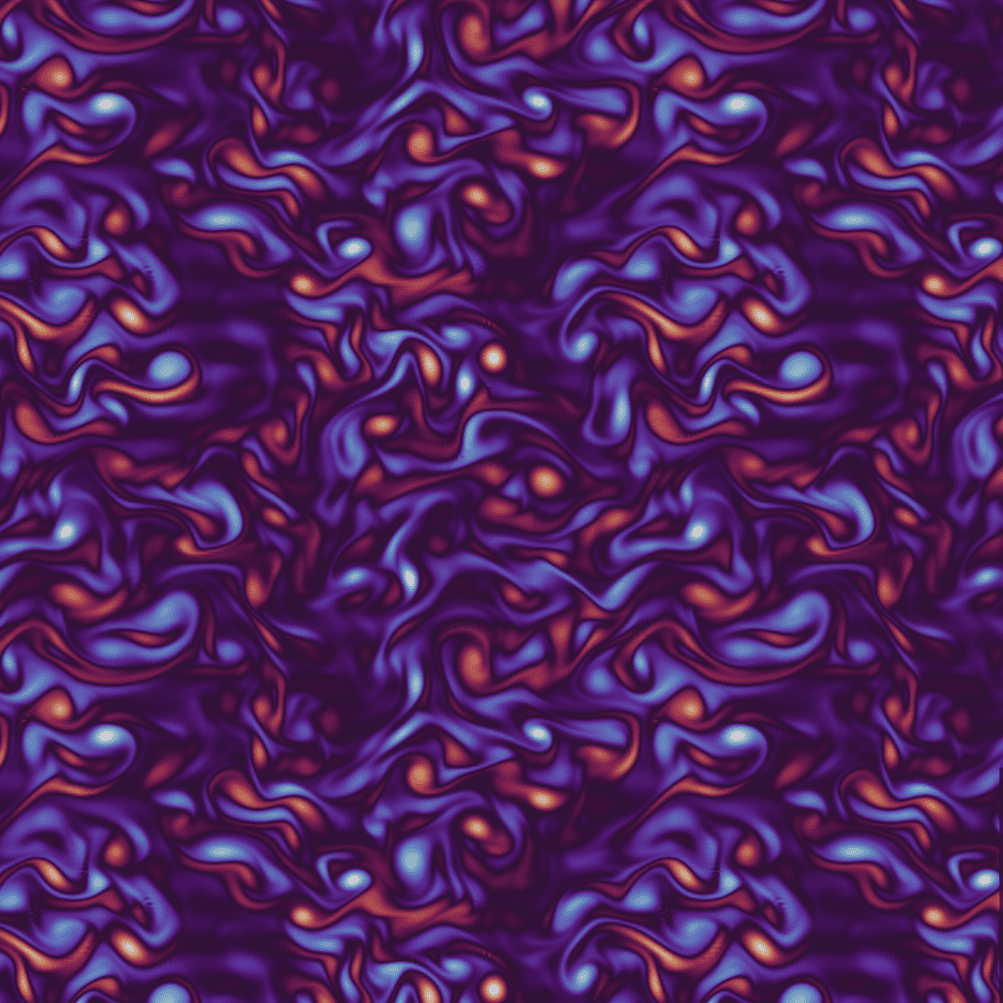
Can energy at the small-scales of a turbulent flow work its way up to larger scales? That’s a question at the heart of today’s study. Here, researchers are studying hydroelastic waves — created by stretching a thin elastic membrane over a water tank. The membrane gets vibrated up and down in just one location with an amplitude of about 1 millimeter. The resulting waves depend both on the movement of the water and the elasticity of the membrane, mimicking situations like ice-covered seas.
Rather than simply dying away, the local fluctuations introduced at the membrane spread, coalescing into larger-scale hydroelastic waves. How energy flows between these scales could have implications for weather forecasting, climate modeling, and other turbulent systems. (Image and research credit: M. Vernet and E. Falcon; via APS)

The Puquios System of Nazca
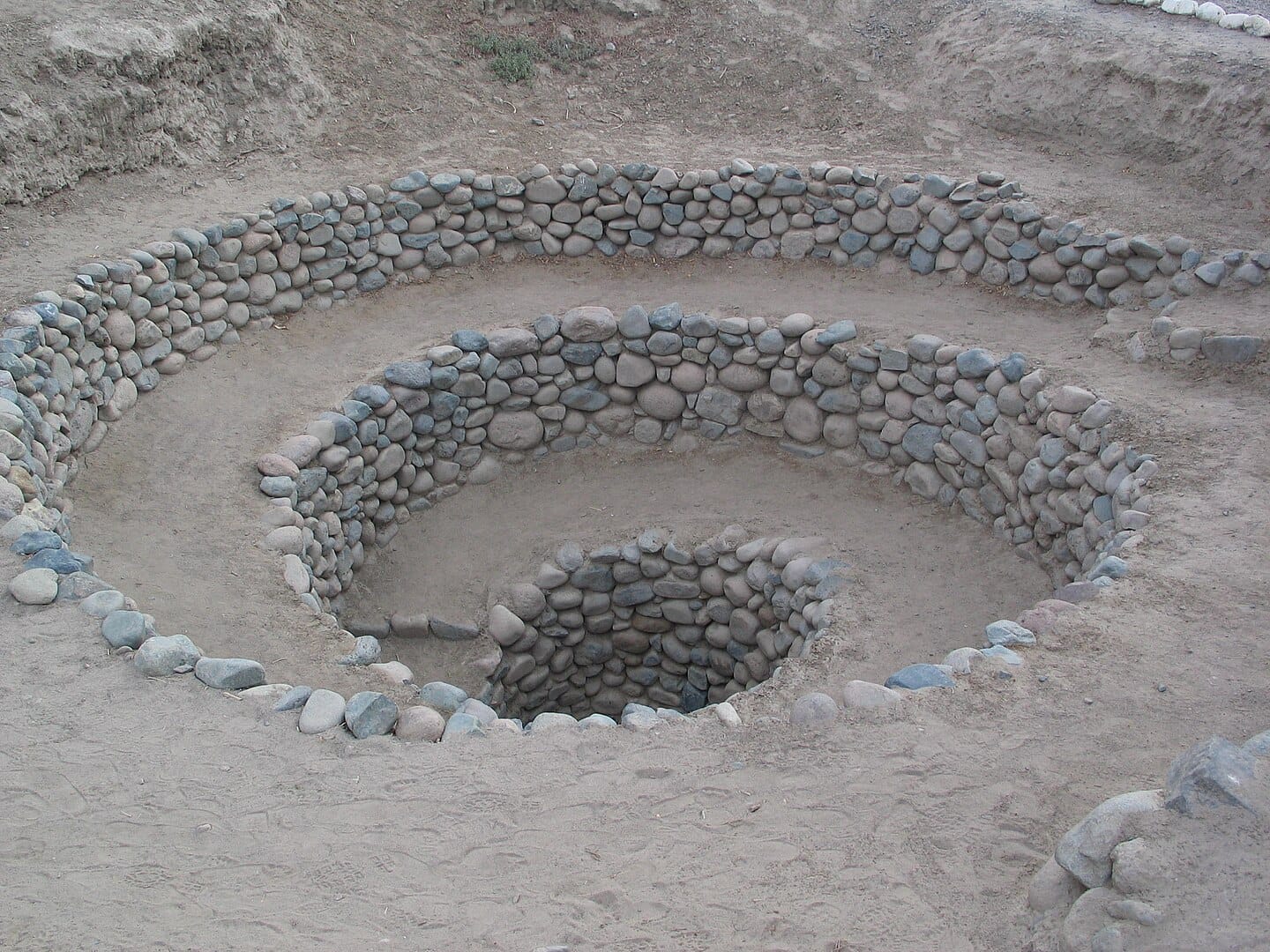
The arid Nazca region of Peru is dotted with spiral-shaped indentations, part of an irrigation system that helped indigenous civilizations thrive here before European contact. Although the region’s rainfall varies year-to-year, it never amounts to much. So pre-Columbian Nazcans turned instead to underground aquifers to gather and transport water.

An aerial view of several puquois chimneys near Nazca, Peru. Aquifers in the region slope downward, following the local geology. Puquios builders began by digging a preliminary well in the highlands, tunneling down until they reached the aquifer. Then they built a horizontal tunnel underground, sloping gently downward, toward the location where water was needed. Along that roughly horizontal tunnel, they built additional chimneys, the spiraling mouths of which are seen above. These chimneys are thought to serve multiple purposes. They provide maintenance access to the aqueduct tunnel, and their shape may help funnel wind underground to oxygenate the water and help keep it flowing. Eventually, the underground tunnel would exit into an open trench and a reservoir, providing year-round water for irrigation and personal use.

Although the puquios cannot themselves be dated through usual archaeological means, the current consensus is that they originate from around 500 C.E., with subsequent modifications by both indigenous and colonial inhabitants. Impressively, several dozen puquios are still providing water today. (Image credits: Ab5602/Wikimedia, PsamatheM/Wikimedia, and R. Lasaponara et al.; research credit: R. Lasaponara et al.; via Eleanor K.)