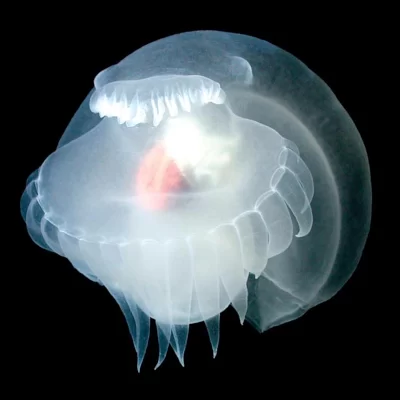
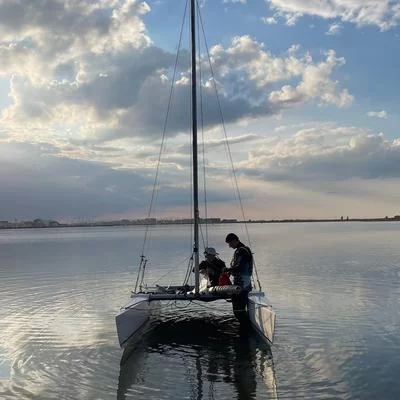
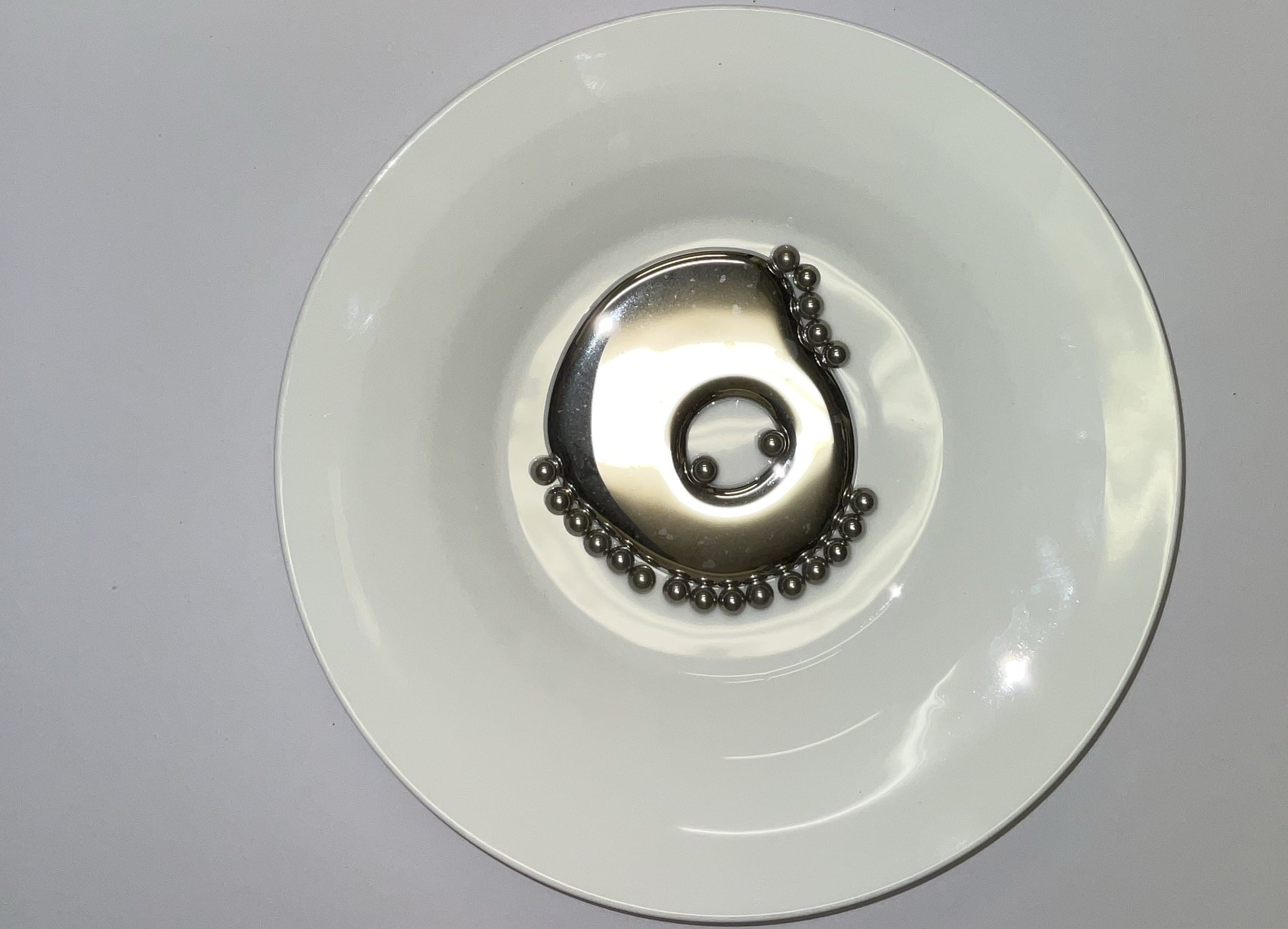
When an object like a sphere enters the water, it drags air into the water behind it, creating a cavity. Depending on the sphere’s impact speed, the cavity might close first under the water, forming a deep seal, or at the surface with a surface seal. But, as this video points out, water often isn’t still. Here, they explore how the sphere’s entry changes when there are ripples on the water surface. (Video and image credit: M. Ibrahim et al.; via GFM)
Tag: science

A Drop of Algae
Spheres of a Volvox colonial algae glow green inside a droplet in this award-winning microphotograph by Jan Rosenboom. Pinned on an inclined surface, the droplet is frozen in a balance between gravity and surface tension that keeps its shape–and its contact angles–asymmetric. Droplets will also take on a shape similar to this when air is blowing past them. (Image credit: J. Rosenboom; via Ars Technica)
Fediverse Reactions
-

Thermal Tides Drive Venusian Winds
Venus is a world of extremes. A full rotation of the world takes 243 Earth days, but winds race around the planet at a speed that makes a Category 5 hurricane look sedate. Just what drives these winds has been an ongoing question for planetary scientists. A recent study suggests that tides are a major contributor to this superrotation.
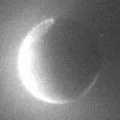
Unlike Earth’s tides, Venus’s are not gravitational in origin. Instead, Venusian tides are thermal, driven by heating in the sunward side of the atmosphere. This creates a diurnal tide, which cycles once per Venusian day and pumps momentum toward the tops of Venus’s clouds. The new analysis–rooted in both observations and numerical simulation–finds that diurnal tides are the primary driver behind the planet’s incredibly fast winds. (Image credit: NASA/JPL-Caltech; research credit: D. Lai et al.; via Eos)
Fediverse Reactions
-

ExaWind Simulation


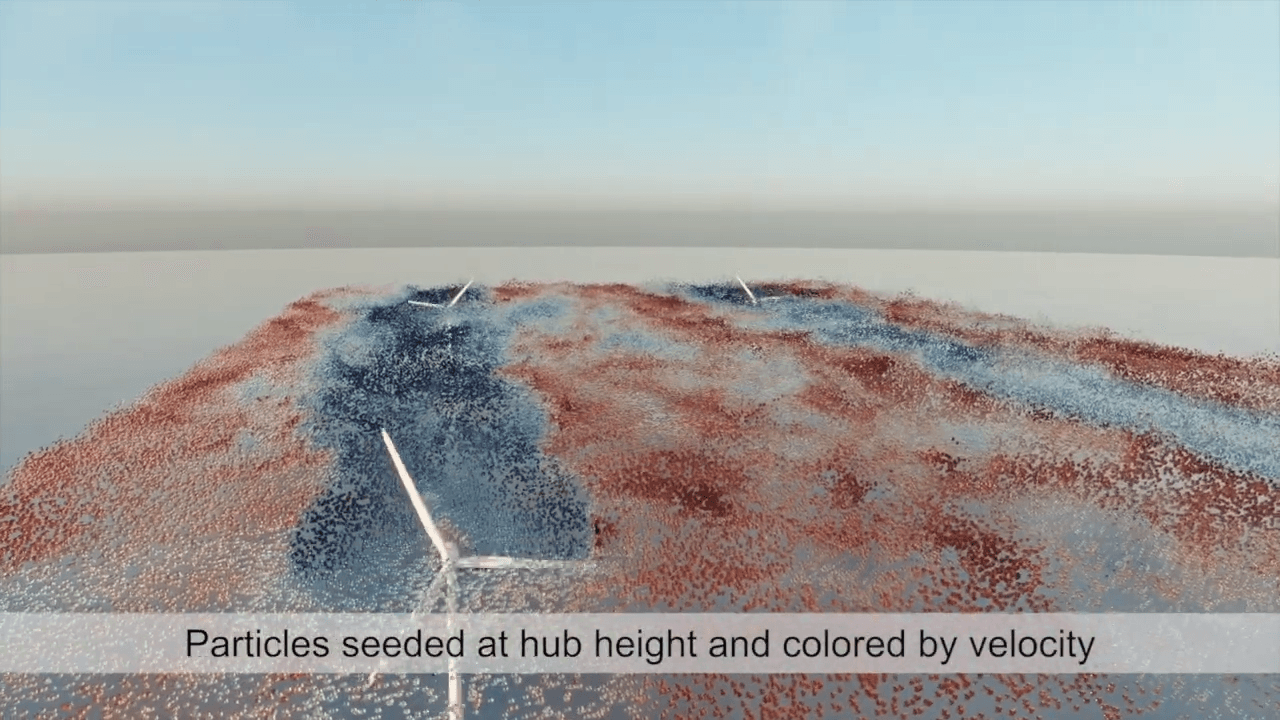
Large-scale computational fluid dynamics simulations face many challenges. Among them is the need to capture both large physical scales–like those of Earth’s atmospheric boundary layer–and small scales–like those of tiny eddies moving around a wind-turbine blade. Capturing all of these scales for a problem like four wind turbines in a wind farm requires using the full computing power of every processor in a large supercomputer. That’s the level of power behind the simulation visualized in this video. The results, however, are stunning. (Video and image credit: M. da Frahan et al.)
Fediverse Reactions
-

The Twin Roles of Turbulence in Fusion
Inside a fusion reactor, magnetically-contained plasma gets heated to more than one hundred million degrees. That heat, researchers observed, spreads much faster than originally predicted. Now a team from Japan has measurements showing how turbulence manages this feat.
The researchers show that the multiscale nature of turbulence allows it to transport heat in two ways. The first is familiar: acting locally, turbulence spreads heat little by little as small eddies mix and pass the heat along. But turbulence can also be nonlocal, they show, able to connect physically distant parts of a flow more rapidly than expected. This happens through turbulence’s larger scales, which can rapidly carry heated plasma from one side of the vessel to another.
The researchers illustrate the two roles of turbulence through a metaphor of American football (can you believe it?). In their metaphor, the quarterback acts as turbulence and the ball represents heat. The quarterback can pass the ball to reach distant parts of the field quickly — just as nonlocal turbulence does–or they can hand off the ball to a running back, who carries the ball down the field more slowly, through local interactions with other nearby players. (Image credit: National Institute for Fusion Science; research credit: N. Kenmochi et al., via Gizmodo and EurekAlert)
Fediverse Reactions
-
Superwalking Droplets
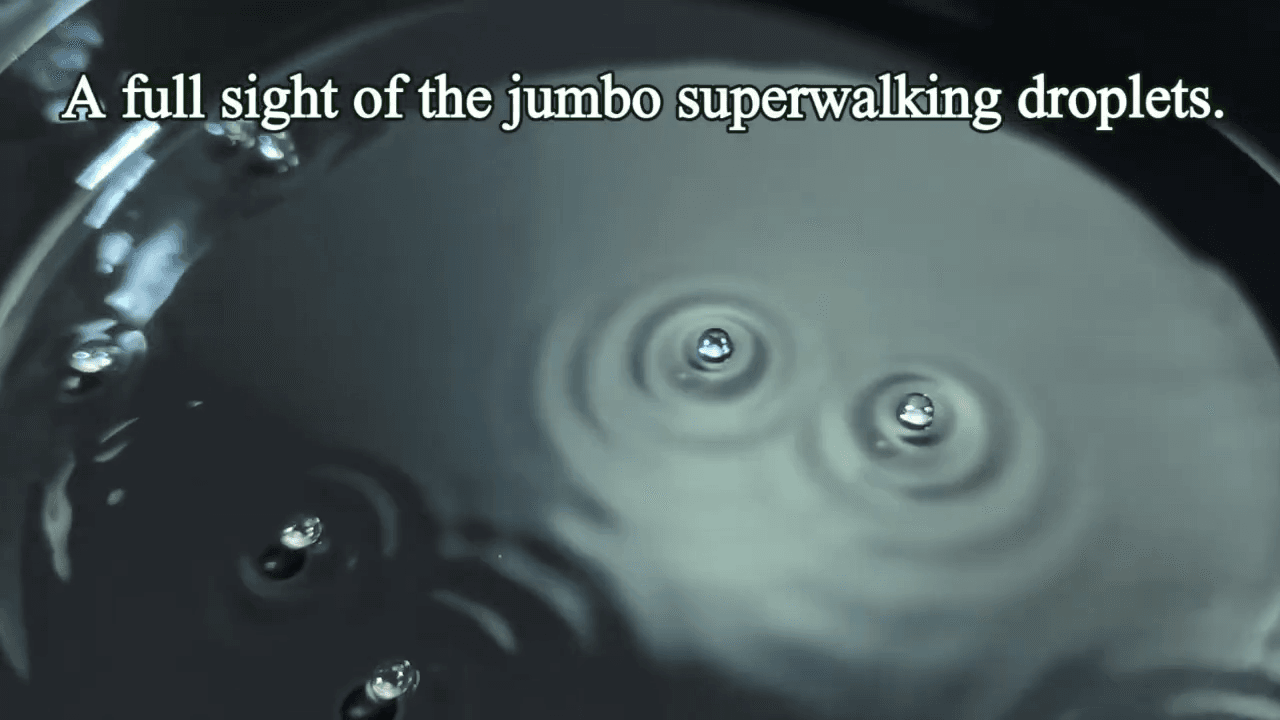
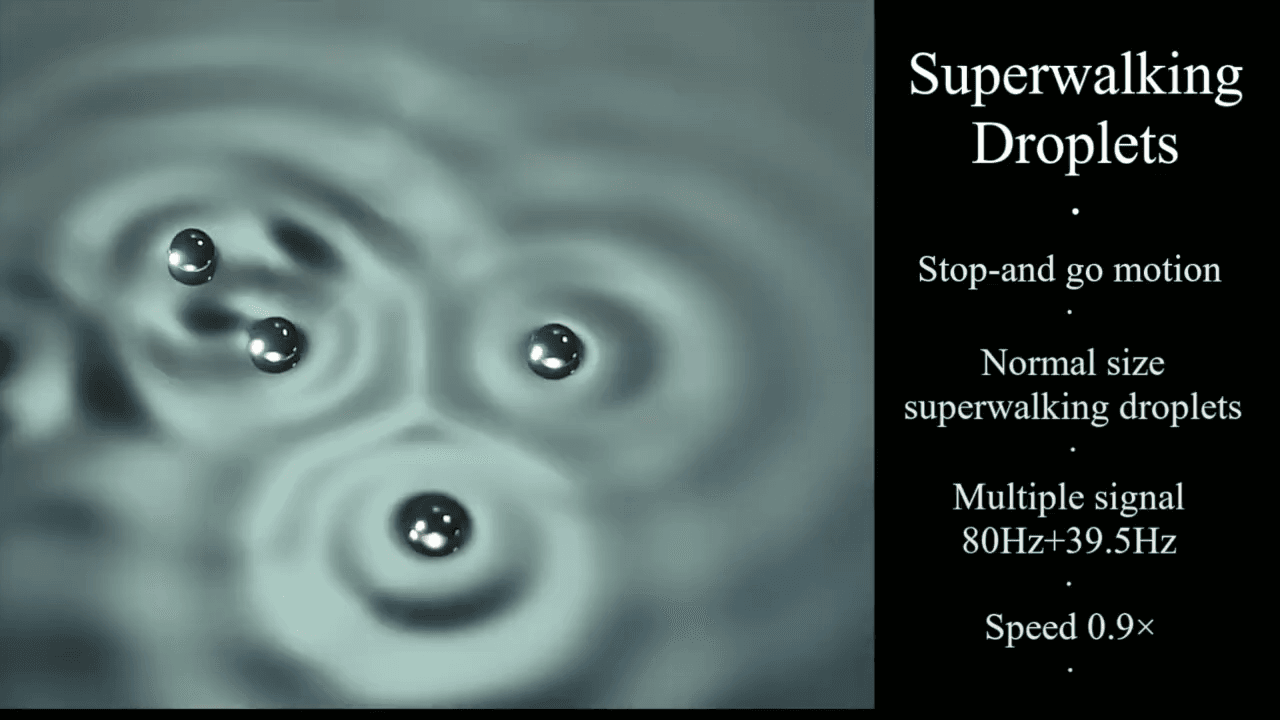
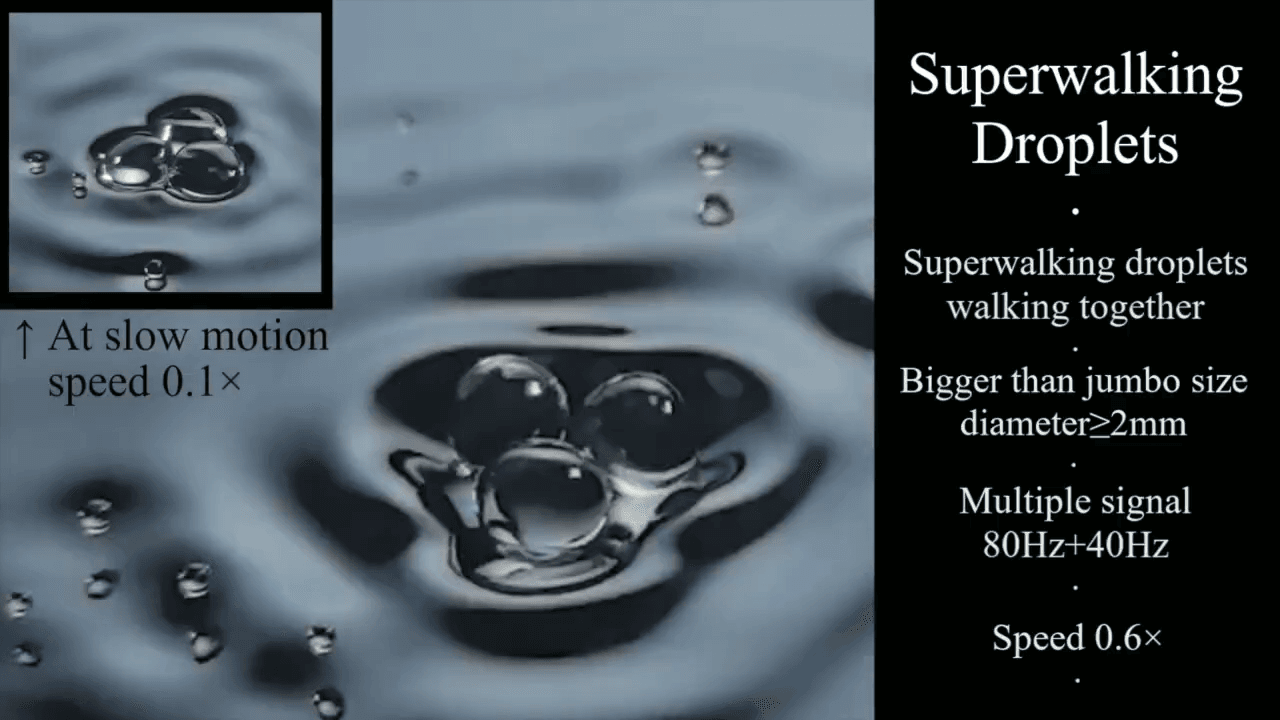
When placed on a vibrating oil bath, droplets have many wild behaviors, some of which mirror quantum mechanics. Even big droplets — bigger than 2 millimeters in diameter — can get in on the fun. This video shows several of these “jumbo superwalkers” in action, both singly and in groups. (Video and image credit: Y. Li and R. Valani; via GFM)
Fediverse Reactions
-
“Glacial River Blues”
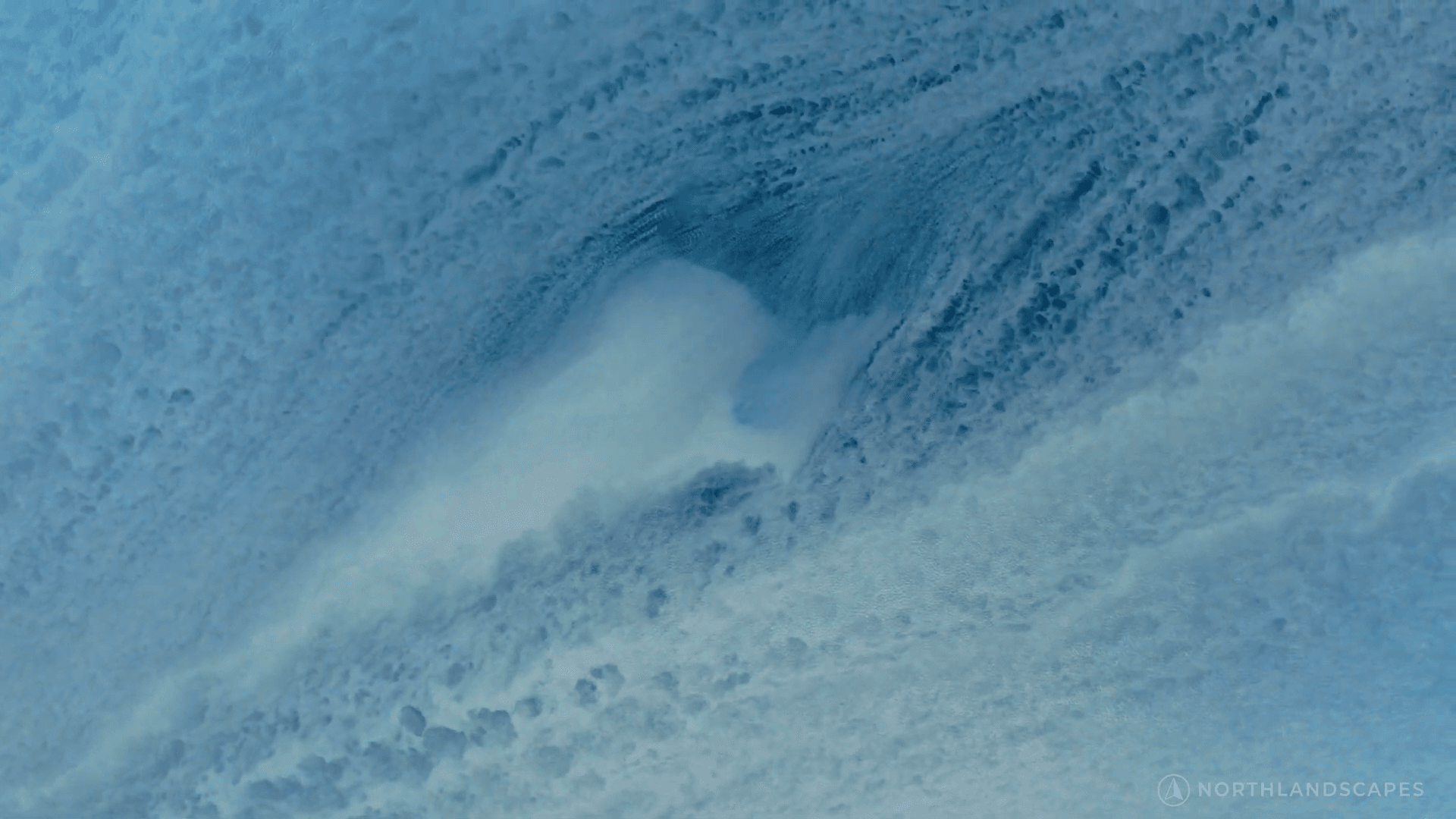

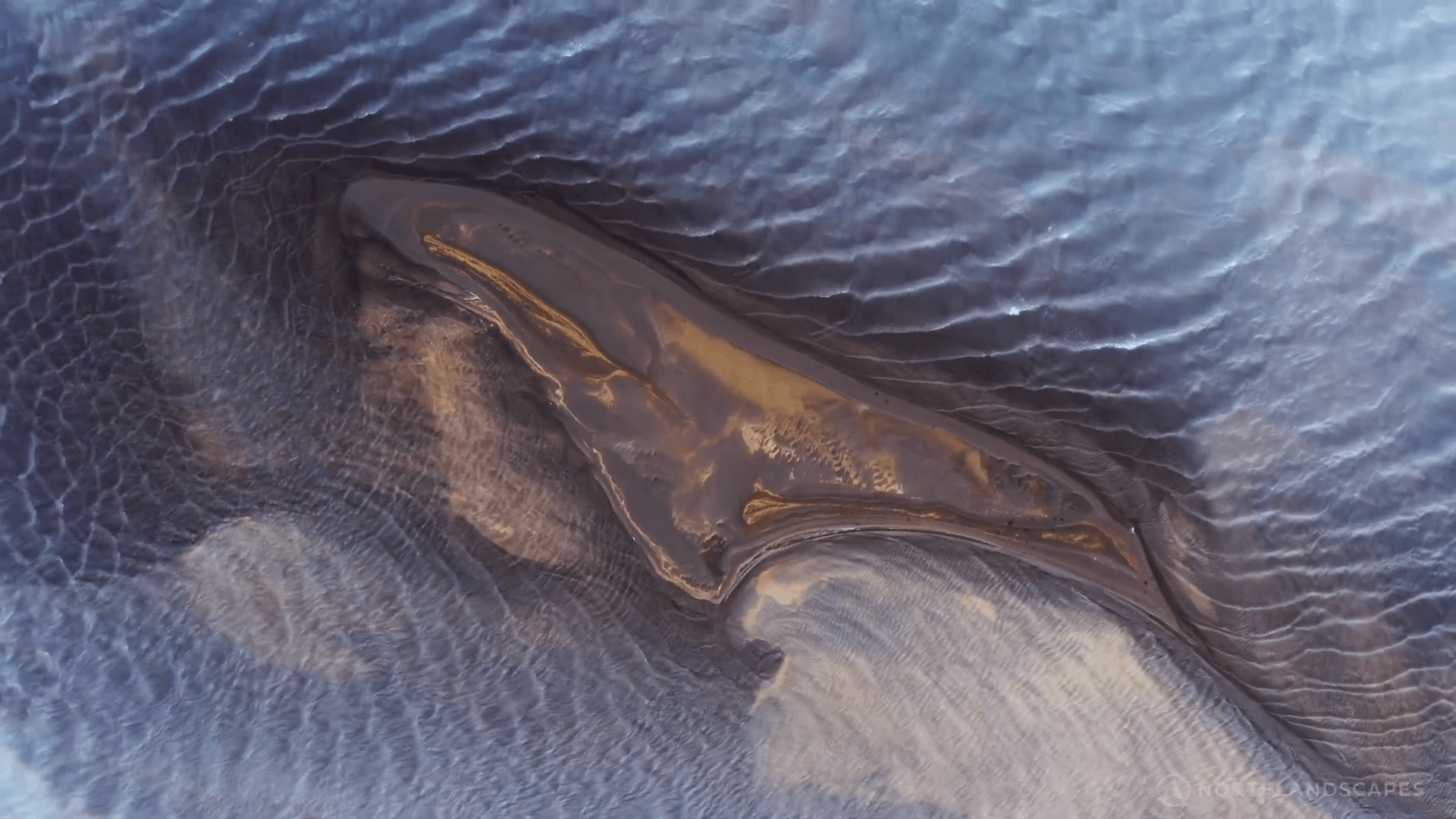
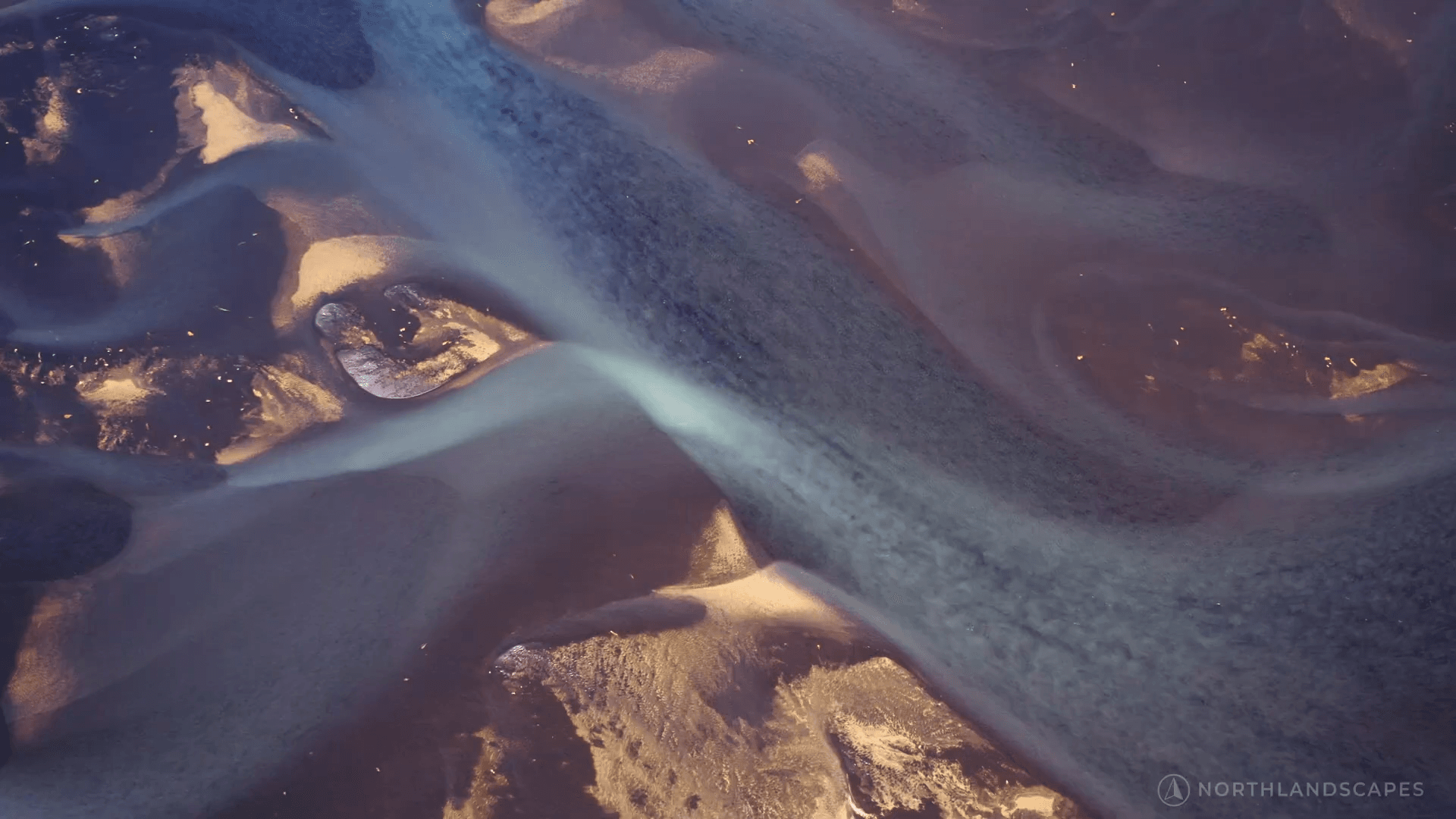
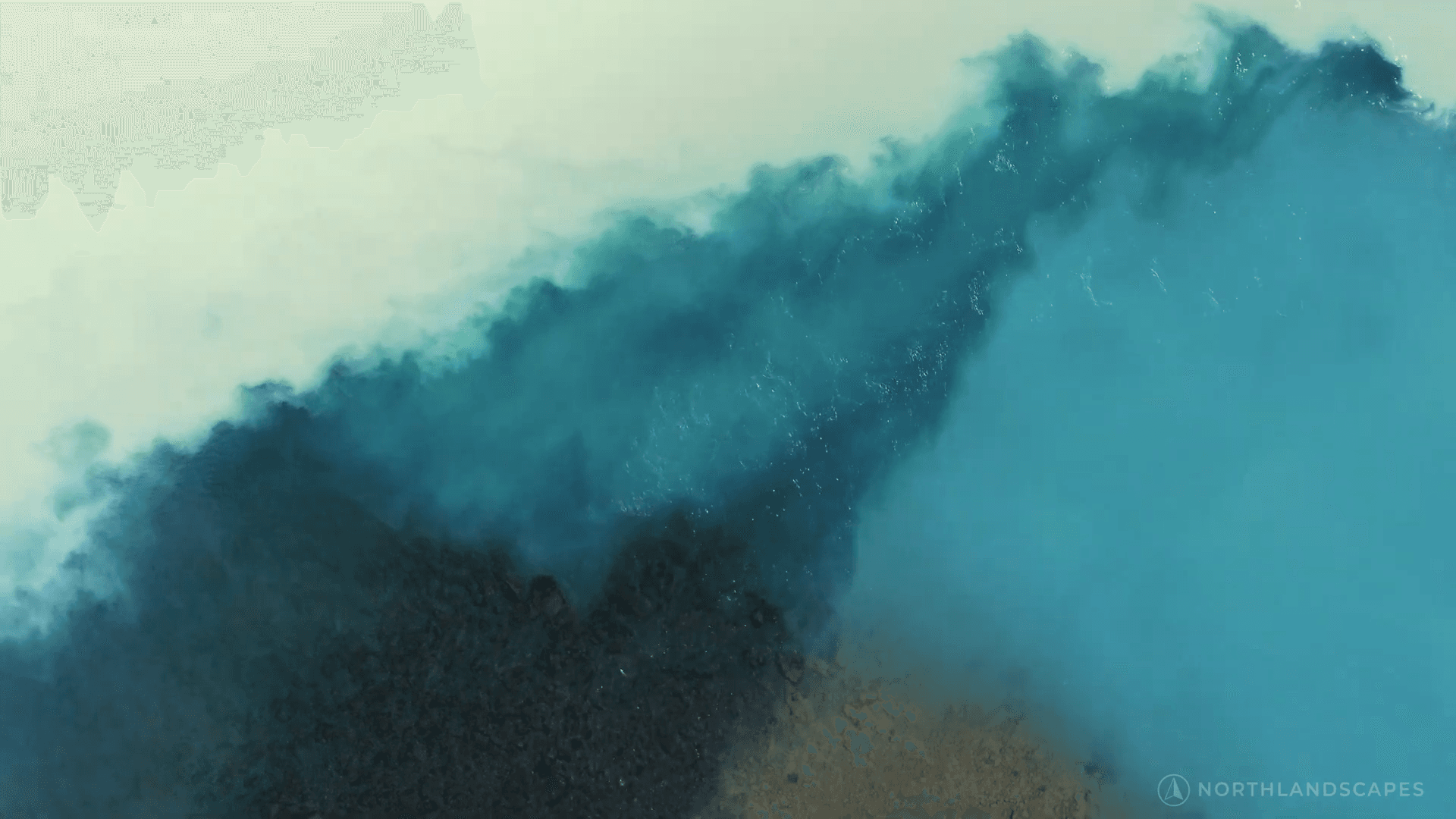
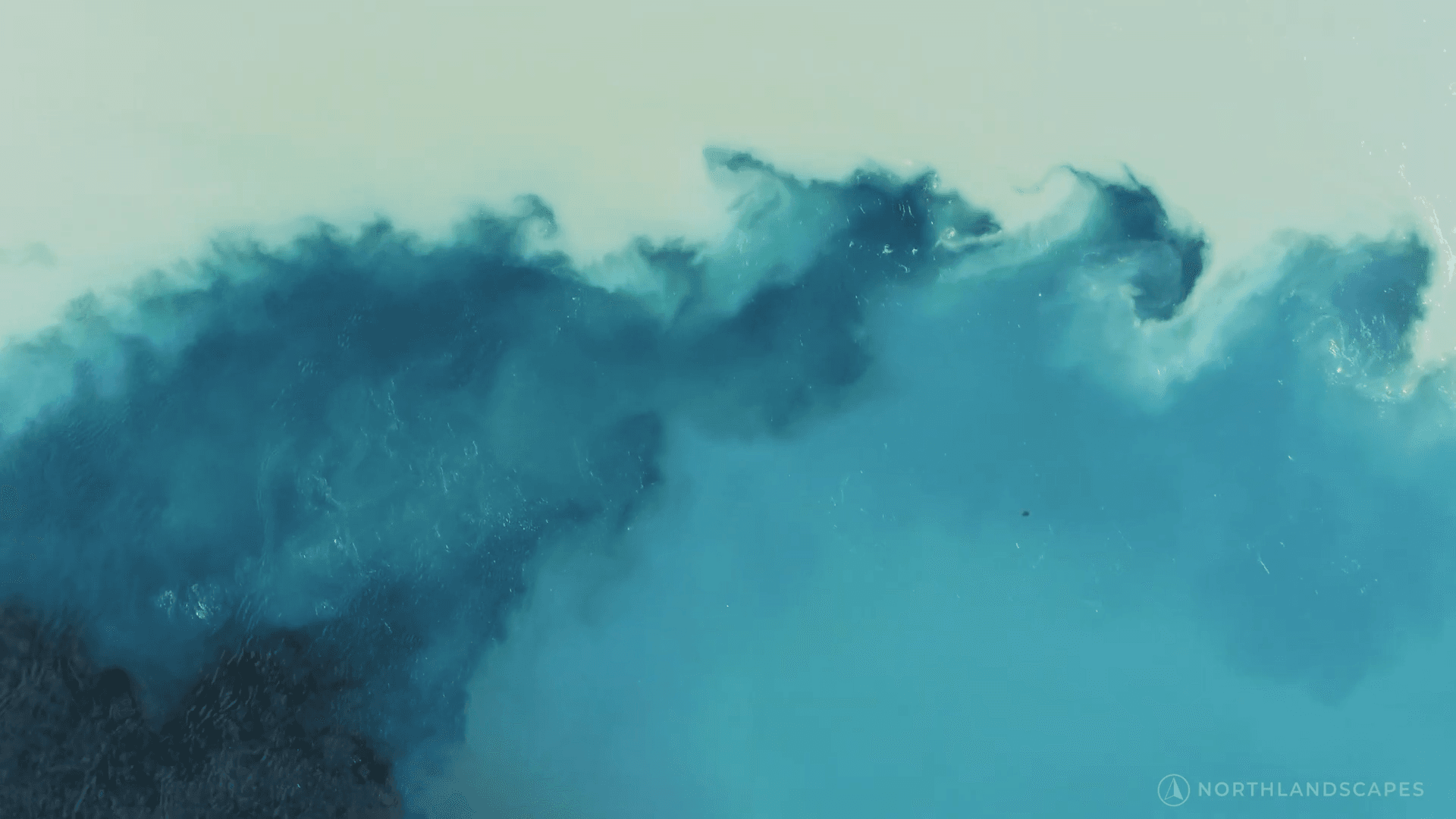
Glacier-fed rivers are often rich in colorful sediments. Here, photographer Jan Erik Waider shows us Iceland’s glacial rivers flowing primarily in shades of blue. While the wave action and diffraction in these videos is great, the real star is the turbulent mixing where turbid and clearer waters meet. Watch those boundaries, and you’ll see shear from flows moving at different speeds which feeds the ragged, Kelvin-Helmholtz-unstable edge between colors. (Video and image credit: J. Waider; via Laughing Squid)
Fediverse Reactions
-

Marangoni Effect in Biology
For decades, biologists have focused on genetics as the key determiner for biological processes, but genetic signals alone do not explain every process. Instead, researchers are beginning to see an interplay between genetics and mechanics as key to what goes on in living bodies.
For example, scientists have long tried to unravel how an undifferentiated blob of cells develops a clear head-to-tail axis that then defines the growing organism. Researchers have found that, rather than being guided purely by genetic signals, this stage relies on mechanical forces–specifically, the Marangoni effect.
The image above shows a mouse gastruloid, a bundle of stem cells that mimic embryo growth. As they develop, cells flow up the sides of the gastruloid, with a returning downward flow down the center. This is the same flow that happens in a droplet with higher surface tension in one region; the Marangoni effect pulls fluid from the lower surface tension region to the higher one, with a returning flow that completes the recirculation circuit.
The same thing, it turns out, happens in the gastruloid. Genes in the cells trigger a higher concentration of proteins in one region of the bundle, creating a lower surface tension that causes tissue to flow away, helping define the head-to-tail axis. (Image credit: S. Tlili/CNRS; research credit: S. Gsell et al.; via Wired)
Fediverse Reactions
-
How the Edenville Dam Failed


Back in May 2020, the Edenville Dam in Michigan failed dramatically, releasing flood waters that destroyed a downstream dam and caused millions of dollars of damage. In this Practical Engineering video, Grady deconstructs the accident, based on an interim report from the forensic team charged with investigating the failure. Along the way, he explains common causes of dam failures, what made the Edenville failure unusual, and how engineers build modern earthen dams to avoid this older design’s flaws. (Image and video credit: Practical Engineering)
Fediverse Reactions
-

Inside Solidification
As children, we’re taught that there are three distinct phases of matter–solid, liquid, and gas–but the reality is somewhat more complicated. In the right–often exotic–conditions, there are far more phases matter takes on. In a recent study, researchers described a metal that sits somewhere between a liquid and a solid.
In a liquid, atoms are free to move. During solidification, atoms lose this freedom, and their frozen positions relative to one another determine the solid’s properties. Atoms frozen into orderly patterns form crystals, whereas those frozen haphazardly become amorphous solids. In their experiment, researchers instead observed atoms in liquid metal nanoparticles that remained stationary throughout the transition from liquid to solid. The number and position of stationary atoms affected whether the final solid crystallized or not.
By tracking these stationary atoms and their influence, the team hopes to better control the material properties of the final solidified metal. (Image credit: U. of Nottingham; research credit: C. Leist et al.; via Gizmodo)
Fediverse Reactions
-