Near the surface of the sun, the interplay of magnetic fields and plasma flow creates solar prominences that appear to dance. The prominence shown here was recorded in 2012 by the NASA Solar Dynamics Observatory, and its arc is large enough to easily surround the Earth. This is fluid dynamics – specifically magnetohydrodynamics – on a scale difficult for us earthbound humans to imagine. Scientists are still working to understand the complex processes that drive flows like this one. Fortunately, we can appreciate their beauty regardless. (Image credit: NASA SDO, source; via APOD; submitted by jpshoer)
Tag: plasma

Exploding Meteors


During the recent Perseid shower, photographer Petr Horálek caught an awesome timelapse of an exploding meteor and the vortex ring it created. This is a type of persistent train left when meteors pass through the upper atmosphere. The exact physics are not well understood because such events are difficult to observe; catching them at all is basically just happenstance. But one interpretation is that we’re seeing trails of plasma left by the ionization of parts of the meteor. When the meteor hits the upper atmosphere, there’s an extremely strong hypersonic shock wave. The jump in temperature across that shock wave is enough to pull atoms apart, creating a plasma. The train left by this meteor’s demise was faintly visible even an hour after the fireball. (Image credit: P. Horálek, video version; via APOD; submitted by Andrea S.)

Shock Waves in the Solar Wind
The empty space of our solar system is not truly empty, as we’ve discussed previously. For one, there’s a fast-moving flux of charged particles – the solar wind – that flows constantly from the Sun. Sometimes these solar wind particles encounter their interstellar equivalents – charged ions from outside our solar system – and exchange energy.
One predicted mechanism for this energy swap is a solar wind shock wave, which occurs when a faster-moving clump of charged particles plows into a slower-moving one. Scientists hypothesized in the mid 1990s that far from the Sun, solar wind shock waves would lose their energy by passing it to these interstellar ions, in a process known as pickup. Data from the New Horizons spacecraft has finally provided evidence for this theory.
In October 2015, instruments on the spacecraft recorded a shock wave when the speed of solar wind ions nearby jumped from 380 km/s to 440 km/s. Comparing the energies of solar and interstellar ions before and after the event, researchers found that interstellar pickup ions became 30% more energetic while solar ions lost 85% of their energy. It’s an important confirmation of theoretical predictions and should help us better understand high-energy particle physics at the edges of our solar system. (Image credit: NASA; research credit: E. Zirnstein et al., via J. Ouellette)

Plasma From a Jet of Water
There aren’t many naturally occurring plasmas in our daily lives; by far the most common one is lightning. So it’s something of a surprise that a stream of water hitting a material like glass is able to produce a toroid of plasma like the one above. The key here, though, is that the jet has to be fast – to the tune of 200 meters per second or faster. When a jet of deionized water strikes a surface at that speed, the water has to take a very sharp, 90-degree turn, and, thanks to the polar nature of water, this causes a (negative) charge to build up at that turn. It’s akin to rubbing a balloon to build up a static charge, and it’s known as a triboelectric effect. At rest (and without high shear rates), water and glass in contact tend to create in a positive charge in the water. The plasma is created when an arc forms through air between those two charged areas.
Experiments in helium environments create a different color of plasma, confirming that the arc definitely travels through the gas. Similarly, if you use regular water instead of deionized water, the conductivity of the dissolved salts in the water is enough to prevent the necessary build up of charge. (Image and research credit: M. Gharib et al.; video credit: Applied Science; submitted by Kam-Yung Soh)

Auroras


Beautiful auroras are the result of ions in the solar wind exciting atoms in our atmosphere. This example of magnetohydrodynamics is typically only visible in the far northern and southern reaches of the globe. But in recent years, citizen scientists noticed a new aurora outside the polar regions. It looked like a narrow purple streak with occasional fingers of green. It got nicknamed Steve. Recent satellite measurements show that the aurora seems to be a visible emission from a known phenomenon, subauroral ion drift, which features a rapid flow of charged ions. In Steve’s case, this flow moves nearly 6 km/s and is around 6000 degrees Celsius. Scientists have dubbed the aurora S.T.E.V.E., Strong Thermal Emission Velocity Enhancement, to honor the original nickname. Learn more from NASA and Science magazine. (Image credit: K. Trinder; NASA GSFC/CIL/K. Kim, source)

Solar Eclipses and Coronal Mass Ejections
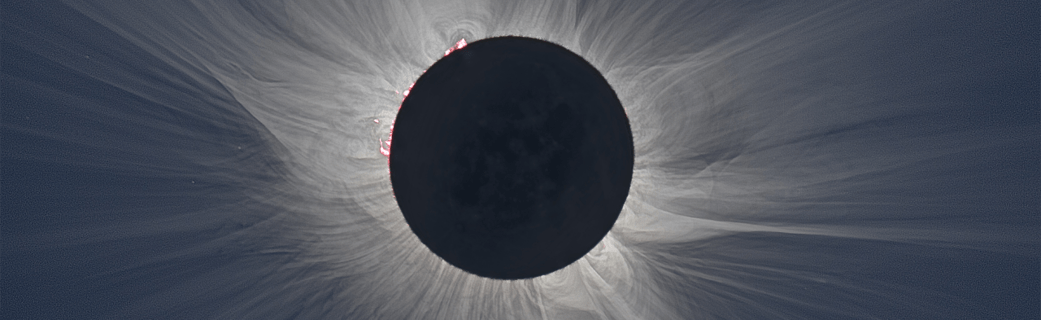
Observations of many solar phenomena have only become accessible to humans relatively recently with the advent of satellites. Prior to that, it simply wasn’t feasible to observe dynamics in the sun’s atmosphere, like solar prominences or coronal mass ejections – the sun was simply too bright to see them – except during the occasional total solar eclipse!
In the 1970s, scientists identified massive bursts of solar plasma as coronal mass ejections. These solar storms are responsible for so-called space weather and, when directed toward Earth, can pose a hazard to technologies on the ground and astronauts in orbit. Scientists initially thought this was the first time such storms had been observed, but they later recognized that photographs and sketches of an 1860 total eclipse revealed that humanity had seen a coronal mass ejection more than 100 years before! Check out the NASA video below for the full story. You can also learn about some of the science that will be going on in today’s eclipse. And, for those in the U.S. today, have a fun and safe time viewing the ecliipse! (Image credit: S. Habbal, M. Druckmüller and P. Aniol, source; video credit: NASA Goddard)

Ionic Sound
So, as we learned previously, sound can actually travel through space. But the recordings our spacecraft send us from other planets or from the edge of the Solar System aren’t really that kind of sound. Acoustic waves require a medium; they travel when particles bump into one another, which, given the sparseness of space, means that only very low frequency sounds can travel. But space has a lot of ions and plasmas – charged particles like electrons and protons – and those particles can interact without physically contacting one another. Instead their motion causes a changing magnetic field that affects nearby particles, which in turn affect more particles (and so on). This transmits what’s called ionic sound. Check out the video above to hear some awesome examples of the ionic sounds of our solar system! (Video credit: The Point Studios)
Where Does the Sun End?
How do you define the edge of our sun? There’s a distinct surface to it, but our star is also surrounded by the corona, an even hotter region of plasma twisted by magnetic fields. The corona is sort of like the sun’s atmosphere. Farther out in the solar system, we receive a constant barrage of charged particles, known as the solar wind, that streams out from the sun. So where does the corona end and the solar wind begin?
Scientists have been studying the flow structure of the solar wind in search of an answer to this question, and they’ve found that there’s a clear transition point about 32 million kilometers from the sun. At this distance, the sun’s magnetic field weakens to the point where it no longer exerts the same hold on the solar particles and they begin to move turbulently, behaving more like a gas than a plasma. With special measurements and image processing, scientists were able to actually see this flow change in the solar wind! (Video/image credit: NASA; research credit: C. DeForest et al.; via FlowViz)


Plasma Flow Control

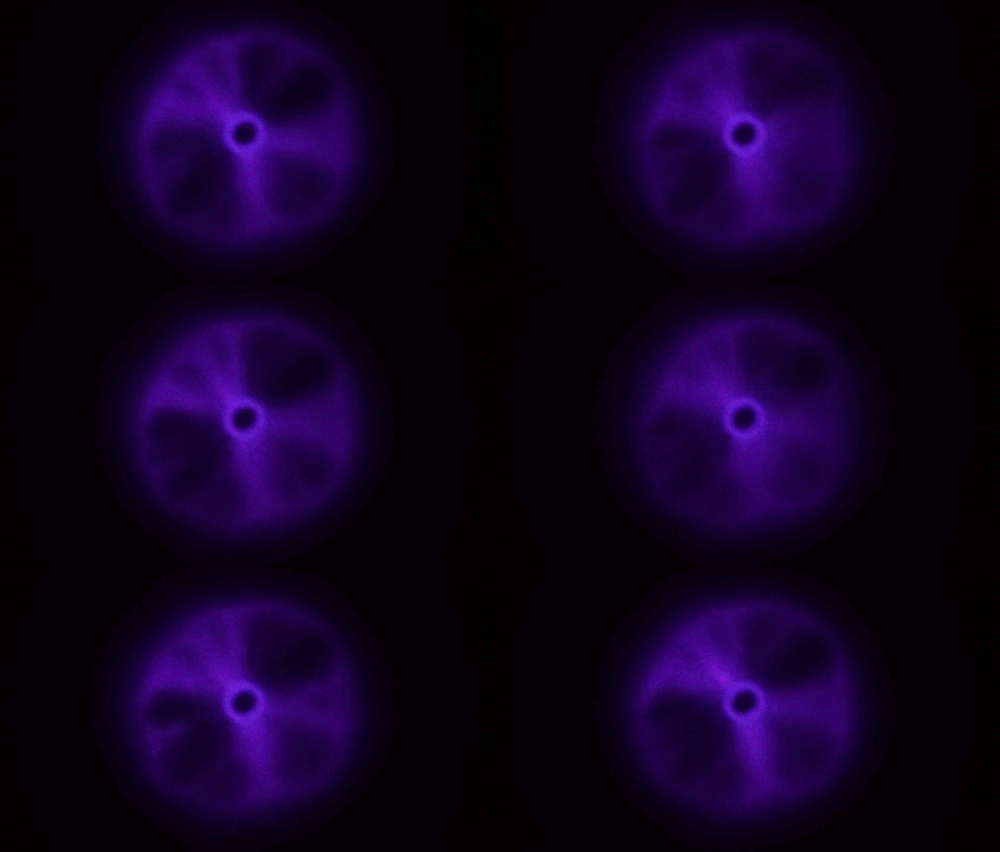
Engineers frequently face the challenge of maintaining control of air flow around an object across a wide range of conditions. After all, wind turbines and airplanes don’t always get to choose the perfect weather. To widen their operating ranges, designers can use active flow control to keep air flowing around an airfoil instead of separating and causing stall. One method of flow control uses plasma actuators on the upper surface of an airfoil. When activated, the plasma actuator ionizes air near the wing surface, producing the purplish glow seen above. That ionized air, or plasma, gets accelerated by the electric field of the device. The acceleration adds momentum to air near the wing surface, which helps it stay attached and flowing smoothly despite the unfavorable pressure conditions near the trailing edge of the wing. Compared to other methods of active flow control, plasma actuation is relatively simple to implement and so is actively being researched for applications in aviation and wind energy. (Image and research credit: I. Brownstein et al., source)

Re-Entry
Atmospheric re-entry subjects vehicles to extreme conditions. At high Mach numbers, the leading shock wave compresses the air so strongly that it reaches temperatures hotter than the surface of the sun. At these temperatures, oxygen and nitrogen molecules in the air dissociate, bathing a vehicle in a plasma of ionized gas molecules. Often these atoms chemically react with the surface materials of a vehicle causing ablation that removes mass from the vehicle while helping protect the vehicle substructure from re-entry heating. Tests in specialized ground facilities like arc-jet plasma tunnels are necessary to develop thermal protection systems capable of shielding a vehicle during hypersonic flight. (Image credit: D. Ponseggi/NASA)