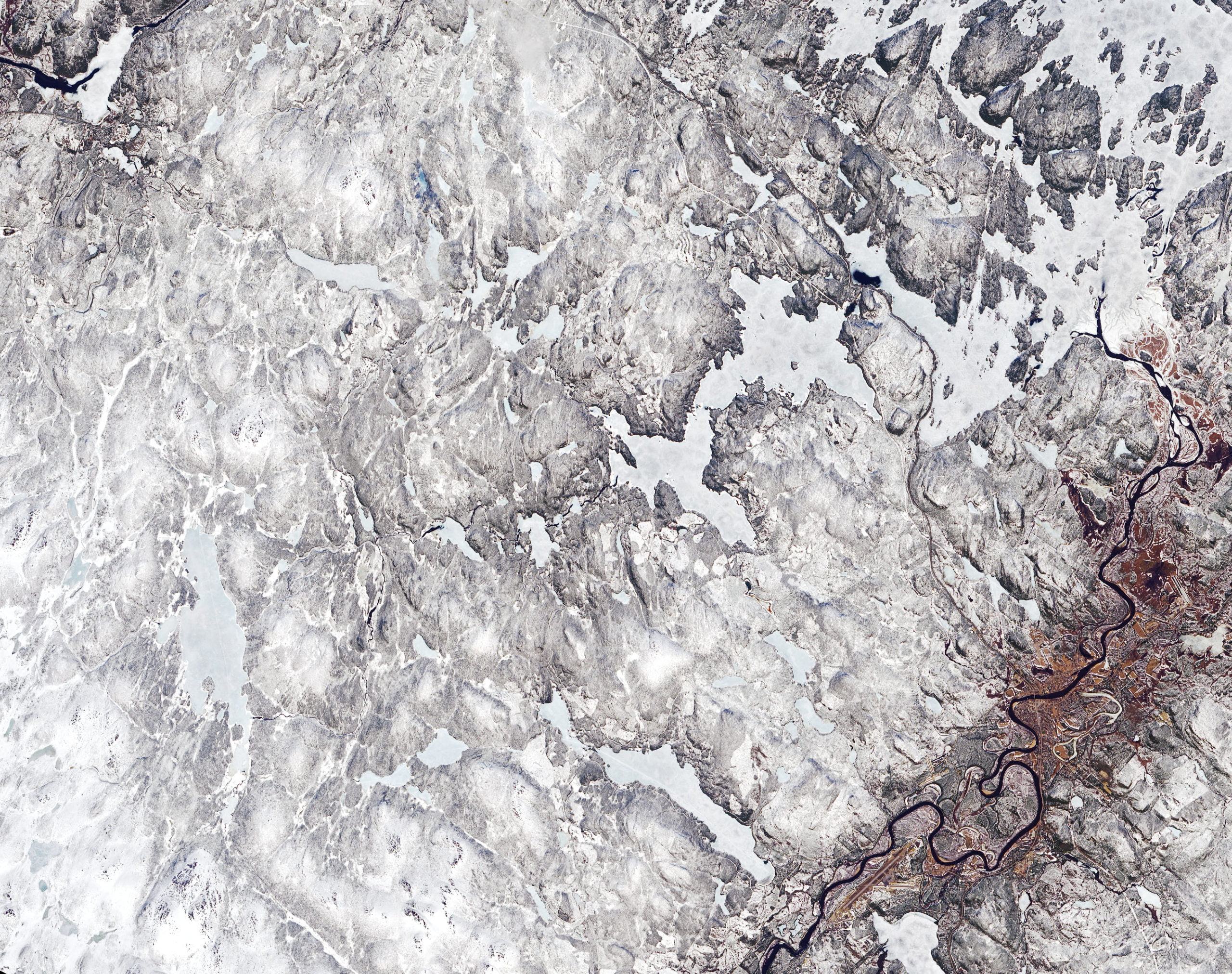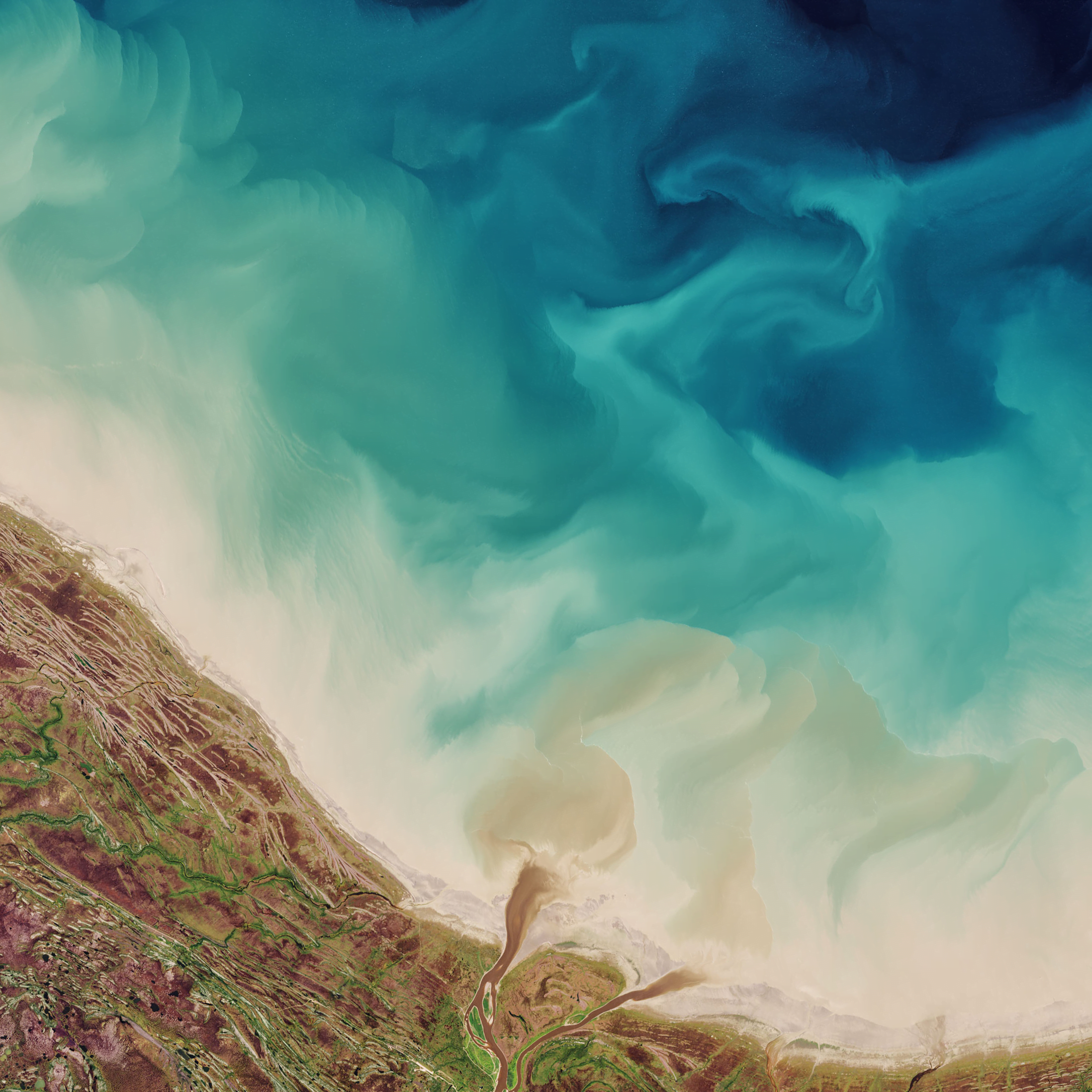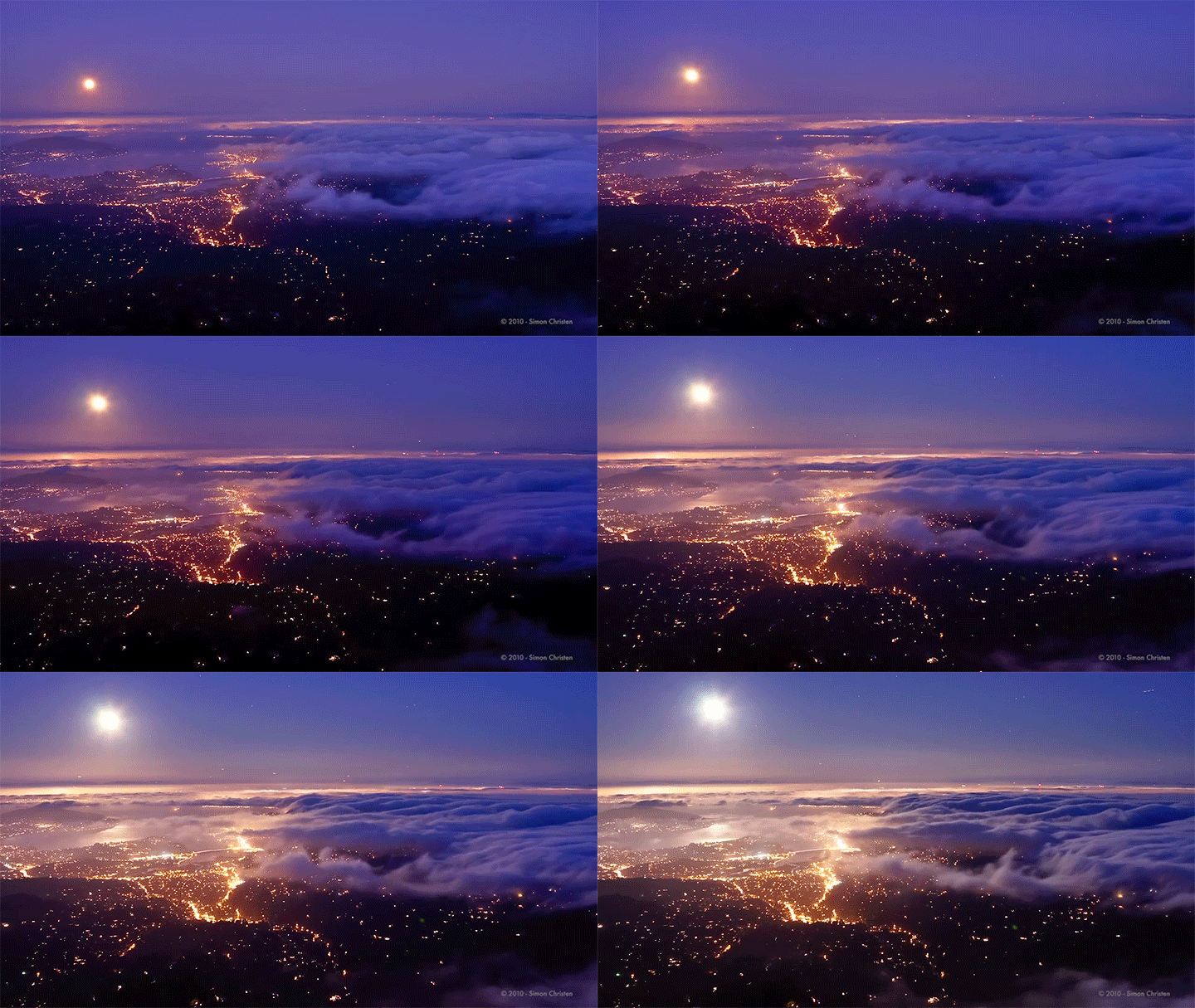
Mike Olbinski’s “Vorticity 3” is a stunning view of storm chasing in the American West. I’ve learned after years in Colorado to always look up because dramatic skies are common here, as is seeing rain falling miles away. Olbinski’s film captures all of that grandeur and more, giving all of us a glimpse inside the incredible storms that mark the summer months in this region. You’ll see spinning supercell thunderstorms, bulbous mammatus clouds, towering cumulus clouds, and more. (Video and image credit: M. Olbinski)
Tag: physics

The Power of a Penguin’s Rectum
When brooding their eggs, penguins can rarely leave the nest, but answering nature’s call is still necessary. To keep the nest clean, Adélie penguins project their feces up to more than a meter away. A new study refines previous calculations on this subject and finds that the penguin’s rectum develops far higher pressures than that of humans.
In one hypothetical calculation, the authors estimate that a human of average height, capable of developing penguin-like rectal pressures, would project excrement more than 3 meters. In the authors’ words, “He/she should not use usual rest rooms.”
Knowing the likely range of contact for penguins is important primarily for zookeepers, who understandably would like to avoid such projectiles. (Image credit: H. Neufeld; research credit: H. Tajima and F. Fujisawa; via phys.org)

The Explosive Vaporization Derby
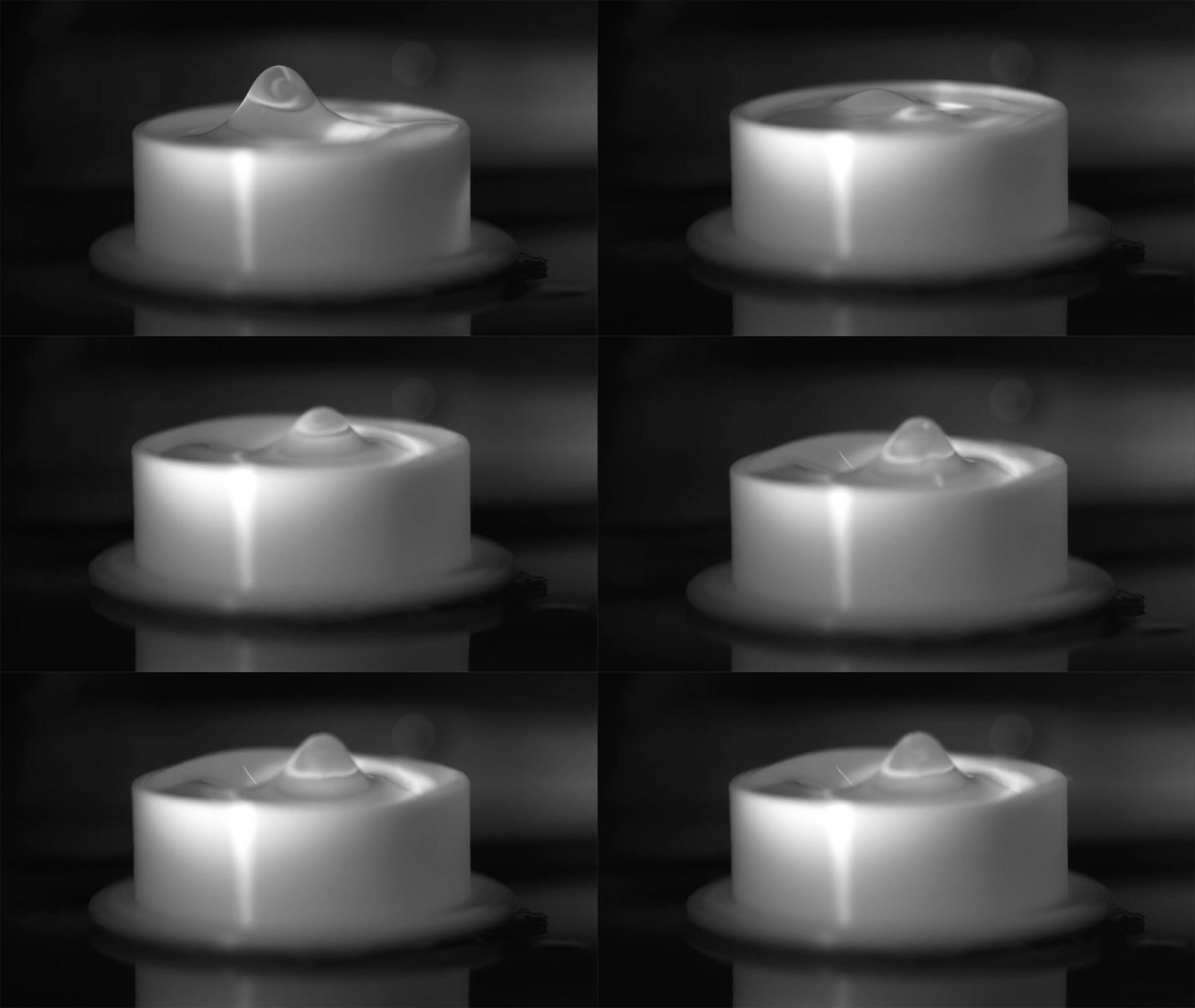
When pressurized, liquids can be superheated to temperatures well above their normal boiling point. When the pressure is released, the liquid will start boiling, sometimes explosively. In this video, researchers explore that dynamic by “racing” a series of liquids against one another. Each racer has been heated to a different temperature beyond the expected boiling point.
The clear winner is the liquid with the highest overheat; as explained in the latter part of the video, beyond a critical overheat temperature, vaporization waves in the fluid enhance the boiling, helping vaporization take place faster. (Video and image credit: K. Jing et al.)

Artificial Microswimmers
Tiny organisms swim through a world much more viscous than ours. To do so, they swim asymmetrically, often using wave-like motions of tiny, hair-like cilia along their bodies. Mimicking this behavior in artificial swimmers is tough; how would you actuate so many micro-appendages? A new study offers a different method: inducing cilia-like waves using magnetic fields.
The researchers’ microswimmers are actually arrays of ferromagnetic particles. The Cheerios effect helps draw the particles together, while magnetic repulsion pushes them apart. Together, these forces help the particles assemble into crystal-like arrays.
To make the particles swim, the researchers shift the magnetic field. All of the outer particles of the array behave like individual cilia. As the magnetic field moves, the cilia-particles move in waves, much like their natural counterparts. Using this technique, the researchers were able to demonstrate both rotational and straight-line (translational) swimming. (Image, research, and submission credit: Y. Collard et al.)

Ghostly Chandeliers

Under a black light, highlighter fluid creates ghostly trails as it drips through water. The vortices that form and break into this chandelier-like shape are the result of density differences between the ink and water. Since ink is heavier than water, it sinks, but as the two fluids flow past, they shear one another, forming elaborate shapes. Formally, this is known as the Rayleigh-Taylor instability. While you may be most familiar with it from pouring cream into coffee, it’s also a key to mixing in the ocean and the explosions of supernovas. (Image credit: S. Adams et al.; via Flow Vis)

Popping an Oil Balloon
Oil and water don’t mix — or at least they won’t without a lot of effort! In this video, we get to admire just how immiscible these fluids are as oil-filled balloons get burst underwater.
Visually, the two bursts are quite spectacular. In the first image, the initial balloon has a sizeable air bubble at the top, which rises even more rapidly than the buoyant oil, creating a miniature, jelly-fish-like plume that reaches the surface first. The large oil plume follows, behaving similarly to the balloon burst without an added air bubble.
The last of the oil in both cases comes from a cloud of smaller droplets formed near the bottom of the balloon. Being smaller and less buoyant, these drops take a lot longer to rise to the surface and remain much closer to spherical as they do. I suspect these smaller droplets form due to the forces created by the fast-moving elastic as it tears away. (Video and image credit: Warped Perception)

Mimicking Insect Flight
There’s an oft-repeated tale that science cannot explain how a bumblebee flies. And while that may have been true 80 years ago, when engineers assumed they could apply their knowledge of fixed-wing aircraft to insects, it’s very far from the truth now.
Being small, insects use aerodynamic tricks that are very different from the physics used by aircraft or even birds. Insects like fruit flies use a forward-and-backward sweeping motion at a very high angle of attack as they flap. This motion creates a vortex at the leading edge of the wing that provides the lift keeping the insect aloft. It still requires fast reflexes — most insects flap their wings hundreds of times a second — but the mechanism is robust enough to keep insects aloft and maneuverable. (Image credits: Robobee – K. Ma and P. Chirarattananon, simulation – F. T. Muijres et al., illustration – G. Lauder; via APS Physics)

Branching Light with Soap Bubbles
By shining laser light through soap bubbles, researchers have demonstrated branching flow in light for the first time. This branching occurs when waves travel through a disordered medium where the typical size of the disordered regions is larger than the wave’s length. Previously, scientists had seen evidence of this phenomenon in electrons, sound waves, and even ocean waves.
Soap bubbles serve as an excellent platform for branching in light because their exceptionally thin film varies in thickness thanks to the interplay of buoyancy, Marangoni effects, and evaporation. It’s also comparable to — but still slightly larger than — the wavelength of light. The experiment is far from simple, though. Lining the laser up with the soap bubble is tough, especially when your bubble is likely to pop! (Video credit: Nature; research credit: A. Patsyk et al.; submitted by Kam-Yung Soh)

“Waves”
The “Waves” installation by artist Daniel Palacios appears deceptively simple, just a rope mounted between two motors. But once the motors start spinning, it is anything but. The installation shifts in response to those around it, creating varying numbers of steady, standing waves or even wildly chaotic ones that whistle through the air. It’s a neat visualization of one of the most commonly-measured quantities in physics: the changes in a wave with time. (Video and image credit: D. Palacios; via Flow Vis)