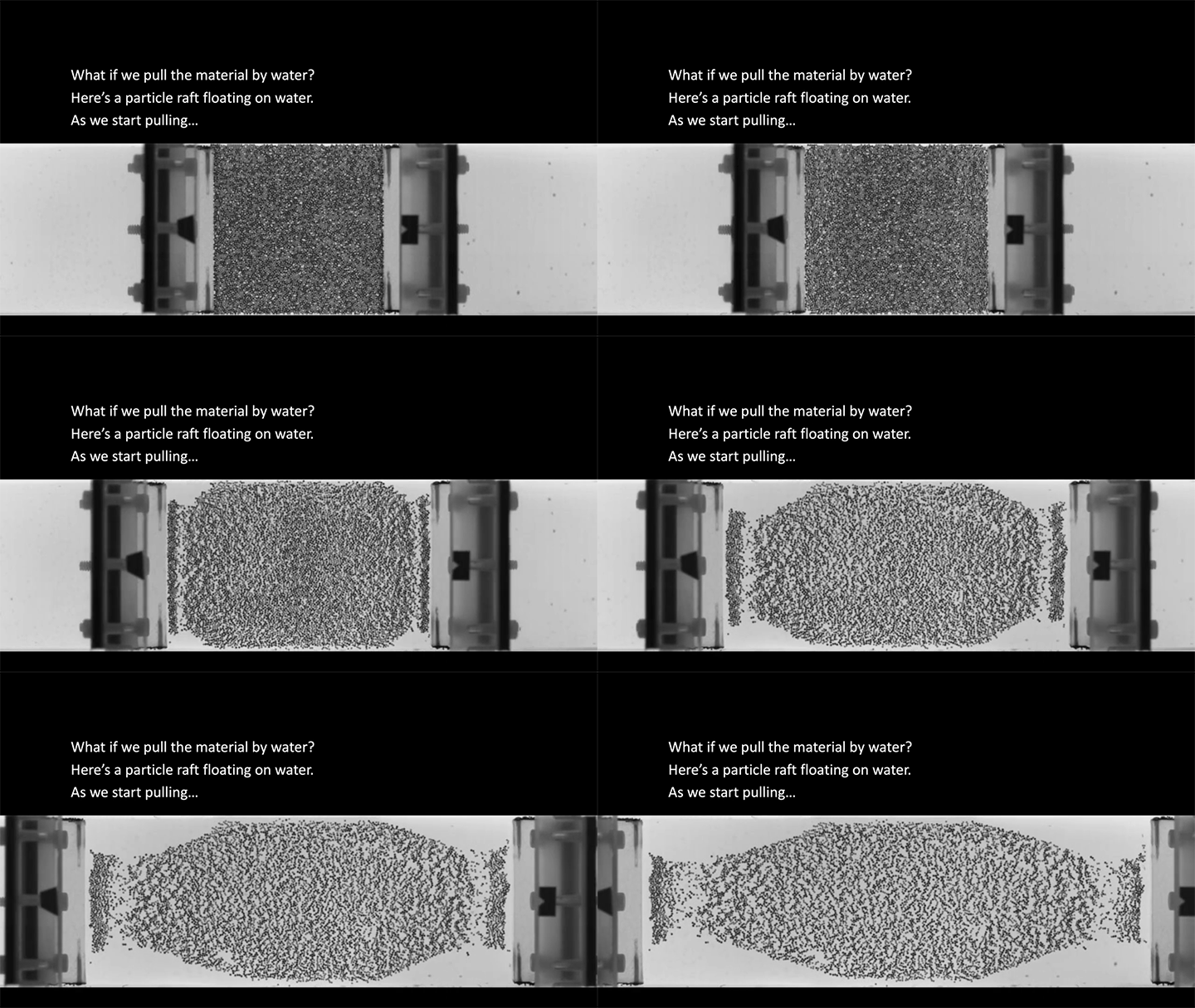
A raft of particles floating on water has some natural cohesion from particle attraction and capillary action. But when the raft is pulled apart, what happens? Does it break cleanly in one spot? Does it stretch and deform? That’s what this video explores. It turns out that the speed you pull the raft at determines how it holds together. Every particle cluster has a preferred relaxation rate, and by choosing the pulling speed, you determine which relaxation rate — and therefore cluster size — can survive most effectively. (Image and video credit: K. Tô and S. Nagel)
Colorful dyes falling through water form chandelier-like, branching shapes. These formations are the result of a slight density difference between the heavier dyes and the surrounding water. As the dye falls, Rayleigh-Taylor instabilities cause the mushroom-like blobs and their branches. With creativity and photographic skill, Mark Mawson turns these ephemeral shapes into bold liquid sculptures, frozen in time. See more of his work in these previousposts, on his website, and on Instagram. (Image credit: M. Mawson)
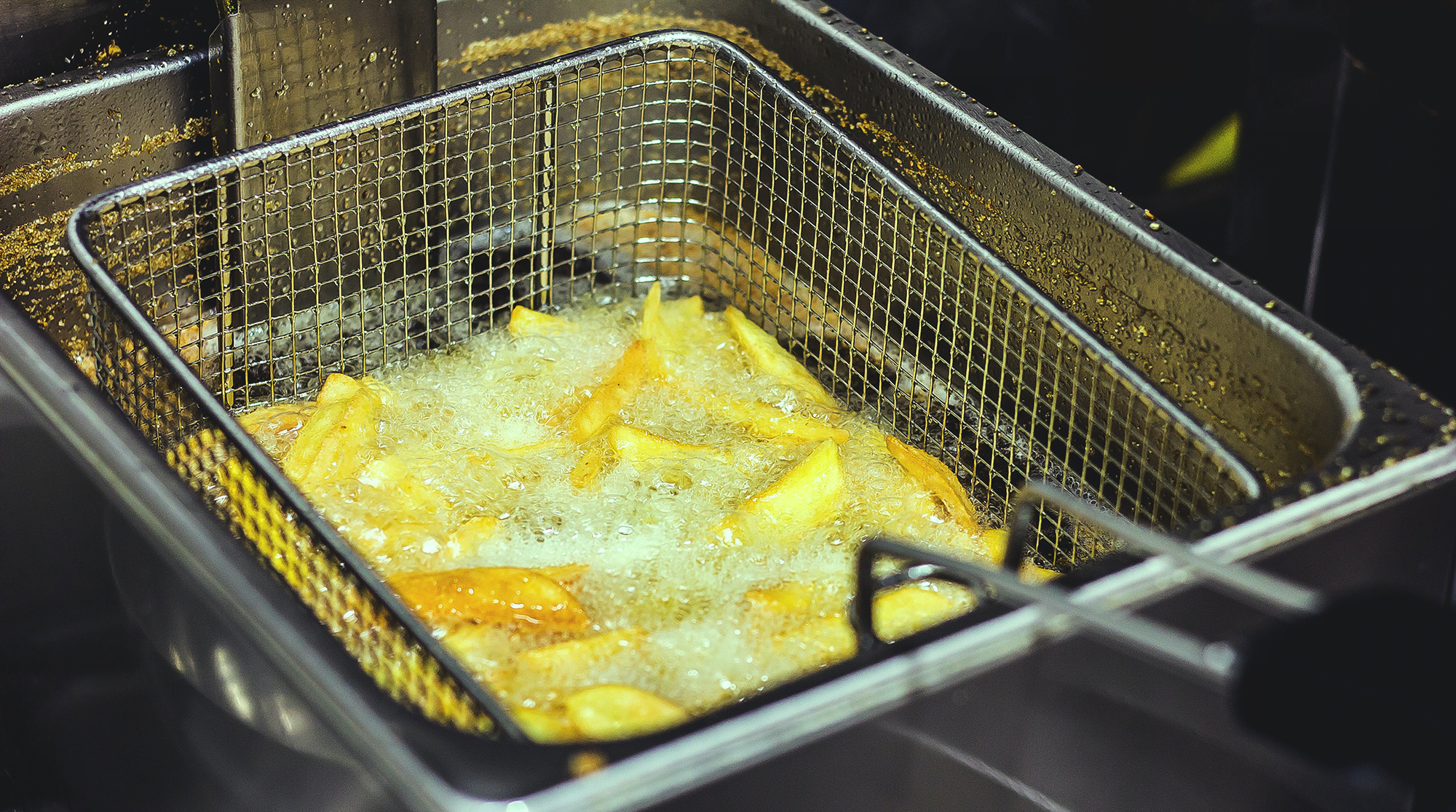
The sizzle of frying food is familiar to many a cook, and that sound actually conveys a surprising amount of information. In this study, researchers suspended water droplets in hot oil and observed their behavior, both with high-speed video and with microphones. They found that these vaporizing drops created three types of cavities in the oil: an exploding cavity that breaks the surface, an elongated cavity that remains submerged, and an oscillating cavity that breaks up well below the surface. All three cavities flung oil droplets upward, and all three were acoustically distinct from one another. That means, as the authors suggest, that it might be possible to measure the aerosol droplets generated during frying simply by listening! (Image credit: fries – W. Dharma, others – A. Kiyama et al.; research credit: A. Kiyama et al.; via Cosmos; submitted by Kam-Yung Soh)
In an ongoing series, Practical Engineering is looking at how civil engineers deal with sewage and wastewater. In this video, Grady looks at how wastewater gets treated to remove contaminants. Where possible, engineers use gravity to do this job, building infrastructure that slows the flow down and lets gravity make heavier particles settle out. Of course, sometimes gravity alone doesn’t act quickly enough, in which case engineers use a little extra help in the form of chemicals that can neutralize particles’ electric charge and help them clump together and settle faster. Check out the full video for a tour of how wastewater gets processed. (Image and video credit: Practical Engineering)
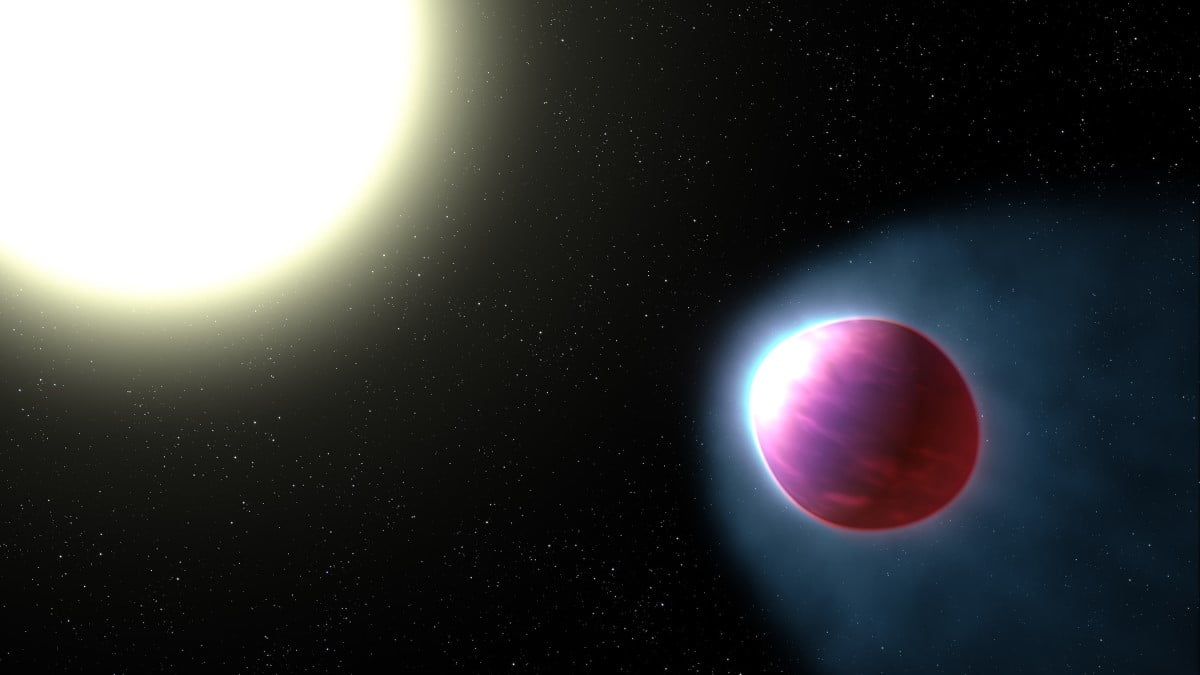
Many of the exoplanets we’ve observed so far are extreme environments. WASP-121b is known as a hot Jupiter, a gas giant so close to its star that it orbits in just 30 hours. The exoplanet is tidally-locked to its star, meaning that one side always faces toward the star and the other faces away. This constant sunlight makes the daytime side of the planet hot enough to vaporize metals. A recent study combined observations of the exoplanet with numerical simulations to model both the daytime and nighttime atmosphere of the exoplanet. The results are pretty wild. The authors found evidence of 18,000 km/h winds that blow hot gases from the dayside to the nightside, where temperatures cool enough for some metals — primarily corundum — to rain out of the atmosphere. Given the trace amounts of other elements available in the atmosphere, the authors posit that the nightside of the planet may have rainfall of liquid rubies and sapphires. (Image credit: NASA/ESA; research credit: T. Mikal-Evans et al.; via Physics World)
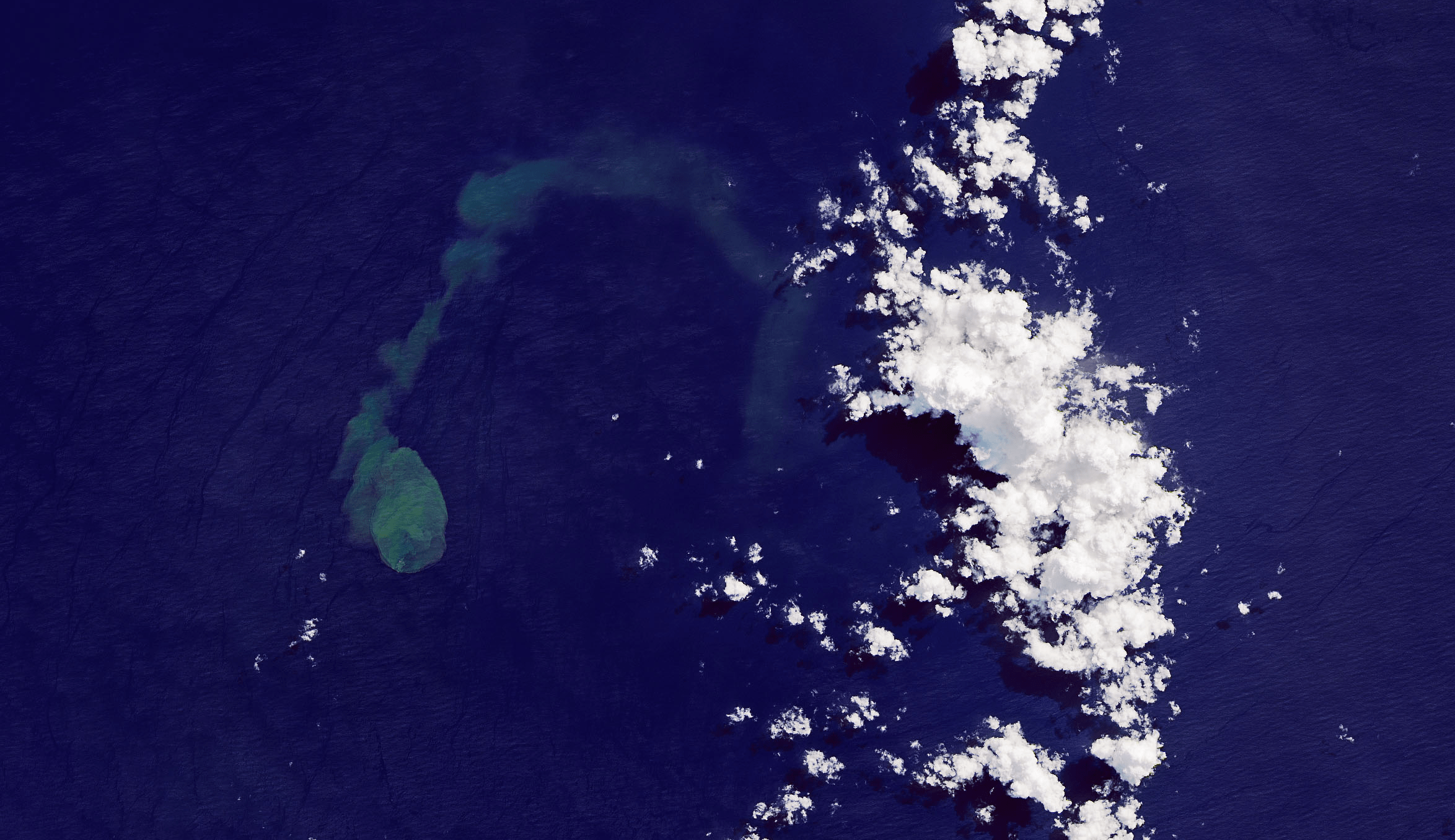
The green-blue plume on the left of this satellite image is an eruption from Kavachi, an underwater volcano in the Solomon Islands. Kavachi’s crest is currently estimated to lie 20 meters below the surface, with its base at a depth of 1.2 kilometers. Eruptions are quite common at the volcano, but that doesn’t stop wildlife — like hammerhead sharks! — from making the crater their home. Over the last century, Kavachi’s eruptions have repeatedly formed small islands at the surface, but they were quickly eroded away by wave action. (Image credit: J. Stevens/NASA/USGS; via NASA Earth Observatory)
In “Life and Chaos,” artists Roman Hill and Paul Mignot shot fluid flows live in a 1 cm x 1 cm square, then projected those images across 3,300 square meters. There’s something incredible about art on this immersive scale. It is literally impossible for any one visitor — or even the artists themselves — to experience the full piece; each person, by definition, can only take in a small part of the whole. That makes it all the more incredible to derive such a piece from a tiny, tiny canvas. As venues for this sort of immersive art spread, I can only imagine the amazing art we’ll see! (Image and video credit: R. Hill and P. Mignot)
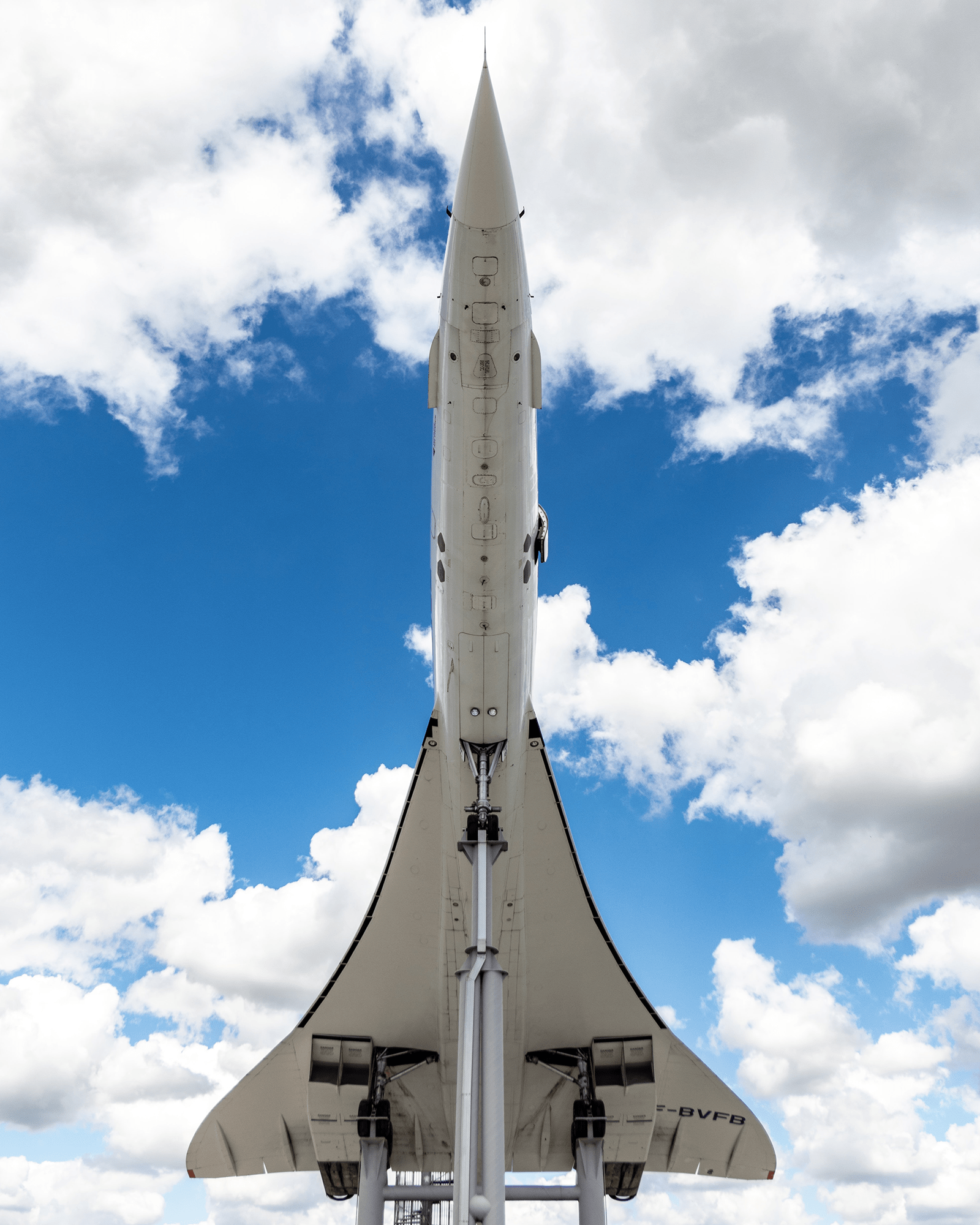
In the days of the Concorde — thus far the world’s only supersonic passenger jet — noise complaints from residents kept the aircraft from faster-than-sound travel except over the open ocean. With many pursuing a new generation of civil supersonic aircraft, researchers are looking at how those sonic booms could interact with those of us on the ground.
In this study, researchers simulated the shock waves from aircraft interacting with single and multiple buildings on the ground. They found that the presence of a building increases the perceived sound level of the boom by about 7 dB at the most. But the most interesting results are what happens between multiple buildings.
If the street between buildings is wide enough, they each act independently, as if they were single buildings. But for narrower streets, the acoustics waves reflect and diffract between the buildings, creating a resonance that makes the acoustic echoes last longer. The effect is especially pronounced for a sonic boom traveling across a series of buildings, which mimics the layout of a dense city full of urban canyons. (Image credit: Concorde – M. Rochette, simulation – D. Dragna et al.; research credit: D. Dragna et al.)
Acoustic waves reflect and propagate through 2D urban canyons with widths of 10 meters (top), 20 meters (middle), and 30 meters (bottom).
With oceans warming, there’s more energy available to intensify hurricanes. And while our weather models have gotten better at predicting where hurricanes will go, they’re less good at predicting hurricane intensity, largely because capturing real data from storms is so difficult and dangerous. To address that shortfall, engineers build facilities like the one seen here, which simulates hurricane wind and water conditions so that scientists can study their interaction and better understand storm physics. Check out the full Be Smart video for a tour of the facility and a look at their work. (Image and video credit: Be Smart)
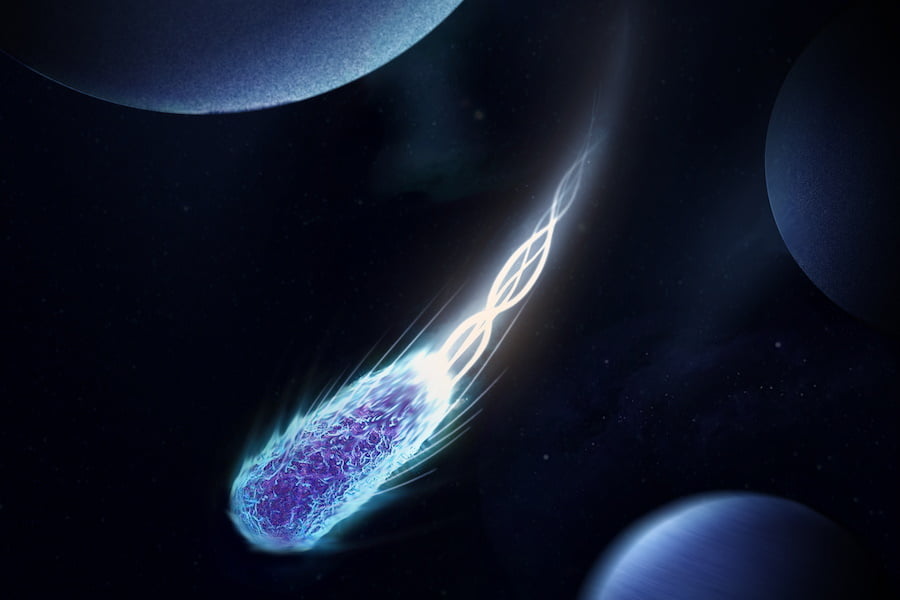
Bacteria like E. coliswim using flagella, helical filaments attached to biological motors on their bodies. By rotating the flagella, the bacterium generates thrust that propels it forward. Oddly, though, researchers observed decades ago that bacteria actually travel faster through complex fluids — like those with polymers or particles in them — than they do through simple fluids like water. A new study using colloids — small particles suspended in a liquid — shows why.
The researchers compared bacteria swimming through polymer-filled fluids and colloidal fluids and found strong overlap both qualitatively and quantitatively. They observed, for example, that bacteria swim in straighter lines — they wobble less — in complex fluids. The reason, according to the authors, is the hydrodynamic influence of the added materials. Essentially, when a bacterium swims near a colloid or piece of polymer, the particle exerts a torque on the microswimmer that reduces its wobble and enhances its speed. (Image credit: Cheng Research Group; research credit: S. Kamdar et al.; via Physics World)