Tag: fire

  • Featured Video Play Icon

    Fire From Below

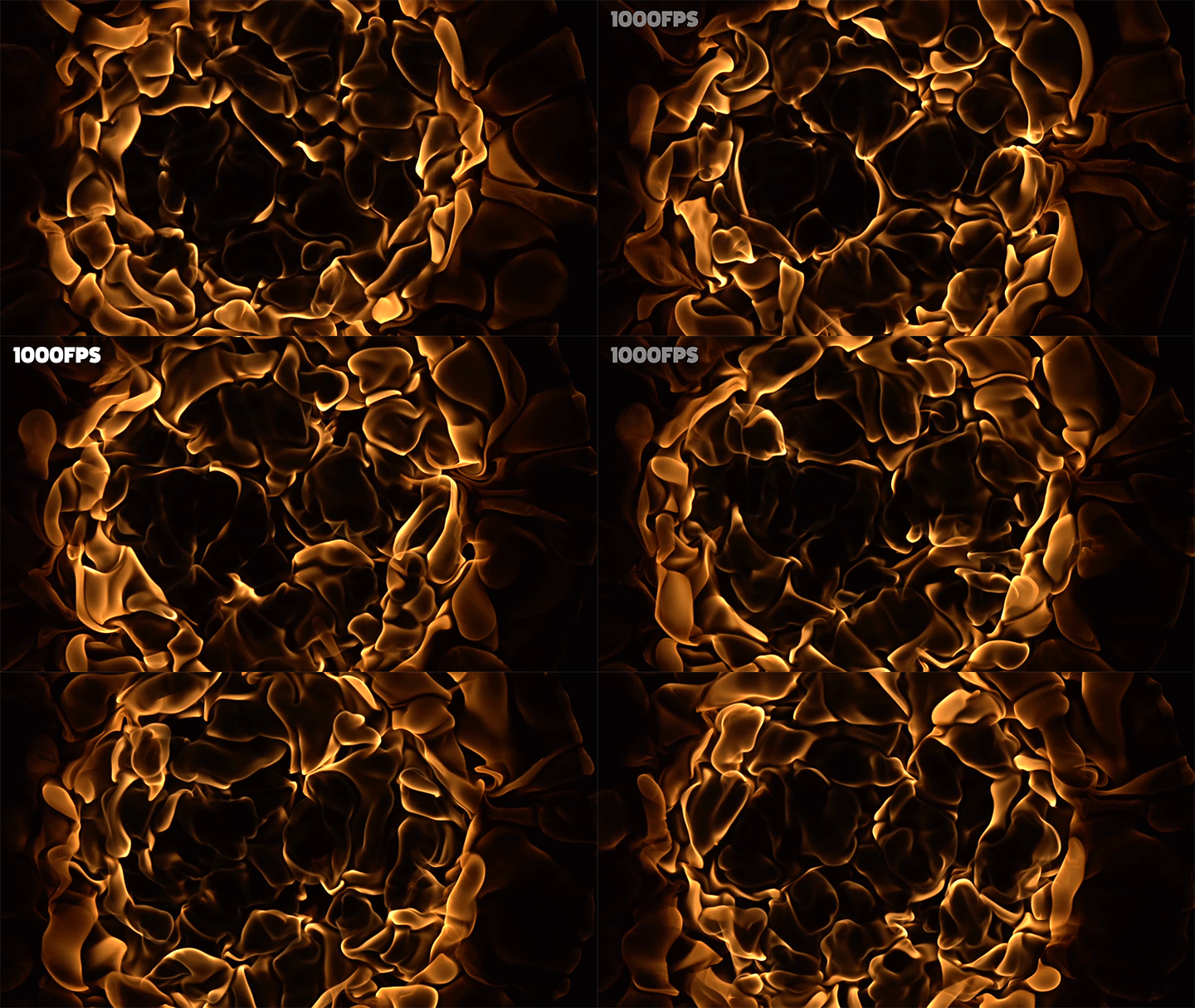
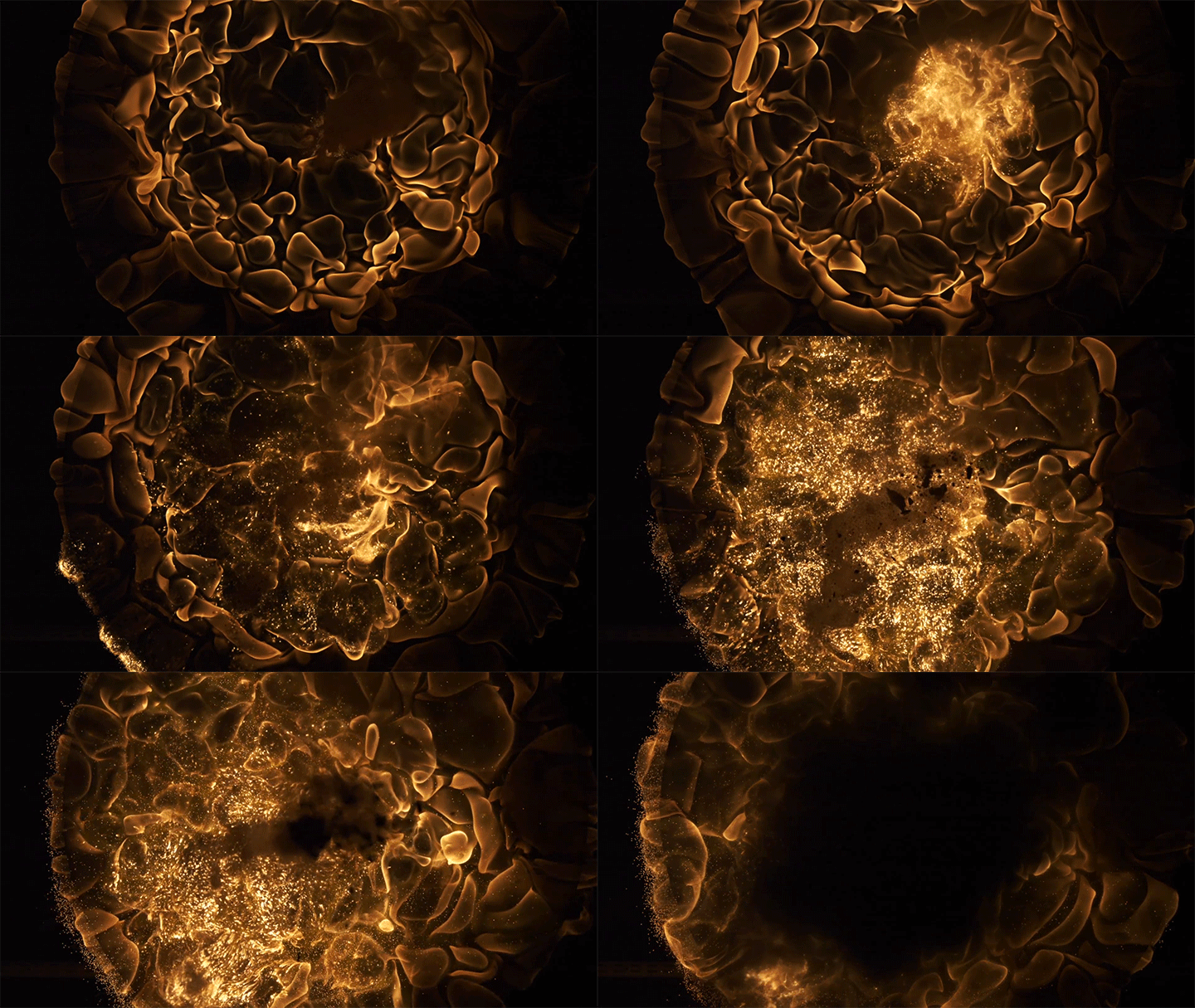
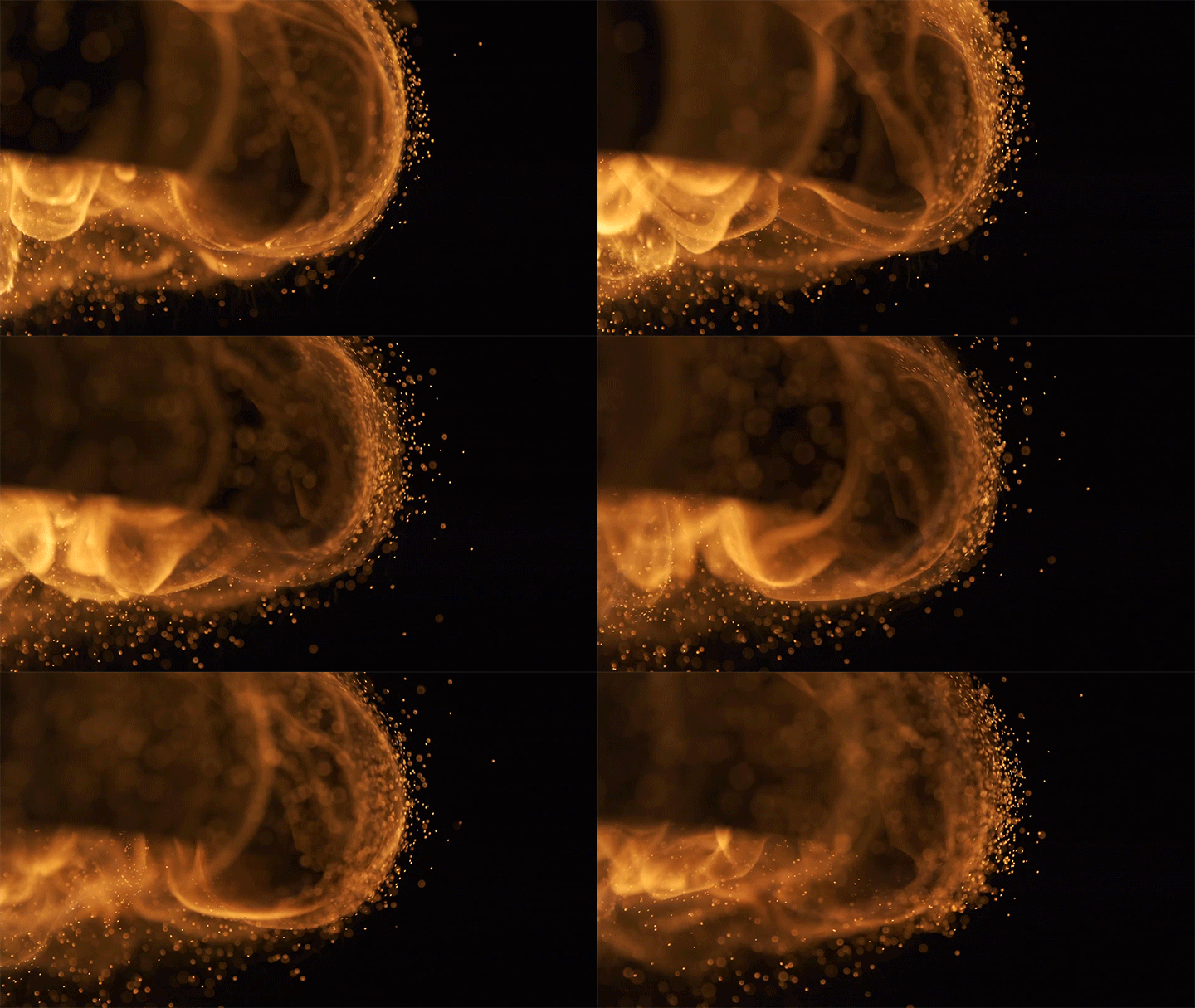
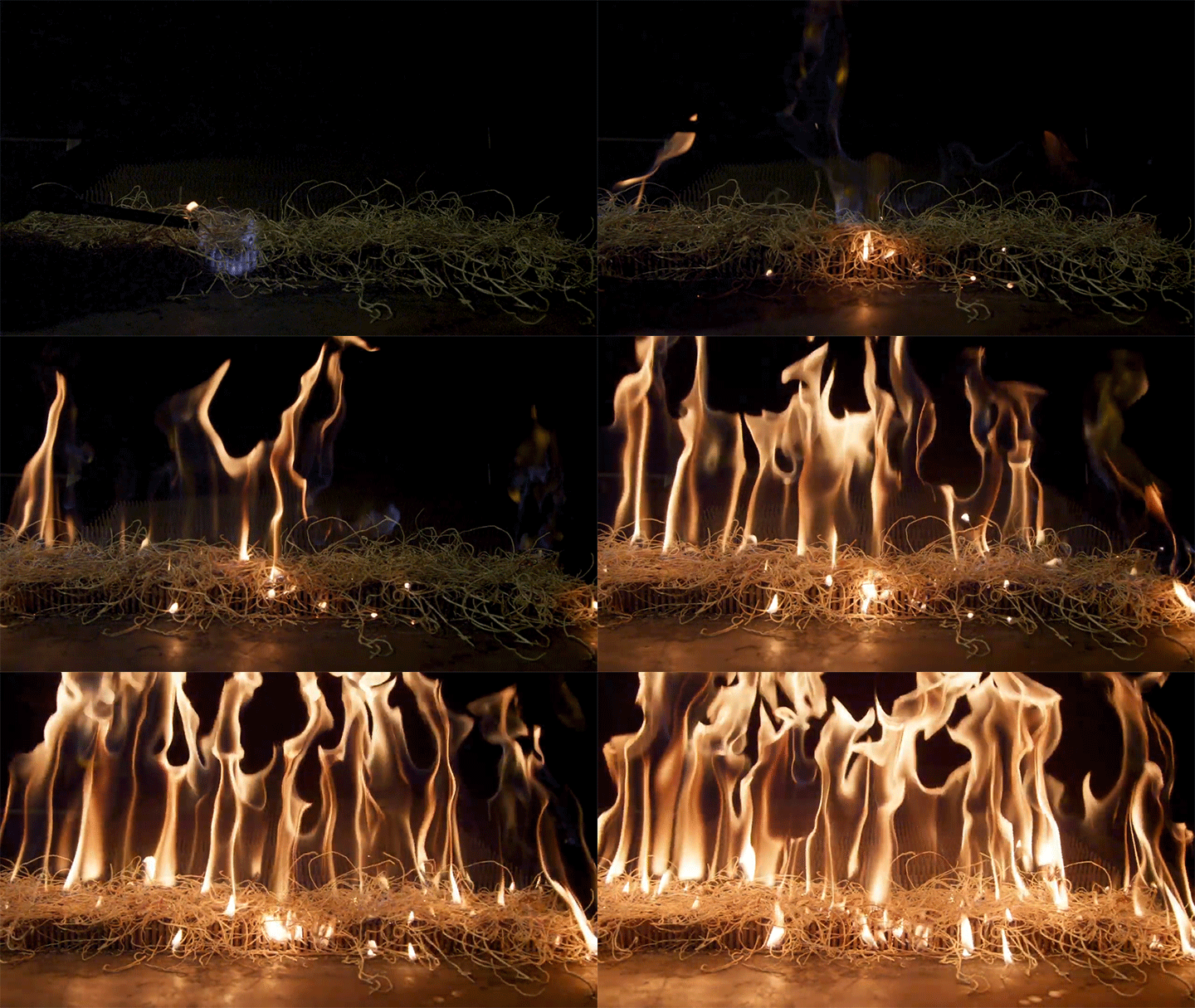
    A slight change in perspective can do wonders. In this video, the Slow Mo Guys look at a burning flame from below. They accomplish this by mounting a gas grill upside-down. This small change means that buoyancy can’t simply lift heat and exhaust gases away from the flame source. Instead, the flow pushes out and around the edges of the grill.

    The views are, as always, amazing. The billowing flames are mesmerizing–often closer to laminar than turbulent. And the added spectacle of cinnamon combusting in the later segments really does make for the kind of visuals you’d expect in a sci-fi movie. (Video and image credit: The Slow Mo Guys)

    Fediverse Reactions
  • Ember Bursts Spread Wildfires

    Ember Bursts Spread Wildfires

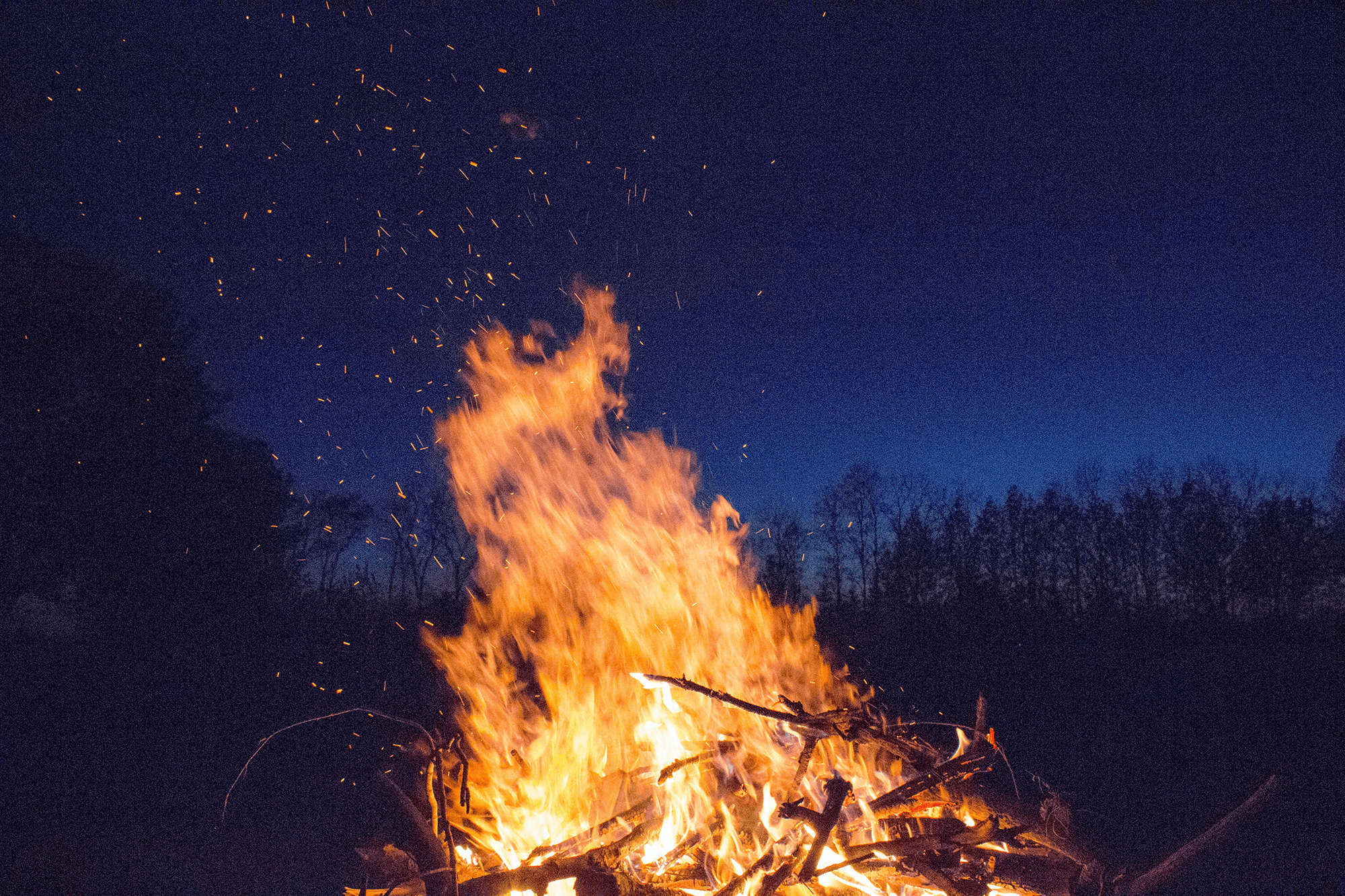
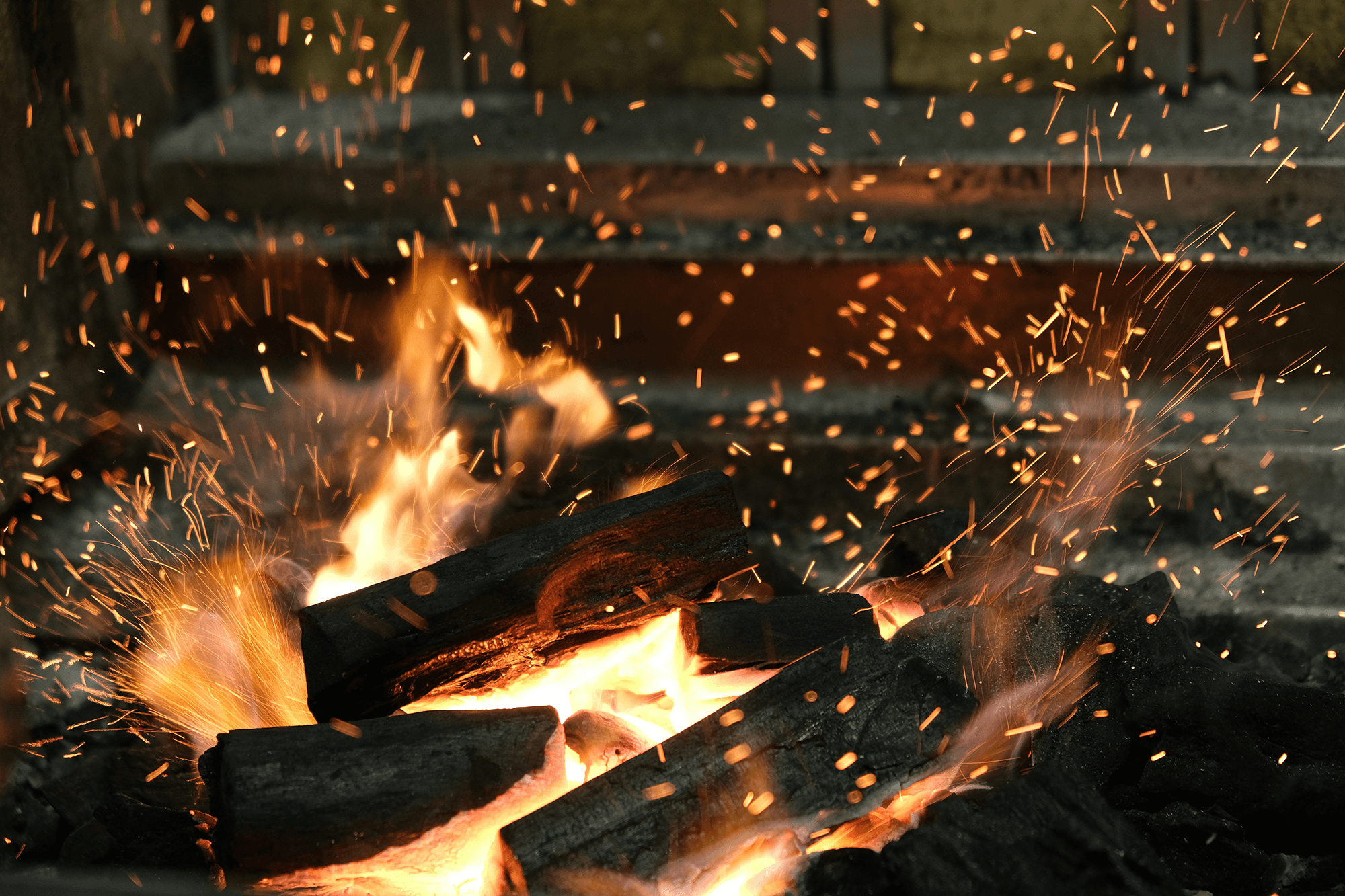
    In a wildfire, a burst of embers lofted upward can travel far, starting a new spot fire when they land. Although large ember bursts only happen occasionally, researchers found that these events — with orders of magnitude more embers than usual — play an outsized role in wildfire spread. In their experiments, researchers observed a bonfire with high-speed cameras to track ember bursts, and they also collected fallen embers from around their fire. They found large (>1 mm) embers could travel much further than current fire models predicted, carried by rare but powerful updrafts that coincided with large bursts. Their work indicates that wildfire models need a better way to simulate these kinds of events that are far from the fire’s baseline state but which occur often enough and with enough impact that they can spread fires. (Image credit: C. Cook; research credit: A. Peterson and T. Banerjee; via Physics World)

  • Featured Video Play Icon

    Burning Virtual Forests

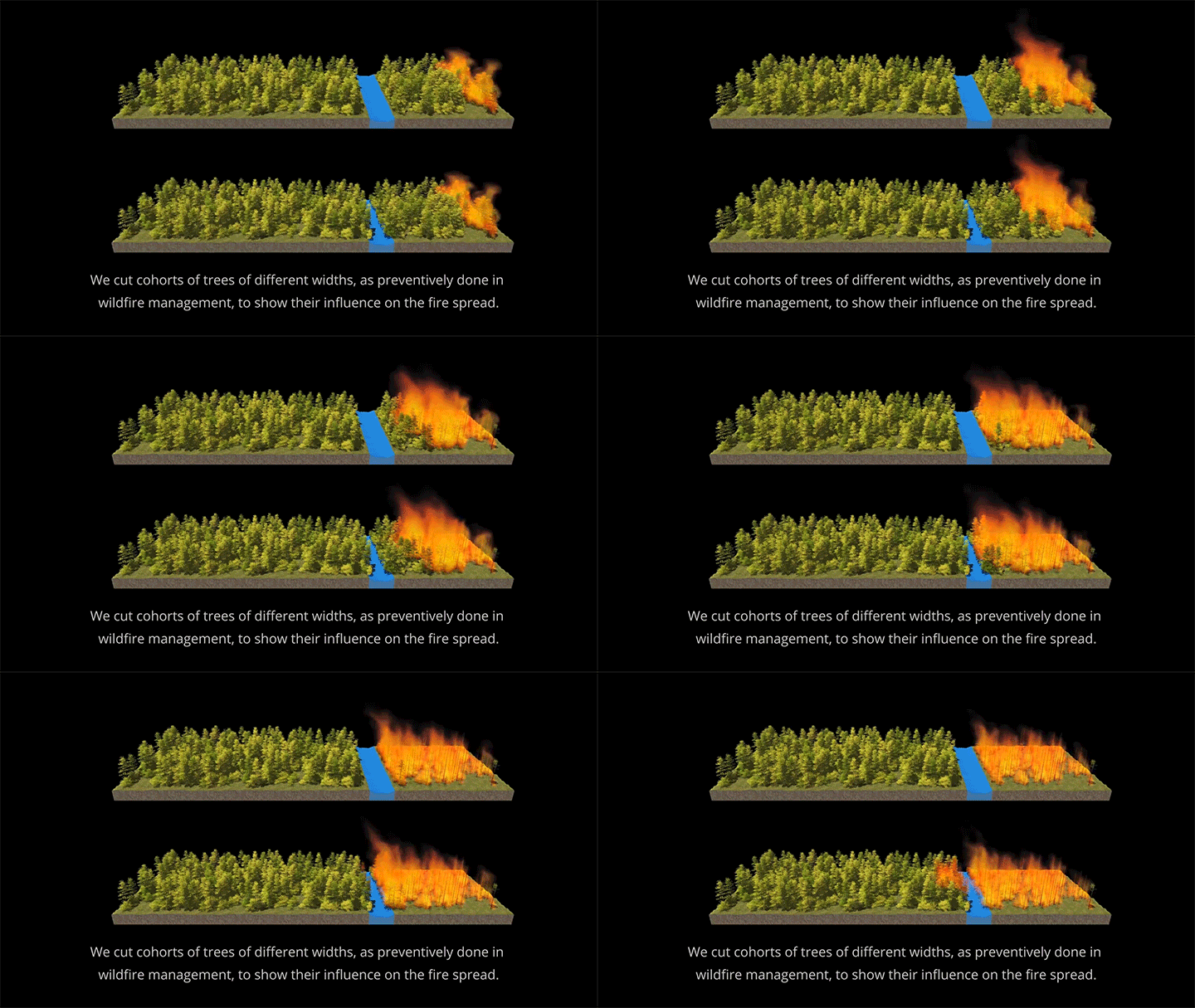
    Wildfires are growing ever more frequent and more destructive as the climate crisis worsens. Unfortunately, simulating and predicting the course of these fires is incredibly difficult, requiring a combination of ecology, meteorology, combustion science, and more. To handle so many variables, model builders often turn to statistics that allow them to simulate an entire forest but at the cost of representing individual trees as a few pixels or a cone.

    In this video, researchers show a new wildfire simulation based on a computationally efficient but more realistic depiction of trees. With individual, three-dimensional trees, the simulation can capture effects that are otherwise hard to examine – like the difference in burn rate for coniferous and deciduous forests and the likelihood that a fire can jump a firebreak of a given size. Their weather, fire, and atmospheric models are even able to simulate the birth of fire-generated clouds! Check out the full video to see more and then head over to their site if you’d like to dig into the methodology. (Video and research credit: T. Hädrich et al.; see also)

  • Featured Video Play Icon

    Inside the Fire Lab

    Fire plays an important role in nature, one with which humanity must live without controlling fully. After several disastrous historic wildfires in the American West, the U.S. Forest Service established its own fire lab, where research foresters can study flames firsthand. This video takes us inside the Fire Lab for a look at the facilities and people responsible for helping us better understand this fundamental force of nature. (Video and image credit: Gizmodo + Atlas Obscura)

  • Understanding Wildfire

    Understanding Wildfire

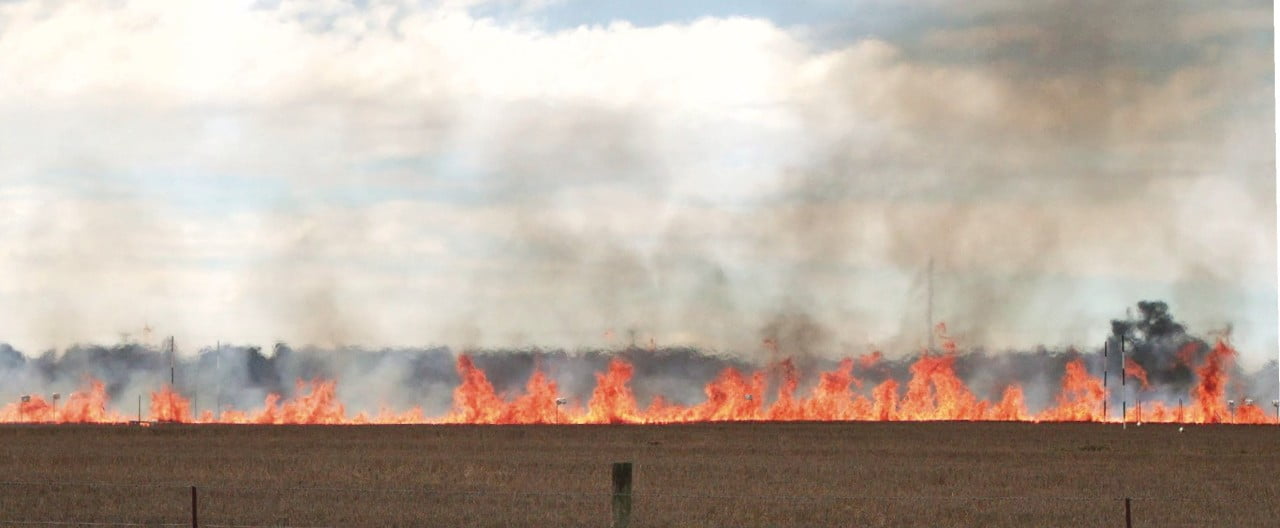
    Wildfires are an ongoing challenge in the western United States, where droughts and warmer conditions have combined with a century of fire suppression to form perfect conditions for monstrous fires. It’s long been understood that ambient winds can drive spreading fire, but the connection between wildfire and wind is more complicated than this.

    The heat of a fire drives buoyant air to rise, creating tower-like updrafts in a flame front. We see this both in the shape of the grass fire above, and in the wind vectors of a simulated grass fire in the lower image. Between those towers are troughs where cooler ambient wind is drawn in to replace the rising air. How a fire spreads will depend on the speed, direction, and temperature of these winds. A hot wind fed by the fire’s heat will raise the temperature of fuel in unburned areas, bringing it closer to ignition. In contrast, cooler ambient winds can hinder a fire by keeping nearby grass and twigs too cool to ignite. (Image credit: fire – M. Finney/US Forest Service; simulation – R. Linn; research credit: R. Linn et al.; for more, see Physics Today)

  • Featured Video Play Icon

    Fiery Backdraft

    Combustion is ultimately a chemical reaction, and like any chemical reaction, it requires the right balance of ingredients. The only way to completely exhaust the reaction is to have the perfect amount of fuel (i.e. stuff to burn) and oxidizer (i.e. oxygen). When those ratios don’t match, the reaction can slow down or even appear to end, but that doesn’t mean a fire’s gone out.

    Firefighters face one of the dangerous consequences of this situation in the form of backdrafts. When a fire has been burning in a sealed container and exhausted its oxygen supply, it can get extremely hot even if the flames seem to have died down. When oxygen is added back by opening a door or window, the fire can react explosively, as the Slow Mo Guys demonstrate above. The good news is that backdrafts are relatively rare and there are steps you can take to avoid them. (Image and video credit: The Slow Mo Guys)

  • Featured Video Play Icon

    Tornadoes, Fire, and Ice

    It’s time for another look at breaking fluid dynamics research with the latest FYFD/JFM video! This time around, we tackle some geophysical fluid dynamics, like listening to the sounds newborn tornadoes make below the range of human hearing; studying how melting ice affects burning oil spills; and how salt sinking from sea ice affects the ocean circulation. Check out the full video below for much more! If you’ve missed any of the previous videos in the series, you can check them out here. (Image and video credit: T. Crawford and N. Sharp)

  • Putting Out Fires

    Putting Out Fires

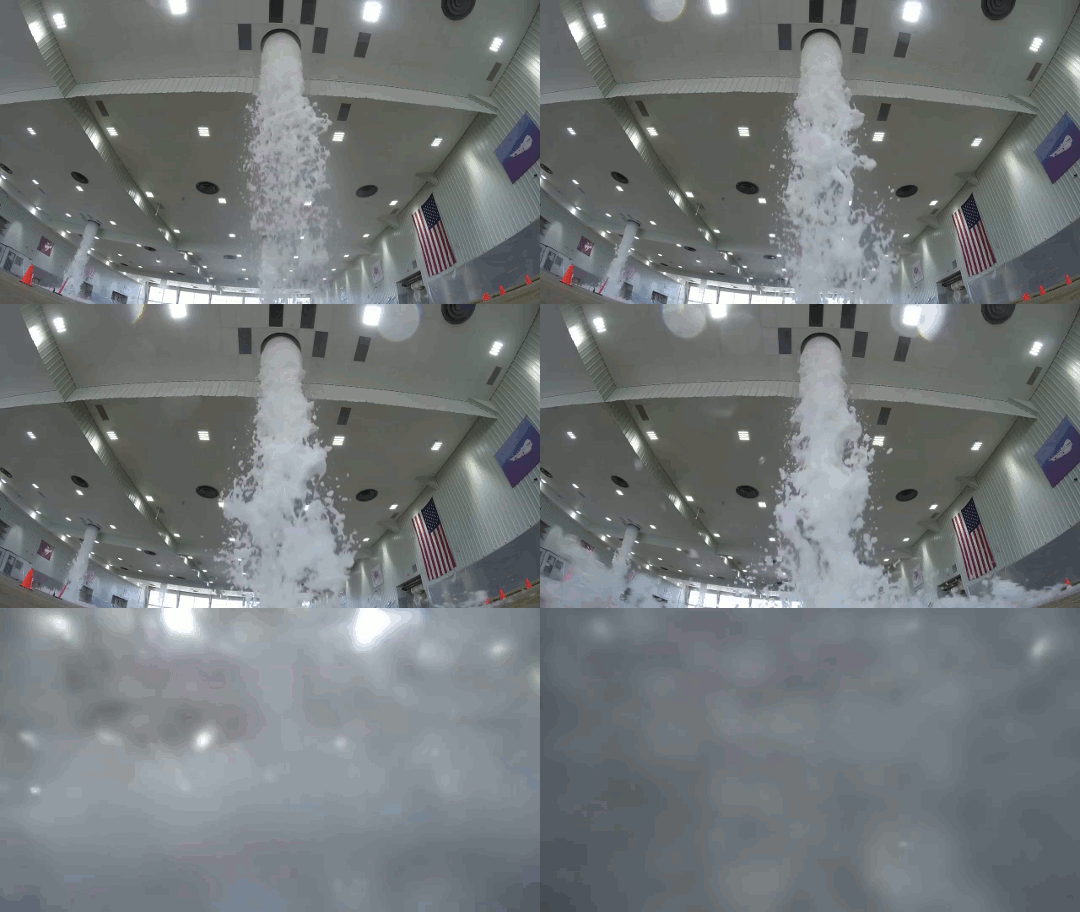
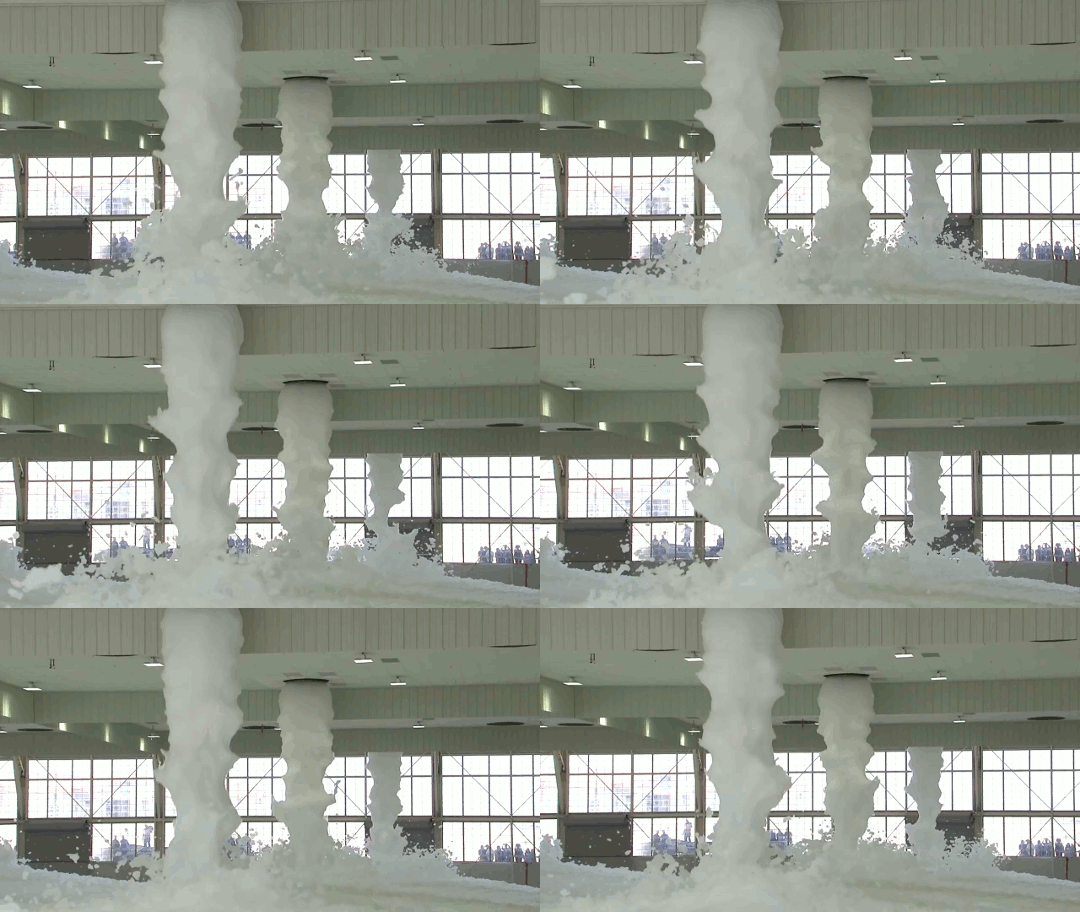
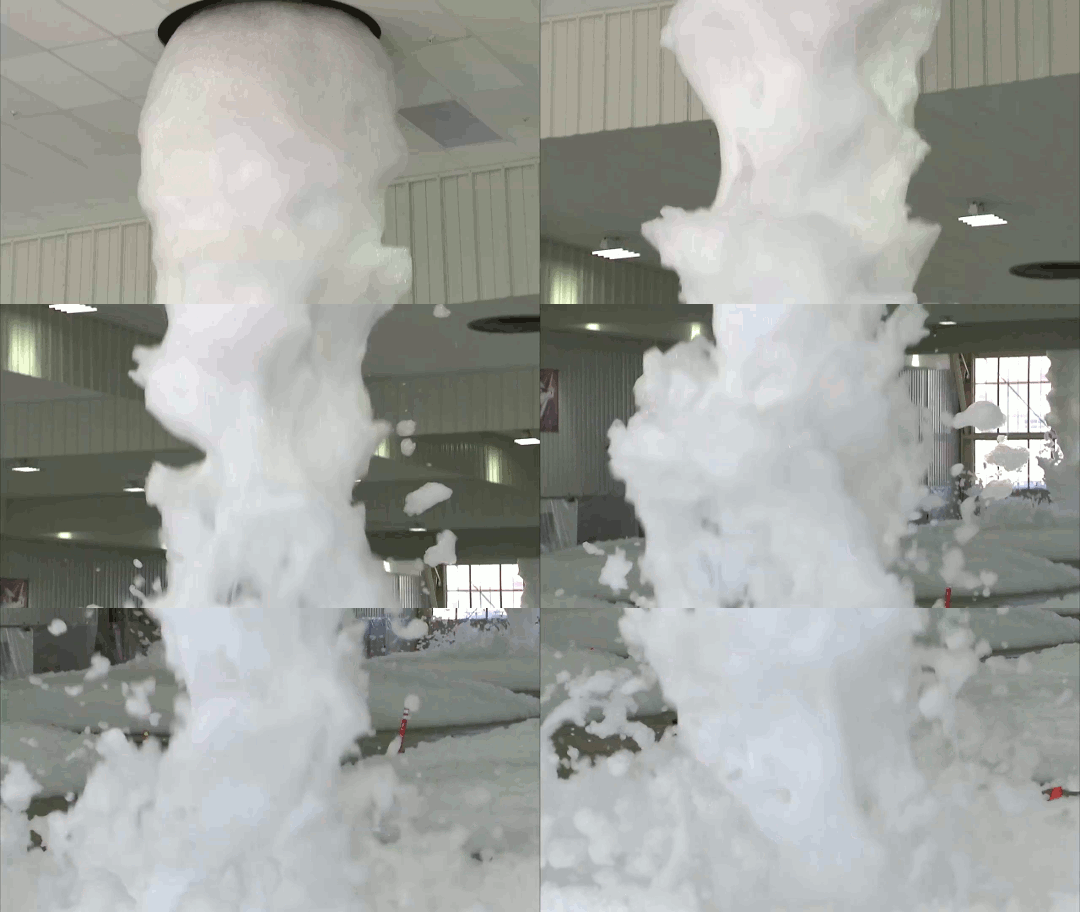
    Fires in large, open spaces like aircraft hangers can be difficult to fight with conventional methods, so many industrial spaces use foam-based fire suppression systems. These animations show such a system being tested at NASA Armstrong Research Center. When jet fuel ignites, foam and water are pumped in from above, quickly generating a spreading foam that floats on the liquid fuel and separates it from the flames. Since the foam-covered liquid fuel cannot evaporate to generate flammable vapors, this puts out the fire. 

    The shape of the falling foam is pretty fascinating, too. Notice the increasing waviness along the foam jet as it falls. Like water from your faucet, the foam jet is starting to break up as disturbances in its shape grow larger and larger. For the most part, though, the flow rate is high enough that the jet reaches the floor before it completely breaks up. (Image credit: NASA Armstrong, source)

  • Featured Video Play Icon

    The Blue Whirl

    We wrote earlier this year about the discovery of a new type of fire whirl – the blue whirl – but now the authors have published video of the blue whirl in action! The blue whirl was discovered while investigating the use of fire whirls to more efficiently burn off oil spilled atop water. A tightly spinning yellow fire whirl produces less soot than a non-vortex burn; the blue whirl is even more efficient, producing little to no soot at all. Much remains to be learned about this new type of fire vortex, but in the meantime, enjoy some high-speed video of the blue whirl, particularly from 1:50 onward. (Video credit: M. Gollner et al.)

  • “Catacomb of Veils”

    “Catacomb of Veils”

    Burning Man’s “Catacomb of Veils”, the largest sculpture burned in the 2016 event, produced a series of smoke tornadoes as it blazed. Like dust devils or fire tornadoes, these vortices are driven by hot, buoyant air rising – in this case, from the fire. As the surrounding air moves in toward the fire, any rotational motion, or vorticity, in the air is intensified due to conservation of angular momentum. That concentrates it into a vortex, which becomes visible when it picks up smoke. Simultaneously, the wind was blowing in a consistent direction, sending any new vortices generated marching downstream. You can watch even more vortices and some slow-motion footage of the burning in the full video by Mark Day.   (Image credit: M. Day, source; submitted by Larry B)