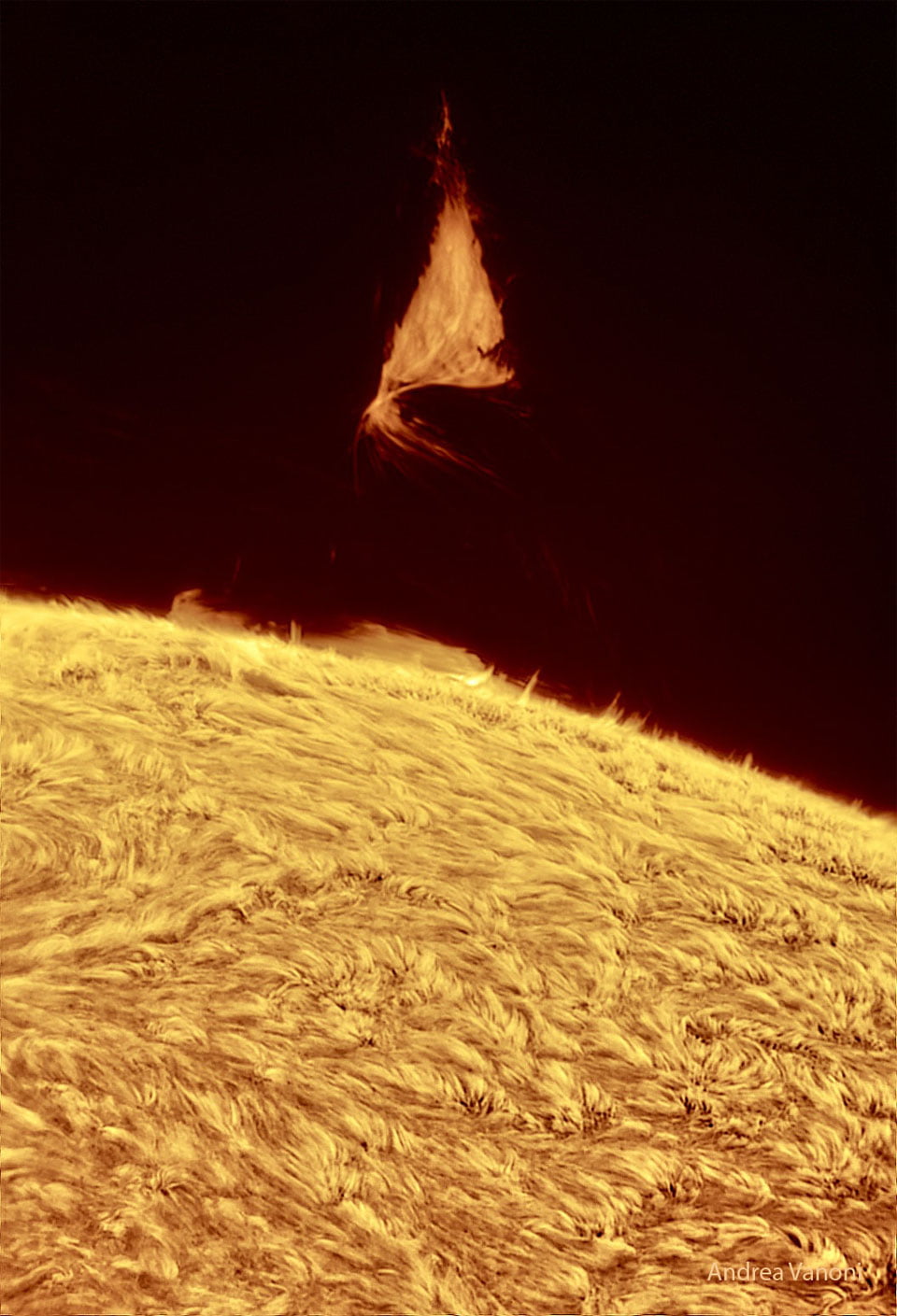
Our Sun is a maelstrom of light and heat, a constant battlefield for plasma and magnetic fields. This recent prominence, captured by Andrea Vanoni and others, bore a striking triangular shape. This fiery outburst — larger than our entire planet — formed and broke up over the course of a single day. The wavy solar surface features in the lower part of the image are solar fibrils, magnetically confined tubes of hot plasma. What changing magnetic fields might allow them to burst forth in a glorious candle of their own? (Image credit: A. Vanoni; via APOD)
Tag: magnetohydrodynamics

The Solar Corona in Detail
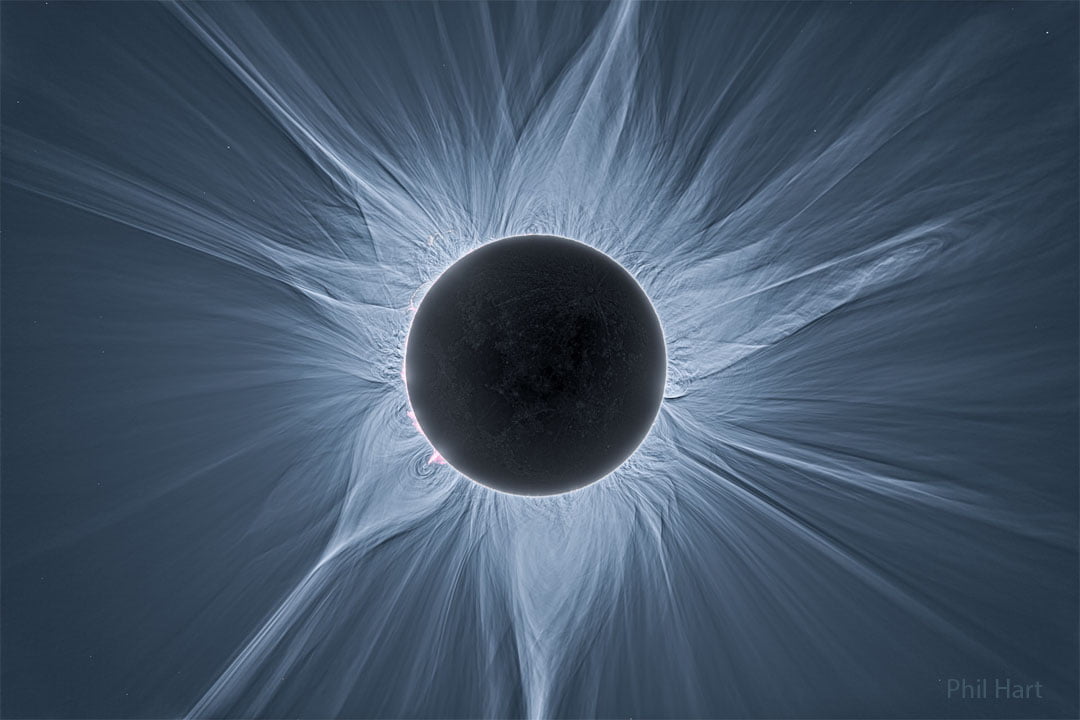
The sun’s corona — its outer atmosphere — is usually impossible to see, since it’s far outshone by the rest of the sun. But during a total solar eclipse, the moon blocks out all but the vibrant, wispy corona. Getting a detailed image of the corona is tough; it’s constantly shifting. For this image, engineer Phil Hart used 5 main cameras, 4 refractors, 2 laptops, and plenty of digital image processing to capture some incredible details of the plasma and hot gases dancing along the sun’s magnetic field lines. You can learn about the awesome effort behind this image — and see more awesome photos from the eclipse — at his site. (Image credit: P. Hart; via APOD)

Solar Filament Eruption
From Earth, we rarely glimpse the violent flows of our home star. Here, a filament erupts from the photosphere creating a coronal mass ejection, captured in ultraviolet wavelengths by the Solar Dynamics Observatory. This particular eruption took place in 2012, and, while it was not aimed at the Earth, it did create auroras here a few days later. Eruptions like these occur as complex interactions between the sun’s hot, ionized plasma and its magnetic fields. Magnetohydrodynamics like these are particularly tough to understand because they combine magnetic physics, chemistry, and flow. (Image credit: NASA/GSFC/SDO; via APOD)

A Shallow Origin for the Sun’s Magnetic Field
The Sun‘s complex magnetic field drives its 11-year solar activity cycle in ways we have yet to understand. During active periods, more sunspots appear, along with roiling flows within the Sun that scientists track through helioseismology. Longstanding theories posit that the Sun’s magnetic field has a deep origin, about 210,000 kilometers below the surface. But new measurements have prompted an alternate theory: that the Sun’s magnetic field originates in its outer 5-10% due to a magnetorotational instability.
Magnetorotational instabilities are usually associated with the accretion disks around black holes and other massive objects. When an electrically-conductive fluid — like the Sun’s plasma — is rotating, even a small deviation in its path can get magnified by a magnetic field. In accretion disks, these little disruptions grow until the disk becomes turbulent.
By applying this idea to the sun, researchers found they were better able to match measurements of the plasma flows beneath the Sun’s surface. With measurements from future heliophysics missions, they believe they can work out the mechanisms driving sunspot formation, which would help us better predict solar storms that can damage electronics here on Earth. (Image credit: NASA/SDO/AIA/LMSAL; research credit: G. Vasil et al.; via Physics World)

The Solar Corona in Stunning Detail


The ESA’s Solar Orbiter captured this beautifully detailed video of our sun‘s corona last September. The Solar Orbiter took this footage from about 43 million kilometers away, a third of the distance between the sun and the Earth. Scattered across the visible surface are fluffy, lace-like features known as coronal moss. Along the curving horizon, gas spires called spicules stretch up to heights of 10,000 kilometers. The video also highlights a “small” eruption of plasma that is nevertheless larger than the entire Earth. We can even see evidence of coronal rain, denser and darker clumps of plasma that gravity pulls back toward the sun. (Video and image credit: ESA; via Colossal)
Making Magnetic Crystals From Ferrofluids
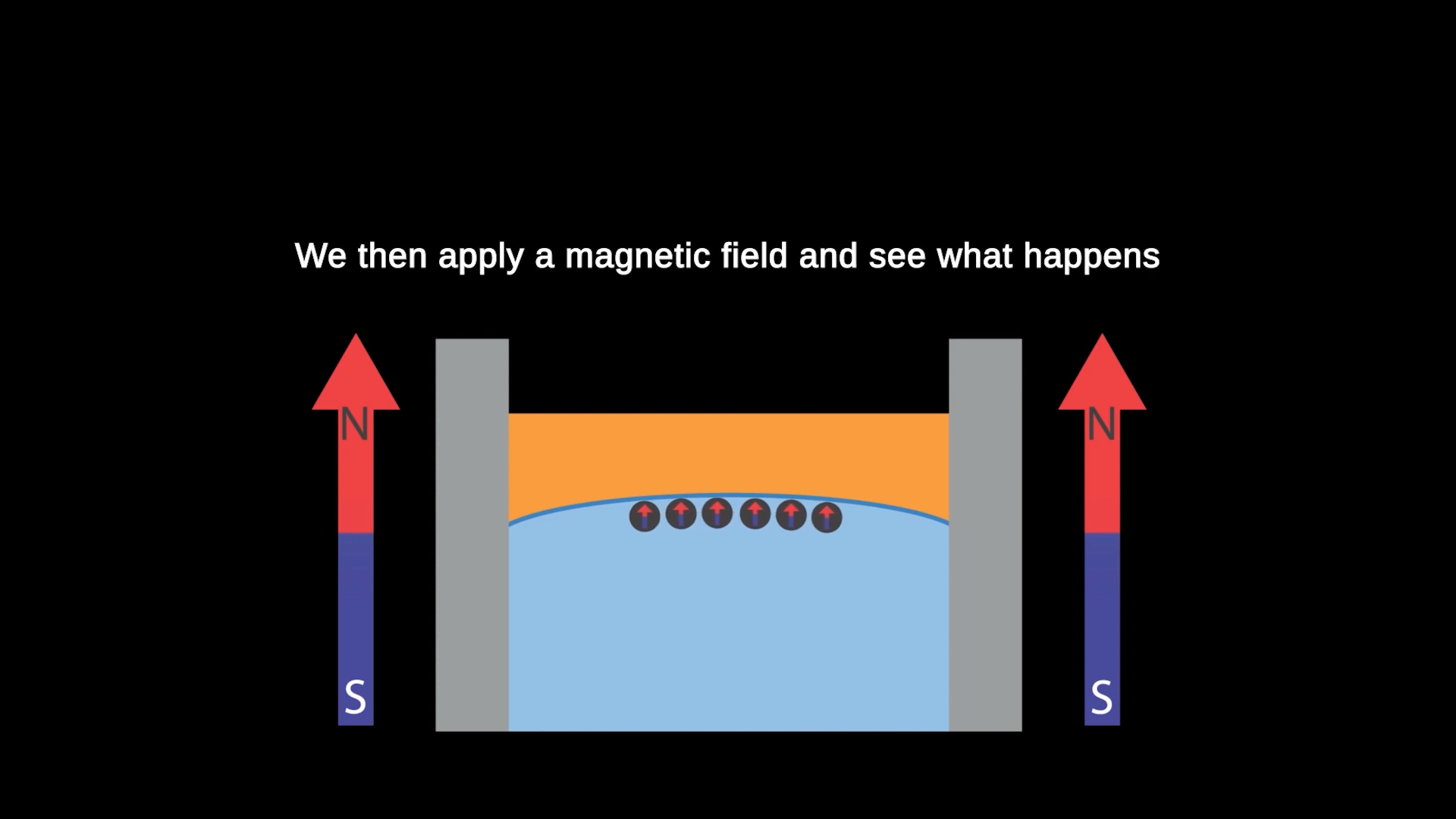
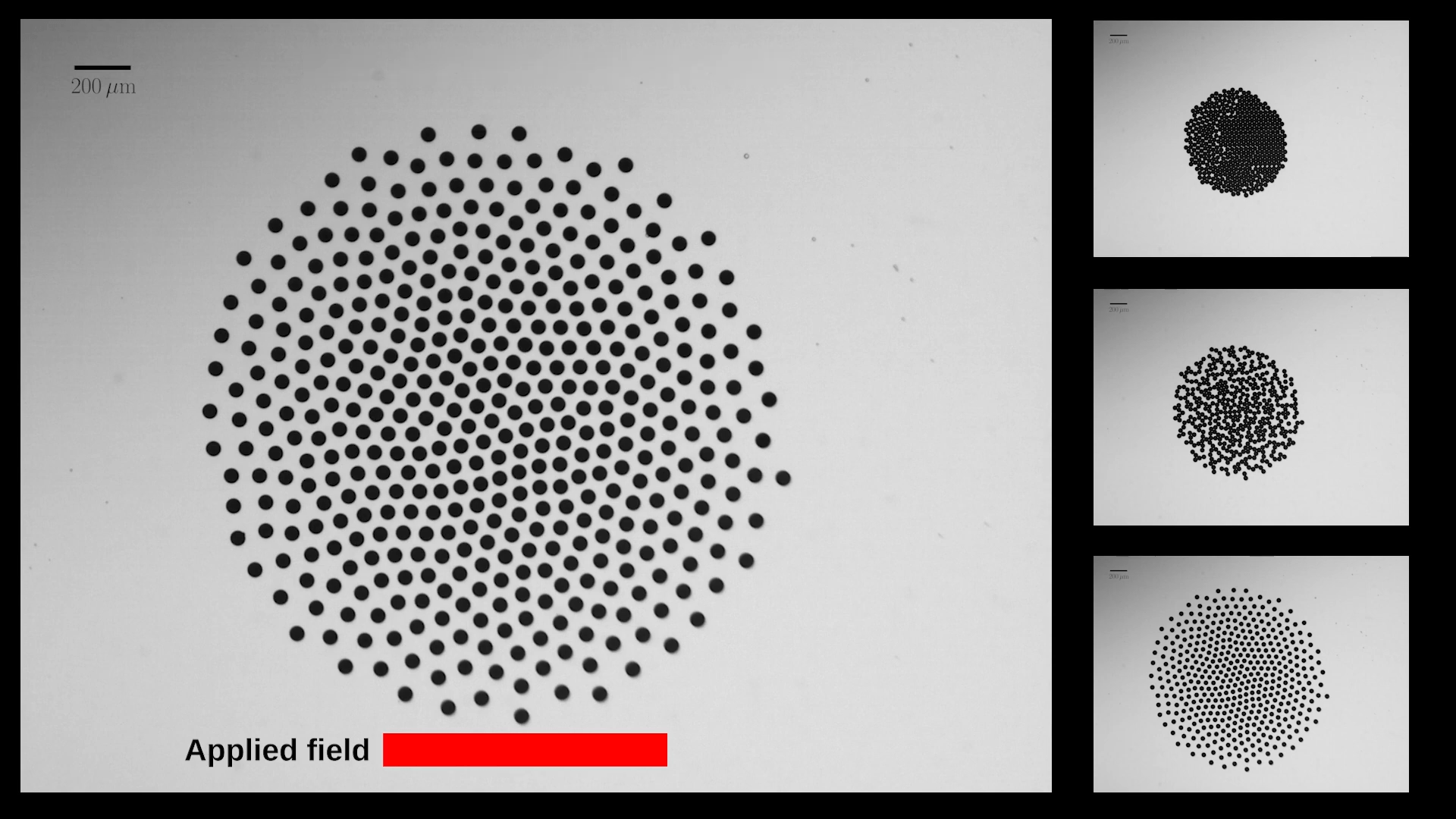
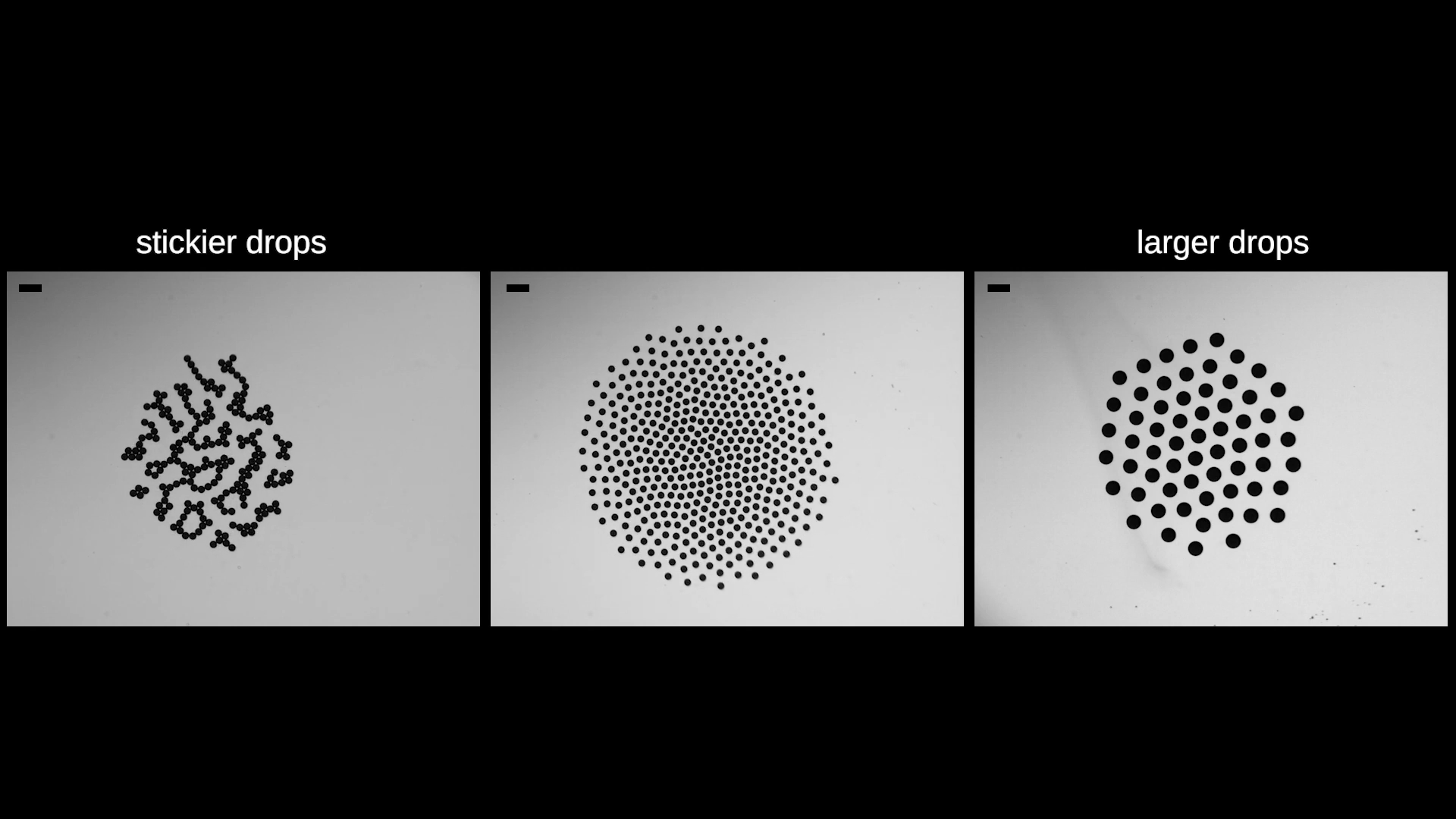
Ferrofluids are a great platform for exploring liquids and magnetism. Here, researchers trap ferrofluid droplets along an oil-water meniscus and then apply a magnetic field that makes the drops repel one another. The results are crystalline patterns formed from magnetic droplets. For a given patch of drops, increasing the magnetic field’s strength pushes drops further apart. But changing the drops’ size and levels of self-attraction also shifts the patterns. Check out the video to see the crystals in action. (Video and image credit: H. Khattak et al.)

A Comet’s Tail
A comet‘s tail changes from day-to-day depending on how much material the comet is losing and how strong the solar wind it’s facing is. This image sequence shows Comet 12P/Pons-Brooks over nine days in 2024 from March 6th (top) through March 14th (bottom). The variations in the comet’s appearance are striking; some days show nearly no tail while others have long plumes with swirls of turbulence. It’s a reminder that, even if they appear unchanging in the moment you see one, a comet is in constant flux. (Image credit: Shengyu Li & Shaining; via APOD)

Our Sun’s Corona Unfurled
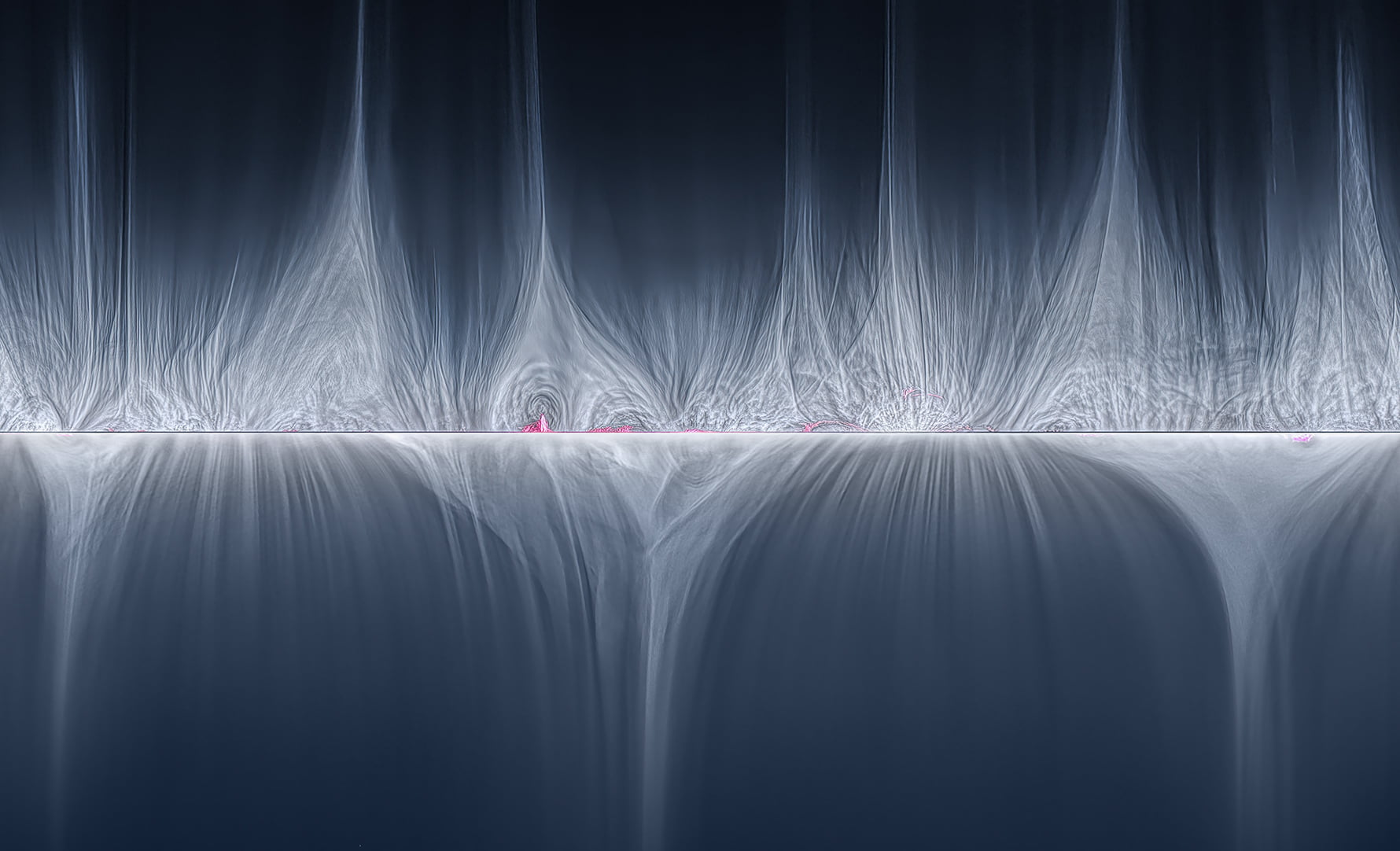
This clever image is actually two solar eclipses stacked atop one another. The bottom half of the image shows the sun‘s corona — its wispy, dramatic outer atmosphere — during the a 2017 total solar eclipse, and top half shows a 2023 total solar eclipse. In both, the corona has been unwrapped from around the sun’s circumference and project instead into a rectangle.
The 2017 eclipse took place near the minimum of the sun’s solar cycle and appears relatively tranquil. The 2023 eclipse, in contrast, came near solar cycle’s maximum and shows a far more chaotic and turbulent environment. Notice the bright pink solar prominences dotting the mid-line and the field of shadowy plasma loops above them. (Image credit: P. Ward; via APOD)

Gigapixel Supernova
Eleven thousand years ago, a star exploded in the constellation Vela, blowing off its outer layers in a spectacular shock wave that remains visible today. Today’s image is a piece of a 1.3-gigapixel composite image of the supernova remnant, captured by the Dark Energy Camera of the Víctor M. Blanco 4-meter Telescope at Cerro Tololo Inter-American Observatory in Chile. Below is a labeled version of the image, identifying the original star — now a fast-spinning pulsar that packs our sun’s mass into an object only kilometers across — its shock wave, and other features. To explore the full-sized image, see NOIRLab. (Image credit: CTIO/NOIRLab/DOE/NSF/AURA; via Colossal)

A labeled version of the image shows the shock wave and other features. 
Kelvin-Helmholtz and the Sun
Kelvin-Helmholtz instabilities (KHI) are a favorite among fluid dynamicists. They resemble the curls of a breaking ocean wave — not a coincidence, since KHI create those ocean waves to begin with — and show up in picturesque clouds, Martian lava coils, and Jovian cloud bands. The instability occurs when two layers of fluid move at different speeds and the friction between them causes wrinkles that grow into waves.
Scientists have long suspected that KHI could occur in solar phenomena, too, like the coronal mass ejections that drive space weather. The Parker Solar Probe, a spacecraft designed to explore the sun, caught evidence of a series of turbulent eddies during a 2021 coronal mass ejection, and a recent study of those observations shows that the series of vortices are consistent with KHI. Put simply, the team found that the features are spaced and aligned as we’d expect for KHI and, during the probe’s measurements, the features grew at the rate Kelvin-Helmholtz eddies would. Although the instability itself may be common in the sun’s corona, it’s unlikely that we’ll see it often, simply because conditions need to be just right for them to be visible. (Image credit: NASA/Johns Hopkins APL/NRL/Guillermo Stenborg and Evangelos Paouris; research credit: E. Paouris et al.; via Gizmodo)
Fediverse Reactions
-