Tag: fluid dynamics

  • Lava Landscapes

    Lava Landscapes

    Lava flows are, by definition, transient. In his LAVA series, photographer Jan Erik Waider explores the changing vistas and textures of Iceland’s Fagradalsfjall volcano eruption. Using a telephoto lens, he captures incredible details of the charred, cooling outer crust of the lava and the glowing molten interior. Only minutes later, fresh lava tore through, destroying these natural sculptures. You can find prints of his images on his website. (Image credit: J. Waider; via Colossal)

  • Featured Video Play Icon

    Backflipping Bubbles

    Rising bubbles can backflip when they impact a tilted surface. As shown in this video, small bubbles will bounce off a titled surface, with each hop leading the bubble further up the incline. For slightly larger bubbles, though, things get a little more complicated. The bubble impacts the surface, bounces away, then circles back and makes its second impact behind the first before moving further up the plate. What drives this backflip? The researchers found that circulation around these bubbles is asymmetric, generating a lift force that drives the bubble’s backflip. (Image and video credit: A. Hooshanginejad et al.)

  • Quantum Instability

    Quantum Instability

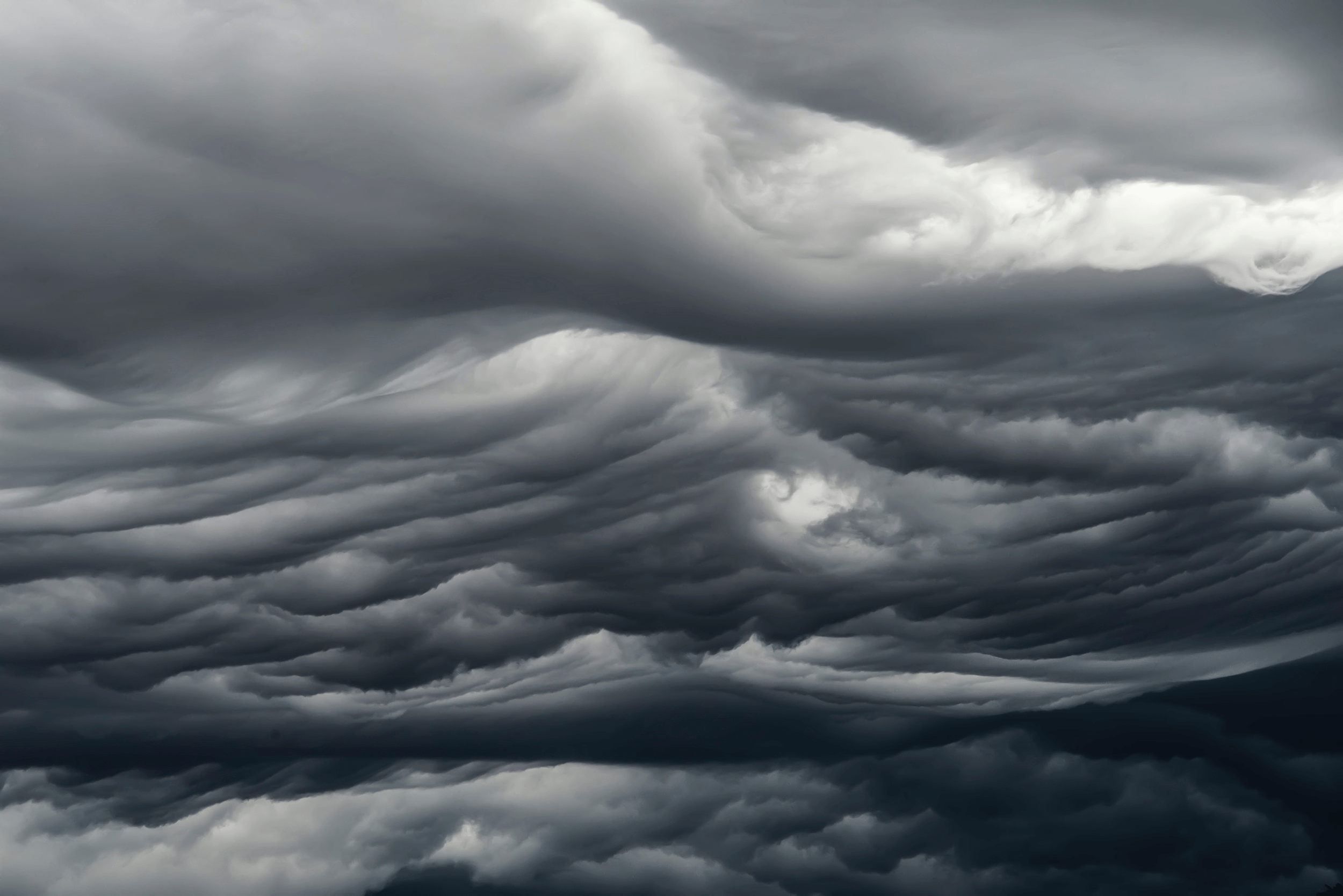
    In our everyday lives, two fluids moving past one another often form a wave-like pattern thanks to the Kelvin-Helmholtz instability. We see it in the curl of waves on the ocean, in clouds in the sky, and even in spirals of lava on Mars. Here researchers explore an analogous instability in the quantum world.

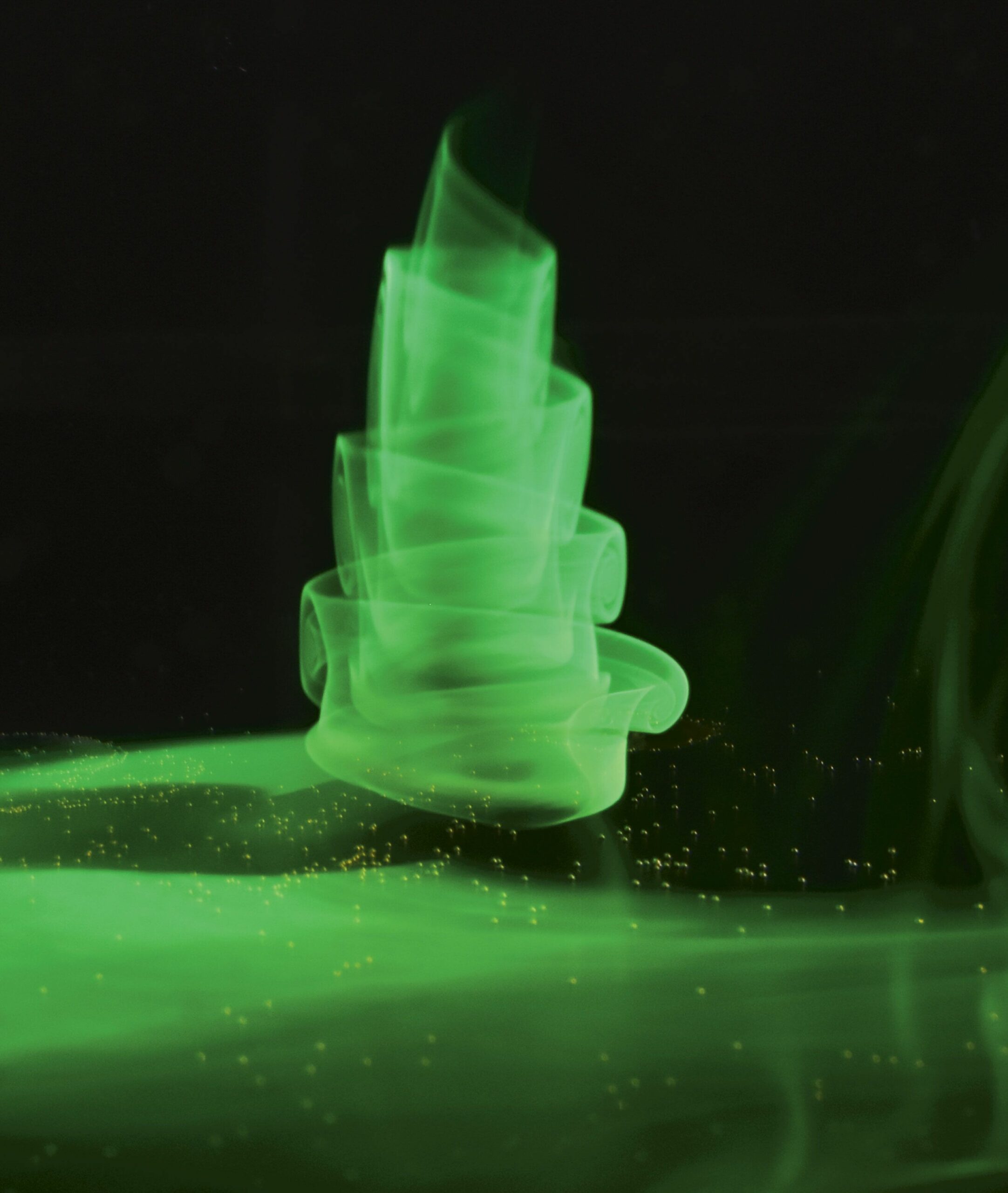
    By spinning a gas of ultracold atoms, the team observed a spontaneous transition from a needle-like configuration to a crystal made up of spirals. It’s a quantum Kelvin-Helmholtz instability! The authors found that wave’s phase is random; it arises purely from quantum interactions between the atoms. (Image, research, and submission credit: B. Mukherjee et al.; see also MIT News)

    The spinning cloud of ultracold atoms breaks up into a series of spirals.
  • Rocked By Waves

    Rocked By Waves

    This astronaut photo shows the Isles of Scilly off the Cornish coast. The pale turquoise waters mark shallow reefs and shoals between the islands while blues reveal deeper waters surrounding the isles. The sun angle is perfect for highlighting the complex wave patterns caused by the winds and tides. Look closely and you’ll see swells intersecting one another and even diffracting around the smaller islets. (Image credit: NASA; via NASA Earth Observatory)

  • Everlasting Bubbles

    Everlasting Bubbles

    Soap bubbles are delicate and ephemeral, always a breath away from collapse due to thinning driven by gravity or evaporation. But that frailty can be countered. Adding microparticles to the bubble’s shell in place of surfactants counters drainage and makes bubbles last for tens of minutes (left). Adding glycerol to the mix takes things a step further (right). The glycerol, which absorbs water from the surrounding air, counteracts the evaporation, allowing bubbles to remain intact — with no discernible change to their radius — almost indefinitely. So far the researchers have made such a bubble last for 465 days! (Image and research credit: A. Roux et al.; via APS Physics)

  • Frozen Wind-Sculpted Sands

    Frozen Wind-Sculpted Sands

    On the cold, wind-swept beaches of Lake Michigan, the sands sometimes turn into a landscape of miniature hoodoos. Strong winds erode the frozen sand into these shapes, which last only days before wearing away or falling over. This photographic series by Joshua Nowicki immortalizes the ephemeral winter sculptures. You can see more of his photography on his Instagram. (Image credit: J. Nowicki; via Colossal; see also)

  • Featured Video Play Icon

    Butterflies Emerging

    When a butterfly emerges from its chrysalis, it flaps its wings to help pump fluids through its body, essentially inflating its new adult form. You get a glimpse of that process here in this Ant Lab video, along with some spectacular slow motion footage of butterflies taking off. I’m always amazed to see how much butterfly wings flex with each wing beat! Even more impressive is the strength of the insect’s lift; as seen here, a butterfly is strong enough to take off while supporting both itself and a mated insect. (Image and video credit: Ant Lab/A. Smith)

  • Stopping The Drop

    Stopping The Drop

    When a droplet falls on a mesh surface, some of the liquid can burst through the holes (top row). But subsequent drops have a harder time penetrating the prewetted mesh. After a few drops have impacted (rows 2-3), the wetted mesh can completely suppress penetration (rows 4-5). The authors found that the taller drops sitting atop the mesh were better at stopping penetration from an incoming drop. (Image and research credit: L. Xu et al.)

  • Streaks of Sea Ice

    Streaks of Sea Ice

    As summer approaches in the Southern Ocean, sea ice melts, but the process is not purely one-way. Temperatures in some locations are cold enough for some limited new freezing. The result is a mix of ice conditions like those seen here. The oldest, thickest ice is part of the ice shelf in the image’s lower right. Normally, younger sea ice would nestle against this shelf, but strong winds have blown that ice north-eastward.

    In the open waters between, delicate frazil ice — tiny needle-like crystals — forms. The wind, coupled with the wave motion, drives the frazil ice together to form streaks of nilas, which eventually accumulate into a layer along the older, broken, windswept ice. (Image credit: J. Stevens/USGS; via NASA Earth Observatory)

  • Sounds of Champagne

    Sounds of Champagne

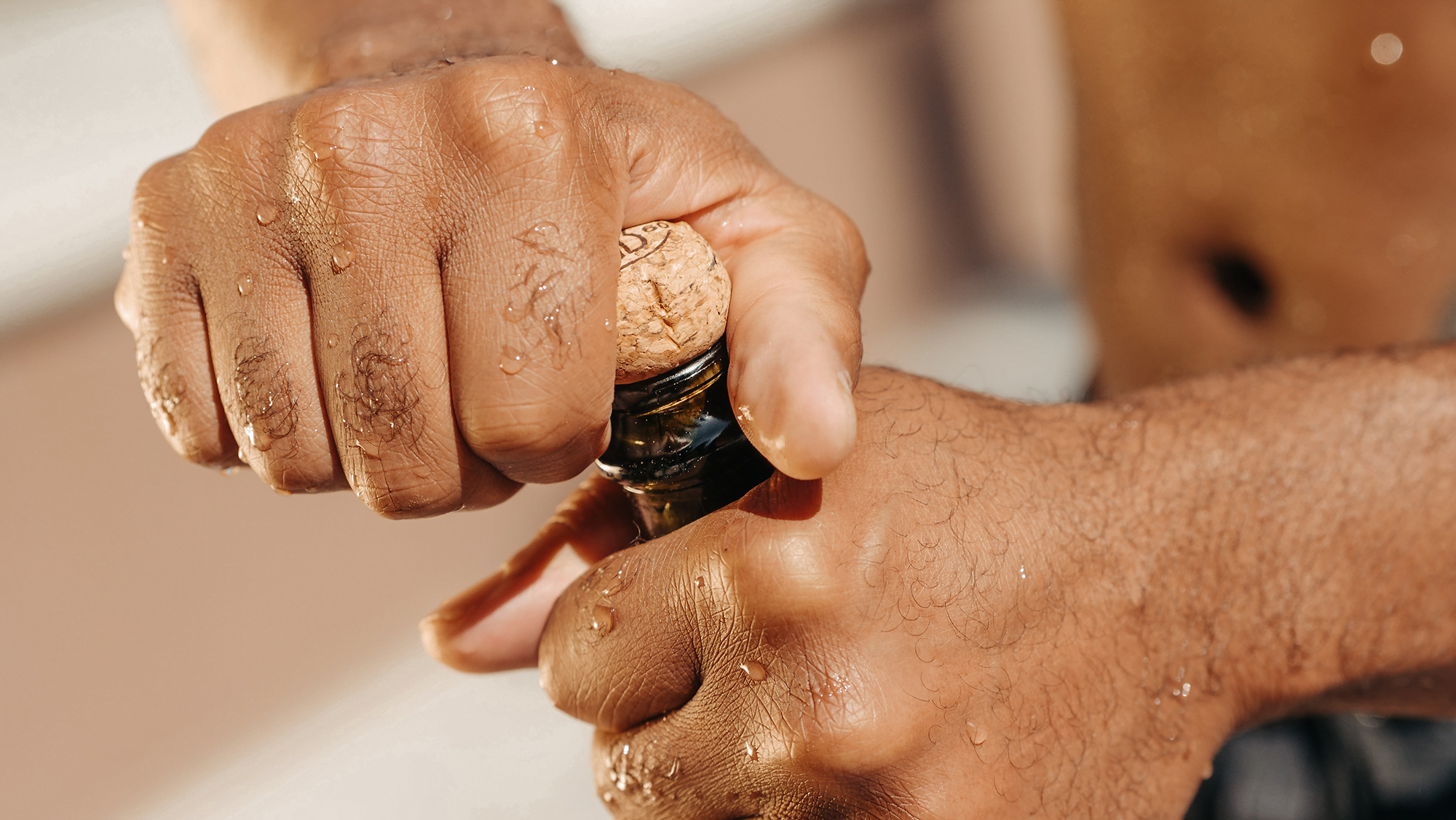
    Lean in to a glass of champagne and you’ll hear a soft chorus of sound as the bubbles pop. Recently, researchers determined the specific mechanism in the process that’s responsible for that audible sound.

    Bubbles pop when the thin film of liquid separating them from the atmosphere drains away. The moment the film opens corresponds to the start of the sound, as overpressurized air inside the bubble has a chance to escape. The researchers found that the bubble behaves like a open-ended Helmholtz resonator, and by the time the sound emission ends, the bubble’s collapse has barely begun. (Image credit: L. Lyshøj; research credit: M. Poujol et al.)