Many of the exoplanets we’ve observed so far are extreme environments. WASP-121b is known as a hot Jupiter, a gas giant so close to its star that it orbits in just 30 hours. The exoplanet is tidally-locked to its star, meaning that one side always faces toward the star and the other faces away. This constant sunlight makes the daytime side of the planet hot enough to vaporize metals. A recent study combined observations of the exoplanet with numerical simulations to model both the daytime and nighttime atmosphere of the exoplanet. The results are pretty wild. The authors found evidence of 18,000 km/h winds that blow hot gases from the dayside to the nightside, where temperatures cool enough for some metals — primarily corundum — to rain out of the atmosphere. Given the trace amounts of other elements available in the atmosphere, the authors posit that the nightside of the planet may have rainfall of liquid rubies and sapphires. (Image credit: NASA/ESA; research credit: T. Mikal-Evans et al.; via Physics World)
Tag: fluid dynamics

Submarine Eruptions
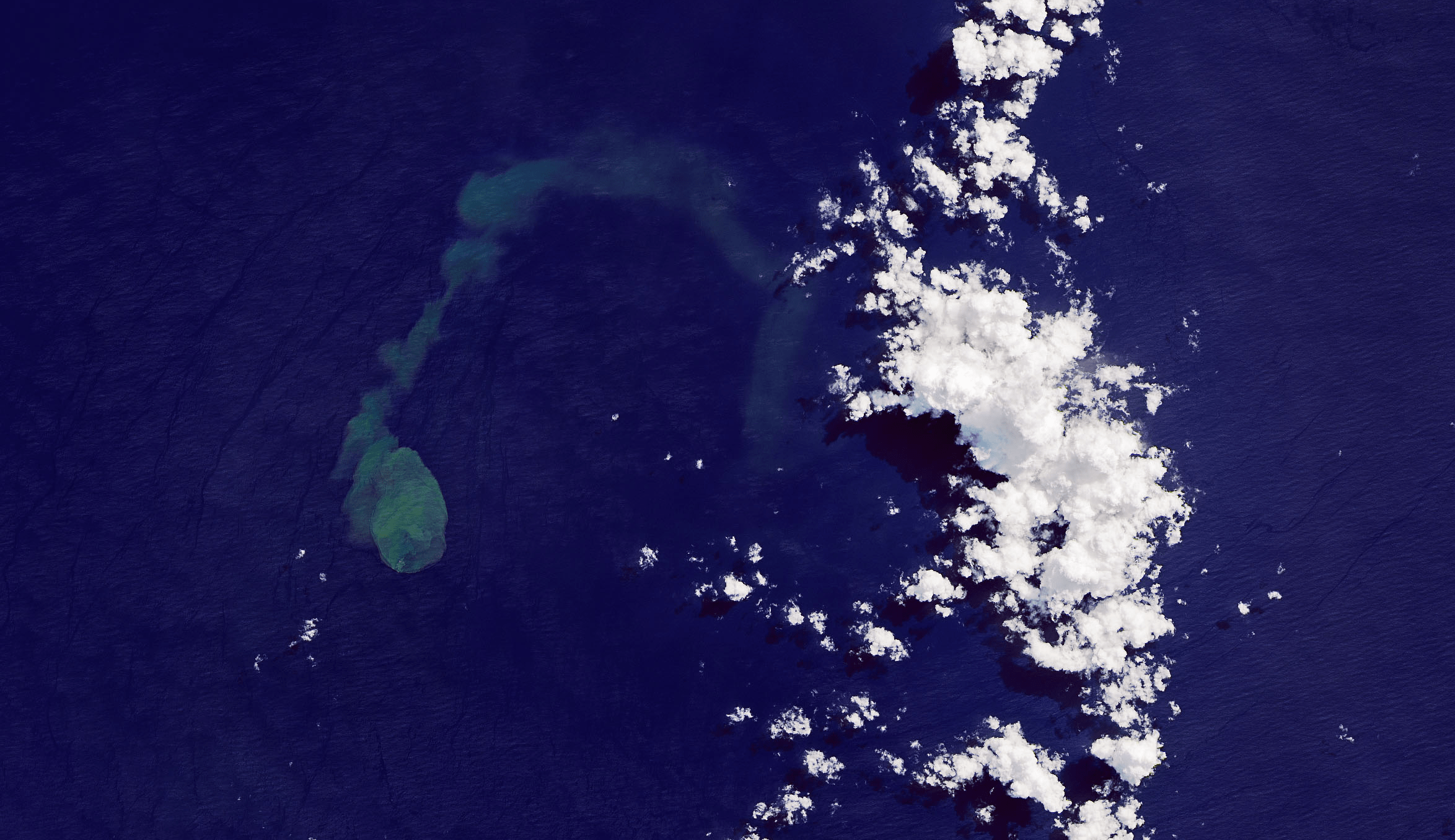
The green-blue plume on the left of this satellite image is an eruption from Kavachi, an underwater volcano in the Solomon Islands. Kavachi’s crest is currently estimated to lie 20 meters below the surface, with its base at a depth of 1.2 kilometers. Eruptions are quite common at the volcano, but that doesn’t stop wildlife — like hammerhead sharks! — from making the crater their home. Over the last century, Kavachi’s eruptions have repeatedly formed small islands at the surface, but they were quickly eroded away by wave action. (Image credit: J. Stevens/NASA/USGS; via NASA Earth Observatory)

“Life and Chaos”


In “Life and Chaos,” artists Roman Hill and Paul Mignot shot fluid flows live in a 1 cm x 1 cm square, then projected those images across 3,300 square meters. There’s something incredible about art on this immersive scale. It is literally impossible for any one visitor — or even the artists themselves — to experience the full piece; each person, by definition, can only take in a small part of the whole. That makes it all the more incredible to derive such a piece from a tiny, tiny canvas. As venues for this sort of immersive art spread, I can only imagine the amazing art we’ll see! (Image and video credit: R. Hill and P. Mignot)

Sonic Booms and Urban Canyons
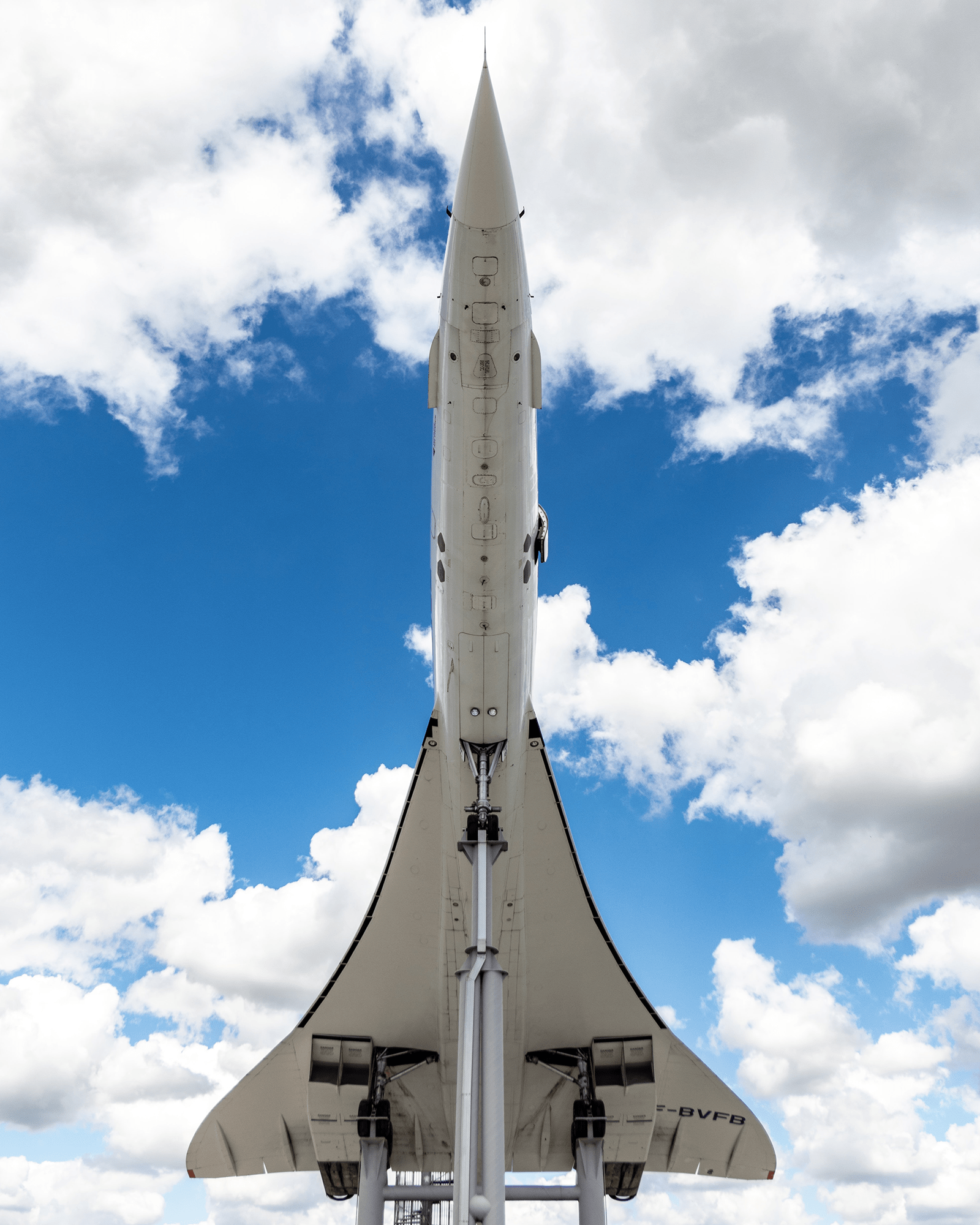
In the days of the Concorde — thus far the world’s only supersonic passenger jet — noise complaints from residents kept the aircraft from faster-than-sound travel except over the open ocean. With many pursuing a new generation of civil supersonic aircraft, researchers are looking at how those sonic booms could interact with those of us on the ground.
In this study, researchers simulated the shock waves from aircraft interacting with single and multiple buildings on the ground. They found that the presence of a building increases the perceived sound level of the boom by about 7 dB at the most. But the most interesting results are what happens between multiple buildings.
If the street between buildings is wide enough, they each act independently, as if they were single buildings. But for narrower streets, the acoustics waves reflect and diffract between the buildings, creating a resonance that makes the acoustic echoes last longer. The effect is especially pronounced for a sonic boom traveling across a series of buildings, which mimics the layout of a dense city full of urban canyons. (Image credit: Concorde – M. Rochette, simulation – D. Dragna et al.; research credit: D. Dragna et al.)

Acoustic waves reflect and propagate through 2D urban canyons with widths of 10 meters (top), 20 meters (middle), and 30 meters (bottom). Making Hurricanes


With oceans warming, there’s more energy available to intensify hurricanes. And while our weather models have gotten better at predicting where hurricanes will go, they’re less good at predicting hurricane intensity, largely because capturing real data from storms is so difficult and dangerous. To address that shortfall, engineers build facilities like the one seen here, which simulates hurricane wind and water conditions so that scientists can study their interaction and better understand storm physics. Check out the full Be Smart video for a tour of the facility and a look at their work. (Image and video credit: Be Smart)

Swimming in Complex Fluids
Bacteria like E. coli swim using flagella, helical filaments attached to biological motors on their bodies. By rotating the flagella, the bacterium generates thrust that propels it forward. Oddly, though, researchers observed decades ago that bacteria actually travel faster through complex fluids — like those with polymers or particles in them — than they do through simple fluids like water. A new study using colloids — small particles suspended in a liquid — shows why.
The researchers compared bacteria swimming through polymer-filled fluids and colloidal fluids and found strong overlap both qualitatively and quantitatively. They observed, for example, that bacteria swim in straighter lines — they wobble less — in complex fluids. The reason, according to the authors, is the hydrodynamic influence of the added materials. Essentially, when a bacterium swims near a colloid or piece of polymer, the particle exerts a torque on the microswimmer that reduces its wobble and enhances its speed. (Image credit: Cheng Research Group; research credit: S. Kamdar et al.; via Physics World)
Meet BILLY


Many wings in nature are not rigid. Instead they flex and curve with the flow. Here researchers imitate that phenomenon with BILLY (Bio-Inspired Lightweight and Limber wing prototYpe). Using an evolutionary-style algorithm, BILLY determines its own optimal flapping characteristics to maximize performance. Its flexible membrane-style wing actually performs better than a rigid wing! Check out the end of the video for some flow visualization of the leading edge vortex. (Image and video credit: A. Gehrke et al.)
“Water III”


In “Water III,” filmmaker Morgan Maassen explores the ocean from above and below. I love the sheer variety of fluid phenomena; yes, there are classic breaking barrel waves for surfing, but there are also rib vortices and bubble plumes and churning turbulence that wouldn’t be out of place in a stormy Midwestern sky. Enjoy! (Image and video credit: M. Maassen)

Mapping Yellowstone Underground
Yellowstone National Park is filled with geysers, hot springs, and mudpots — all geophysical features driven by the underground movement of water heated by the underlying volcano. But what does that underground plumbing look like? To find out, a team of researchers flew a 25-m diameter electromagnetic loop over portions of the park; they used the electromagnetic feedback induced in the loop to roughly map the subsurface features of the park.
To their surprise, they found that deep hydrothermal vents in Yellowstone lie in discrete locations; previously, geologists assumed the vents were more widespread. With a better sense of what lies beneath, park officials will be able to build new infrastructure in areas better protected from one of the park’s biggest hazards: hydrothermal explosions caused by a buildup of pressure underground. (Image credits: top – I. Shturma, map – C. Finn et al.; research credit: C. Finn et al.; via Physics World)
Editor’s Note: This article was written and scheduled prior to the historic flooding in Yellowstone in June 2022.

Geophysical map of Yellowstone’s Upper Geyser Basin, including Old Faithful. Rip Currents
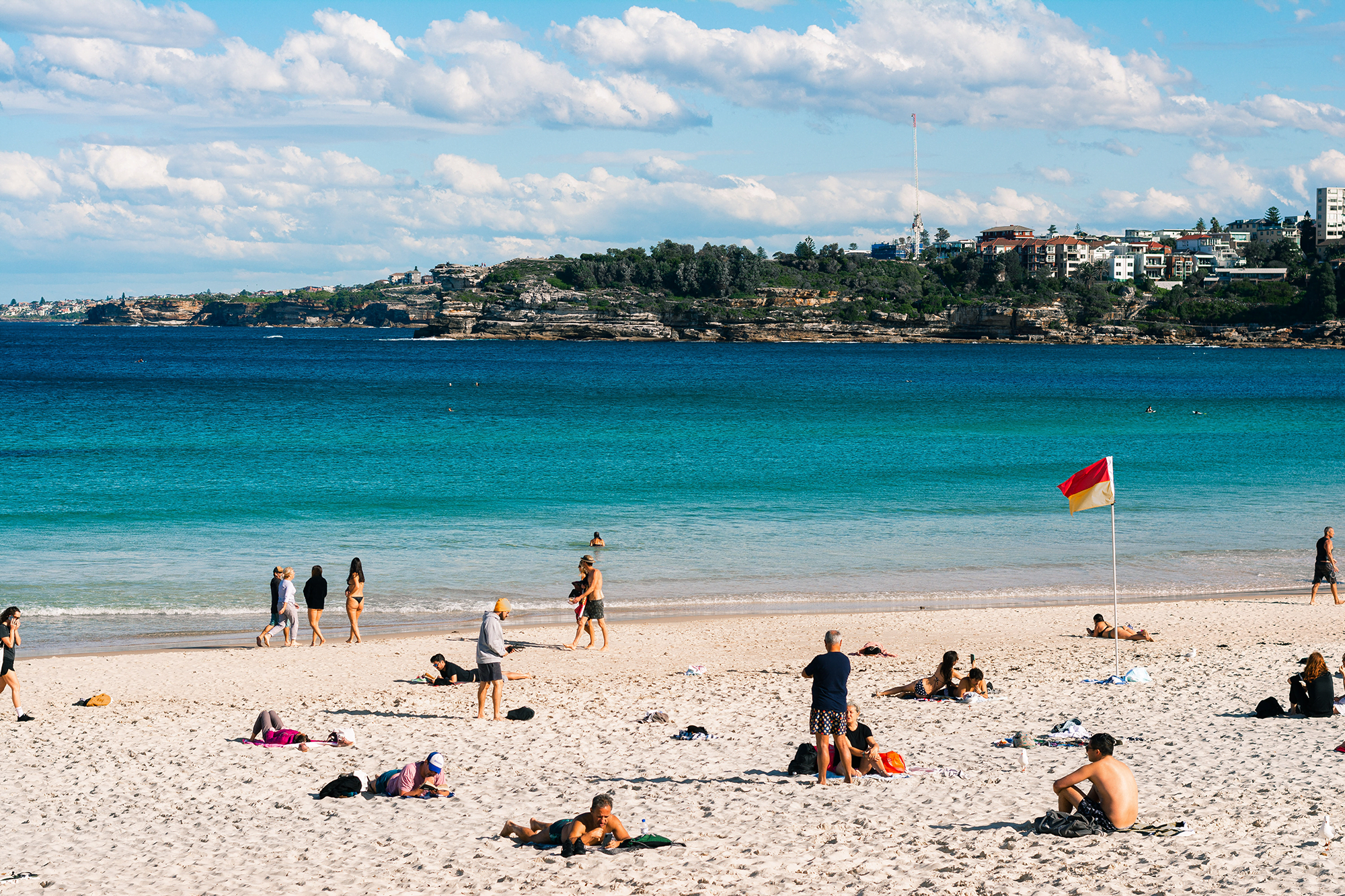
Rip currents — also known as rips — are a threat to beachgoers around the world, and, unfortunately, they’re often underestimated or misunderstood. As waves crash on the shore, water must find a path back out to sea, often through deeper channels that provide a break between the waves. These flow paths are rip currents, and they can form, shift, and intensify with little warning.
Over the years, researchers have found that efforts to educate beachgoers through signs, flags, and other methods once at the beach have done little to help visitors understand, avoid, or escape rips. Instead, it’s better to educate people long before the water is in sight. Since no one method is guaranteed success for escaping a rip, it’s better to learn to recognize and avoid these dangerous areas. Check out the video below for advice on spotting rips, and here’s a video showing rips from a surfer’s perspective, as well as one using dye flow visualization to mark a rip. Be safe and smart out there! (Image credit: P. Auitpol; video credit: Surf Life Saving Australia; via Hakai Magazine; submitted by Kam-Yung Soh)