Pitcher plants often entice their insect victims with sweet nectar before trapping them in inescapable viscoelastic goo. But some species go even further. Nepenthes gracilis, a species native to Southeast Asia uses its leafy springboard to lure its prey. Once an ant crawls to the underside of the leaf, a falling rain drop will spell its doom. When drops hit the leaf, it deflects down and jerks up, thanks to its shape and stiffness. The motion catapults insects into the pitcher, where digestive fluids await. While we’ve seen some fast-moving plants before, this is a rare example of a plant with an externally-driven speed mechanism. With it, the pitcher plant doesn’t have to wait or expend any metabolic effort to reset for the next insect. (Image credit: GFC Collection/Alamy; research credit: A. Lenz and U. Bauer; via New Scientist)
Tag: fluid dynamics

Reefs Along New Caledonia
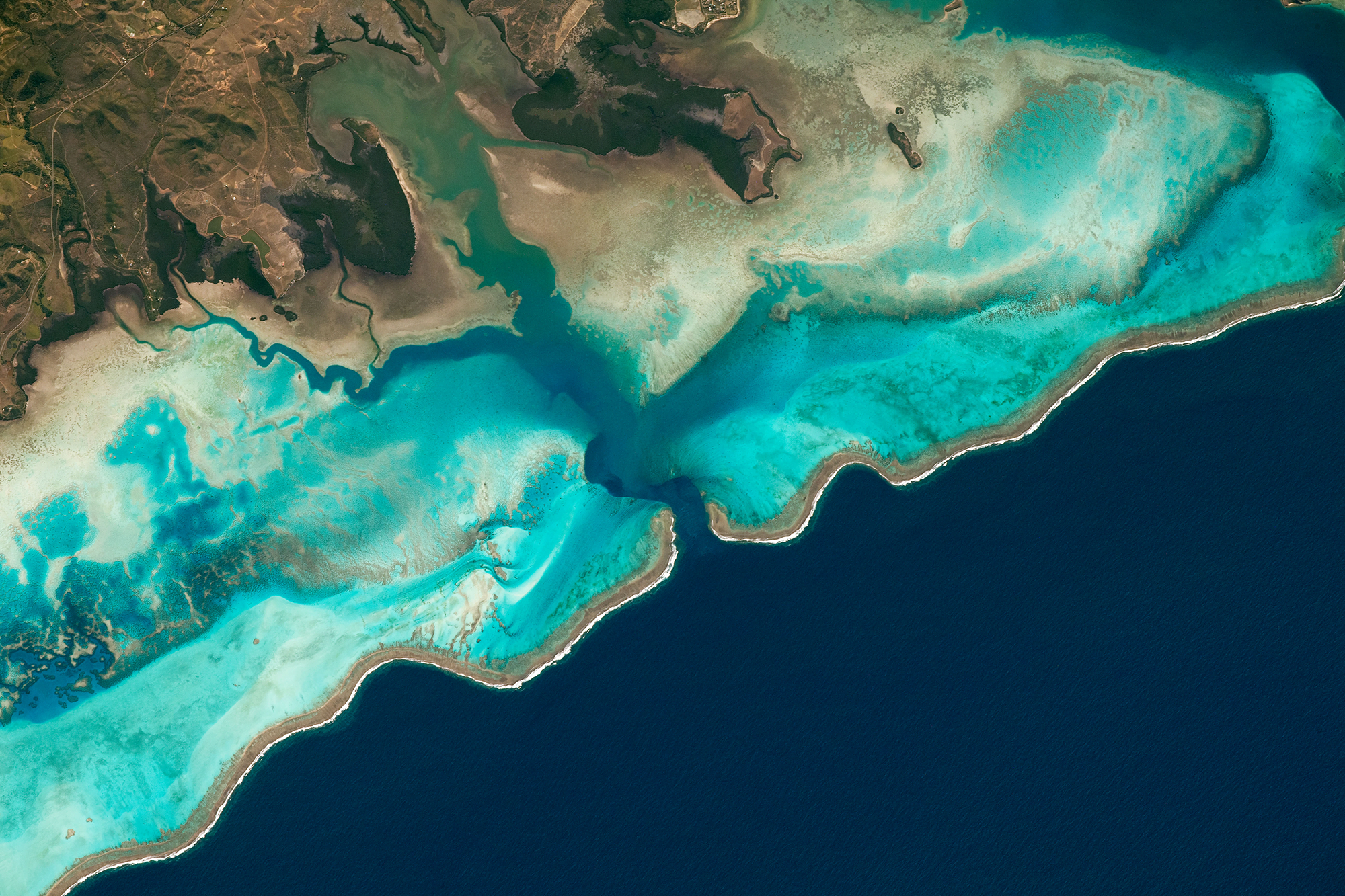
Brown reefs edge a turquoise lagoon in this astronaut snapshot of the New Caledonian coastline. Reefs like these form a natural barrier that protects coastlines from storms by breaking up waves (seen here as those white edges) before they reach the shore. The lagoon is streaked with lines of tan where sediment flows from the uplands into the water. Similarly, the color variations from green to blue in water hint at changes in depth, organic content, and more. (Image credit: NASA; via NASA Earth Observatory)

Stunning Waves

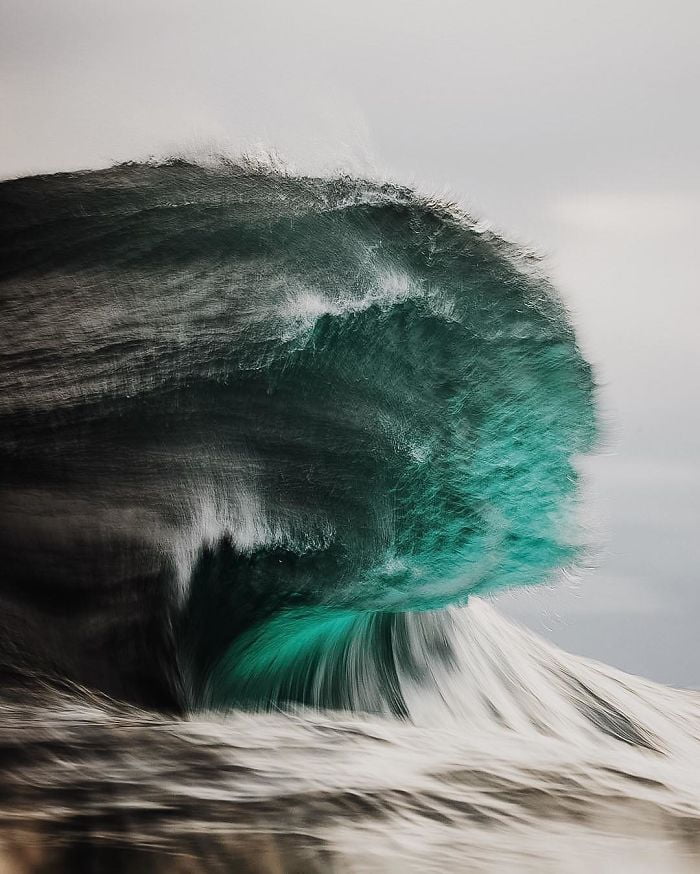
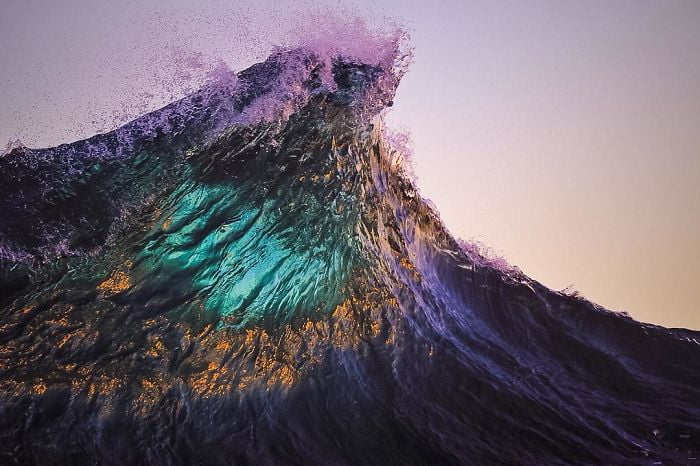


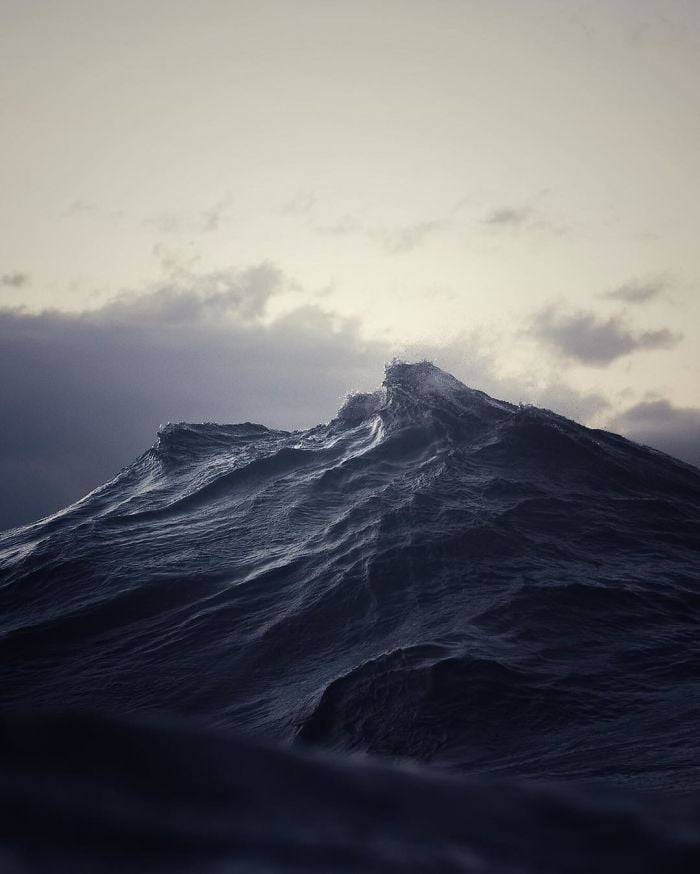

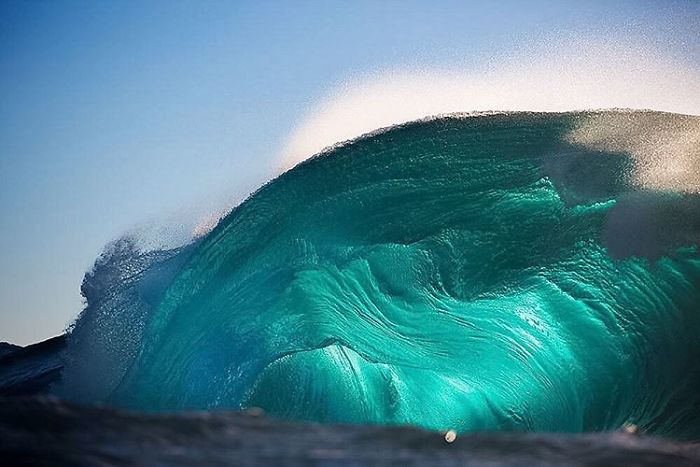

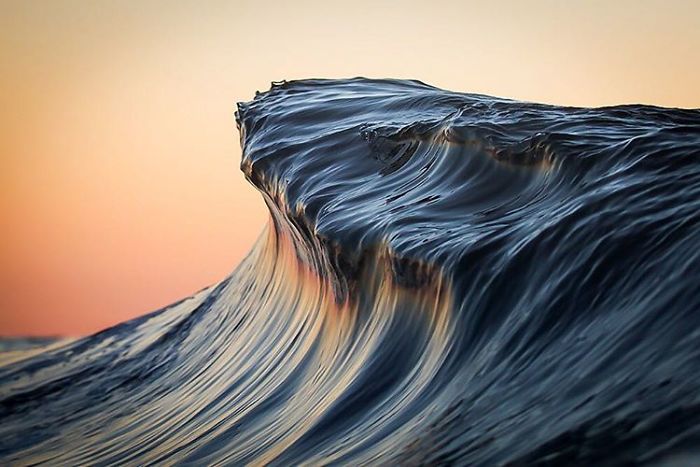
Photographer Lloyd Meudell captures breathtaking images of ocean waves off his home shores of New South Wales. The waveforms and lighting combine to create infinite variety in shape and texture. Some waves look like towering mountain landscapes; some look like glass sculptures. Every one of them draws you into the ocean’s power. (Image credit: L. Meudell; via Bored Panda)

Absorbing Sound with Moth Wings
Manmade soundproofing tends to be porous and bulky or very limited in the range of frequencies it can handle. In contrast, moths are natural absorbers of ultrasound, having evolved to avoid reflecting those frequencies back to the bats hunting them. Researchers took the structures from a moth wing and applied them to an aluminum disk to see how the coating performed. They found that the moth wing’s structures reduced sound reflection by as much as 87% at the lowest frequency tested (20kHz, still beyond human hearing.) As researchers explore how the individual structures of the wing perform, they hope to adapt the moth’s prowess to soundproof within the human range of hearing. (Image and research credit: T. Neil et al.; via Physics World)

A Levitated Boil


When acoustically levitated, objects tend to clump together and move like a single, large solid. But researchers found more fluid-like states for their levitated particles when the particles were smaller. At low acoustic power, the particles behave like a liquid and shift primarily within a plane. But as the acoustic power increases, the granular liquid begins to “boil” and transition into a gaseous state, with particles moving in all directions. It’s amazing how often these metaphors (e.g., treating a group of particles as a “liquid”) hold true when observing different physical systems! (Image and video credit: B. Wu et al.)
Aligning by Bubble Array


Assembling structures from small components is often difficult. Techniques like optical tweezers are limited to very small objects, and magnetic techniques only work with certain materials. Here, researchers use acoustical forces on bubbles to move and align centimeter-sized objects.
When a single bubble oscillates in an ultrasonic field, its changing size creates pressure variations around it. When an acoustic wave scatters off one bubble and impacts another, it sets up a small attractive force between the bubbles, known as the secondary Bjerknes force. For individual bubble pairs, this force is extremely small and unable to affect much. But using arrays of bubbles — one array on a fixed object and another on a floating object — researchers amplified the attraction and showed that the resulting forces could manipulate and align their components. (Image credit: top – J. Thomas, others – R. Goyal et al.; research credit: R. Goyal et al.; via APS Physics)
Perturbations


At first glance, today’s video appears to have little to do with fluid dynamics since it’s a demonstration of interactions between magnets. But for those who’ve delved into the mathematics of fluid dynamics — especially subjects like perturbation theory — there’s a lot to appreciate here. In the video, we see systems of magnets constructed and then manipulated, often by moving a single magnet and watching how the rest respond. Visually, this demonstrates how disturbances move in complex, interconnected damped systems. The auditory component — definitely turn the sound on for this video — is an extra layer of fluids-related goodness that also shows how reconfiguring a system changes its resonant frequencies. (Image and video credit: Magnetic Tricks and Magnetic Games; via Colossal)

Liquid Sculptures


Snapshots of splashes are nothing new, but few have mastered the art of freezing incredible shapes in water the way Markus Reugels has. His splash photography is mind-boggling, especially knowing that he uses Photoshop only for minor corrections like contrast and removing sensor noise. Fortunately, he’s generous in sharing his expertise. Check out lots more incredible photos and plenty of how-to guides (mostly in German) over at his site. (Image credits: M. Reugels)

Microscale Kelvin-Helmholtz
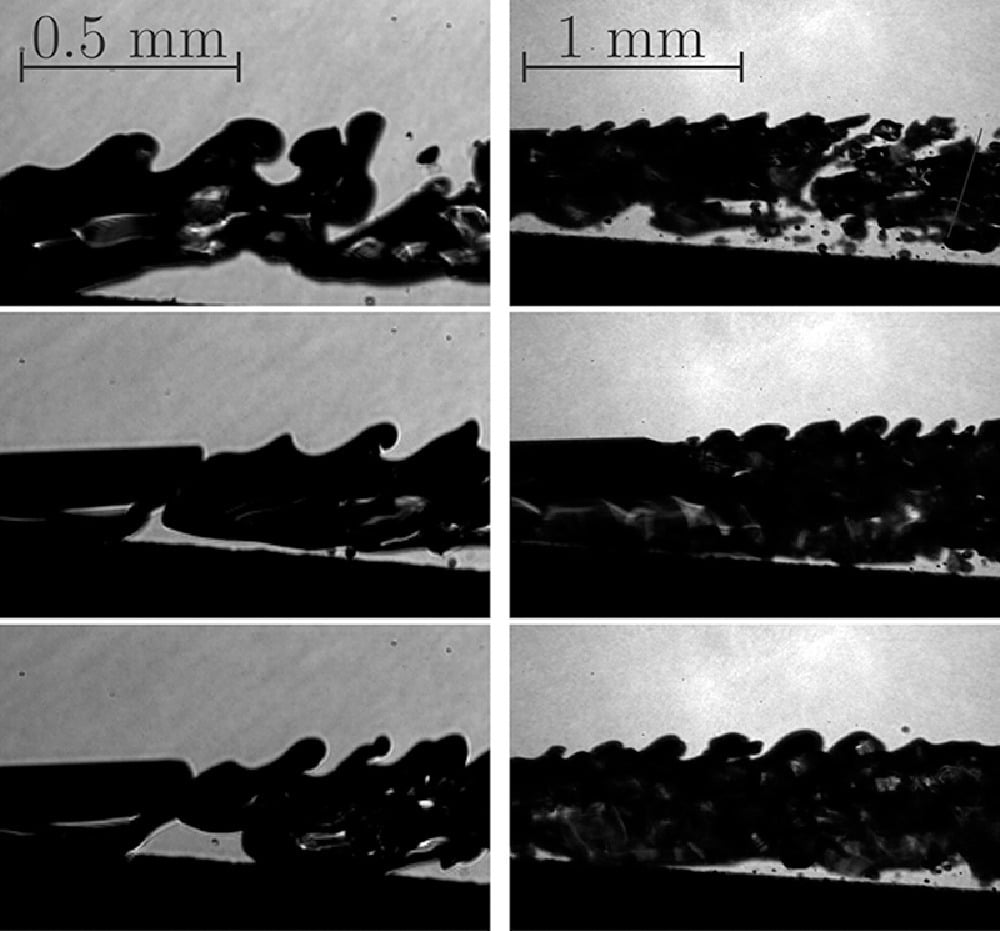
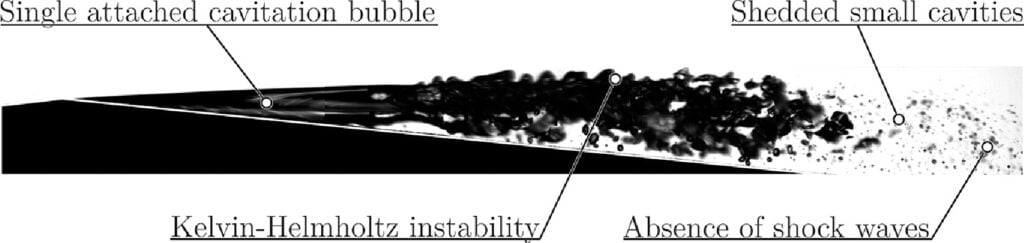
When we think of cavitation in a flow, we often think of it occurring at a relatively large scale — on the propeller of a boat, for example. But cavitation takes place on microscales, too, including around fuel-injection nozzles. In this study, researchers investigated submillimeter-scale cavitation using a flow through a tiny Venturi tube. What they found was something we usually associate with larger scale flows: the Kelvin-Helmholtz instability.

The wavy shape of a Kelvin-Helmholtz instability forms when two layers of fluid move past one another at different speeds and the interface where they meet becomes unstable. Here, that happens along a cavitation bubble, where the bubble and the flow meet. Interestingly, at these scales, the Kelvin-Helmholtz instability seems to be the primary method of break-up, instead of shock wave interactions.
For those keeping track, we’ve now seen the Kelvin-Helmholtz instability from the quantum scale up to 160 thousand light-years. It’s hard to achieve a much wider range than that! (Image and research credit: D. Podbevšek et al.; submitted by M. Dular)

Florida’s Keys


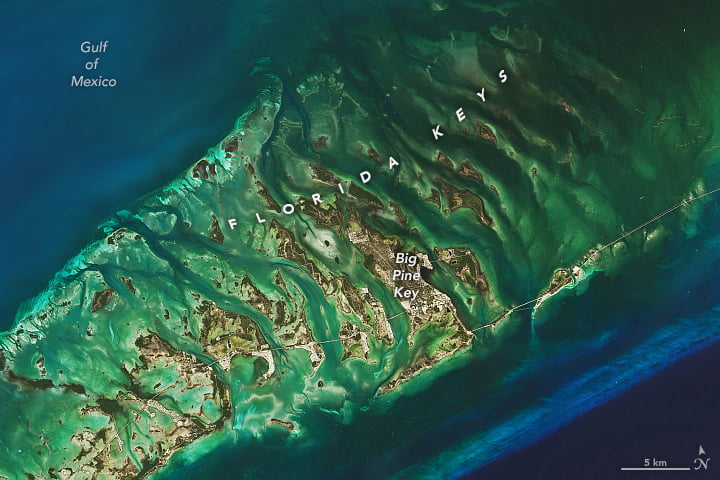
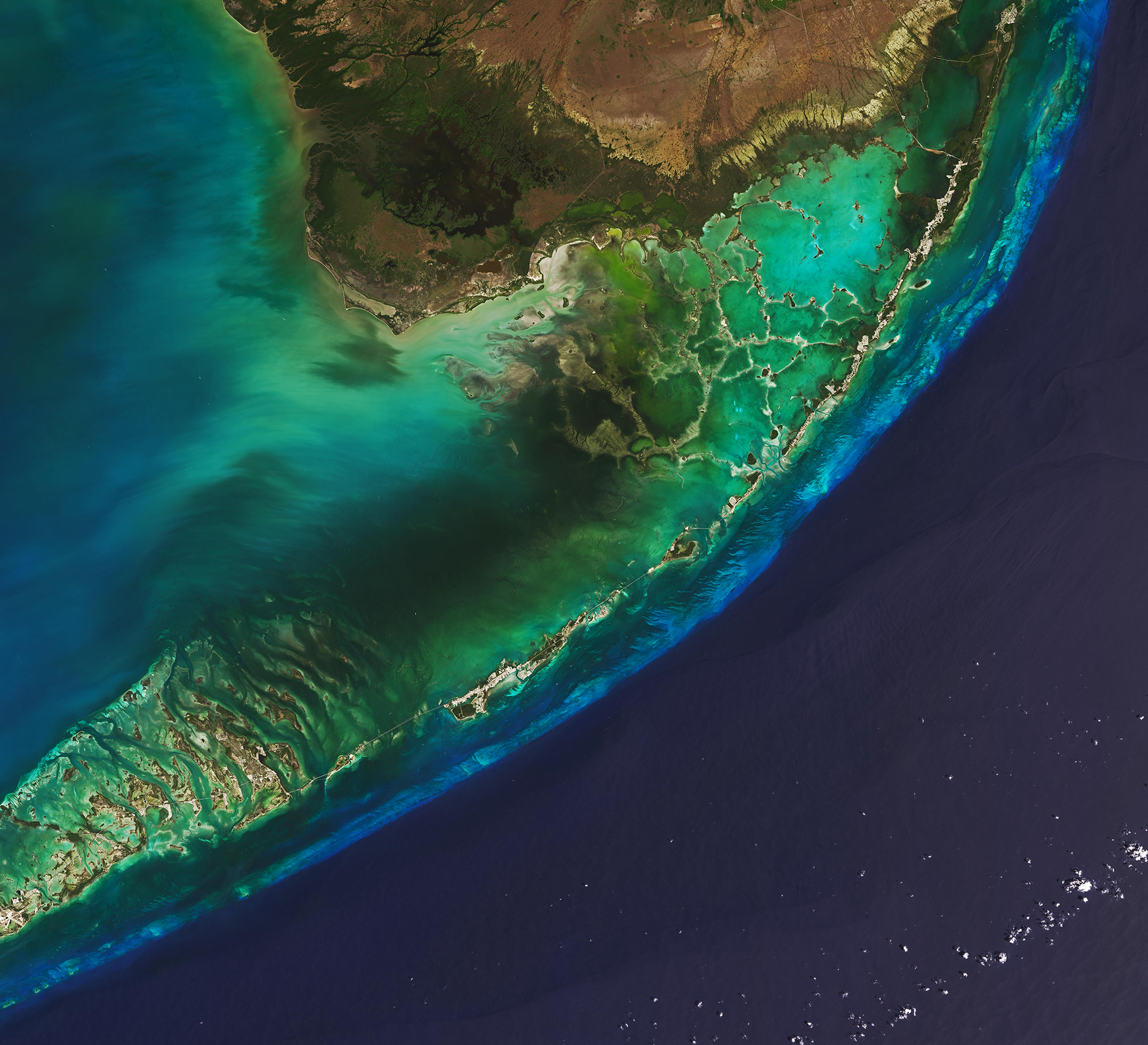
Stretching from the southern tip of Florida, a chain of low-lying islands, known as keys or cays, formed underwater during a warm interglacial period some 125,000 years ago. Originally coral reefs and sand bars, the islands hardened and fossilized when sea levels dropped during an ice age. These natural-color satellite images hint at the keys’ impressive ecosystems. The bright blue streak is a giant coral reef separating the deeper waters of the Atlantic from the shallow waters and sea-grass beds lying between the islands. Formations like these, along with mangrove forests, are part of nature’s way to mitigate the damage and flooding caused by hurricanes. Unfortunately, warmer seas and rising sea levels now threaten the keys. (Image credit: L. Dauphin/USGS; via NASA Earth Observatory)