Tag: flow visualization

  • Featured Video Play Icon

    The Tea Leaves Effect

    If you’ve ever stirred a cup of tea with loose leaves in it, you’ve probably noticed that the leaves tend to swirl into the center of the cup in a kind of inverted whirlpool. At first, this behavior can seem counter-intuitive; after all, a spinning centrifuge causes denser components to fly to the outside. In this video, Steve Mould steps through this phenomenon and how the balance of pressures, velocities, densities, and viscosity cause the effect. (Note that Mould uses the term “drag,” but what he’s really referring to is the boundary layer across the bottom of the container. But who wants to explain a boundary layer in a video when they can avoid it?) (Video and image credit: S. Mould)
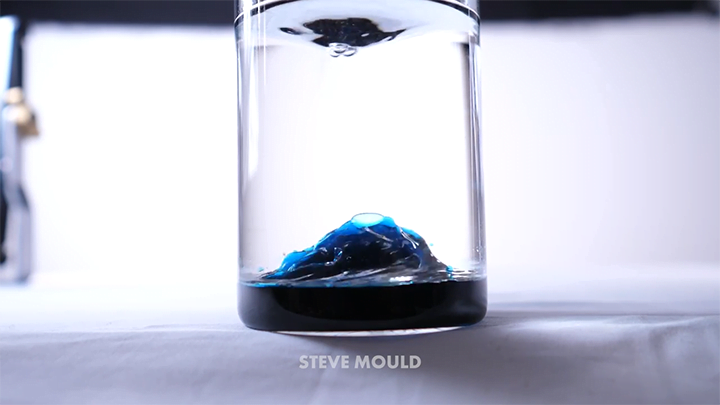
    When liquid in a cup is stirred, the densest layers move to the center.
  • Featured Video Play Icon

    “Timedrift II”

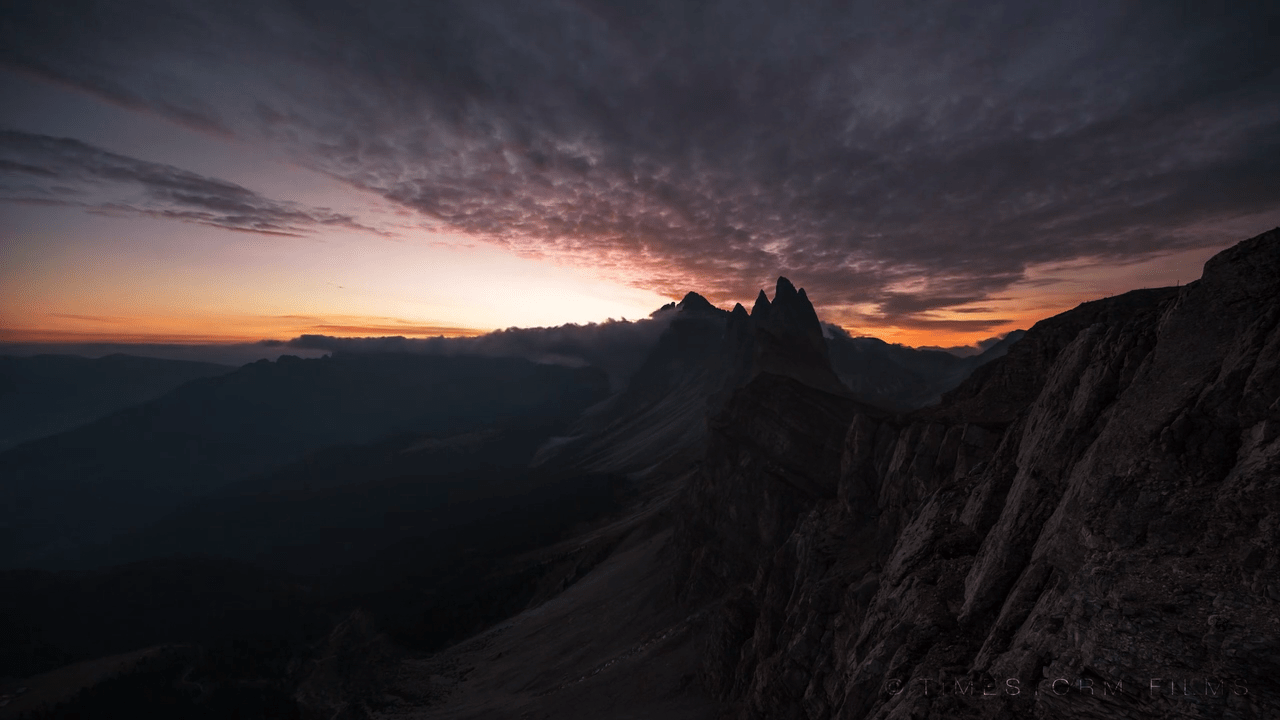
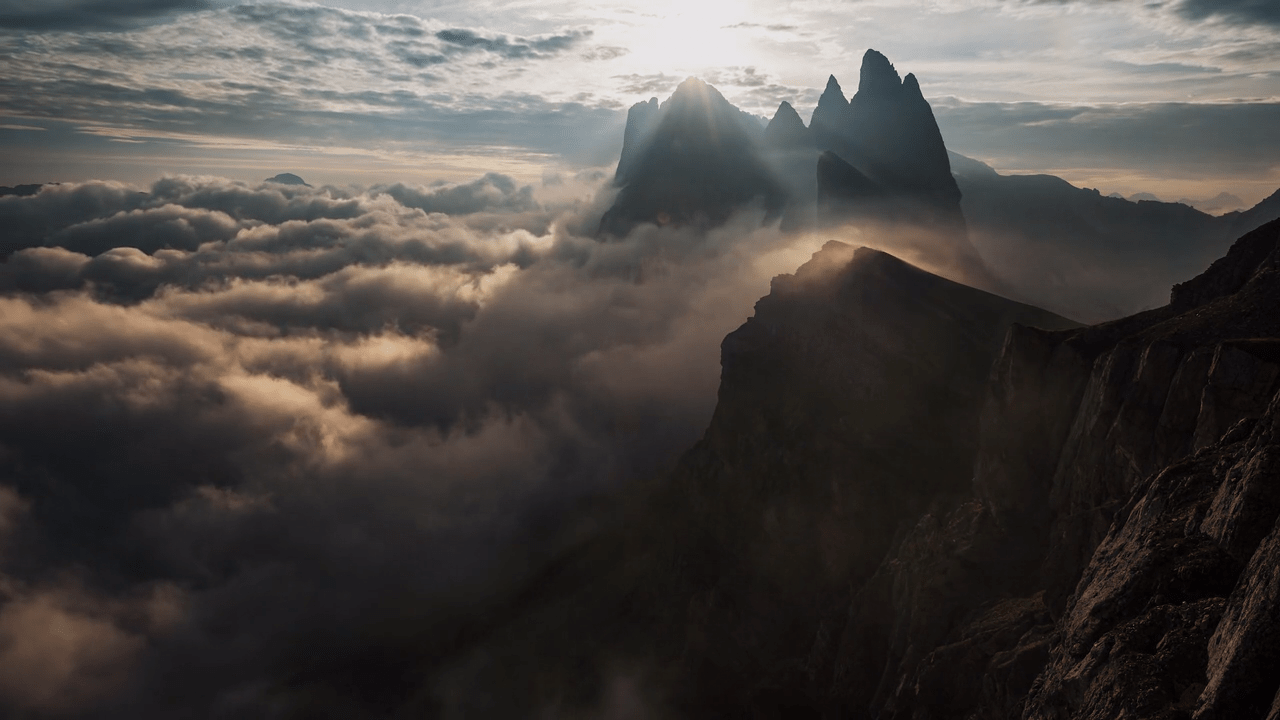
    As a teenager, I climbed Mount Kilimanjaro. The final ascent began around midnight, and we climbed through the dark, through sunrise, and into the early morning. I remember pausing at one point, just as the sun was rising, and looking out at the clouds thousands of meters below. From that height, they looked like an ocean, rippled with lavender waves. Timelapse films like this one, by filmmaker Martin Heck, remind me of that morning and the sense that I had of the sky as an ocean, flowing, crashing, and surging in ways we cannot appreciate until we slow down and look closer. (Image and video credit: M. Heck/Timestorm Films)

  • Listening to the Sizzle

    Listening to the Sizzle

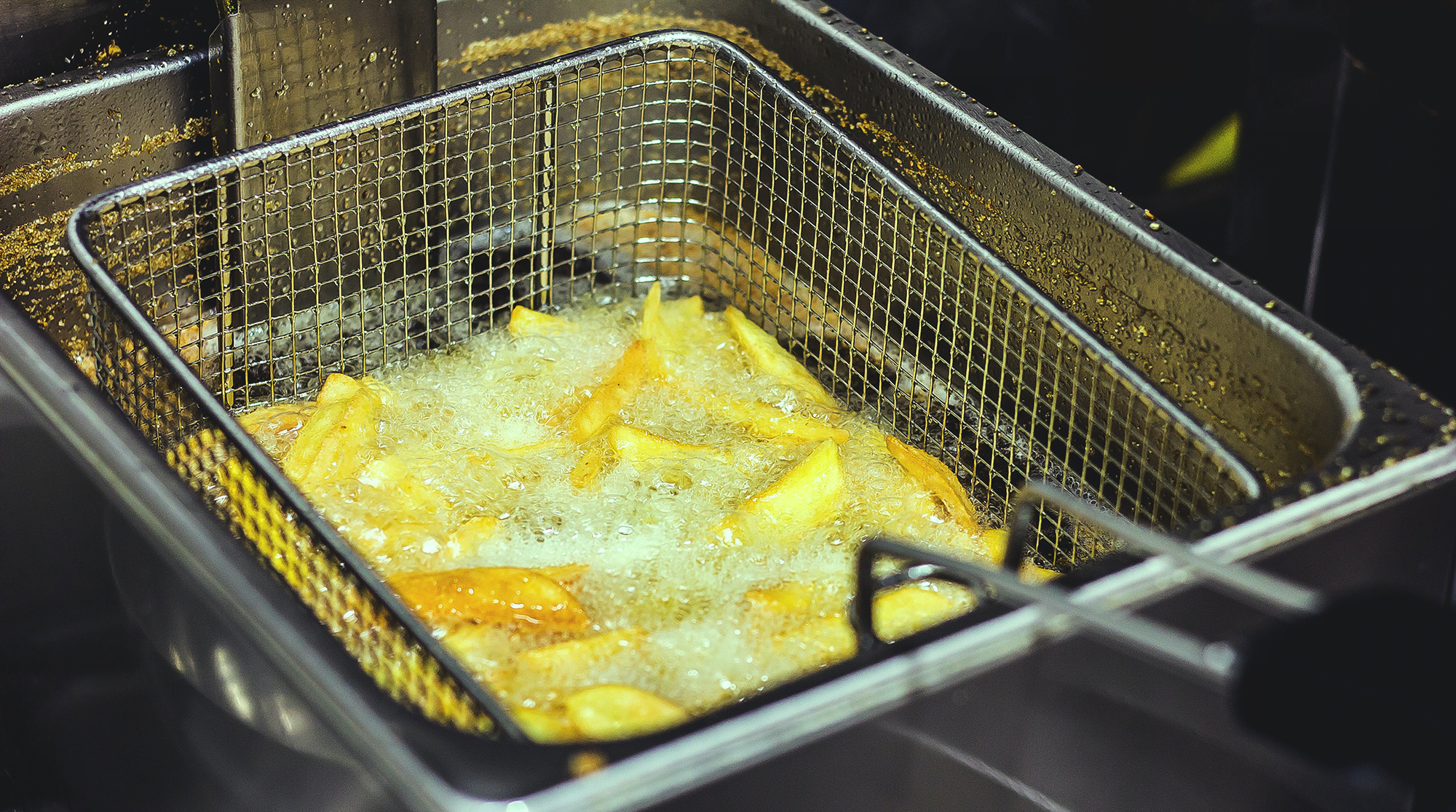
    The sizzle of frying food is familiar to many a cook, and that sound actually conveys a surprising amount of information. In this study, researchers suspended water droplets in hot oil and observed their behavior, both with high-speed video and with microphones. They found that these vaporizing drops created three types of cavities in the oil: an exploding cavity that breaks the surface, an elongated cavity that remains submerged, and an oscillating cavity that breaks up well below the surface. All three cavities flung oil droplets upward, and all three were acoustically distinct from one another. That means, as the authors suggest, that it might be possible to measure the aerosol droplets generated during frying simply by listening! (Image credit: fries – W. Dharma, others – A. Kiyama et al.; research credit: A. Kiyama et al.; via Cosmos; submitted by Kam-Yung Soh)

  • Featured Video Play Icon

    “Life and Chaos”

    In “Life and Chaos,” artists Roman Hill and Paul Mignot shot fluid flows live in a 1 cm x 1 cm square, then projected those images across 3,300 square meters. There’s something incredible about art on this immersive scale. It is literally impossible for any one visitor — or even the artists themselves — to experience the full piece; each person, by definition, can only take in a small part of the whole. That makes it all the more incredible to derive such a piece from a tiny, tiny canvas. As venues for this sort of immersive art spread, I can only imagine the amazing art we’ll see! (Image and video credit: R. Hill and P. Mignot)

  • Featured Video Play Icon

    Meet BILLY

    Many wings in nature are not rigid. Instead they flex and curve with the flow. Here researchers imitate that phenomenon with BILLY (Bio-Inspired Lightweight and Limber wing prototYpe). Using an evolutionary-style algorithm, BILLY determines its own optimal flapping characteristics to maximize performance. Its flexible membrane-style wing actually performs better than a rigid wing! Check out the end of the video for some flow visualization of the leading edge vortex. (Image and video credit: A. Gehrke et al.)

  • Inside a Champagne Pop

    Inside a Champagne Pop

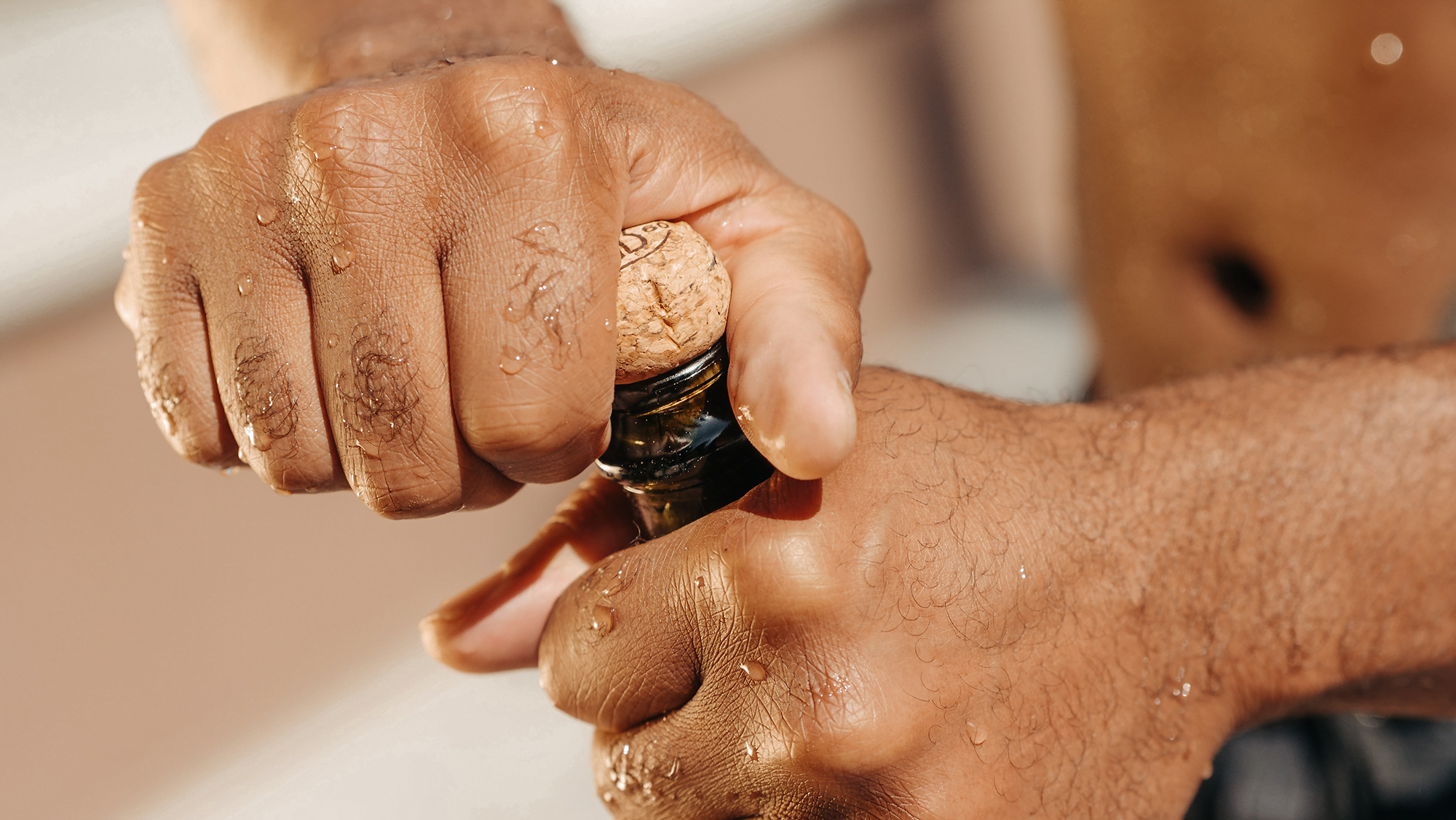
    When the cork pops on a bottle of champagne, the physics is akin to that of a missile launch in more ways than one. In this study, researchers used computational fluid dynamics to closely examine the gases that escape behind the cork. They identified three phases to the flow. In the first, the exhaust gases form a crown-shaped expansion region, complete with shock diamonds. Once the cork has moved far enough downstream, the axial flow accelerates to supersonic speeds and a bow shock forms behind the cork. Finally, the pressure in the bottle drops low enough that supersonic conditions cannot be maintained and the flow becomes subsonic. (Image credit: top – Kindel Media, simulation – A. Benidar et al.; research credit: A. Benidar et al.; via Ars Technica; submitted by Kam-Yung Soh)

    A numerical simulation showing the ejection of a champagne cork from a bottle. The colors indicate the speed of gases escaping from the bottle.
    A numerical simulation showing the ejection of a champagne cork from a bottle. The colors indicate the speed of gases escaping from the bottle.
  • Spinning Off-Axis

    Spinning Off-Axis

    To make a vortex in the laboratory, researchers typically set a tank on a rotating platform and allow the water to drain out a hole in the center of the tank. In that case, a vortex forms over the drain (like in your bathtub!) and remains centered over the hole. In nature, though, vortices rarely follow such a simple path.

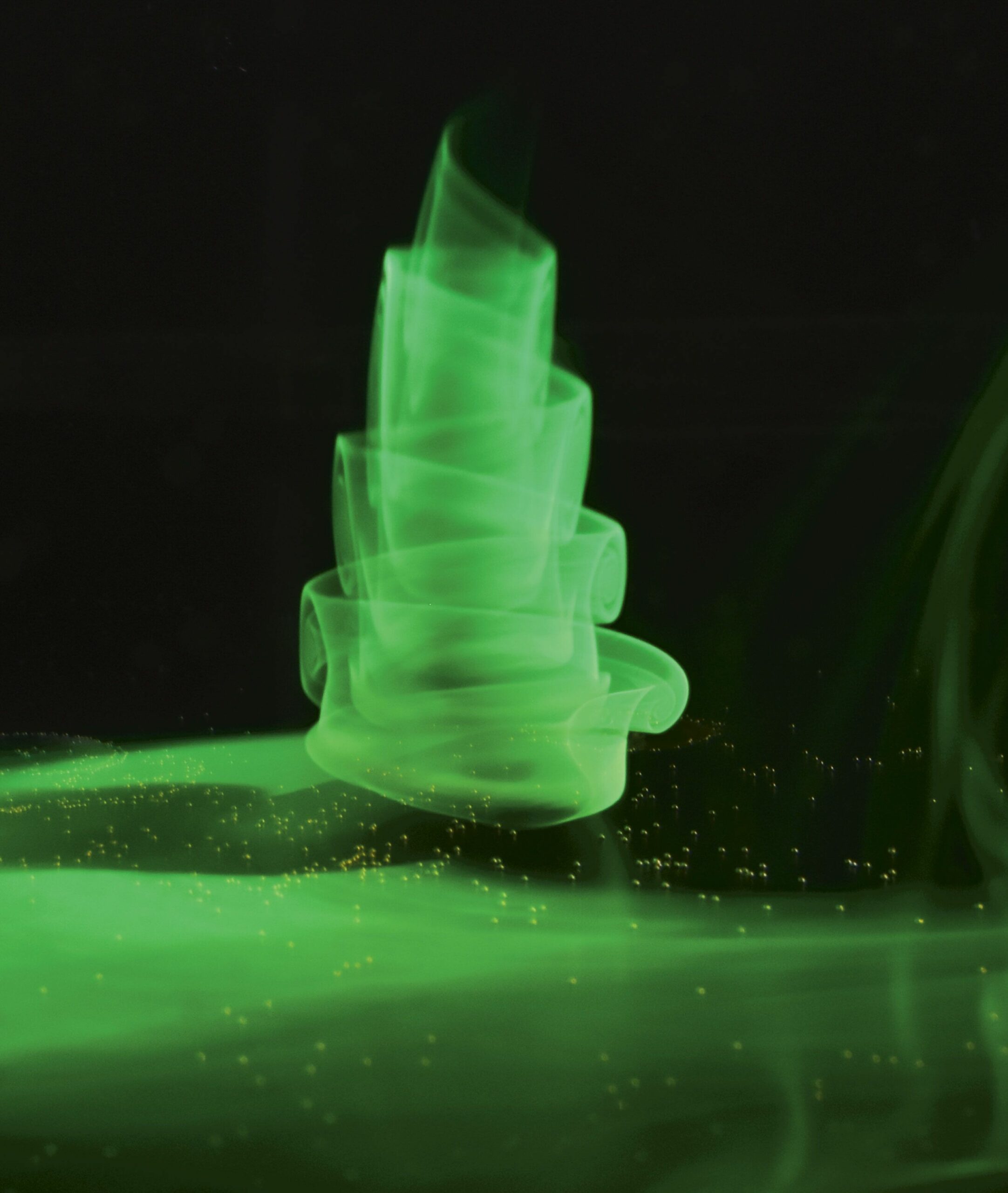
    In this experiment, researchers moved the drainage hole so that it is not aligned with the tank’s axis of rotation. Although the vortex forms over the drain (marked by a yellow dot in the lower image), it quickly moves away, following a roughly circular path around the axis until it comes to a stop. Green dye marks fluid from the tank’s bottom boundary layer, which eventually gets entrained up into the vortex. (Image and research credit: R. Munro and M. Foster; via Physics Today)

    Timelapse animation showing the development of the vortex. The yellow dot marks the location of the drain.
    Timelapse animation showing the development of the vortex. The yellow dot marks the location of the drain.

  • Featured Video Play Icon

    How Wells and Aquifers Work

    When rain falls, some of that water turns into run-off in storm systems but much of it seeps into the ground. What happens to that water? In most places, it joins the local aquifer, infusing the spaces between soil particles underground. In this video, Grady takes us through some of the interactions between surface water, aquifers, and the wells we use to access water underground. He’s even built some great demonstrations to show how aquifers and surface water like rivers pass water back and forth. (Image and video credit: Practical Engineering)

  • When Seeing a Flow Changes It

    When Seeing a Flow Changes It

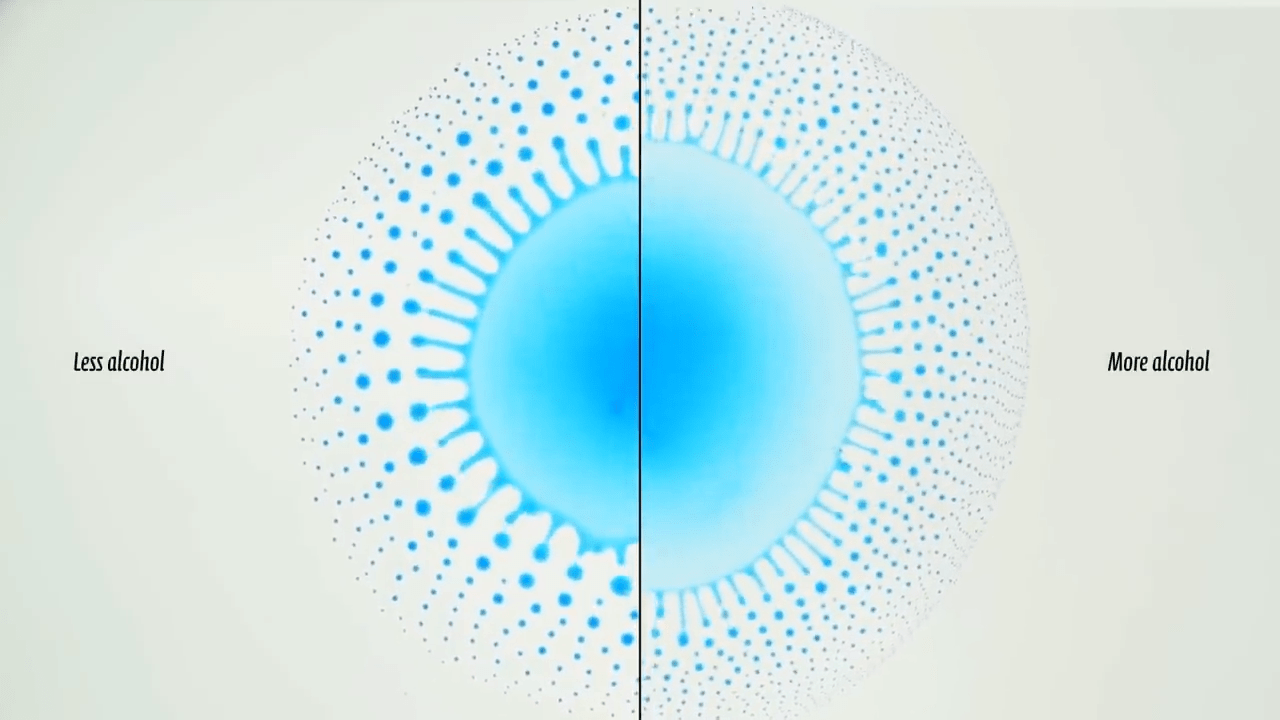
    Adding dye to a flow is a common technique for visualization. After all, many flows in fluids like air and water are invisible to our bare eyes. But for some classes of flows — especially those driven by variations in surface tension — adding dye can have unforeseen effects. A recent study shows how true this is for bursting Marangoni droplets, where evaporation and alcohol concentration can pull a water-alcohol droplet apart.

    Composite series of photos showing the effect of increased dye concentration on Marangoni bursting.
    As more dye is added to the experiment, the daughter droplets grow larger and more ligaments form. In the first three images, a dashed black line has been added to show the location of the droplet rim.

    Without dye, it’s nearly impossible to see the phenomenon since the refractive indices of the two component liquids are so close. But the researchers found that, as they added more methyl blue dye, it did more than increase the contrast in the flow. It changed the flow, making the droplets larger and creating ligaments between them. They believe that the dye’s own surface tension creates local gradients that alter the flow. It’s a reminder that experimentalists have to be careful to consider how our efforts to measure and observe a flow can change it. (Image credit: top – The Lutetium Project, bottom – C. Seyfert and A. Marin with modification; research credit: C. Seyfert and A. Marin)

  • Featured Video Play Icon

    “Velocity”

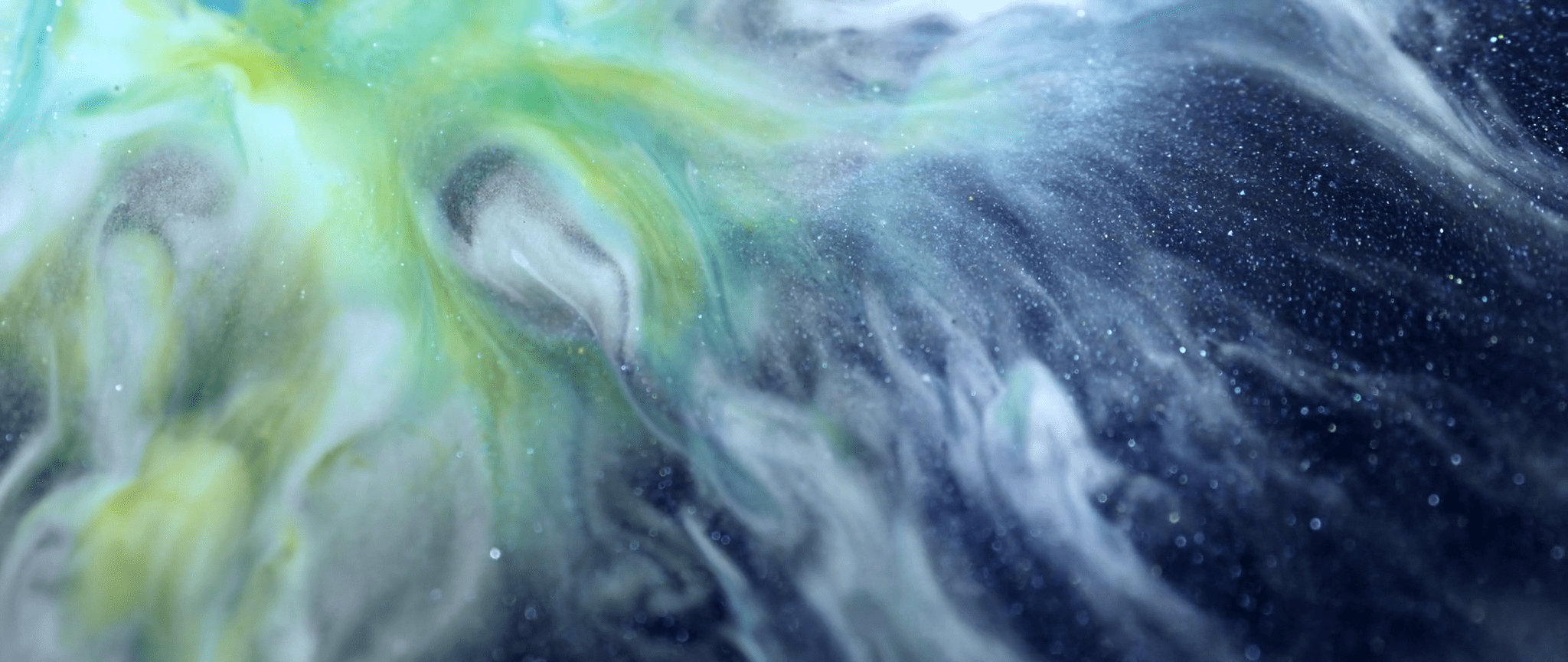
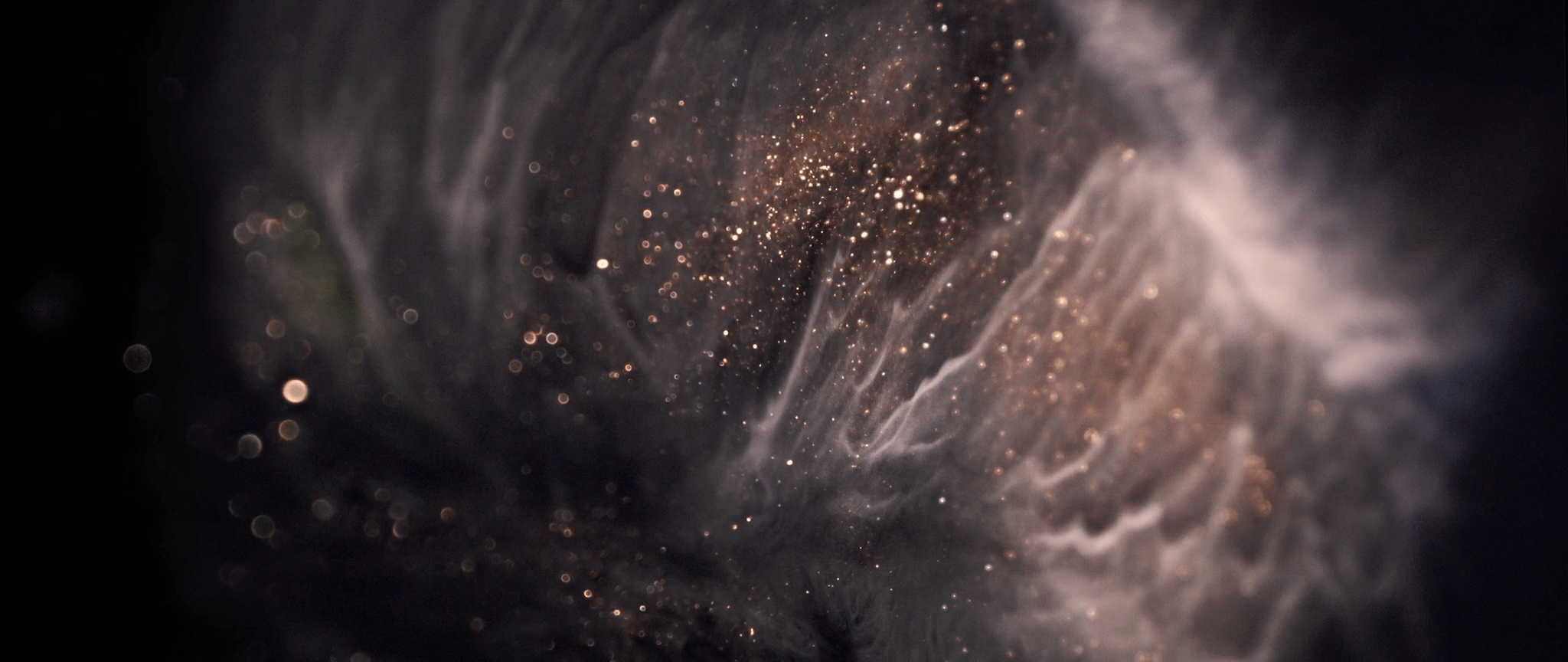
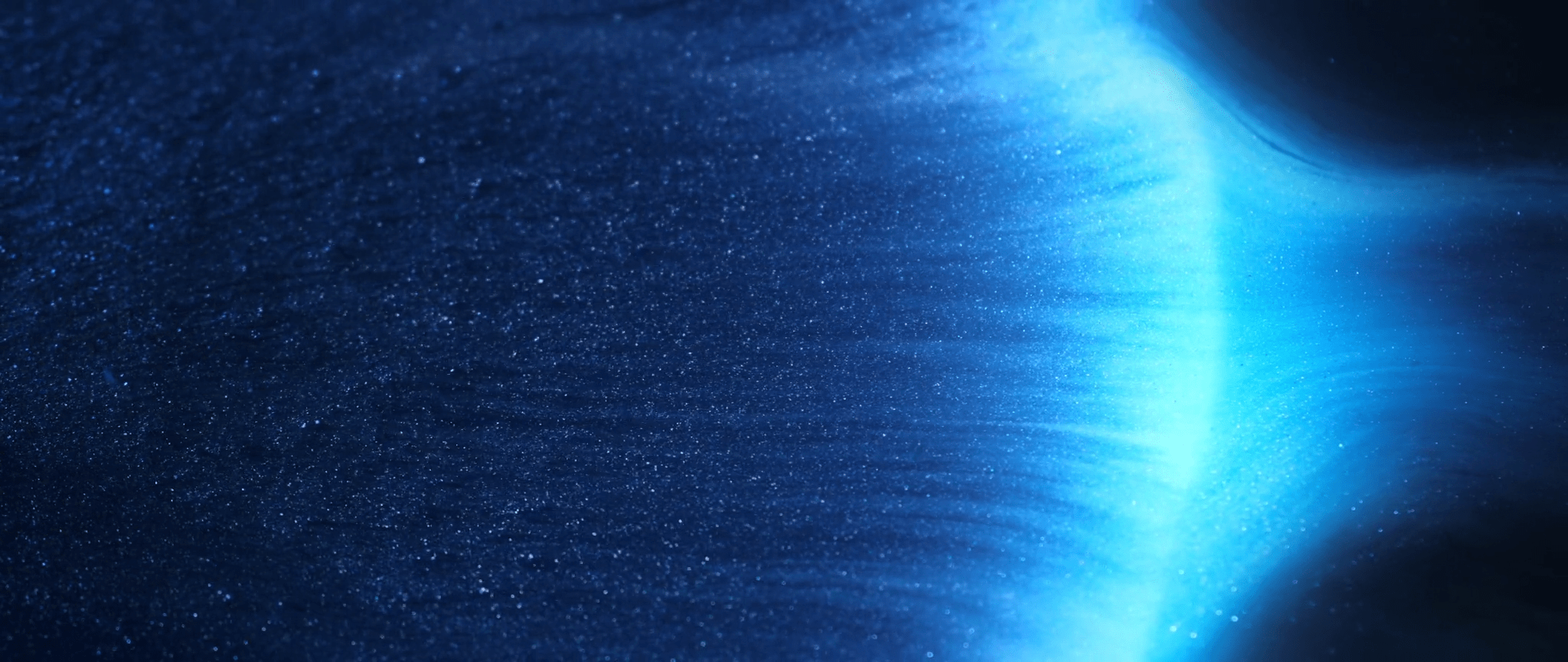
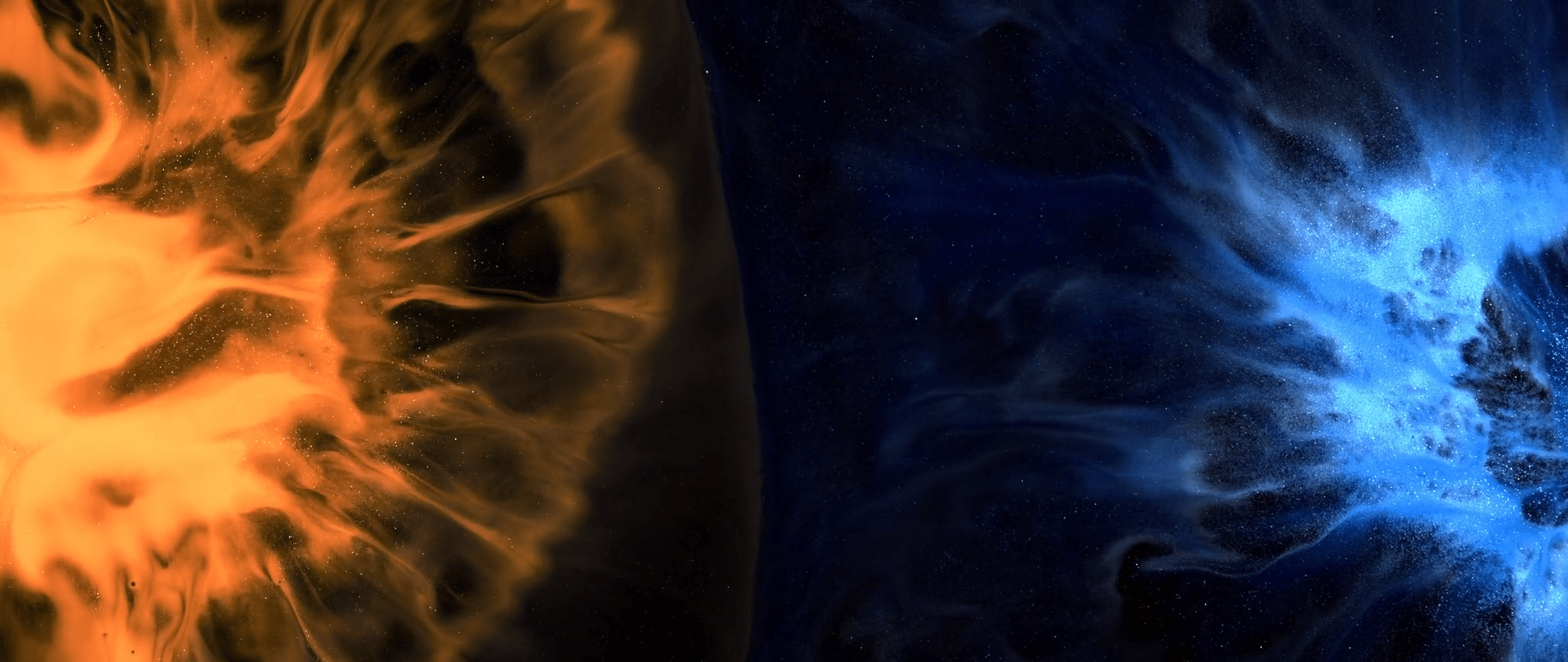
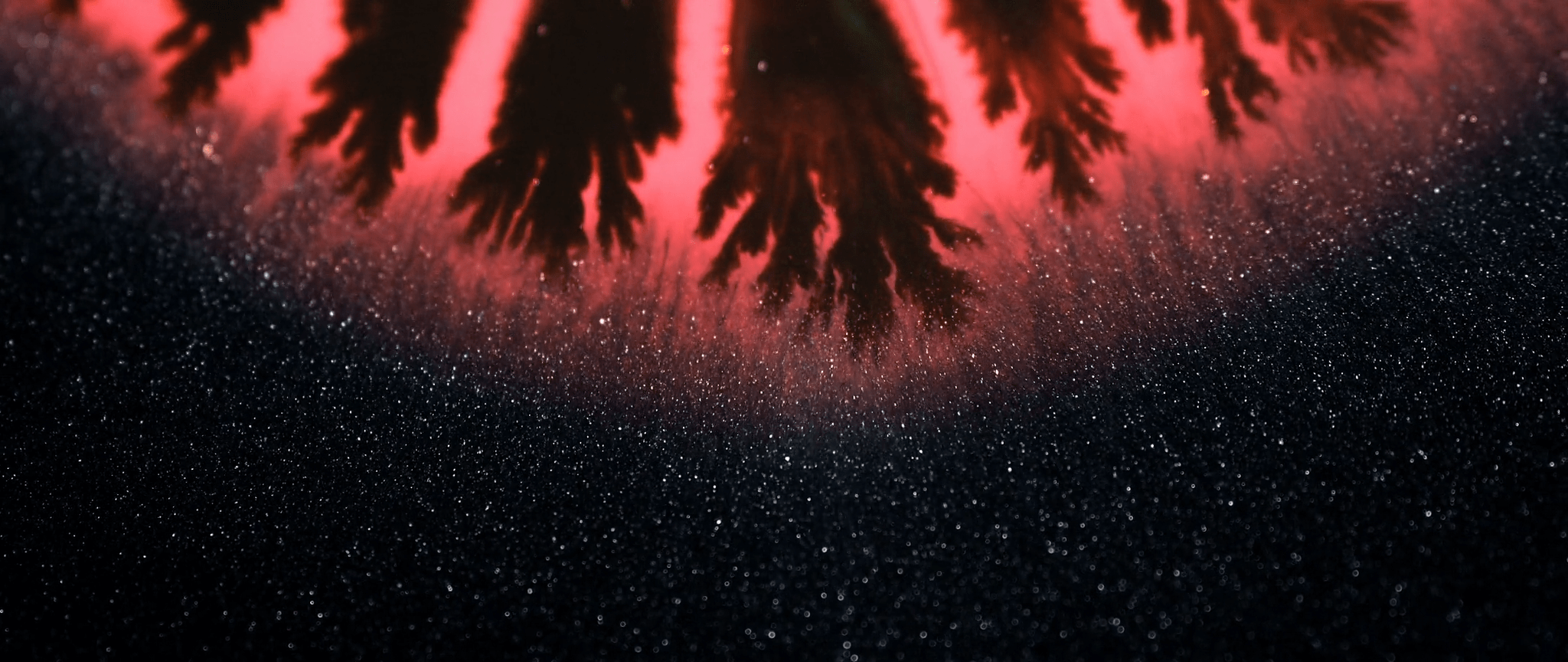
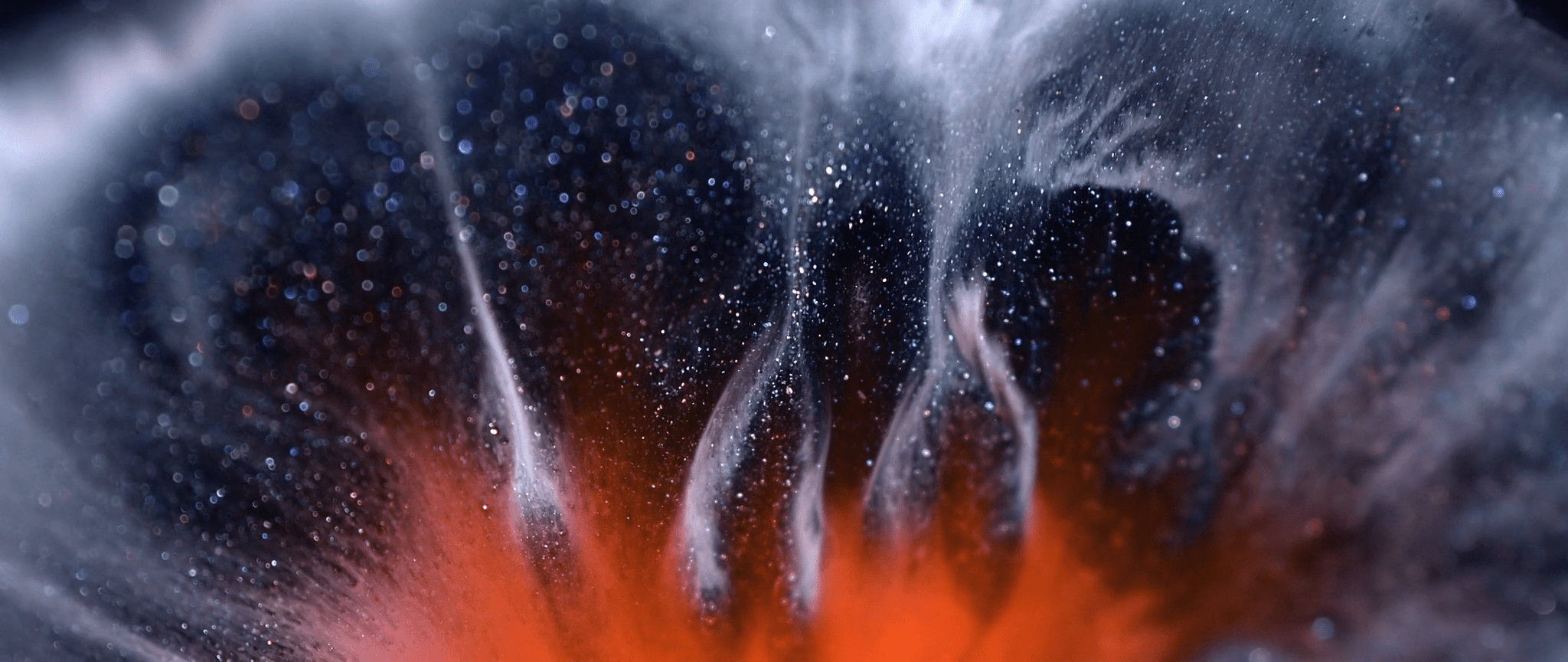
    In this short film by Vadim Sherbakov, macro shots of glittery ink and pigments look like astronomical vistas. The title of the film, “Velocity,” is spot on; every shot is full of flow and motion driven by the mixture of ink, alcohol, soap, and other fluids. That means lots of surface-tension-driven flow, and the glitter particles act as excellent tracers, giving a real sense of depth and direction for our gaze to follow. Watching films like this, I always want to pull out some odds and ends and try it for myself, but I’m certain my results would pale in comparison! (Video and image credit: V. Sherbakov; via Colossal)