Tag: engineering

  • Saving Screens with Shear-Thinning Fluids

    Saving Screens with Shear-Thinning Fluids

    These days glass screens travel with us everywhere, and they can take some big hits on the way. Manufacturers have made tougher glass, but they continue to look for ways to protect our screens. Recently, a study suggested that non-Newtonian fluids are well-suited to the task.

    The team explored the physics of sandwiching a layer of fluid between a glass top layer and an LCD screen bottom layer, mimicking structures found in electronic devices. Through simulation, they searched for the fluid characteristics that would best minimize the forces felt by the solid layers during an impact. They found that shear-thinning fluids — fluids that, like paint or shampoo, get runnier when they’re deformed — provided the best protection. Having the impact energy go into reducing the local viscosity of the fluid stretches the length of time the impact affects the glass, which lowers the bending forces on it and helps avoid breakage. (Image credit: G. Rosenke; research credit: J. Richards et al.; via Physics World)

  • Featured Video Play Icon

    Liquid Metal Printing

    Engineers have developed a new 3D-printing technique that uses molten aluminum to quickly manufacture large-scale parts. This Liquid Metal Printing method deposits the metal into a bed of tiny glass beads, which hold the metal in place while it cools. In minutes, they can produce furniture-sized parts, but that speed comes at a cost in resolution; the printed parts are rough, but they have the strength to withstand further machining by bending, milling, etc. The process is also well-suited for reusing scrap metal. The team hopes their method will be a useful prototyping tool as well as a possible manufacturing technique in architecture and construction. (Image and video credit: MIT News; research credit: Z. Karsan et al.)

  • Capturing the Tides

    Capturing the Tides

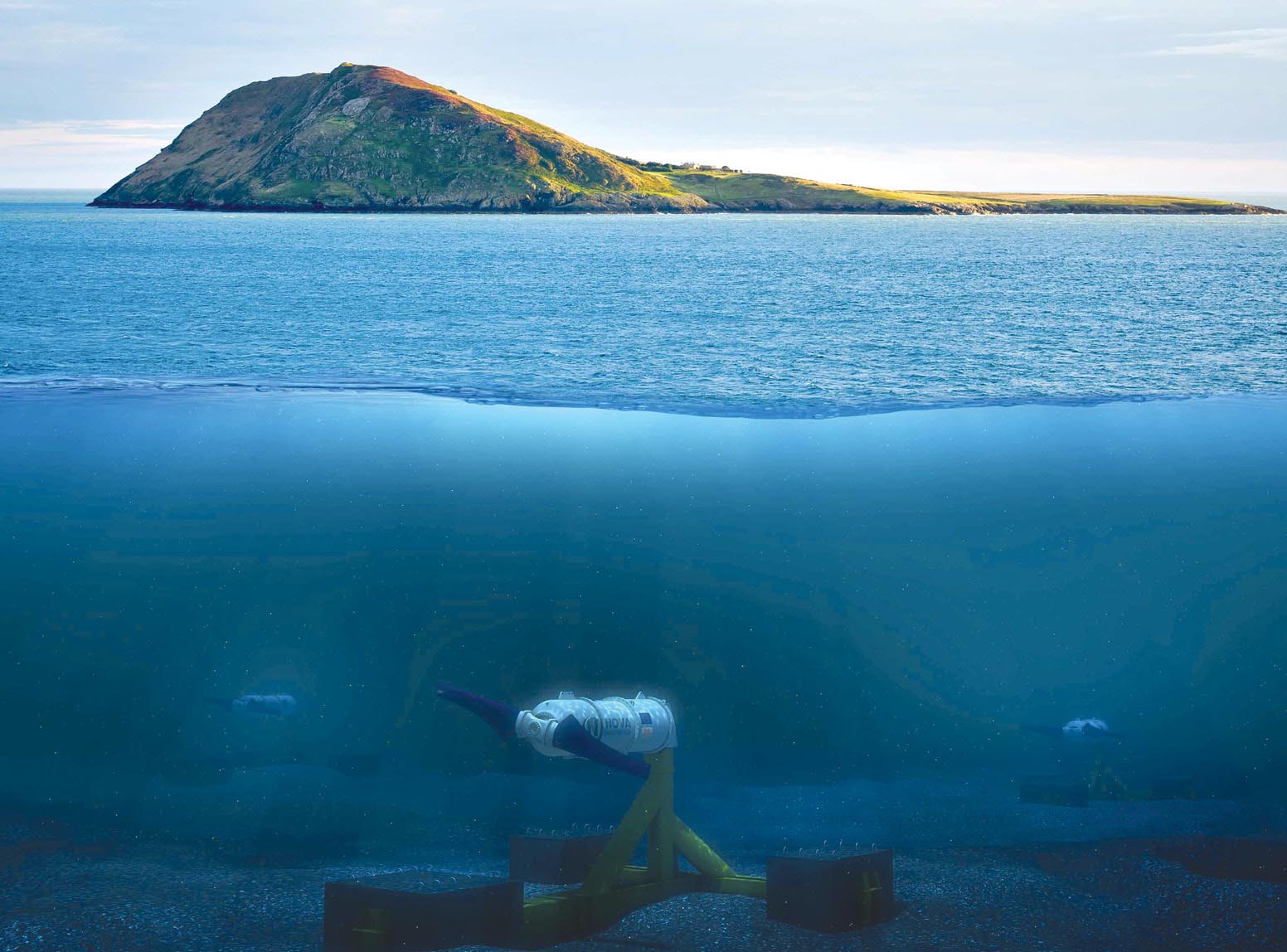
    Twice a day the tides rise and fall along coastlines. Increasingly, engineers are trying to harness these regular currents for clean energy. Tidal turbines spin during the fastest flows, turning a rotor that powers an electrical generator. Compared to wind and solar energy, tidal energy is expensive, but it’s also predictable — a feature wind and solar lack.

    Previous investments in clean energy have reduced costs as technologies mature, and proponents expect this will hold true for tidal turbines, as well. The machines face difficult conditions: salt and water are notoriously tough on equipment. Right now that makes large-scale facilities impractical. Instead, most projects are on a smaller scale, often focusing on powering remote rural coastal communities that currently rely on diesel for their electricity. These projects provide immediate benefits to the community while serving as a proving ground for the technology as a whole. For more, see this Physics Today article. (Image credit: Nova Innovation; see also Physics Today)

  • Featured Video Play Icon

    Mitigating Urban Floods

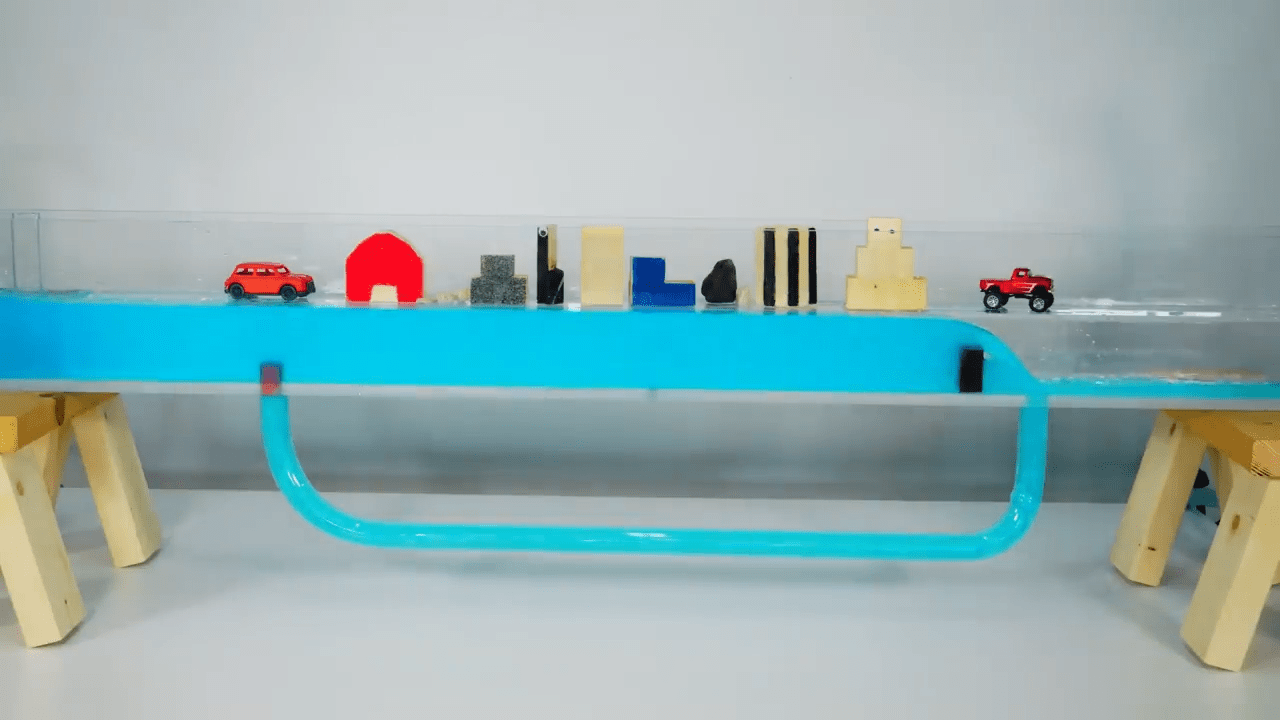
    For densely-populated urban areas, floods are one of the most damaging and expensive natural disasters. We can’t control the amount of rain that falls, so engineers need other ways to mitigate damage. It’s not usually possible to remove people and property from floodplains, so instead civil engineers look below the surface, building flood tunnel networks to alleviate floodwaters. In this Practical Engineering video, Grady demonstrates how these systems work and what some of their challenges are. (Video and image credit: Practical Engineering)

  • Fixing Reverse Osmosis

    Fixing Reverse Osmosis

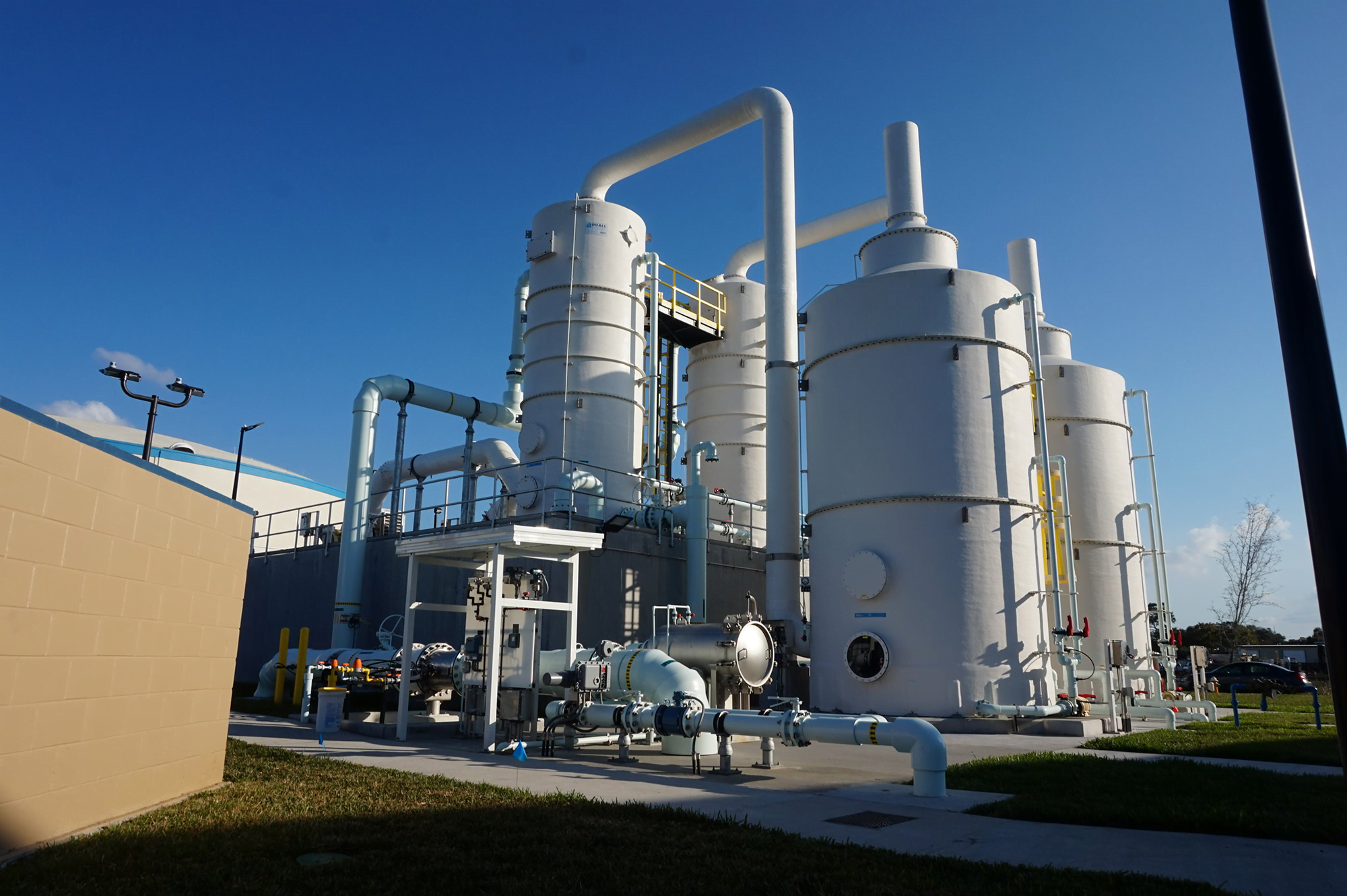
    Desalination and water treatment plants both rely on reverse osmosis to generate clean water for human use. The standard theory behind reverse osmosis for the last half century suggested that the membranes separated water and other chemicals by forcing water molecules, driven by chemical gradients, to travel one-by-one through a dense membrane forest. But over the years, researchers saw signs that this theory didn’t hold up; for one, the membranes water travels through have pores in them that are larger than individual water molecules.

    A new study examines the underlying assumptions of the prevailing model and finds instead that water moves through reverse osmosis membranes by pore flow. Instead of individual molecules pushed by concentration, flow takes place through pores and is driven by a pressure gradient. The difference is important because it enables engineers to design more efficient membranes according to real-world physics. By understanding the underlying mechanism, designers can tweak the pore size, density, and other features of reverse osmosis membranes to better filter unwanted chemicals and to remove salt from water with less energy input. (Image credit: Florida Water Daily; research credit: L. Wang et al.; via Wired; submitted by Kam-Yung Soh)

  • Featured Video Play Icon

    Sandgrouse Soak in Water

    Desert-dwelling sandgrouse resemble pigeons or doves, but they have a very different superpower: males can soak in and hold 25 milliliters of water in their feathers, which they carry tens of kilometers back to their chicks. The key to this ability is the microstructure of the bird’s breast feathers. Unlike other species, where feathers have hooks and grooves that “zip” them together, the sandgrouse’s specialized feathers have tiny barbules with varying bending stresses. When dipped in water, their curled shape unwinds, allowing water to soak in through capillary action. Barbules at the tips curl inward, holding the water in place so that the sandgrouse can fly home with it.

    Studying nature’s solutions for water-carrying will help engineers design better materials for human use, whether that’s a water bottle that avoids sloshing or a medical swab that’s better at absorbing and releasing fluids. (Image and video credit: Johns Hopkins; research credit: J. Mueller and L. Gibson; via Forbes; submitted by Kam-Yung Soh)

  • Featured Video Play Icon

    Acoustic Cameras

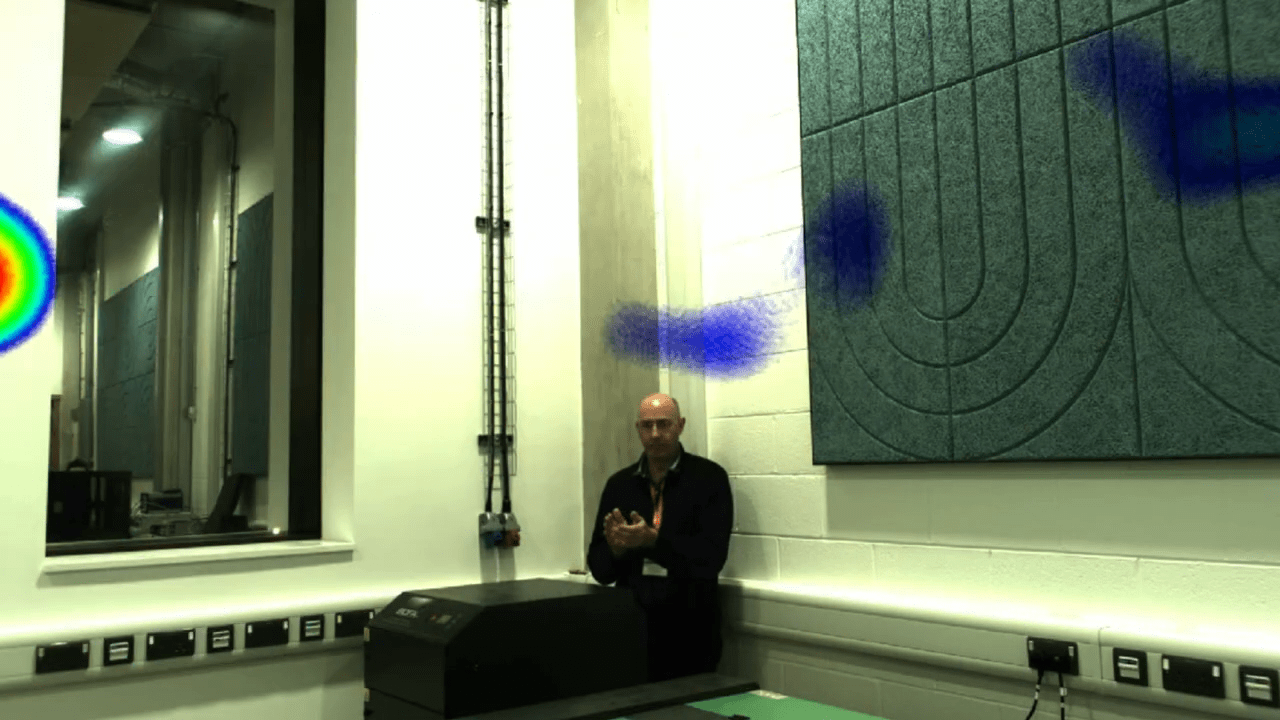
    Acoustic cameras use arrays of microphones to isolate where sounds are coming from. As Steve Mould shows in this video, they have some incredibly cool properties. They can show engineers which part of a device is producing particular sound frequencies, which is handy, for example, when trying to quiet a vacuum cleaner or learn which wheels on a train need maintenance. They can also show how sound moves around a room; near the end of the video, you can see the echo from a clap flashing around a room. Check out the full video for more! (Video credit: S. Mould)

  • Featured Video Play Icon

    How Spillway Gates Work

    Dams and reservoirs need a way to control their water level, and for many, that’s managed using spillway gates. In this video, Grady from Practical Engineering introduces several types of spillway gates, including their advantages and disadvantages. As always, he’s got neat tabletop demonstrations of each type, and he digs into the practical issues engineers face when building, maintaining, and repairing these critical pieces of infrastructure. (Image and video credit: Practical Engineering)

  • Testing Full-Size Engines

    Testing Full-Size Engines

    Engineers can often use small-scale models to test the physics of their creations, but sometimes there’s no substitute for going large. In this photo, we see a full-size commercial engine used on an airplane, mounted at the Instituto Nacional de Tecnica Aeroespacial (INTA) in Madrid.

    Behind the engine, in red, is an optical rig used for a brand-new measurement technique that allows engineers to directly measure the carbon dioxide emissions of the engine as it runs. The optical frame is 7 meters in diameter and uses 126 beams of near-infrared laser light to probe the engine’s exhaust without interrupting the flow. It’s the first chemically specific imaging of a full-scale gas turbine like those found on commercial aircraft. Given the high carbon emissions associated with air travel, the technique will be important for engineers building greener aircraft engines. (Image and research credit: A. Upadhyay et al.; via The Engineer; submitted by Simon H.)

  • Dispelling Ice

    Dispelling Ice

    In winter weather, delays pile up at airports when planes need de-icing. Our current process involves spraying thousands of gallons of chemicals on planes, but these chemicals are easily removed by shear stress and dissolution, meaning that by the time a plane takes off, there is little to no de-icing agent remaining on the plane. Instead, those chemicals become run-off.

    Researchers looking to change that have developed a family of anti-icing coatings — including creams, sprays, and gels — that are easy to use and apply, non-toxic, and much longer lasting than conventional methods. Ice slides easily off their gel coatings, which remain optically transparent even under freezing conditions — and ice can take 25 times longer to form on the gels compared to current anti-icing tech.

    The team envisions using their coatings on much more than airplanes. Imagine traffic lights that can’t be obscured by ice or snow, a windshield on your car that never freezes over, or even an anti-icing spray that could protect crops from a sudden freeze! (Image, video, research, and submission credit: R. Chatterjee et al.; see also)