Tag: droplets

  • Featured Video Play Icon

    Storm Eyes and Mushrooms in a Drop

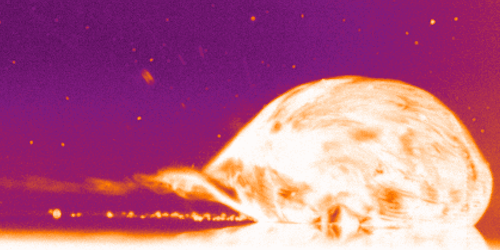
    In industry, drying droplets often have many components: a liquid solvent, solid nanoparticles, and dissolved polymers. The concentration of that last component — the polymers — can have a big effect on the way the droplet dries, as seen in the video above.

    Without polymers, the droplet dries similarly to a coffee ring stain. But at moderate concentration, we see something very different. The droplet forms an eye in the middle, similar to a hurricane’s, and the edges of the droplet sprout mushroom-shaped plumes that grow and merge with one another along the edge. With even larger polymer concentrations, the mushrooms sweep their way inward, leaving a feathery stain behind. (Video, image, and research credit: J. Zhao et al.)

  • Droplets From Speaking

    Droplets From Speaking

    Illnesses like COVID-19 can spread through droplets and aerosols produced by coughing, sneezing, or even speaking. New research looks at how regular speech patterns produce a spray of droplets. Researchers found that pronouncing many consonants causes a sheet of saliva to form between the speaker’s lips. That sheet stretches into filaments that then break into a spray of droplets.

    Strong, plosive consonants like /p/ and /b/ create the most droplets (Images 2 and 3), but even milder consonants like /m/ create some (Image 1). Interestingly, the researchers found that wearing lip balm drastically decreased droplet production by altering the saliva sheet formation. Even so, there’s no substitute for wearing a properly fitted mask! (Image credits: masks – K. Grabowska, droplets – M. Abkarian and H. Stone; research credit: M. Abkarian and H. Stone; via APS Physics)

  • Oil Drops and Filter Feeders

    Oil Drops and Filter Feeders

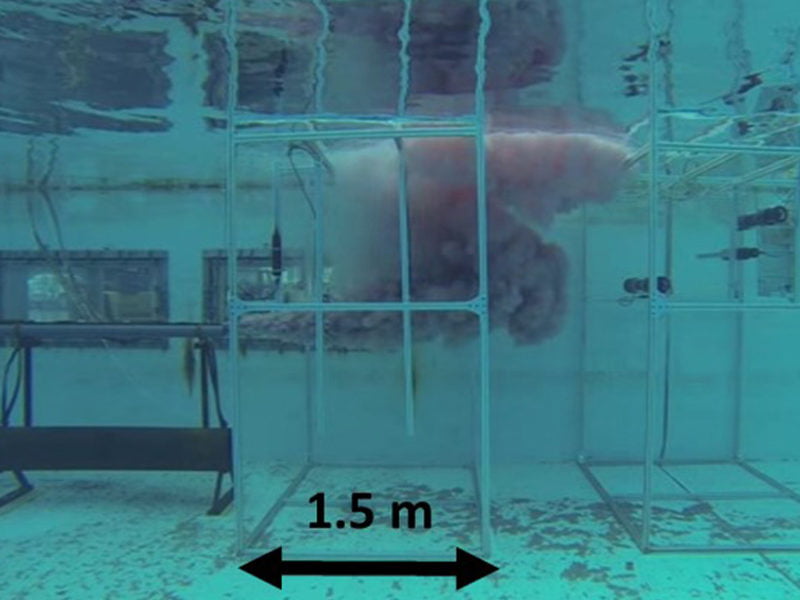
    Natural oils provide critical nutrients to filter feeders like zooplankton and barnacles. These creatures capture oil droplets on bristle-like appendages such as cilia and setae. But this droplet-catching turns into a disadvantage during petroleum spills, when capturing and ingesting oil can be lethal. A recent study looks at the fluid dynamics of oil droplet capture for these tiny creatures.

    The authors found that filter feeders capture a range of droplets regardless of size and oil viscosity. But not all droplets stay attached long enough to get consumed, and the larger a droplet is, the lower the flow velocity necessary to detach it from the animal. That suggests a method of limiting uptake of spilled petroleum into the marine food chain: use surfactants to break up the oil into droplets large enough that they’ll detach from filter feeders before getting eaten. (Image credit: D. Pelusi; research credit: F. Letendre et al.; submitted by Christopher C.)

  • Featured Video Play Icon

    Fluorescent Dancing Droplets

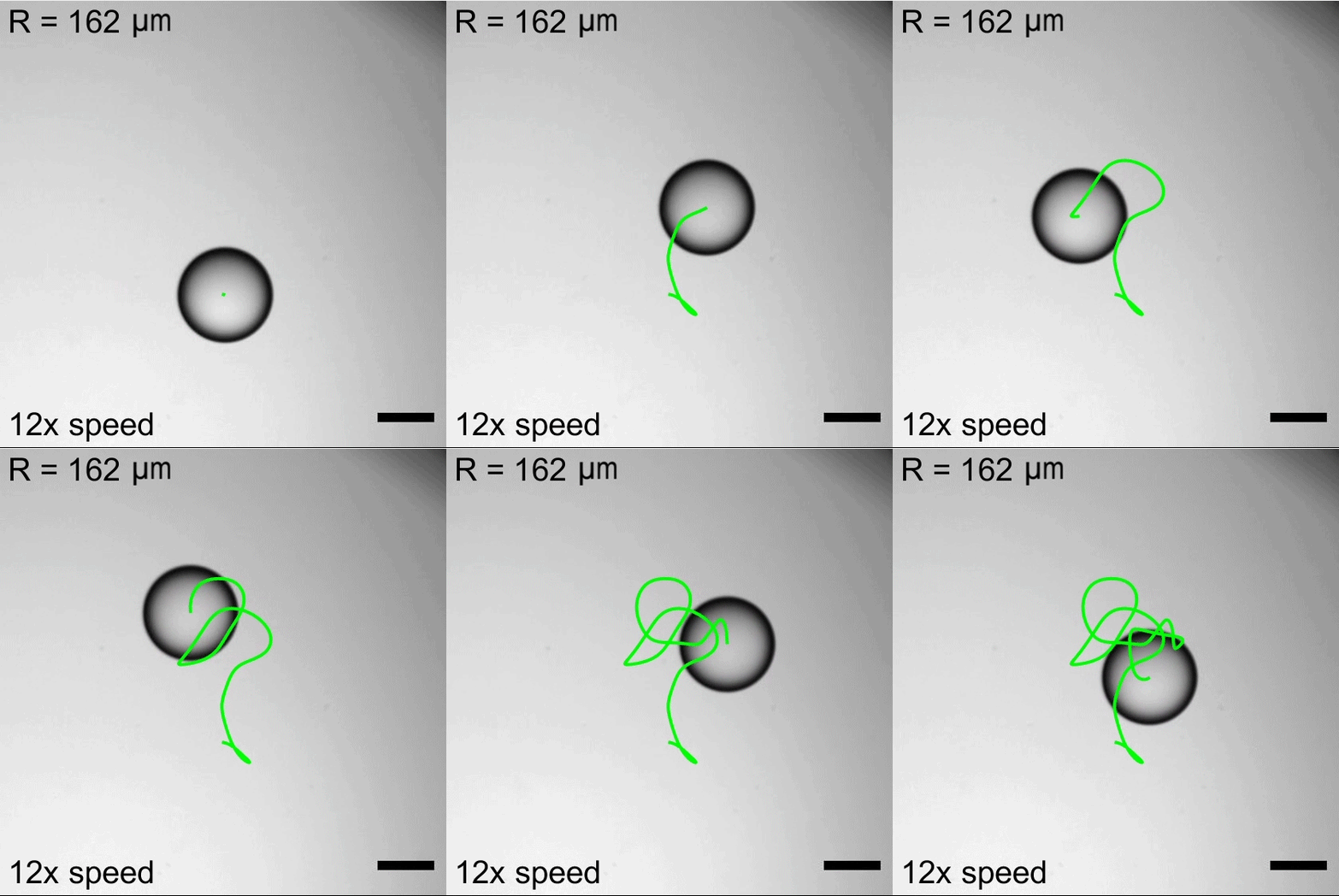
    These fluorescent droplets of glowstick liquid jiggle and dance in a solution of sodium hydroxide. Some droplets jitter. Some rotate. And some undergo one coalescence after another. It’s always fun to see how fluid dynamics and chemistry combine! (Image and video credit: Beauty of Science)

  • Featured Video Play Icon

    Crystalline Critters

    In 5th grade, I grew crystals by evaporating solutions of salt water from miniature pie tins. The results were white, boxy crystals whose size depended on how much salt I’d managed to dissolve into the water. But it turns out I could have gotten much cooler results if I’d evaporated my salt water a drop at a time on a hot superhydrophobic surface. That’s how these researchers formed the “crystal critters” shown in the video above.

    Initially, the evaporating salt water drop is what we would expect, but once enough water is gone to leave a shell of salt, the drop grows legs and lifts off the surface. From that point, all growth occurs from the surface up. Because the surface is heated, evaporation happens quickest at that point of contact, and the water that remains is drawn down the legs, providing more fluid for evaporation as well as additional salt to grow the crystal. (Video, image, and research credit: S. McBride et al.)

  • Featured Video Play Icon

    “As Above”

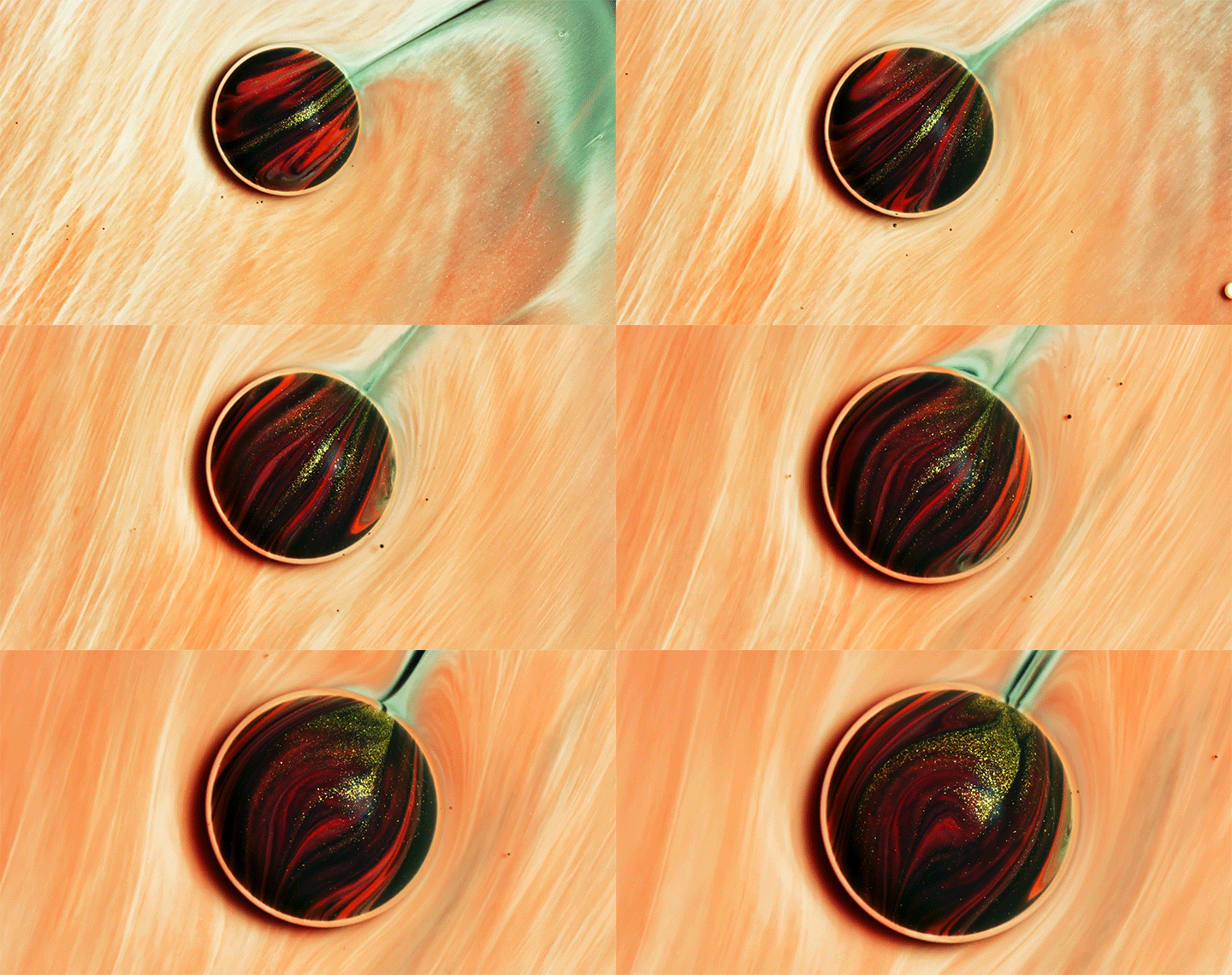
    In Roman Hill’s “As Above,” we see expansive celestial landscapes: nebulae, the corona of a star, and expanding interstellar dust clouds. Except, in reality, we are watching fluids undergoing a chemical reaction, on a canvas only 8 square millimeters in size. It’s a fun — and beautiful — reminder that the patterns of physics repeat across many scales. (Video and image credit: R. Hill)

  • Measuring Contaminants in Drops and Bubbles

    Measuring Contaminants in Drops and Bubbles

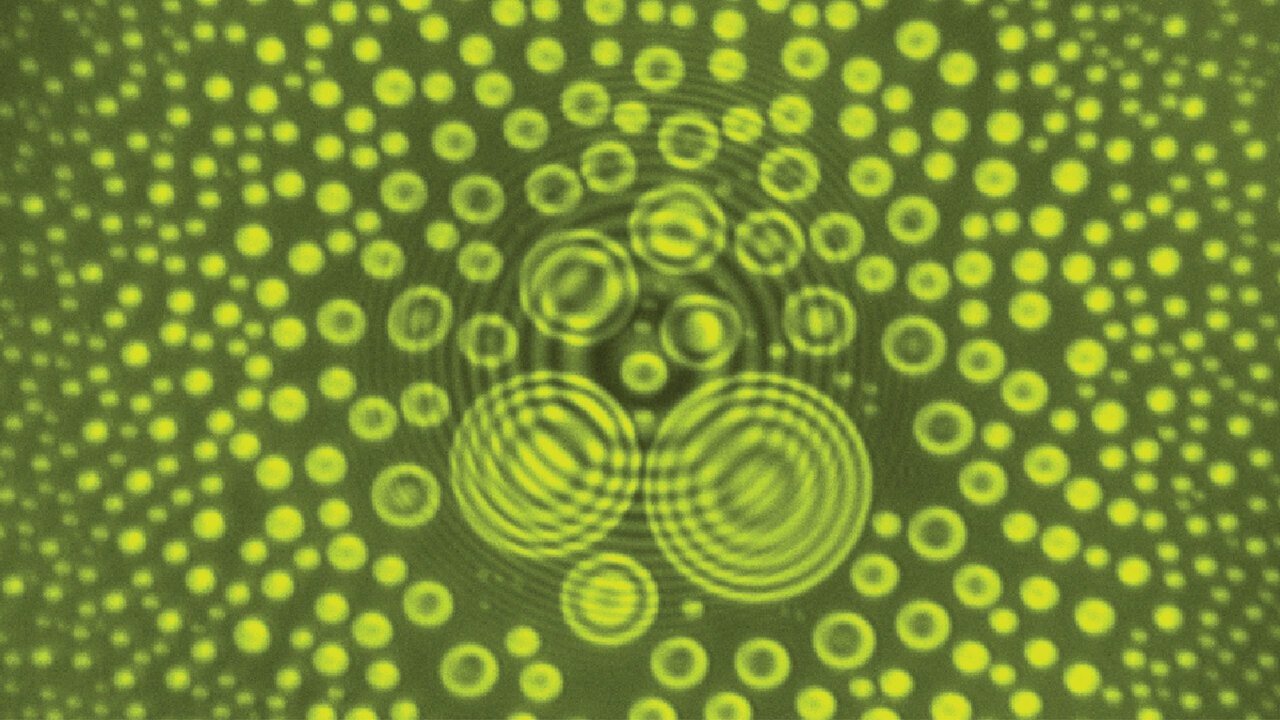
    Rising bubbles and droplets are common in many chemical and industrial applications. But just a tiny concentration of contaminants on their surface can completely alter their behavior, disrupting coalescence and slowing down chemical reactions.

    Historically, it’s been hard to measure the level of contamination in these some drops and bubbles, but a new study outlines a way to measure these small concentrations by perturbing the drops and watching how they deform. By analyzing how the drop shimmies and shakes, they’re able to measure its surface tension and, ultimately, the concentration of contaminants. (Image credit: S. Sørensen; research credit: B. Lalanne et al.; via APS Physics)

  • Featured Video Play Icon

    “Focus, Vol. 1”

    In “Focus, Vol. 1,” photographer Roman De Giuli follows colorful droplets as they roll along, chase one another, and burst. You may notice that many of the drops seem attracted to one another. This is actually a surface tension effect caused by the dimples the droplets create on the surface; it’s the same effect responsible for Cheerios clumping together in your milk. Interestingly, though, the oil coating the drops doesn’t seem to drain quickly enough for the clumping drops to actually coalesce. (Image and video credit: R. De Giuli)

  • Featured Video Play Icon

    The Birth of a Liquor

    A water droplet immersed in a mixture of anise oil and ethanol displays some pretty complicated dynamics. Its behavior is driven, in part, by the variable miscibility of the three liquids. Water and ethanol are fully miscible, anise oil and ethanol are only partially miscible, and anise oil and water are completely immiscible. These varying levels of miscibility set up a lot of variations in surface tension along and around the droplet, which drives its stretching and eventual jump.

    Once detached, the droplet takes on a flattened, lens-like shape that continues to spread. That spreading is driven by the mixing of ethanol and water, which generates heat and, thus, convection around the drop. This not only spreads the droplet, it causes turbulent behavior along the drop’s interface. (Image and video credit: S. Yamanidouzisorkhabi et al.)

  • Kicking Droplets

    Kicking Droplets

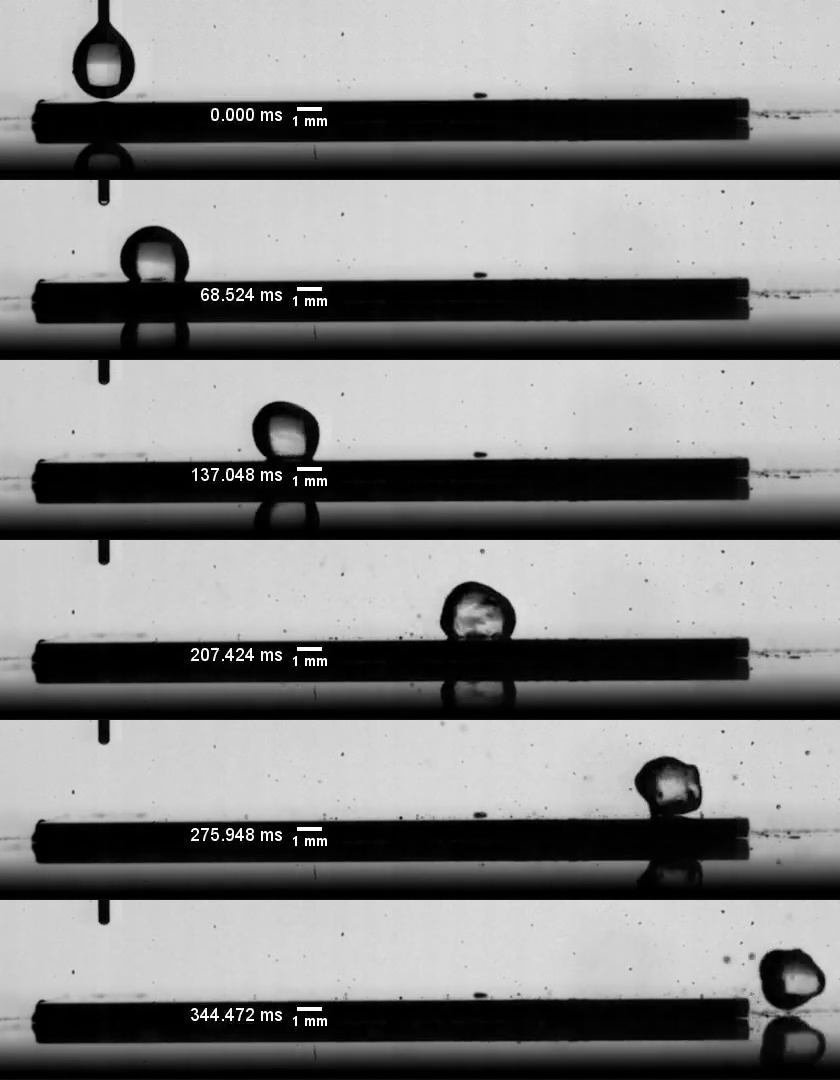
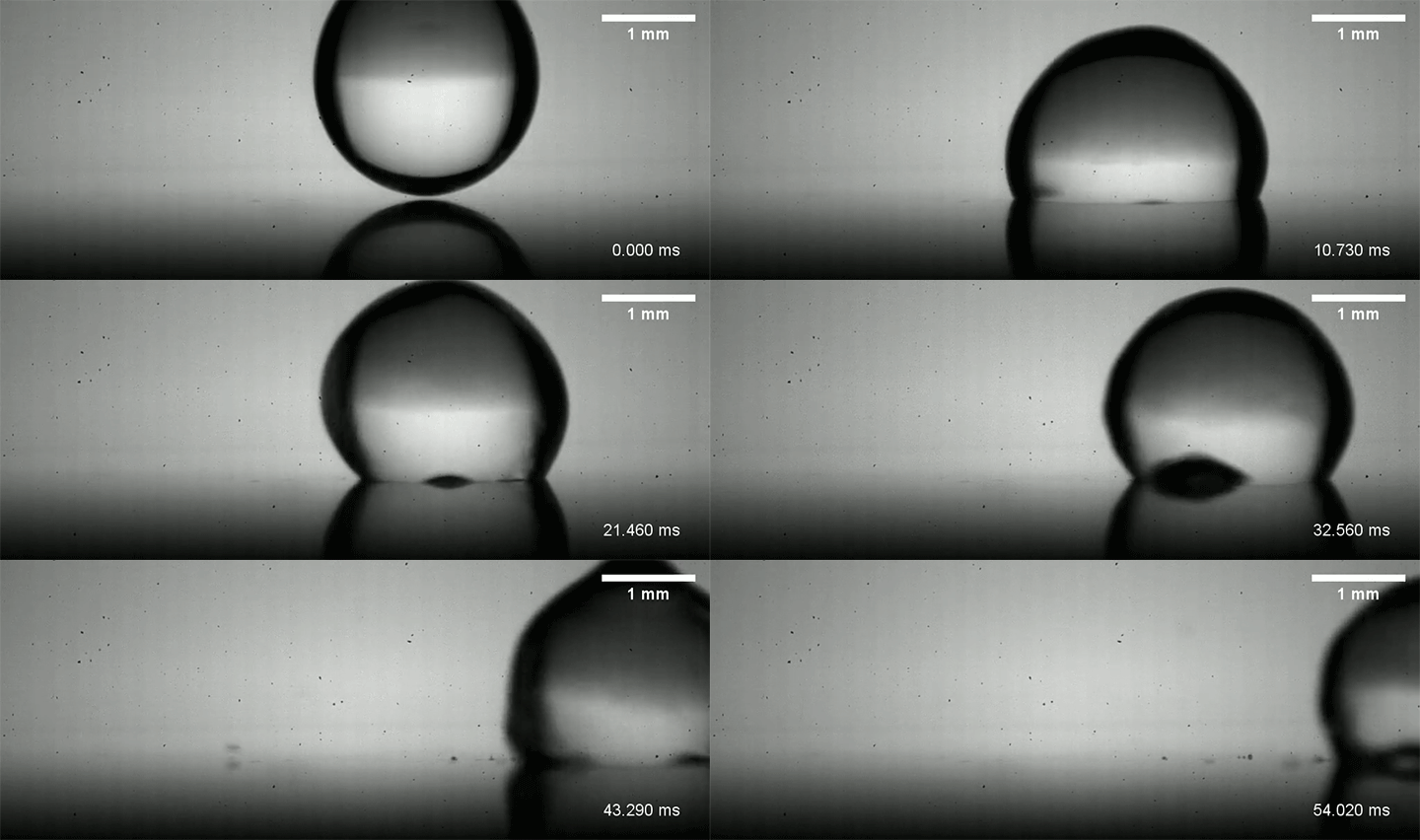
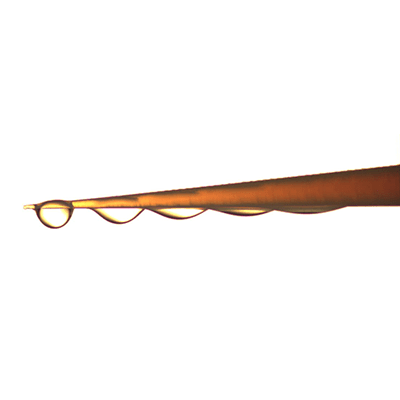
    Moving the surface a droplet sits on creates some interesting dynamics, especially if the surface is hydrophobic. That’s what we see here with these droplets launched off an impulsively-moved plate.

    On the left, the drop has some limited contact with the plate and it takes time for the droplet to completely detach. When accelerated, the droplet first flattens into a pancake, the rim of which quickly leaves the plate. The center of the droplet is slower to detach, stretching the drop into a vase-like shape. When the drop does finally lose contact, it creates a fast-moving jet that shoots upward at several meters per second!

    In contrast the image on the left shows a levitating Leidenfrost droplet. Since this drop has no physical contact with the plate, the kick makes it leave the surface all at once, launching a pancake-like drop that quickly forms unstable lobes. (Image and research credit: M. Coux et al.)