Tag: climate change

  • Melting Ice Cap

    Melting Ice Cap

    This award-winning photo by Thomas Vijayan shows waterfalls of ice melt off the Austfonna ice cap. The third-largest glacier in Europe, Austfonna is located in Norway’s Svalbard archipelago. Like other glaciers, it sees rising temperatures and increased melting due to climate change. Vijayan highlights that melting with his focus on the many waterfalls slicing through the ice. All that meltwater contributes to changes in local salinity as well as rising sea levels worldwide. (Image credit: T. Vijayan; via Nature TTL POTY)

  • Stirring Up Sediment

    Stirring Up Sediment

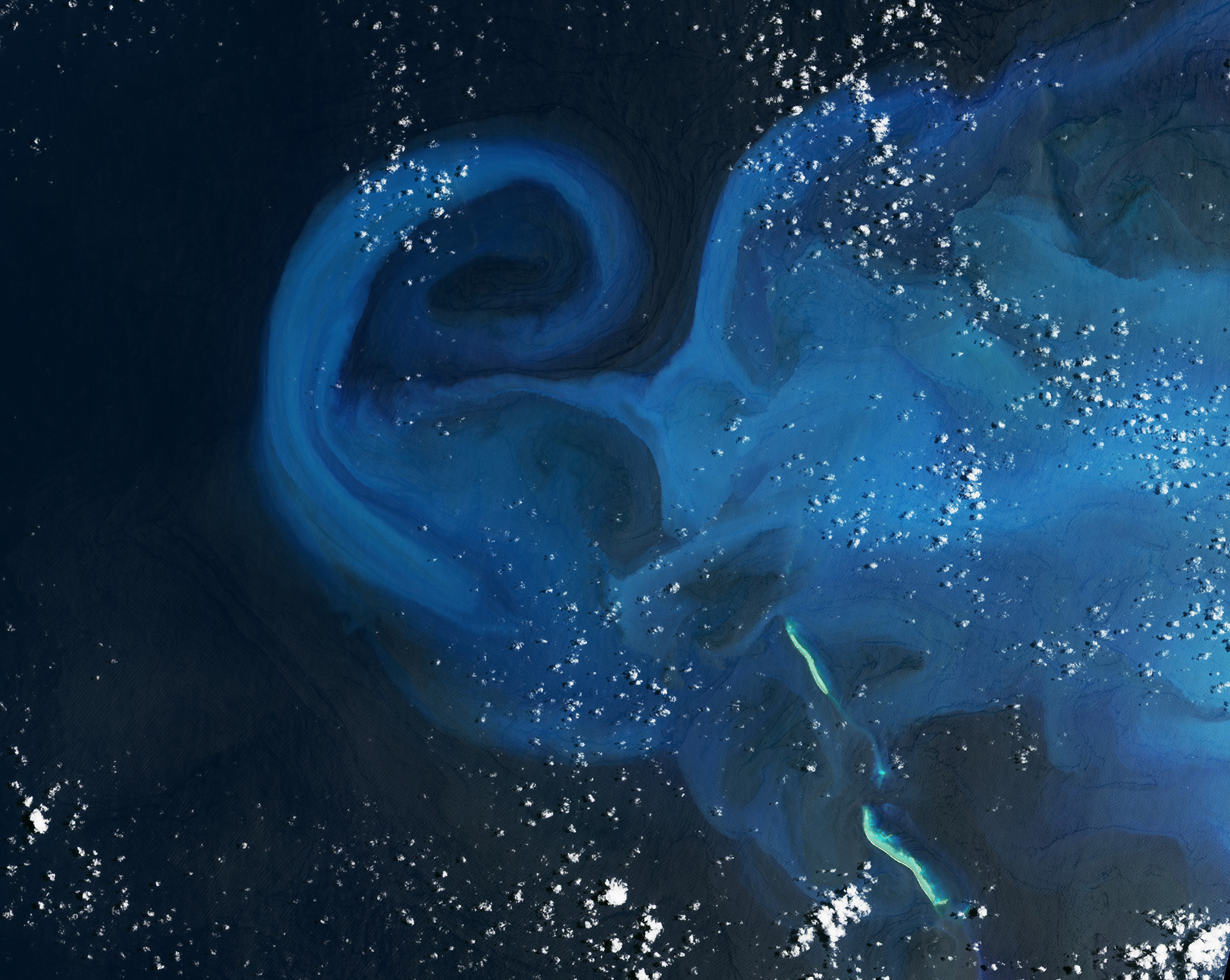
    In early February, Tropical Cyclone Gabrielle passed over the Bellona Plateau in the Coral Sea, stirring up sediment from the shallow reefs there. Once the storm cleared, large swirls of carbonate sediment mixed into the deeper waters around the plateau. As the sediment sinks to depths of kilometers, it will dissolve into the deep ocean waters, eventually getting captured as part of sedimentary rocks. This is a critical step in the ocean’s carbon capture cycle.

    Unfortunately, climate change is disrupting the ocean’s ability to capture carbon. An excess of carbon dioxide acidifies ocean waters, making it harder for creatures like corals and crabs to incorporate carbon into their bodies. That reduces sources for carbonate sediments like those seen here. Changes in ocean chemistry also affect where and how much carbonate can get dissolved. In short, ocean carbon capture has been an important process for Earth’s carbon cycle in the past, but the process is a slow one, and human activity has overloaded the ocean’s system in ways we don’t fully understand. (Image credit: A. Nussbaum; via NASA Earth Observatory)

  • Summer Melt

    Summer Melt

    A warm summer in 2022 has resulted in record melting on Svalbard. Located halfway between the Norwegian mainland and the North Pole, more than half of Svalbard is normally covered in ice. But with glaciers in retreat and firn — a surface layer of compressed porous snow — melting, pale blue ice is getting direct exposure to the sun and warm air temperatures. The result has been melting 3.5 times larger than the average melt between 1981 and 2010. Look closely and you’ll find deep blue meltwater ponds dotting the ice, too. The run-off of meltwater has likely carried extra sediment into the surrounding waters, accounting for some of the paler water colors along the coast. (Image credit: J. Stevens/USGS; via NASA Earth Observatory)

  • Dance of the Coral Polyps

    Dance of the Coral Polyps

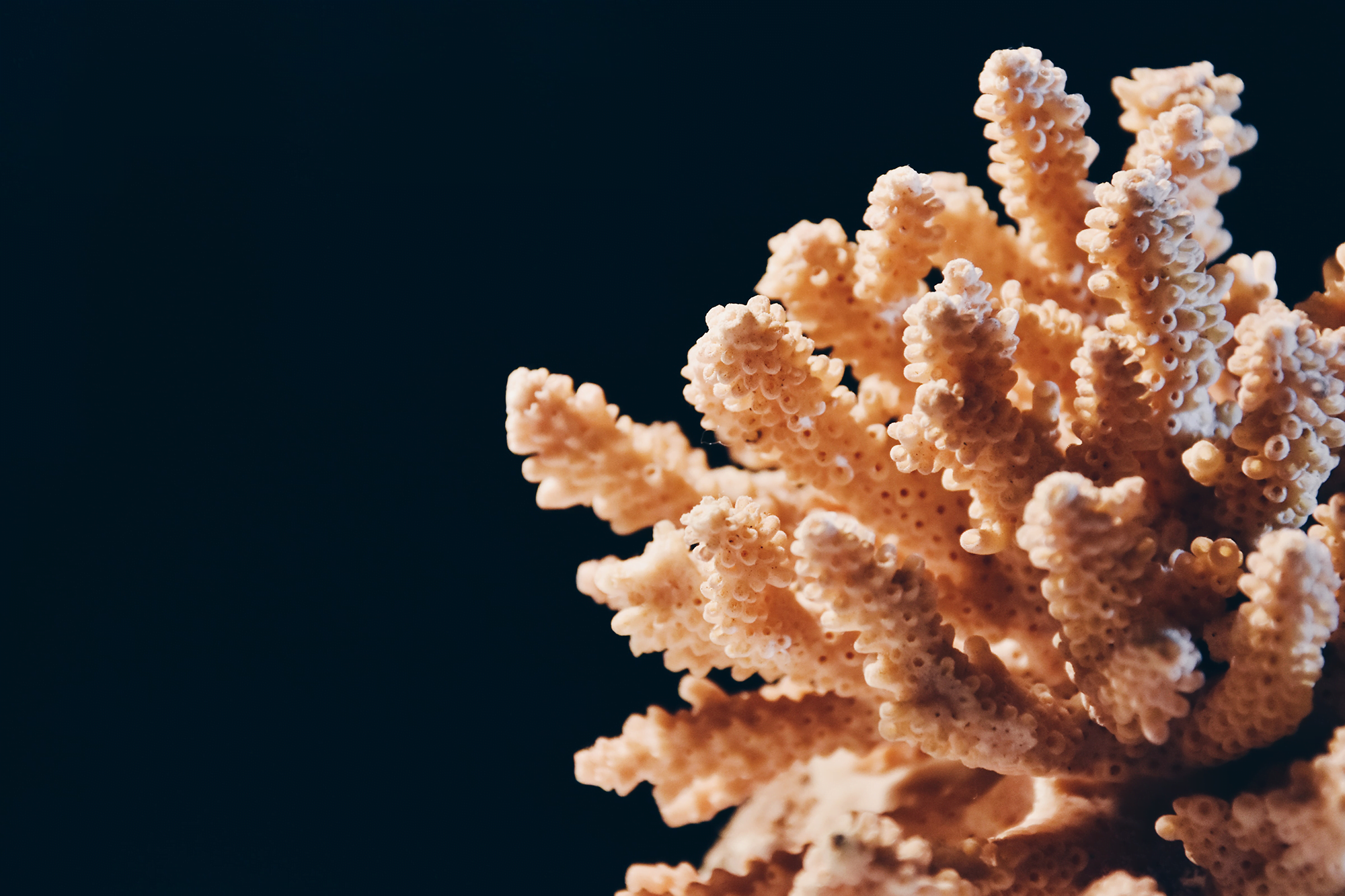
    Coral reefs are made of up small organisms, called coral polyps, that live together in a colony. Individual polyps can expand, contract, and wave in the flow around them, and, in a recent study, researchers looked at whether changing conditions in temperature and light wavelength can affect polyp movement. To do so, they built a little flow control tank around a coral nubbin containing several polyps.

    Under normal light and temperature conditions, they found the polyps’ motions are correlated. (Scientists don’t know why this is the case, but it could help with foraging or photosynthesis for the organisms.) When temperatures rise and light levels shift to bluer wavelengths — simulating warmer and rising oceans — the polyps lose their coordination. Without knowing the purpose behind the motion, scientists can’t yet say what that lack of coordination means, but the team believes their experimental methods can be adapted to help answer those questions, perhaps even in natural, rather than lab-created, circumstances. (Image credit: S. Ravaloniaina; research credit: S. Li et al.; via APS Physics)

  • Recycling Urban Heat

    Recycling Urban Heat

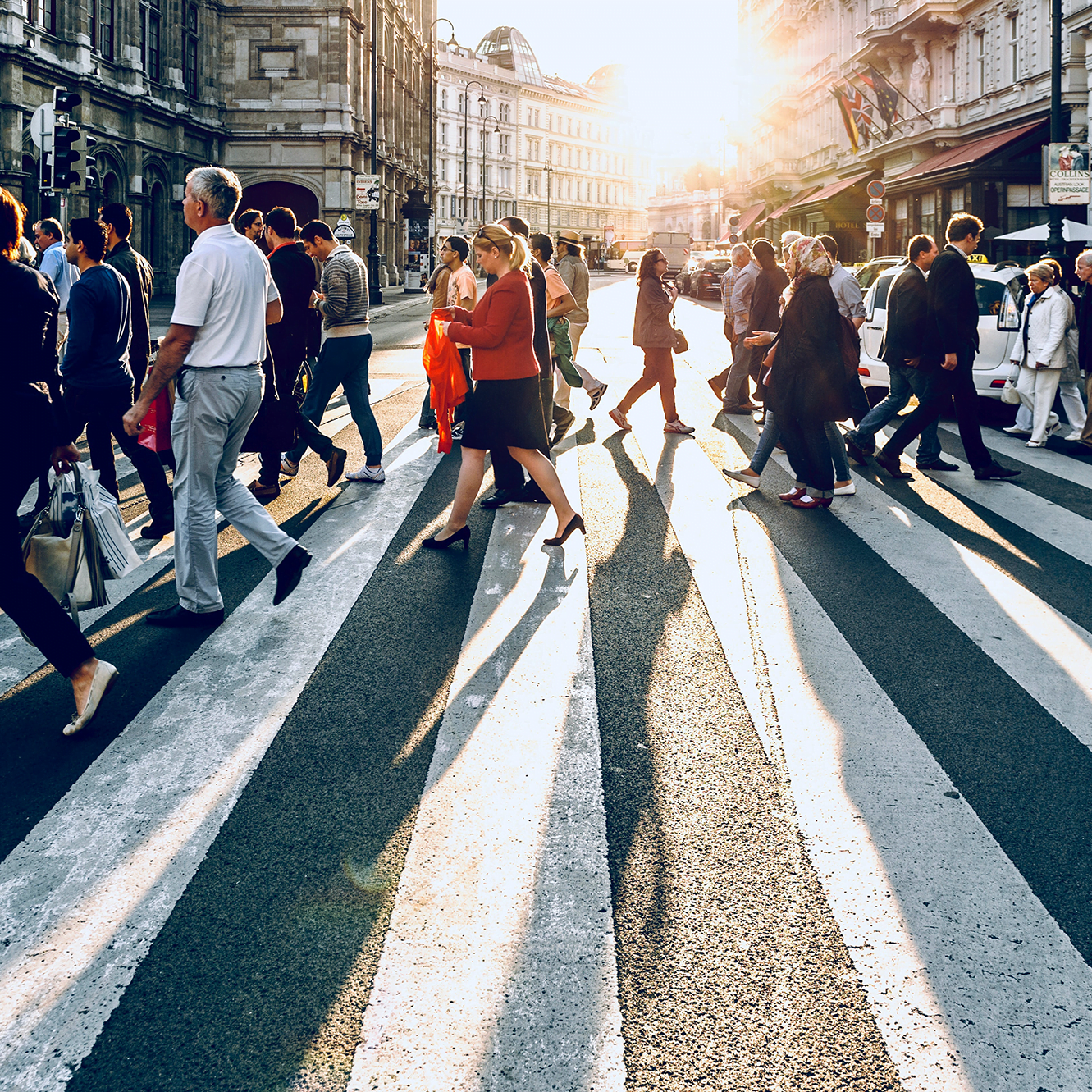
    In urban areas, buildings and concrete surfaces create a heat effect that can make temperatures in the city substantially higher than in nearby rural areas. That heat isn’t just above ground, either. It seeps into the subsurface, measurably increasing groundwater temperatures. In a recent study, authors suggest this excess subsurface heat could be reclaimed and recycled (via heat pumps and other heat exchangers) in urban areas to offset peoples’ needs and to help groundwater return to its normal temperature. They found that even focusing on heat stored in the top meter of the subsurface could provide green heating for much of the world’s urban populations. (Image credit: J. Dylag; research credit: S. Benz et al.)

  • Florida’s Keys

    Florida’s Keys

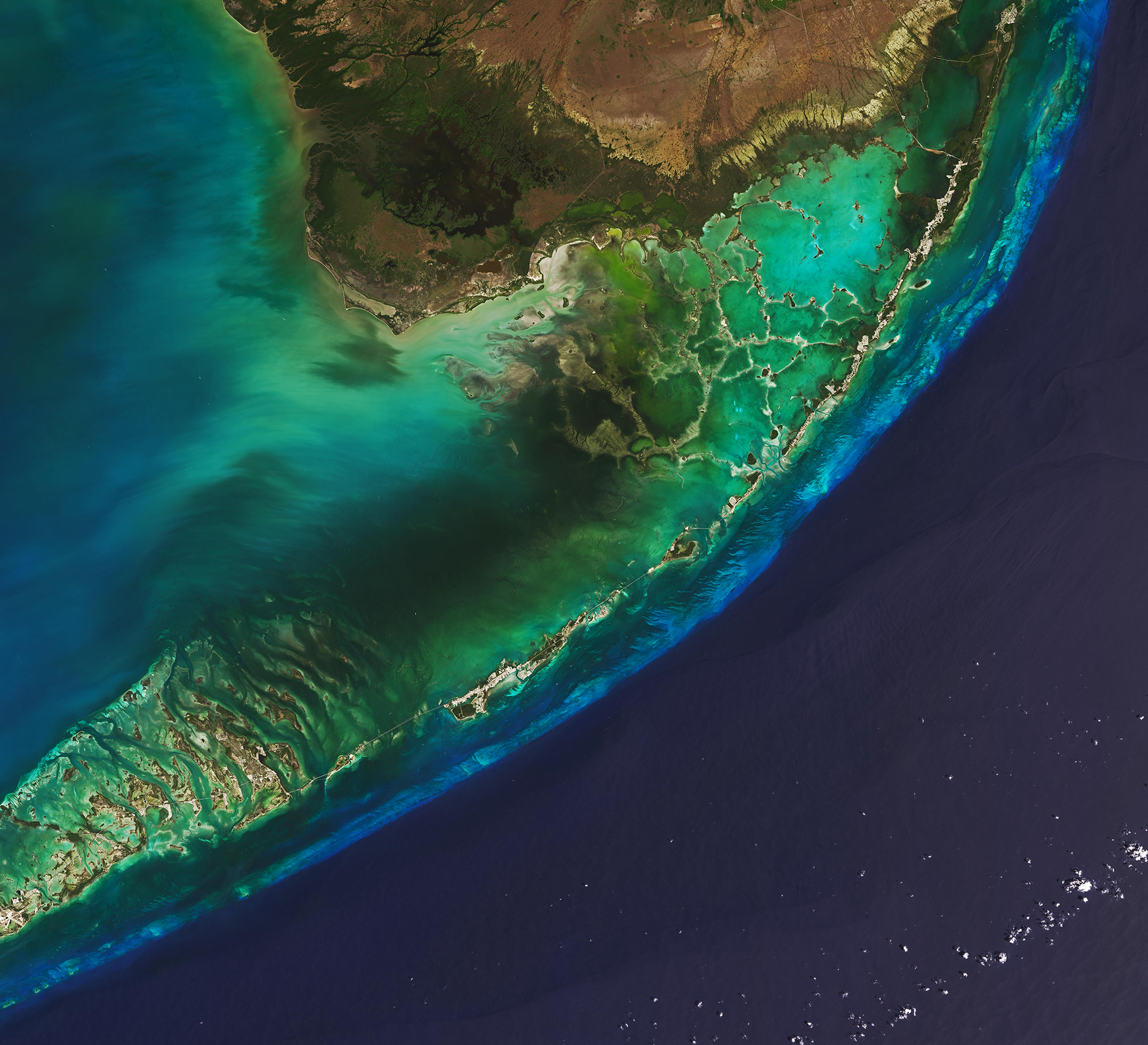
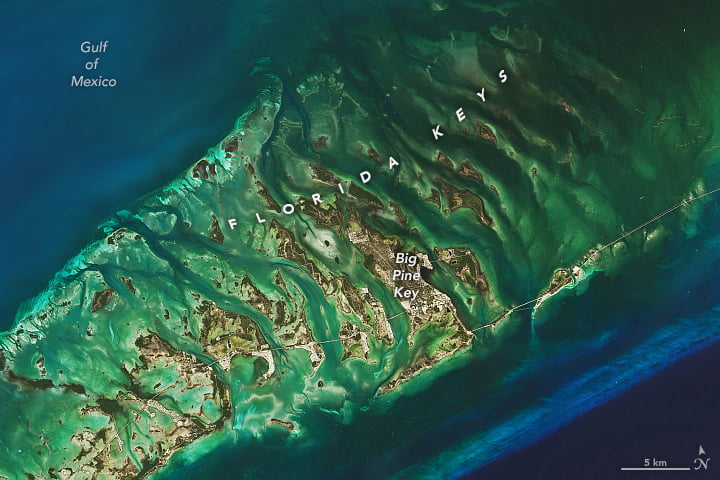
    Stretching from the southern tip of Florida, a chain of low-lying islands, known as keys or cays, formed underwater during a warm interglacial period some 125,000 years ago. Originally coral reefs and sand bars, the islands hardened and fossilized when sea levels dropped during an ice age. These natural-color satellite images hint at the keys’ impressive ecosystems. The bright blue streak is a giant coral reef separating the deeper waters of the Atlantic from the shallow waters and sea-grass beds lying between the islands. Formations like these, along with mangrove forests, are part of nature’s way to mitigate the damage and flooding caused by hurricanes. Unfortunately, warmer seas and rising sea levels now threaten the keys. (Image credit: L. Dauphin/USGS; via NASA Earth Observatory)

  • Featured Video Play Icon

    When Reservoirs Run Dry

    With the ongoing megadrought in the U.S. Southwest, more and more reservoirs are reaching historic low water levels. So it’s worth asking: what happens when a reservoir runs dry? And what, exactly, does a reservoir do in the first place? In this Practical Engineering video, Grady tackles both questions and takes a look at the many disciplines — beyond just civil engineering — that go into making a functional reservoir. (Image and video credit: Practical Engineering)

  • Featured Video Play Icon

    Columbia Glacier’s Retreat

    In southeastern Alaska, the Columbia Glacier once stretched as far as Heather Island in Prince William Sound. After a long period of stability, the glacier began retreating in 1980 and currently sits more than 15 miles from its previous extent. This video explores the glacier’s evolution through false-color satellite imagery, which allows researchers to distinguish the glacier from sea ice, open water, exposed rocks, and nearby vegetation. Though rapid overall, the glacier’s retreat takes place in fits and starts, due to a combination of influences including climate change, sea and ice interactions, and the effects of local topography. (Video and image credit: NASA Earth Observatory)

    False-color animation showing the retreat of Alaska's Columbia Glacier since 1980.
    False-color animation showing the retreat of Alaska’s Columbia Glacier since 1980.
  • Featured Video Play Icon

    Burning Virtual Forests

    Wildfires are growing ever more frequent and more destructive as the climate crisis worsens. Unfortunately, simulating and predicting the course of these fires is incredibly difficult, requiring a combination of ecology, meteorology, combustion science, and more. To handle so many variables, model builders often turn to statistics that allow them to simulate an entire forest but at the cost of representing individual trees as a few pixels or a cone.

    In this video, researchers show a new wildfire simulation based on a computationally efficient but more realistic depiction of trees. With individual, three-dimensional trees, the simulation can capture effects that are otherwise hard to examine – like the difference in burn rate for coniferous and deciduous forests and the likelihood that a fire can jump a firebreak of a given size. Their weather, fire, and atmospheric models are even able to simulate the birth of fire-generated clouds! Check out the full video to see more and then head over to their site if you’d like to dig into the methodology. (Video and research credit: T. Hädrich et al.; see also)

  • Antarctic Meltwaters

    Antarctic Meltwaters

    Cerulean blue meltwater glints in this satellite image of the George VI Ice Shelf. Wedged between the Antarctic Peninsula on the right and Alexander Island on the left, the ice shelf itself floats on the ocean. When ice shelves collapse, they do not directly raise sea levels since their weight has already displaced water; but a collapsed ice shelf lets glaciers flow and break up faster, thereby raising water levels.

    In past ice shelf collapses, scientists have noted major buildup and sudden drainage of surface lakes like the ones seen here. Meltwater penetrating through snow and ice can destabilize the shelf and hasten collapse, but the exact mechanisms are hard to track. This Physics Today article summarizes our understanding of the process and some of the methods scientists use to study it. (Image credit: L. Dauphin/NASA Earth Observatory; see also Physics Today)