Tag: hurricanes

  • Rip Currents and Hurricanes

    Rip Currents and Hurricanes

    When it comes to the beach, looks can be deceiving. That calm-looking water to the side of big crashing waves may actually be a rip current that carries water back out to the ocean. Rip currents are a result of conservation of mass; just as waves carry water to the shore, something has to carry that incoming water back out to the ocean. Depending on the local topography, that outflow could be below the water surface, creating an undertow, or along the surface, as a rip current.

    Even when far offshore, hurricanes can trigger unexpected and strong rip currents, largely because they create bigger waves that travel shoreward. Those waves can also change the depth and layout of the underwater shoreline, potentially exacerbating rip currents.

    For more on rip currents, including the latest guidance on how to escape one, check out this article. (Image credit: A. Marlowe; via SciAm)

    Fediverse Reactions
  • Aboard a Hurricane Hunter

    Aboard a Hurricane Hunter

    For decades, NOAA has relied on two WP-3D Orion aircraft–nicknamed Kermit and Miss Piggy–to carry crews into the heart of hurricanes, collecting data all the while. Every ride aboard a Hurricane Hunter is a bumpy one, but some flights are notorious for the level of turbulence they see. In a recent analysis, researchers used flight data since 2004 (as well as a couple of infamous historic flights) to determine a “bumpiness index” that people aboard each flight would experience, based on the plane’s accelerations and changes in acceleration (i.e., jerk).

    The analysis confirmed that a 1989 flight into Hurricane Hugo was the bumpiest of all-time, followed by a 2022 flight into Hurricane Ian, which was notable for its side-to-side (rather than up-and-down) motions. Overall, they found that the most turbulent flights occurred in strong storms that would weaken in the next 12 hours, and that the bumpiest spot in a hurricane was on the inner edge of the eyewall. That especially turbulent region, they found, is associated with a large gradient in radar reflectivity, which could help future Hurricane Hunter pilots avoid such dangers. (Image credit: NOAA; research credit: J. Wadler et al.; via Eos)

    Fediverse Reactions
  • Featured Video Play Icon

    Revealing Gravity Waves

    Severe weather — like thunderstorms, tornadoes, and hurricanes — can push air upward into a higher layer of the atmosphere and trigger gravity waves. Aboard the International Space Station (ISS), the Atmospheric Waves Experiment (AWE) instrument captures these waves by looking for variations in the brightness of Earth’s airglow (above). Recently, when Hurricane Helene hit the southeastern United States, AWE caught a series of gravity waves some 55 miles up, pushed by the storm (below). It’s incredible to see these long-ranging ripples spreading far beyond the heart of the storm. (Video credits: NASA Goddard and Utah State University)

  • Feeding Hurricanes

    Feeding Hurricanes

    With the strong hurricane season pummeling the southern U.S. this year, you may have heard comments about how warm oceans are intensifying hurricanes. Let’s take a look at how this works. Above is a map of ocean surface temperatures in late September, as Helene was developing and intensifying. For hurricanes, the critical ocean surface temperature is about 27 degrees Celsius — above this temperature, the warm waters add enough energy and moisture to the storm to intensify it. In this image, the waters colored from medium red to black are at or above this temperature. In fact Helene’s path — shown in a dotted white line — took it across particularly warm (and therefore dark) eddies with temperatures up to 31 degrees Celsius.

    Many factors affect a hurricane’s formation and intensification; understanding and predicting storms, their path, and their strength remains an active area of research. But warmer ocean temperatures are better at sustaining the hurricane’s warm core, and their moisture is easier to evaporate, thereby fueling the storm. Unfortunately, as the climate warms, we have to expect that warmer oceans will help rapidly intensify tropical storms and hurricanes. (Image credit: W. Liang; via NASA Earth Observatory)

  • Featured Video Play Icon

    Making Hurricanes

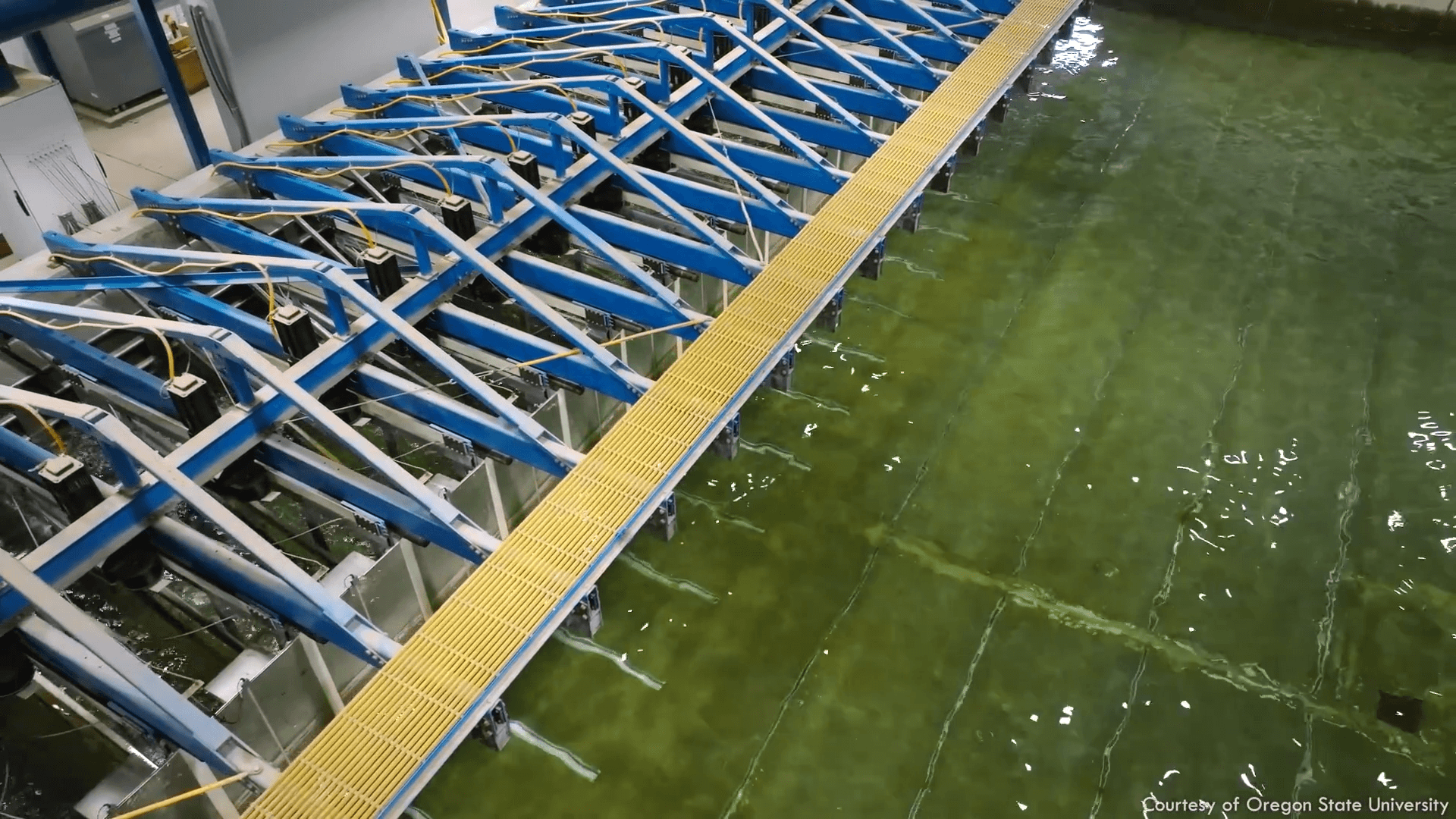
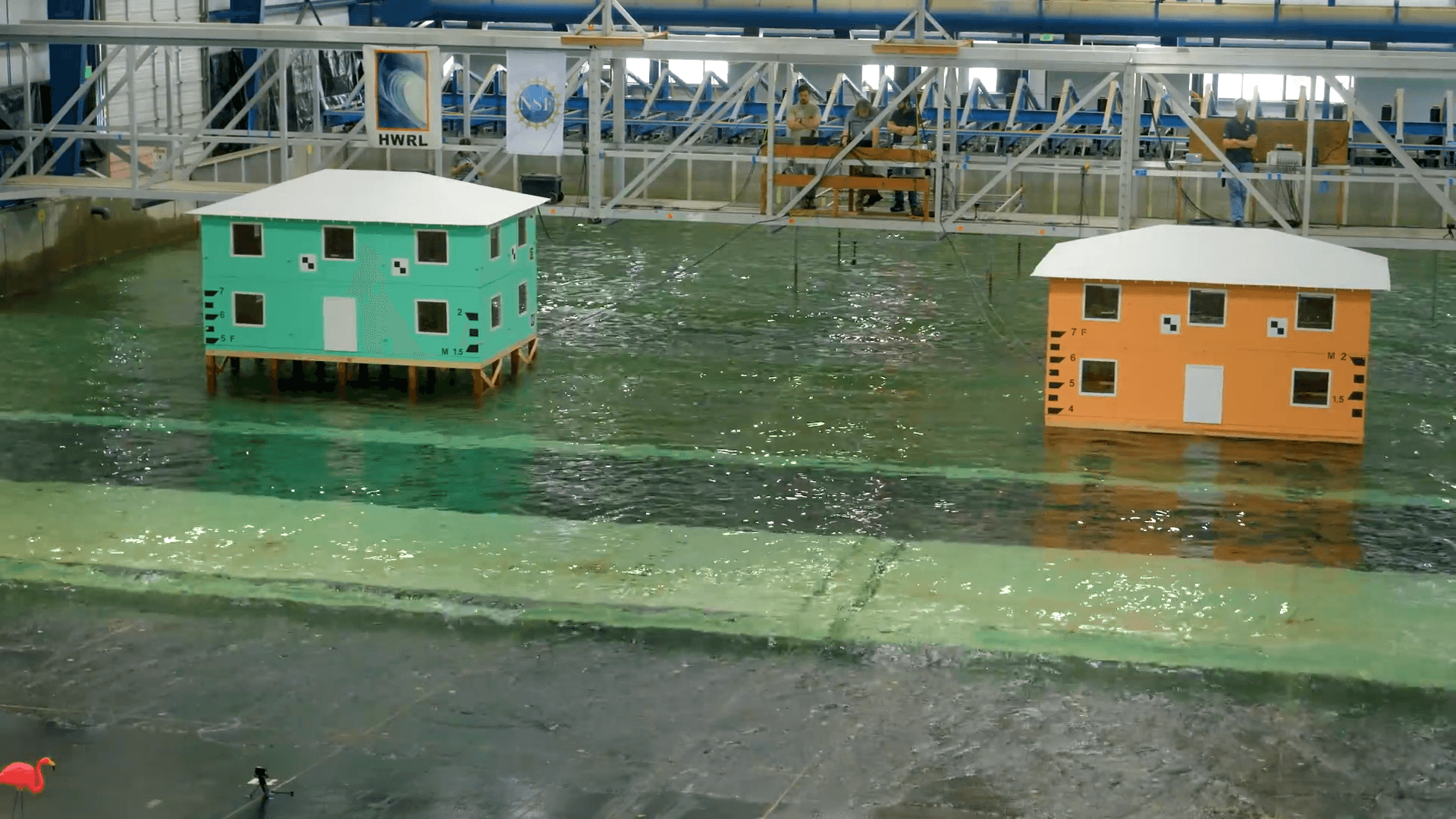
    With oceans warming, there’s more energy available to intensify hurricanes. And while our weather models have gotten better at predicting where hurricanes will go, they’re less good at predicting hurricane intensity, largely because capturing real data from storms is so difficult and dangerous. To address that shortfall, engineers build facilities like the one seen here, which simulates hurricane wind and water conditions so that scientists can study their interaction and better understand storm physics. Check out the full Be Smart video for a tour of the facility and a look at their work. (Image and video credit: Be Smart)

  • Featured Video Play Icon

    Protecting From Storm Surge

    The most dangerous and destructive part of a tropical cyclone isn’t the wind or rain; it’s the storm surge of water moving inland. This landward shift of ocean takes place because of a cyclone’s strong winds, which drive the water via shear. The depth storm surges reach depends on the wind speed and direction, shape of the shoreline, and many other factors, making exact predictions difficult.

    Fortunately, engineers can — with enough foresight and investment — build structures and networks to help protect developed land from storm surge flooding. (Image and video credit: Practical Engineering)

  • Featured Video Play Icon

    A Year From Geostationary Orbit

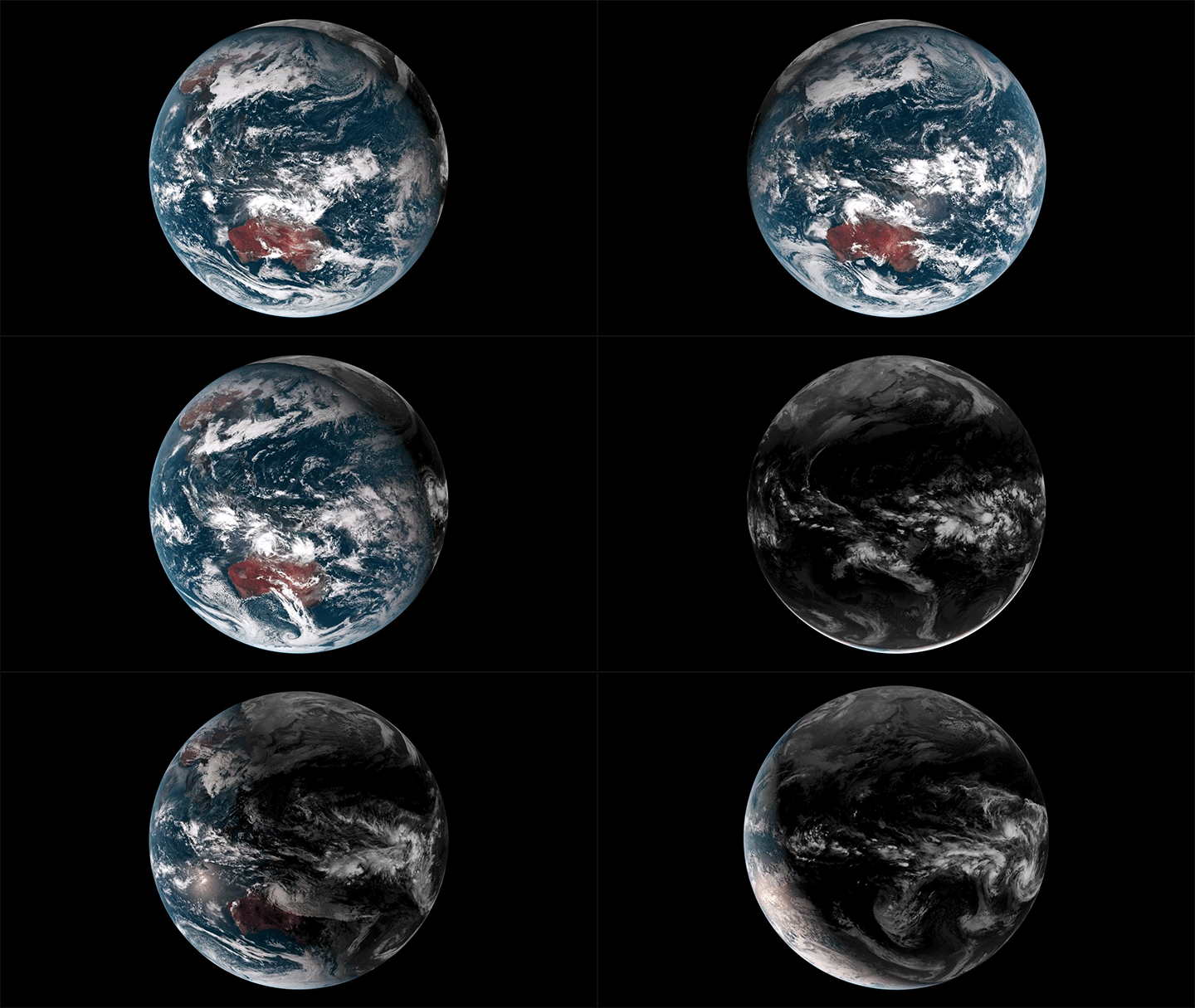
    Our planet is a complex fluid dynamical system, and one of the best ways to watch nature at work is through timelapse. This short film takes us through an entire year, from December 2015 to December 2016, as viewed from a geostationary weather satellite centered over Oceania.

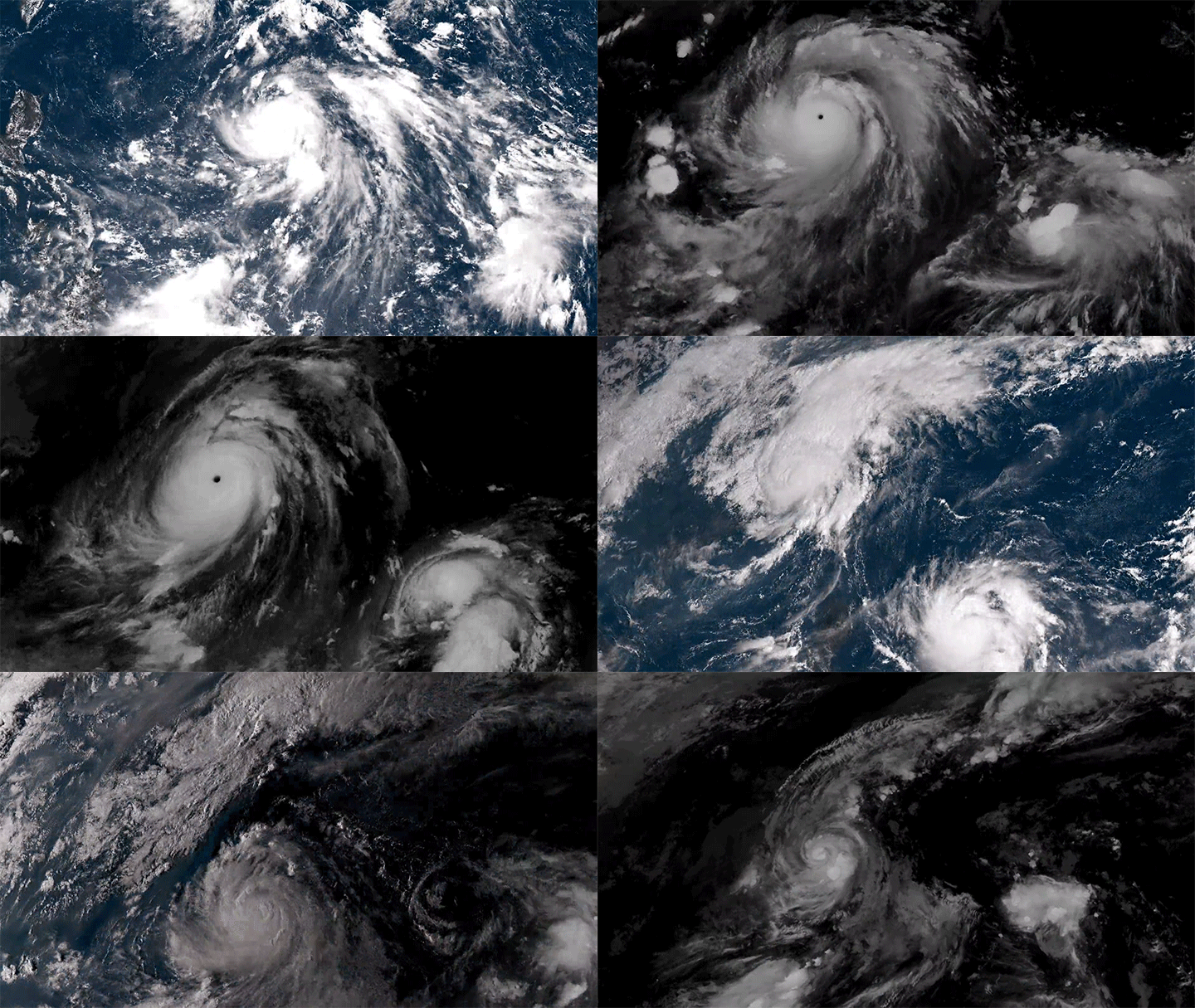
    The imagery is rather hypnotic, with clouds swirling day and night across the full field of view. Watch closely, though, and you’ll see a lot of neat phenomena from typhoons forming in the Pacific to wave clouds streaming from the islands of Japan. You can also see clouds blossoming (especially during the day) over the humid rainforests of Oceania.

    There are neat non-fluids phenomena, too, like a total solar eclipse and the permanent sunlight of Arctic and Antarctic summers. What do you notice? (Image and video credit: F. Dierich)

  • Urban Centers During Hurricanes

    Urban Centers During Hurricanes

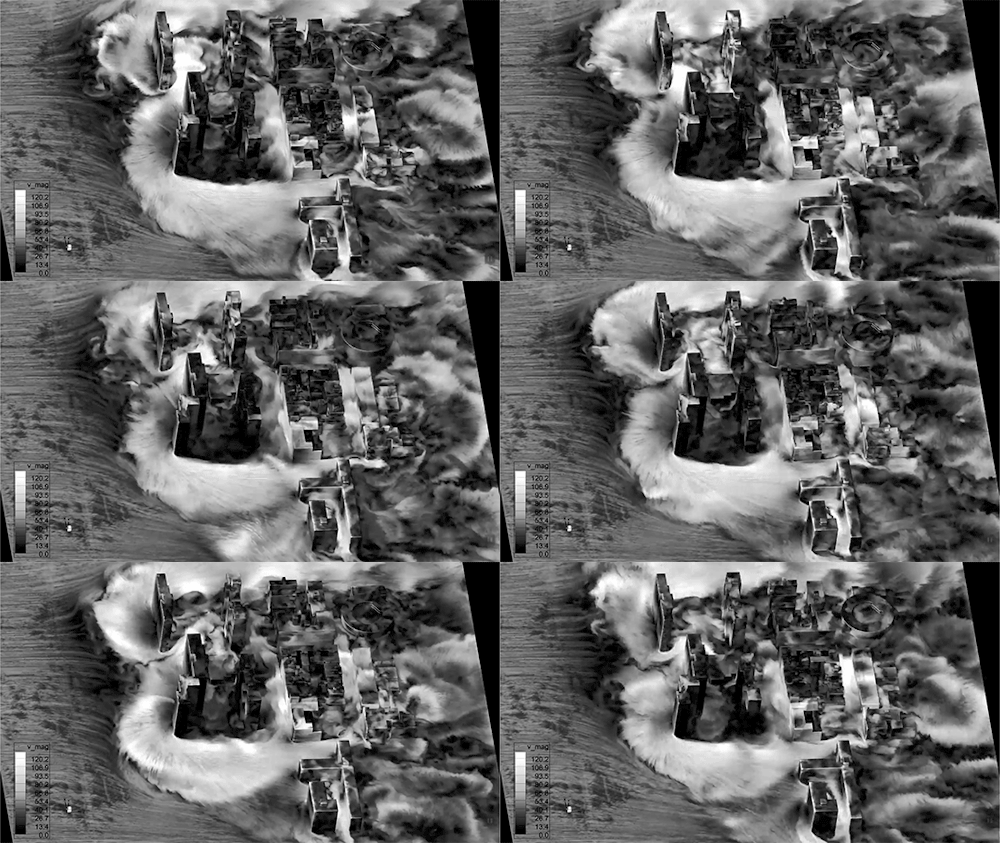
    As the climate warms, many urban centers are facing stronger and more frequent storms. Some, like New York City, are using numerical simulations to better understand the interactions of their complicated urban geometries with hurricane force winds. 

    Above you see a simulation showing predicted wind speeds in a Lower Eastside neighborhood. The incoming wind speed (from the left) is roughly 60 m/s (~134 mph), but the speeds around and between buildings are as much as 2 times higher than that. That means that, even if a storm is Category 3 or 4, there will be areas of a neighborhood that receive sustained winds well beyond the range of a Category 5 hurricane. Urban planners need this sort of data both for devising building requirements and for understanding what storm conditions warrant mandatory evacuations for residents. (Video and image credit: X. Jiang et al.)

  • Featured Video Play Icon

    Inside Hurricane Maria

    In addition to looking outward, NASA constantly monitors our own planet using a suite of satellites. In this video, they visualize data taken by the Global Precipitation Measurement Core Observatory of Hurricane Maria two days before it hit Puerto Rico. Instruments on board the satellite measure both liquid and frozen precipitation, giving scientists – and now the public – a glimpse into the heart of a developing hurricane. Be sure to take a look around; it’s a 360-degree video, and I bet it’s even more spectacular in VR. Having a trove of data like this helps researchers better understand the processes that influence a strengthening hurricane, which ultimately allows them to make better predictions about hurricane behavior in order to save lives. (Video credit: NASA; via Francesco C.)

  • Featured Video Play Icon

    Mimicking Hurricanes

    Hurricanes are a frequent and potentially deadly occurrence for many parts of the world. Although forecasting models have improved, there is still a lot about the physics of these storms that we don’t fully understand, in part because getting direct measurements from the real thing is so difficult and hazardous. Researchers at the University of Miami have instead built their own hurricane generator, capable of sustained 200 mph winds – strong enough to create Category 5 hurricane conditions. In this facility, they can study details of the storm up close, allowing them to distinguish effects from the scale of large waves down to the physics of the sea spray. Learn more and see the facility in action in the Science Friday video below. (Video credit: L. Groskin/Science Friday; image credits: L. Groskin/Science Friday, University of Miami, SUSTAIN Lab; submitted by Guillaume D.)