Tag: chemistry

  • Acidic Aerosols

    Acidic Aerosols

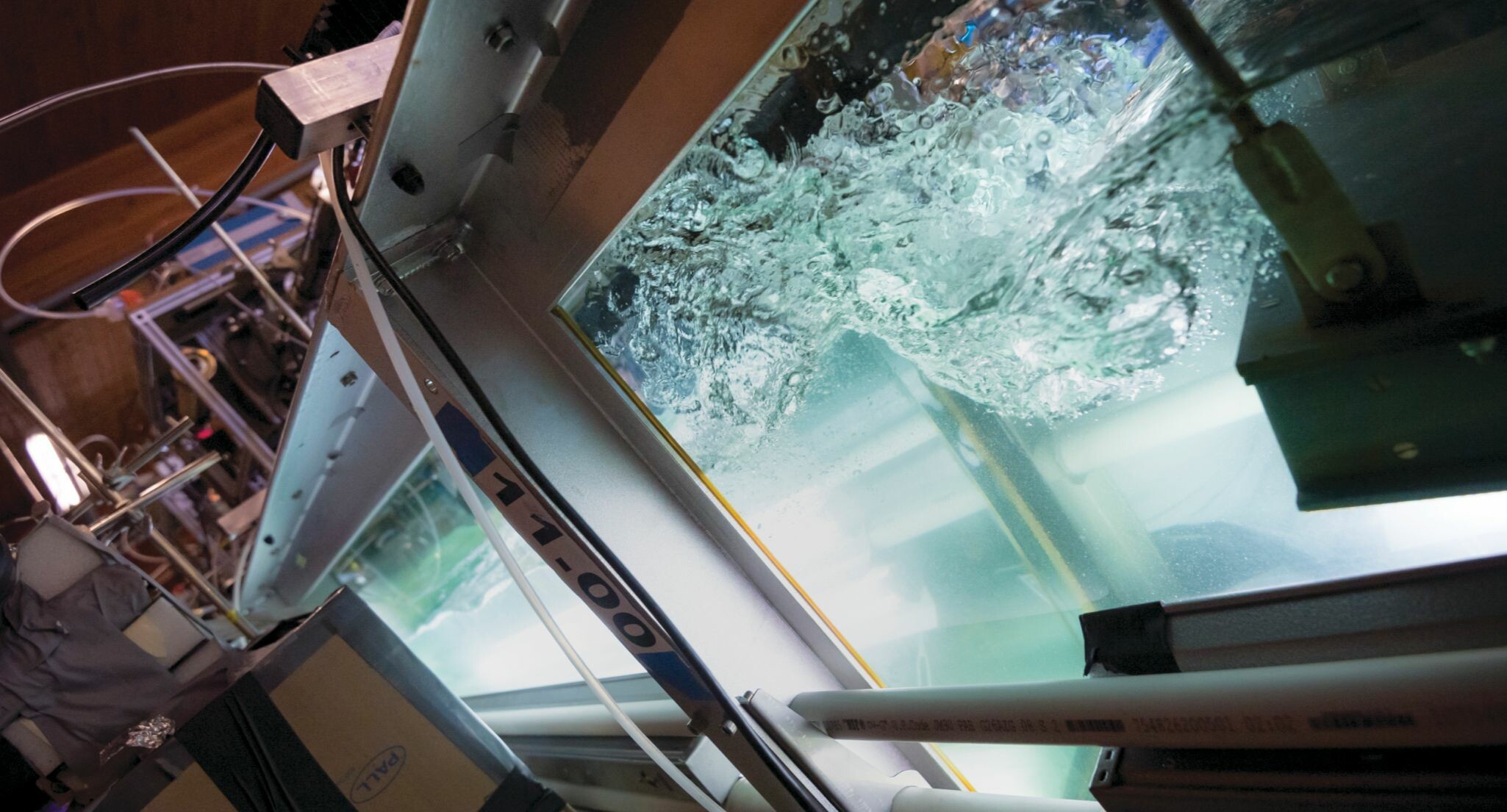
    As ocean waves crash, they generate aerosols — tiny liquid and solid particulates — that interact with the atmosphere. Curious about the chemistry of these tiny drops, researchers set out to measure their acidity. That’s easier said than done. Over time, aerosol droplets acidify as they interact with acidic gases in the atmosphere and capturing fresh aerosols in the field is next to impossible.

    To tackle these challenges, researchers instead moved the aerosols to the laboratory, filling a wave channel with seawater and agitating it to generate aerosols they could then measure. They found that the smallest aerosols become a million times more acidic than the bulk ocean in only two minutes! Find out more about their experiment and its implications over at Physics Today. (Image credit: E. Jepsen; research credit: K. Angle et al.)

  • Dispelling Ice

    Dispelling Ice

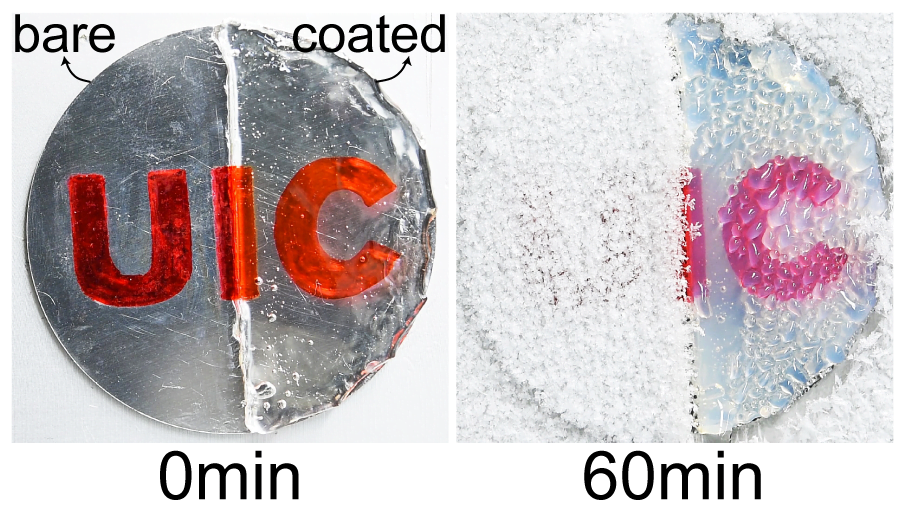
    In winter weather, delays pile up at airports when planes need de-icing. Our current process involves spraying thousands of gallons of chemicals on planes, but these chemicals are easily removed by shear stress and dissolution, meaning that by the time a plane takes off, there is little to no de-icing agent remaining on the plane. Instead, those chemicals become run-off.

    Researchers looking to change that have developed a family of anti-icing coatings — including creams, sprays, and gels — that are easy to use and apply, non-toxic, and much longer lasting than conventional methods. Ice slides easily off their gel coatings, which remain optically transparent even under freezing conditions — and ice can take 25 times longer to form on the gels compared to current anti-icing tech.

    The team envisions using their coatings on much more than airplanes. Imagine traffic lights that can’t be obscured by ice or snow, a windshield on your car that never freezes over, or even an anti-icing spray that could protect crops from a sudden freeze! (Image, video, research, and submission credit: R. Chatterjee et al.; see also)

  • Mixing the Immiscible

    Mixing the Immiscible

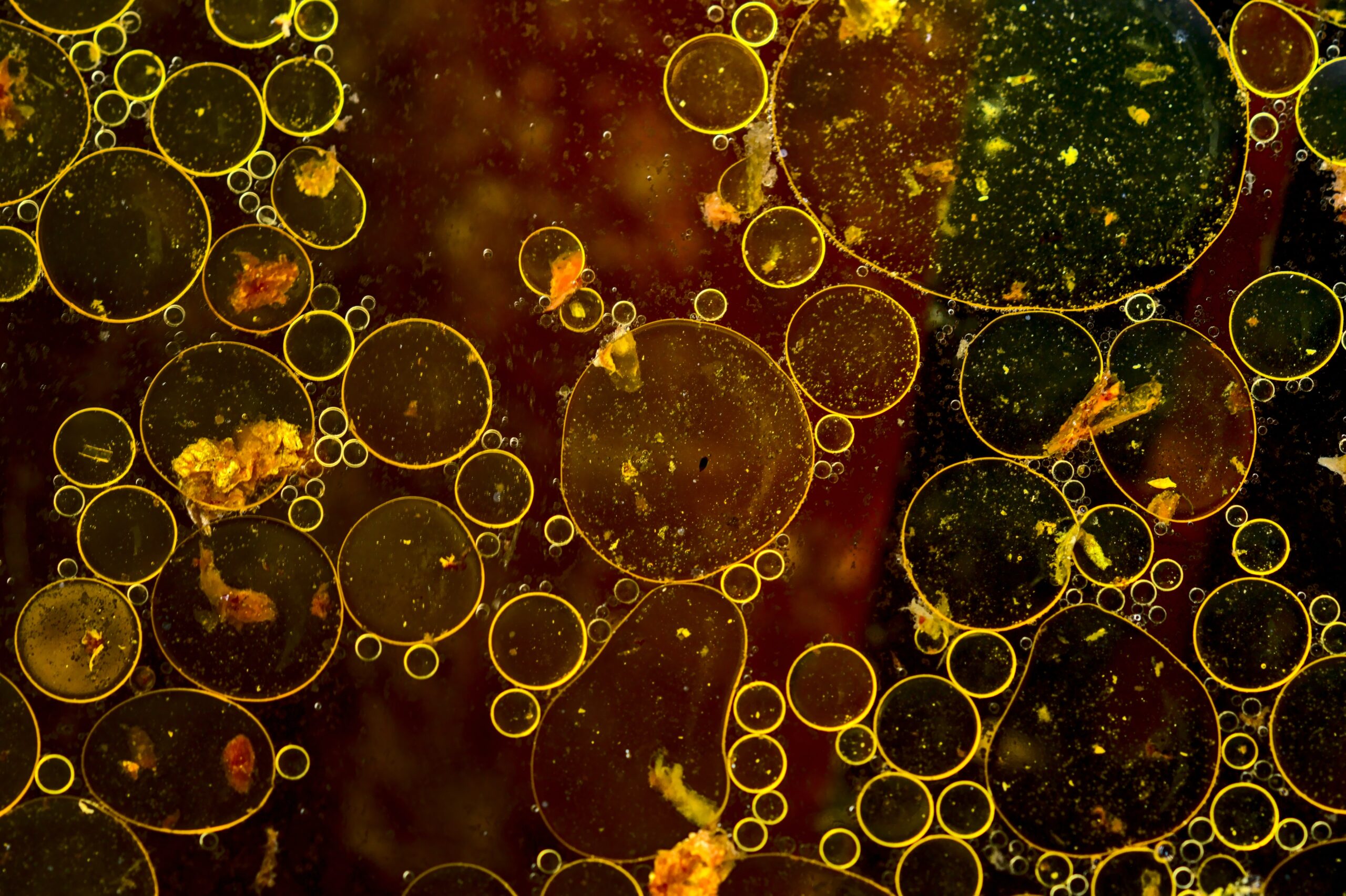
    Immiscible liquids — like oil and water — do not combine easily. Typically, with enough effort, you can create an emulsion — a mixture formed from droplets of one liquid suspended in the other — like the one above. But a team of researchers have taken mixing immiscible liquids to a new level using their Vortex Fluid Device (VFD).

    Longtime readers may remember the group from their Ig-Nobel-winning demonstration of unboiling an egg, but this time the team is used the VFD to mix and de-mix immiscible liquids. As shown in the video below, the VFD is essentially a fast-spinning tube tilted at a 45-degree angle. As it spins, the liquids inside are forced into thin films with very high shear rates — high enough that immiscible liquids like water and toluene are forced together without forming an emulsion. Essentially, the mechanical forces mixing the liquids are strong enough to overcome the chemistry that typically keeps them apart.

    Impressively, the device manages this without using harsh surfactants or catalysts that other methods rely on. As a result, the technique offers a greener method for mixing chemicals for pharmaceuticals, cosmetics, food processing, and more. (Image credit: pisauikan; research credit: M. Jellicoe et al.; video credit: Flinders University; submitted by Marc A.)

  • Featured Video Play Icon

    “Belletrix”

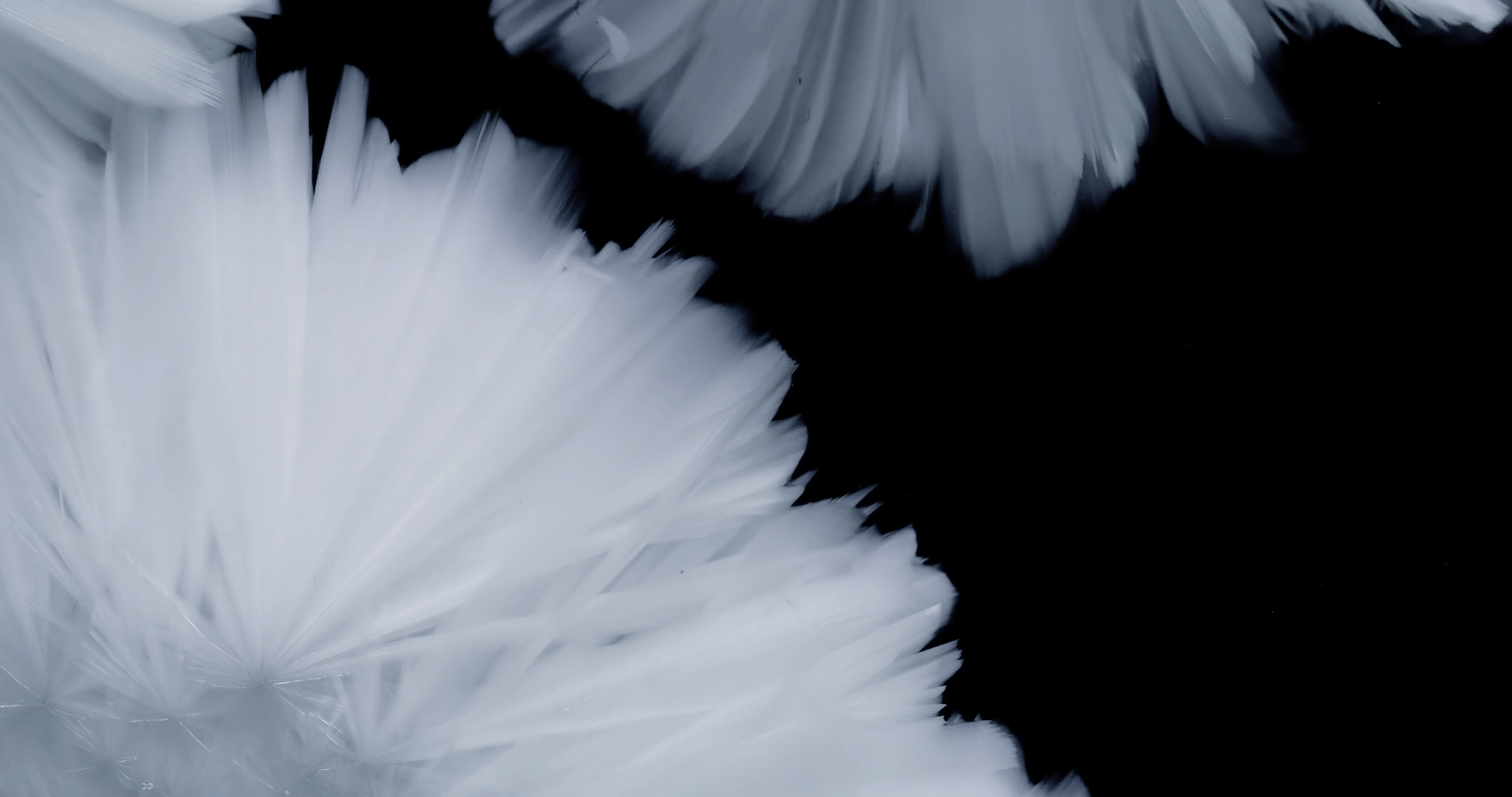
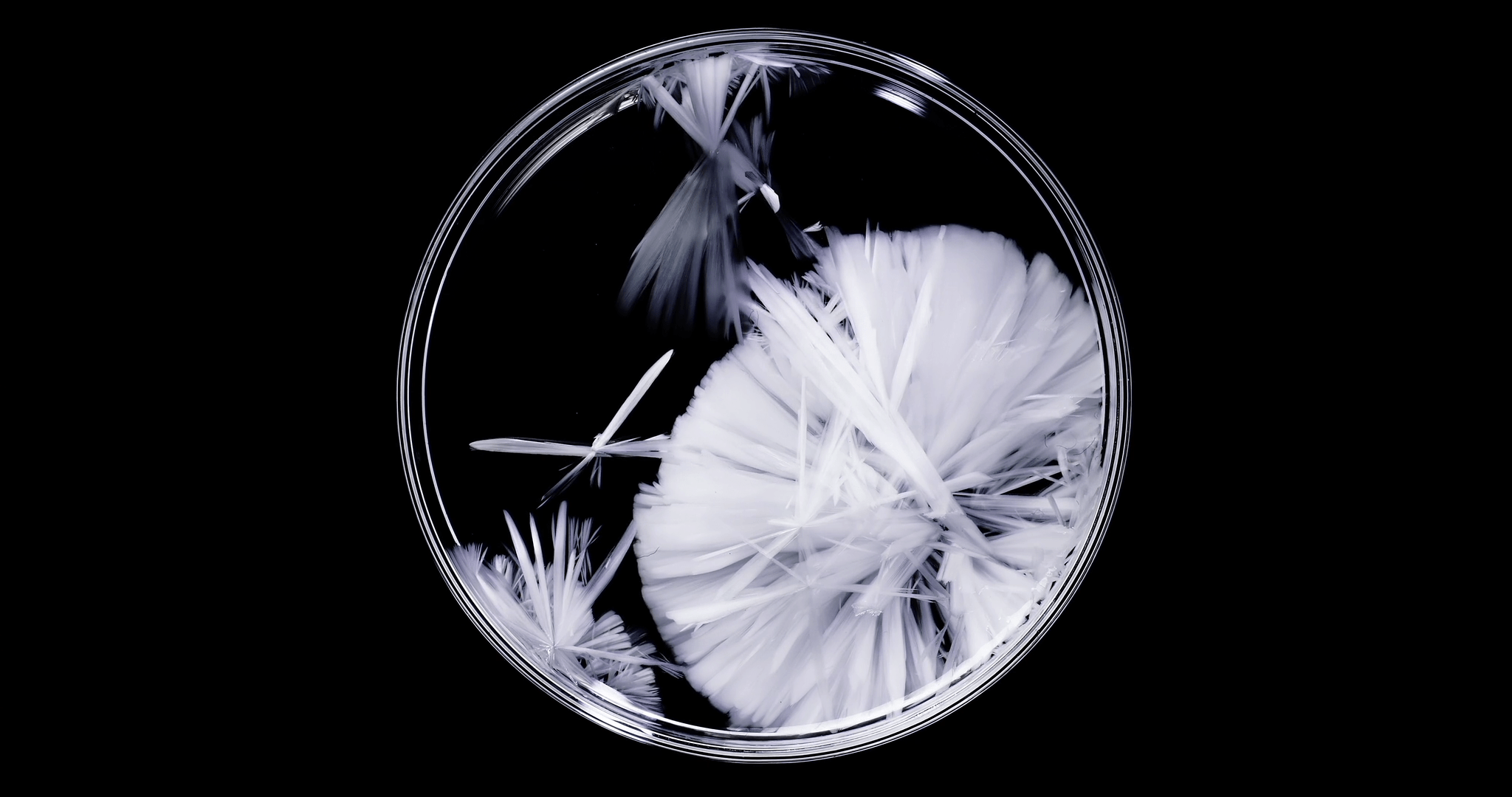
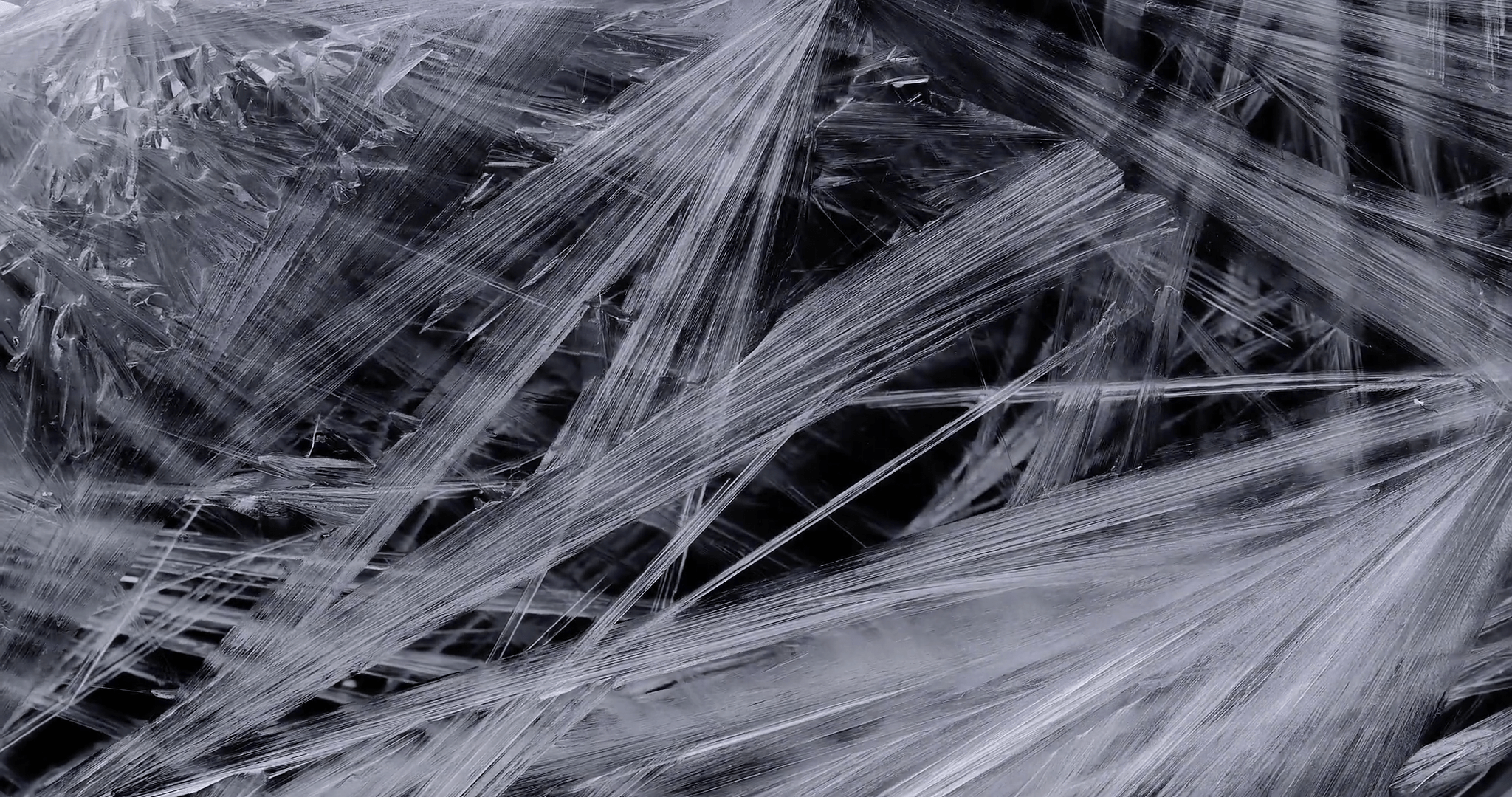
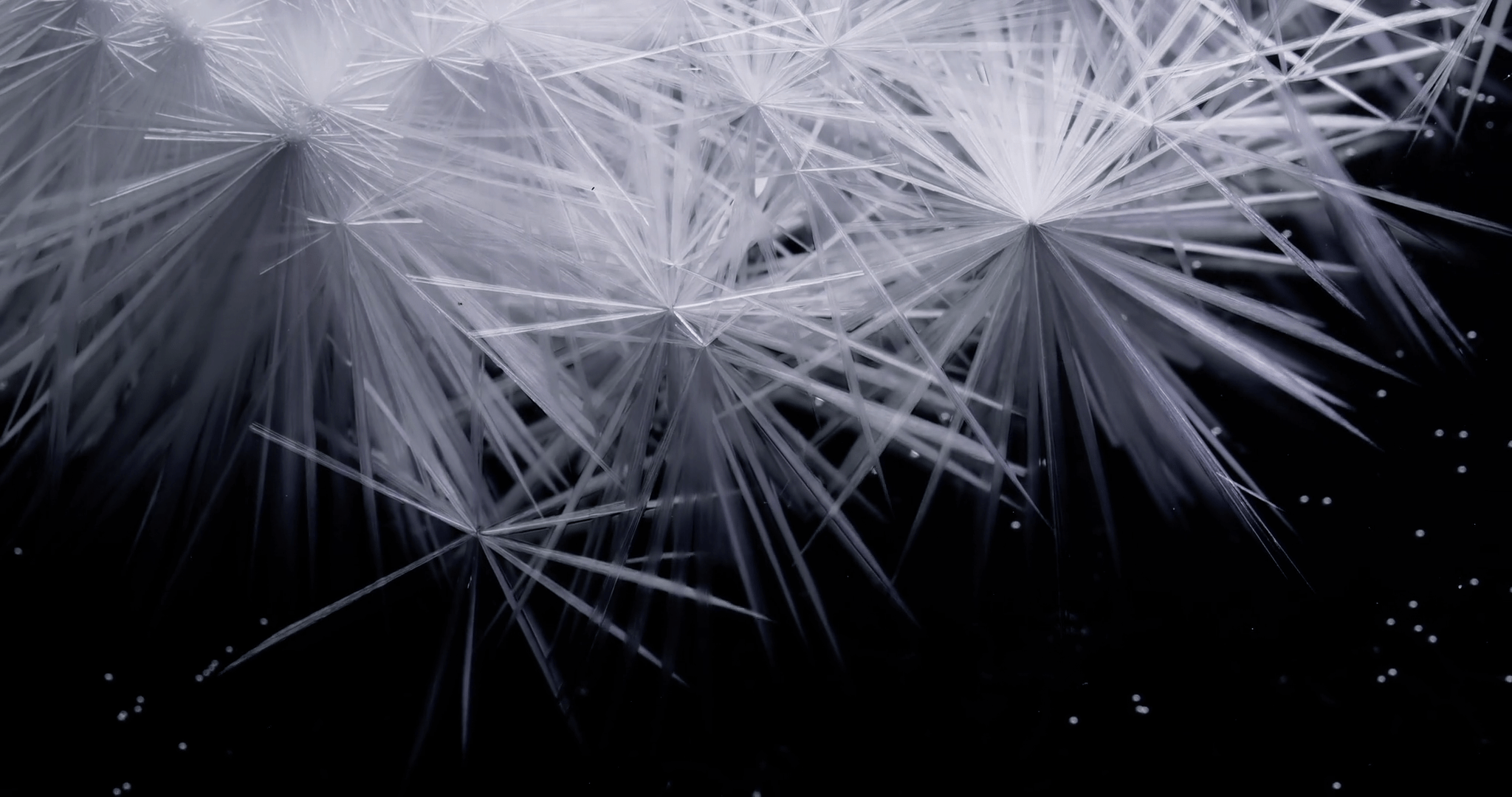
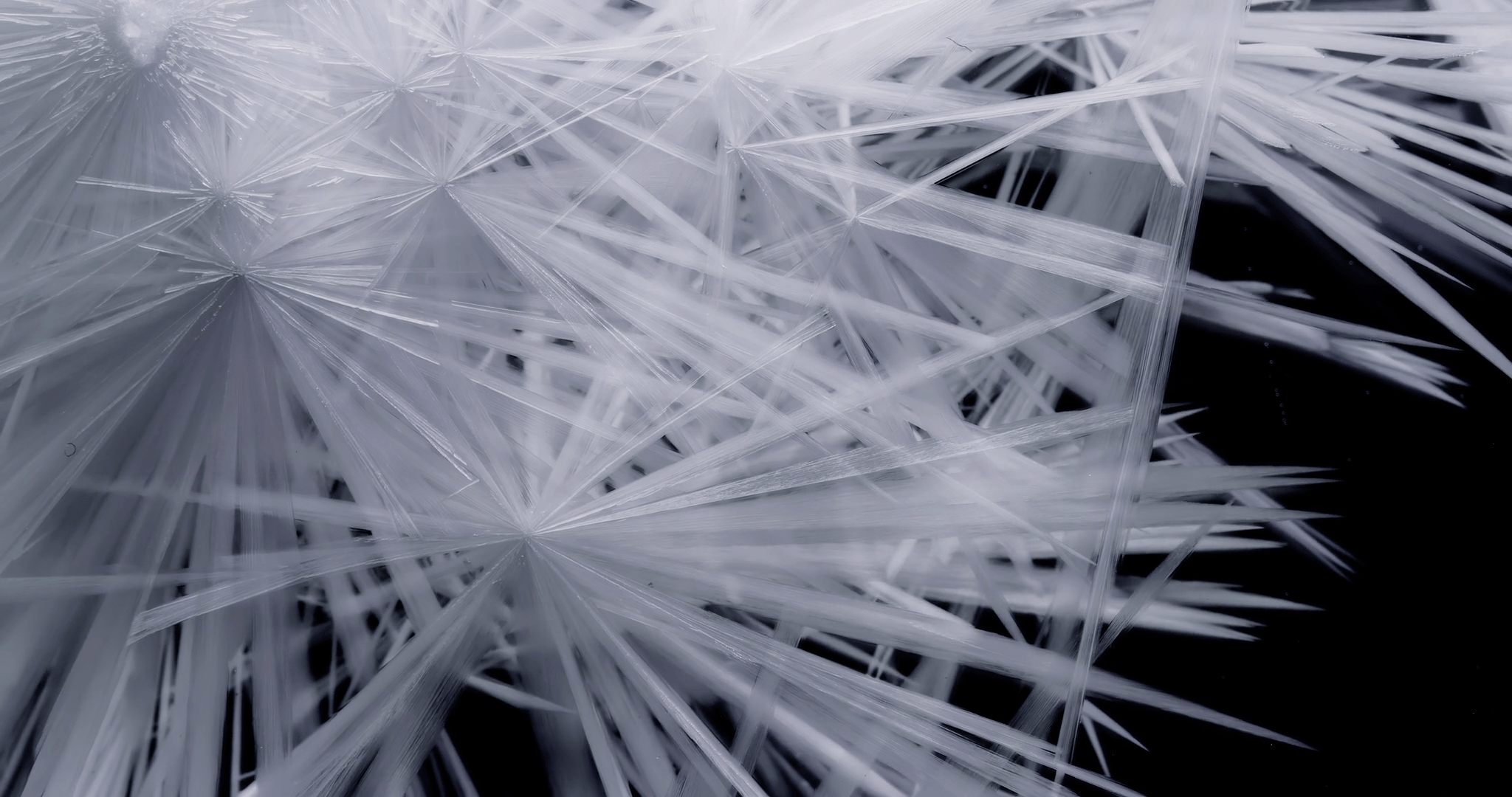
    Icy crystals burst forth against a dark background in Thomas Blanchard’s short film “Belletrix.” The process is one of chemical crystallization. Blanchard supersaturates a chemical in a dish of hot water, then cools the fluid, which then spontaneously crystallizes when disturbed. Depending on the solution’s temperature, the crystals vary from feather-like to radial stars, each reflecting, expanding, and overlapping to cover the full surface. (Image and video credit: T. Blanchard)

  • Liquid Bridges

    Liquid Bridges

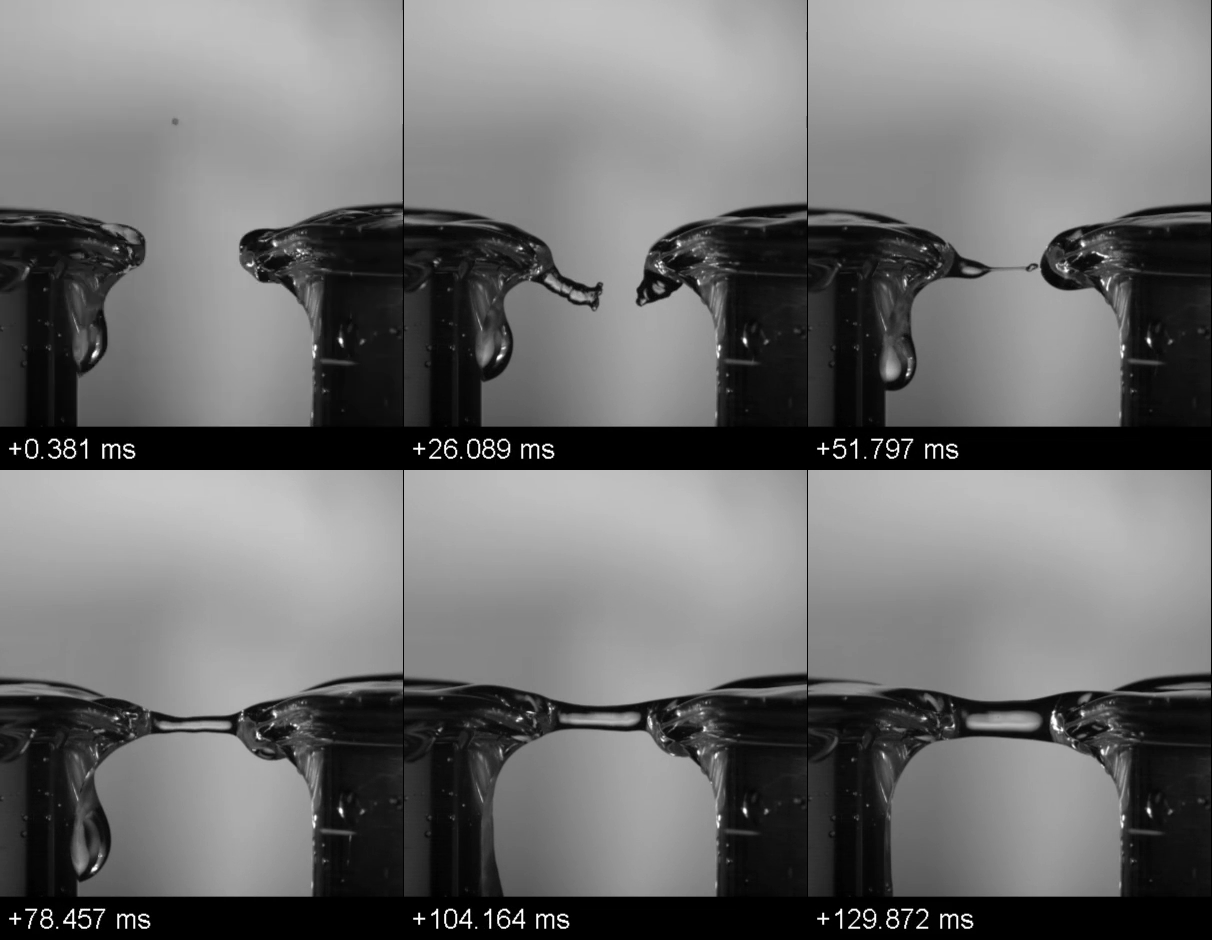
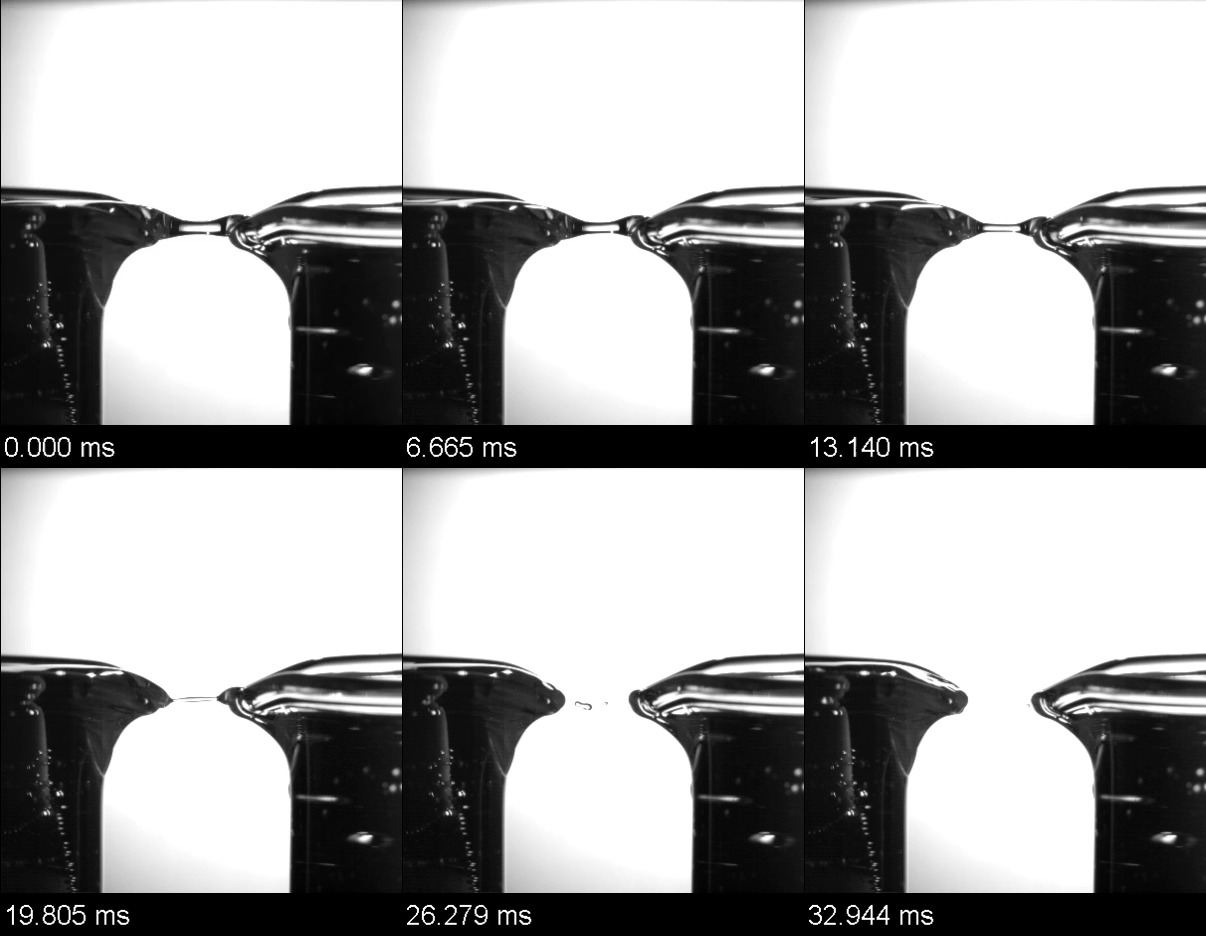
    In 1893, Baron Armstrong demonstrated a peculiar phenomenon — a liquid bridge of water suspended between two beakers with a strong electric charge between them (Image 1). More than a century later, the details of the mechanism remain challenging to pin down thanks to the setup’s combination of electohydrodynamics, heat transfer (Image 2), evaporation, and chemistry (the electrodes can split water).

    Researchers have pinned down a few details, though, like that the break-up of the liquid bridge (Image 3) depends on its effective length and that the effective length grows as applied voltage increases. Researchers also found that inducing an external flow can extend the bridge’s lifetime, though it does not affect the length at which it breaks up. Interestingly, the phenomenon is not limited to water (and its odd chemistry); ethanol and glycerol have been used for liquid bridges, too! (Image and research credit: X. Pan et al.)

  • Featured Video Play Icon

    “Halo”

    Fluids create mesmerizing practical effects in this new experimental film from the Julia Set Lab. I love how the visuals mess with your sense of scale. Some of the sequences look like they could be a solar firestorm or disintegrating sea ice, though in reality the camera’s field of view is probably smaller than your palm. The filmmakers provide no information on the fluids they use, but I spy some hints of partially miscible ingredients, some chemical reactions, and plenty of Marangoni action. (Video and submission credit: S. Bocci/Julia Set Lab)

  • Changing with the Flow

    Changing with the Flow

    Chemically-reacting flows are some of the toughest problems to unravel. In this new study, researchers found that the very act of flowing through narrow channels can change the speed of chemical reactions. In particular, they found that protein molecules carried through a capillary tube (comparable in size to human capillaries) changed their local shape as a result of the shear forces they experienced. Those changes actually sped up the proteins’ chemical reactions compared to the reaction speed for the chemicals in bulk.

    That finding suggests two important takeaways: 1) chemicals may be absorbed in the human bloodstream differently in capillaries than in other parts of the cardiovascular system, and 2) mimicking these tiny capillaries in microfluidic devices could be useful in speeding up certain biochemical reactions. (Image credit: top – KazuN, visual abstract – T. Hakala et al.; research credit: T. Hakala et al.; via Science; submitted by Kam-Yung Soh)

    Graphical abstract showing that shear forces in small channels can cause local changes to protein structure that affect the rate of chemical reactions.
  • Featured Video Play Icon

    Tougher Hydrogels

    Hydrogels are soft, stretchy solids made from polymer chains immersed in water. Engineers hope these materials will be good candidates for medical implants, but to reach that goal, hydrogels need to be durable enough to withstand repeated stretching and contortion without tearing. One team has built a better hydrogel by encouraging entanglement within the gel’s polymer network.

    The polymers inside a hydrogel form their network with two main components: physical entanglements between polymer chains and chemical cross-links. If you imagine the polymers as a tangle of yarn, the cross-links would be spots where pieces of yarn are knotted together and the entanglements are spots where strands wrap and cross without knotting. If you pull on the network, cross-links (knots) will allow very little stretching, whereas the looser entanglements can stretch and deform without tearing. In a hydrogel with lots of entangled polymers but very few cross-links, the material is strong and stretchy without becoming brittle or easily torn. (Video credit: Science; research credit: J. Kim et al.)

  • Spreading By Island

    Spreading By Island

    How does a droplet sinking through an immiscible liquid settle onto a surface? Conventional wisdom suggests that the settling drop will slowly squeeze the ambient fluid film out of the way, form a liquid bridge to the solid beneath, and spread onto the surface. But for some droplets, that’s not how it goes.

    While watching a glycerol droplet settle through silicone oil, researchers discovered a new mechanism for wetting. Initially, the silicone oil drained from beneath the drop, as expected. But then the thinning of the film stalled. Tiny bright spots (above) appeared beneath the light and dark interference fringes of the parent drop. These are spots of glycerol, formed when material from the main drop dissolved into the oil and then nucleated onto the solid surface below. Over time, the island-like spots of glycerol grew. Eventually one grew large enough to coalesce with its parent drop (below), causing the glycerol to quickly spread over the solid surface!

    Islands nucleate and grow beneath a droplet until they're able to coalesce with the parent droplet above.
    Islands of liquid (darker rings) grow beneath a parent drop (brighter rings) until reaching a size where they coalesce, causing the interference fringes to disappear.

    The key to this phenomenon seems to be that immiscibility isn’t perfect. Even trace amounts of solubility between the drop and surrounding fluid are enough to allow these islands to form. And once formed, the islands will grow as long as the drop fluid and the solid surface are chemically attractive. (Image, research, and submission credit: S. Borkar and A. Ramachandran; see also Nature Behind the Paper)

  • Featured Video Play Icon

    Ink-Based Propulsion

    In this video, Steve Mould explores an interesting phenomenon: propulsion via ballpoint pen ink. Placing ink on one side of a leaf or piece of paper turns it into a boat with a dramatic dye-filled wake. It’s not 100% clear what’s happening here, though I agree with Steve that there are likely several effects contributing.

    Firstly, there’s the Marangoni effect, the flow that happens from an area of low surface tension to high surface tension. This is what propels a soap boat as well as many water-walking insects. I think this is a big one here, and not just because the ink has surfactants. As any component of the ballpoint ink spreads, its varying concentration is going to trigger this effect.

    Secondly, there’s a rocket effect. Rockets operate on a fairly simple principle: throw mass out the back in order to go forward. These dye boats are also doing this to some extent.

    And finally there’s some chemistry going on. Some kind of reaction seems to be taking place between one or more of the ink components and the water in order to create the semi-solid layer of dye. Presumably this is why the dye doesn’t simply dissolve as it does in some of Steve’s other experiments.

    I figure some of my readers who are better versed in interfacial dynamics, rheology, and surface chemistry than I am will have some more insights. What do you think is going on here? (Video and image credit: S. Mould)