Tag: capillary action

  • Sliding Down a Pitcher Plant

    Sliding Down a Pitcher Plant

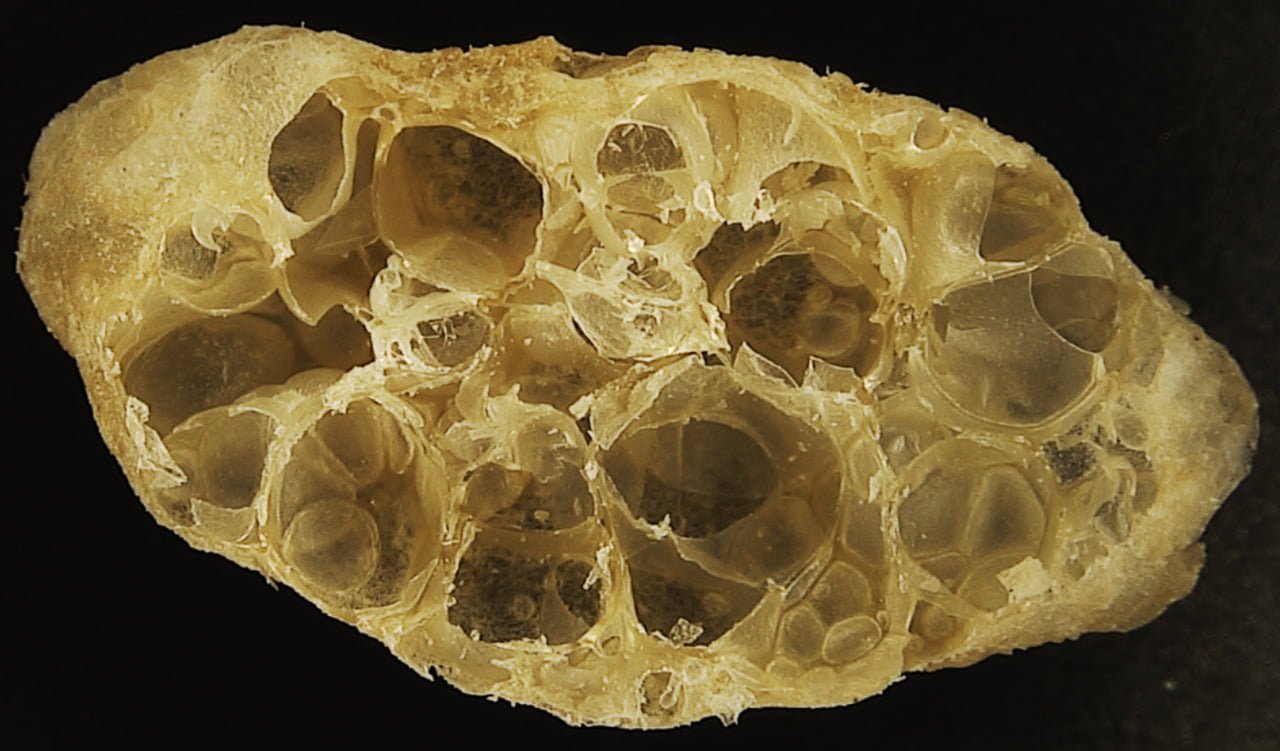
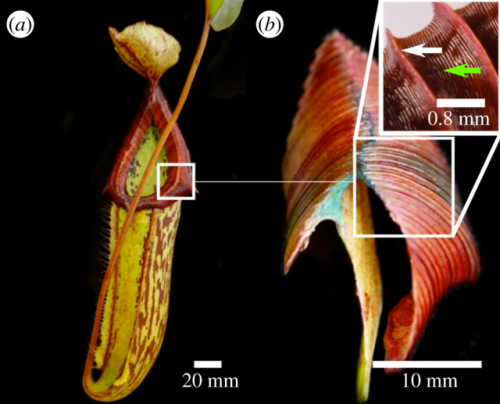
    Carnivorous pitcher plants supplement their nutrient-poor environments by capturing and consuming insects. The viscoelastic fluid inside them helps trap prey, but fluid dynamics plays a role elsewhere on the plant as well. The inner and outer surfaces of the pitcher are covered in macroscopic and microscopic grooves, seen above, oriented toward the interior of the plant. 

    Researchers found that these grooves trap droplets on the slippery plant through capillary action. Once adhered, the droplet cannot easily move across the grooves, but it can slip along them, carrying the droplet and any insect stuck to it, into the plant. By replicating pitcher-plant-inspired grooves on manmade surfaces, researchers found they were able to better control droplet motion on slippery, lubricant-infused surfaces than in previous work. (Image and research credit: F. Box et al.; via Royal Society; submitted by Kam-Yung Soh)

  • Capillary Action and Sand Castles

    Capillary Action and Sand Castles

    Capillary action – or capillarity – is the ability of liquids to flow through narrow constrictions. It results from intermolecular forces between fluids and solids. It’s a combination of surface tension – which creates cohesion within the liquid – and adhesion, which allows the liquid and solid to hold to one another. Together, these forces propel the liquid to flow through narrow gaps.

    In the video below, a saturated mixture of sand and water is poured into a mold on a bed of dry sand. When left to settle, much of the water flows from the mold into the dry sand bed through capillary action. When the mold is removed (top), the sand holds its shape, something it can’t do without a porous bed to soak in the excess liquid. (Image and video credit: amàco et al.)

  • Featured Video Play Icon

    Drinking Coffee in Space

    You probably don’t give much thought to the forces involved in drinking here on Earth. That’s because gravity’s effects dominate over everything else. Our cups are designed to hold a liquid until we use gravity to pour it into our mouths. But that technique doesn’t work in microgravity. There other forces govern how liquids flow: specifically surface tension and capillary action.

    Both of these forces are the result of intermolecular attractions. In the case of surface tension, it’s the attraction that the molecules of a liquid feel for one another that keeps them in a cohesive bunch. Capillary action is similar, but it’s an attraction between the liquid molecules and those of the solid they’re wetting. When you combine them both, you get the ability for liquids to climb up a narrow gap and pull more liquid up behind them. That’s the key science behind every version of the “space cup” developed by astronaut Don Pettit and his collaborators. 

    To hear more about the development and engineering of the cup (and exactly why it makes drinking coffee so much more enjoyable in space than it would be otherwise) check out the full video. And, in case you’re wondering, there’s a special microgravity champagne flute, too! (Image and video credit: It’s Okay to Be Smart)

  • Dip Coating

    Dip Coating

    Imagine dipping a rod into a liquid mixture filled with particles. When you pull the rod out, do particles stick to it? The answer depends on the relative importance of two sets of forces: the viscous drag as you lift the rod and adhesive power of surface tension. Scientists express this as a dimensionless ratio known as the capillary number.

    When the capillary number is small, viscous drag dominates, and any particles that try to stick to the rod get pulled away (upper left). But as you increase the capillary number, surface tension helps particles clump together and stick to the rod (lower left and right). If the surface tension forces are strong enough – meaning that the capillary number is high –  you can actually get multiple layers of particles adhering to the dipped surface. (Image and research credit: E. Dressaire et al.)

  • Featured Video Play Icon

    The Clever Cat’s Tongue

    Cats spend almost a quarter of their waking hours grooming, and their tongues are wonderfully specialized for this task, allowing them to clean, cool, and untangle themselves with ease. Anyone who’s ever been licked by a cat knows their tongues feel sandpaper-y. This is due to rear-facing hook-like structures called papillae that have a stiffness comparable to human fingernails.

    The papillae are hollow, and their U-shaped tip helps them wick up saliva, which the cat deposits deep into its undercoat when it licks. Although the papillae only hold about 5% of the volume of saliva on the cat’s tongue, this wicking action is key because most of the tongue surface can’t reach the inner coat; only the papillae do. The saliva that reaches these dense inner hairs is important not only for cleaning the fur, but for helping the cat cool off. As the saliva evaporates, it carries heat away with it, just like sweating does for us.

    The papillae are key to untangling fur, but their shape also makes it easy to remove hairs caught on the tongue. Researchers built a 3D-printed cat-inspired hair brush to show how efficient and easy to clean a cat’s tongue can be! (Video credit: Science; research credit: A. Noel and D. Hu)

  • Ricequakes

    Ricequakes

    Rockfill dams, sinkholes, ice shelves, and other geological features often consist of brittle, porous materials that are partially submerged. Over time, pressure and chemical reactions with the fluid around them can cause these structures to collapse, but it can take many, many years. 

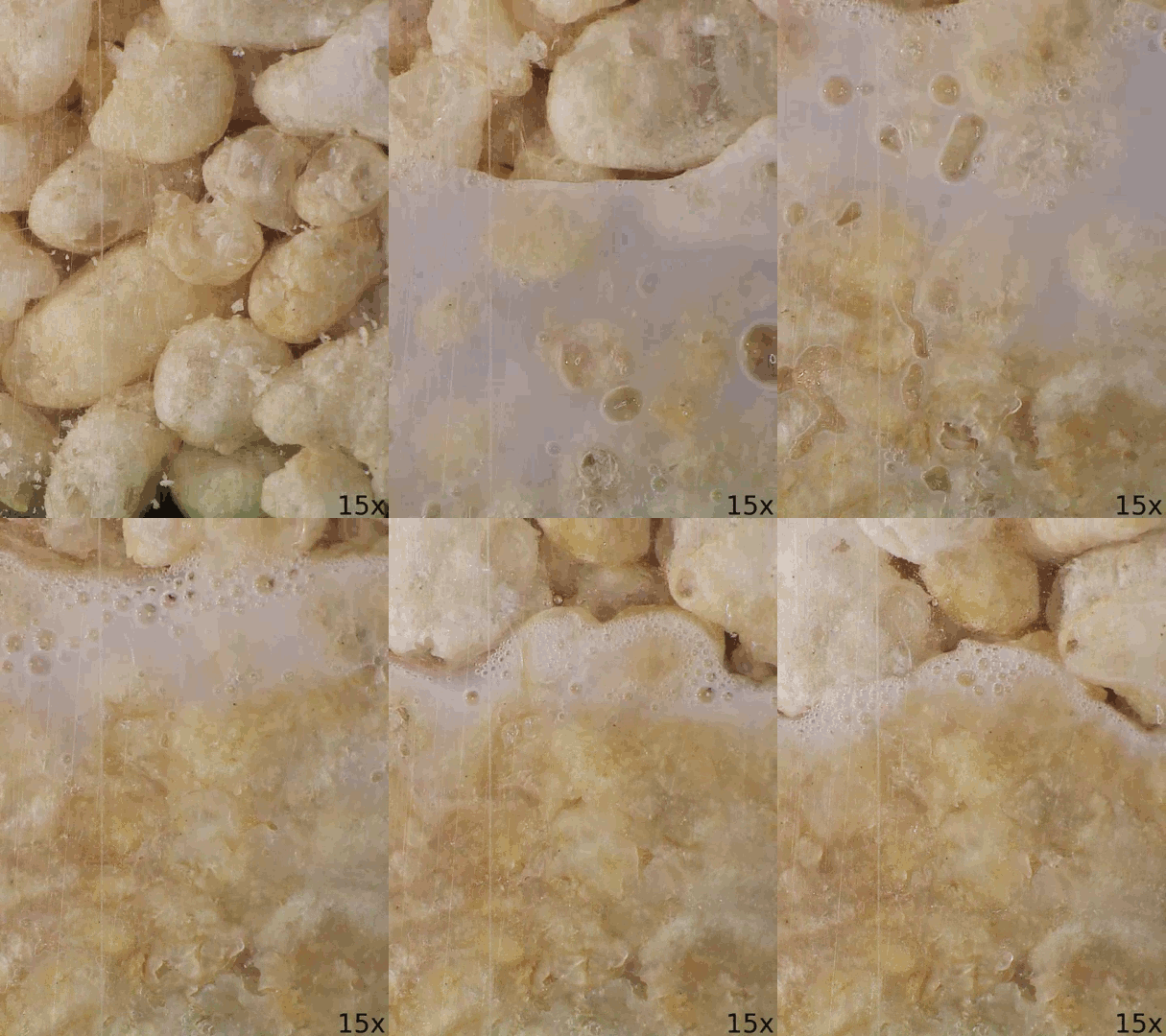
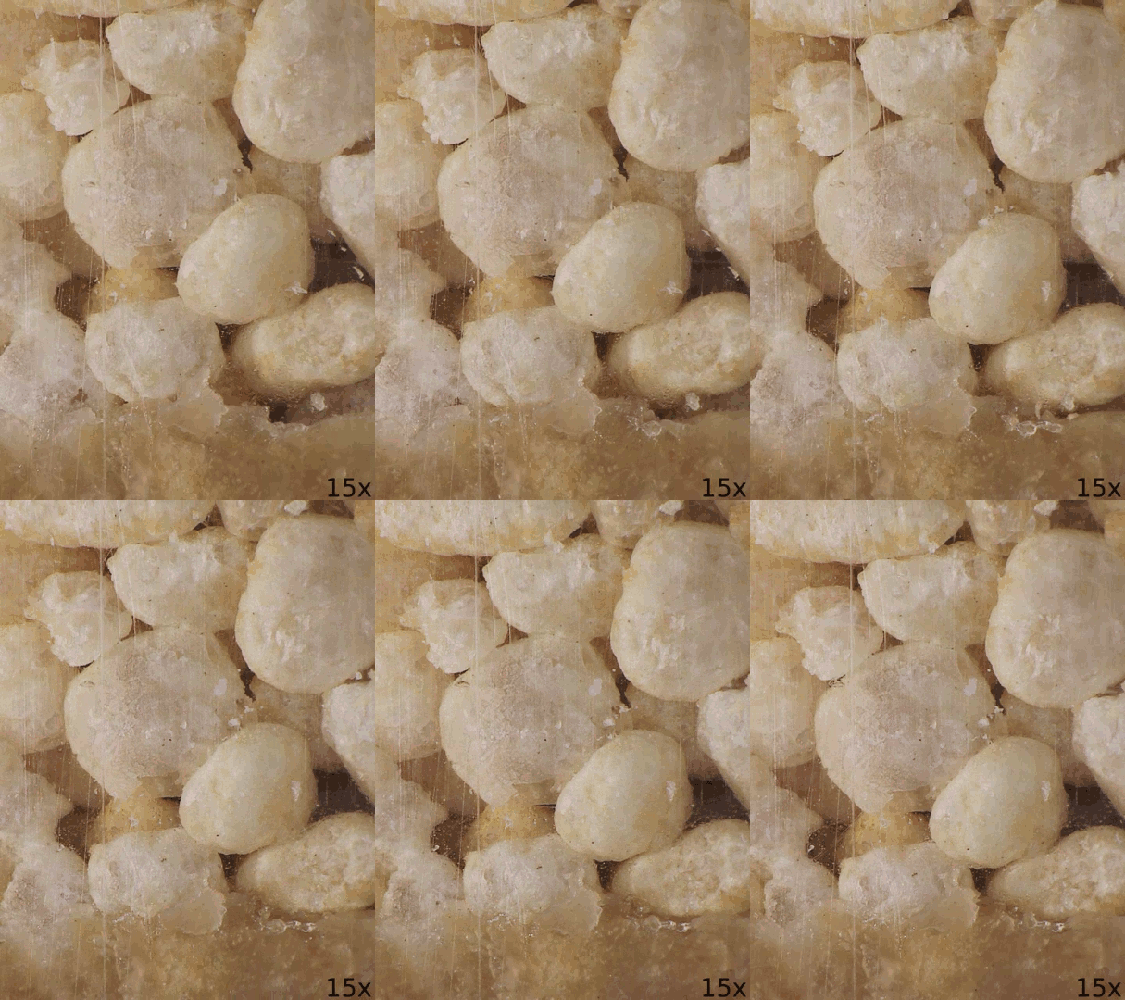
    To study the physics behind this, researchers have turned to a new model: puffed rice cereal. Like their counterparts in nature, puffed rice grains contain micropores that slowly soften and get crushed after being wetted. Researchers filled their test container with puffed rice and put it under pressure to give the whole stack a constant stress. Then they injected milk in the bottom section of the container. After an immediate collapse in the wet material (lower left), the remaining grains collapsed slowly in a series of “ricequakes”. 

    As the micropores compacted, the cereal let out audible cracks that corresponded with the motion of a crushing wavefront (lower right). The time between ricequakes increased linearly and depended on pore size. The relationship was so consistent, researchers found, that they could predict how long the puffed rice stack had been wet simply by listening to the time between crackles! Experiments like these offer scientists an exciting chance to understand geological physics that would otherwise take up to millions of years to observe. (Image and research credit: I. Einav and F. Guillard; via Physics World; submitted by Kam-Yung Soh)

  • Settling in Straws

    Settling in Straws

    At some point in your life, you’ve probably stuck your finger over the end of a straw and used it to pick up the liquid you’re drinking. If you lift the straw so that the end is still in your drink and remove your finger from the top, the liquid level in the straw will drop, then bounce up and down a couple times before it settles. This is what we see happen in the series of snapshots in the top image. Eventually, the liquid level settles at its equilibrium position, marked by the red arrow at the far right.

    The liquid has to bounce before settling because capillary forces and the liquid’s inertia are battling it out moment by moment. Just how long the rebound takes depends on the initial height of the fluid and the depth the straw is immersed at, but it doesn’t depend on the fluid’s viscosity. Lower viscosity fluids do sometimes have a neat jet (bottom image) that forms at the immersed end of the straw, though. (Image and research credit: J. Marston et al.)

  • Coalescence

    Coalescence

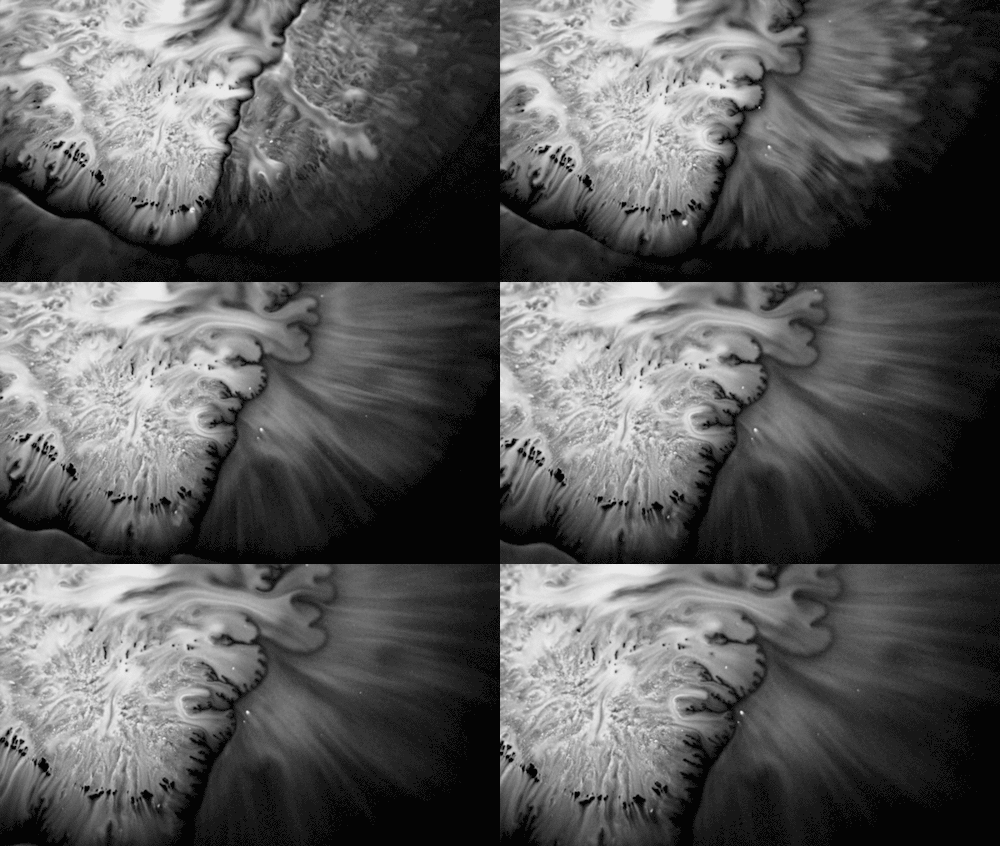
    Simple acts like the coalescence of two droplets sitting on a surface can be beautiful and complex. As the droplets come together, they form a thin neck between them, and the curvature of that surface causes capillary forces that drive fluid into the neck. For two dissimilar droplets, like the ones above, there can be additional forces. Here, the upper drop is pure water, but the lower one has added surfactants, which reduce its surface tension. That difference in surface tension creates a Marangoni flow that tends to pull fluid away from the neck. The result is that full coalescence takes longer. Depending on other factors in this tug-of-war between capillary action and Marangoni flow, the process of coalescence can look very different. In this example, there’s a fingering instability that occurs as the neck spreads. Change the circumstances slightly and the drops may chase each other instead of merging or will merge with a perfectly smooth contact front. (Image and research credit: M. Bruning et al.)

  • Featured Video Play Icon

    “Liquid Calligraphy”

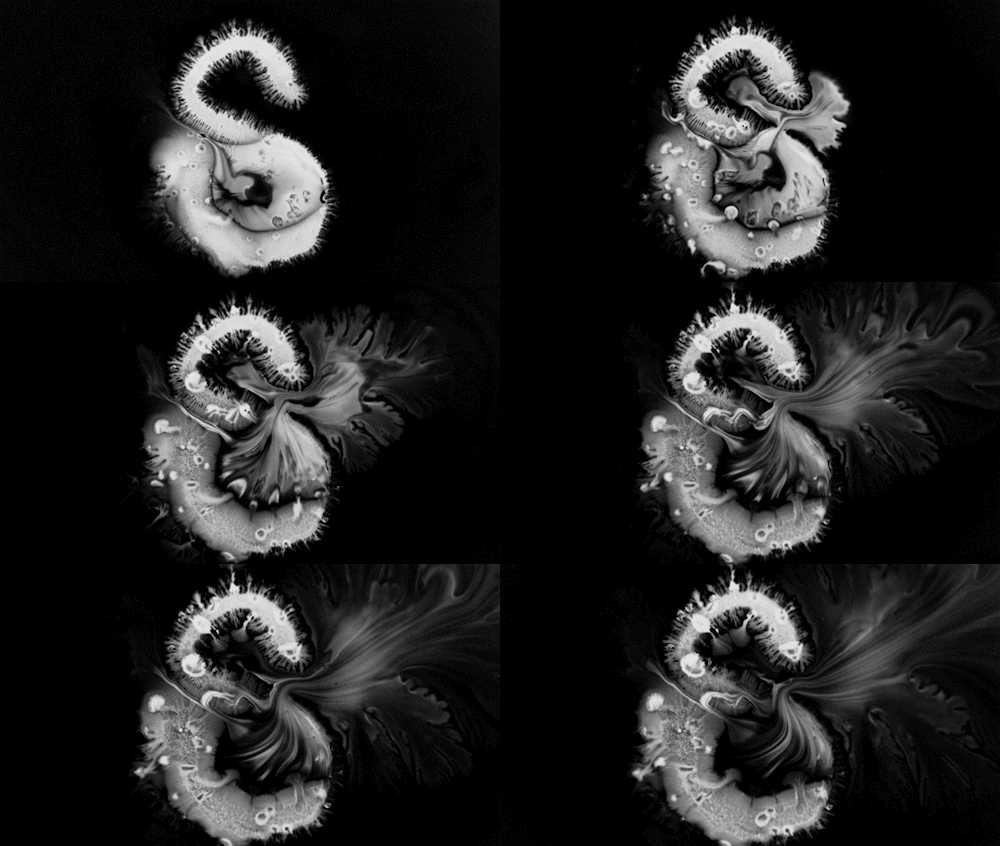
    In “Liquid Calligraphy,” artist Rus Khasanov’s letters dissolve once he draws them. At first, the white ink spreads in narrow fingers, probably driven by a combination of surface tension gradients, capillary action, and simple diffusion. But then, in flashes, the letters morph faster and flow outward. My best guess is that each jump is a spray from a bottle full of a low surface tension liquid like alcohol. The spray triggers faster outflows than before, like those seen when a strong difference in surface tension activates the Marangoni effect. It’s a beautiful and different artistic take on these important fluid forces. Check out more of his videos here or enjoy high-resolution stills and wallpapers in this style from his Behance page. (Image and video credit: R. Khasanov; submitted by TBBQoC)

  • Nestling Droplets

    Nestling Droplets

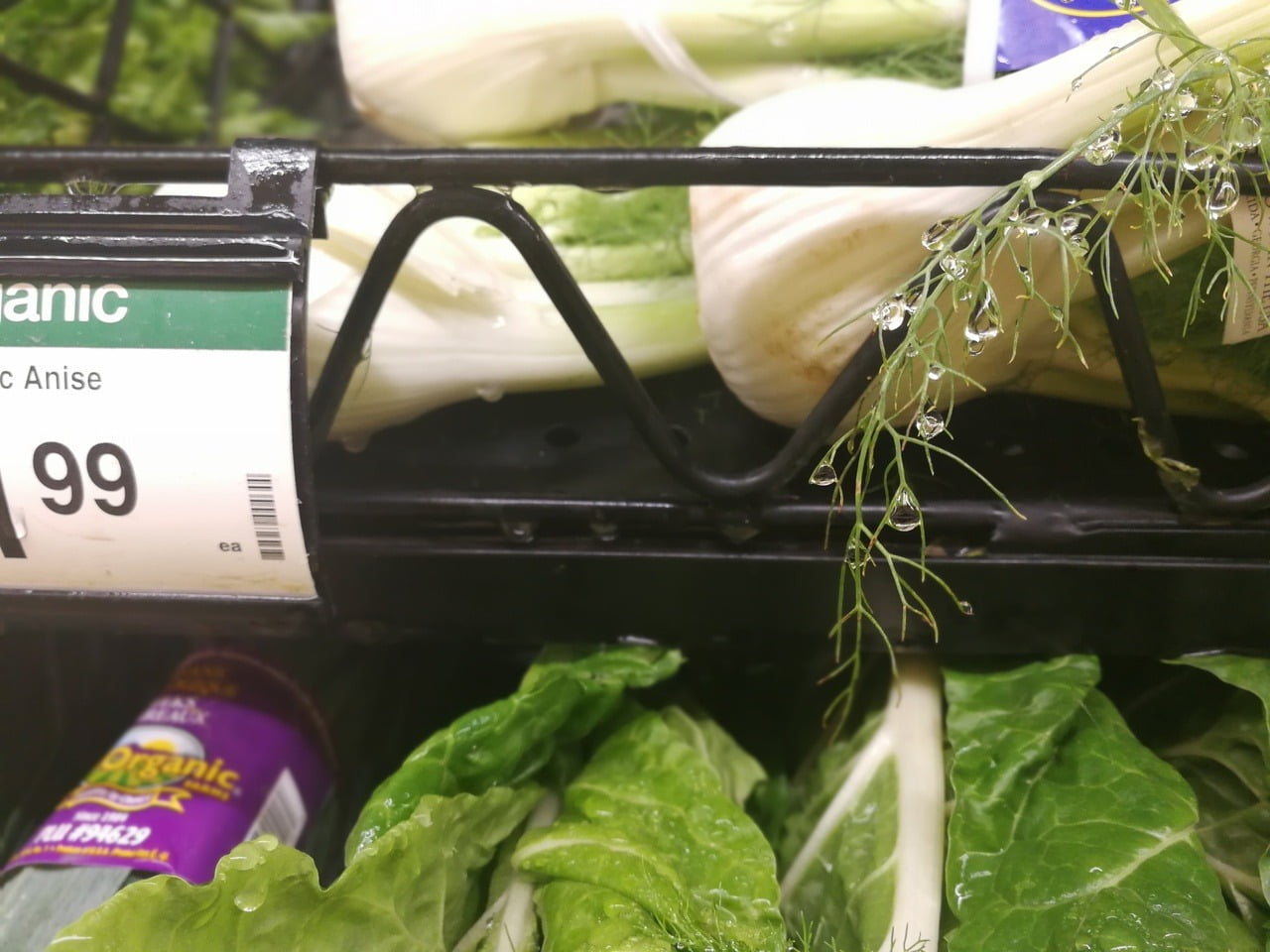
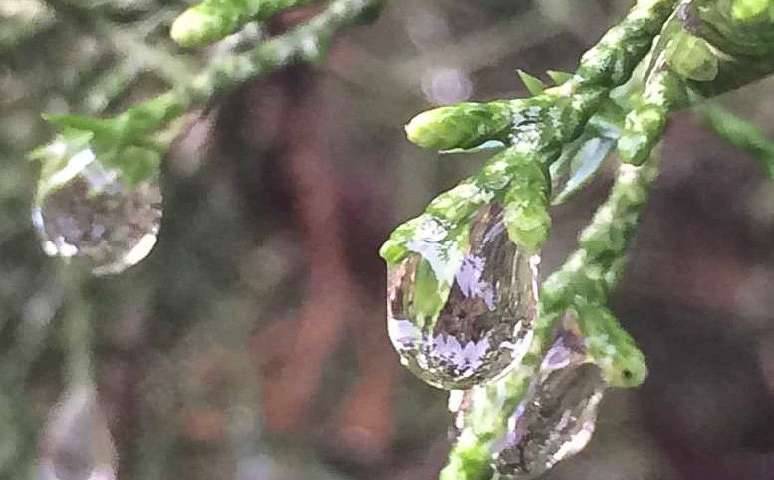
    Pay attention after a rainfall, and you may notice beads of water gathering in the corners of a spider’s web or along the leaves of a cypress tree (bottom right). Look closely and you’ll notice that the largest droplets don’t form along a straight fiber. Instead they nestle into the corners of a bent fiber (top image). Researchers recently characterized this corner mechanism and found that the angle at which the largest droplets form is about 36 degrees. This angle provides the optimal conditions for capillary action and surface tension to hold large drops in place. At smaller angles, a growing droplet’s weight pulls it down until the thin film holding the droplet near the top ruptures and the droplet falls. At larger angles, a heavy droplet will slowly detach from one side of its fiber and shift toward the other side until its weight is too great for the wetted length of fiber to hold. Then it detaches completely and falls. (Research and image credit: Z. Pan et al.; via T. Truscott)