Tag: biology

  • Featured Video Play Icon

    How Sunflowers Follow the Sun

    Sunflower blossoms face east, presenting their blooms to the morning sun and the bees that come exploring with it. But before they grow their massive flower, each plant spends the day following the sun, greeting it in the east and tracking it westward all day. Overnight, the plant reorients eastward to start over again. The motion occurs thanks to the plant internally shifting its water supply. During the day, it swells cells on the east-facing side of the plant, gradually lengthening that side and causing the plant to tip westward. At night, it switches to swelling the west-facing side. Why go to all this trouble? By following the sun, the plant is able to photosynthesize and grow more effectively. (Video and image credit: Deep Look)

    Sunflower plants follow the sun during the day and reset overnight.
    Sunflower plants follow the sun during the day and reset overnight.
    Fediverse Reactions
  • Featured Video Play Icon

    Why Nature Loves Fractals

    Trees, blood vessels, and rivers all follow branching patterns that make their pieces look very similar to their whole. We call this repeating, self-similar shape a fractal, and this Be Smart video explores why these branching patterns are so common, both in living and non-living systems. For trees, packing a large, leafy surface area onto the smallest amount of wood makes sense; the tree needs plenty of solar energy (and water and carbon dioxide) to photosynthesize, and it has to be efficient about how much it grows to get that energy. Similarly, our lungs and blood vessels need to pack a lot of surface area into a small space to support the diffusion that lets us move oxygen and waste through our bodies. Non-living systems, like the branches of viscous fingers or river deltas or the branching of cracks and lightning, rely on different physics but wind up with the same patterns because they, too, have to balance forces that scale with surface area and ones that scale with volume. (Video and image credit: Be Smart)

    Fediverse Reactions
  • “My Own Galaxy”

    “My Own Galaxy”

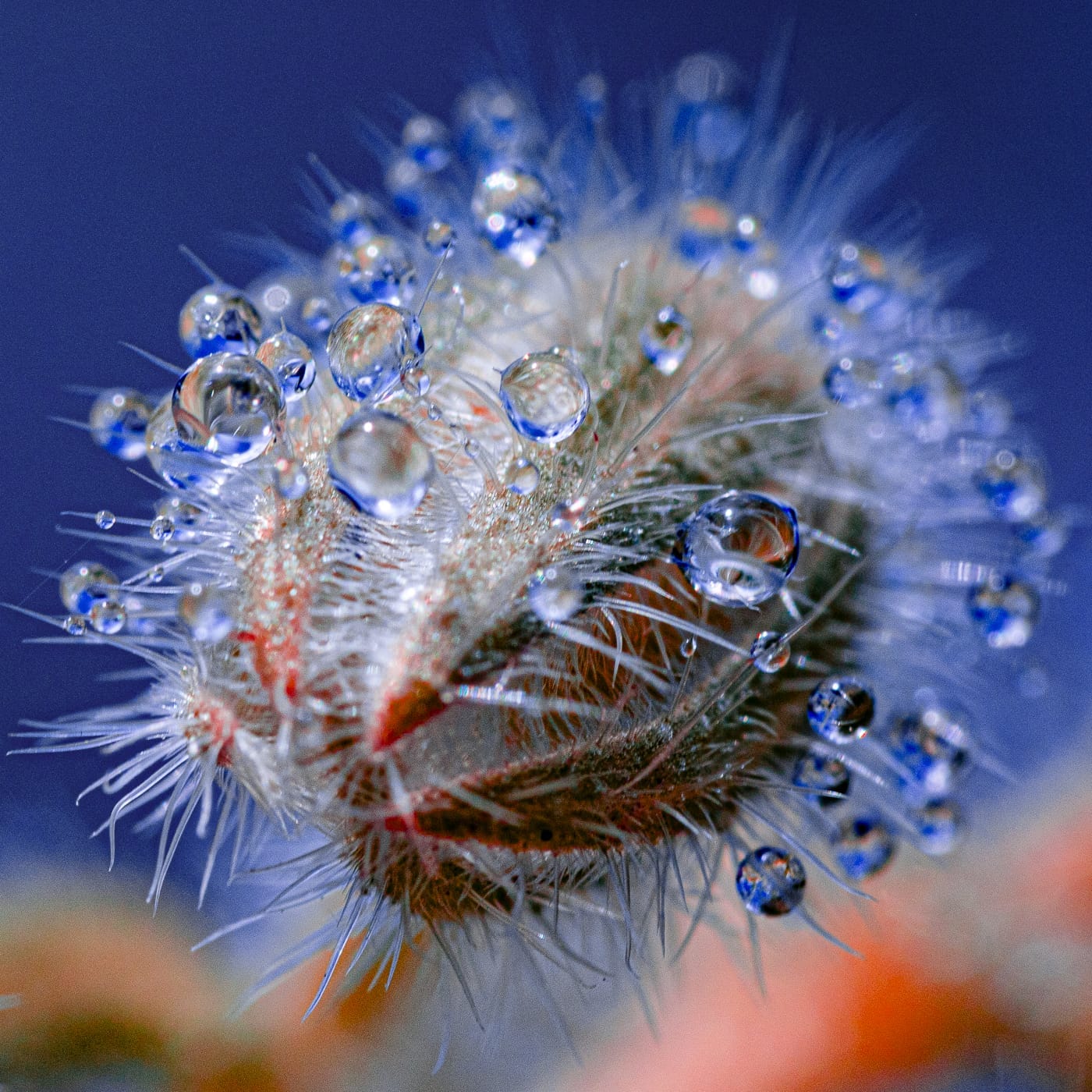
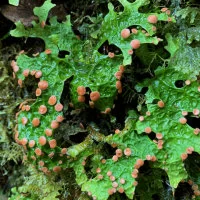
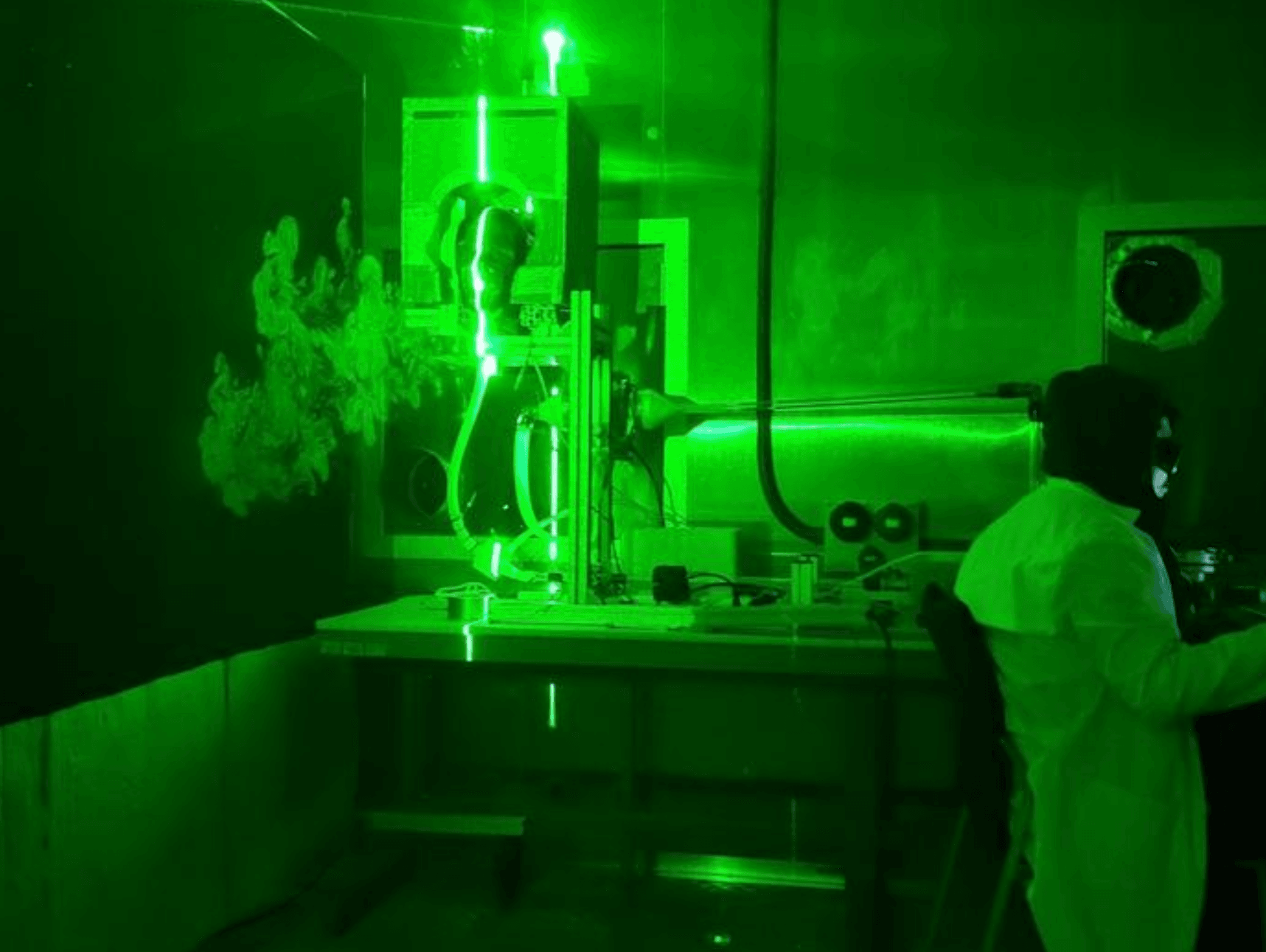
    Fungal spores sketch out minute air currents in this shortlisted photograph by Avilash Ghosh. The moth atop a mushroom appears to admire the celestial view. In the largely still air near the forest floor, mushrooms use evaporation and buoyancy to generate air flows capable of lifting their spores high enough to catch a stray breeze. (Image credit: A. Ghosh/CUPOTY; via Colossal)

    Fediverse Reactions
  • Flushing the Brain During Sleep

    Flushing the Brain During Sleep

    When we sleep, our brains flush out waste that builds up during our waking hours, but how this happens has been something of a mystery. A new study of sleeping mice has visualized and tracked the flow for the first time. The researchers found that, during a specific sleep phase (the non-rapid eye movement portion), the mice released pulses of norepinephrine — a cousin to adrenaline — that periodically contracted blood vessels in the rodents’ brains. As these blood vessels contract and relax, it forces the nearby cerebrospinal fluid to flow. In short, the pulsing of the blood vessels pumps the fluid bathing the brain, flushing it.

    The team also found that certain medications — like the sleep aid Ambien — disrupted this flow in mice by suppressing the blood vessels’ oscillations. It’s not known yet whether our brains operate on the same pumping principle or whether medications could affect that, but it does suggest that a similar study in humans is worthwhile. (Image credit: K. Howard; research credit: N. Hauglund et al.; via Science)

  • Featured Video Play Icon

    A Pitcher Plant’s Rain-Triggered Trap

    Pitcher plants all use slippery rims and sticky digestive juices to capture and trap their insect prey. But two species of pitcher plant independently evolved an extra trap: a rain-activated springboard lid. Both the Seychelles pitcher plant and the slender pitcher plant — separated geographically by 6000 kilometers — have a springy, near-horizontal “lid” that sticks out over their pitcher. The underside of the surface is slippery, though less so than the pitcher’s lip and walls. Unsuspecting ants crawl under the lid, confident that they can keep their footing, and then — bang — a rain drop hits the springboard. That impact catapults the insect directly into the drink. There’s no escaping now.

    How did two widely separated, independently evolving plants both settle on this technique? Scientists think it was random chance. Pitcher plants are highly variable in their pitcher size, shape, and features. The scientists suggest that by trying lots of random combinations, these two species hit upon a particular arrangement that works really well for them. (Video and image credit: Science)

    Fediverse Reactions
  • Featured Video Play Icon

    Mapping the Oceans With Seals

    Elephant seals are harbingers — canaries in the coal mine — for climate change. A long-running experiment tracks northern elephant seal populations using a combination of sensor tags and field measurements. With the miniaturization of sensors, a tagged seal can provide a wealth of data for scientists: foraging paths, temperature and salinity data, behavioral patterns, ecological data, and even information on the species around the seal. This video delves into this treasure trove, explaining how and what we’re learning from this species, especially as they navigate our changing climate. (Video and image credit: Science)

    Fediverse Reactions
  • Swimming Like a Ray

    Swimming Like a Ray

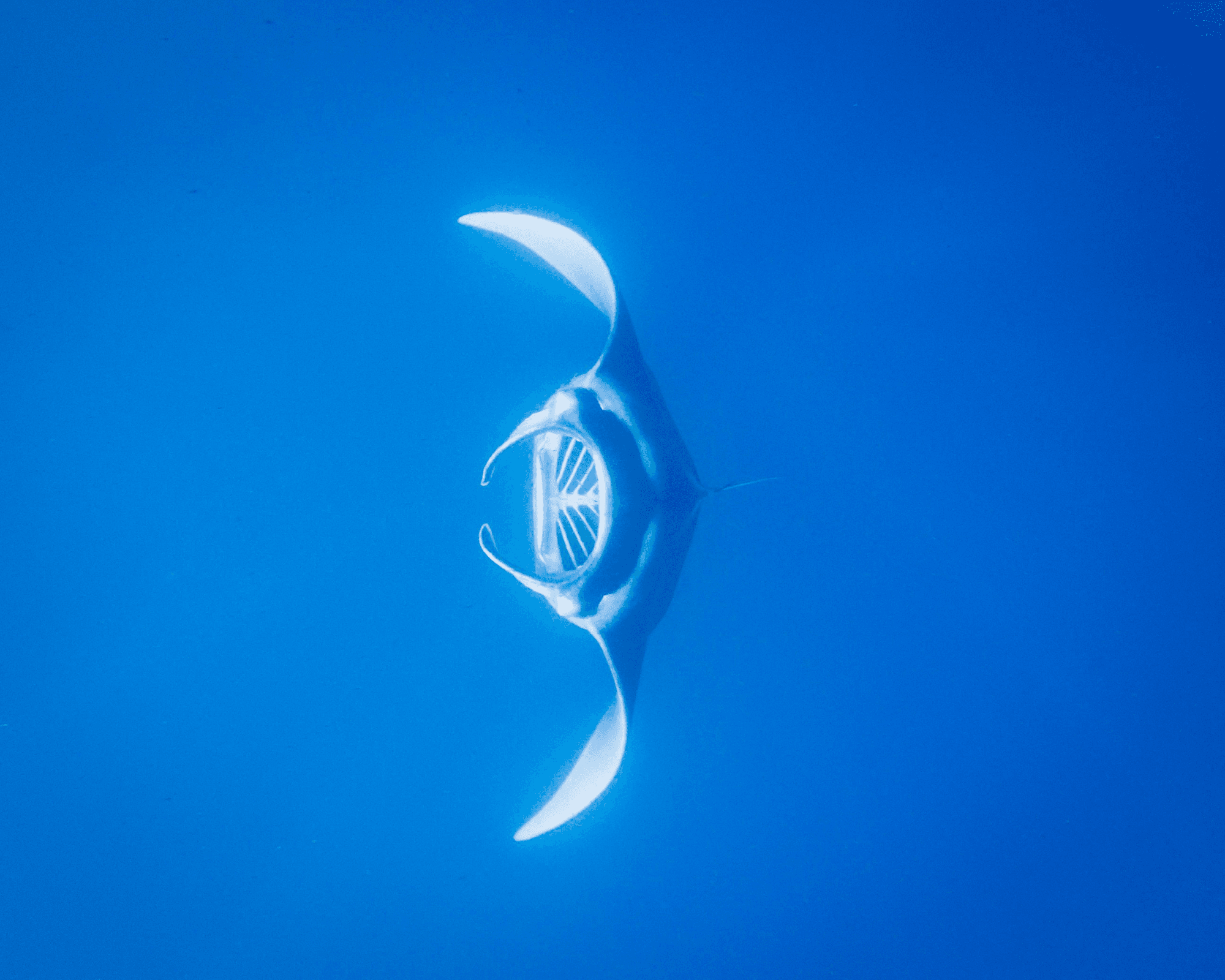
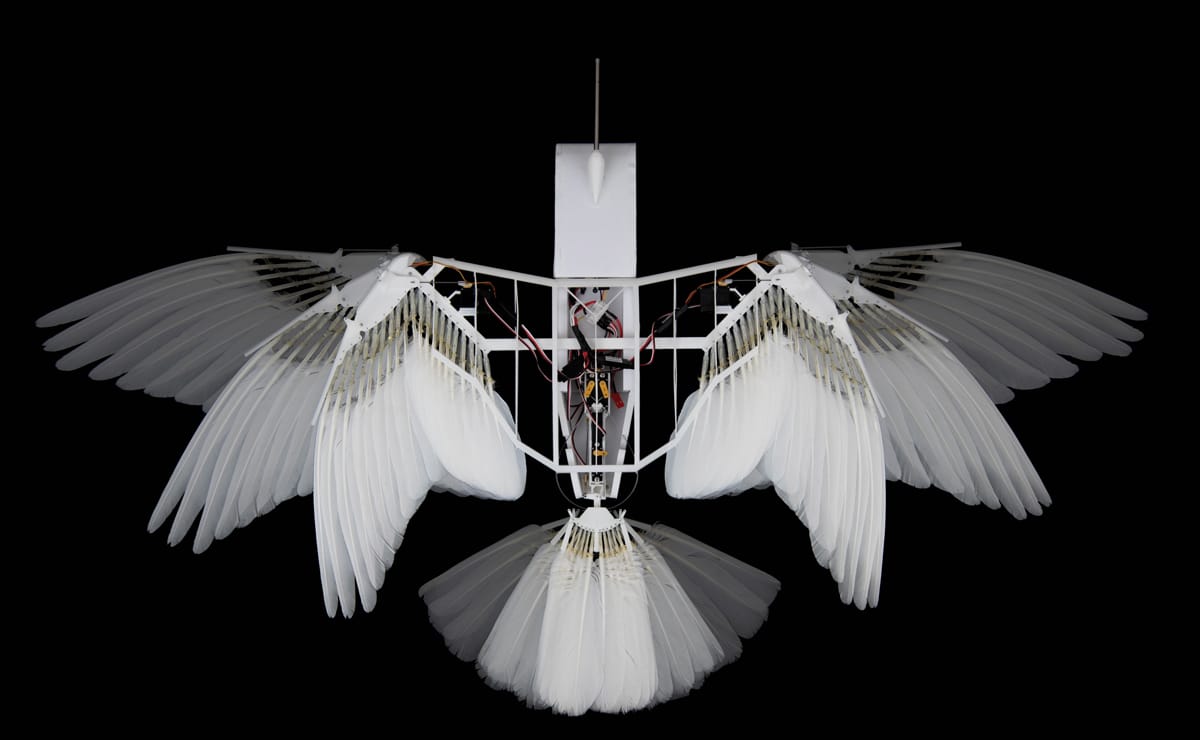
    Manta rays are amazing and efficient swimmers — a necessity for any large animal that survives on tiny plankton. Researchers have built a new soft robot inspired by swimming mantas. Like its biological inspiration, the robot flaps its pectoral fins much as bird flaps its wings; this motion creates vortices that push water behind the robot, propelling it forward. For a downstroke, air inflates the robot’s body cavity, pushing the fins downward. When that air is released, its fins snap back up. With this simple and energy efficient stroke, researchers are able to control the robot’s swimming speed and depth, allowing it to maneuver around obstacles. Flapping faster helps the robot surface, and slower flapping allows it to sink. (Living manta rays also sink if they slow down.) Check out the robot in action below. (Image credit: J. Lanoy; video and research credit: H. Qing et al.; via Ars Technica)

  • Strata of Starlings

    Strata of Starlings

    Starlings come together in groups of up to thousands of birds for the protection of numbers. These flocks form spellbinding, undulating masses known as murmurations, where the movement of individual starlings sends waves spreading from neighbor to neighbor through the group. One bird’s effort to dodge a hawk triggers a giant, spreading ripple in the flock.

    To capture the flowing nature of the murmuration, photographer and scientist Kathryn Cooper layers multiple images of the starlings atop one another. The birds themselves become pathlines marking the murmuration’s motion. The final images are surprisingly varied in form. Some flocks resemble a downpour of rain; others the dangling branches of a tree. (Image credit: K. Cooper; via Colossal)

    Fediverse Reactions
  • “Flowing Kelp”

    “Flowing Kelp”

    This CUPOTY-shortlisted photo by Sigfrido Zimmerman shows giant kelp drifting in the current. At the base of each blade is an inflated bladder that helps keep the algae buoyant. The blades themselves are furrowed on their surface, with patterns reminiscent of sand ripples. Though giant kelp can grow to as large as 60 meters, the species lives in constant flux, pushed and pulled by the currents that run along its length. (Image credit: S. Zimmerman/CUPOTY; via Colossal)

    Fediverse Reactions
  • Holding Steady

    Holding Steady

    Before a mammalian cell divides, the spindle — a protein structure — divides the cell’s genetic material in two. As it does, the cytoplasm inside the cell forms a toroidal flow (below, left). Researchers wondered how the spindle manages to stay in place with this flow; the spindle sits just where the flow diverges, a spot that seems ripe for unstable shifts in position. But, contrary to expectations, their analysis showed that — although a smaller spindle would be unstable in that spot — the protein spindle is large enough that its size distorts the cell’s flow and creates a pressure that moves it back into place if it shifts. (Image credit: top – ColiN00B, illustration – W. Liao and E. Lauga; research credit: W. Liao and E. Lauga; via APS Physics)

    Left: illustration of the toroidal flow near the spindle (purple) in a cell. Right: schematic of flow near the spindle's fixed point.
    Left: illustration of the toroidal flow near the spindle (purple) in a cell. Right: schematic of flow near the spindle’s fixed point.
    Fediverse Reactions