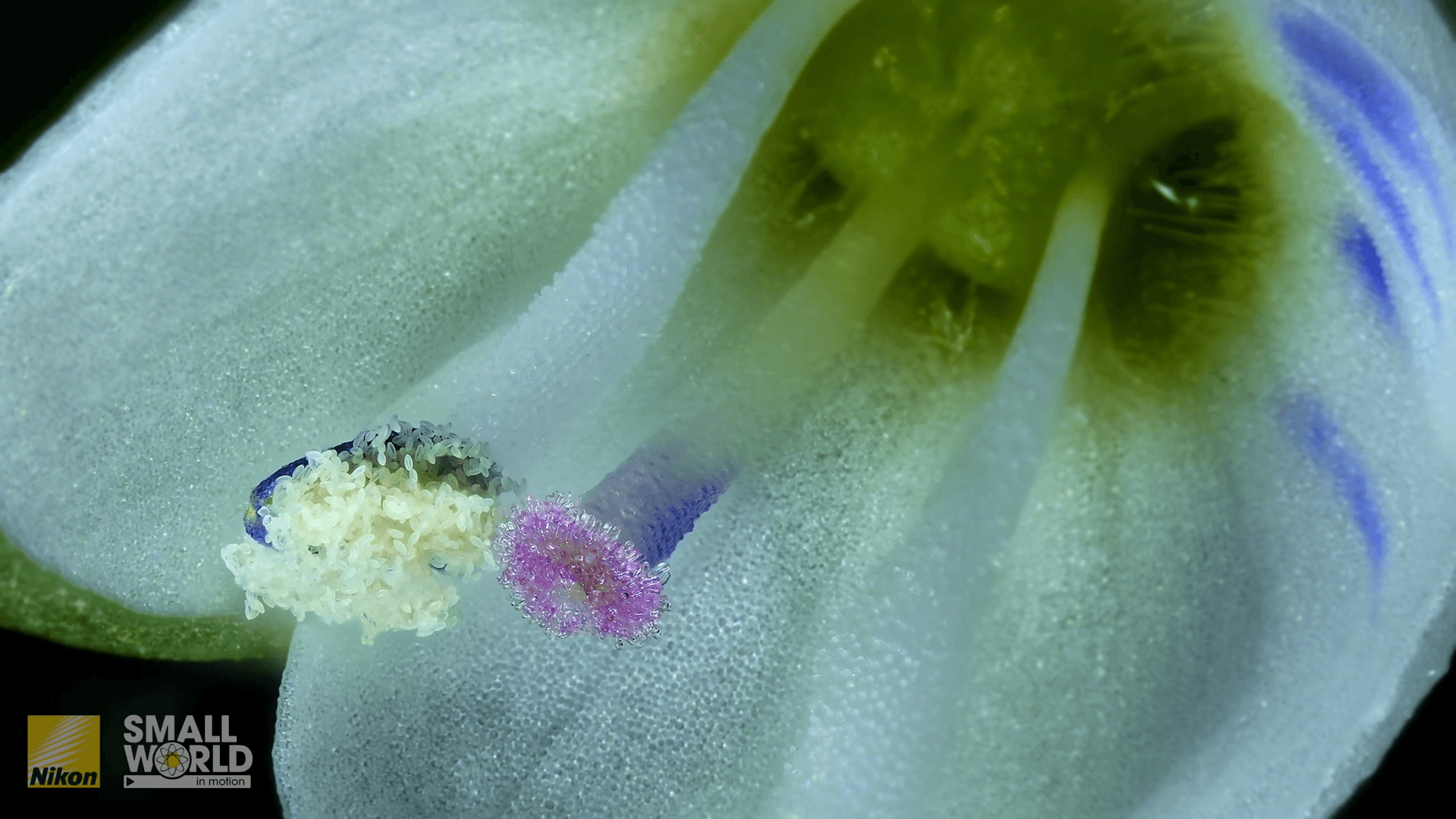
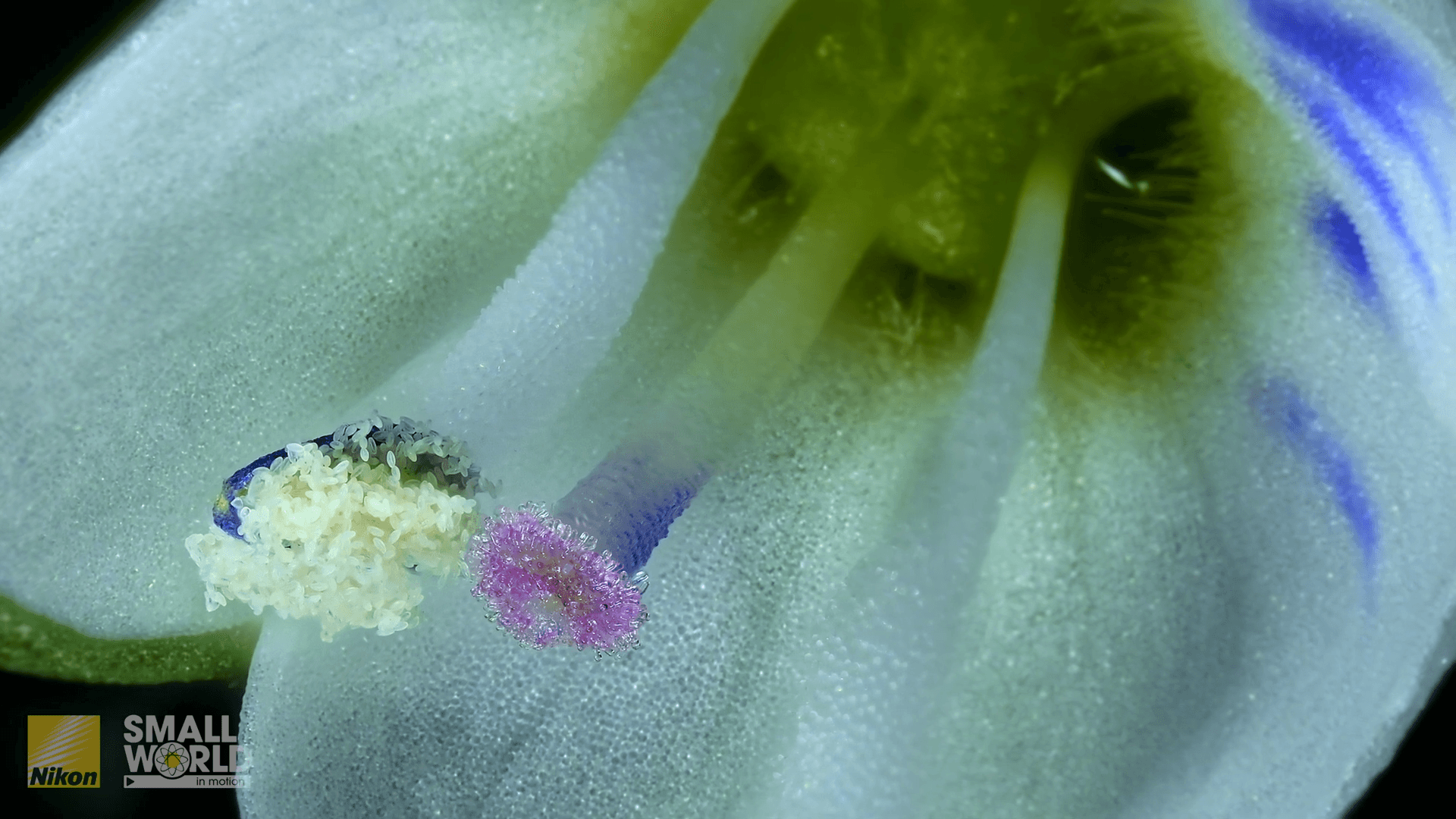
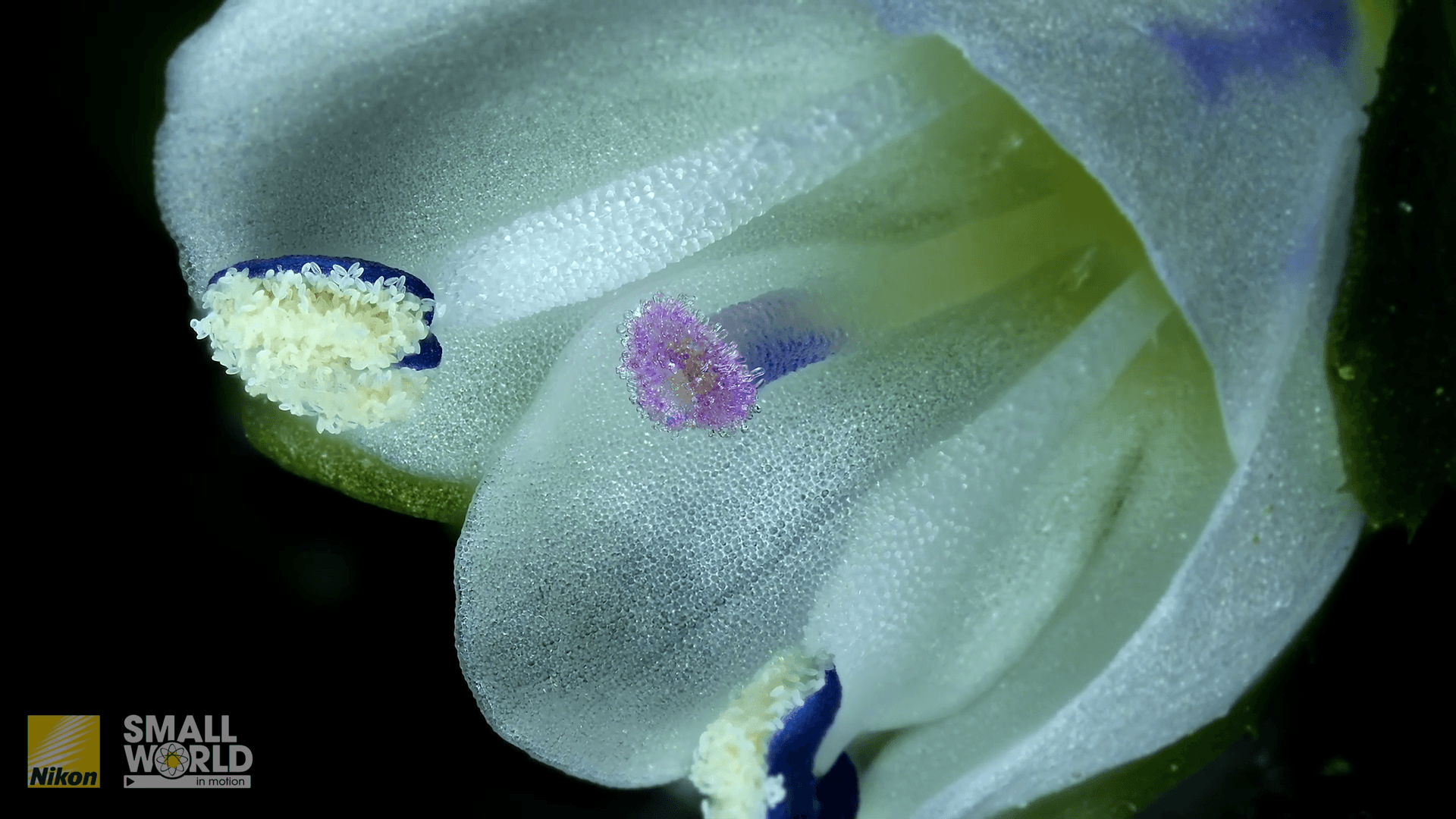
Though we rarely notice their movement in the moment, plants, and especially their flowers, are frequently on the move. Here, retired engineer Jay McClellan captures a thymeleaf speedwell flower as it opens, then pushes a stamen toward its pistil, thereby pollinating itself. Like much of the motion executed by plants, these movements come from pumping water between different cells, swelling and shrinking them as needed to execute the overall motion. (Video and image credit: J. McClellan; via Colossal)
Tag: turgor pressure

Closing a Venus Fly Trap
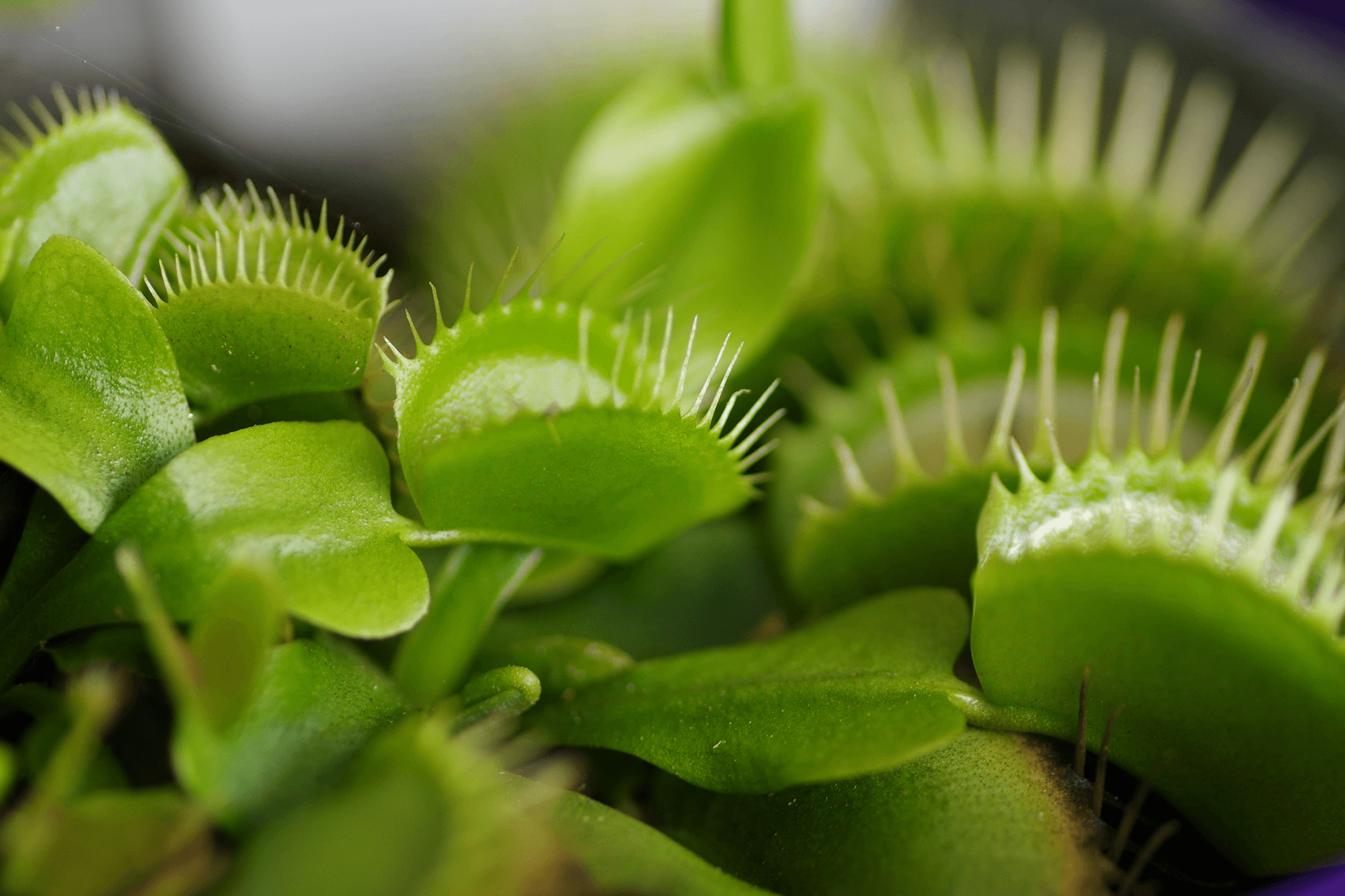
The Venus fly trap has long fascinated scientists with its ability to catch fast-moving prey. Just how the plant closes its “trap” leaf so quickly is a matter of debate. A new study gives us more detail–but not complete clarity–about what’s going on.
One way that plants move rapidly is by moving water into or out of cells, changing their internal pressure. The new experiments showed that this is not what the fly trap does. Specifically, by watching the speed at which individual Venus fly trap cells take up water, the team concluded that closing the leaf would take 30-150 seconds–far more than the 1 second observed.
Instead, the team showed that the trap’s rapid closure happens because the plant’s cell walls rapidly soften, making the leaf unable to stay open against previously-stored elastic energy. Instead, the trap snaps closed. The physical mechanism behind the softening is still unclear, though, so the charismatic plant still has mysteries for us to discover. (Image credit: N. Suzuki; research credit: J. Ryu et al.; via Nature and Gizmodo)

How Sunflowers Follow the Sun
Sunflower blossoms face east, presenting their blooms to the morning sun and the bees that come exploring with it. But before they grow their massive flower, each plant spends the day following the sun, greeting it in the east and tracking it westward all day. Overnight, the plant reorients eastward to start over again. The motion occurs thanks to the plant internally shifting its water supply. During the day, it swells cells on the east-facing side of the plant, gradually lengthening that side and causing the plant to tip westward. At night, it switches to swelling the west-facing side. Why go to all this trouble? By following the sun, the plant is able to photosynthesize and grow more effectively. (Video and image credit: Deep Look)

Sunflower plants follow the sun during the day and reset overnight. 
Inside the Squirting Cucumber
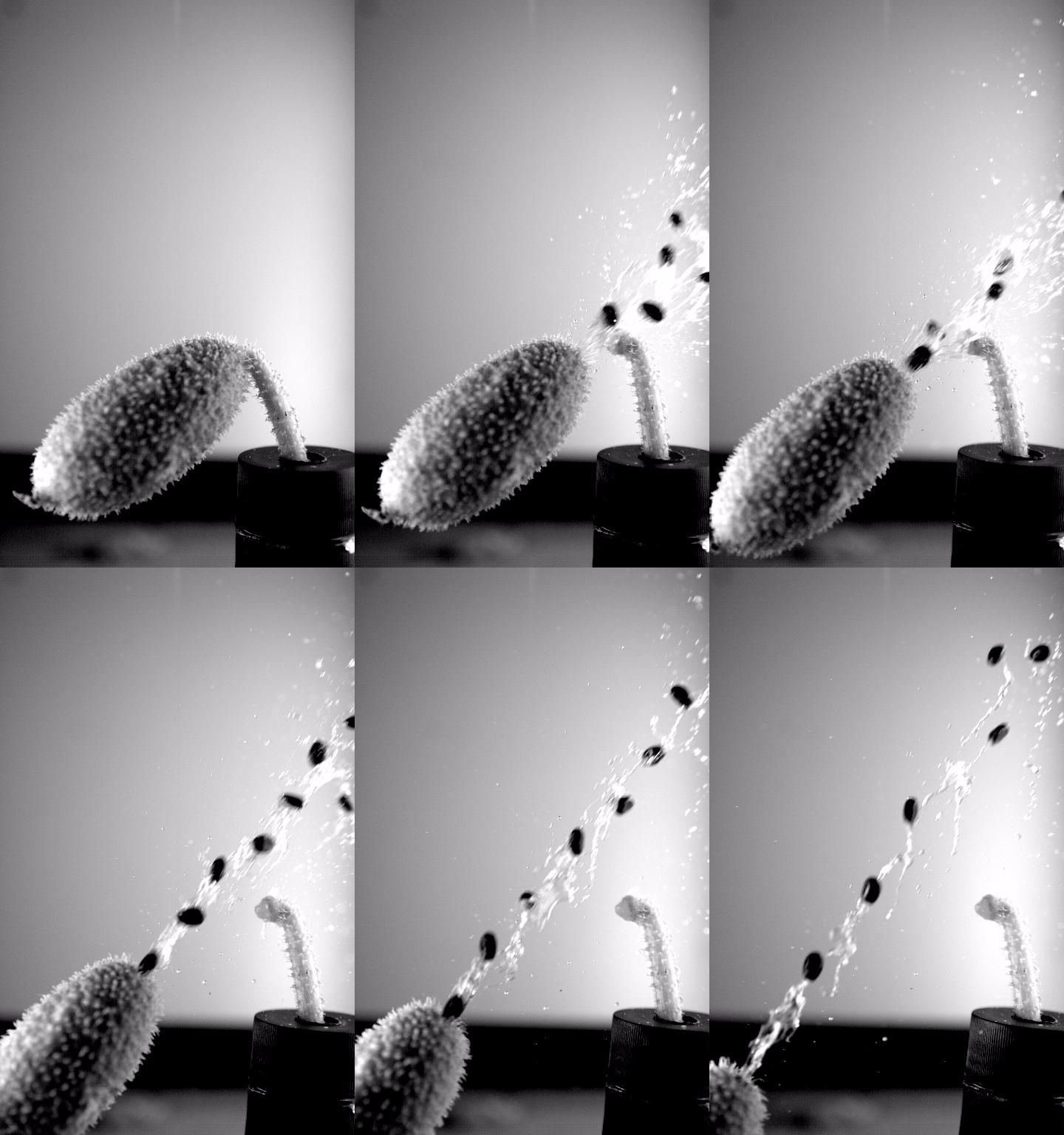
Though only 5 cm long, the squirting cucumber can spray its seeds up to 10 meters away. The little fruit does so through a clever combination of preparation and ballistic maneuvers. Ahead of launch, the plant actually moves water from the fruit into the stem; this reorients the cucumber so that its long axis sits close to 45 degrees. It also makes the stem thicker and stiffer.

This high-speed video shows the explosive release of the squirting cucumber’s seeds. When the burst happens, fruit spews out a jet of mucus that propels the seeds at up to 20 m/s. The initial seeds move the fastest — thanks to the fruit’s high-pressure reservoir — and fly the furthest. As the pressure drops, the jet slows and the fruit’s rotation sends the seeds higher, causing them to land closer to the original plant. With multiple fruits in different orientations, a single plant can spread its seeds in a fairly even ring around itself. (Research and image credit: F. Box et al.; via Gizmodo)

“The Green Reapers”
This short film from artist Thomas Blanchard focuses on carnivorous plants and their prey. These plants — including Venus fly traps, sundews, and pitcher plants — rely on fluids both to attract and capture their prey. Plants like the Venus fly trap build turgor pressure in their cells to move and prop open their leaves. Once triggered, a mechanical release allows the fluid pressure to snap the trap closed. Sweet-smelling fluids invite insects in, only to become nightmarishly difficult to escape once prey try to unstick themselves from the highly viscoelastic liquids. (Video and image credit: T. Blanchard; via Colossal)

Plant Week: Bunchberry Dogwood
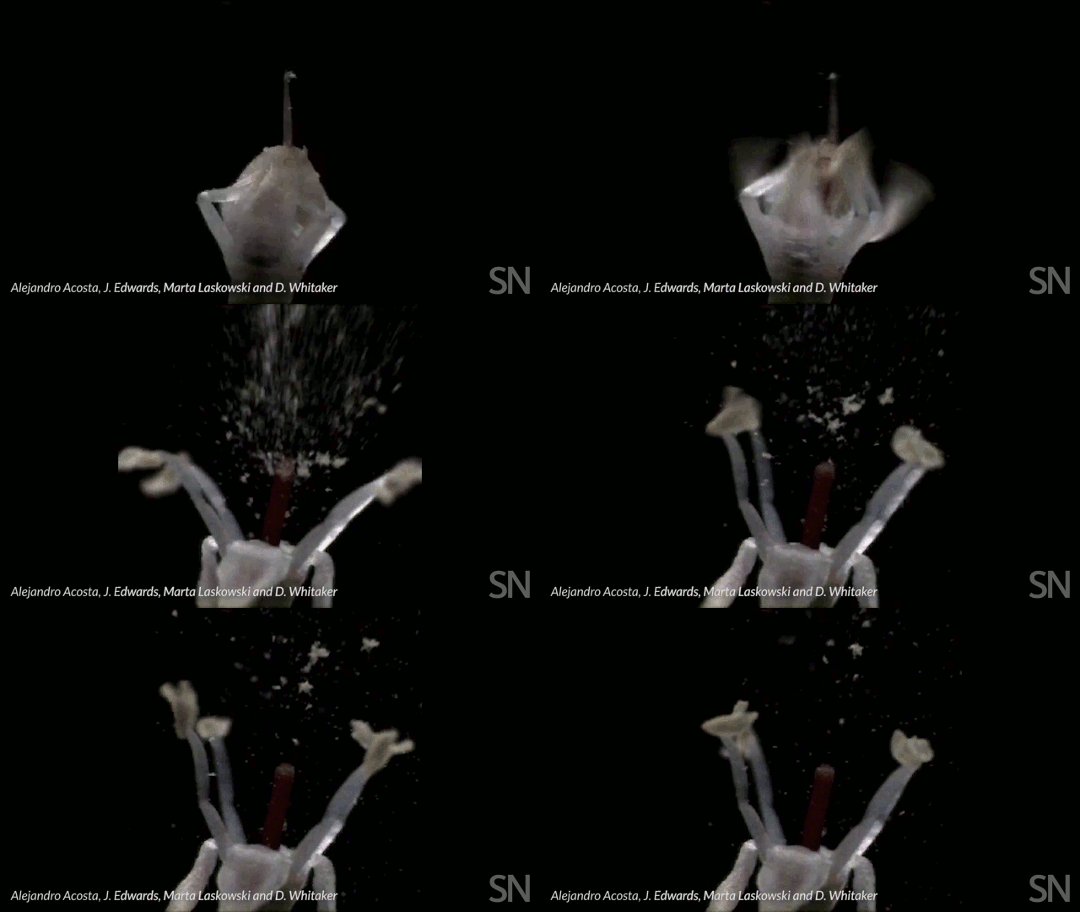
The bunchberry dogwood, unlike its taller relatives, is a low-lying subshrub that spreads along the ground. But it sports some of the fastest action of any plant, requiring 10,000 frames per second to capture! When young buds form in the bunchberry flower, their four petals are fused, completely hiding the stamens. As the plant matures, the pollen-carrying stamens grow faster than the petals, causing them to peek out the sides of the bud. But the petals stay attached at the tip, holding the stamens in while pressure inside the stamens creates a store of elastic energy.
When disturbed, the petals break loose and the stamens spring up and out. The anthers at their tips hold the pollen in place until the stamen reaches its maximum vertical velocity, at which point the anthers swing out to release the pollen upward. In essence, the flower works in the same manner as a trebuchet, flinging pollen with an acceleration 2,400 times greater than gravity. That’s enough to coat pollen onto nearby insects and to launch the remainder high enough for the wind to catch it. (Image and research credit: D. Whitaker et al., source; via Science News; submitted by Kam-Yung Soh)
And with that, FYFD’s Plant Week is a wrap! Missed one of the previous posts? You can catch up with them here.

How Plants Move

Though most plants don’t move at speeds that we humans notice, many plants are remarkably active, as seen in the timelapse animations above. Much of this motion is driven by water flow inside the plant. The two plants above are phototropic–they move in response to light. The motion is actuated via a specialized motor cell called the pulvinus, which is located at the base of the leaf where it meets the stem. Unlike animal cells, plant cells have stiff outer walls that allow them to maintain an internal pressure–or turgor pressure–that differs from the outside environment. In fact, it’s not unusual for a plant’s cell to hold a pressure equivalent to 5 atmospheres! The plant manipulates this turgor pressure by controlling the transport of ions across cell membranes. Pump more ions into a cell, and osmosis will cause water to flow into the area of high solute (ion) concentration. This causes the cell to swell and raises the turgor pressure, resulting in the plant’s leaf moving. (Image credit: L. Miller and A. Hoover, source; additional research credit: J. Dumais and Y. Forterre)