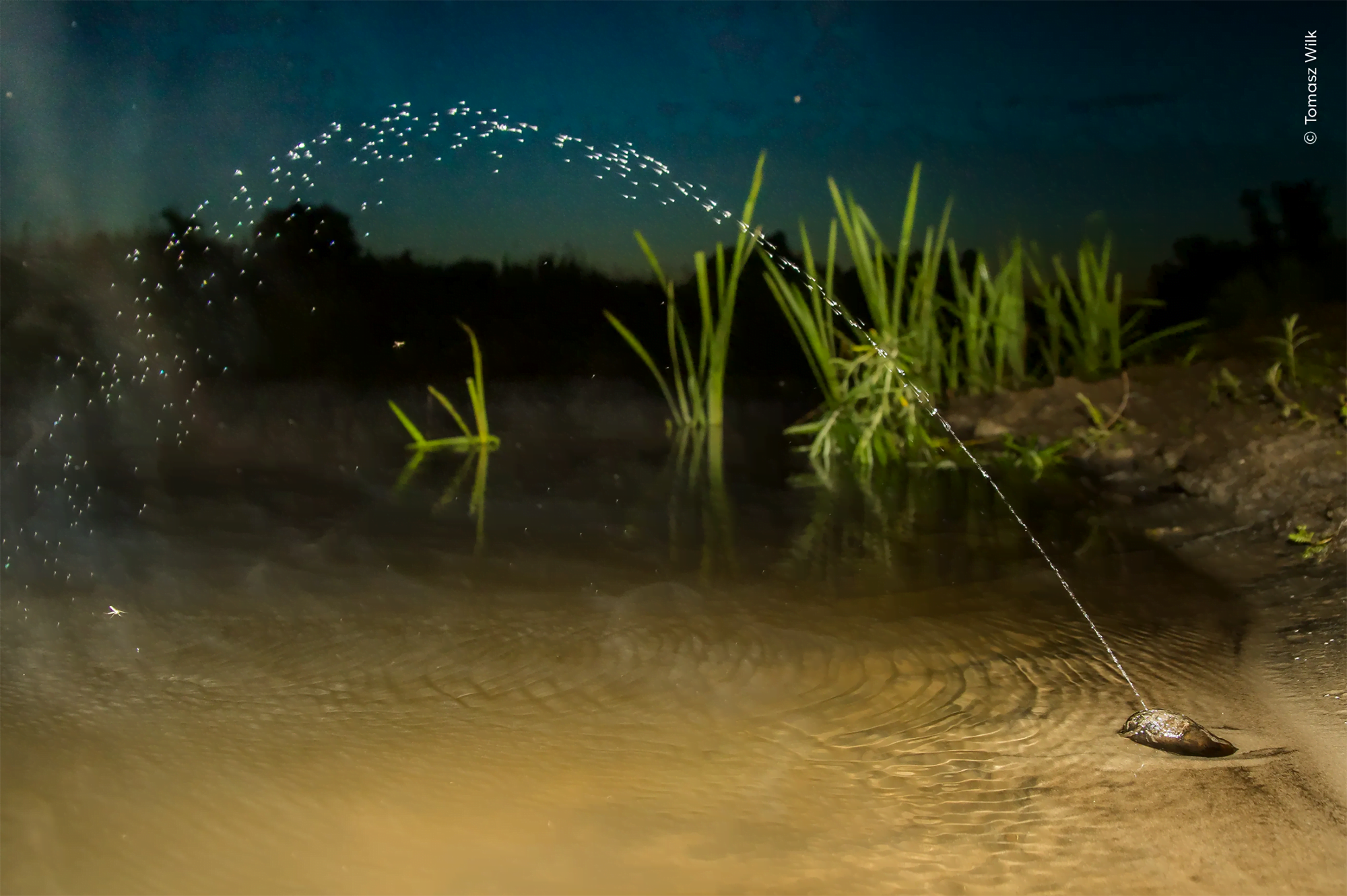
When Tomasz Wilk settled to camp one evening on the banks of a Polish river, he didn’t expect to find fountains in the shallows. Though reminiscent of an archer fish’s shot, this stream comes from a freshwater mussel. In spring, the mature female thick-shelled river mussels head to the shallows, where they edge a bit of their shell out of the water and release this fountain of water and larvae. Once dispersed, the larvae will attach (harmlessly) to the gills of fish until they grow into a juvenile mussel. (Image credit: T Wilk; via Wildlife POTY)
Tag: biology

Eel-Like Swimming


Working with living creatures can’t always reveal their mechanics. That’s one reason engineers like building biorobots. Here, researchers built 1-guilla, an eel-like swimmer, and studied how its body motions affected its swimming. Eels are anguilliform swimmers that use a traveling wave moving along their body from head to tail for propulsion. In the video (and paper), they break down the robot’s motion step by step — looking at amplitude, wavelength, and tail angle — to find the optimal values for maximizing speed and, separately, efficiency in swimming. (Video and image credit: A. Anastasiadis et al.; research credit: A. Anastasiadis et al.)

Stretching Ant Rafts
In their natural habitat, fire ants experience frequent floods and so developed the ability to form rafts. Entire colonies will float out a flood in a two-ant-thick raft anchored to whatever vegetation they can find. Because ants in the upper layer of the raft are constantly milling about, the rafts have some ability to “self-heal” as they’re stretched.

Pulling slowly gives the ants time to “heal” their stretching raft. In these experiments, researchers slowly (above) and quickly (below) stretched ant rafts to see how they responded. Given a slow enough stretch, the ants were able to adjust and keep the raft together until it doubled in length. In contrast, a faster stretching rate overwhelmed the raft by the time it was 30% longer. (Image credit: top – Wikimedia Commons, others – C. Chen et al.; research credit: C. Chen et al.; via APS Physics)
Pulling quickly breaks an ant raft because the ants cannot react fast enough to heal the raft. 
Flexy Fur Foils Fouling
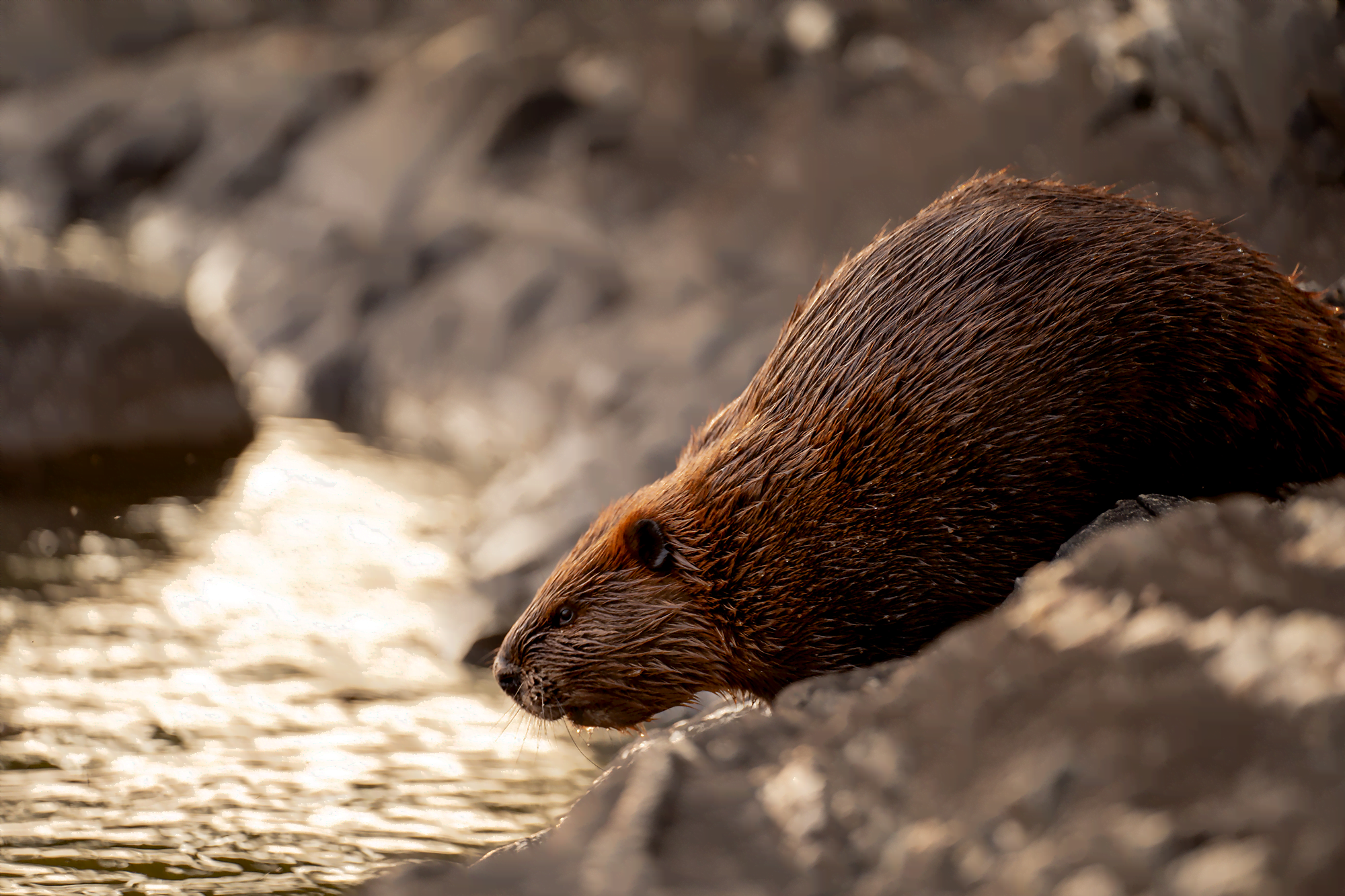
Inspired by a muddy hike with a dog, today’s study looks at how fur in a flow can shed dirt and debris. Researchers placed beaver, coyote, and synthetic hairs in a flow chamber with a slurry of titanium dioxide particles in water. After 24 hours, they counted the particles stuck on each hair. The more flexible a hair, the cleaner it stayed. Long hairs collected fewer particles per unit surface area than short ones, thanks to their larger deflection in the flow. The effect, they discovered, is a bit like when paint or glue dries on your hand. The more you move and flex your skin, the harder it is for crusty material to stick. This self-cleaning with flex and flow occurs in nature, too: the only furry mammal with consistently dirty fur is the notoriously inactive sloth. (Image credit: T. Umphreys; research credit: M. Krsmanovic et al.; via APS Physics)

Corralling Corals
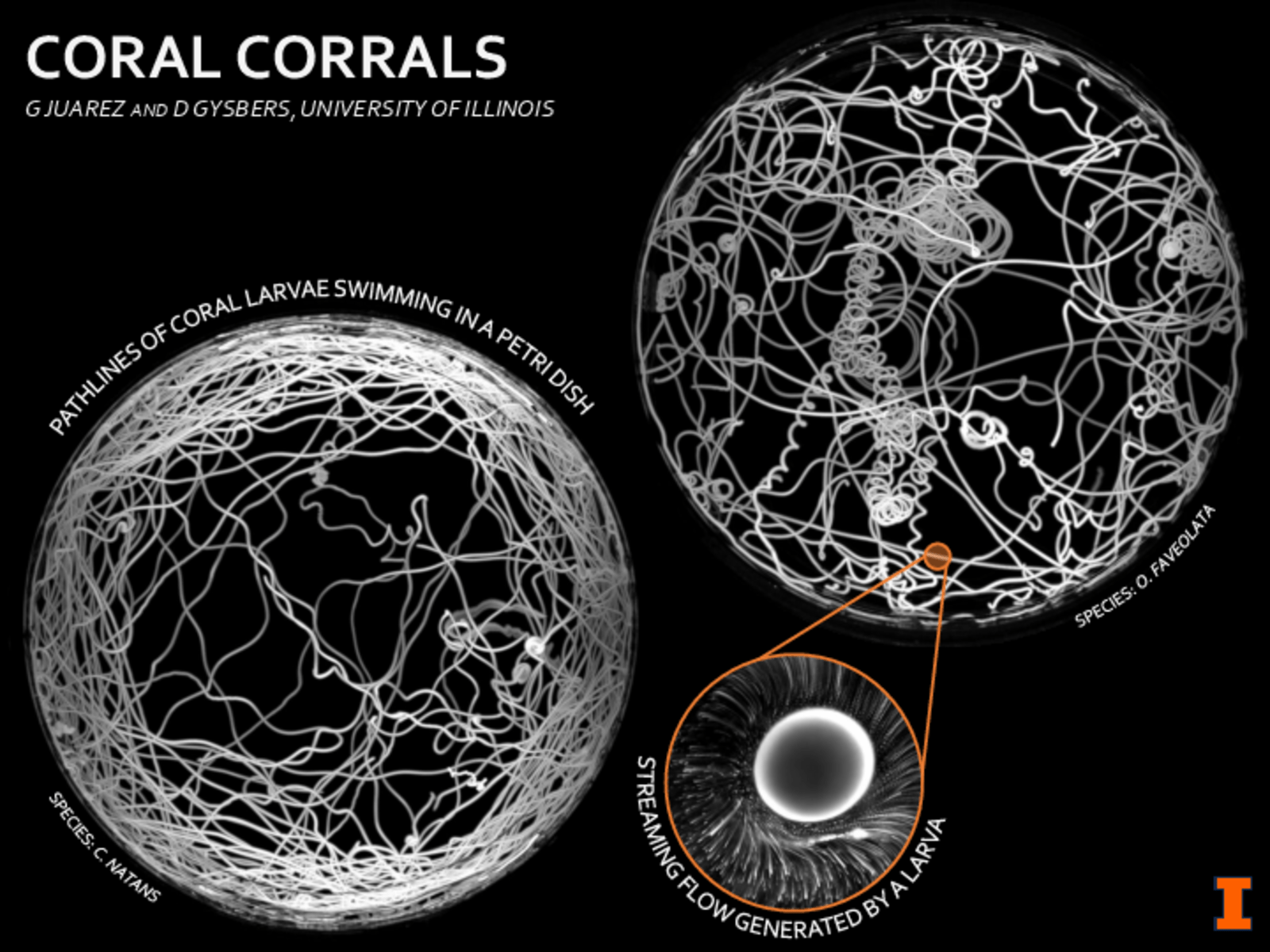
So much of fluid dynamics is seeking patterns. Shown here are two sets of patterns, each created by a different species of coral larvae. These tiny creatures form a streaming flow (orange inset) around them as they swim. Combined together in a petri dish, the larvae follow winding paths, shown in white. The overall pattern is distinctly different for the two species. One shows a clear preference for paths near the wall of the dish (left), while the other corkscrews through open spaces (right). This difference raises questions researchers can explore: do the larvae differ in their propulsion methods or in their collective behavior? (Image credit: G. Juarez and D. Gysbers)

The Best of FYFD 2023


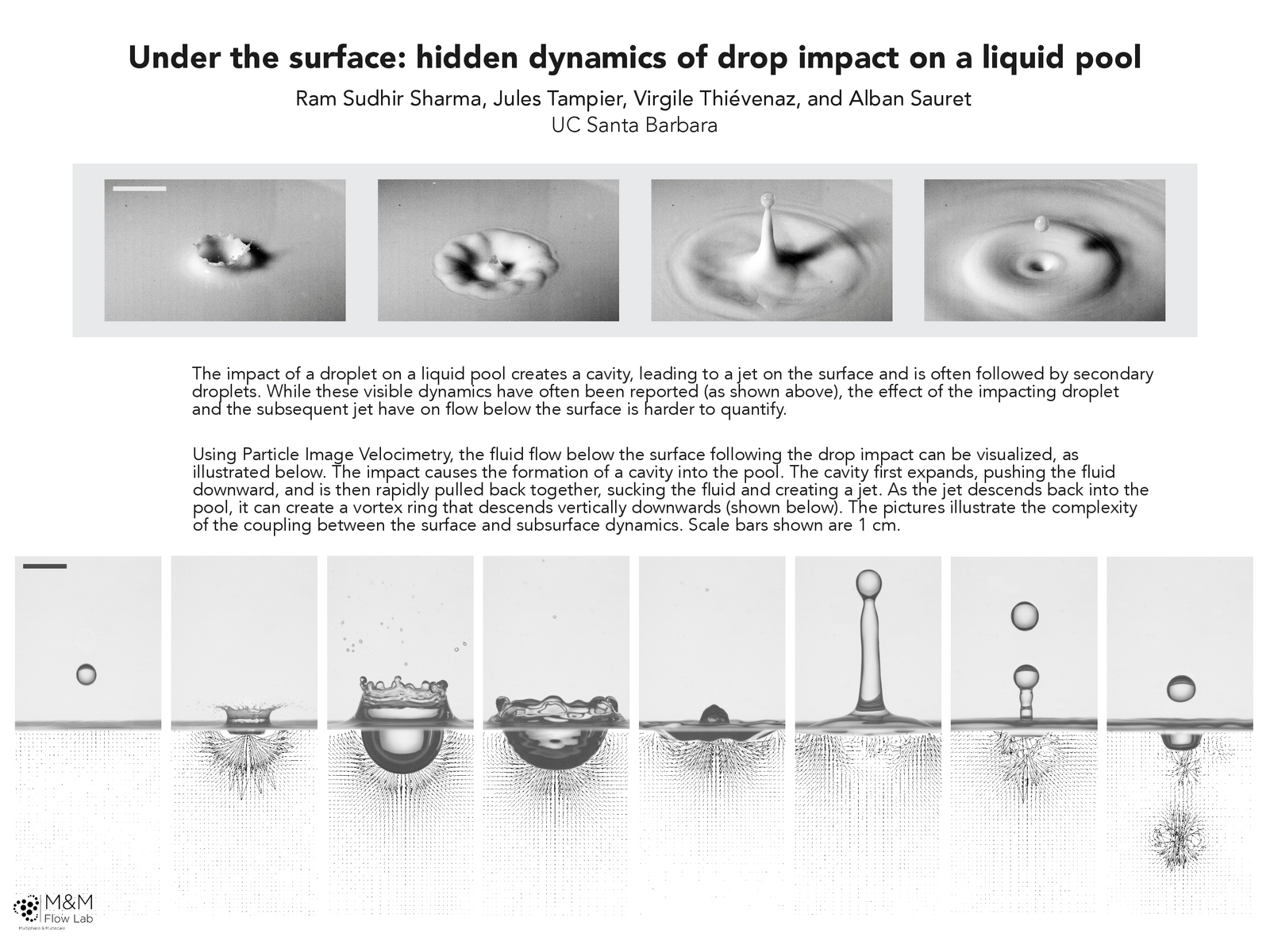

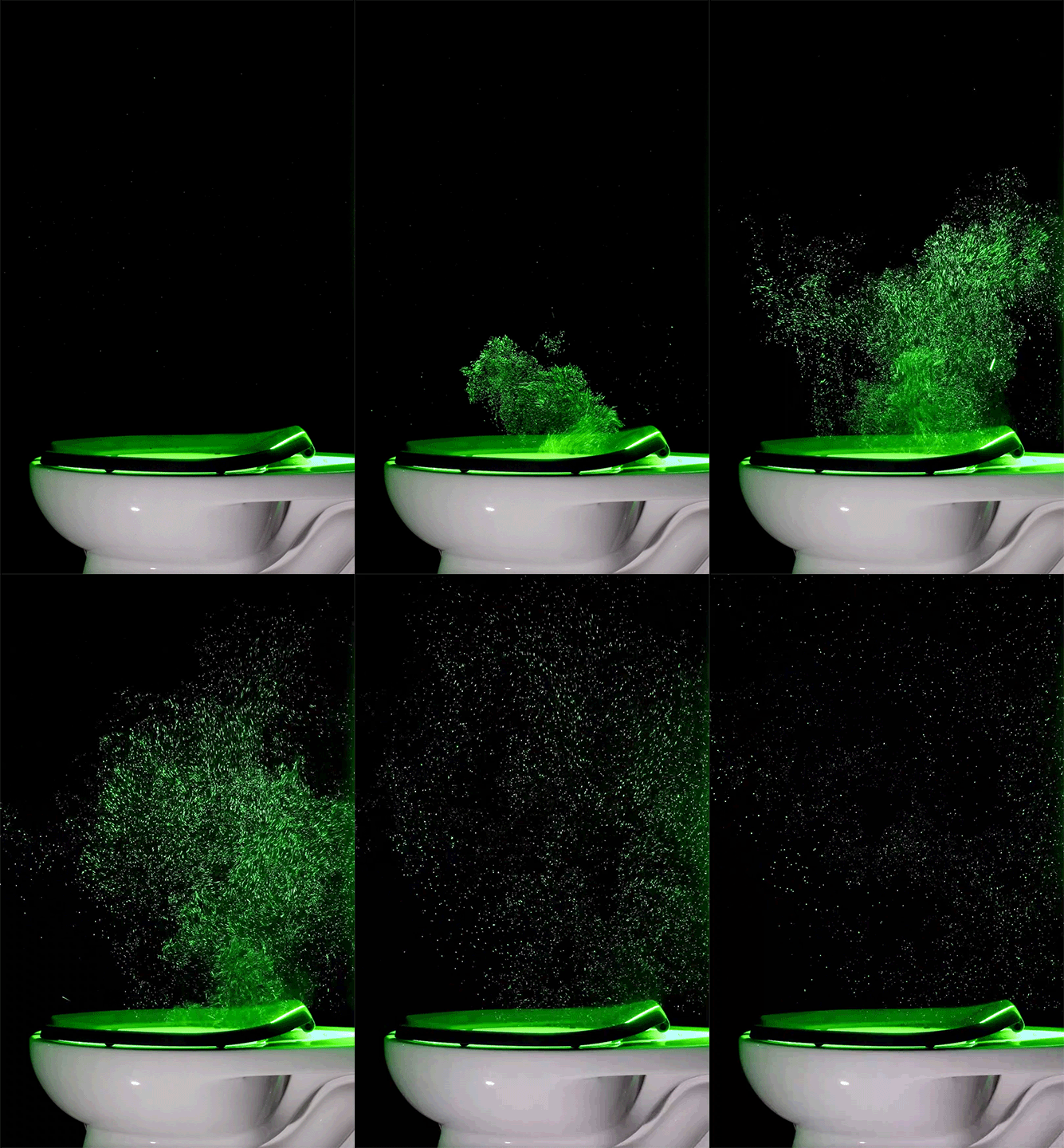


A fresh year means a look back at what was popular last year on FYFD. Usually, I give a numeric list of the top 10 posts, but this year the analytics weren’t as clear. So, instead, I’m combining from a few different sources and presenting an unordered list of some of the site’s most popular content. Here you go:
- Eroding the Sphinx
- Getting Water Out of Your Ear
- Can Water Solve a Maze?
- Dandelion Seeds
- Black Holes in a Bathtub
- Mixing With E. coli
- Beneath the Cavity
- Leidenfrost Explosions
- Toilet Plumes
- Exascale Simulations
- Ghosts of Rivers Past
- Blood Flow in a Fin
- Snake Tracks
- Lagoon Nebula
- “Chaosmosis”
I’m really pleased with the mix of topics this year; many of these topics are straight from research papers, and others are artists’ works. At least one is both. From swimming bacteria to star-birthing nebulas, fluid dynamics are everywhere!
If you enjoy FYFD, please remember that it’s a reader-supported website. I don’t run ads and it’s been years since my last sponsored post. You can help support the site by becoming a patron, making a one-time donation, buying some merch, or simply by sharing on social media. And if you find yourself struggling to remember to check the website, remember you can get FYFD in your inbox every two weeks with our newsletter. Happy New Year!
(Image credits: sphinx – S. Boury et al., ear model – S. Kim et al., maze – S. Mould, dandelion – S. Chaudhry, water tank – P. Ammon, e. coli – R. Ran et al., drop impact – R. Sharma et al., Leidenfrost – L. Gledhill, toilet – J. Crimaldi et al., engine sim – N. Wimer et al., rivers – D. Coe, fin – F. Weston, snake – P. Schmid, nebula – J. Drudis and C. Sasse, flames – C. Almarcha et al.)

“The Reef”
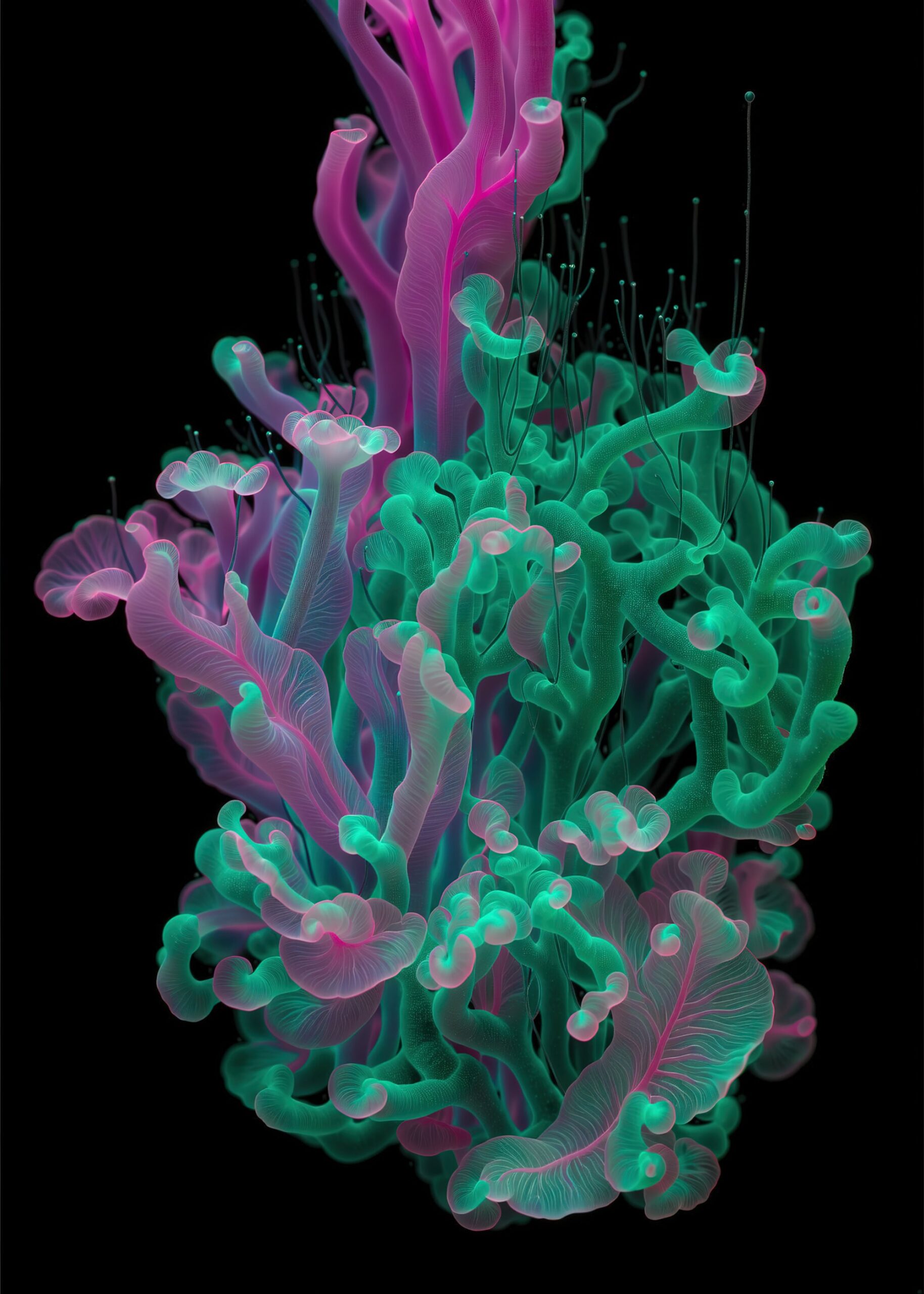
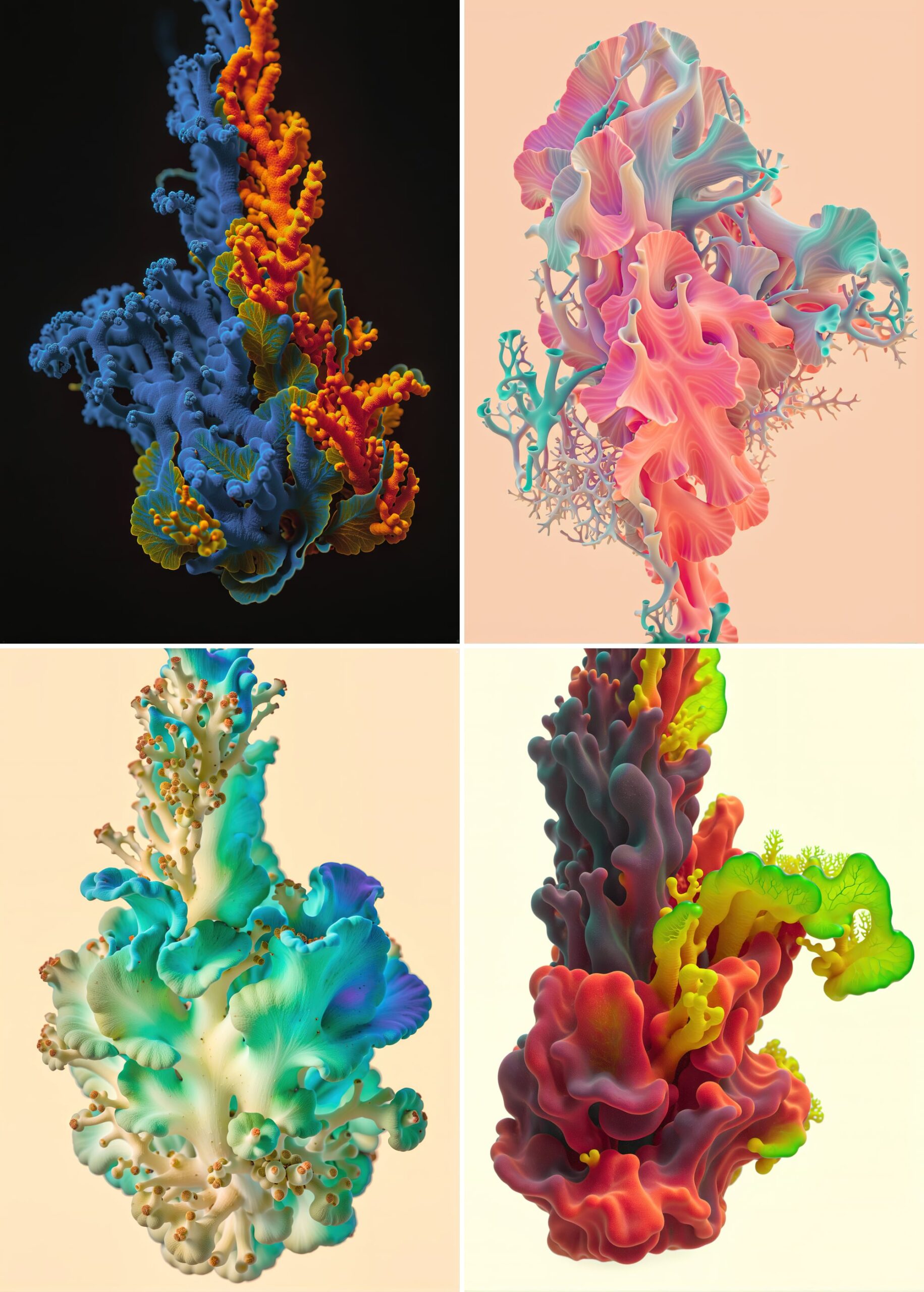

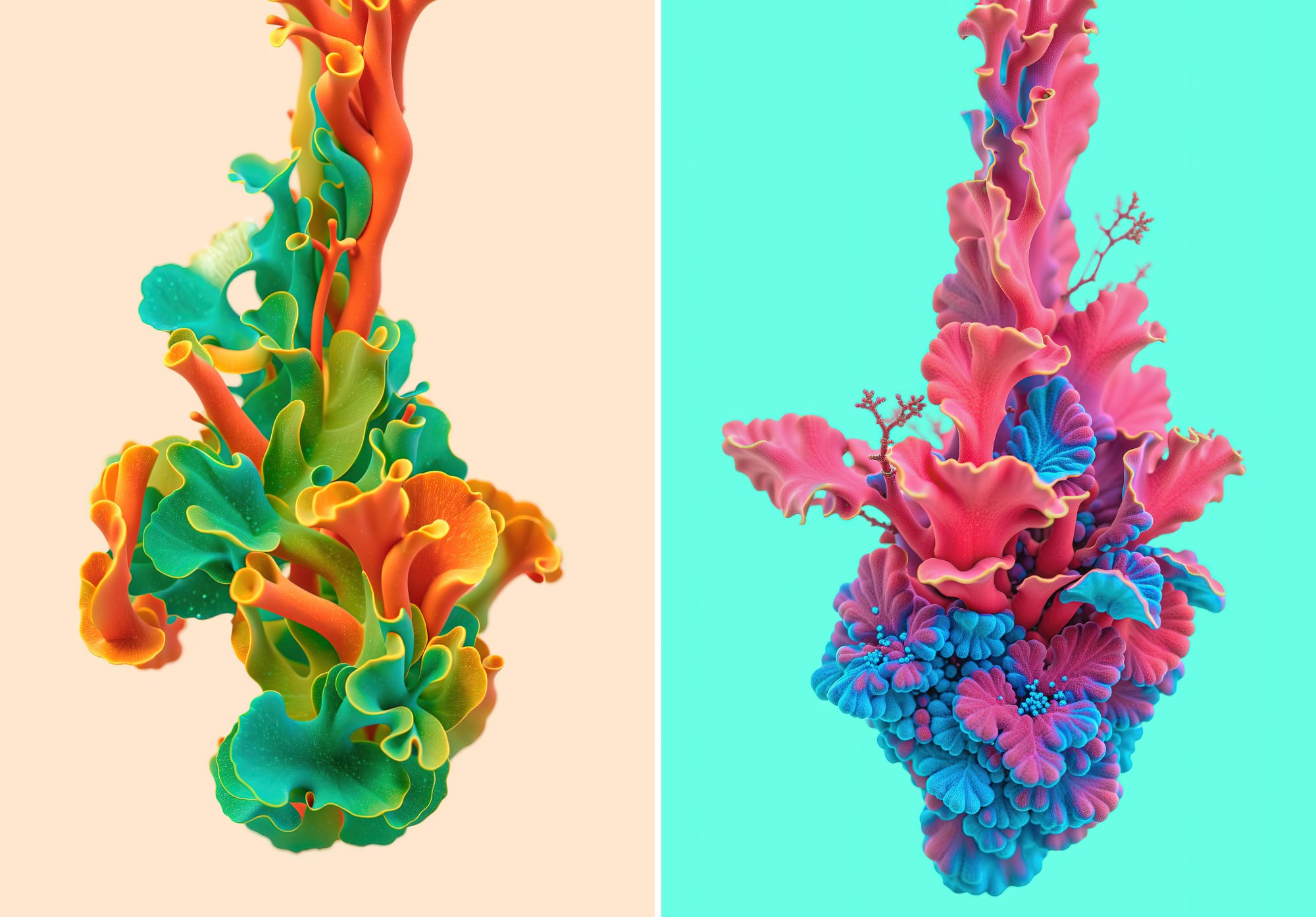

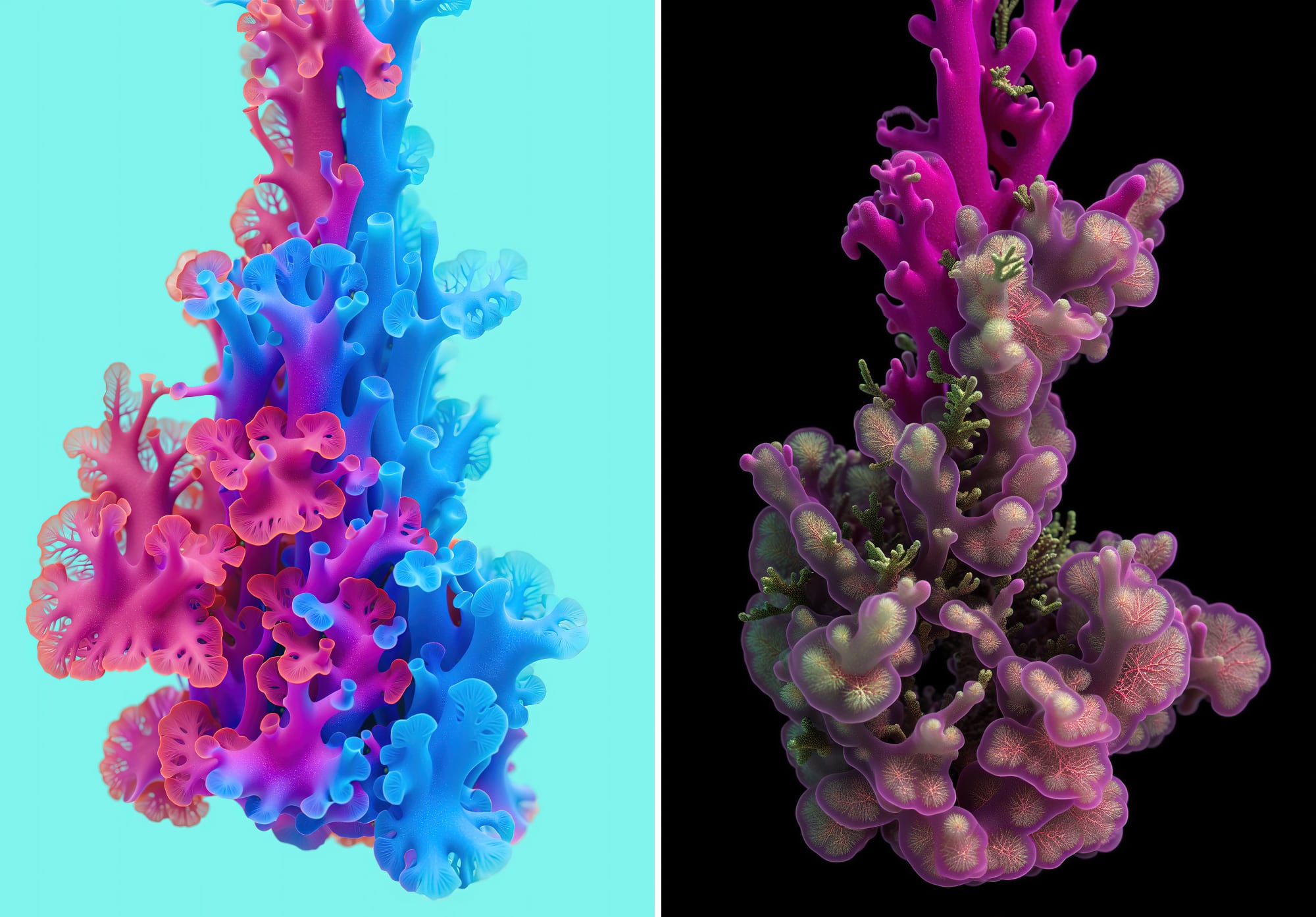

Artist Alberto Seveso returns to his colorful ink plumes (1, 2, 3, 4, 5), but this time with a twist. Here, Seveso took ink injected in water and digitally altered it, adding texture and shaping the ink to mimic the shapes of coral reefs. The results are stunning, though I confess a few of them remind me of mushrooms or organs more than reefs. (Image credit: A. Seveso; via Colossal)

Ciliary Pathlines
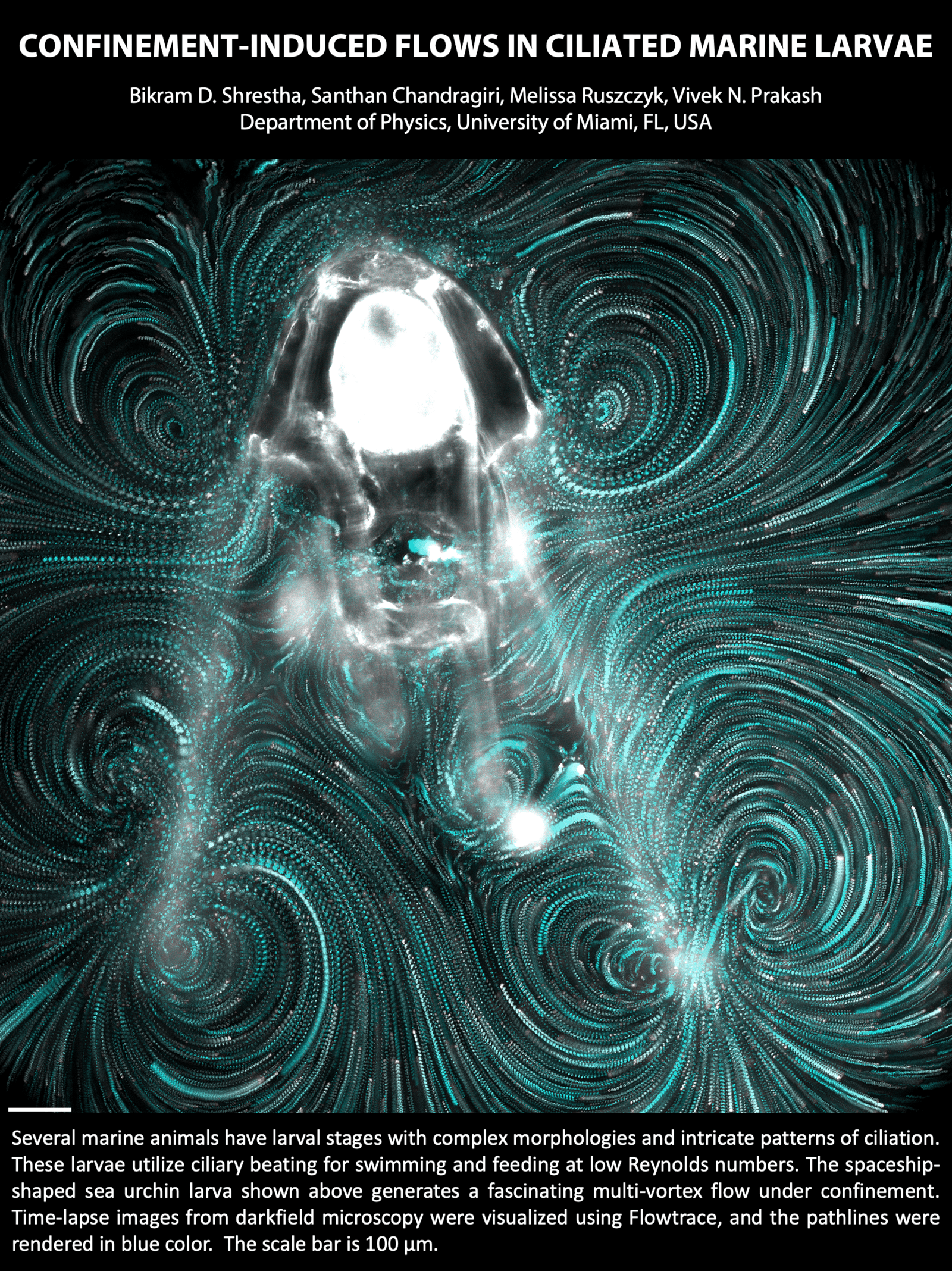
For tiny creatures, swimming through water requires techniques very different than ours. Many, like this sea urchin larva, use hair-like cilia that they beat to push fluid near their bodies. The flows generated this way are beautiful and complex, as shown above. Importantly for the larva, the flows are asymmetric; that’s critical at these scales since any symmetric back-and-forth motion will keep the larva stuck in place. (Image credit: B. Shrestha et al.)
Inside a Zebrafish Heart
This glimpse inside a 5-day-old zebrafish’s heart shows why they’re often used as a model organism in cardiac studies. The fish’s heart rate is similar to humans and its two-chamber heart — one atrium and one ventricle, both seen here — serves as a simplified version of ours. Check out the slowed-down section of the video to clearly see blood filling and expanding one chamber before it’s pumped onward. Perhaps the most unusual feature of the zebrafish’s heart is its ability to regenerate; after amputation of up to 20% of its ventricle, the fish can fully regenerate its heart. That’s a pretty incredible recovery, especially when you consider that the heart has to keep pumping the entire time! (Video credit: M. Weber/2023 Nikon Small World in Motion Competition)

Jamming Inside
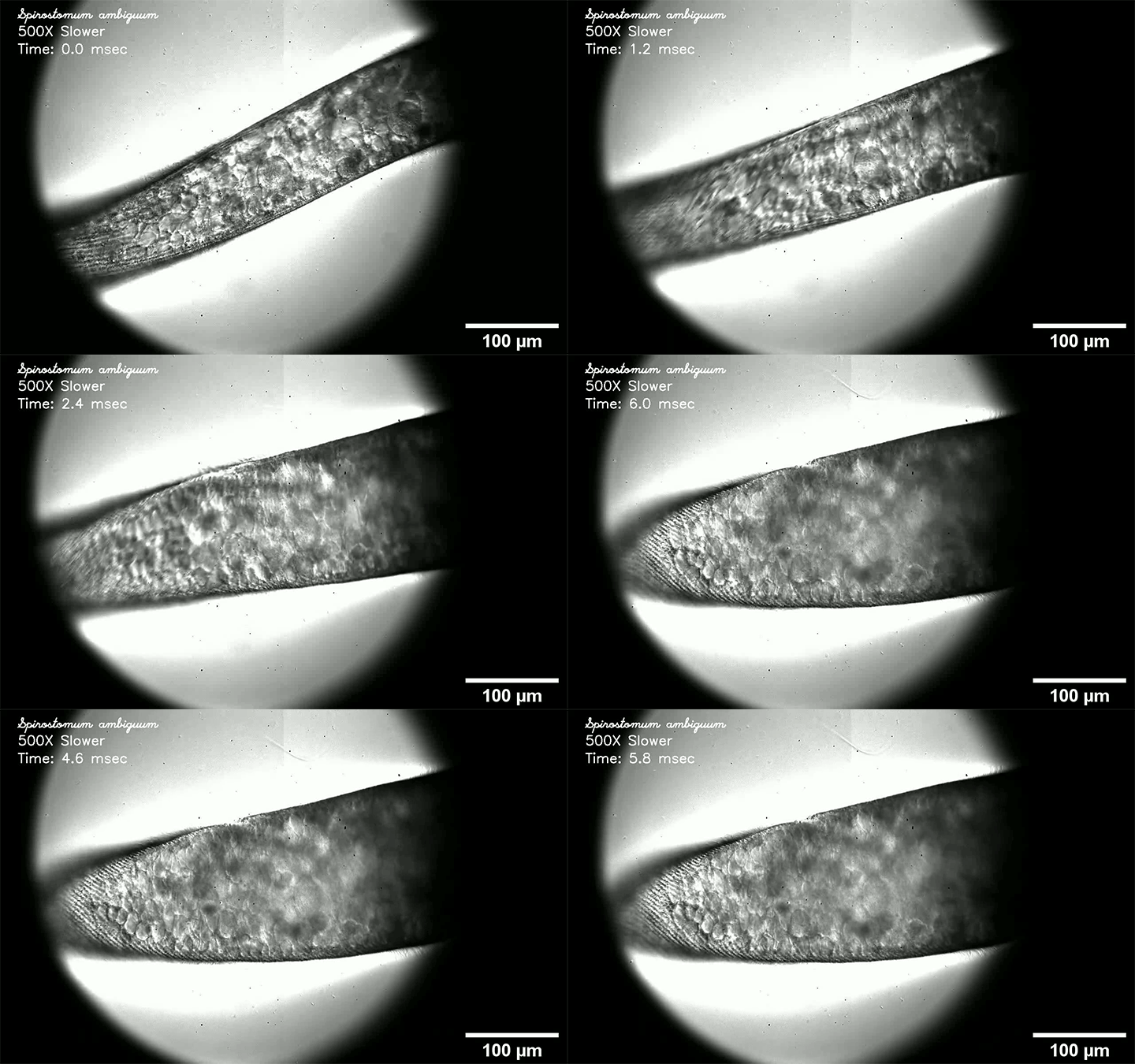
Worm-like Spirostomum ambiguum are millimeter-sized single-cell organisms that live in brackish waters. In milliseconds, these cells can retract to half their original length, generating g-forces greater than a Formula One driver experiences when cornering. How, researchers wondered, do these cells avoid shredding their internal structure with forces that strong?
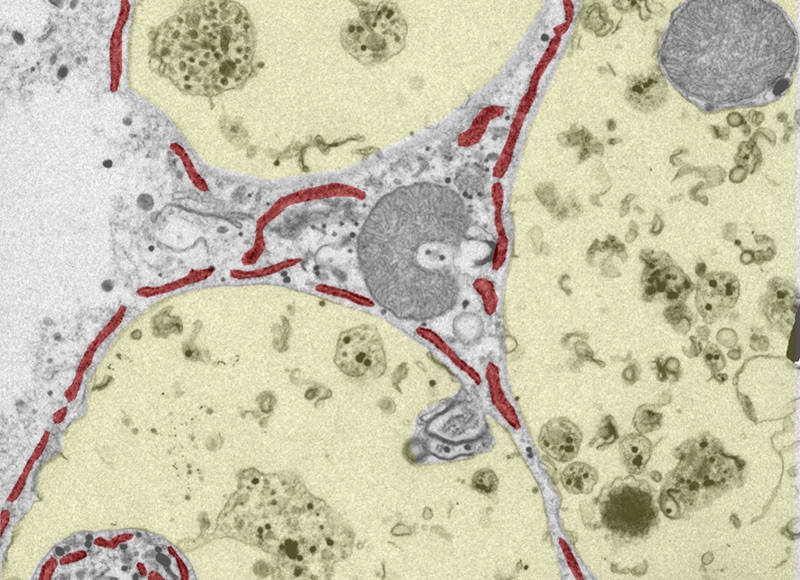
Spirostomum ambiguum, they found, contain fluid-filled sacs called vacuoles that are entangled with the folds of a membrane-like structure called the endoplasmic reticulum. The researchers constructed a simulated cell, based on the properties of the living ones, and tested it under retraction. Without the endoplasmic reticulum, the insides of their model acted like a liquid, with vacuoles moving past one another readily. That’s not good for staying alive since swapping positions can disrupt bodily functions.

An artificially-colored micrograph highlights the different structures inside Spirostomum ambiguum. The red strings are a membrane-like endoplasmic reticulum entangled between yellow, fluid-filled vacuoles. With the vacuoles connected by a model endoplasmic reticulum, the cell’s insides acted more like a solid during retraction. The vacuoles deformed but fewer of them traded places, instead jamming together to prevent rearrangement. Mimicking this structure at a larger scale, the team suggests, could enable new types of shock absorbers. (Image and research credit: R. Chang and M. Prakash; via APS Physics)