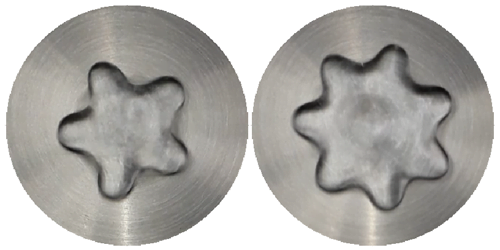
On a hot surface, droplets can float on a layer of their own vapor and vibrate in star-like shapes. These so-called Leidenfrost stars also make noise, with distinct beats that match the oscillations of the vapor layer beneath them. Researchers found that the frequency of the sound shifts with droplet size, increasing as the drop size decreases. Physically, the droplets act much like a wind instrument! (Image and research credit: T. Singla and M. Rivera; via APS Physics)
Tag: acoustics

Recreating Acoustics
The cultural heritage of a site is made up of more than its appearance; its soundscape is vital, as well. Acousticians and historians work together to preserve and recreate the auditory landscape of important sites through acoustical measurements and digital reconstructions based on architecture and building materials. Thanks to projects like these, researchers can achieve feats like recreating a concert within the Notre Dame Cathedral as it was before the 2019 fire. To learn more about the technologies behind these feats, check out this Physics Today article. (Image and video credit: Ghost Orchestra; for more, see Physics Today)
Hot Ice, Buoyancy Tricks, and More DIY Fun
Here’s a smorgasbord of DIY experiments from Dianna at Physics Girl. Some are fluidsy, some aren’t, but all of them give you a chance to stretch your science muscles at home. Personally, I think she saved the best for last with her laser-acoustics demo! (Video credit: Physics Girl)
Ultrasound in Medicine


When you hear the term “ultrasound,” your brain likely jumps to grainy black and white images of unborn babies, but this technology has a lot more medical uses than just that! Ultrasound is used to image many parts of the body — earlier this year, I got to see my own heart in action through an echocardiogram, for example. But the technology has therapeutic uses as well. At higher energies, ultrasound is used to break up kidney stones (through cavitation), treat tremors, and alleviate some sources of pain. To learn more, check out Explore Sound’s page on biomedical acoustics. (Video and image credit: Acoustical Society of America)
“Waves”
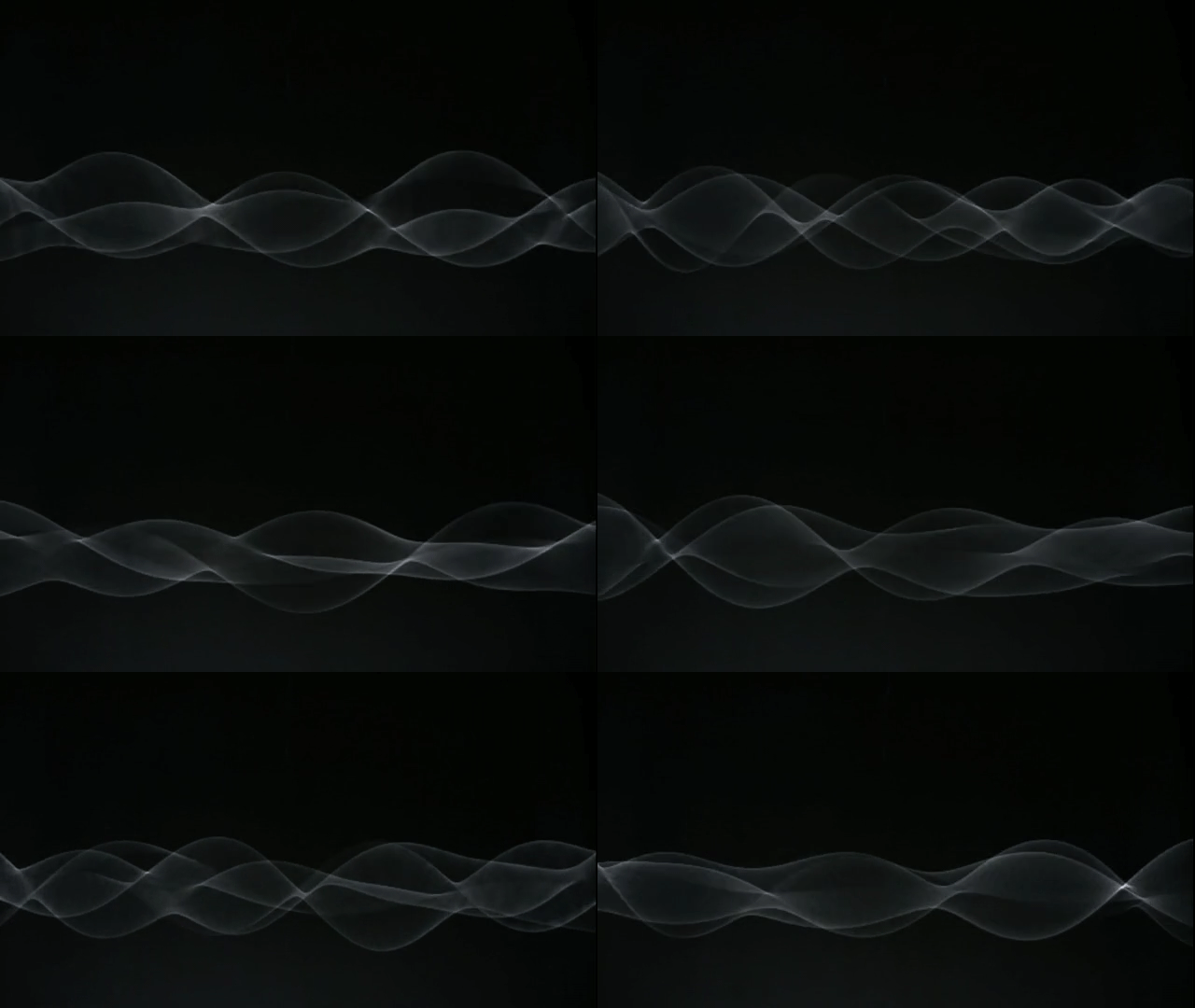


The “Waves” installation by artist Daniel Palacios appears deceptively simple, just a rope mounted between two motors. But once the motors start spinning, it is anything but. The installation shifts in response to those around it, creating varying numbers of steady, standing waves or even wildly chaotic ones that whistle through the air. It’s a neat visualization of one of the most commonly-measured quantities in physics: the changes in a wave with time. (Video and image credit: D. Palacios; via Flow Vis)

Toad Singing
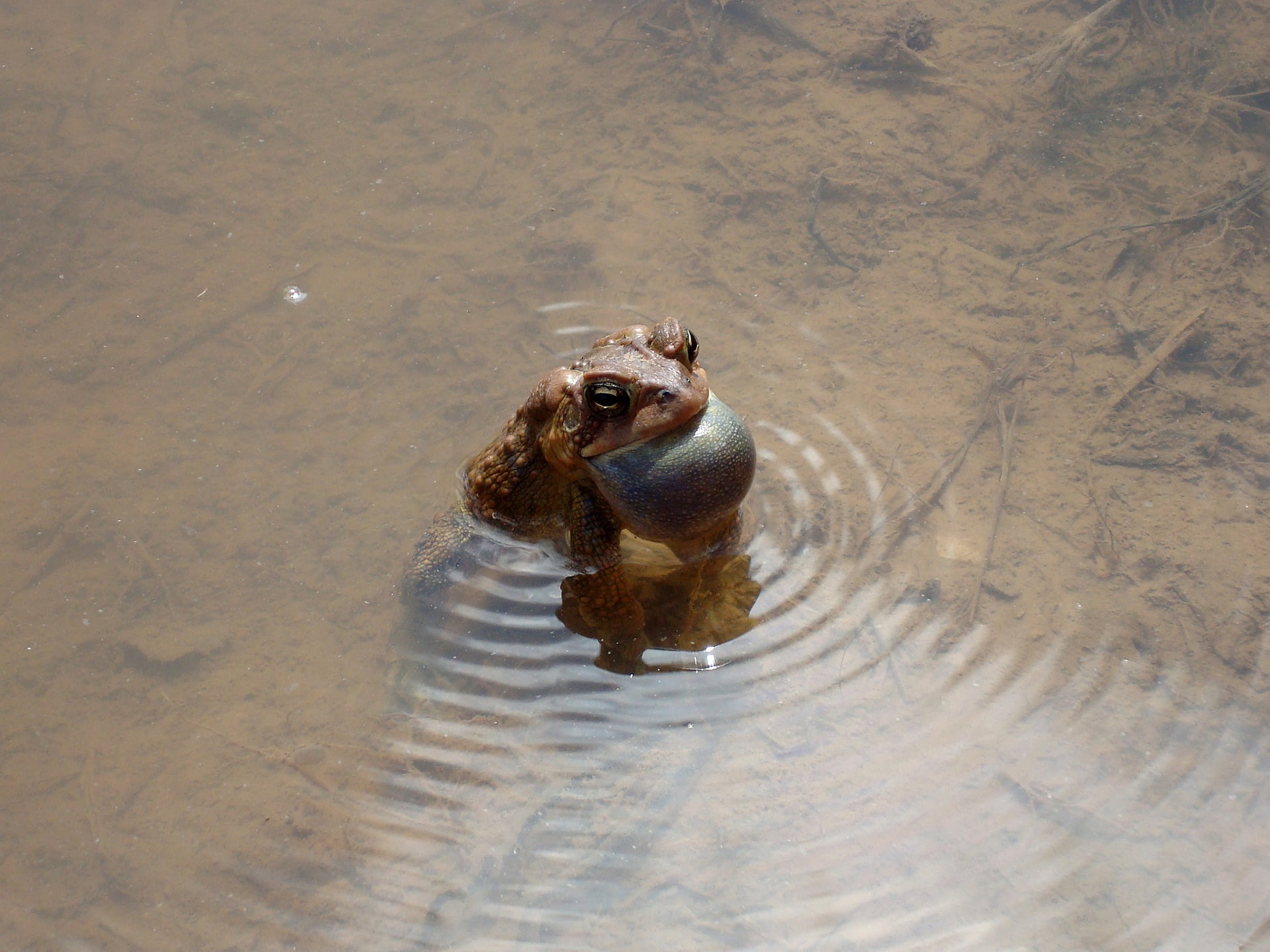
With spring heading into summer, many parts of the United States enjoy a nighttime chorus of frogs and toads. These amphibians are singing to attract mates and delineate territory. Some, like this American toad, sing from the water, and the vibration of their vocal sac creates ripples that last as long as they’re vocalizing. The toad sings by closing its nostrils and mouth, then forcing air from its lungs over its vocal cords. Those vibrations are amplified by resonance in its vocal sac, generating the high chirp we hear. (Image credit: cassiescisco)
The Eerie Singing of the Golden Gate Bridge
Recent changes to the Golden Gate Bridge’s guardrails have created a new soundscape in the Bay Area. Under high winds, the bridge gives off an eerie, otherworldly wail that can be heard even miles away. The new guardrails are substantially thinner than the previous ones, which reduces the wind load the bridge has to endure. But that thinner profile is also what causes the noise, through a well-known phenomena known as vortex shedding.

Animation of vortex shedding behind a cylinder. (Image credit: Wikimedia) As air moves past a non-streamlined body, like a cylinder, it forms counter-rotating vortices that peel off the body at a set frequency. Fluid dynamicists use a non-dimensional number, the Strouhal number, to characterize this vortex shedding. For a simple shape like a cylinder, the Strouhal number is relatively constant, so I decided to do a quick and dirty calculation to examine the wind velocities responsible for the sound. (See also my analysis of Star Trek Voyager’s opening sequence.)
I began by collecting several videos with samples of the bridge’s singing (1, 2, 3). Then I used Adobe Audition to analyze the frequency content of the bridge noise. Below is a sample snapshot from a video taken on the bridge’s bike path, right next to the guardrail. The analysis shows three broad, but distinct peaks: a primary peak at 430 Hz, a small harmonic of that frequency at 860 Hz, and a separate, secondary peak centered at 1070 Hz. The broadness of the peaks, along with the competition between the primary and secondary peaks, is probably responsible for the disconcerting, discordant nature of the sound.

Frequency analysis of the Golden Gate Bridge’s “singing”, taken from a section of this video. (Image credit: N. Sharp) Of the other videos I analyzed, a second video from near the bridge also showed the 430 Hz peak, while a video from further away had a dominant frequency of 517 Hz. There’s a lot of uncertainty introduced in not knowing exactly when each video was filmed, but given the agreement between videos 2 and 3, I suspect that video 1’s higher frequency may be caused by interference and modulation as the sound travels.
With the major frequency in hand, I estimated the size of the new guardrail wires as 10mm in diameter. After some tweaking to adjust the Reynolds number and Strouhal numbers, that gave me an estimated wind speed of 21 meters per second, or about 47 miles per hour. That’s right in line with the 43 miles per hour discussed by the news anchors.
What if the guardrails are a little thinner? If the wires are about 7.5 mm in diameter, then it only takes winds at about 15 meters per second (34 miles per hour) to create that 430 Hz note.
Keep in mind that this analysis doesn’t predict the minimum wind speed needed to create the audible noise; all I’m able to do is a back-of-the-envelope calculation of what the likely wind speed was when a video was recorded. Nevertheless, I hope you’ll find it interesting! (Video credit: KPIX CBS News; image credits: vortex shedding – Wikimedia, frequency analysis – N. Sharp; submitted by Christina T.)
Singing in the MRI


We rarely consider just how complex the process is when we speak or sing. Sound waves produced in our larynx are shifted and amplified by the geometry of our throats, mouths, sinus cavities, tongues, and lips. This video provides a glimpse of that hidden complexity through a trained vocalist singing inside an MRI machine. He sings the same aria in four distinctly different vocal styles, and it’s incredible to watch all the changes his tongue, lips, and soft palette go through to produce those different sounds. (Image and video credit: T. Ross; via Flow Vis)

Listening to a Bubble’s Pop
Sound is an important aspect of many flows, from the scream of a rocket engine to the hum of electrical wires vibrating in the wind. Critically, those sounds carry important information about the flow. A new study extends these acoustic diagnostics to the popping of soap bubbles.
When a hole opens in a soap bubble, it throws the surface-tension-driven capillary forces of the bubble into disarray. The rim around the hole retracts, pushing fluid away from the expanding hole. At the same time, air is pushed out of the collapsing bubble. Using microphone arrays, the researchers found they could measure and distinguish sound from both sources — the escaping air and the expanding hole.
From the sound, they developed a model that predicts the rupture location, bubble thickness profile, and other properties of the bubble. They confirmed the model’s results by comparing with high-speed photography. The authors hope their new acoustic technique will shed light on bubble bursting events that are hard to observe visually, like the bubbling of magma. (Image and research credit: A. Bussonnière et al.; via Science News; submitted by Kam-Yung Soh)
The Cricket’s Chirp


Growing up, my summer nights often featured a chorus of crickets and bull frogs. Even now, the sound of those chirps reminds me of home. So how do crickets make their calls? As this video shows, it’s a matter of scraping the hard edge of one wing along a tiny series of spines, similar to the teeth of a comb, that sit on the other wing.
How fast the cricket’s wings move affects how frequently the chirps are heard. Being cold-blooded, the insects’ speed is affected by the external temperature, which is why you can count cricket chirps to estimate the temperature. Essentially, the chemical reactions necessary to regulate wing movement are temperature-dependent, so colder crickets produce slower chirps. (Video and image credit: Deep Look)