Tag: 2021gofm

  • Merging Along Wires

    Merging Along Wires

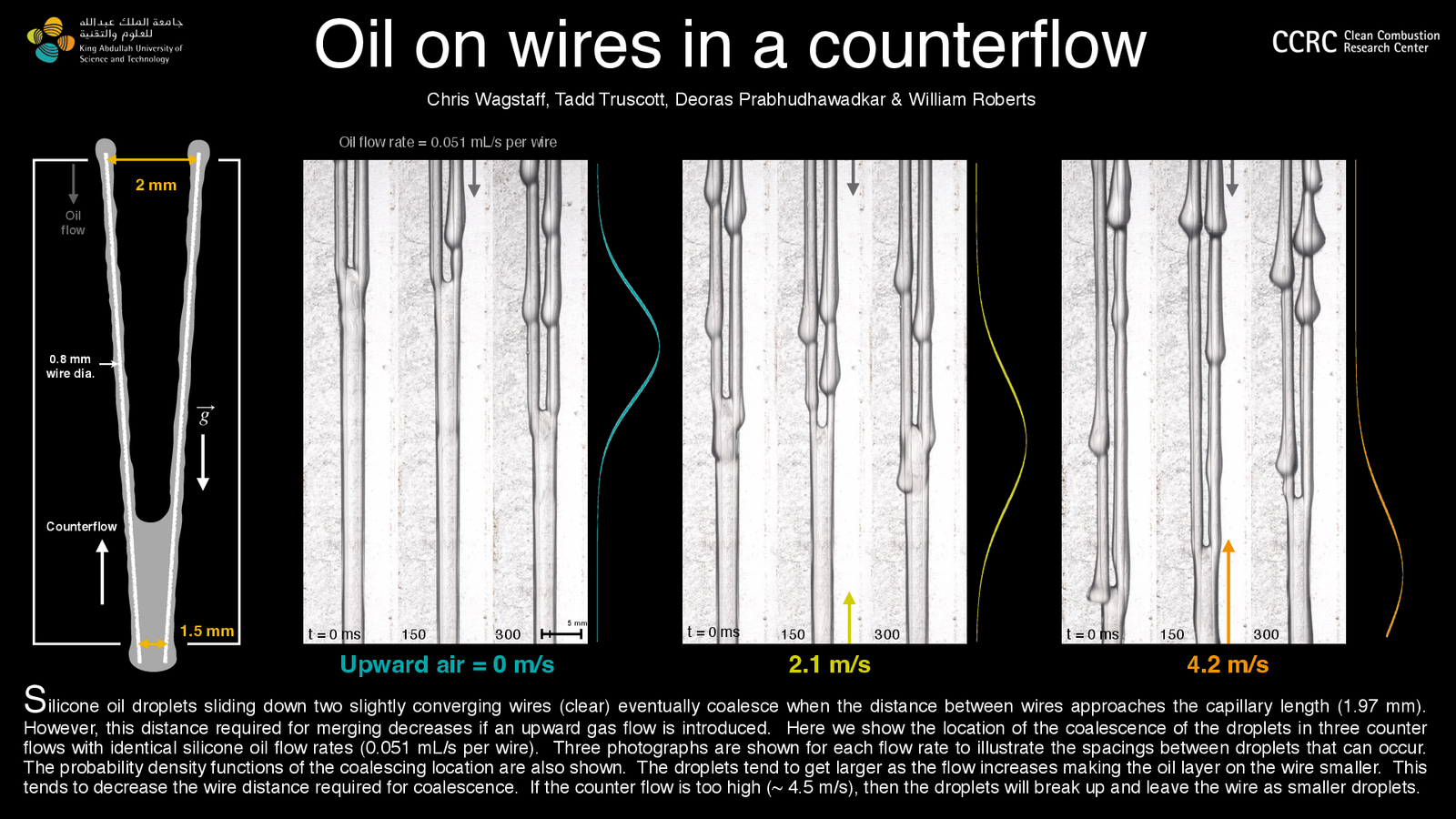
    As oil slides down two slowly converging wires, the droplets will merge into a sheet that stretches between both wires. When this happens can vary somewhat but occurs somewhere around the liquid’s capillary length.

    In the poster above, the leftmost image (not the illustration) shows three possible merger points. To the right of the image, is a teal curve; this is a probability density function. Essentially, this curve shows where the merger is most likely to occur. The peak of the curve corresponds to the most probable point of merger.

    The following two composite images show the same system — same oil flow rate, same wire spacing — with gas blowing upward along the wires. As the gas’s flow rate increase, the oil drops get larger, making the oil films thinner. The result? The wires have to get closer to one another before the oil merges. That’s reflected in the yellow and orange probability density functions, which have peaks further along the wires than the no-gas-flow case. (Image credit: C. Wagstaff et al.)

  • Featured Video Play Icon

    Double Diffusive Flow

    Diffusion is the tendency for differences in a fluid — in density, temperature, or concentration — to even out over time. Think about a drop of food coloring in a glass of water. Even without stirring, that dye will eventually disperse throughout the glass through diffusion. But when there is more than one factor controlling diffusion — like temperature and salinity — things get more complicated. In the ocean, for example, this double-diffusion causes salt fingers like those shown in the first image.

    But what happens when the two diffusing fluid layers are flowing? That’s the question at the heart of this video, which explores the intricate mixing that takes place between doubly-diffusing liquids in a channel. (Video and image credit: A. Mizev et al.)

  • Re-Entry For X-Wings

    Re-Entry For X-Wings

    Fans of sci-fi and fantasy have a long-standing tradition of exploring the physics and/or practicality of creations in their fandom, and Star Wars fans are no exception. Here engineers ask whether Luke Skywalker’s X-wing fighter could survive the descent through Dagobah’s atmosphere as he searched for Master Yoda. Their results are based on a numerical simulation, with some assumptions about the spacecraft’s descent path and design as well as the planet’s atmosphere. Fans of the Jedi will be glad to hear that the X-wing can survive its supersonic descent intact, delivering the last Jedi safely to his mentor. (Image credit: Y. Ling et al.)

  • Featured Video Play Icon

    Fast Fractal Fingers

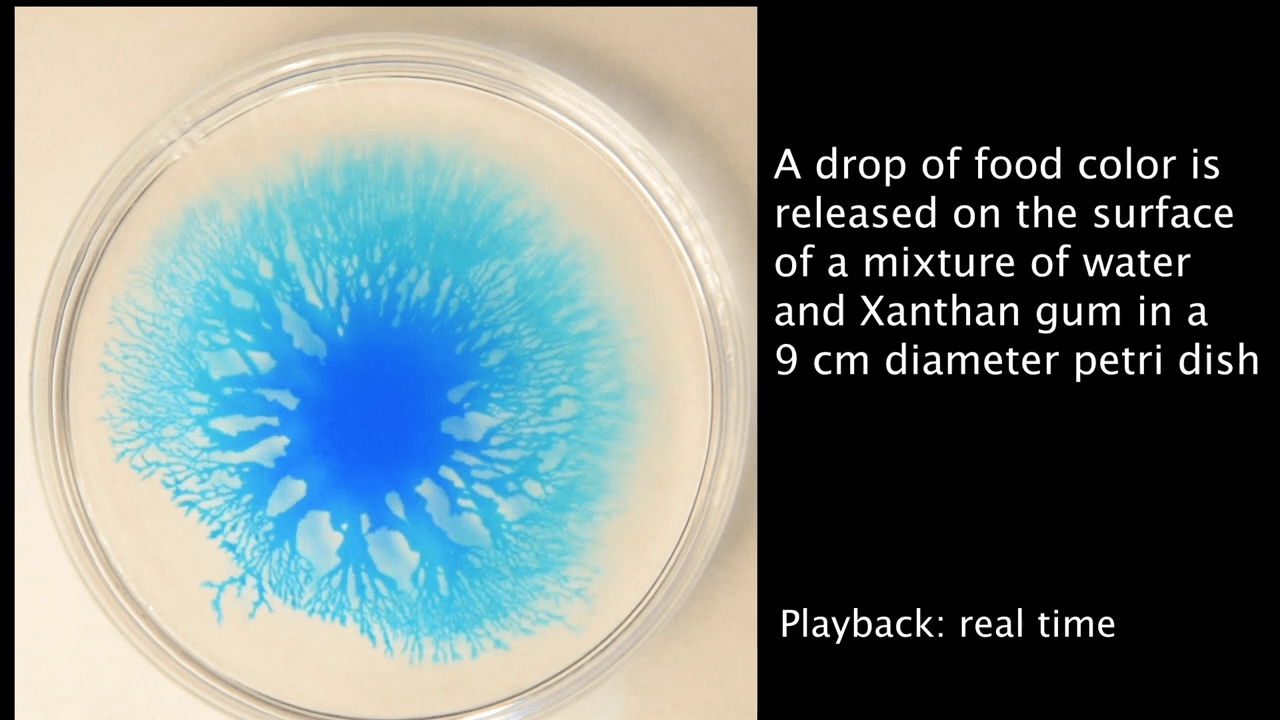
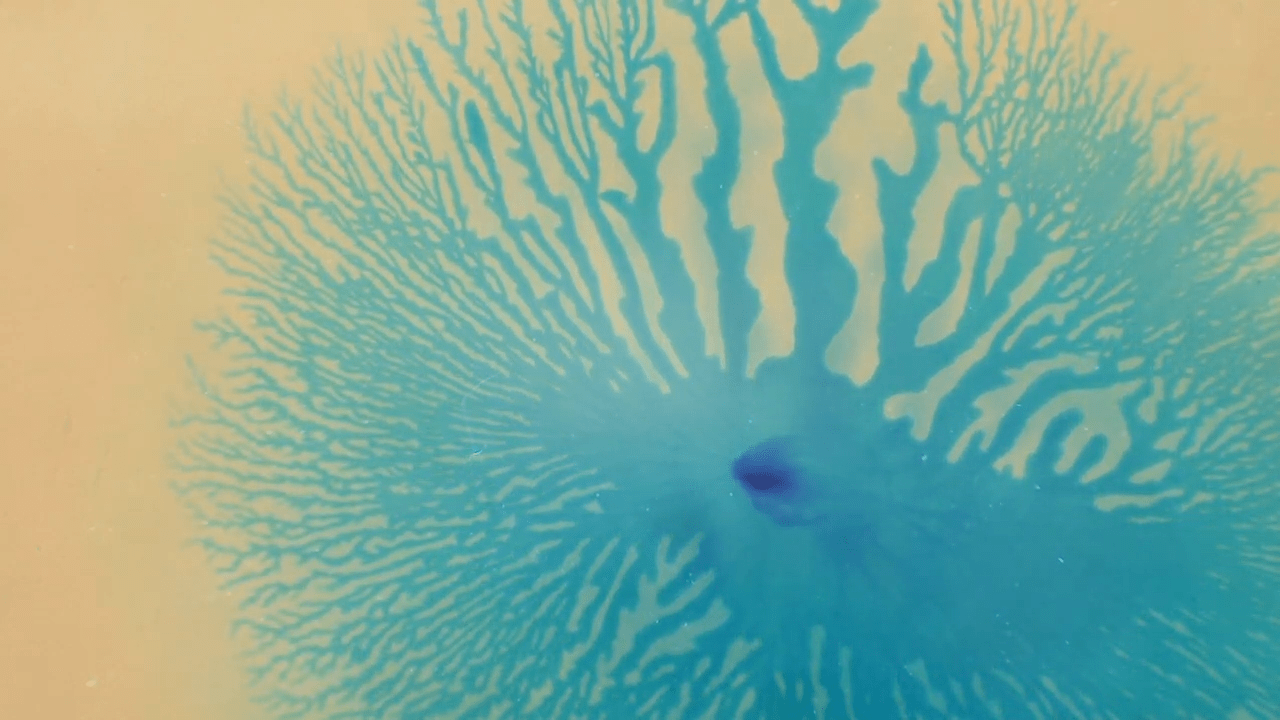
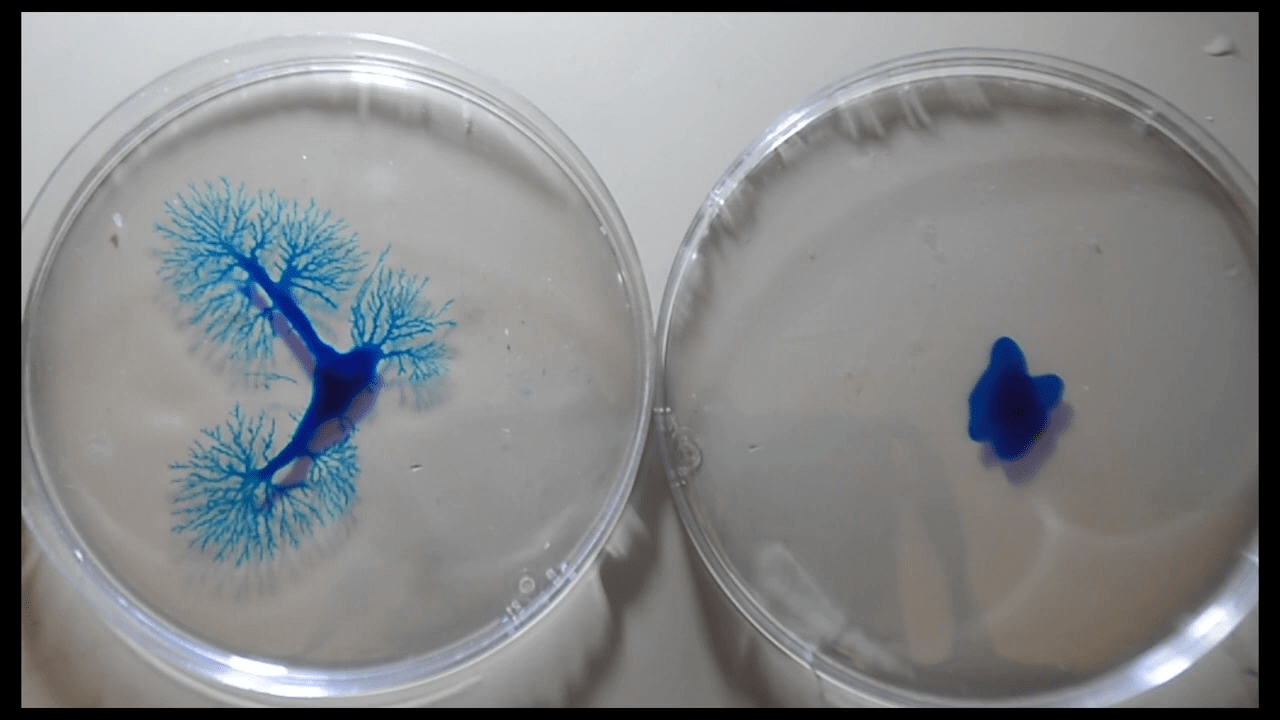
    With the right balance of viscosity and surface tension, many fluid combinations can form fractal or dendritic patterns. Here, researchers use a drop of food coloring atop a mixture of water and xanthan gum. Depending on the concentration of gum (and the age of the viscous fluid) different fractal patterns spread quickly across the surface. (Image and video credit: R. Camassa et al.)

  • Featured Video Play Icon

    Listening to Tempura

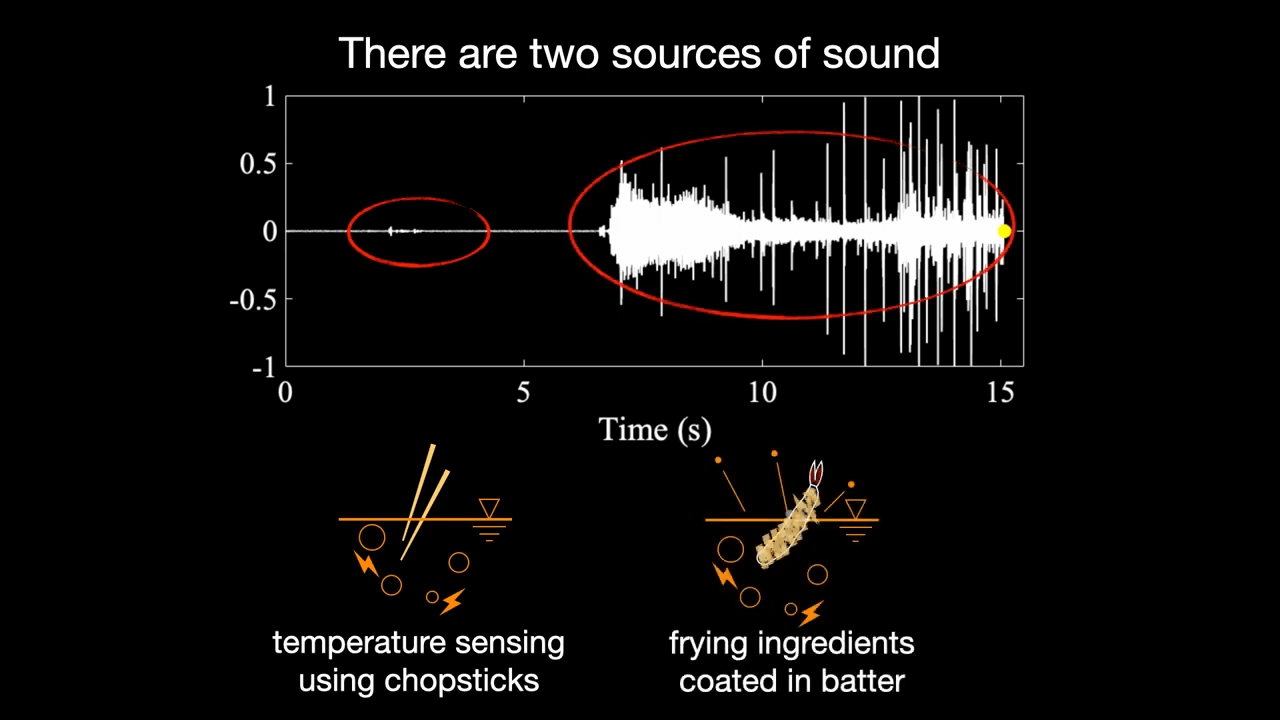
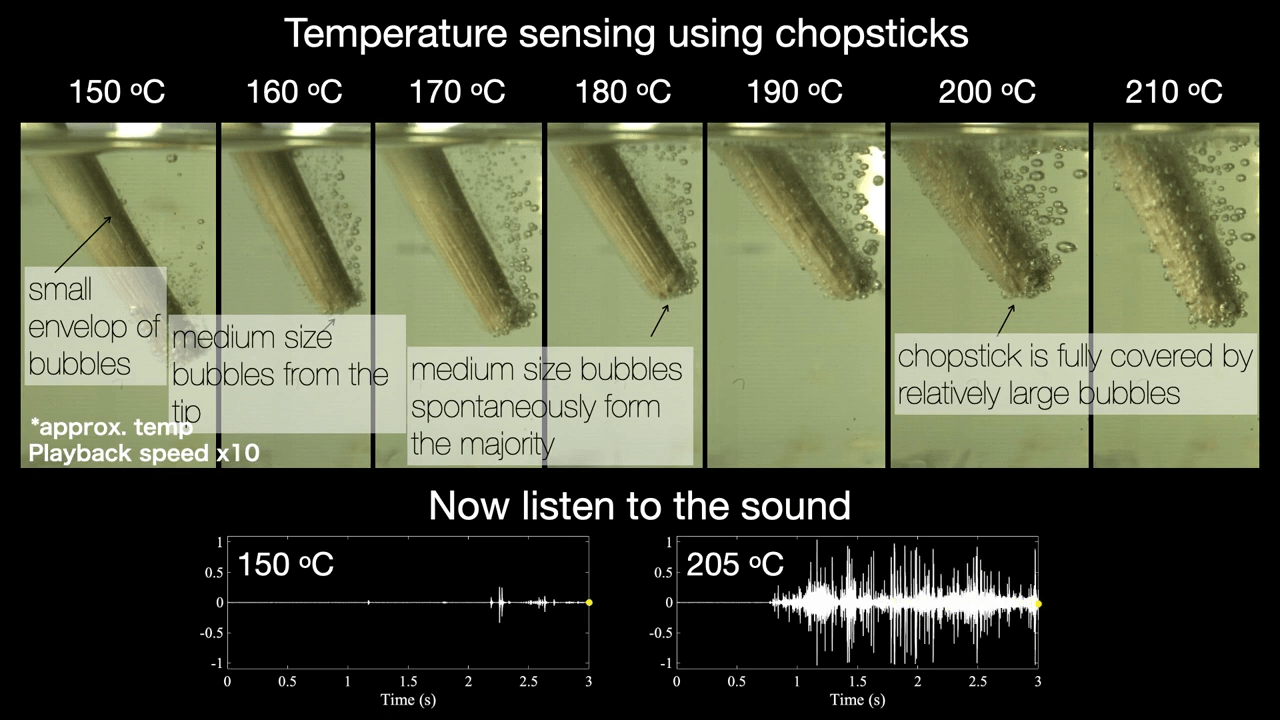
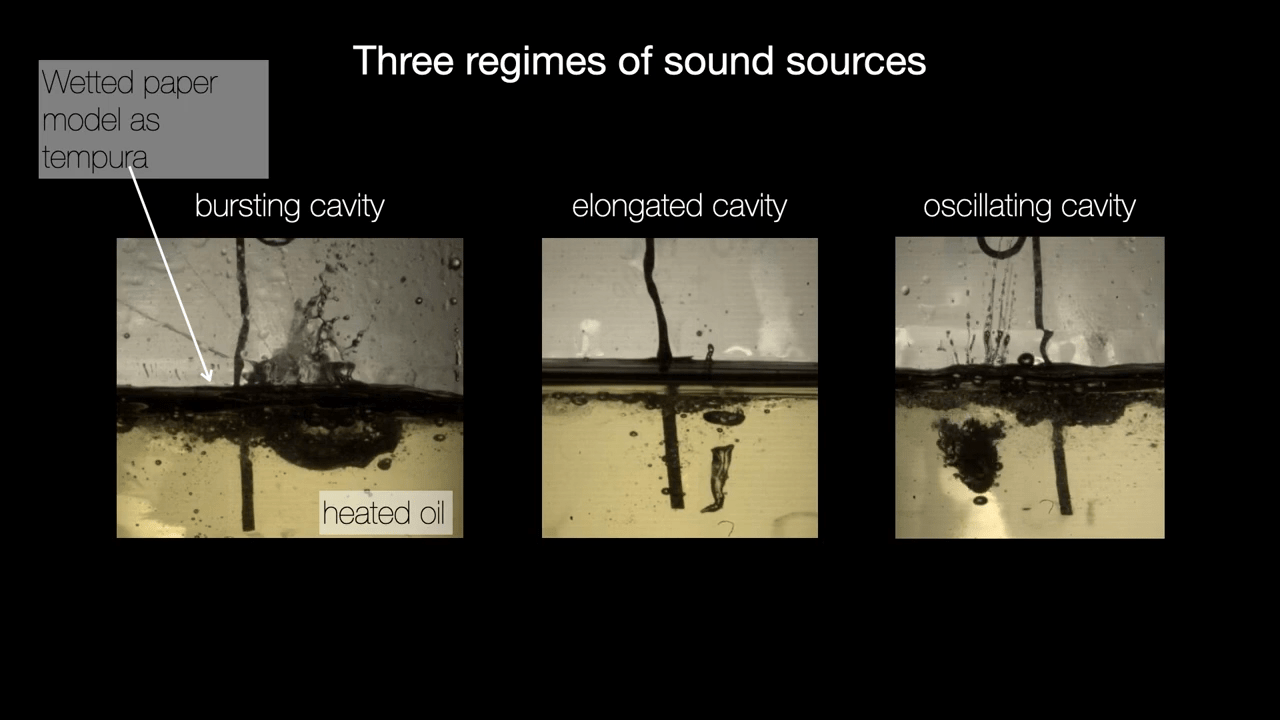
    Most cooks know that their frying oil isn’t hot enough if dropping the food in doesn’t create a furious burst of bubbles. But the canniest cooks know they can check the temperature just by listening to the sound made when inserting a utensil, like a wooden chopstick. When oil nears the right temperature, a cloud of bubbles forms around the utensil, leading to a flurry of sound as those bubbles break.

    In this video, researchers explore the sound and bubble dynamics together as a function of temperature. They show how the final sound carries the signature of the its bursting bubble, too. So next time you’re getting ready to fry and you can’t find your thermometer, don’t panic. Just listen! (Image and video credit: A. Kiyama et al.)

  • Spinning Tops

    Spinning Tops

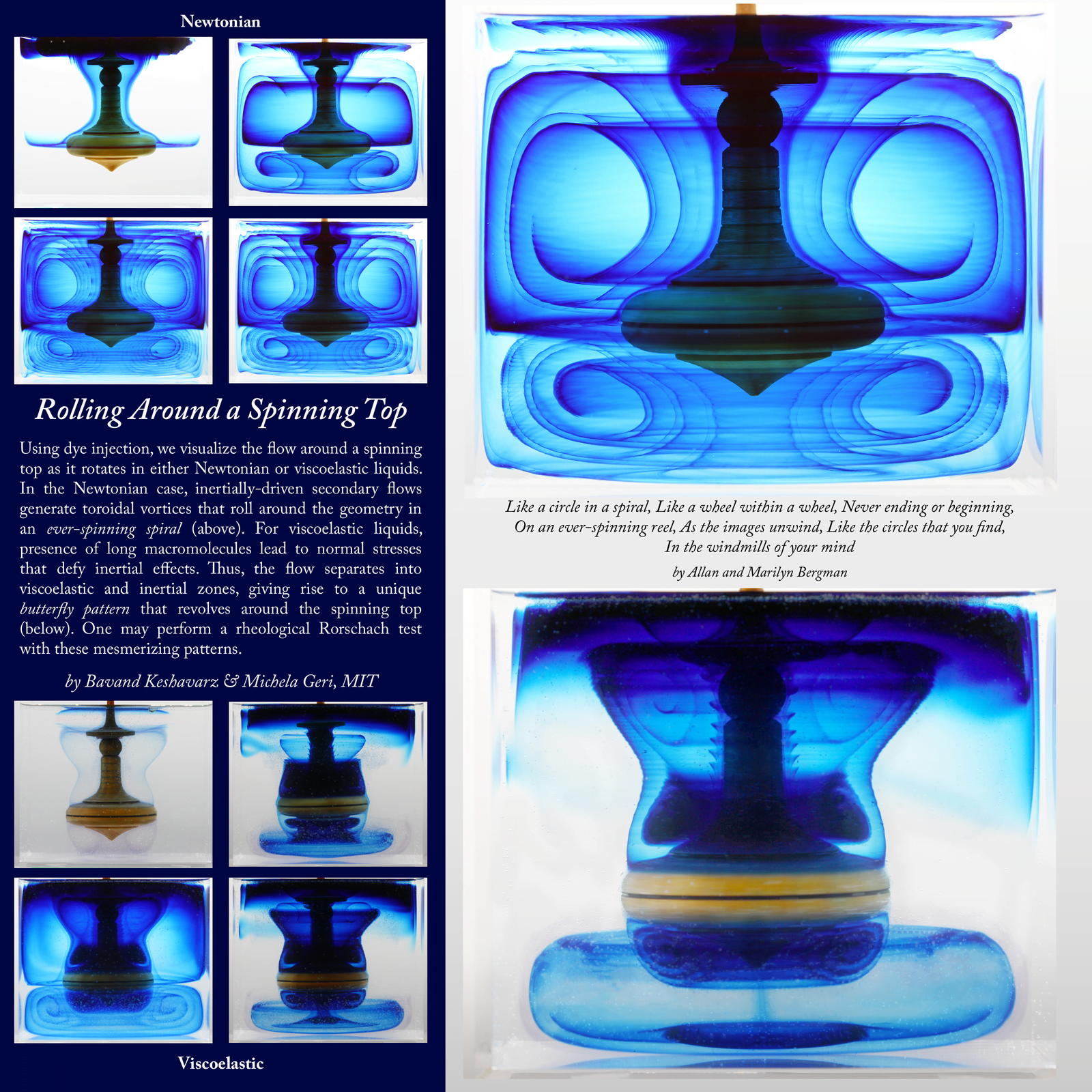
    What does the flow look like around a spinning top? Here, researchers used dye to visualize what happens in a Newtonian fluid (like air or water) as well as a viscoelastic fluid. The Newtonian fluid (upper images) divides into two circulating zones, one below the top and one above. They both take the shape of a toroidal, or donut-shaped, vortex, visible here in cross-section.

    The long molecules of the viscoelastic fluid lend it elasticity to resist stretching. The result is a very different flow field. Beneath the top, there’s still a toroidal vortex, though it appears tighter. But around the upper part of the top, there’s a butterfly-like region of recirculation! (Image credit: B. Keshavarz and M. Geri)

  • Featured Video Play Icon

    Eruption in a Box

    In layers of viscous fluids, lighter and less viscous fluids can displace heavier, more viscous liquids. Here, researchers demonstrate this using four fluids sandwiched between layers of glass and mounted in a rotating frame. (Think of those liquid-air-sand art frames found in museums but bigger!)

    In their first example, each layer of fluid is denser than the one beneath it, so buoyancy forces the lowest layer — air — to rise. The air pushes its way through the more viscous layer of olive oil, then slowly makes its way through the even more viscous glycerin before bursting through the last layer in an eruption. As the team varies the viscosity and miscibility of the layers, the movement of the buoyant fluids through the viscous layers changes dramatically. (Image and video credit: A. Albrahim et. al.)

  • Featured Video Play Icon

    Burning Virtual Forests

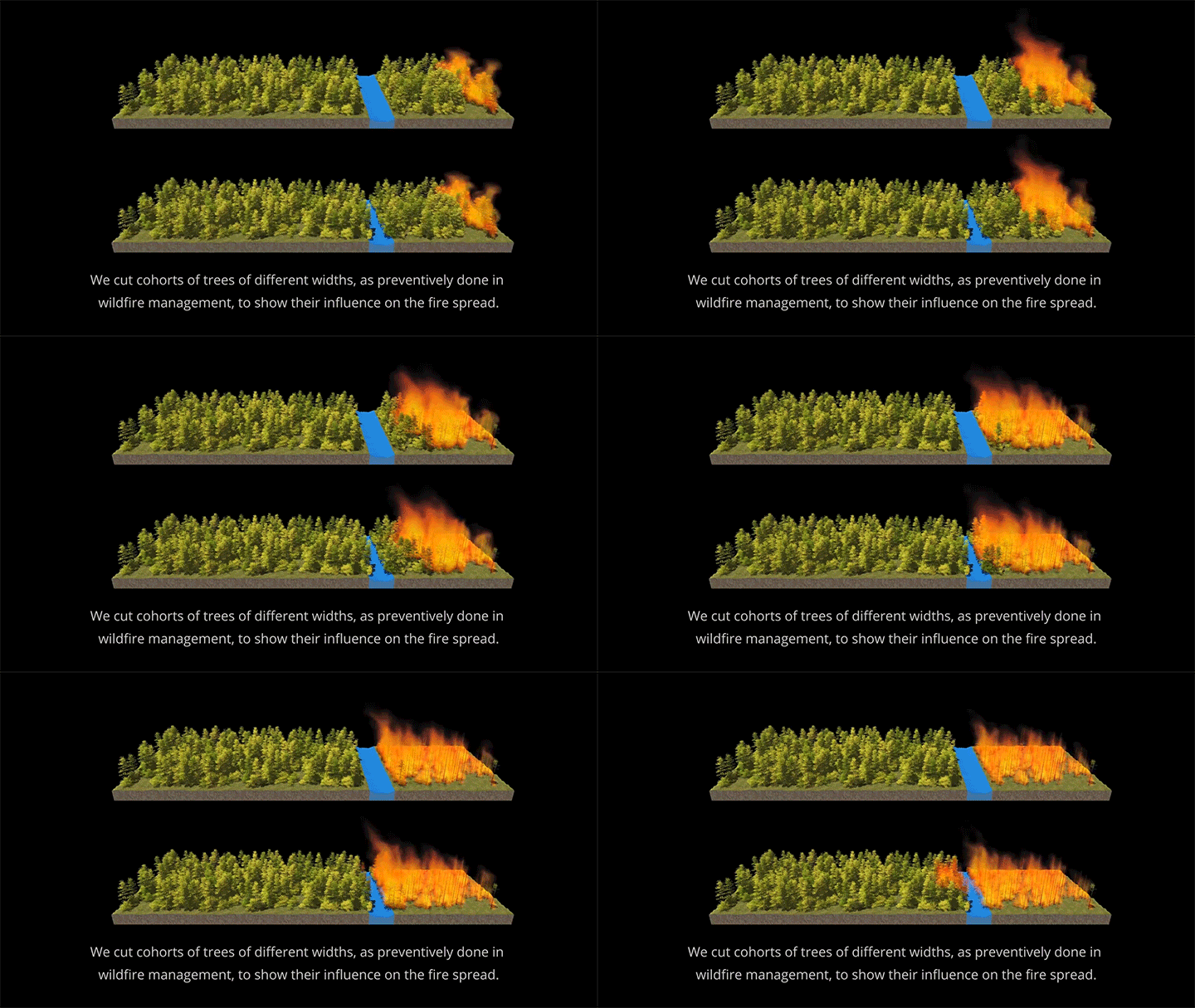
    Wildfires are growing ever more frequent and more destructive as the climate crisis worsens. Unfortunately, simulating and predicting the course of these fires is incredibly difficult, requiring a combination of ecology, meteorology, combustion science, and more. To handle so many variables, model builders often turn to statistics that allow them to simulate an entire forest but at the cost of representing individual trees as a few pixels or a cone.

    In this video, researchers show a new wildfire simulation based on a computationally efficient but more realistic depiction of trees. With individual, three-dimensional trees, the simulation can capture effects that are otherwise hard to examine – like the difference in burn rate for coniferous and deciduous forests and the likelihood that a fire can jump a firebreak of a given size. Their weather, fire, and atmospheric models are even able to simulate the birth of fire-generated clouds! Check out the full video to see more and then head over to their site if you’d like to dig into the methodology. (Video and research credit: T. Hädrich et al.; see also)

  • Featured Video Play Icon

    When Bubbles Don’t Die

    In a pure liquid, most bubbles pop almost immediately. But with a simple ingredient — a little heat — bubbles can live almost indefinitely. The mechanism is revealed in this video when the researchers use an infrared camera to watch a bubble on a heated pool. The top of the bubble is cooler than the rest of the liquid, forming colder, denser droplets that slide down. But the cooler liquid also has a higher surface tension, which draws warm liquid up the bubble, replenishing it. The result is a stable bubble that simply carries on. (Image and video credit: S. Nath et al.)

  • Featured Video Play Icon

    Schooling Relies on Vision

    For fish, collective motions like schooling rely on a few mechanisms, including flow sensing and — as beautifully demonstrated in this experiment — vision. Researchers used an infrared camera to track fish motions both in light and dark conditions and compared how orderly the school of fish was in each. As expected, the school’s motion was much more orderly when the fish could see one another clearly. Interestingly, the researchers then ran an experiment in which the illumination rose continuously from dark to fully bright. The fish school’s organization grew continuously with the light! The better they could see one another, the more organized their schooling. (Video and research credit: L. Baptiste et al.)