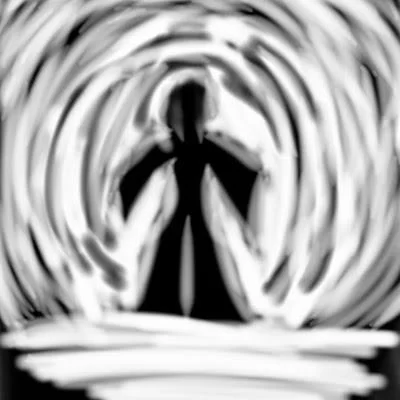
Shock waves emanating from a trombone have been captured on video for the first time using schlieren photography. With a harsh blast from the mouthpiece, it’s possible for pressure waves inside the trombone to build into a weak shock wave traveling about 1% faster than the speed of sound. It’s possible that musicians sitting in front of the trombones could receive hearing damage from these shock waves or similar ones from trumpets. # (submitted by jessecaps)
Search results for: “waves”

Seeing Blast Waves
This clip shows high-speed video footage of a blackpowder explosion. As the blast wave expands, the surrounding air is heated, which changes its index of refraction. The strength of this change is great enough that we can distinguish the edges of the expanding shock wave by the visual distortion they cause to the view beyond the explosion.
Jets from Waves
When vibrated, fluid surfaces can exhibit standing waves known as Faraday waves. In this experiment, increased forcing of these standing waves causes the formation of a jet. Under the right conditions, as the standing wave collapses, a singularity forms on the fluid surface when velocity and surface curvature diverge. The narrow jet column forms as a result of the fluid’s kinetic energy getting focused by the collapse. For more, see this letter to Nature. #
Volcanic Shock Waves
This footage of last year’s eruption of Eyjafjallajökull in Iceland shows shockwaves emanating from the mouth of the volcano as hot ash and gases explode from underground.
Shock Waves
Flow visualization really can be considered a form of art. Though we fluid mechanicians are looking for physics, we’re quite aware of the beauty of what we study. The clips in this video mostly show transient shockwave behavior, including lots of shock reflection and even a few instabilities. It’s unclear what the speeds are, aside from faster than sound; the medium is air.
Waves on Cornstarch
A thin layer of the non-Newtonian fluid oobleck on a vibrating surface (in this case, a speaker) is a great way to show off nonlinear standing waves known as Faraday waves. The waves form because, under these circumstances, the flat surface of the air/oobleck interface has actually become unstable.
Seeing Shock Waves with Schlieren
Schlieren photography is actually a pretty commonly used system in high-speed experimental aerodynamics. A typical schlieren system will shine a collimated light source on the target (a wind tunnel test section or, above, a candle), bounce that light off a mirror, block half the light with a knife-edge at the focal point, and then record the subsequent images with a camera (high-speed or otherwise). The density of air is closely related to its index of refraction, so light that hits air of a different density will be bent more or less than a neighboring ray. This uneven bending of the light rays due to density gradients is what causes the light and dark areas on the schlieren images. Since the density of air changes drastically across a shock wave, the schlieren system is perfect for visualizing shock waves and has, in fact, been used for that purpose since 1864!

Shock Waves in Space
Shock waves are not just an earthbound phenomenon. They can be found in space as well. In this photo, gas (colored yellow) ejected from a dying star hits clouds of gas and dust (colored blue), creating shock waves. #

Shock Waves From a Gun
Often fluid motion is invisible to the human eye. Researchers use techniques like schlieren photography to make changes in fluid density apparent. In this high-speed schlieren photo, an AK-47 is being fired. The spherical shock wave centered on the gun’s muzzle is due to the explosive discharge of gases used to fire the bullet. At the left of the frame, the bullet also causes a shock wave, this time a conical one, as it travels supersonically out of the gun.
Photo Source; Credit: Gary Settles, Penn State Gas Dynamics Lab
How Strings Vibrate

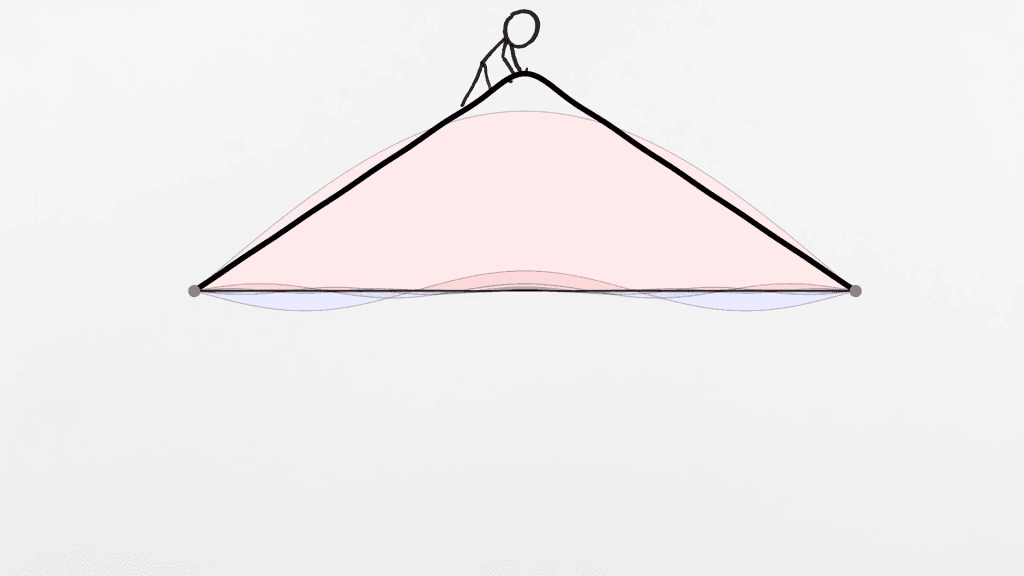
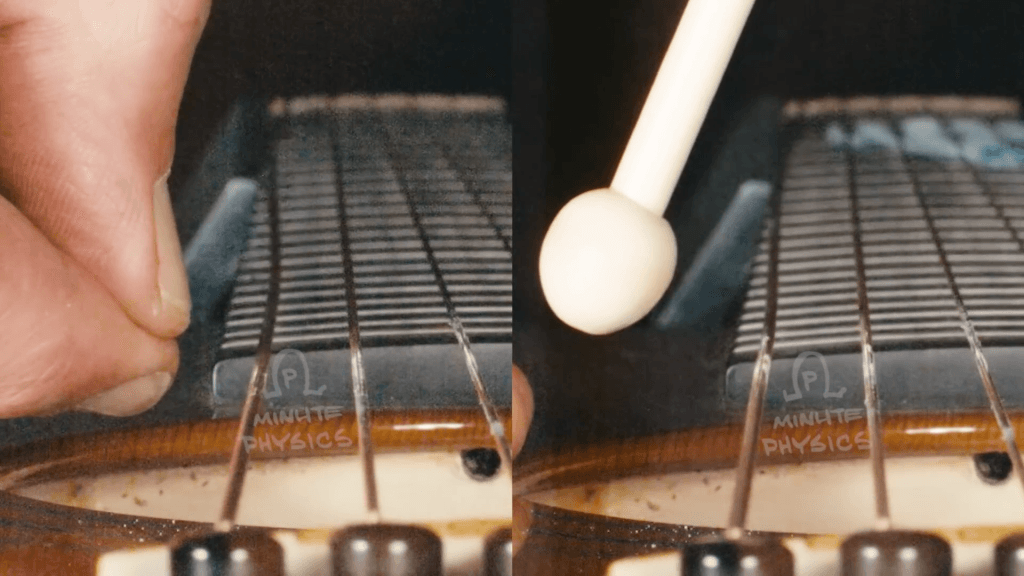
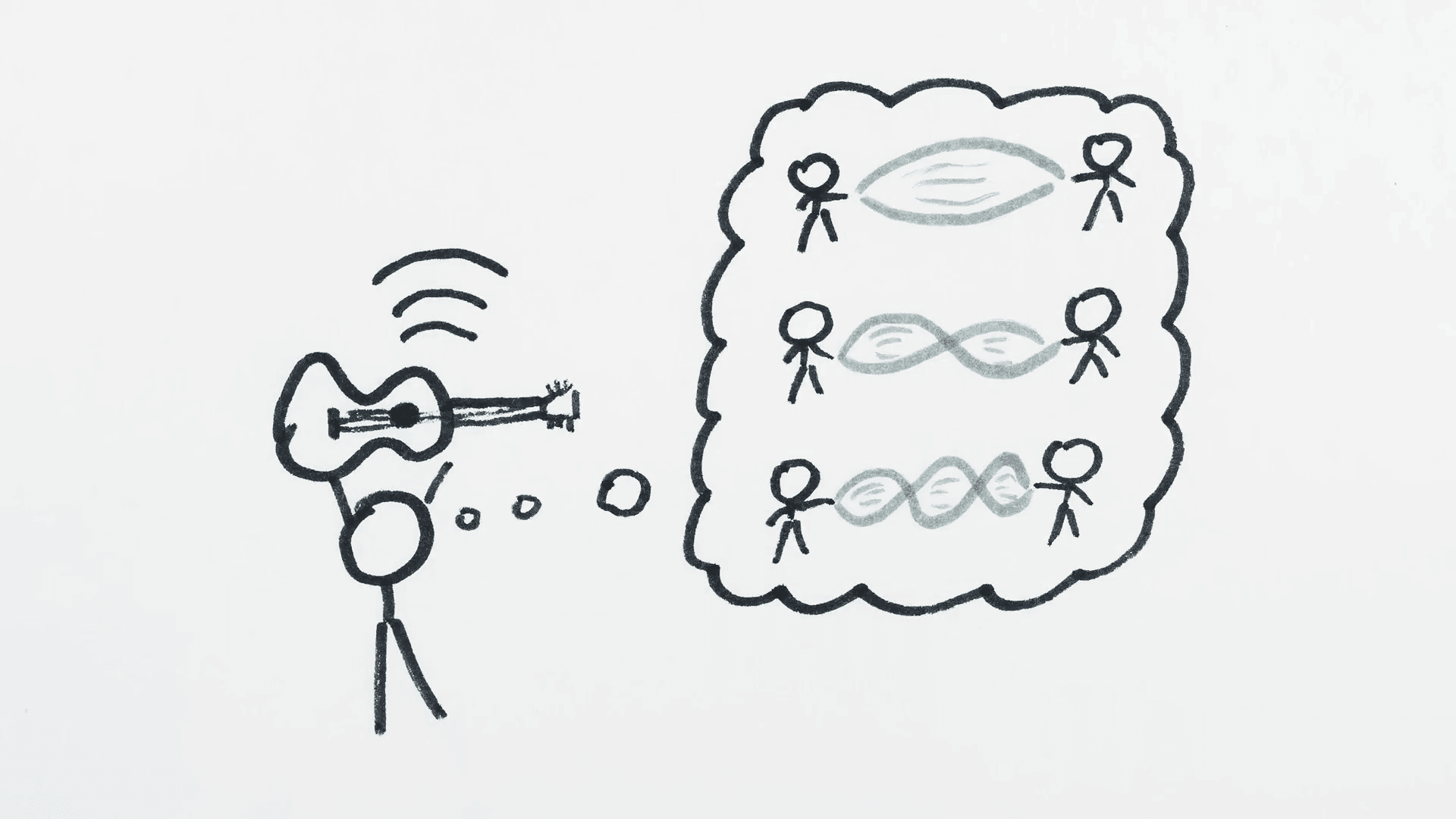
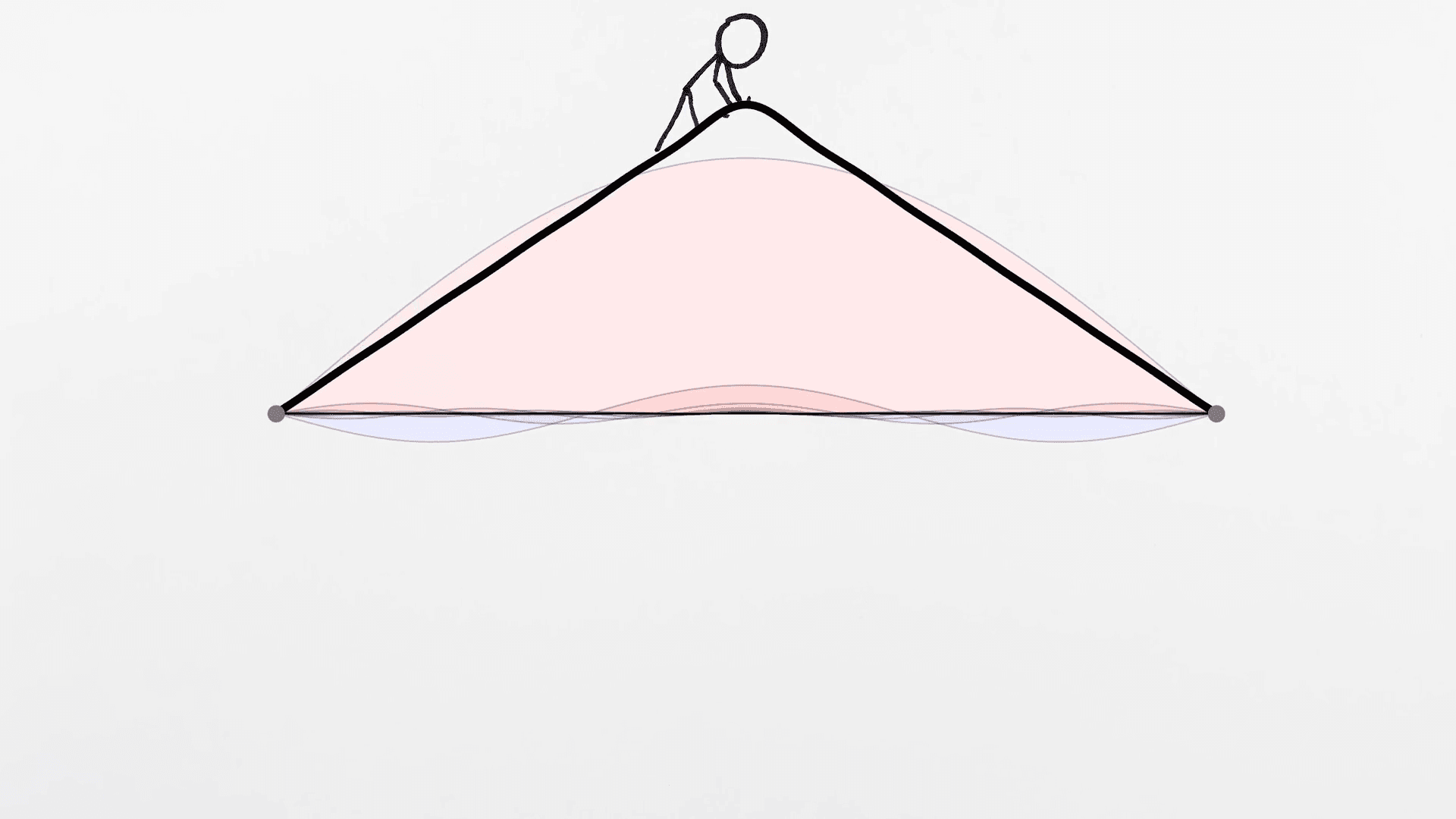
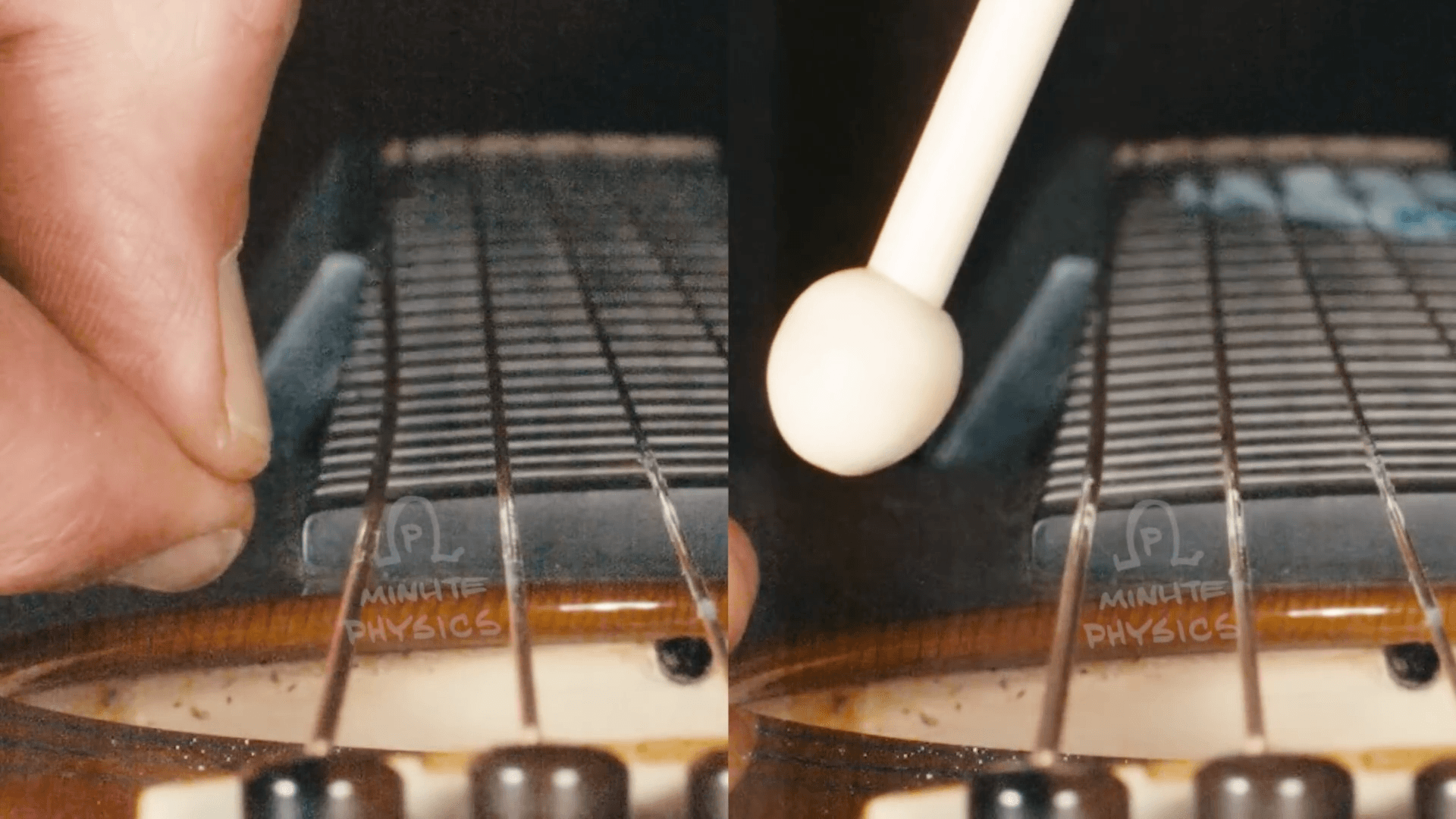
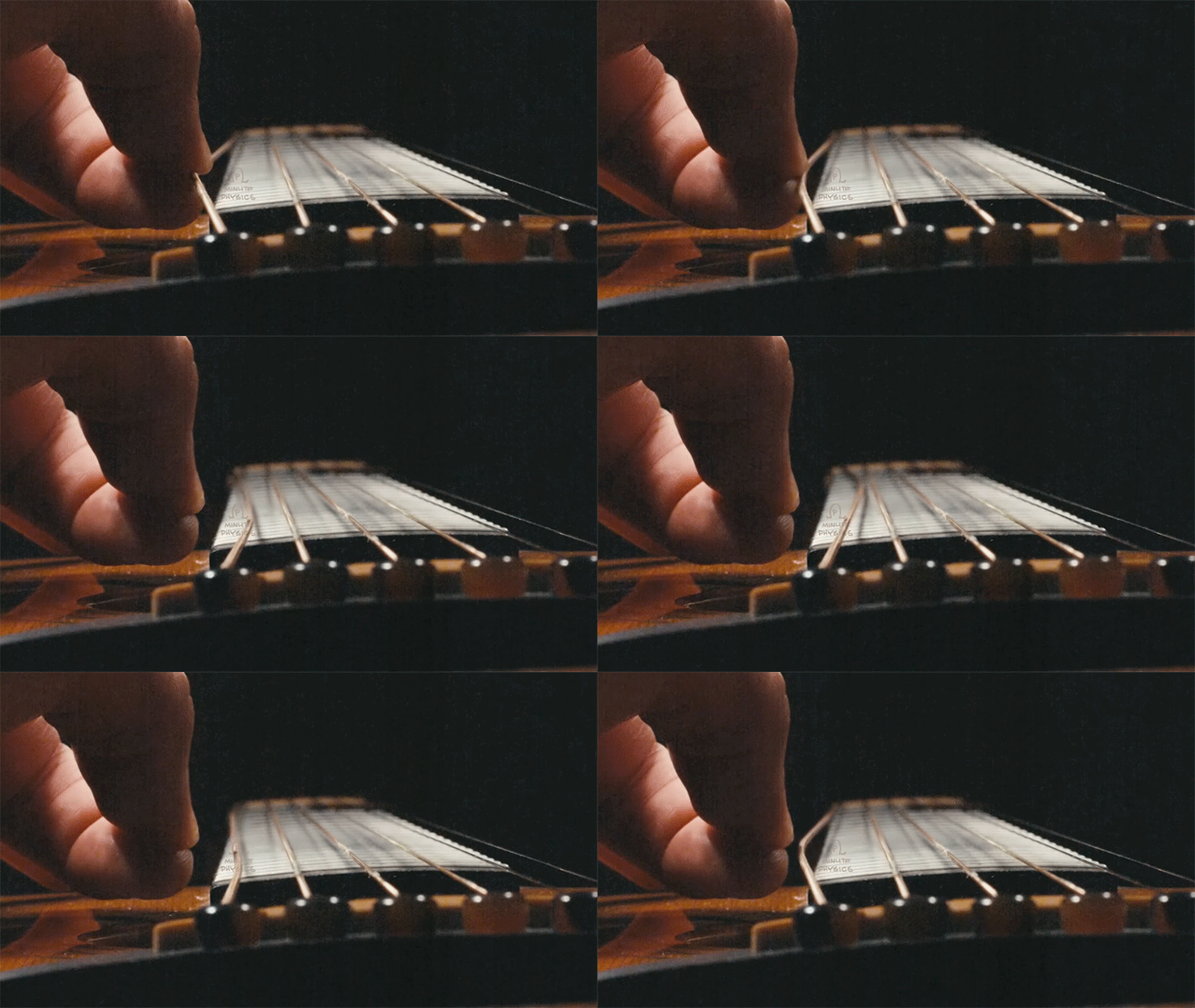
Many of us have a mental image of strings vibrating like a swinging jump rope, but that’s not quite what you actually see. Instead, plucked strings often look strangely triangular, as Henry explains in this Minute Physics video. This more complicated shape comes from the way the string’s tension responds to the applied force of plucking, striking, or bowing.
That doesn’t mean that the jump rope picture is entirely wrong, though. The triangular waves seen in the video are the shape you get when all the sine waves of the jump rope model get added together! (Superposition is fun.) (Video and image credit: Minute Physics)
Fediverse Reactions
-