Search results for: “turbulence”

  • Paris 2024: Bouncing and Spinning

    Paris 2024: Bouncing and Spinning

    Spin, or the lack thereof, plays a major role in many sports — including tennis, golf, football, baseball, volleyball, and table tennis — because it affects whether flow stays attached around a ball, as well as how much lift or side force a ball gets. A ball’s spin doesn’t stay constant, however. During flight, a ball’s spin decays at a rate proportional to its initial spin and velocity. Researchers have found that a ball’s moment of inertia, flow regime, and surface roughness all affect that decay, but which factor is the most significant varies by ball and by sport.

    Whether a ball bounces while spinning also matters. For compliant balls on a non-compliant surface — think tennis balls on a court — a bounce can actually change how much a ball spins. During impact, a tennis ball can: slide, decreasing its tangential velocity while increasing its topspin; roll, where the ball’s tangential velocity matches the tangential velocity of the surface; or over-spin, where the ball spins faster than it rolls. For a given impact angle and velocity, researchers found that stiffer and/or lighter balls were more likely to over-spin. Within tennis’s allowable range of ball stiffness and mass, manufacturers could create tennis balls that over-spin far more than conventional ones, creating another opportunity for deceptive tactics in the sport. (Image credit: J. Calabrese; research credit: T. Allen et al.)

    Related topics: How flow separates from a surface, and why turbulence is sometimes preferable

    Find all of our Olympics coverage — past and ongoing — here and every sports post here.

  • The Real Butterfly Effect

    The Real Butterfly Effect

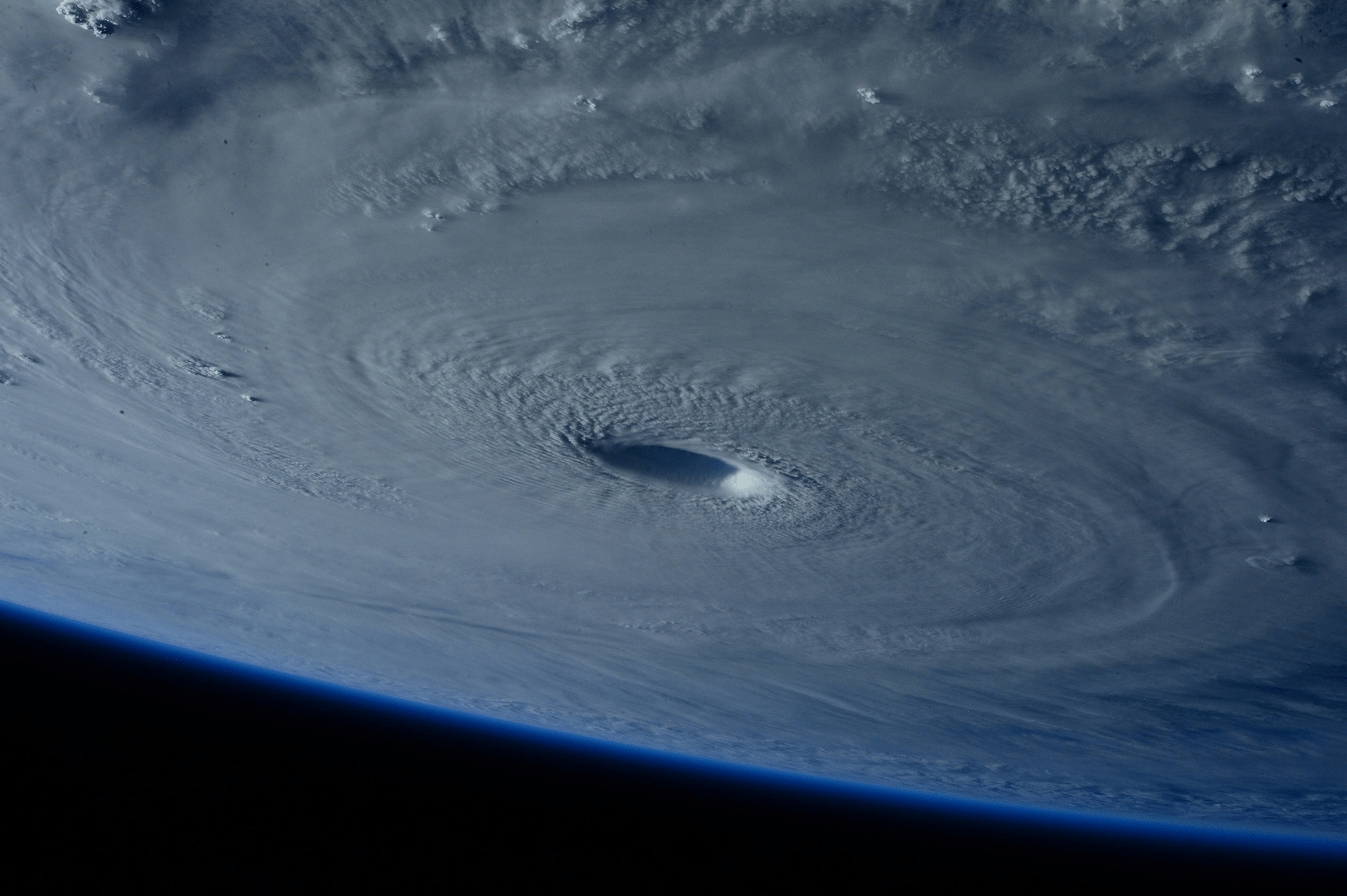
    The butterfly effect — that the flapping of a butterfly’s wings in Brazil can cause a tornado in Texas — expresses the sensitivity of a chaotic system to initial conditions. In essence, because we can’t possibly track every butterfly in Brazil, we’ll never perfectly predict tornadoes in Texas, even if the equations behind our weather forecast are deterministic.

    But this interpretation doesn’t fully capture the subtleties of the situation. With fluid dynamics, the small scales of a flow — like the turbulence in an individual cloud — are linked to the largest scales in the flow — for example, a hurricane. For short times, we’re actually quite good at predicting those large scales; our weather forecasts can distinguish sunny days and cloudy ones a week out. But at smaller scales, the forecast errors pile up quickly. No one can forecast that an individual cloud will form over your house three days from now. And because the small scales are linked to the larger scales, the uncertainties from the small scale cascade upward, limiting how far into the future we can reliably predict the weather.

    And, unfortunately, drilling down to capture smaller and smaller scales in our models can’t fix the problem, unless our initial uncertainties are identically zero. To get around this problem, weather forecasters instead use ensemble forecasting, where they run many simulations of the weather with slightly different initial conditions. Those differences in initial conditions let the forecasters play with those initial uncertainties — how accurate is the temperature reading from that station? How reliable is the instrument reporting that humidity? How old is the satellite data coming in? Once all the forecasts are run, they can see how many predicted sunny days versus rainy ones, which ones resulted in severe weather, and so on. Often the probabilities we see in our weather app — like 30% chance of rain — depend on factors including how many of the forecasts resulted in rain.

    Unfortunately, this butterfly effect permanently limits just how far into the future we can predict weather — at least until we fully understand the nature of the Navier-Stokes equations. For much more on this interesting aspect of chaos, check out this Physics Today article. (Image credit: NASA; see also T. Palmer at Physics Today)

    Fediverse Reactions
  • Featured Video Play Icon

    Fish Ladders Keep Species Swimming

    Dams often use fish ladders to help migratory species make their way upstream without interruption. In this video, Grady from Practical Engineering discusses some of the considerations that go into this special infrastructure and what kinds of designs work for different species. The first challenge for any dam is attracting fish to the ladder, which is often done by regulating the water flow at the entrance to create the velocity and turbulence that fish look for when going upstream.

    Once fish are in the ladder, they travel up a series of jumps that break the dam’s elevation into manageable steps. Different dams use various baffle designs to create jumps suited to their local species and the way they like to swim. Calmer spots in each section give fish a spot to rest before they carry on. In well-designed systems, the vast majority (97%!) of fish that enter a ladder make it through to the other side. (Video and image credit: Practical Engineering)

    Fediverse Reactions
  • “Storm Warning”

    “Storm Warning”

    A calm, sunny day erupted into a thunderstorm off the coast of Scotland for photographer Brian Matthews. Turbulent clouds streak the sky, and a downpour on the left releases a stream of precipitation. Storms like these were once uncommon in the United Kingdom, but with increasingly hot weather due to climate change, more water vapor and more energy in the atmosphere create conditions for storms like these. (Image credit: B. Matthews; via Wildlife POTY)

  • A Comet’s Tail

    A Comet’s Tail

    A comet‘s tail changes from day-to-day depending on how much material the comet is losing and how strong the solar wind it’s facing is. This image sequence shows Comet 12P/Pons-Brooks over nine days in 2024 from March 6th (top) through March 14th (bottom). The variations in the comet’s appearance are striking; some days show nearly no tail while others have long plumes with swirls of turbulence. It’s a reminder that, even if they appear unchanging in the moment you see one, a comet is in constant flux. (Image credit: Shengyu Li & Shaining; via APOD)

  • Featured Video Play Icon

    “Serenity”

    Peering from directly above, landscapes take on a whole different aspect. That idea is the heart of Vadim Sherbakov’s “Serenity,” filmed by drone. From seething waters and meandering rivers to eroded landscapes and twisting ice, there’s lots of fluid dynamics on display here. (Video and image credit: V. Sherbakov)

    Fediverse Reactions
  • Featured Video Play Icon

    “Origin”

    Billowing turbulence, mushroom-like Rayleigh-Taylor instabilities, and spreading flows abound in Vadim Sherbakov’s “Origin.” The short film takes a macro looks at fluids — inks, alcohols, soaps, and other household liquids. It was filmed entirely on a DJI Pocket 2, a rather small, stabilized pocket camera. It’s a testament to what you can achieve with some experimentation and relatively inexpensive equipment. (Video and image credit: V. Sherbakov)

  • Featured Video Play Icon

    Convection in Action

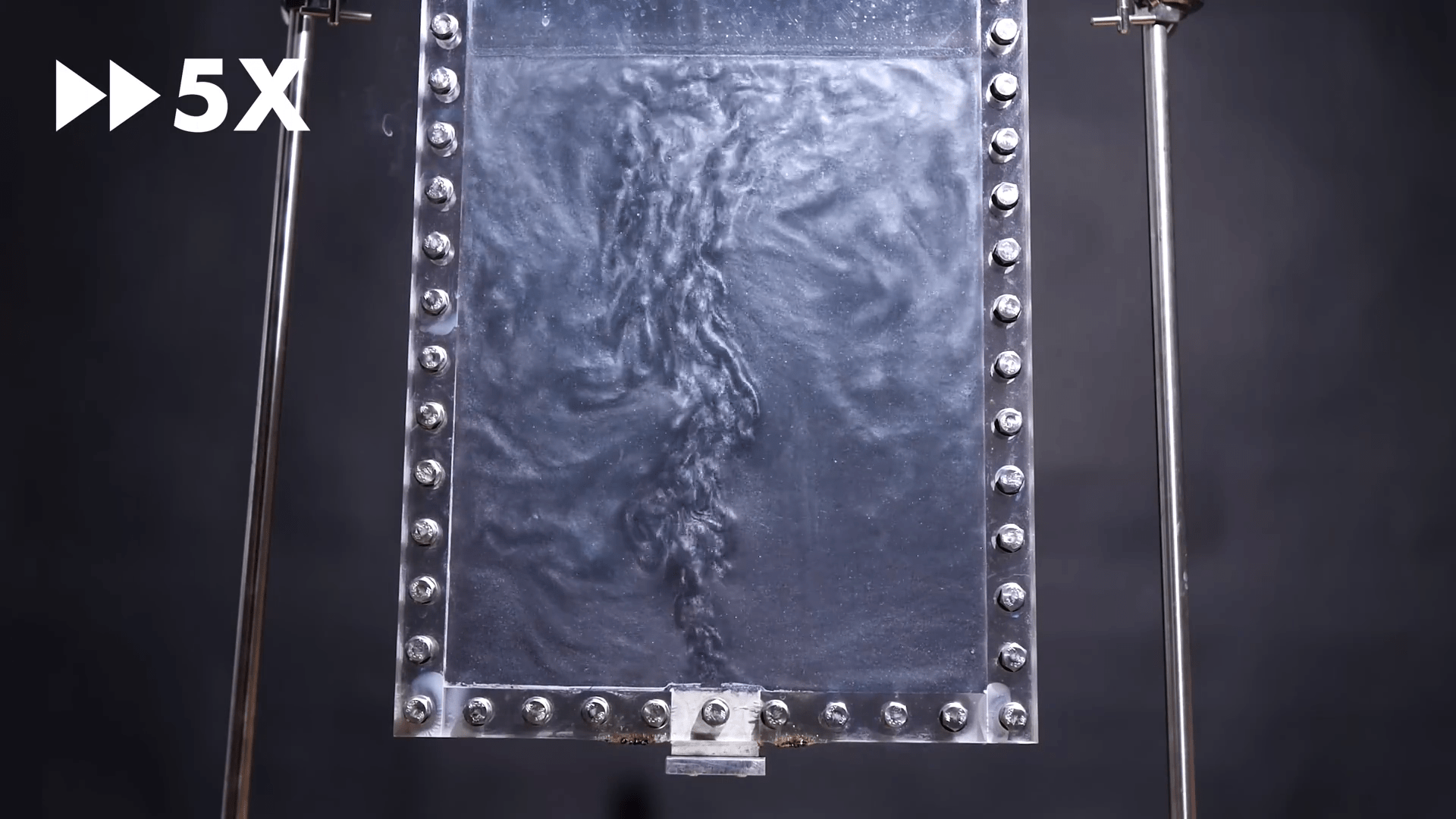
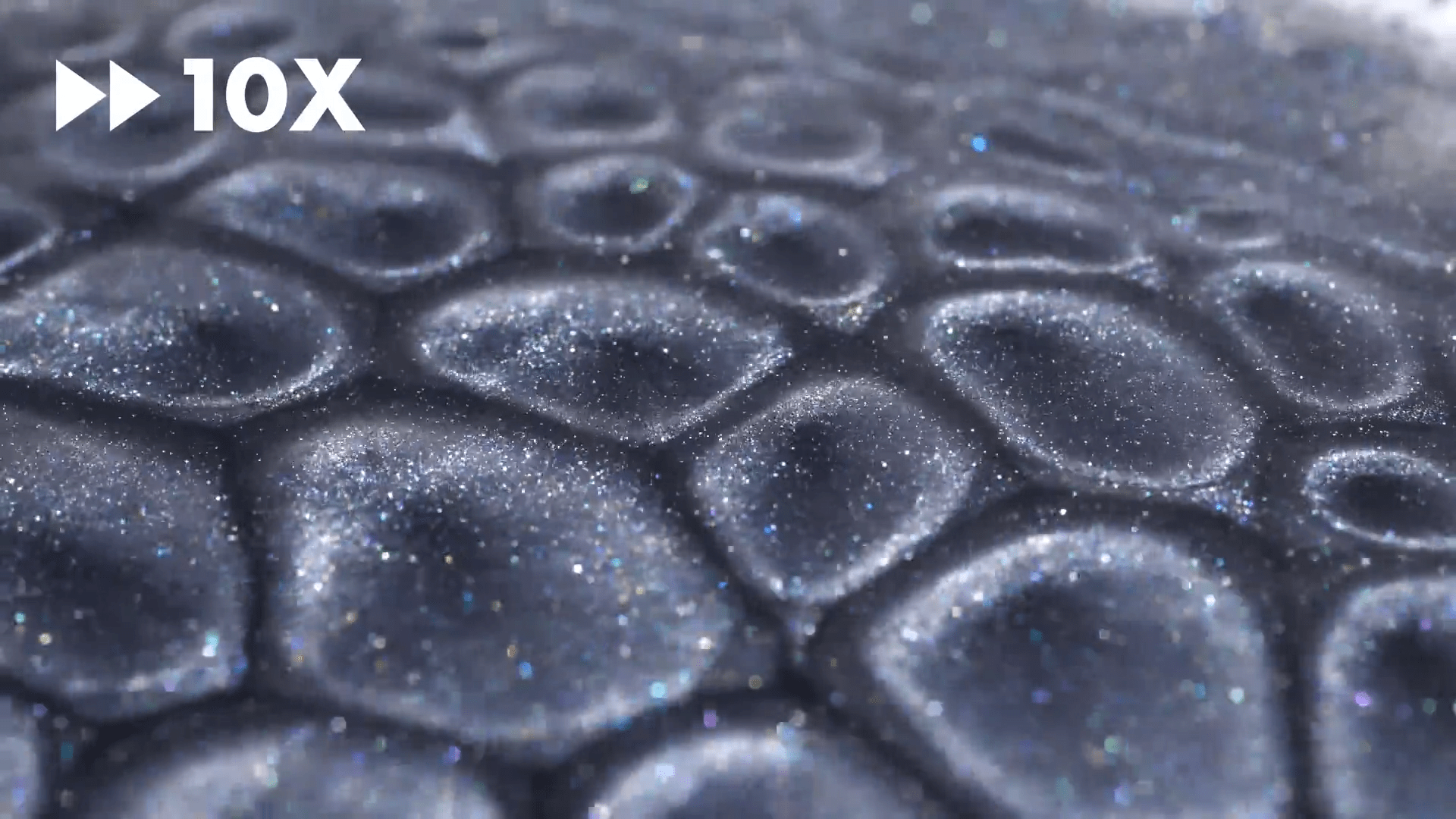
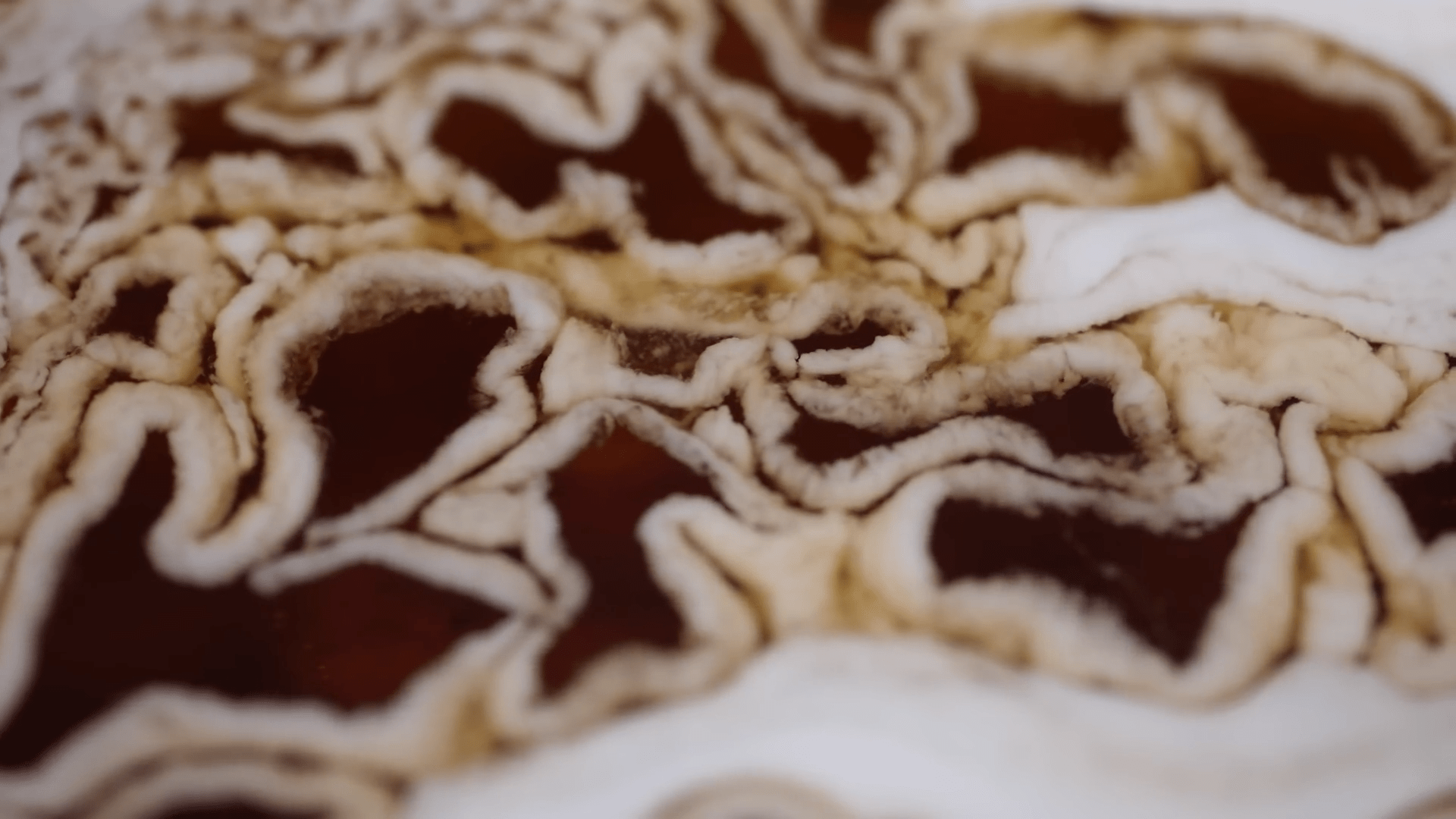
    We’re surrounded daily by convection — a buoyancy-driven flow — but most of the time it’s invisible to us. In this video, Steve Mould shows off what convection really looks like with some of his excellent tabletop demos. The first half of the video gives profile views of turbulent convection, with chaotic and unsteady patterns. When he switches to oil instead of water, the higher viscosity (and lower Reynolds number) offer a more structured, laminar look. And finally, he shows a little non-temperature-dependent convection with a mixture of Tia Maria and cream, which convects due to evaporation changing the density. (Image and video credit: S. Mould; submitted by Eric W.)

  • Rough Surfaces

    Rough Surfaces

    In fluid dynamics, we’re often concerned with flow moving past a solid surface — air past an airplane wing, water past fish scales, oil between moving parts — and those surfaces are rarely perfectly smooth. Rough surfaces affect the flow near them, sometimes in unexpected ways. Here, researchers show a rough surface’s effect on the eddies of the atmospheric boundary layer. Put differently, this poster shows how buildings, trees, and other features influence the lowest layer of the atmosphere. From the tiny gaps between buildings to the eddies towering many times higher, the turbulence reflects roughness’s effects. (Image credit: J. Kostelecky and C. Ansorge)

  • Featured Video Play Icon

    Visualizing Changes

    This rather mesmerizing video by Michiel de Boer uses a video editing technique to highlight movement and changes in video clips. From falling rain to rising mist to passing footsteps, the relatively simple technique visualizes all kinds of motion. De Boer calls it “motion extraction,” but it’s essentially a way to play with autocorrelation, a mathematical technique often used in fluid dynamics. It’s especially prevalent in turbulence, where it helps researchers identify parts of the flow that are closely related to one another. (Video and image credit: M. de Boer; via Colossal)