Search results for: “turbulence”

  • Featured Video Play Icon

    Peering Into the Gap

    This video offers a glimpse into turbulence developing in a classic flow set-up, a Taylor-Couette cylinder. The apparatus consists of two upright, concentric cylinders; the outer cylinder is fixed, and the inner one rotates. This video shows the gap between the cylinders, and it’s rotated so that the inner cylinder is at the bottom of the frame. Gravity points from left to right in the video. The fluid in the 8-cm gap between the cylinders is water, seeded with rheoscopic particles to visualize the flow.

    The video begins as the inner cylinder has just begun to rotate, dragging nearby fluid with it. A thin, laminar boundary layer forms at the bottom of the frame, growing as time goes on. A few seconds in, the boundary layer transitions to turbulence; look closely and you’ll see hairpin-shaped vortices appear. Just after that, the boundary layer becomes entirely turbulent and continues to slowly move upward to take over the full gap. The video is available in a full 4K resolution if you really want to get lost in the flow. (Video credit: D. van Gils)

  • Featured Video Play Icon

    “Water III”

    In “Water III,” filmmaker Morgan Maassen explores the ocean from above and below. I love the sheer variety of fluid phenomena; yes, there are classic breaking barrel waves for surfing, but there are also rib vortices and bubble plumes and churning turbulence that wouldn’t be out of place in a stormy Midwestern sky. Enjoy! (Image and video credit: M. Maassen)

  • Stormy Skies

    Stormy Skies

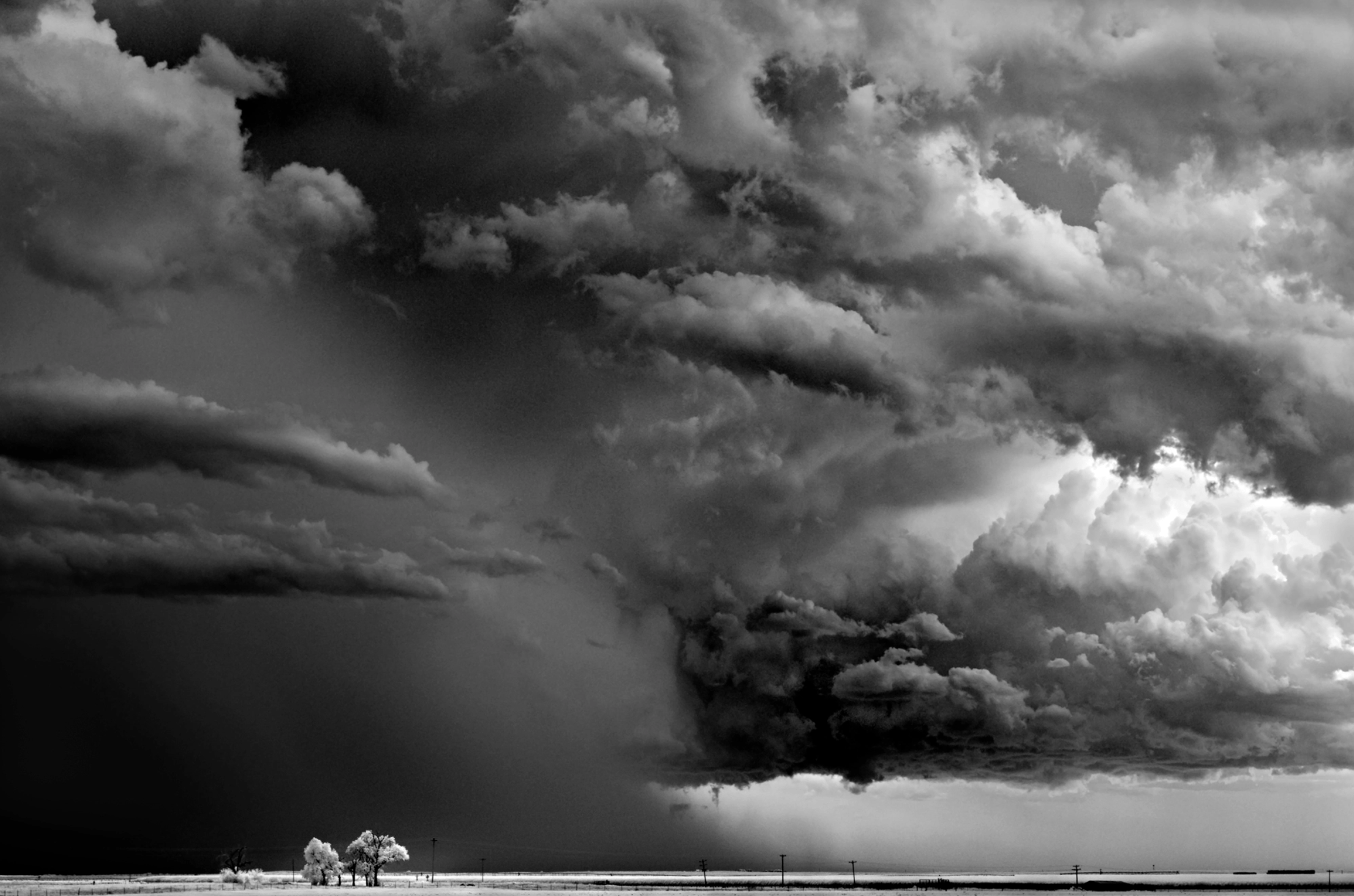
    Photographer Mitch Dobrowner captures the majestic and terrifying power of storms in his black and white images. Towering turbulence, swirling vortices, and convective clouds abound. See more of his work at his website and Instagram. (Image credit: M. Dobrowner; via Colossal)

  • “In Flight”

    “In Flight”

    Photographer Mark Harvey captured these stunning portraits of birds in flight. From acrobatic songbirds to soaring raptors, the images show the incredible morphology of a bird’s wing during flight. Most birds are constantly changing their wing shape to generate lift, change trajectory, and stabilize their flight. Note the separation between the flight feathers in all of these birds. Those gaps are thought help break up the birds’ wingtip vortices, thereby reducing their induced drag. You may also notice that the owls in Harvey’s photos have feathers that look a bit different from the other birds; owls have adaptations in their feathers that help damp out turbulence, which makes them quieter in flight. Prints of Harvey’s images are available on his website. (Image credit: M. Harvey; via Colossal 1, 2)

  • Jovian Circulation

    Jovian Circulation

    Jupiter‘s atmosphere remains quite mysterious, due to our limited ability to measure the depths of the gas giant’s clouds. But measurements from the Juno spacecraft are continuing to shape researchers’ understanding of our massive neighbor. By tracking ammonia distributions in Jupiter’s belts and zones, a team has found a series of circulation cells similar to the Ferrel cells of Earth’s midlatitudes.

    Unlike the stronger Hadley cells and polar cells, Earth’s Ferrel cells are relatively weak. They’re driven by turbulence and the motion of the circulation cells to the north and south. The Northern and Southern hemispheres each have one Ferrel cell. In contrast, Jupiter — with its larger size and higher rotation rate — boasts eight Ferrel-like cells in each hemisphere! (Image and research credit: K. Duer et al.; via Universe Today; submitted by Kam-Yung Soh)

  • Turbulent Puffs

    Turbulent Puffs

    When a burst of air gets expelled into still surroundings — like when a person coughs — it forms a turbulent puff like the one seen here. Puffs can be surprisingly long-lasting, though these miniature clouds slow down and expand over time. How they behave is critical to understanding the spread of pollution as well as how respiratory illnesses like COVID-19 travel. In this study, researchers found that buoyancy is also a critical factor. When the puff is warmer than its surroundings, it rises higher, lasts longer, and travels further. That might help explain why respiratory illnesses like the flu spread more readily in the winter than in warmer months. (Image and research credit: A. Mazzino and M. Rosti; via Physics World; submitted by Kam-Yung Soh)

  • As Above, So Below

    As Above, So Below

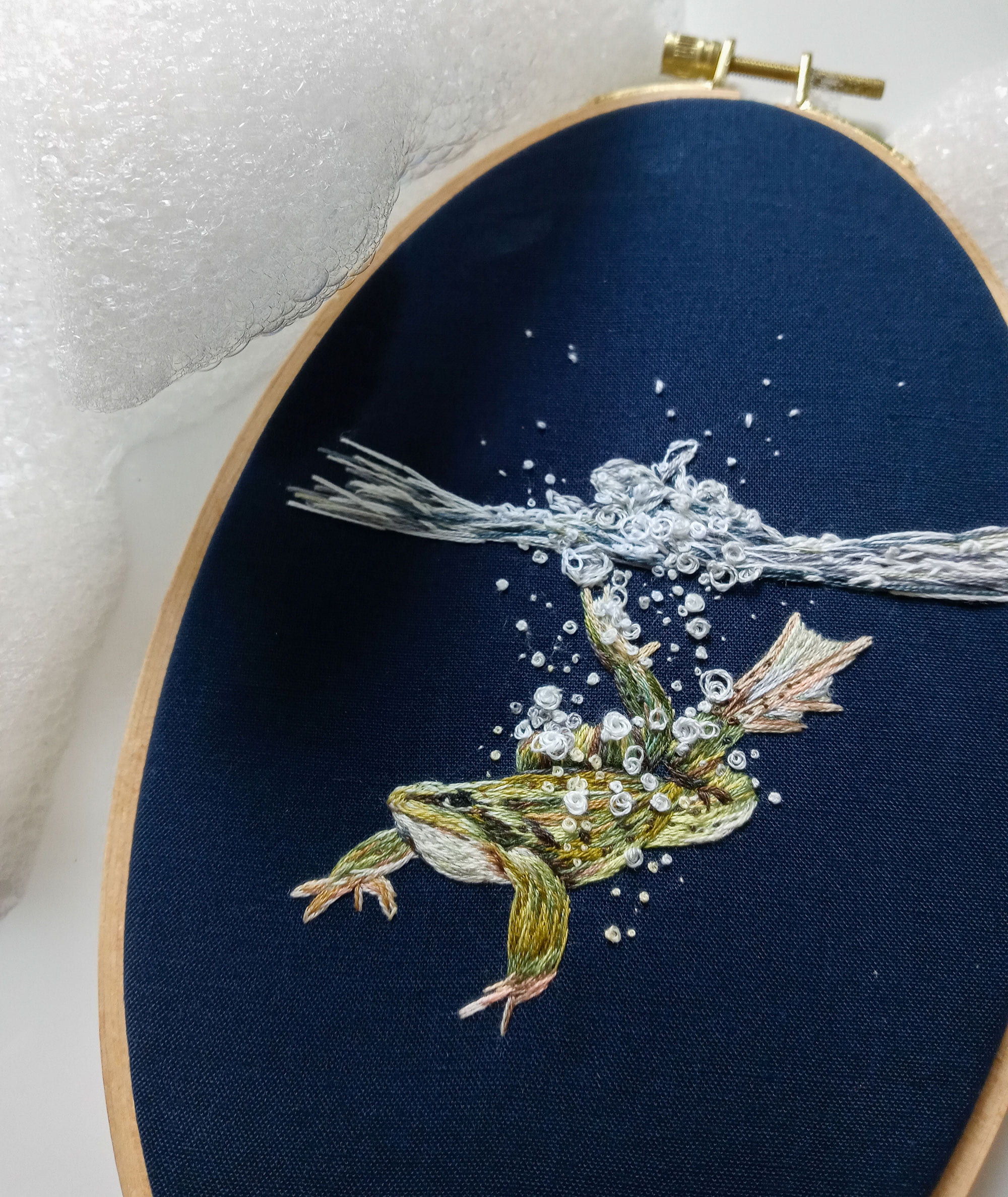
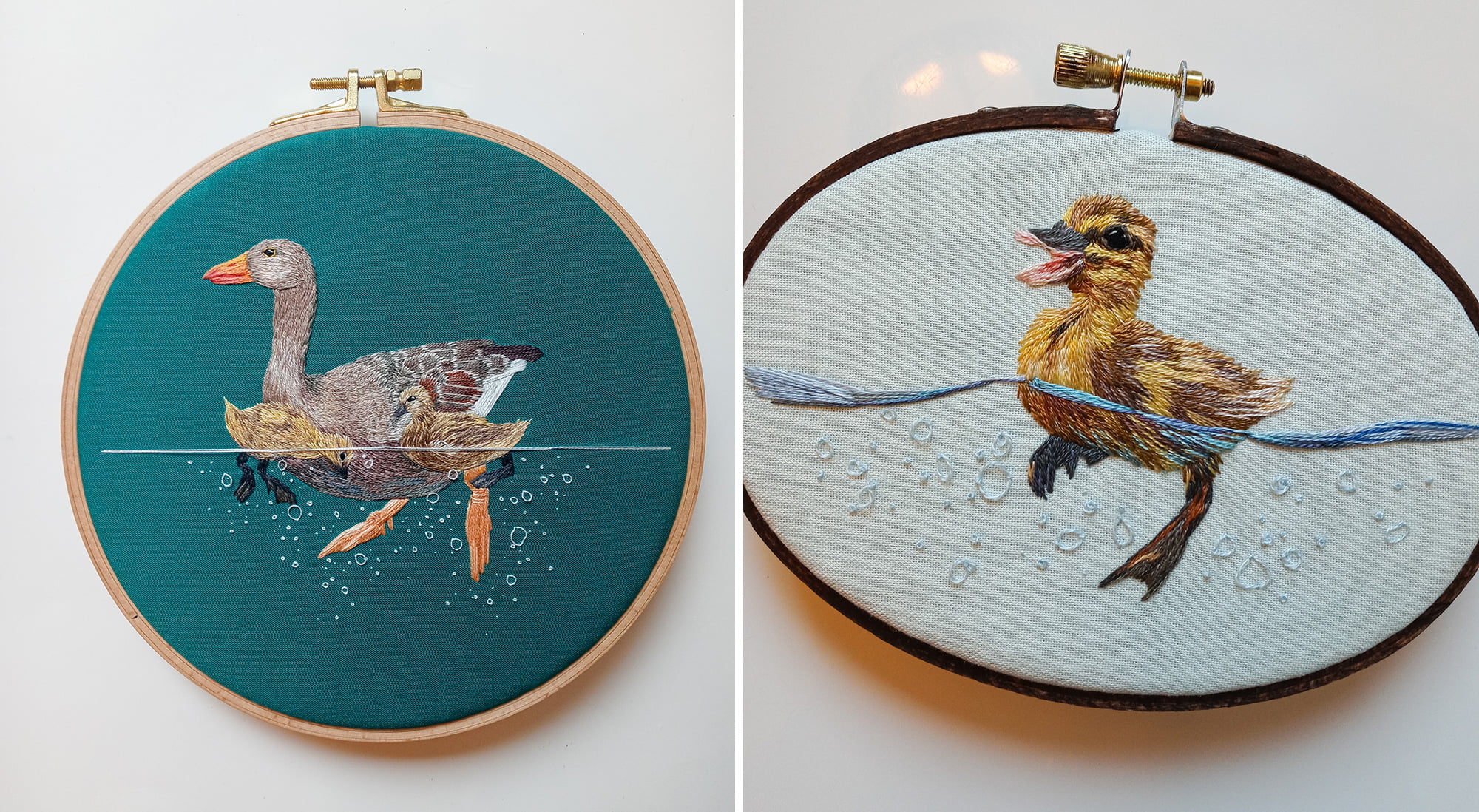
    I love a good crossover between fluid dynamics and something unexpected. Fiber artist Megan Zaniewski uses thread-painting techniques to embroider ducks, frogs, otters, and other animals as they appear both above and below water. I am blown away by how she captures the movement and turbulence of water in these pieces! Just look at that spectacular frog splash. You can find lots more of her art on her Instagram. (Image credit: M. Zaniewski; via Colossal)

  • Candy Clouds Mid-Storm

    Candy Clouds Mid-Storm

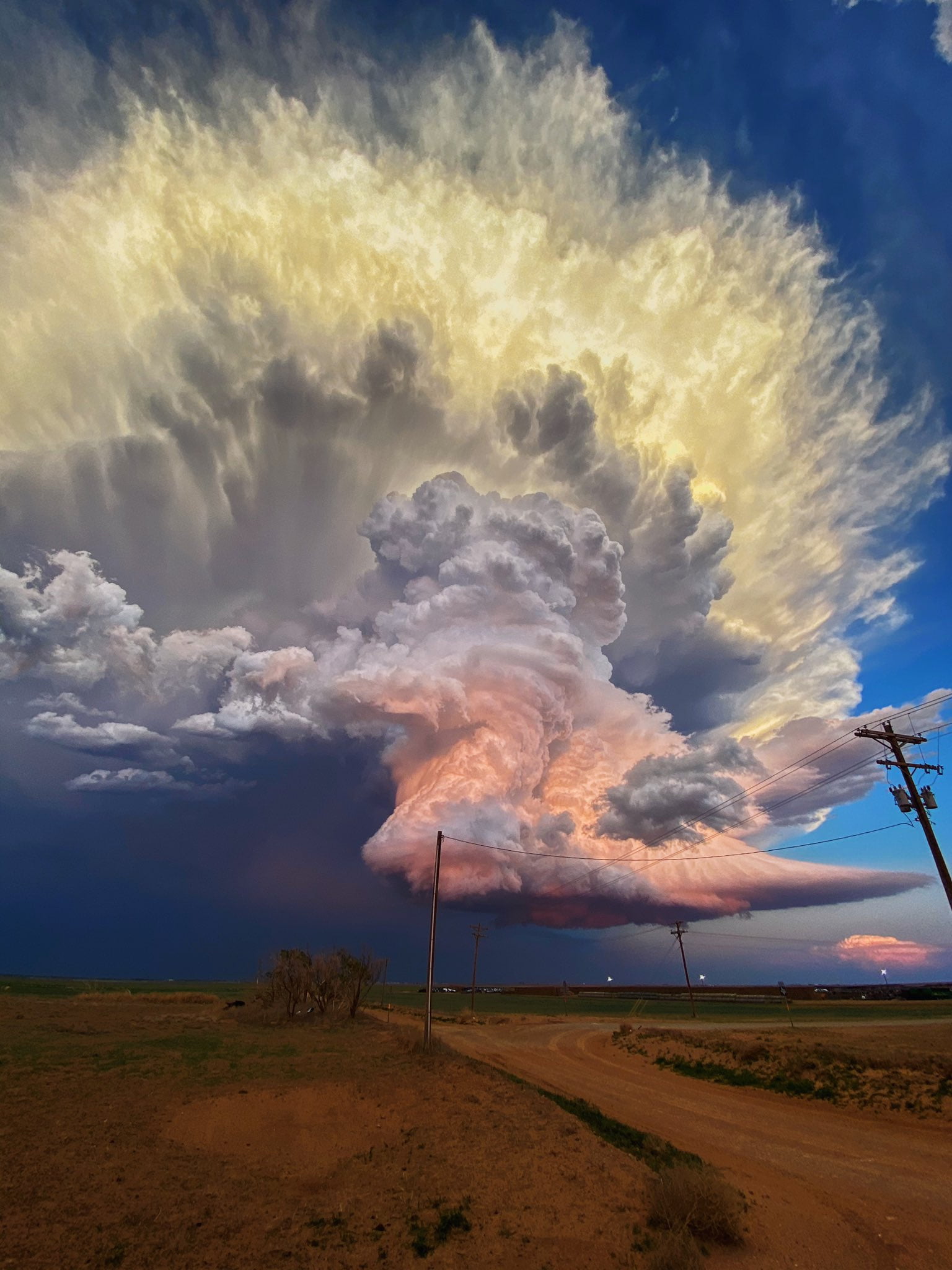
    There’s nothing quite like a towering storm cloud to showcase nature’s power. This gorgeous photo by Laura Rowe shows pastel clouds over West Texas in the middle of a thunderstorm. Despite the dusk at ground level, the height of the cloud keeps it lit by direct sunlight, giving its turbulent convection that colorful glow. Rowe, as it happens, is not a professional photographer, which is a good reminder to us all: it’s always worth looking up! You never know what beauty you’ll miss if you don’t. (Image credit: L. Rowe; via Colossal)

  • Tokyo 2020: Visualizing the Magnus Effect in Golf

    Tokyo 2020: Visualizing the Magnus Effect in Golf

    Golf returned to the Olympics in 2016 in Rio and is back for the Tokyo edition. Golf balls — with their turbulence-promoting dimples — are a perennial favorite for aerodynamics explanations because, counterintuitively, a dimpled golf ball flies farther than a smooth one. But today we’re going to focus on a different aspect of golf aerodynamics, namely, what happens when a golf ball is spinning. Here’s an animation showing the difference between flow around a non-spinning golf ball and flow around a golf ball spinning at 3180 rpm. Both balls are moving to the left at 30 m/s.

    Animation toggling between a non-spinning and spinning golf ball moving at 30 m/s.

    The colors in this image indicate the direction of vorticity (which is unimportant for us at the moment). What matters are the blue and red arrows, which mark where flow is leaving the surface of the golf ball, in other words, where the wake begins. For the non-spinning golf ball, flow leaves the ball at the same streamwise position on both sides of the ball. This gives a symmetric wake that is neither tilted upward nor downward.

    On the spinning ball, though, the blue arrow on top of the ball moves backward, indicating that separation occurs later. On the lower surface, the red arrow moves forward, so separation happens earlier. These shifts cause the golf ball’s wake to tilt downward, which — by Newton’s Third Law — tells us that the ball is experiencing an upward force. This is known as the Magnus effect, and it plays a big role in soccer, volleyball, tennis, and any other sports with spinning balls.

    It’s also possible, under the right circumstances, to get a reverse Magnus effect. For more on that, check out this video and Smith’s analysis. (Image credit: top – M. Spiske, others – N. Sakib and B. Smith; research credit: N. Sakib and B. Smith, pdf)
    We’re celebrating the Olympics with sports-themed fluid dynamics. Learn how surface roughness affects a volleyball serve, see the wingtip vortices of sail boats, and find out how to optimize rowing oars. And don’t forget to come back next week for more!

  • Tokyo 2020: Volleyball Aerodynamics

    Tokyo 2020: Volleyball Aerodynamics

    Like footballs and baseballs, the trajectory of a volleyball is strongly influenced by aerodynamics. When spinning, the ball experiences a difference in pressure on either side, which causes it to swerve, per the Magnus effect. But volleyball also has the float serve, which like the knuckleball in baseball, uses no spin. 

    In this case, how the ball behaves depends strongly on the way the ball is made. Some volleyballs use smooth panels, while others have surfaces modified with dimples or honeycomb patterns, and researchers found that these subtle changes make a big difference in aerodynamics. A float serve’s trajectory is unpredictable because the ball will swerve whenever air near the surface of the ball on one side goes turbulent or separates. And without spin to influence that transition, everything comes down to the ball’s speed and its surface.

    Researchers found that volleyballs with patterned surfaces transition to turbulence at lower speeds, which makes their behavior more predictable overall. But players who want to maximize the unpredictability of their float serve might prefer smooth-paneled balls, which don’t make the transition until higher speeds. (Image credit: game – Pixabay, volleyballs – U. Tsukuba; research credit: S. Hong et al.T. Asai et al.; via Ars Technica)

    Stick around all this week and next for more Olympic-themed fluid physics!